
Atmospheric Thermodynamics Ben Harvey NCAS University of Reading
Atmospheric Thermodynamics Ben Harvey NCAS, University of Reading b. j. harvey@reading. ac. uk With thanks to: Alan Blyth, Maarten Ambaum
What is thermodynamics? The study of heat and temperature and their relation to energy and work • Individual molecules are ignored and the system is treated as a bulk entity described by macroscopic variables such as temperature, pressure and density • Assumes the existence of equilibrium states of the system Other approaches: • Statistical mechanics – treat behaviour of molecules statistically • Kinetic theory – use classical mechanics to describe the motions and collisions of molecules
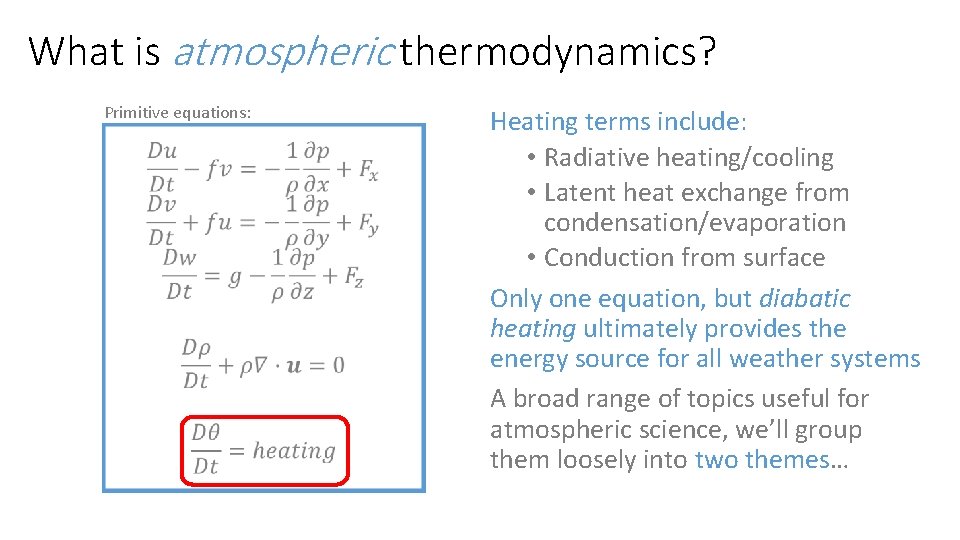
What is atmospheric thermodynamics? Primitive equations: • Heating terms include: • Radiative heating/cooling • Latent heat exchange from condensation/evaporation • Conduction from surface Only one equation, but diabatic heating ultimately provides the energy source for all weather systems A broad range of topics useful for atmospheric science, we’ll group them loosely into two themes…
Outline of this session 1. 2. 3. 4. THEME I: The vertical structure of the atmosphere The ideal gas law Heat and work Adiabatic processes Buoyancy and static stability THEME II: The special role of moisture 5. 6. 7. 8. Latent heat Saturation Stability with moisture The tephigram
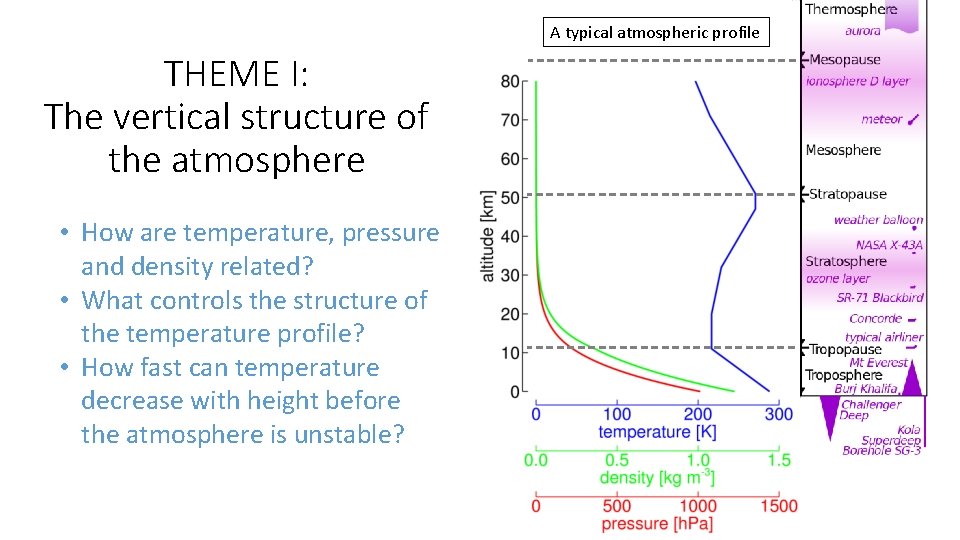
A typical atmospheric profile THEME I: The vertical structure of the atmosphere • How are temperature, pressure and density related? • What controls the structure of the temperature profile? • How fast can temperature decrease with height before the atmosphere is unstable?
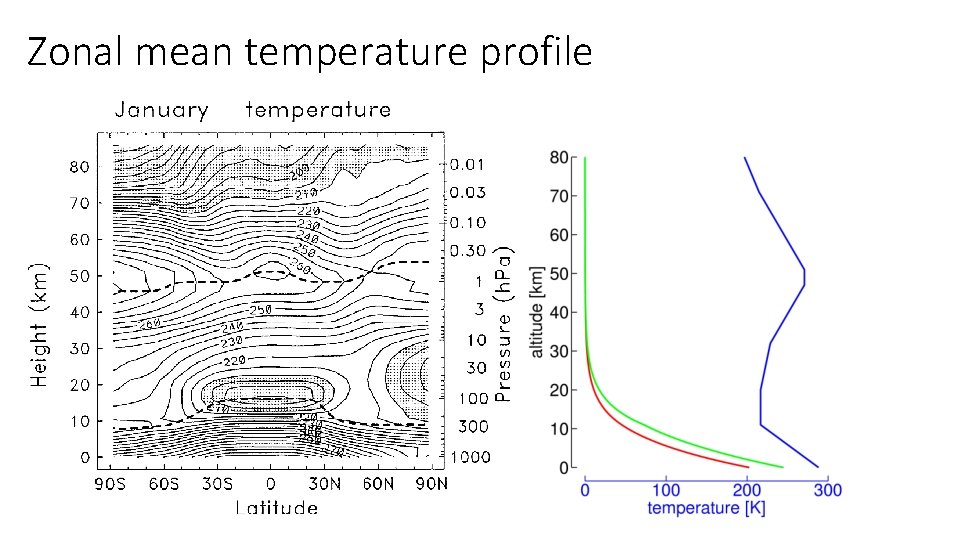
Zonal mean temperature profile
Outline of this session 1. 2. 3. 4. THEME I: The vertical structure of the atmosphere The ideal gas law Heat and work Adiabatic processes Buoyancy and static stability THEME II: The special role of moisture 5. 6. 7. 8. Latent heat Saturation Stability with moisture The tephigram
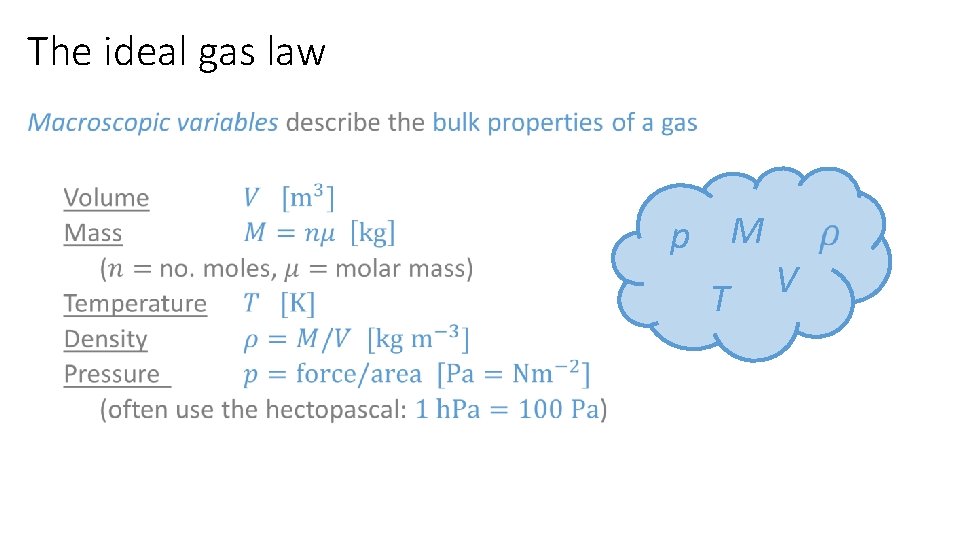
The ideal gas law • p M T V
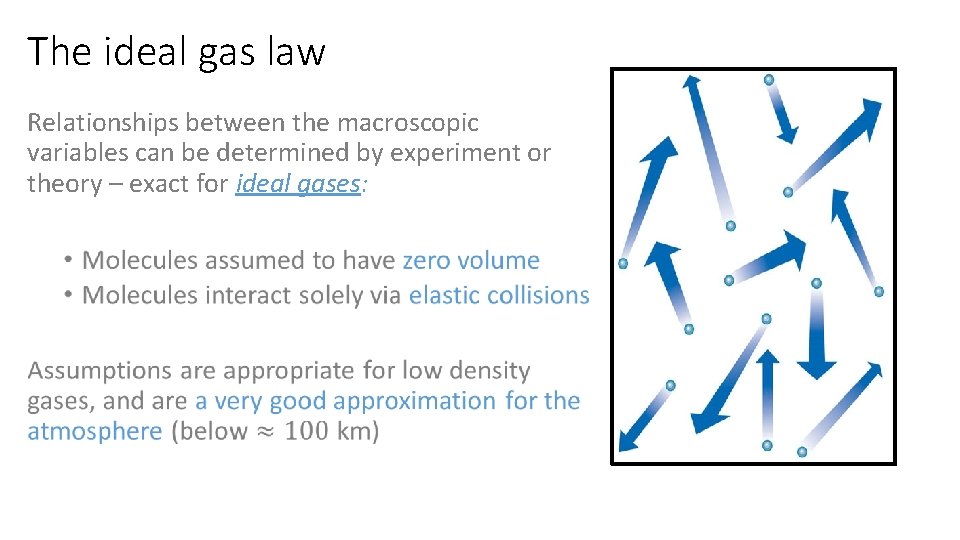
The ideal gas law Relationships between the macroscopic variables can be determined by experiment or theory – exact for ideal gases:
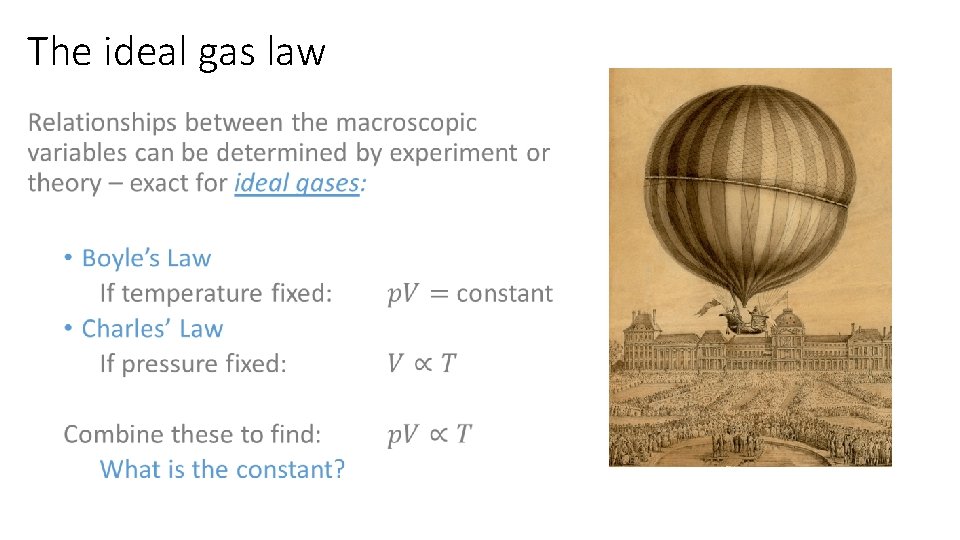
The ideal gas law •
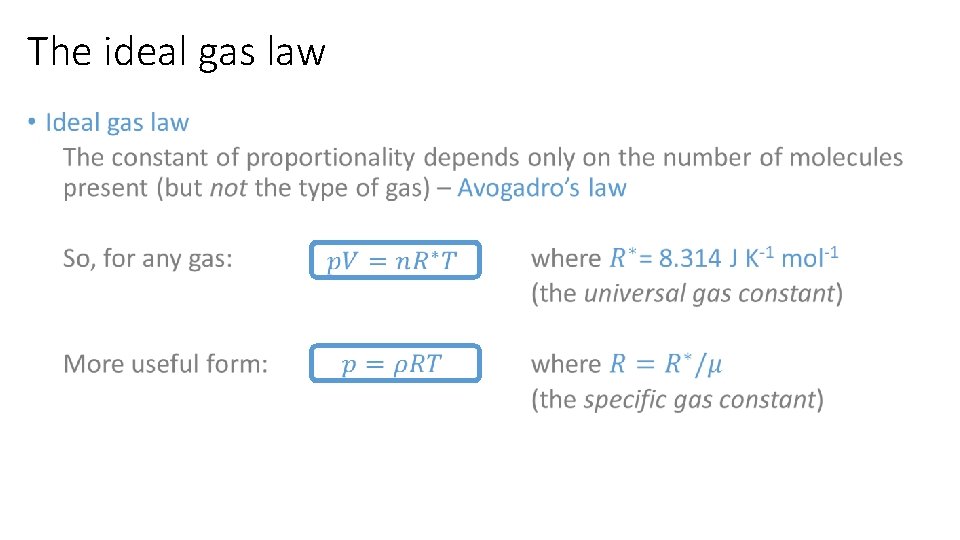
The ideal gas law •
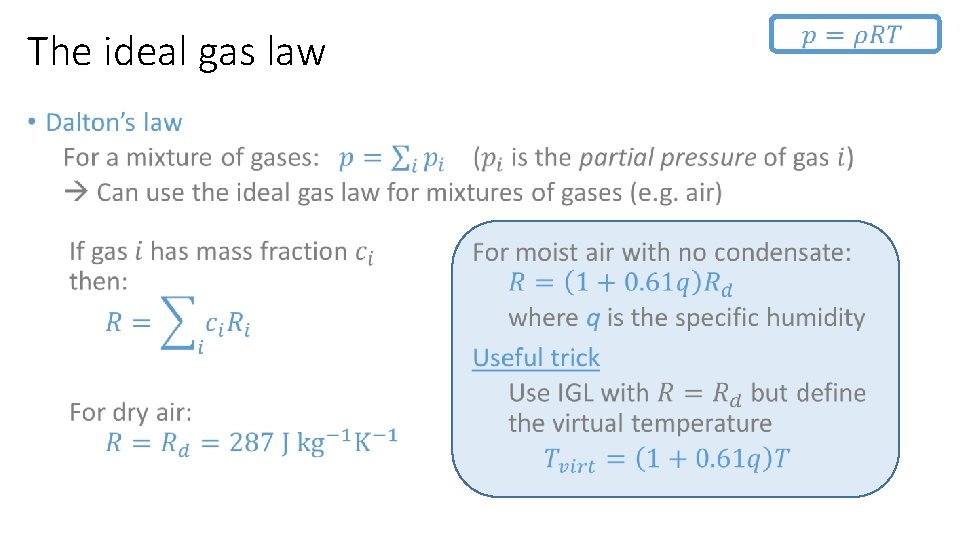
The ideal gas law • The main constituents of air Constituent Nitrogen 28. 02 0. 755 Oxygen 32. 00 0. 231 Argon 39. 93 0. 013 Carbon dioxide 44. 01 ~0. 0006 Water vapour 18. 02 0 to ~0. 03
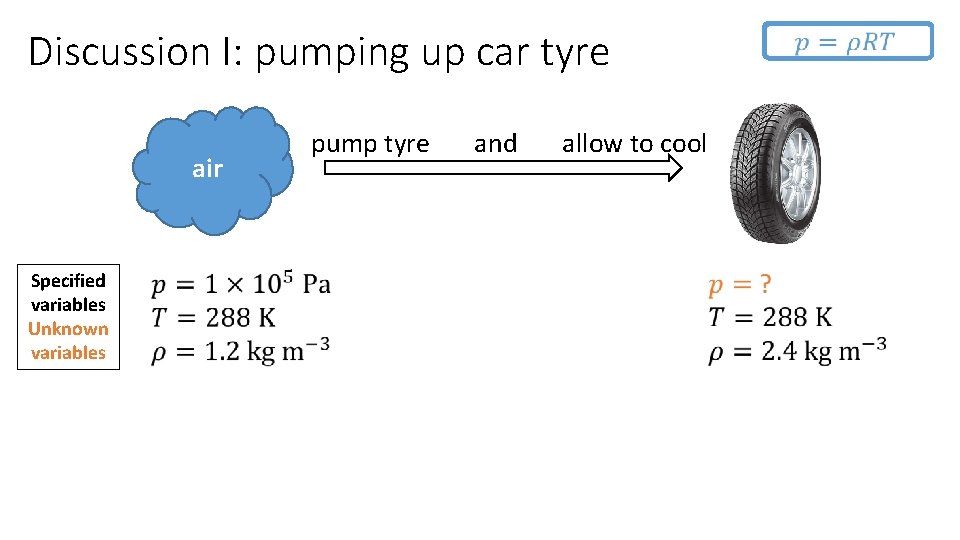
Discussion I: pumping up car tyre air Specified variables Unknown variables pump tyre and allow to cool
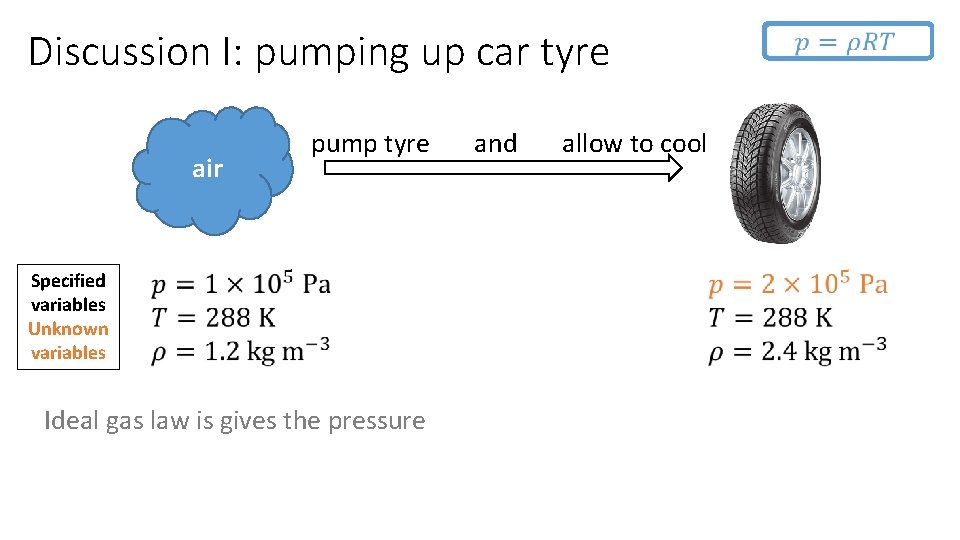
Discussion I: pumping up car tyre air Specified variables Unknown variables pump tyre and Ideal gas law is gives the pressure allow to cool
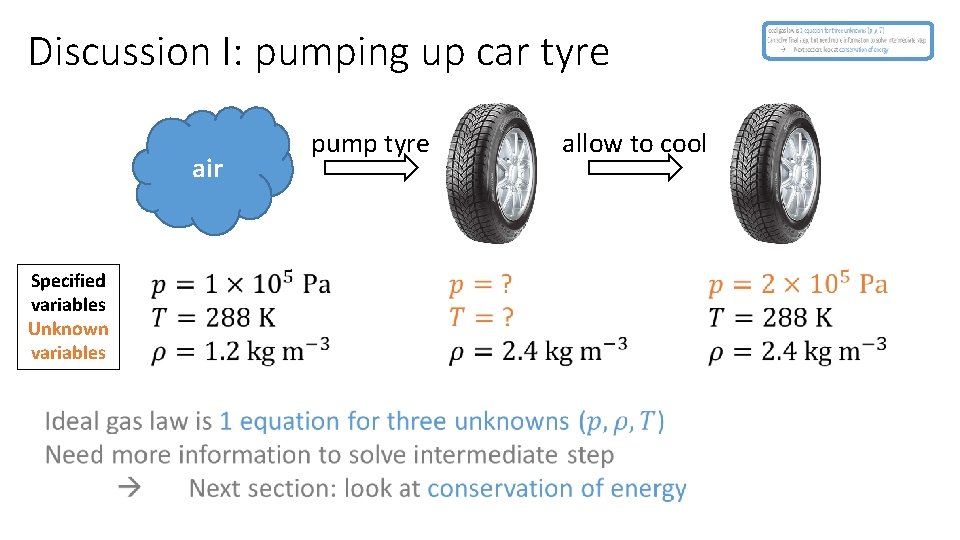
Discussion I: pumping up car tyre air Specified variables Unknown variables allow to cool pump tyre
Outline of this session 1. 2. 3. 4. THEME I: The vertical structure of the atmosphere The ideal gas law Heat and work Adiabatic processes Buoyancy and static stability THEME II: The special role of moisture 5. 6. 7. 8. Latent heat Saturation Stability with moisture The tephigram
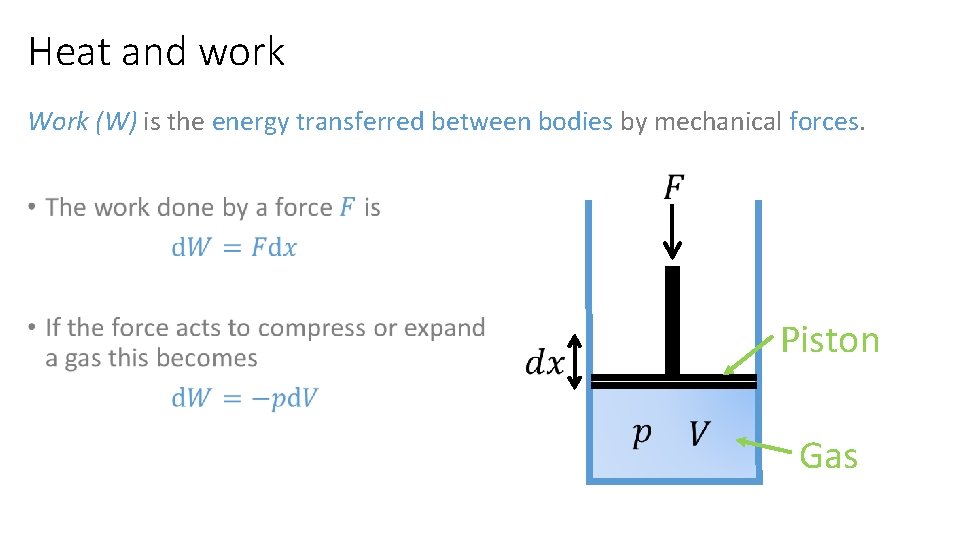
Heat and work Work (W) is the energy transferred between bodies by mechanical forces. • Piston Gas
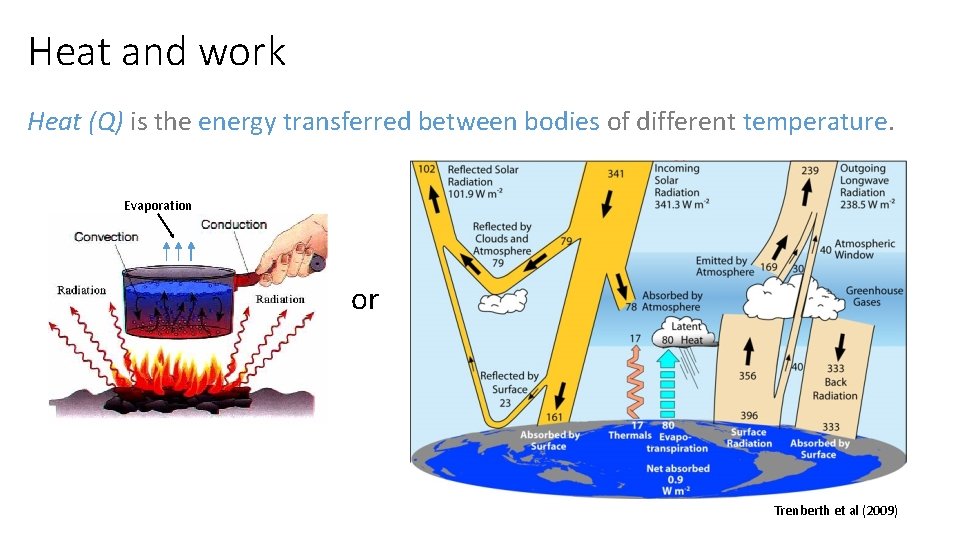
Heat and work Heat (Q) is the energy transferred between bodies of different temperature. Evaporation or Trenberth et al (2009)
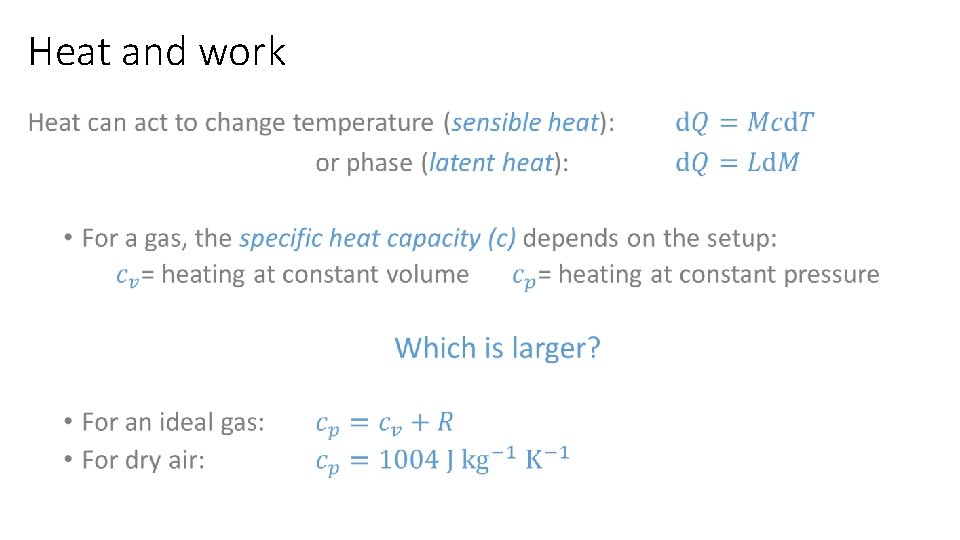
Heat and work •
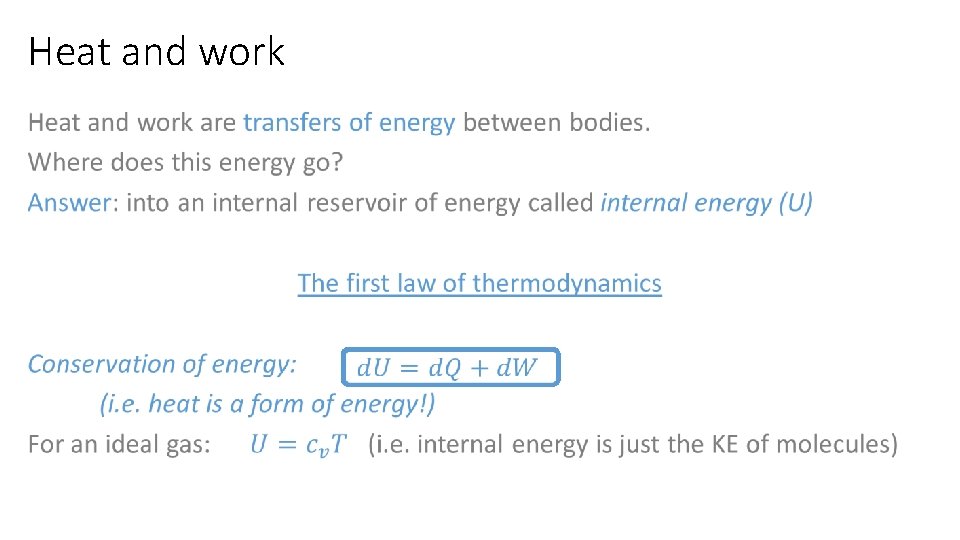
Heat and work •
Outline of this session 1. 2. 3. 4. THEME I: The vertical structure of the atmosphere The ideal gas law Heat and work Adiabatic processes Buoyancy and static stability THEME II: The special role of moisture 5. 6. 7. 8. Latent heat Saturation Stability with moisture The tephigram
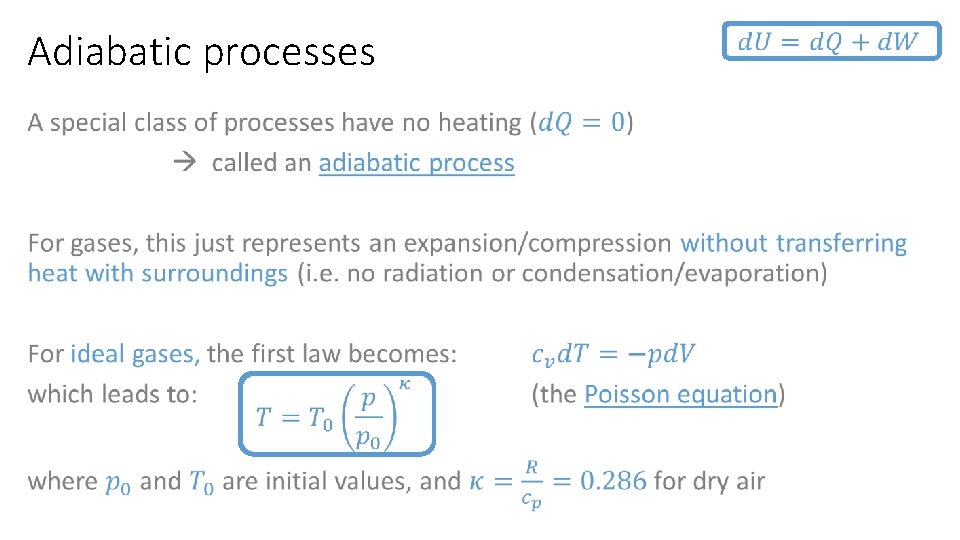
Adiabatic processes •
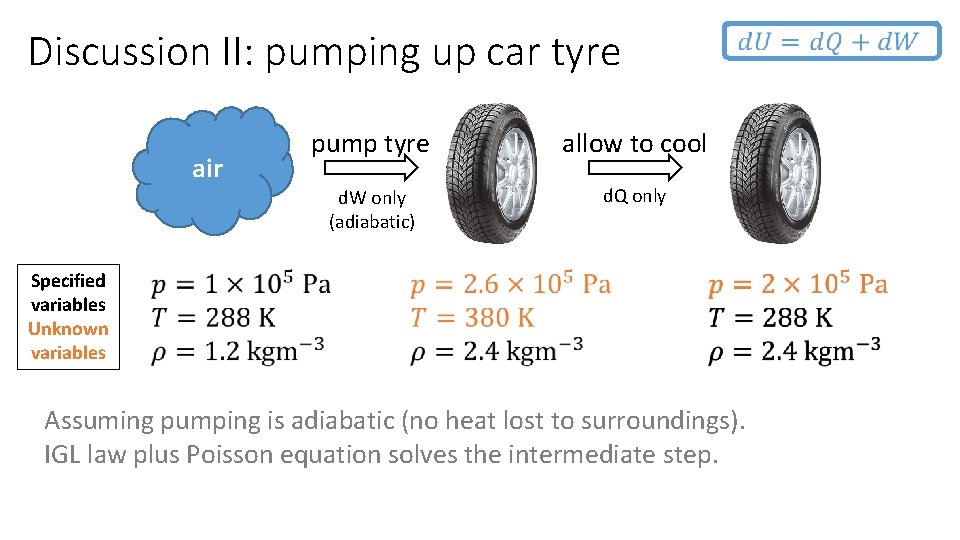
Discussion II: pumping up car tyre air Specified variables Unknown variables pump tyre allow to cool d. W only (adiabatic) d. Q only Assuming pumping is adiabatic (no heat lost to surroundings). IGL law plus Poisson equation solves the intermediate step.
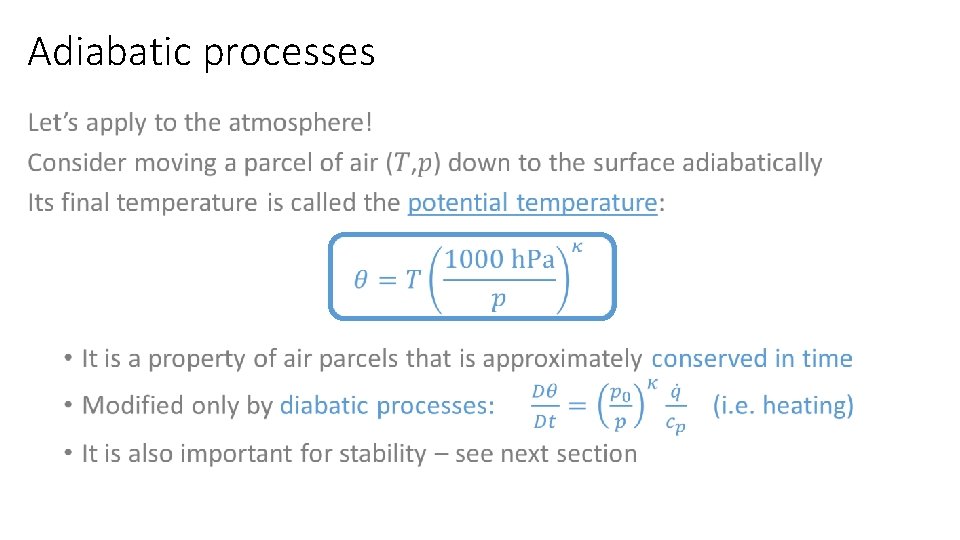
Adiabatic processes •
Outline of this session 1. 2. 3. 4. THEME I: The vertical structure of the atmosphere The ideal gas law Heat and work Adiabatic processes Buoyancy and static stability THEME II: The special role of moisture 5. 6. 7. 8. Latent heat Saturation Stability with moisture The tephigram
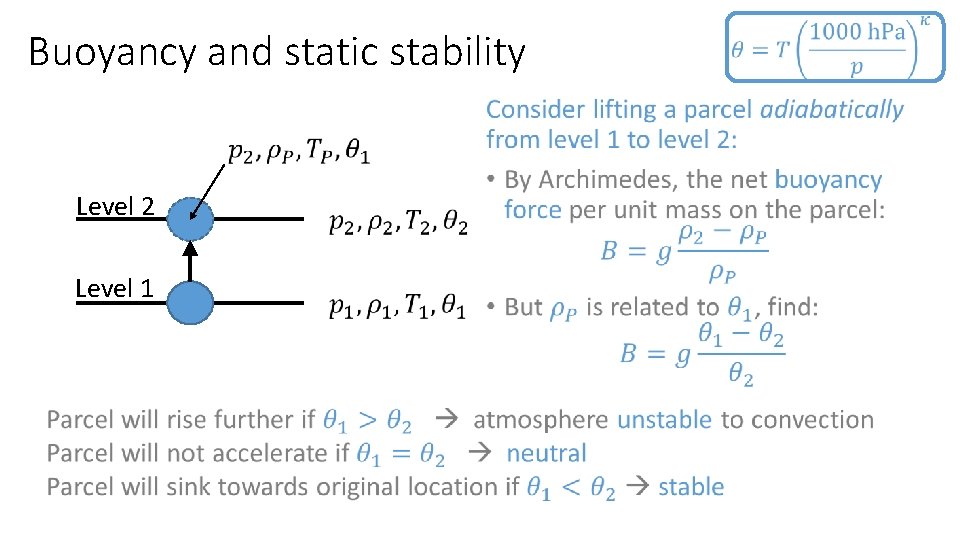
Buoyancy and static stability • Level 2 Level 1
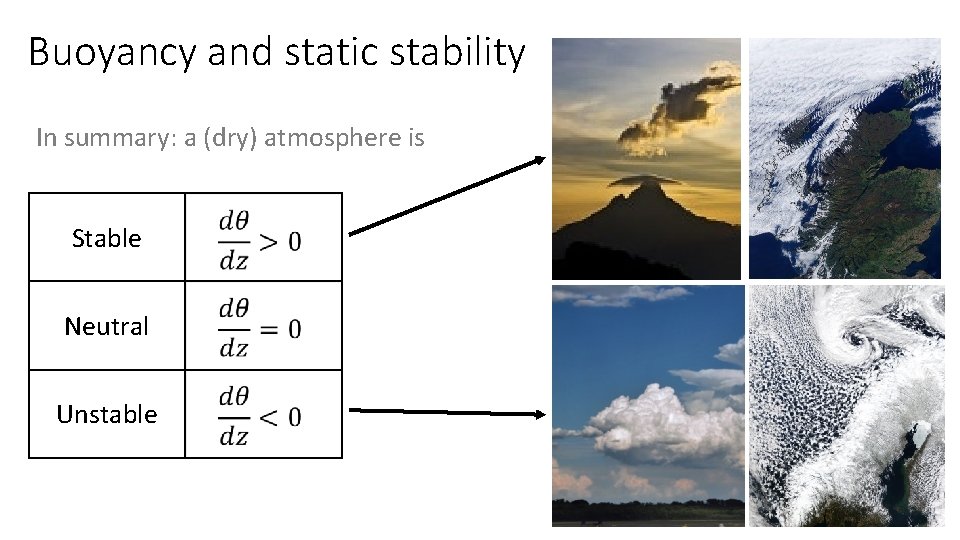
Buoyancy and static stability In summary: a (dry) atmosphere is Stable Neutral Unstable
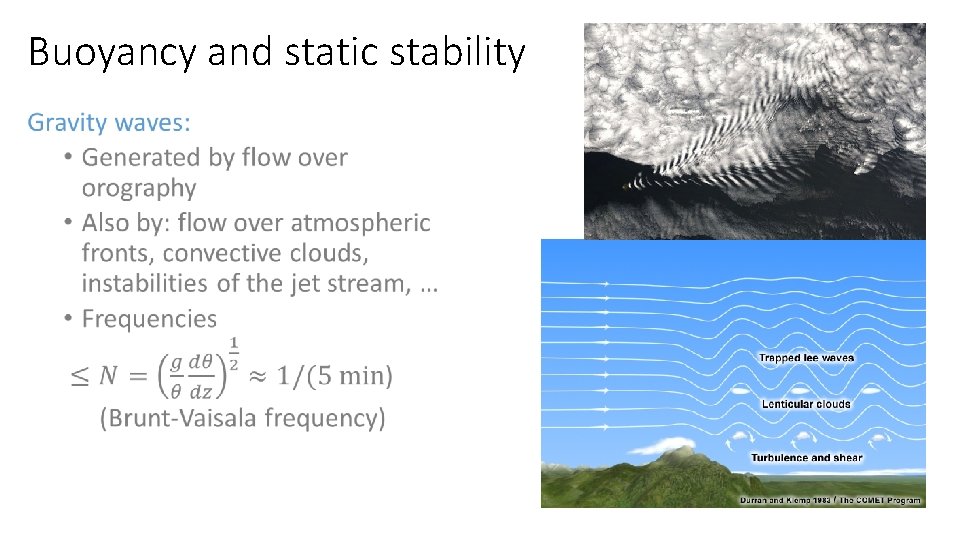
Buoyancy and static stability •
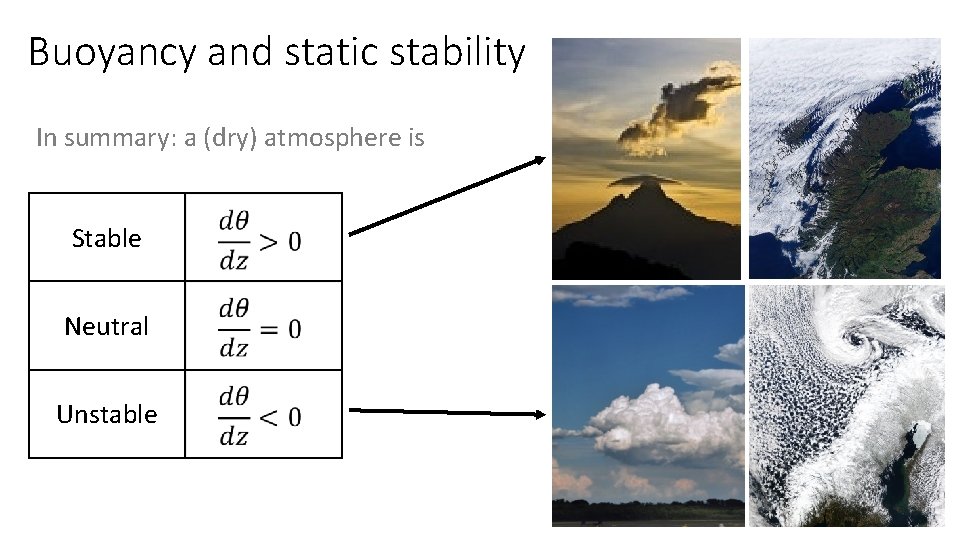
Buoyancy and static stability In summary: a (dry) atmosphere is Stable Neutral Unstable
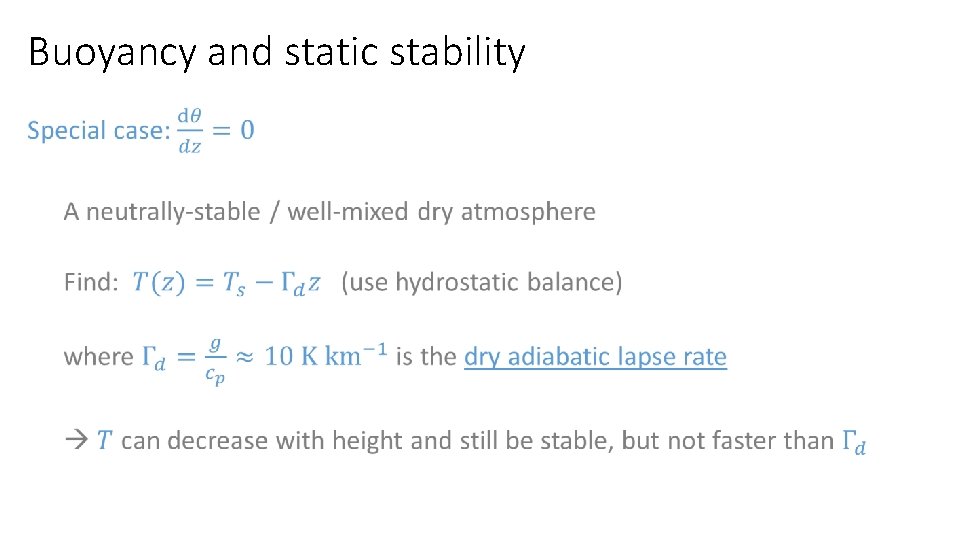
Buoyancy and static stability •
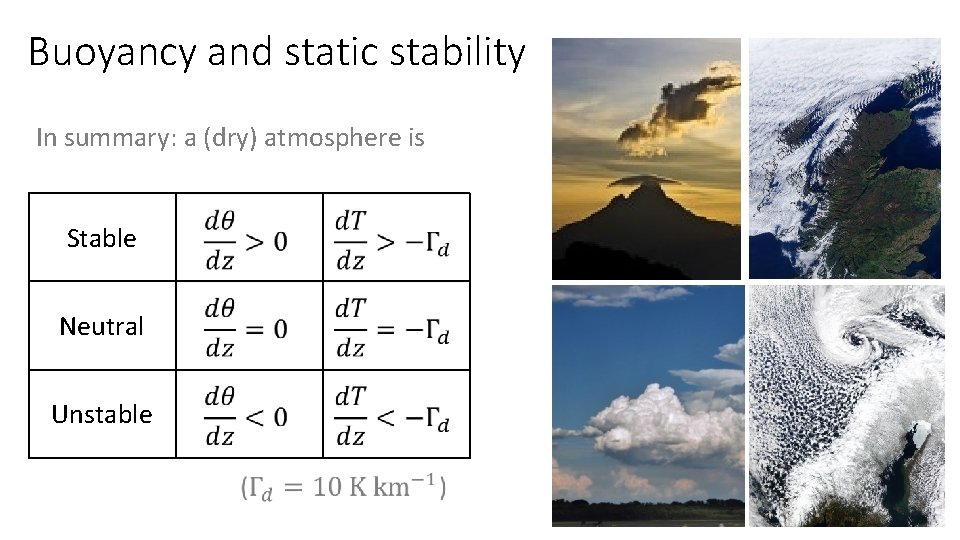
Buoyancy and static stability In summary: a (dry) atmosphere is Stable Neutral Unstable
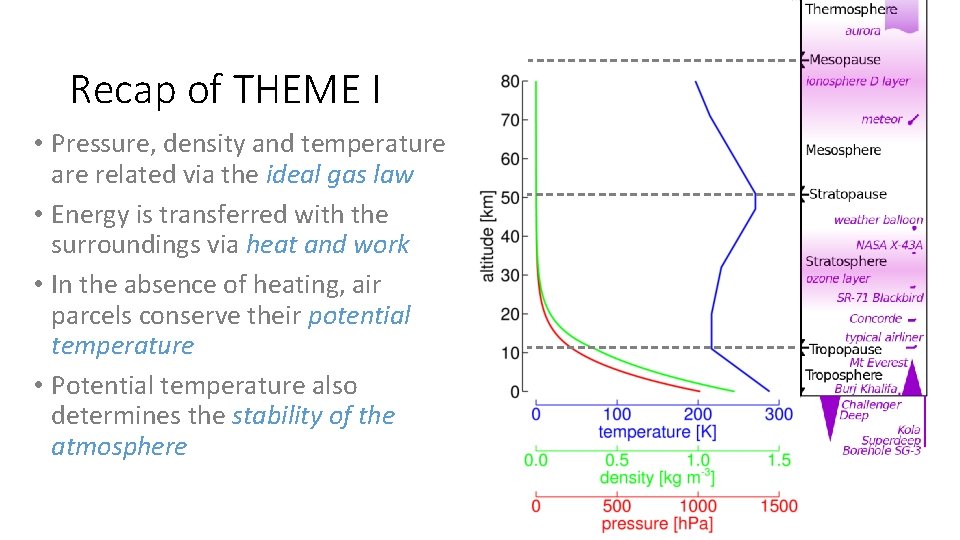
Recap of THEME I • Pressure, density and temperature are related via the ideal gas law • Energy is transferred with the surroundings via heat and work • In the absence of heating, air parcels conserve their potential temperature • Potential temperature also determines the stability of the atmosphere
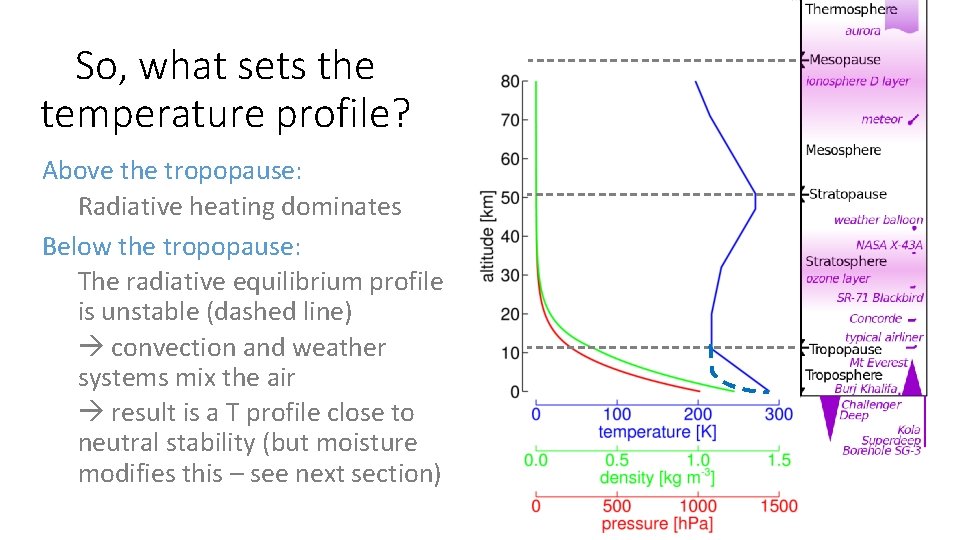
So, what sets the temperature profile? Above the tropopause: Radiative heating dominates Below the tropopause: The radiative equilibrium profile is unstable (dashed line) convection and weather systems mix the air result is a T profile close to neutral stability (but moisture modifies this – see next section)
Outline of this session 1. 2. 3. 4. THEME I: The vertical structure of the atmosphere The ideal gas law Heat and work Adiabatic processes Buoyancy and static stability THEME II: The special role of moisture 5. 6. 7. 8. Latent heat Saturation Stability with moisture The tephigram
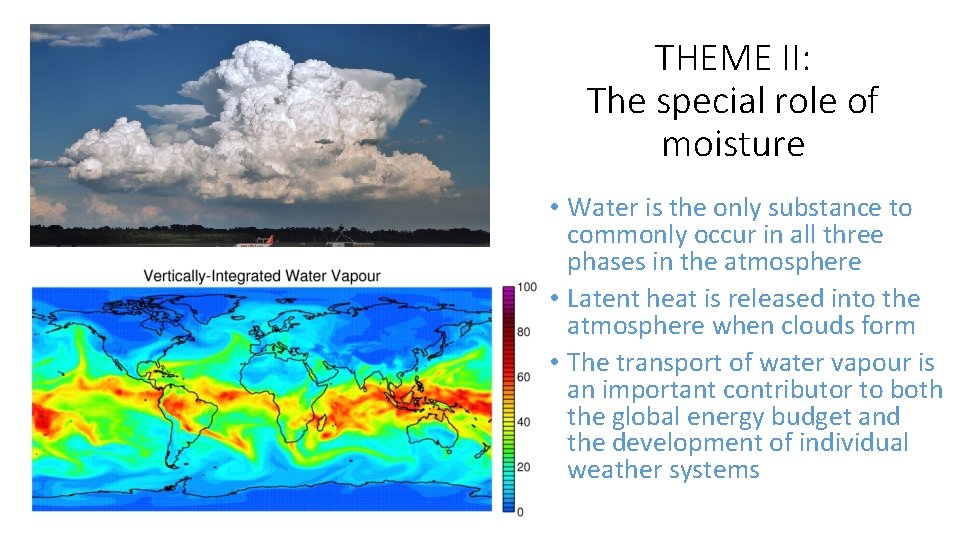
THEME II: The special role of moisture • Water is the only substance to commonly occur in all three phases in the atmosphere • Latent heat is released into the atmosphere when clouds form • The transport of water vapour is an important contributor to both the global energy budget and the development of individual weather systems
Outline of this session 1. 2. 3. 4. THEME I: The vertical structure of the atmosphere The ideal gas law Heat and work Adiabatic processes Buoyancy and static stability THEME II: The special role of moisture 5. 6. 7. 8. Latent heat Saturation Stability with moisture The tephigram
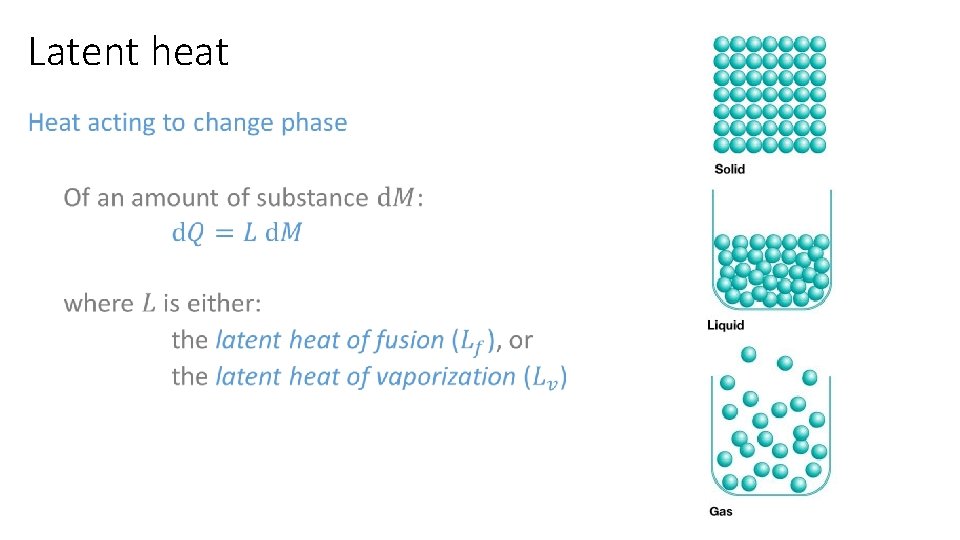
Latent heat •
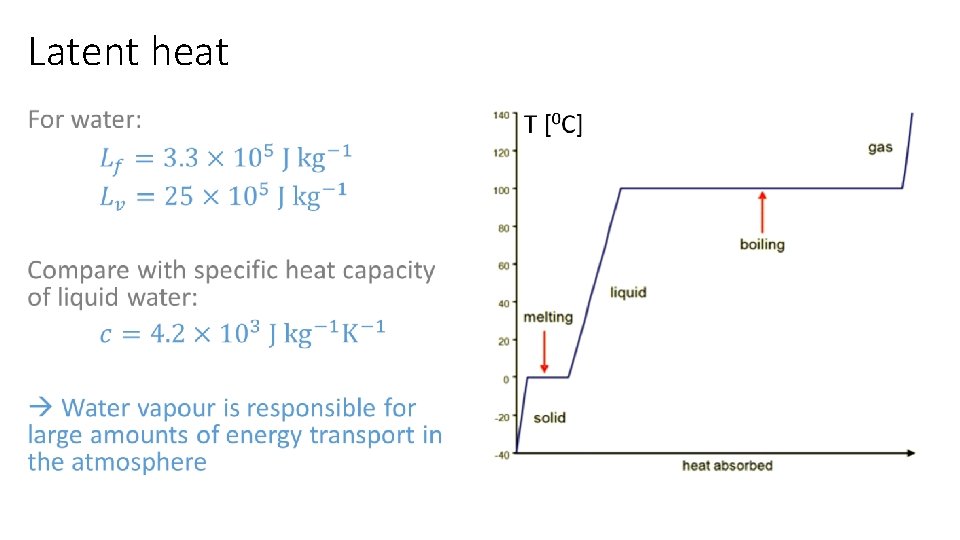
Latent heat •
Outline of this session 1. 2. 3. 4. THEME I: The vertical structure of the atmosphere The ideal gas law Heat and work Adiabatic processes Buoyancy and static stability THEME II: The special role of moisture 5. 6. 7. 8. Latent heat Saturation Stability with moisture The tephigram
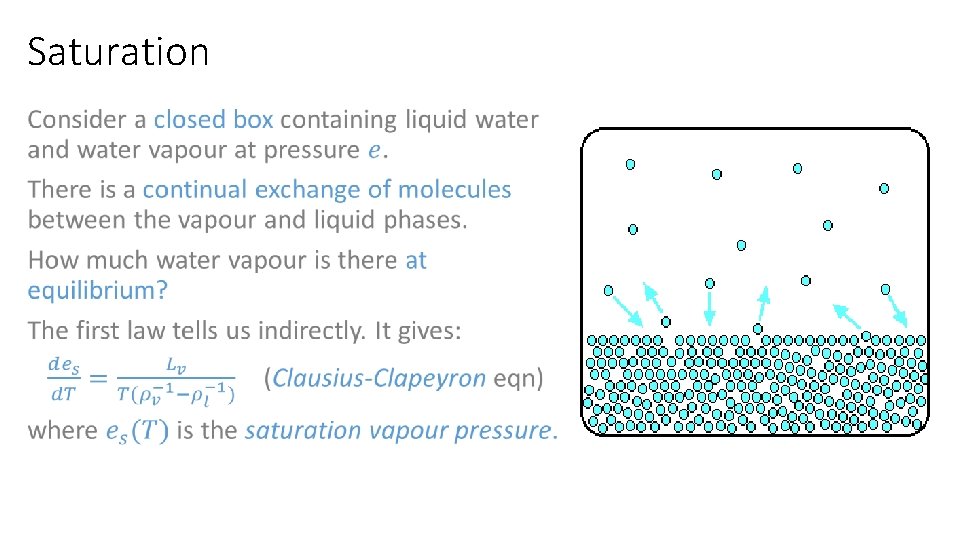
Saturation •
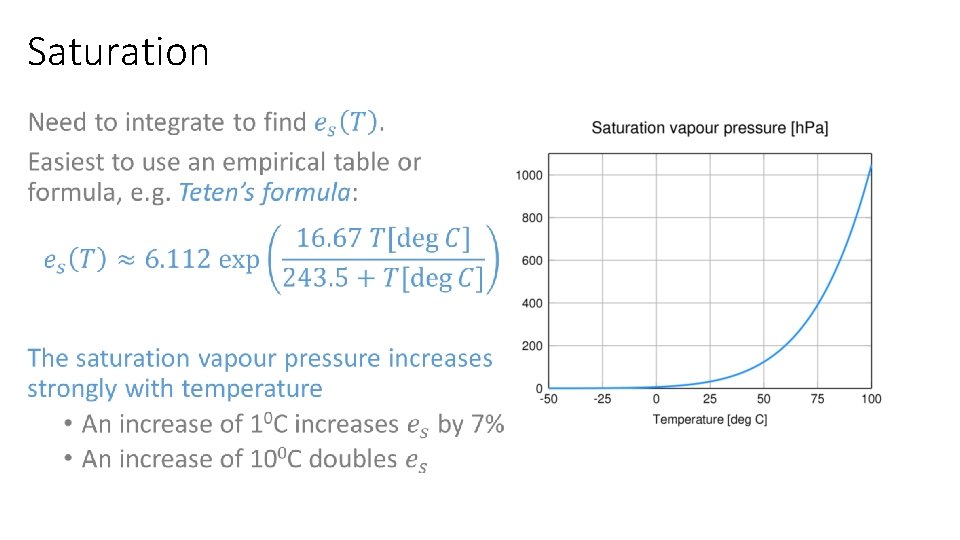
Saturation •
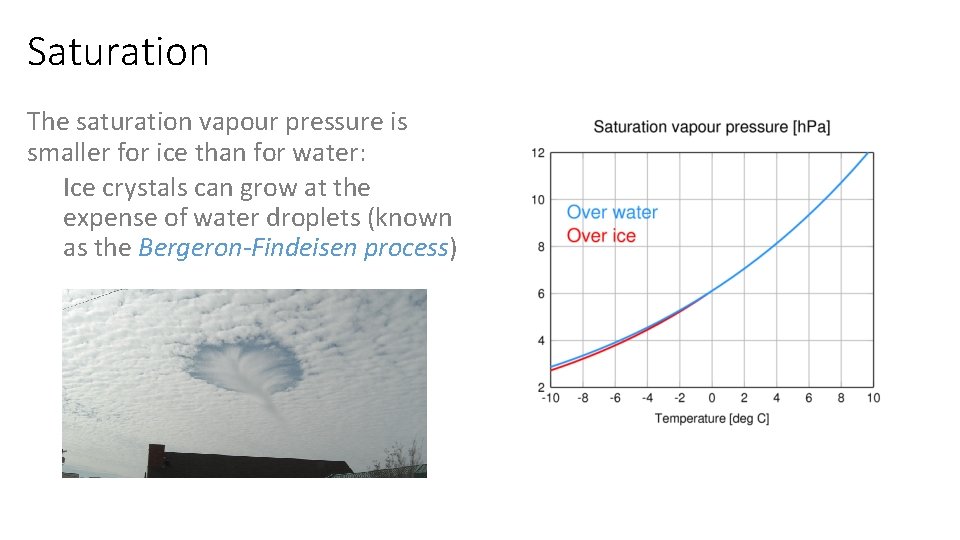
Saturation The saturation vapour pressure is smaller for ice than for water: Ice crystals can grow at the expense of water droplets (known as the Bergeron-Findeisen process)
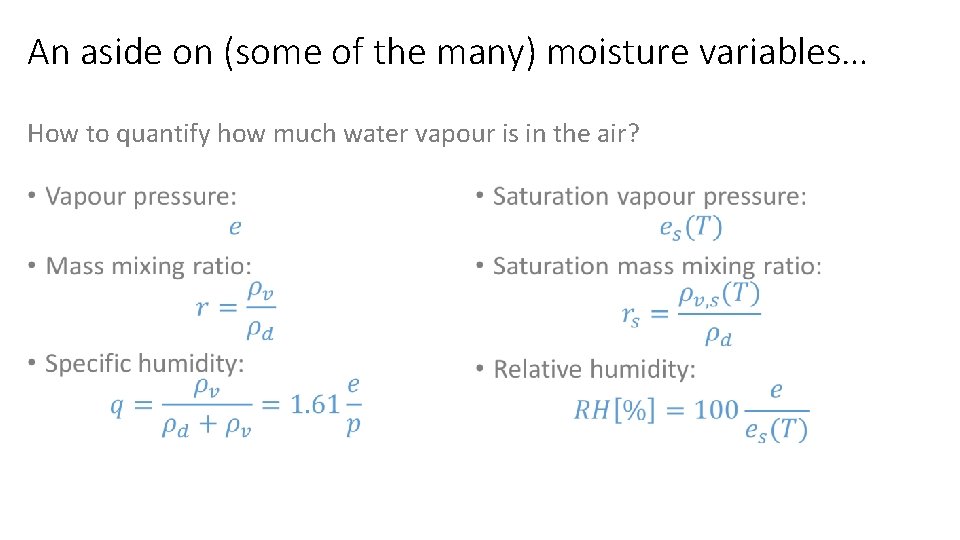
An aside on (some of the many) moisture variables… How to quantify how much water vapour is in the air? • •
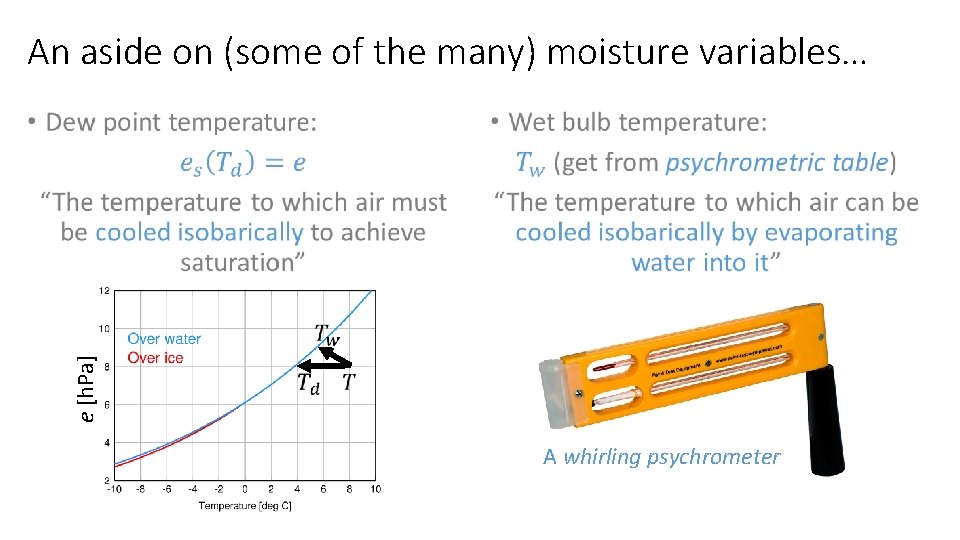
An aside on (some of the many) moisture variables… • • e [h. Pa] A whirling psychrometer
Outline of this session 1. 2. 3. 4. THEME I: The vertical structure of the atmosphere The ideal gas law Heat and work Adiabatic processes Buoyancy and static stability THEME II: The special role of moisture 5. 6. 7. 8. Latent heat Saturation Stability with moisture The tephigram
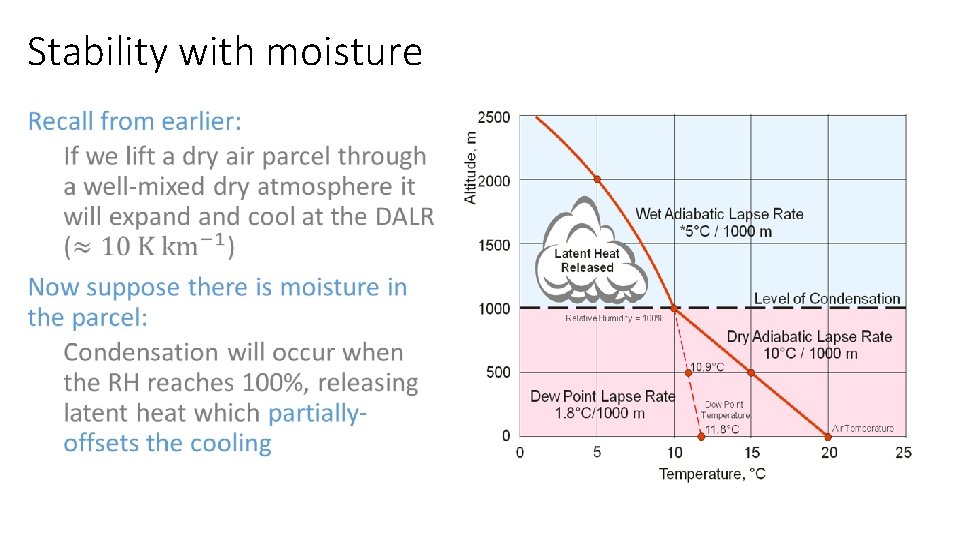
Stability with moisture •
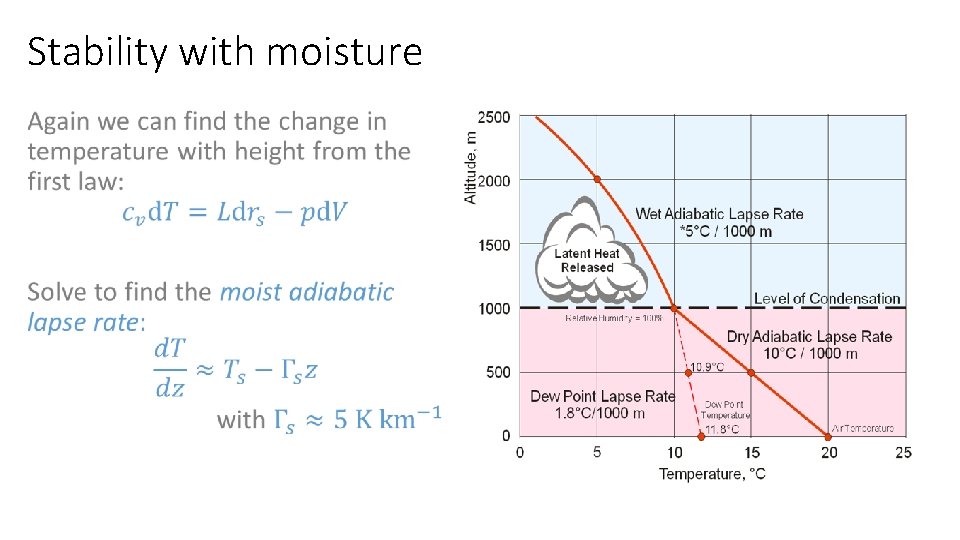
Stability with moisture •
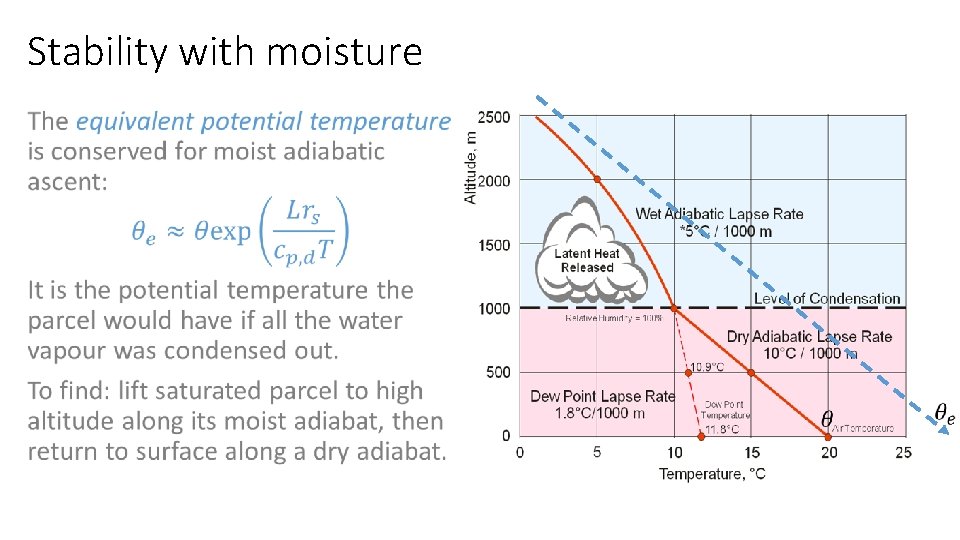
Stability with moisture •
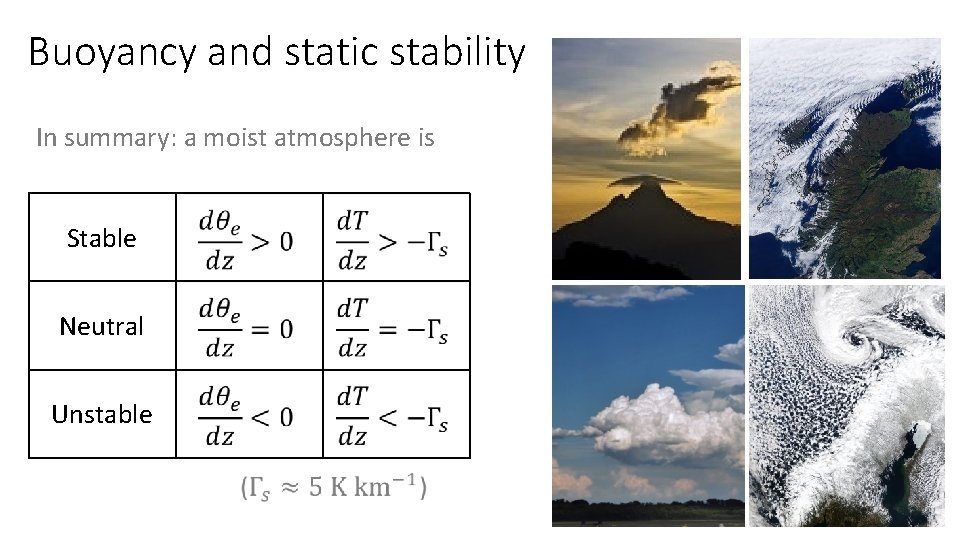
Buoyancy and static stability In summary: a moist atmosphere is Stable Neutral Unstable
Outline of this session 1. 2. 3. 4. THEME I: The vertical structure of the atmosphere The ideal gas law Heat and work Adiabatic processes Buoyancy and static stability THEME II: The special role of moisture 5. 6. 7. 8. Latent heat Saturation Stability with moisture The tephigram
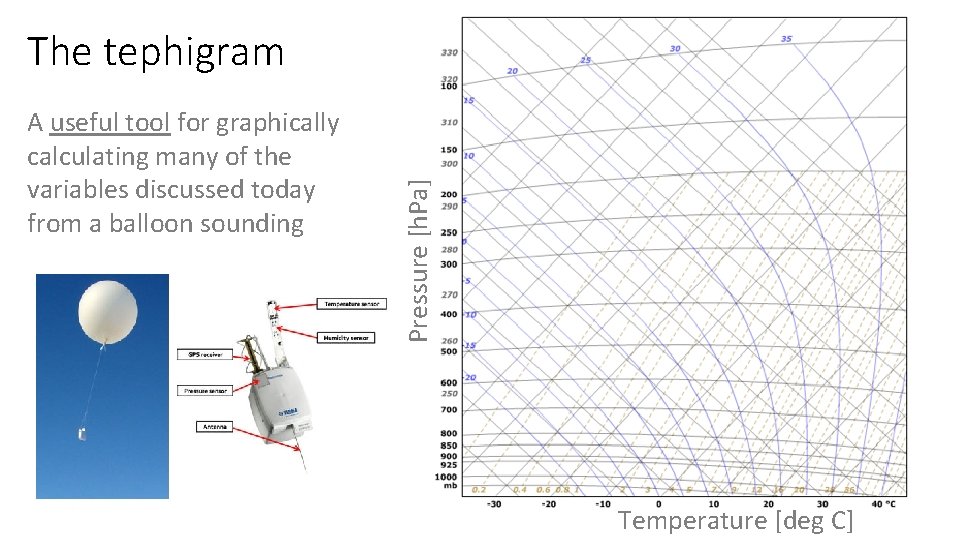
A useful tool for graphically calculating many of the variables discussed today from a balloon sounding Pressure [h. Pa] The tephigram Temperature [deg C]
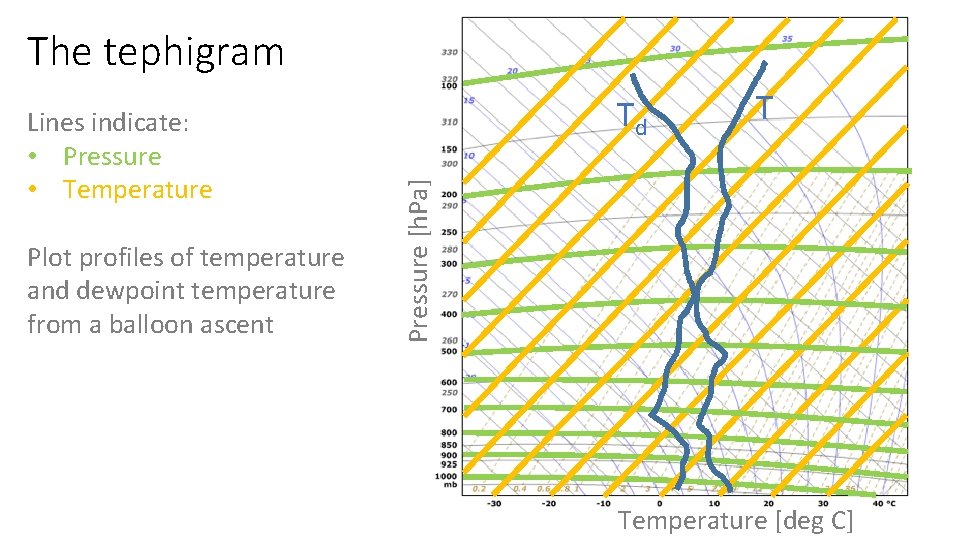
The tephigram Plot profiles of temperature and dewpoint temperature from a balloon ascent Td T Pressure [h. Pa] Lines indicate: • Pressure • Temperature [deg C]
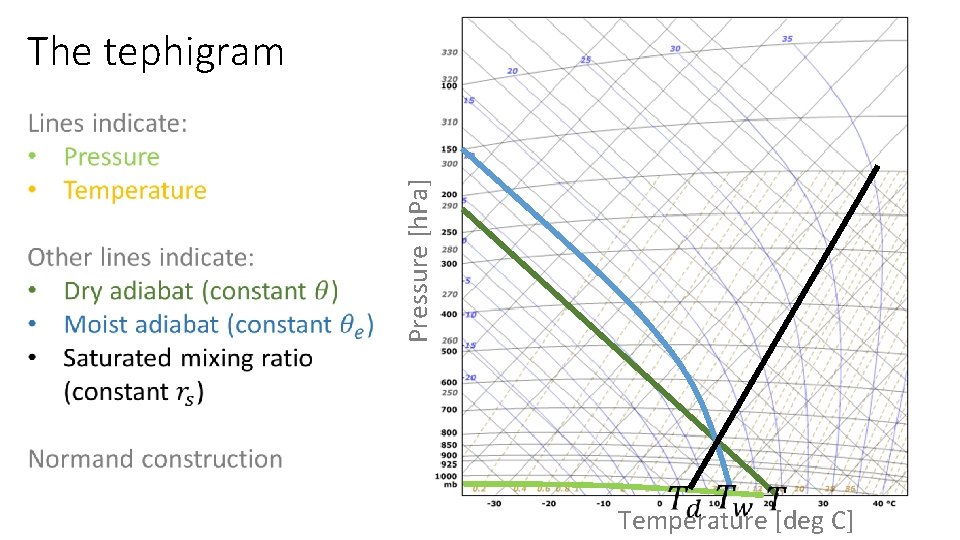
The tephigram Pressure [h. Pa] Temperature [deg C]
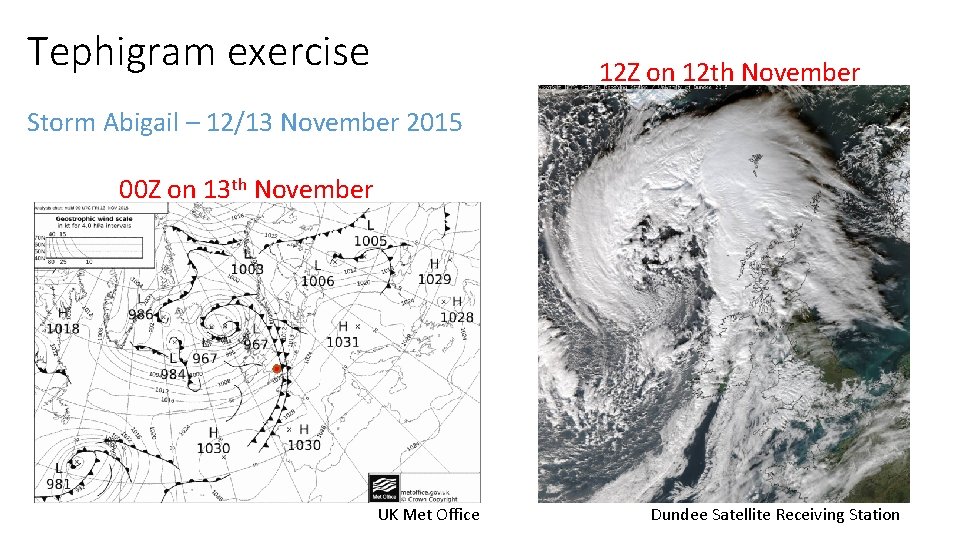
Tephigram exercise 12 Z on 12 th November Storm Abigail – 12/13 November 2015 00 Z on 13 th November UK Met Office Dundee Satellite Receiving Station
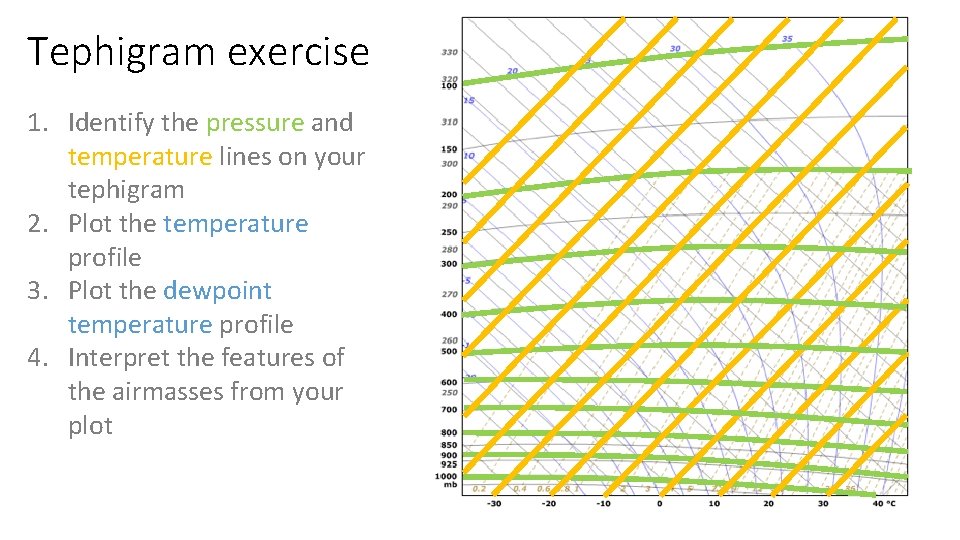
Tephigram exercise 1. Identify the pressure and temperature lines on your tephigram 2. Plot the temperature profile 3. Plot the dewpoint temperature profile 4. Interpret the features of the airmasses from your plot
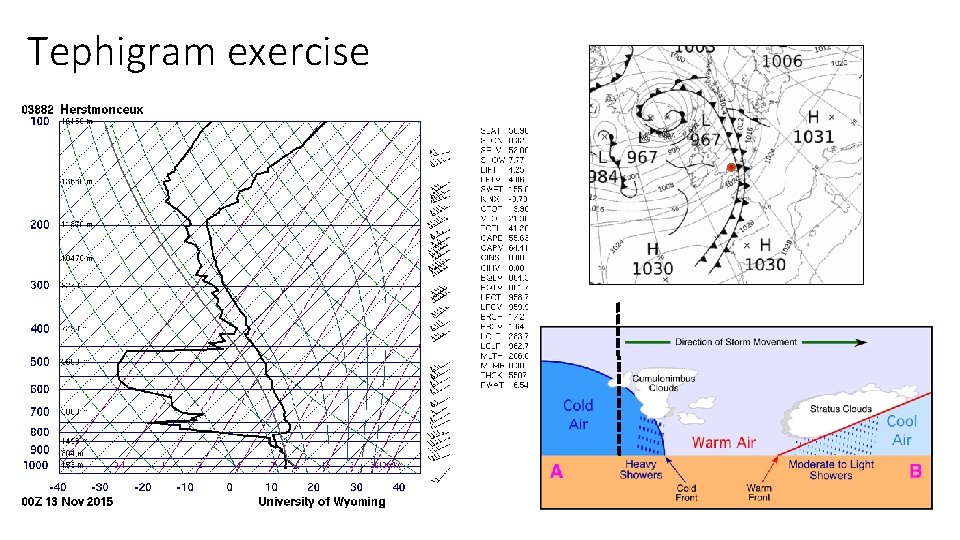
Tephigram exercise
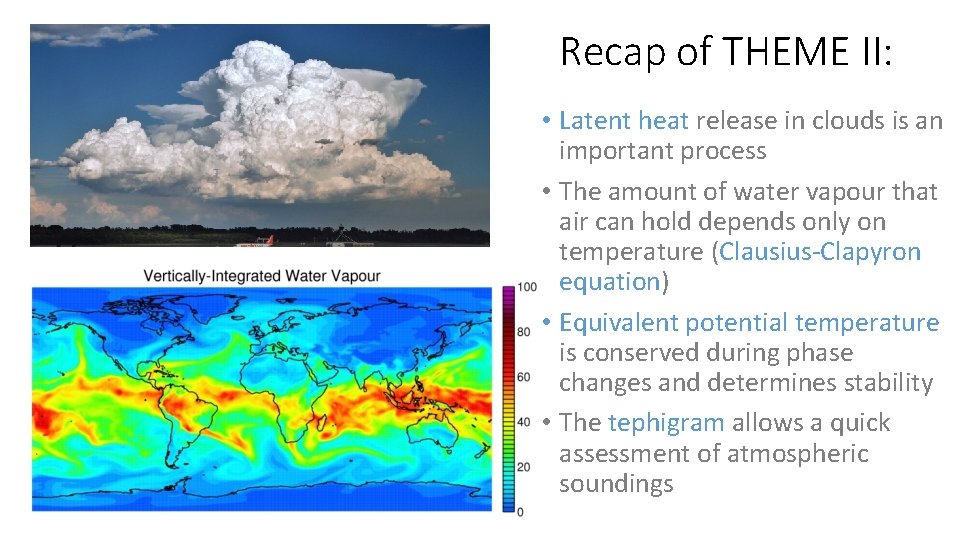
Recap of THEME II: • Latent heat release in clouds is an important process • The amount of water vapour that air can hold depends only on temperature (Clausius-Clapyron equation) • Equivalent potential temperature is conserved during phase changes and determines stability • The tephigram allows a quick assessment of atmospheric soundings
The end! Any questions?

Extra slides…
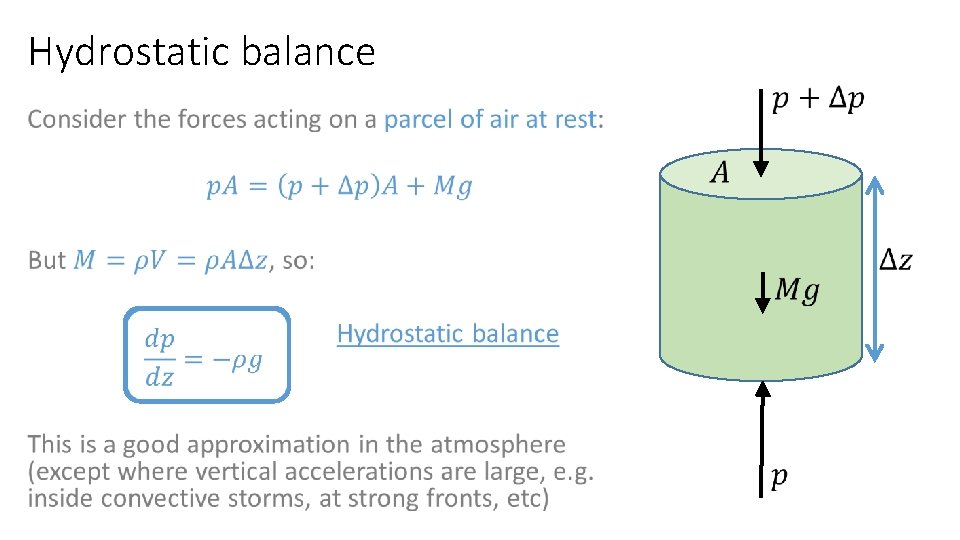
Hydrostatic balance •
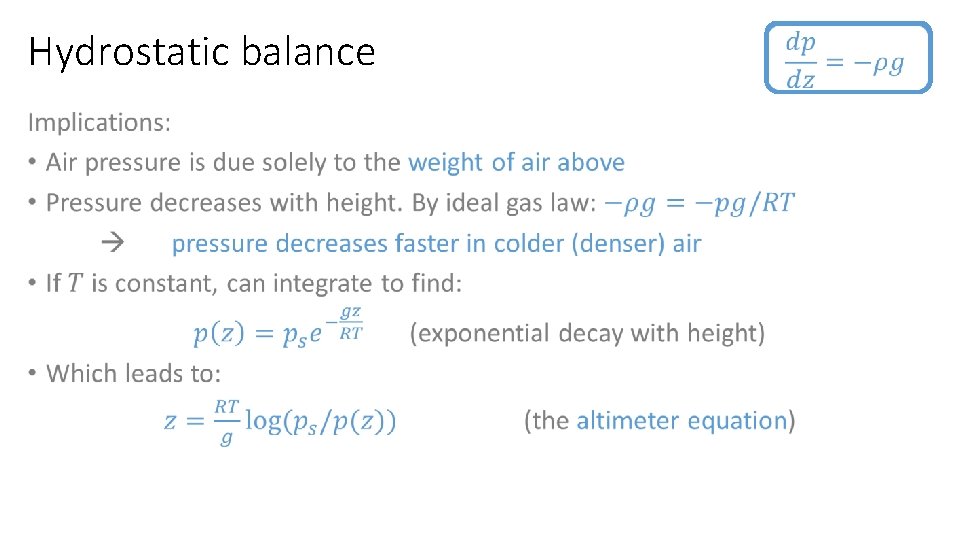
Hydrostatic balance •
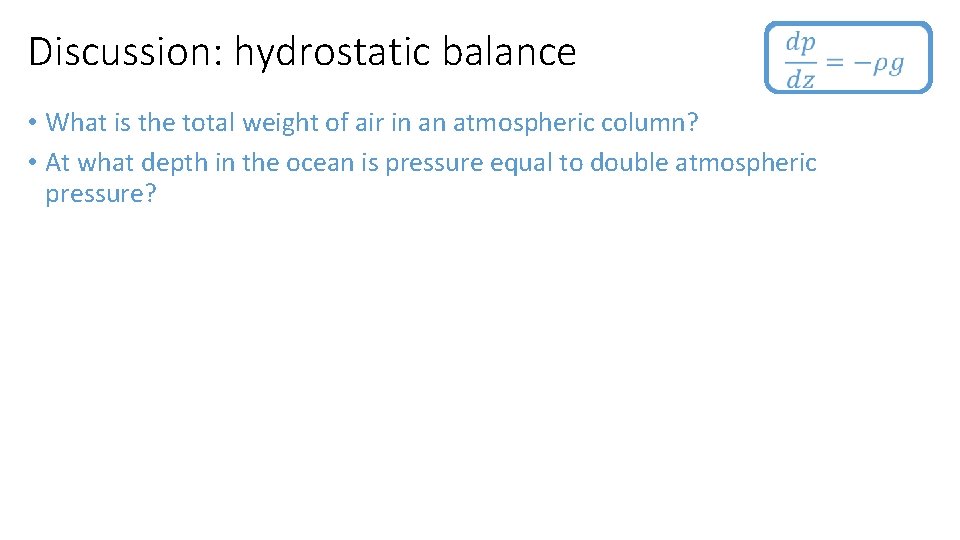
Discussion: hydrostatic balance • What is the total weight of air in an atmospheric column? • At what depth in the ocean is pressure equal to double atmospheric pressure?
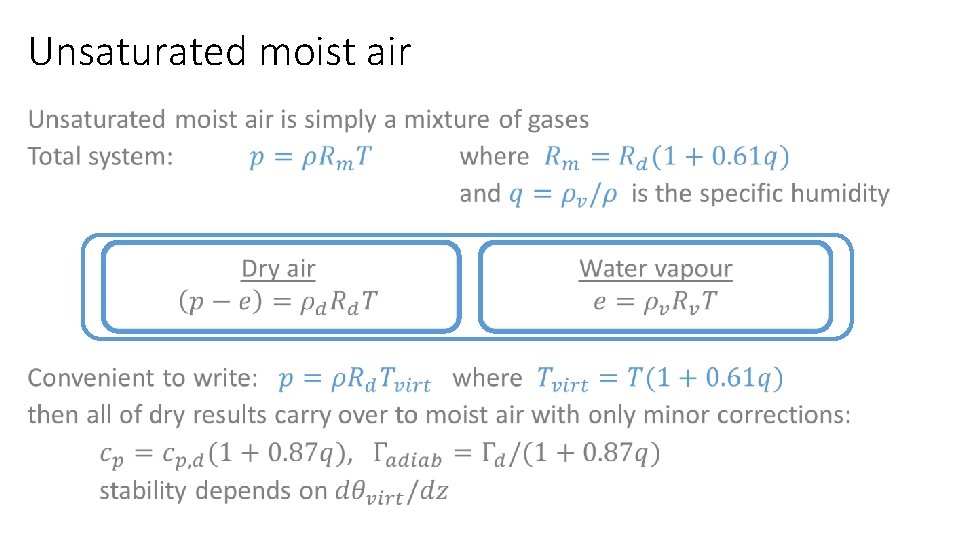
Unsaturated moist air •
- Slides: 63