
Atmospheric Stability and the SkewTLogP Diagram Adapted from
Atmospheric Stability and the Skew-T/Log-P Diagram Adapted from Material Produced At COMET for their Residence Course in Hydrometeorology 1
Atmospheric Stability • Stable versus Unstable • Dry and Moist Adiabatic Processes • Skew-T Log-P Diagrams 2
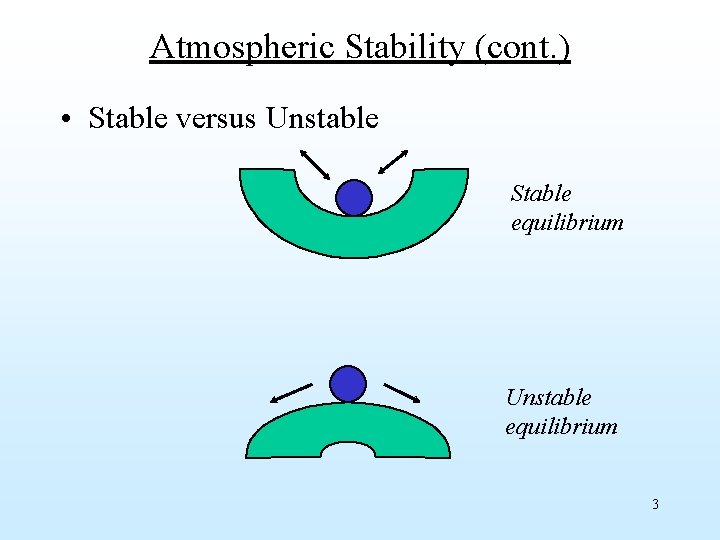
Atmospheric Stability (cont. ) • Stable versus Unstable Stable equilibrium Unstable equilibrium 3
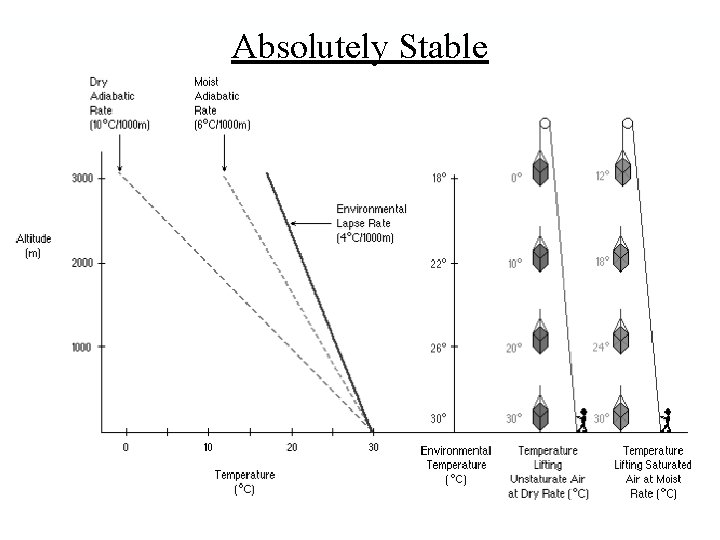
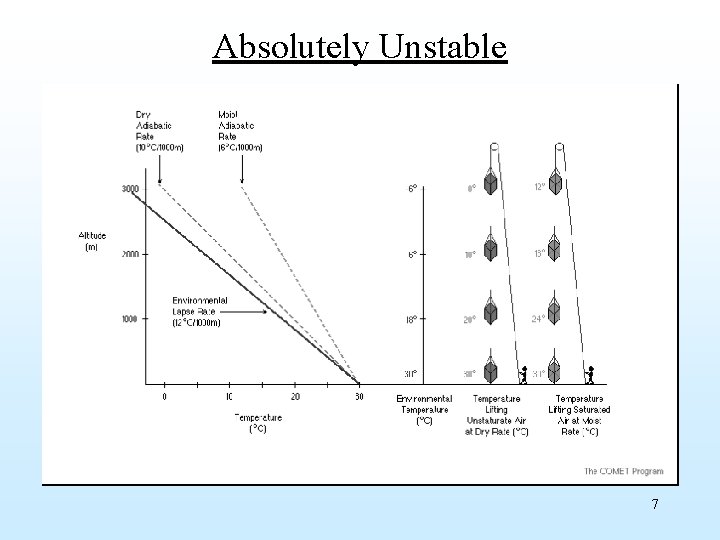
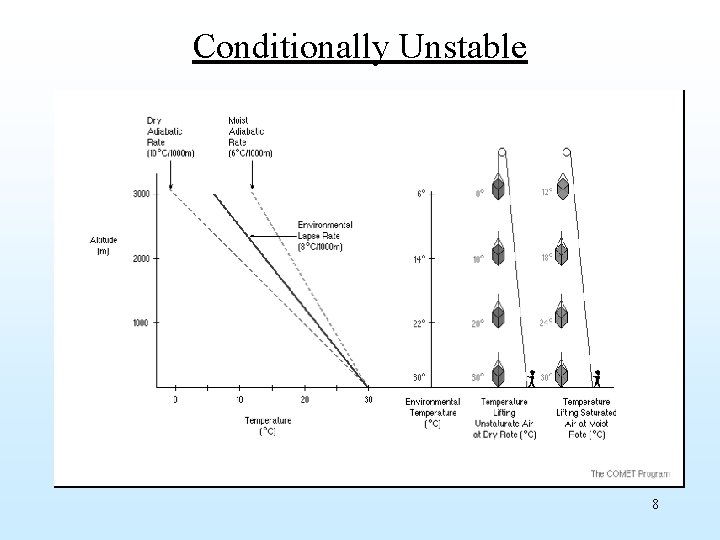
Atmospheric Stability (cont. ) • Adiabatic Processes – Parcel of air expands and cools, or compresses and warms, with no interchange of heat with the surrounding environment – An adiabatic process is reversible • If the parcel doesn’t saturate, then cooling or warming occurs at the dry adiabatic lapse rate – Constant in our atmosphere 10 o. C / km 4
Atmospheric Stability (cont. ) • If the parcel does saturate and ascent is occurring. . . – Condensation (RH = 100%), Latent Heat is released – Latent Heating offsets some of the cooling – Cooling at slower rate: moist adiabatic lapse rate – Not constant, varies with temperature and moisture Average value ~ 6 o. C / km – Not reversible (heat added, moisture probably removed) • Pseudo-adiabatic process 5
Absolutely Stable 6
Absolutely Unstable 7
Conditionally Unstable 8
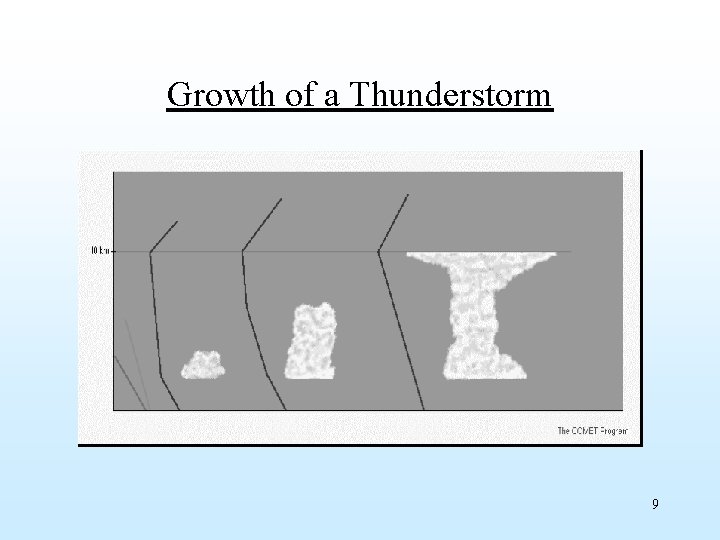
Growth of a Thunderstorm 9
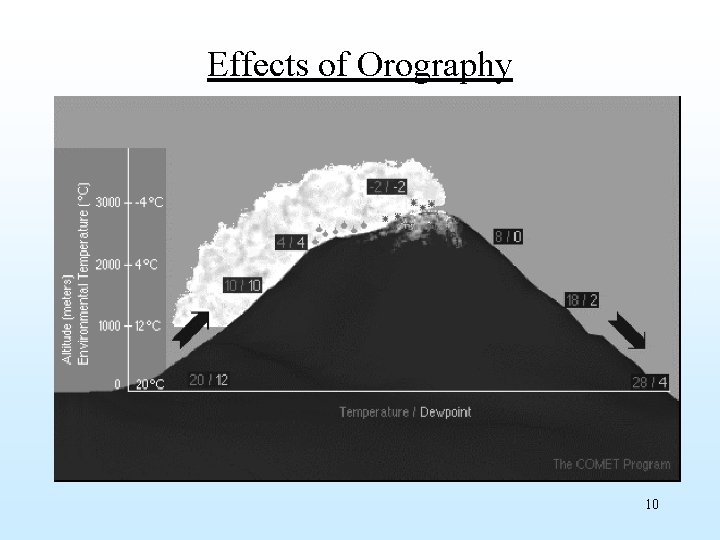
Effects of Orography 10
Atmospheric Stability & Clouds • Stability – Parcel Theory • Characteristics – Expands and Contracts Freely – Remains in as a single unit – No heat exchange with the outside air (Adiabatic) • Adiabatic Process – Expands when lifted due to lessening pressure » Molecular action slows (decreasing kinetic) » Cools at a steady rate – Compresses when forced down » Molecular action increases (increasing kinetic) » Warms at a steady rate 11
Atmospheric Stability & Clouds • Lapse Rate – Dry Adiabatic Lapse Rate (DALR) – Unsaturated air » 10°C per 1000 meters or 5. 5°F per 1000 ft – Moist Adiabatic Lapse Rate (MALR or WALR) – Saturated » 6°C per 1000 meters or 3. 3°F per 1000 ft – Effects » As a dry air parcel rises, it cools at the DALR until it reaches its dewpoint and becomes saturated. If parcel continues to rise, then it will cool at the MALR. » As an air parcel sinks, it warms at the DALR due to compressional heating. If the parcel is moist, then it will warm at the MALR for a very short distance and then warm at the DALR for the rest of the sinking moition. 12
Atmospheric Stability & Clouds • Stability Determinations – Environmental Lapse Rate (ELR) • Not constant – takes into account the lack of conduction the higher you go up • Obtained from a weather balloon sounding – Absolutely stable • Actual sounding temp profile is warmer than the parcel’s temperature. • Parcel is cooler than environment, so it sinks • ELR < MALR…. . Why? – A higher lapse rate yields a cooler temp – Causes » Radiational Cooling, Cold Air Advection, Air Crossing a Cold Surface, Sinking (warming) air at upper levels 13
Atmospheric Stability & Clouds – Neutral Stability • ELR is equal to the DALR or ELR = MALR • Parcel temp the same as the environmental temp – Absolutely Unstable • Actual sounding temp cooler than the parcel temp • Parcel is warmer than the environment around it so it wants to keep rising • ELR > DALR – Conditional Stability • When the environmental temp is between the dry parcel temp and the moist parcel temp • If parcel is unsaturated: then stable • If parcel is saturated: then unstable 14
Atmospheric Stability & Clouds • Causes of Instability – Daytime heating – Warm air advection – Air moving over a warm surface (conduction) – Cold air advection aloft – Turbulent mixing of atmospheric layers • Can produce an unstable layer – Lifting a layer of air • Convective lifting causes air to cool at the DALR • Other Lifting mechanisms – Fronts (cold air is more dense and forces warm air up) – Mountains (orographic lifting) 15
Atmospheric Stability & Clouds • Cloud Development – Mechanisms • • Surface Heating – Free Convection Topography Convergence of Surface Air Fronts – Process • Ground heated by radiation • Thermal Forms (Convective Updraft) – Air in contact with warmest ground is warmer and therefore less dense than surrounding air » Air rises…. . it cools as it rises…. it expands due to lessening pressure acting on it. 16
Atmospheric Stability & Clouds – Parcel of air reaches saturation at some height level » Lifted Condensation Level (LCL) » Cloud droplet formation – Air cools enough so that it is cooler than the surrounding air…. . air parcel sinks outside of the cloud » Sets up a Convection Cell or Convective Current • Assumptions – No Mixing between rising air (air parcel) and surroundings (environment) – One thermal updraft = only one cumulus cloud – Cloud forms at 100% Relative Humidity (saturation) – Rising air inside the cloud remains saturated • Entrainment: Mixing of air originally outside of the cloud with saturated air inside the cloud – If outside air is dry: droplets evaporate…. cooling process 17
Atmospheric Stability & Clouds – Lifting by Elevation: Topographic • Orographic – Pronounced uplift on the windward side of a mountain » Responsible for cloudy, wet conditions – Sinking on the Leeward Side » Produces a Rain Shadow effect » Desert-like conditions – Large-Scale Ascending Air • Usually associated with large cyclonic low pressure storms • Cold fronts force warm, moist air to rise over it – Estimating Cumulus Cloud Heights • Use convective cloud height diagram (p. 177) 18
Skew-T Log-P Diagram • Convenient way to look at the vertical structure of the atmosphere • Determine unreported meteorological quantities • Assess parcel stability • Used to display observations or model output • Developed by the U. S. Air Force 19
Skew-T Log-P Diagram (cont. ) • Basic Definitions – mixing ratio (w) • mass of vapor to mass of dry air – saturation mixing ratio (ws) • maximum for a given T and P – wet-bulb temperature (Tw) • equilibrium T when water evaporates from a wetted-bulb thermometer at a rate where latent heat lost is balanced by flow of heat from surrounding warmer air – potential temperature ( ) • temperature of air if brought dry-adiabatically to 1000 mb – vapor pressure (e) • partial pressure of water vapor 20
Skew-T Log-P Diagram (cont. ) • Basic Definitions (cont. ) – virtual temperature (Tv) • temperature dry air at pressure P would have so its density equals that of a moist parcel at T and P – dew point temperature (Td) • temperature of a parcel cooled to saturation at constant P – relative humidity • 100 x (mixing ratio / saturation mixing ratio) – specific humidity (q) • mass of vapor to mass of moist air (nearly the same as mixing ratio) – equivalent temperature (Te) • temperature air would have if all of its latent heat were released 21
Skew-T Log-P Diagram (cont. ) • Basic Definitions (cont. ) – equivalent potential temperature ( e) • temperature of a parcel if all moisture condensed out (latent heat released) then the parcel brought dry-adiabatically to 1000 mb – Convective condensation level (CCL) • Height where rising parcel just becomes saturated (condensation starts) – Convective temperature (Tc) • T that must be reached for a surface parcel to rise to CCL – Lifting condensation level (LCL) • Height where parcel becomes saturated by lifting dry-adiabatically – Level of free convection (LFC) • Height where parcel lifted dry-adiabatically until saturated, then moist-adiabatically, first becomes warmer than the surrounding air 22
Skew-T Log-P Diagram (cont. ) • Basic Definitions (cont. ) – Positive area (or CAPE) • Area between the sounding and the moist adiabat that intersects the CCL, above the CCL. Proportional to the amount of energy the parcel gains from the environment. – Negative area (or CIN) • Area between the sounding and the dry adiabat that intersects the CCL, below the CCL. Proportional to the energy needed to move the parcel. – Equilibrium level (EL) • Height where the temperature of a buoyant parcel again becomes equal to the temperature of the environment. – Wet bulb zero • Height above ground where the wet bulb first reaches zero degrees Celsius. This is the level where hail will begin to melt. 23
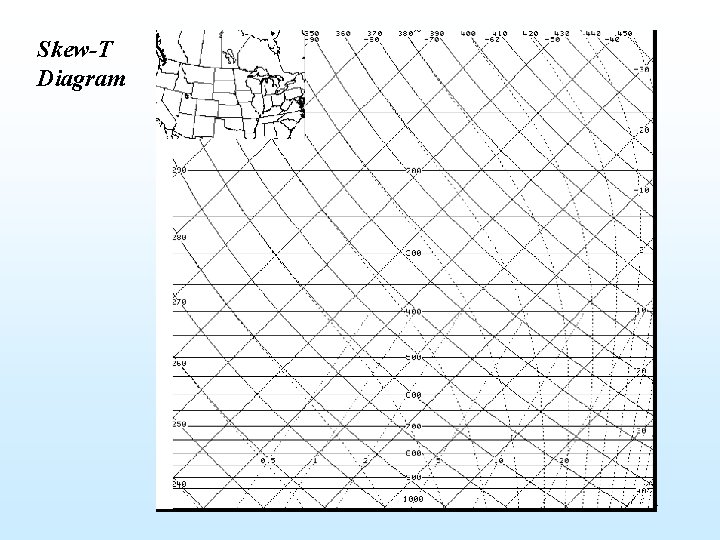
Skew-T Diagram 24
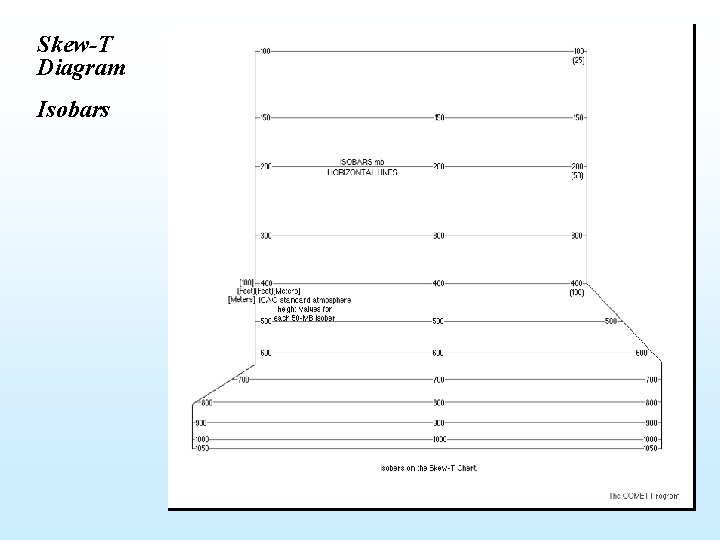
Skew-T Diagram Isobars 25
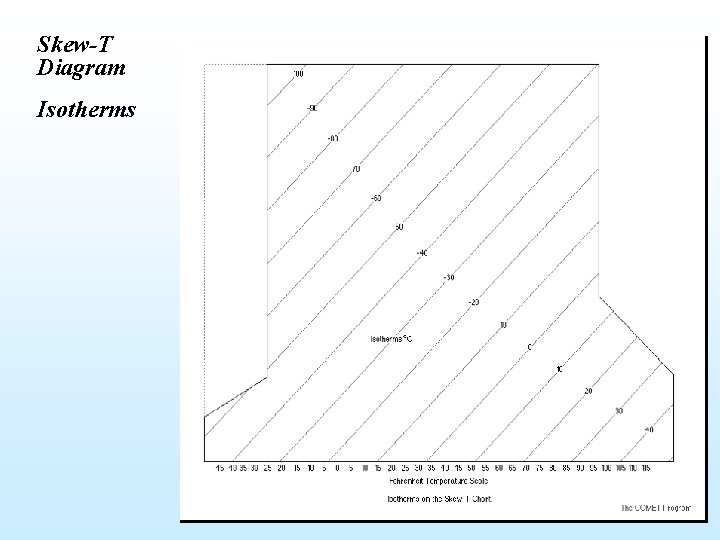
Skew-T Diagram Isotherms 26
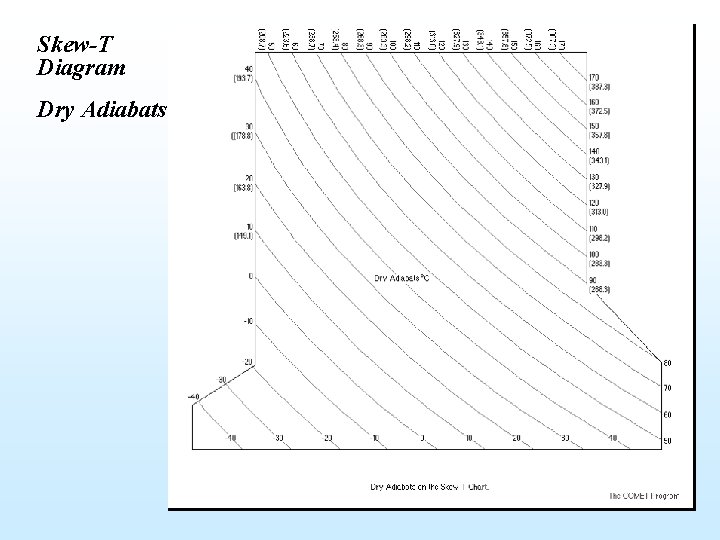
Skew-T Diagram Dry Adiabats 27
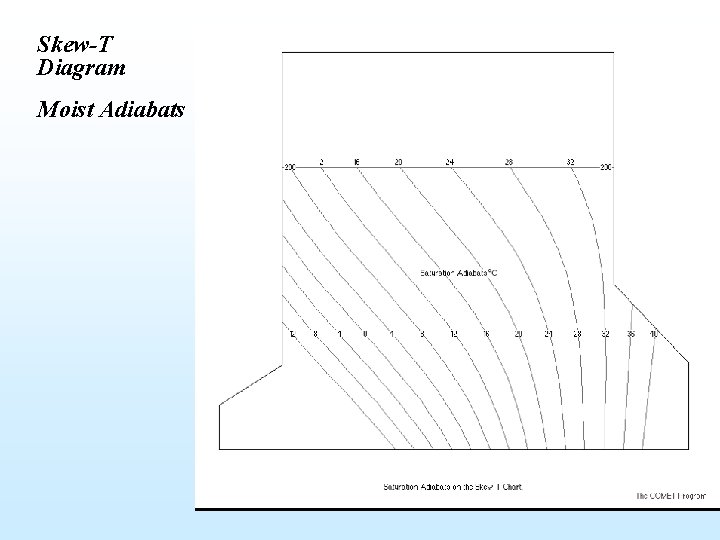
Skew-T Diagram Moist Adiabats 28
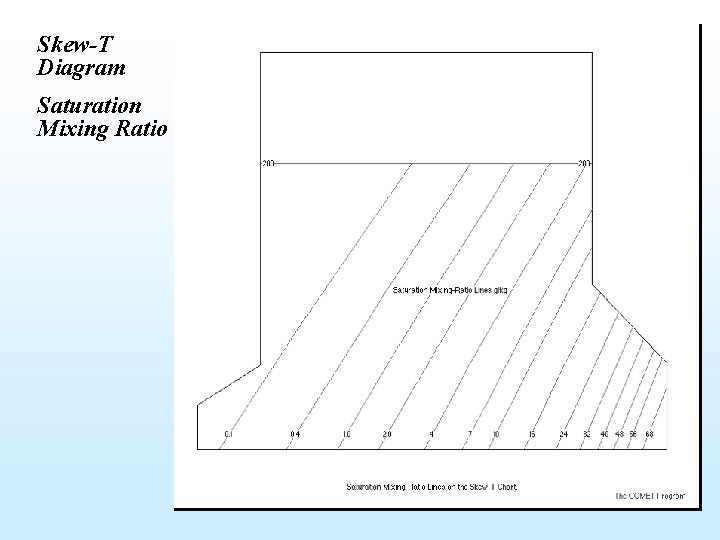
Skew-T Diagram Saturation Mixing Ratio 29
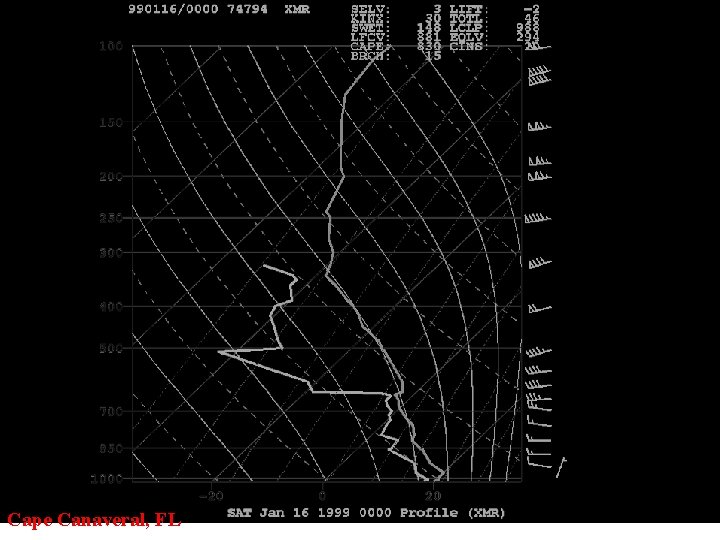
Cape Canaveral, FL 30
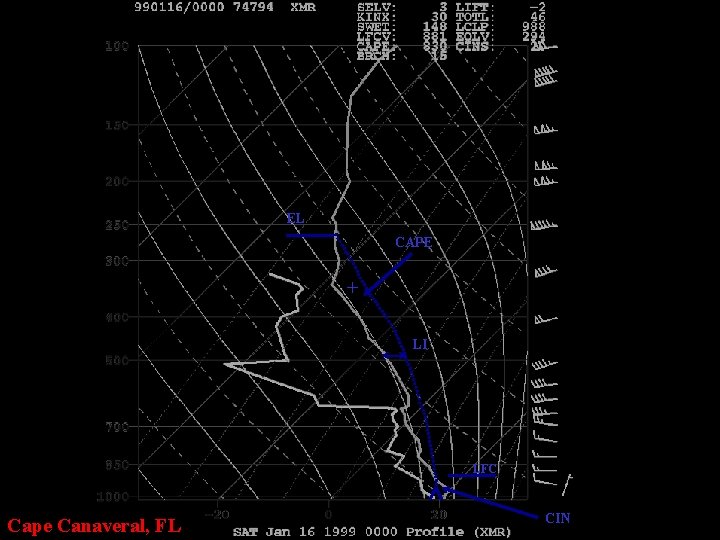
EL CAPE + LI LFC Cape Canaveral, FL CIN 31
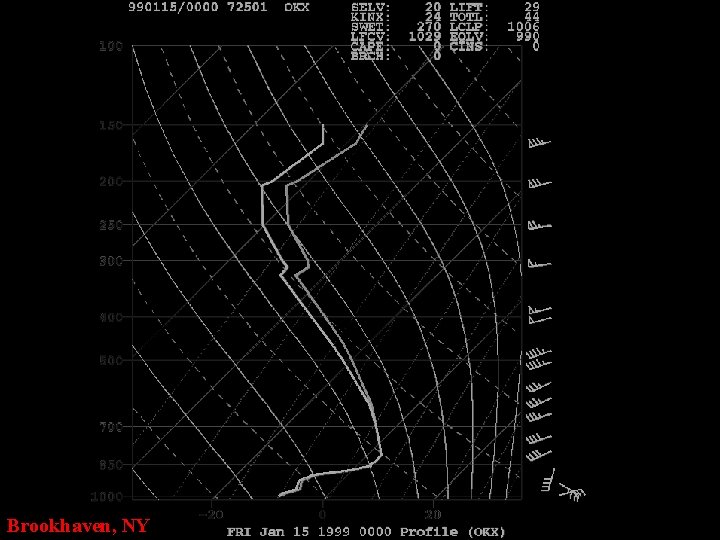
32 Brookhaven, NY
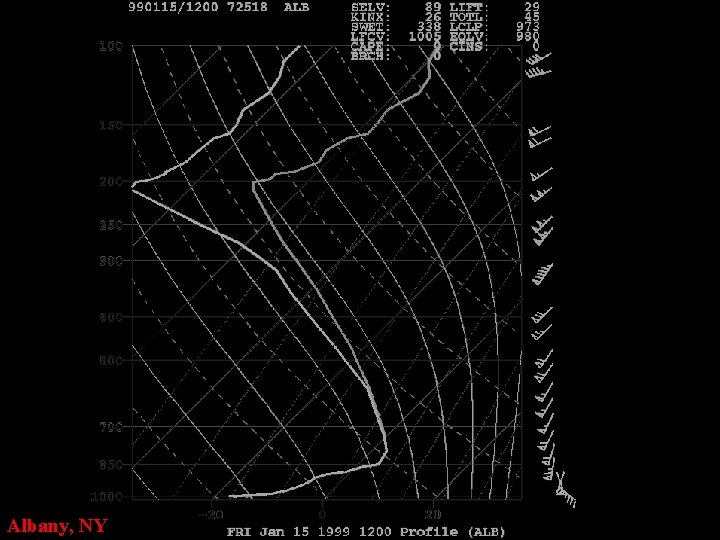
33 Albany, NY
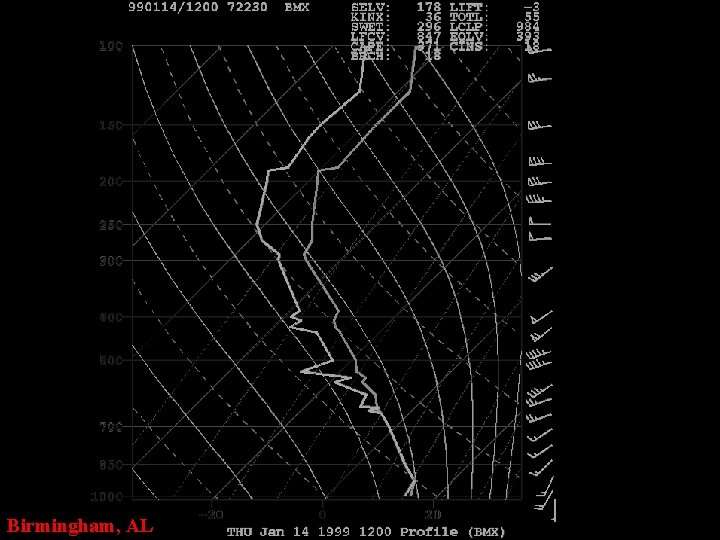
34 Birmingham, AL
- Slides: 34