
Atmospheric Pollution Pollutants and Atmospheric Cleansing s Air
- Slides: 45
Atmospheric Pollution
Pollutants and Atmospheric Cleansing s Air pollutants: gases and aerosols in the atmosphere that have harmful effects s Living organisms s Inanimate objects s Level of air pollution determined by: s The amount of pollutants entering the air s The amount of space into which the pollutants dispersed s Mechanisms that remove pollutants from the air
Myths about Air Pollutants s There are tolerable threshold levels of air pollutants s Dilution is the solution to air pollution s Air pollutants can be assimilated by nature s Air pollutants do not travel s Air pollution accidents will not happen
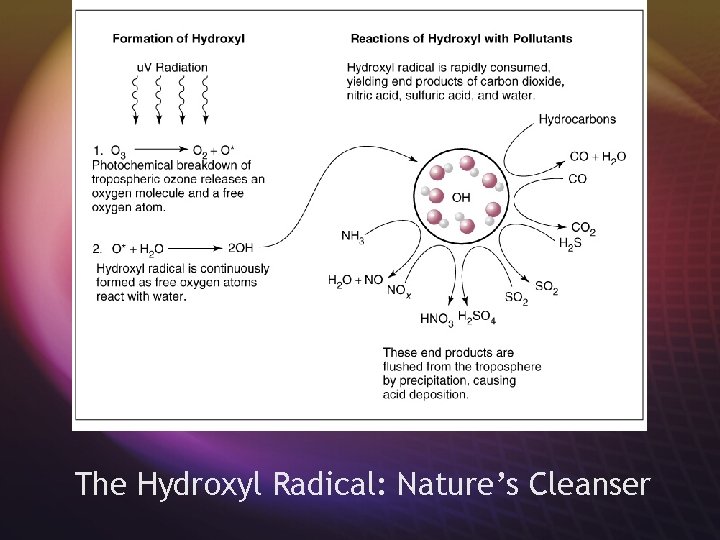
The Hydroxyl Radical: Nature’s Cleanser
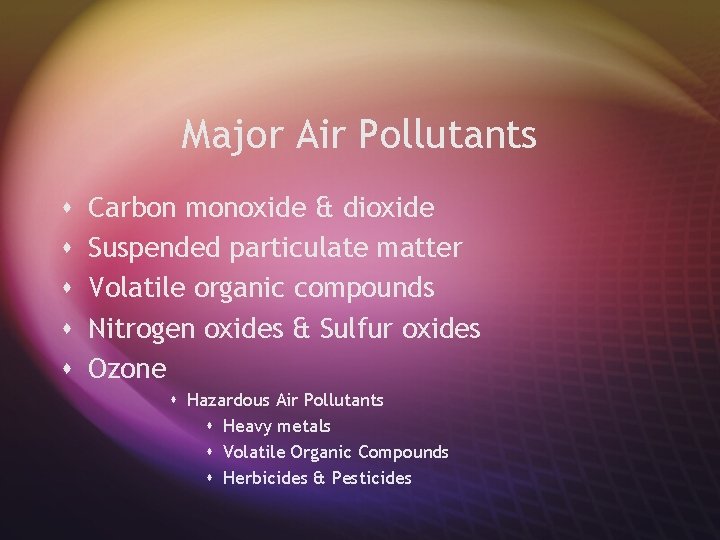
Major Air Pollutants s s Carbon monoxide & dioxide Suspended particulate matter Volatile organic compounds Nitrogen oxides & Sulfur oxides Ozone s Hazardous Air Pollutants s Heavy metals s Volatile Organic Compounds s Herbicides & Pesticides
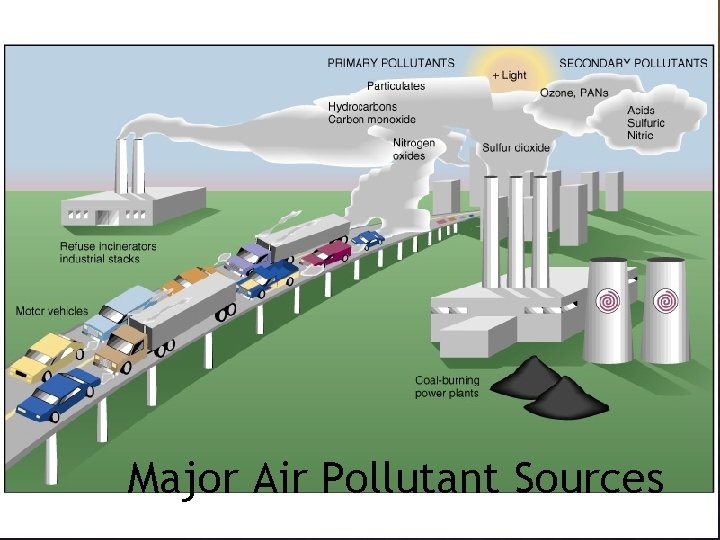
Major Air Pollutant Sources
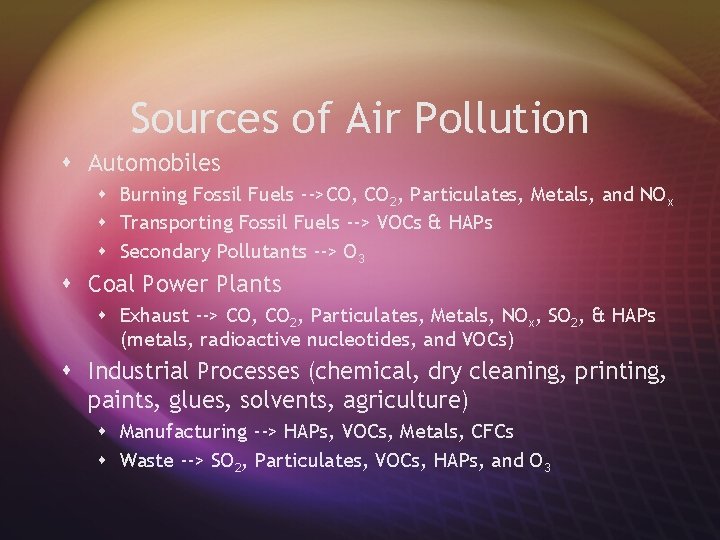
Sources of Air Pollution s Automobiles s Burning Fossil Fuels -->CO, CO 2, Particulates, Metals, and NOx s Transporting Fossil Fuels --> VOCs & HAPs s Secondary Pollutants --> O 3 s Coal Power Plants s Exhaust --> CO, CO 2, Particulates, Metals, NOx, SO 2, & HAPs (metals, radioactive nucleotides, and VOCs) s Industrial Processes (chemical, dry cleaning, printing, paints, glues, solvents, agriculture) s Manufacturing --> HAPs, VOCs, Metals, CFCs s Waste --> SO 2, Particulates, VOCs, HAPs, and O 3
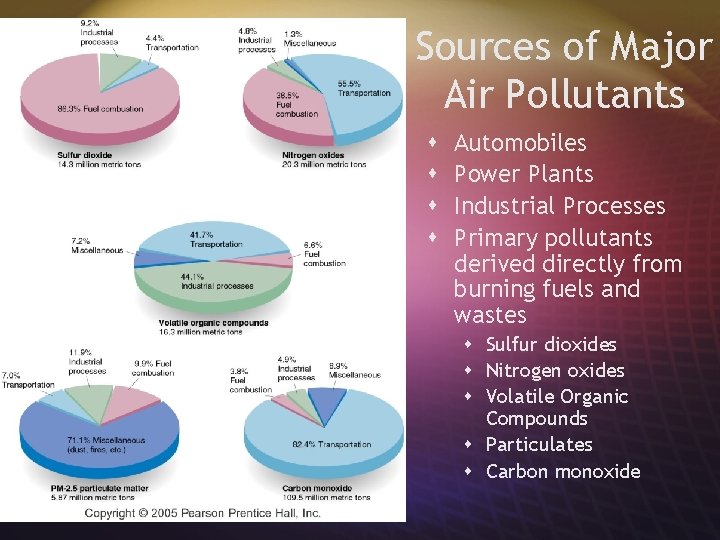
Sources of Major Air Pollutants s s Automobiles Power Plants Industrial Processes Primary pollutants derived directly from burning fuels and wastes s Sulfur dioxides s Nitrogen oxides s Volatile Organic Compounds s Particulates s Carbon monoxide
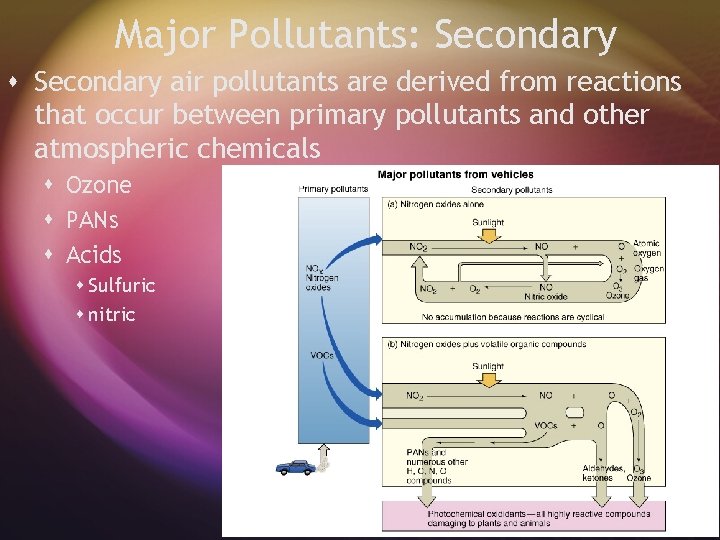
Major Pollutants: Secondary s Secondary air pollutants are derived from reactions that occur between primary pollutants and other atmospheric chemicals s Ozone s PANs s Acids s Sulfuric s nitric
Examining Specific Air Pollutants s Indoor Air Pollution s Smog s Acid Precipitation
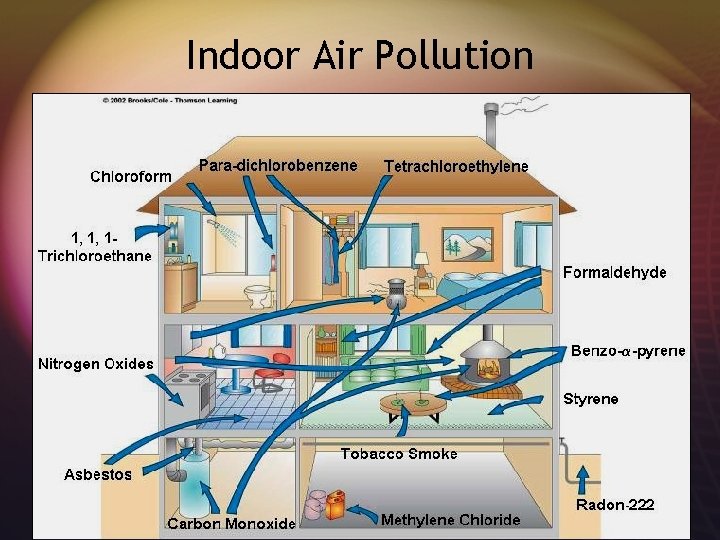
Indoor Air Pollution
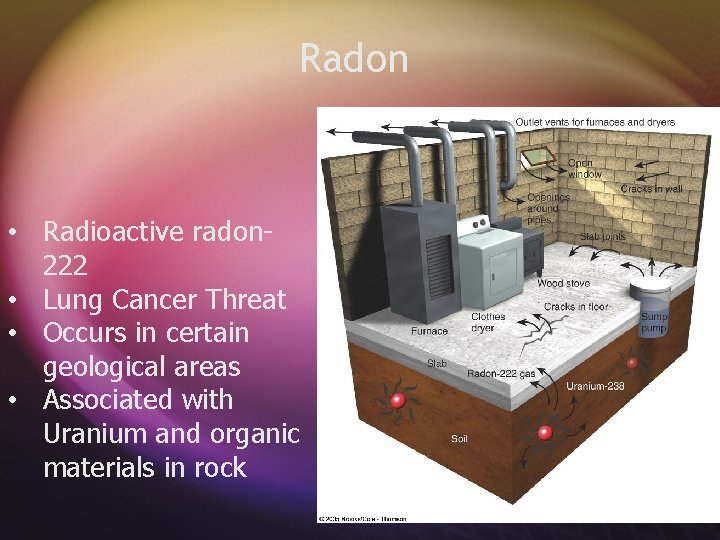
Radon • Radioactive radon 222 • Lung Cancer Threat • Occurs in certain geological areas • Associated with Uranium and organic materials in rock
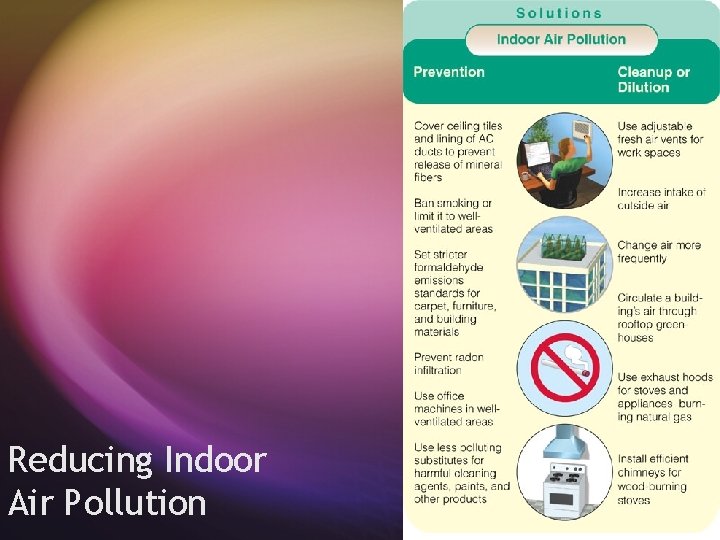
Reducing Indoor Air Pollution
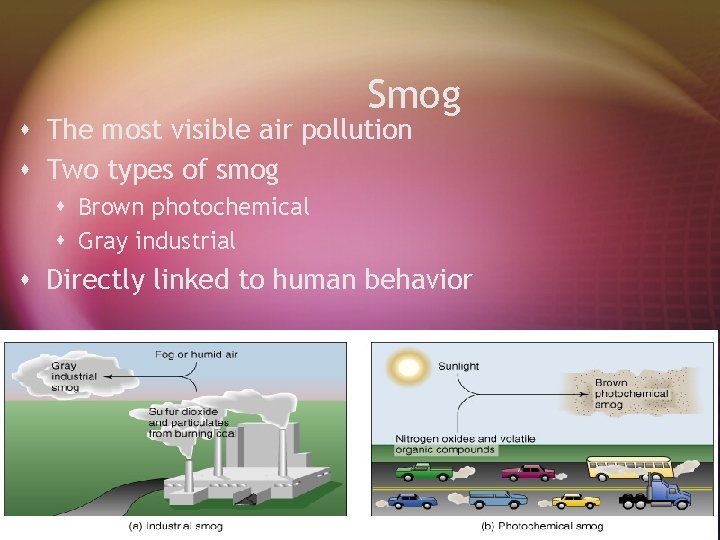
Smog s The most visible air pollution s Two types of smog s Brown photochemical s Gray industrial s Directly linked to human behavior
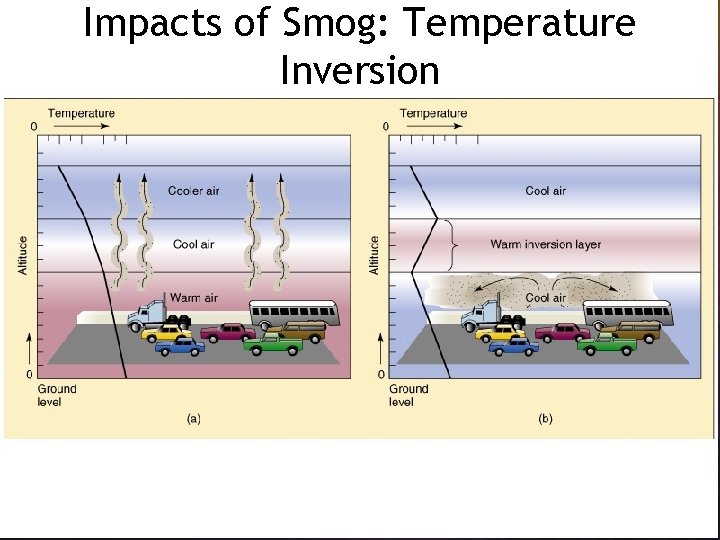
Impacts of Smog: Temperature Inversion
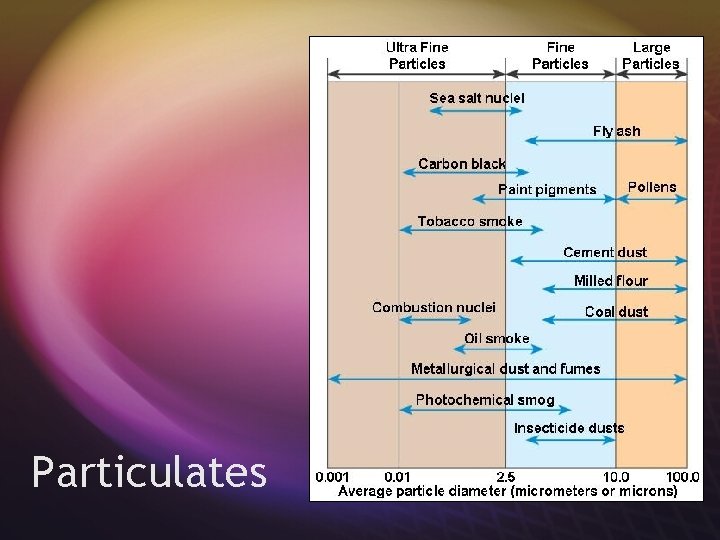
Particulates
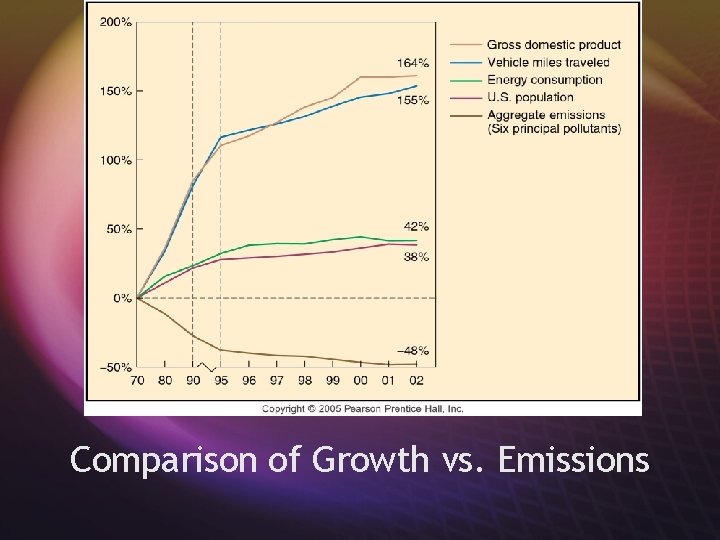
Comparison of Growth vs. Emissions
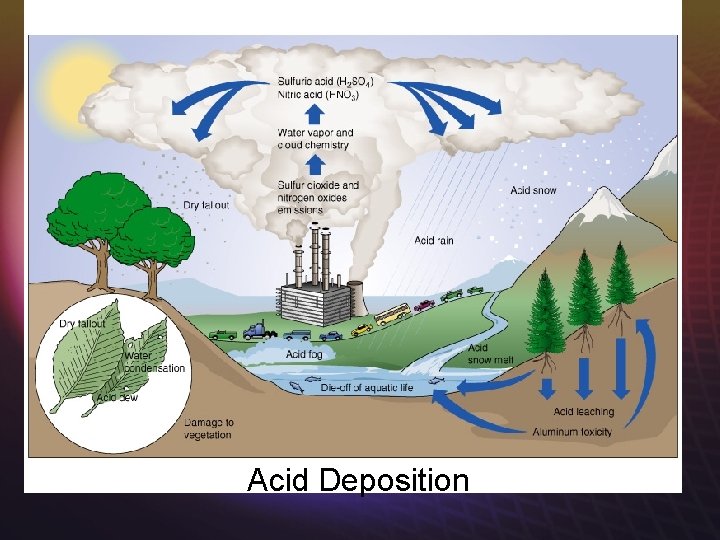
Acid Deposition
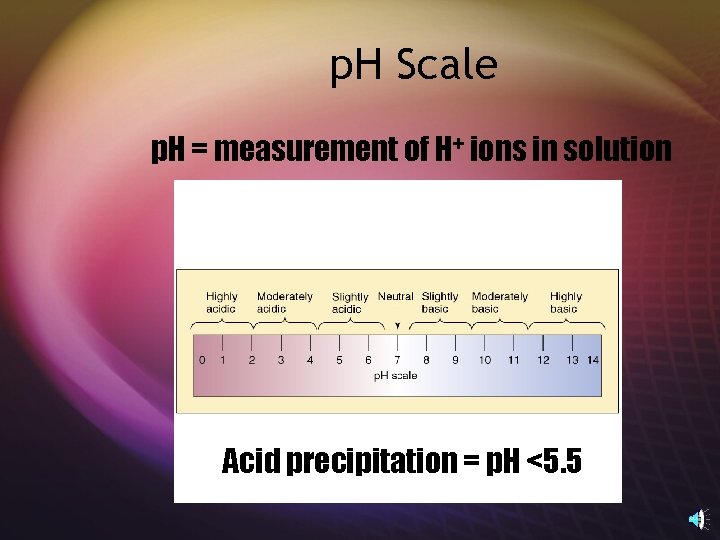
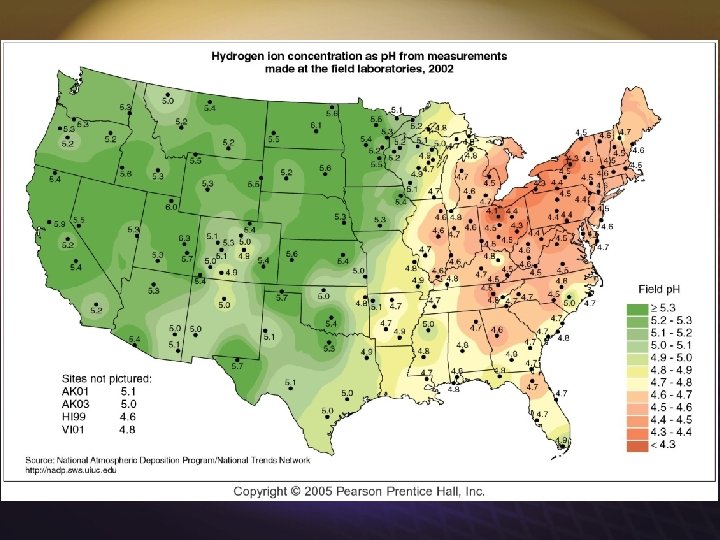
p. H Scale p. H = measurement of H+ ions in solution Acid precipitation = p. H <5. 5
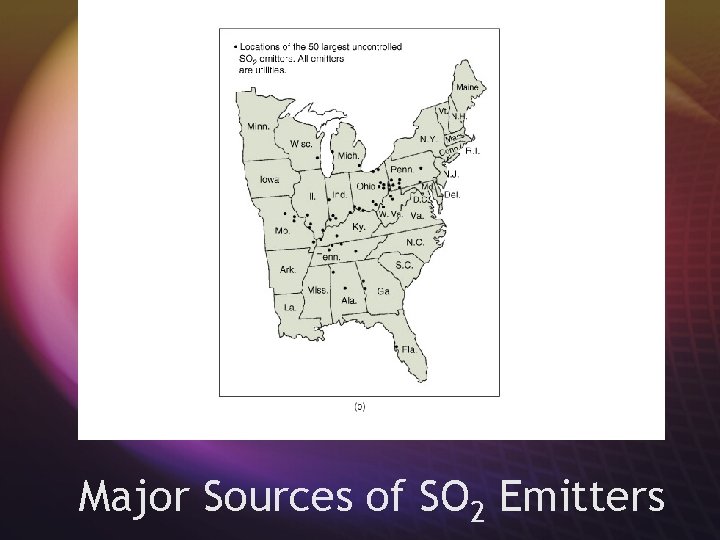
Major Sources of SO 2 Emitters
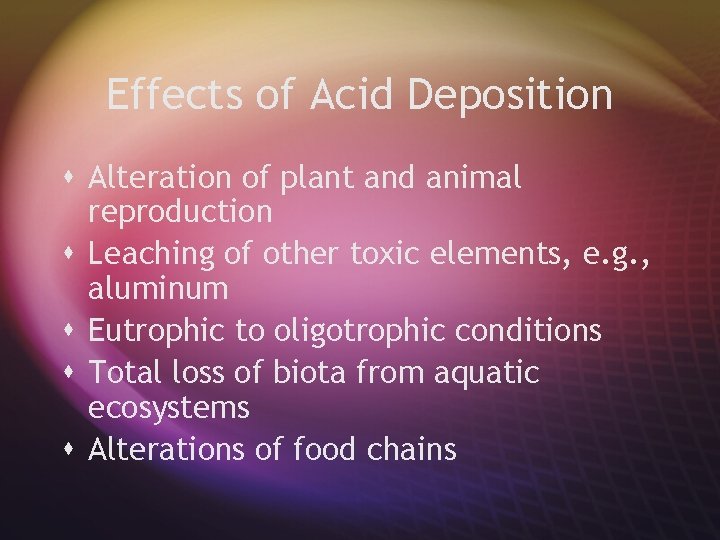
Effects of Acid Deposition s Alteration of plant and animal reproduction s Leaching of other toxic elements, e. g. , aluminum s Eutrophic to oligotrophic conditions s Total loss of biota from aquatic ecosystems s Alterations of food chains
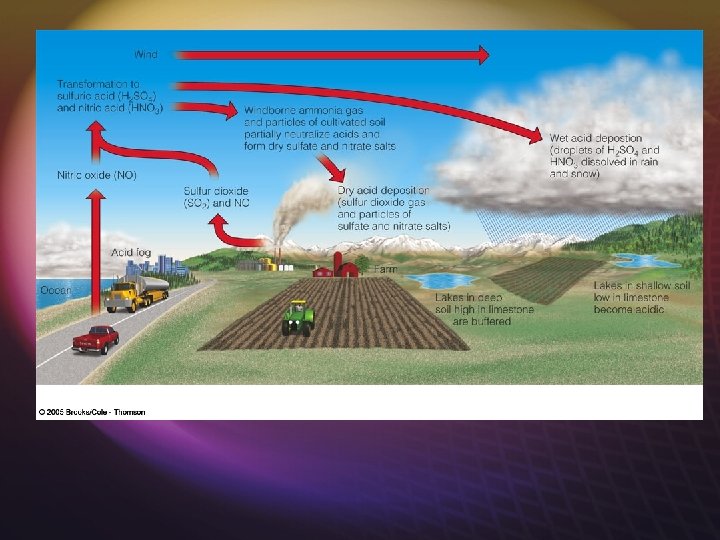
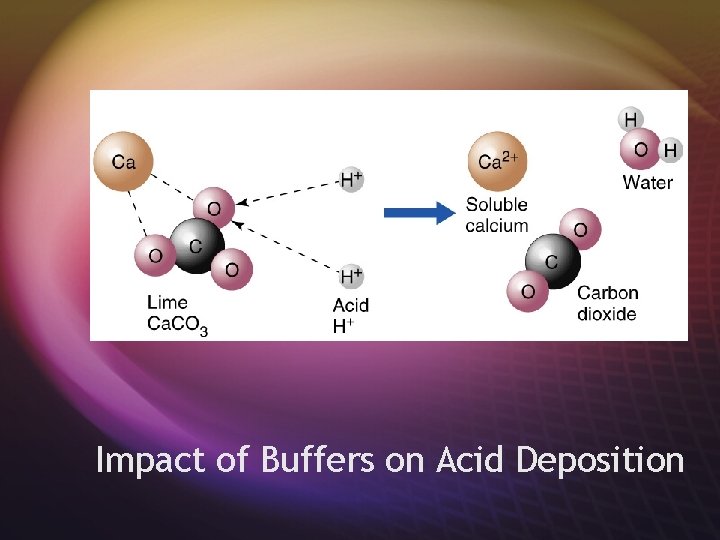
Impact of Buffers on Acid Deposition
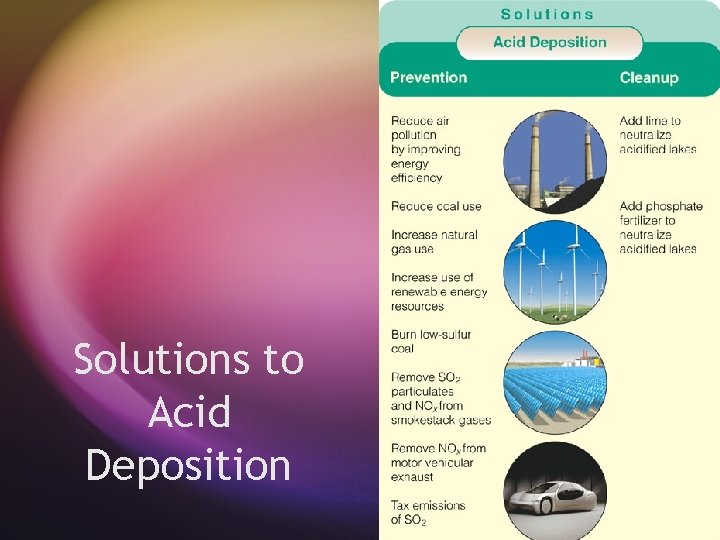
Solutions to Acid Deposition
Air Pollution Effects s Adversely affects the health of organisms s s People Other Animals Crops Forests s Highly corrosive to Structures s Metal s Stone
Impacts of Air Pollutants on Human Health s Chronic: gradual deterioration of a variety of physiological functions over a period of years s Acute: life-threatening reactions within a period of hours or days s Carcinogenic: cancer-causing
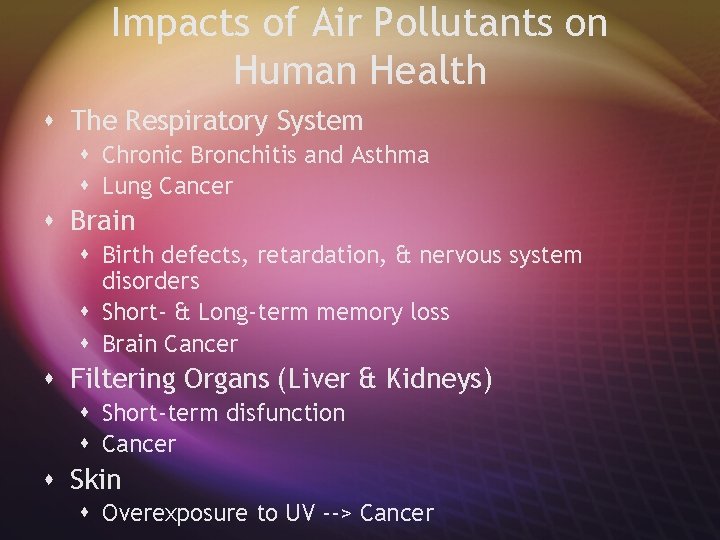
Impacts of Air Pollutants on Human Health s The Respiratory System s Chronic Bronchitis and Asthma s Lung Cancer s Brain s Birth defects, retardation, & nervous system disorders s Short- & Long-term memory loss s Brain Cancer s Filtering Organs (Liver & Kidneys) s Short-term disfunction s Cancer s Skin s Overexposure to UV --> Cancer
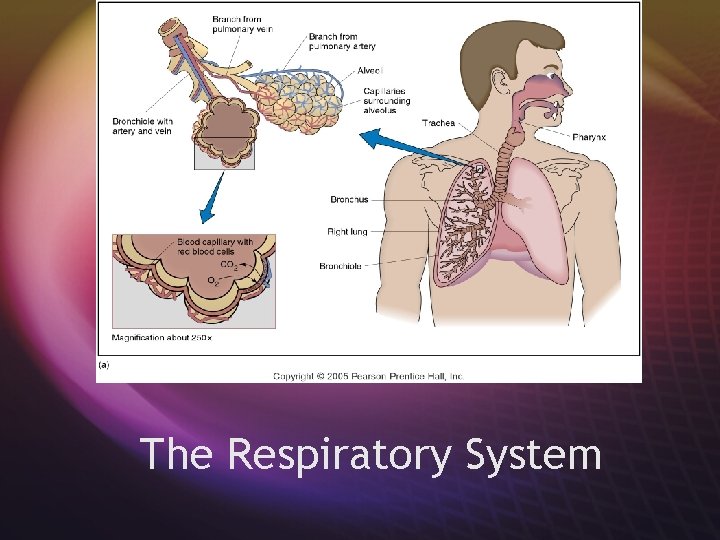
The Respiratory System
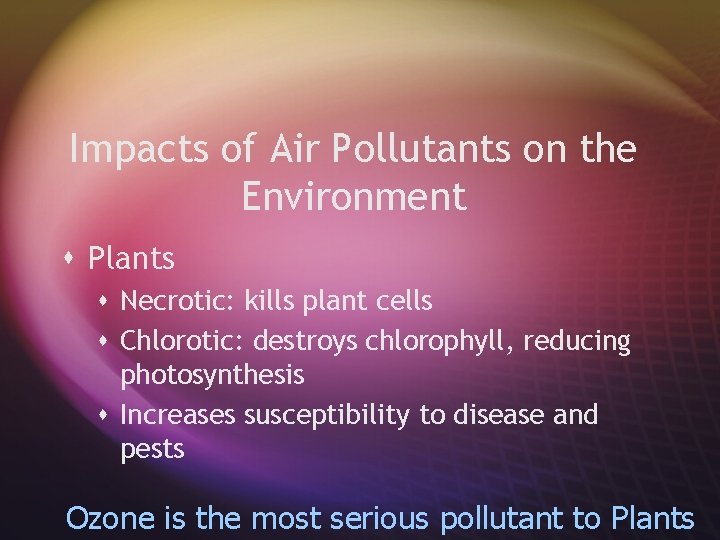
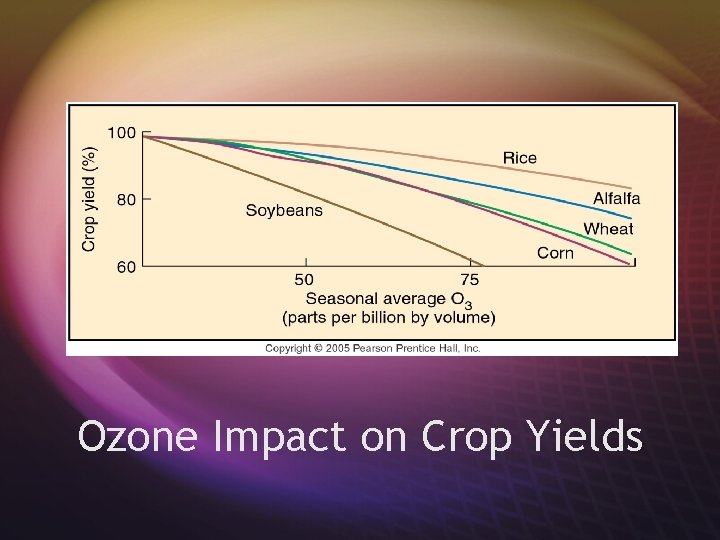
Impacts of Air Pollutants on the Environment s Plants s Necrotic: kills plant cells s Chlorotic: destroys chlorophyll, reducing photosynthesis s Increases susceptibility to disease and pests Ozone is the most serious pollutant to Plants
Ozone Impact on Crop Yields
Impacts of Air Pollutants on the Environment s Forests s s s s Leaching of nutrients Release of aluminum into solution Rapid changes in soil chemistry Reduced growth and diebacks of plants and animals Increased plant vulnerability to natural enemies Increased soil erosion Increased flooding Increased sedimentation of waterways
Impacts of Air Pollutants on the Environment s Building Materials s s Loss of color Oxidation Corrosion Decreased real estate values
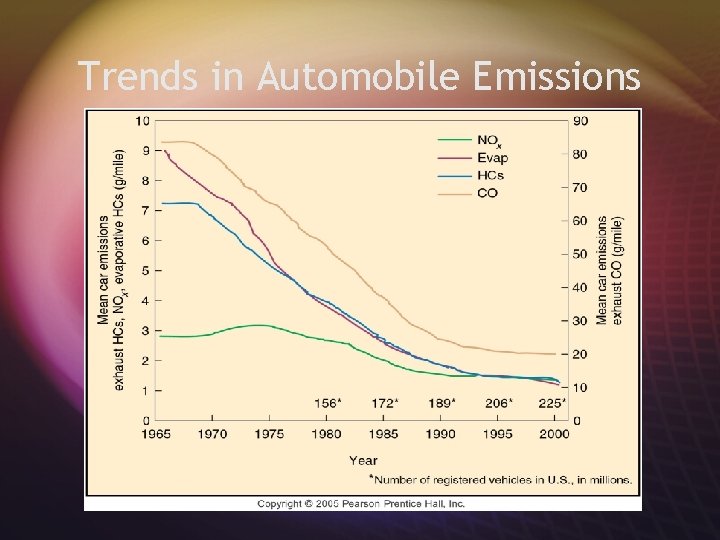
Trends in Automobile Emissions
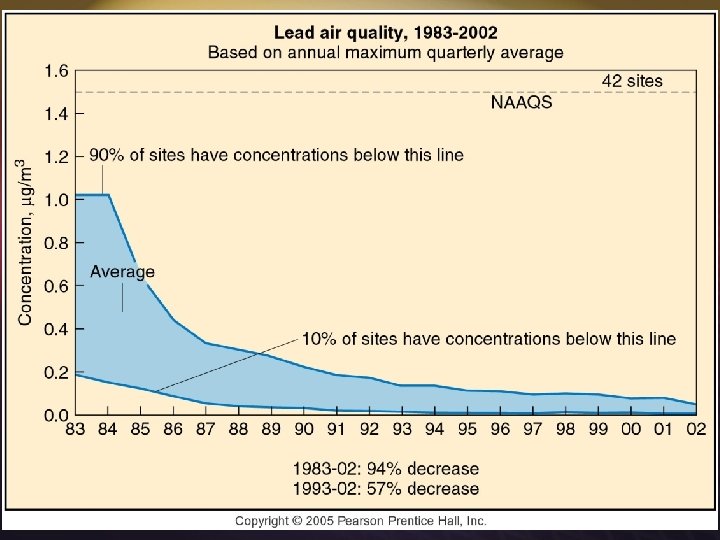
Bringing Air Pollution under Control s Clean Air Act identifies most widespread pollutants: e. g. , particulates, SO, CO, NO, lead = criteria pollutants s National Ambient Air Quality Standards (NAAQS) set levels that protect environmental and human health
Bringing Air Pollution under Control s NAAQS = national ambient air quality standards (EPA) s National Emission Standards for Hazardous Air Pollutants set national emission standards for hazardous air pollutants
Control Strategies s Command-control: regulate air pollution so criteria pollutants remain below primary standard level s Lack of enforcement and compliance s 37% reduction of air pollutants s Forced compliance with state implementation plan (SIP)
Can you Match Control Strategies on Right with Air Pollutants on Left? s Particulates s VOCs s Automobile emissions s Acid rain s Catalytic converter s Reasonably available control strategy (RACT) s Scrubbers s Coal washing
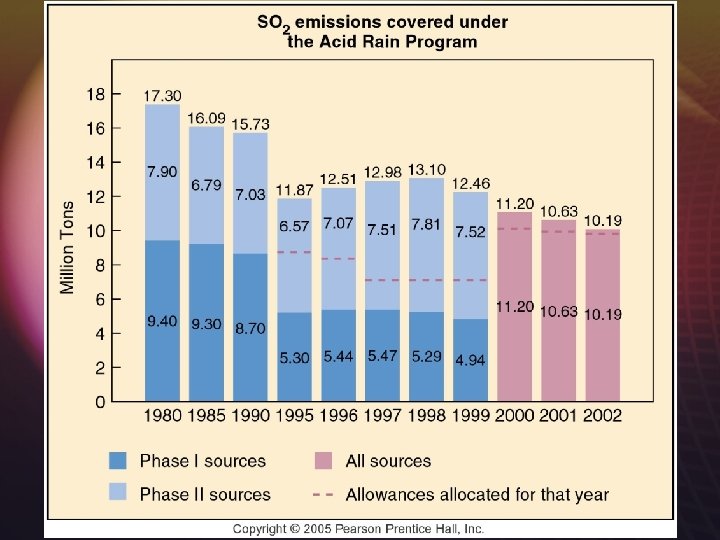
Title IV Clean Air Act 1990 s s s Reduce SO emissions 50% below 1980 levels Improve methods of reducing SO emissions Allow emissions allowances and trading Emissions purchases Reduce NO emissions
Industry’s Response to Title IV s s Fuel switching Scrubbers Emissions allowance trading Using low-sulfur coals
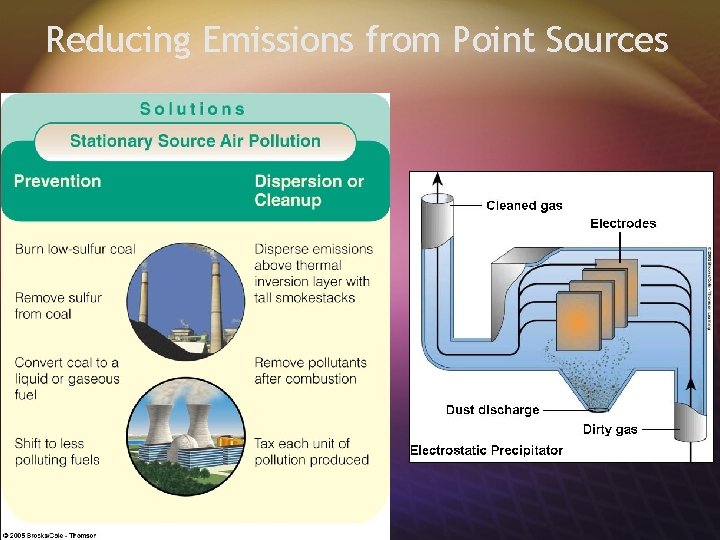
Reducing Emissions from Point Sources
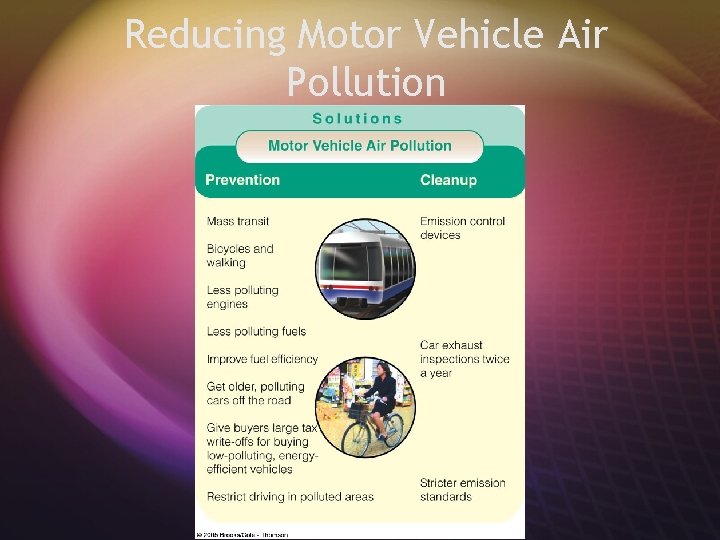
Reducing Motor Vehicle Air Pollution
Unresolved Issues s s s Costs vs benefits of air pollution control Status of “new source” review & enforcement Improving fuel efficiency – hybrid cars Improving mass transit systems Reducing commuting distances Should the EPA regulate CO 2 as a pollutant? s Research this question! Come prepared to discuss your findings in class tomorrow!