
Atmospheric Layering Layers of the Atmosphere The atmosphere
- Slides: 10
Atmospheric Layering
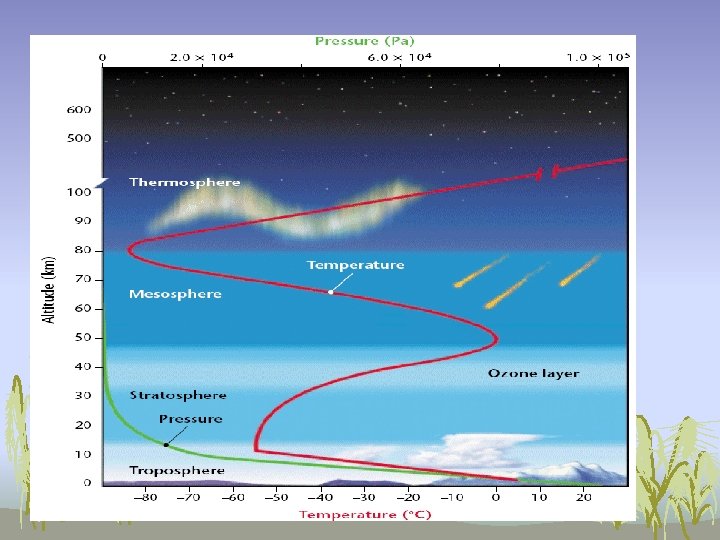
Layers of the Atmosphere • The atmosphere is divided into four layers based on temperature changes that occur at different distances above the Earth’s surface. • • The Troposphere The Stratosphere The Mesosphere Thermosphere
The Troposphere • The troposphere is the lowest layer of the atmosphere in which temperature drops at a constant rate as altitude increases. • This is the part of the atmosphere weather conditions exist. • The troposphere is Earth’s densest atmospheric layer and extends to 18 km above Earth’s surface.
The Stratosphere • The stratosphere is the layer of the atmosphere that lies immediately above the troposphere and extends from about 10 to 50 km above the Earth’s surface. • Temperature rises as altitude increases because ozone in the stratosphere absorbs the sun’s ultraviolet (UV) energy and warms the air.
The Stratosphere • Ozone is a gas molecule that is made up of three oxygen atoms. • Almost all of the ozone in the atmosphere is concentrated in the stratosphere. • Because ozone absorbs UV radiation, it reduces the amount of UV radiation that reaches the Earth. UV radiation that does reach Earth can damage living cells.
The Mesosphere • The layer above the stratosphere is the mesosphere. • This layer extends to an altitude of about 50 -80 km. • This is the coldest layer of the atmosphere where temperatures have been measured as low as – 93ºC.
The Thermosphere • The atmospheric layer located farthest from Earth’s surface is thermosphere. • Here, nitrogen and oxygen absorb solar radiation resulting in temperatures measuring above 2, 000 ºC. • The air in thermosphere is thin that air particles rarely collide, so little heat is transferred, and would therefore not feel hot to us.
The Thermosphere • The absorption of X rays and gamma rays by nitrogen and oxygen causes atoms to become electrically charged. • Electrically charged atoms are called ions, and the lower thermosphere is called the ionosphere.
The Thermosphere • Ions can radiate energy as light, and these lights often glow in spectacular colors in the night skies near the Earth’s North and South Poles. • Outer layer is called the exosphere.