
Atmospheric Deposition La Toya Myles Air Resources Laboratory
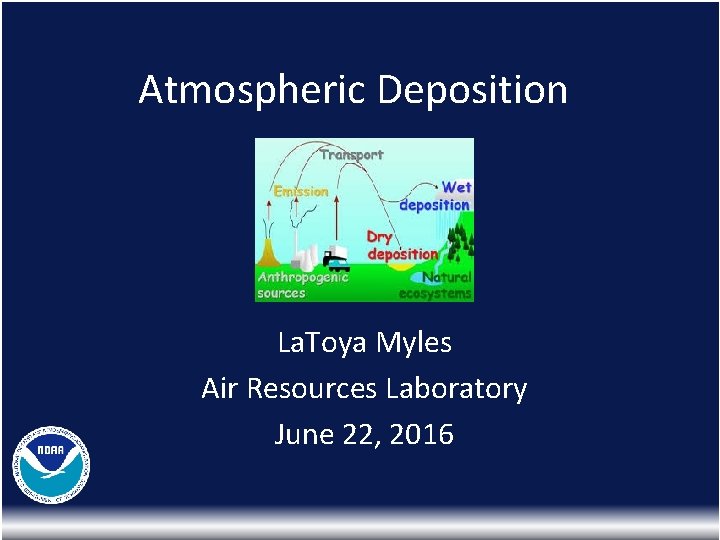
Atmospheric Deposition La. Toya Myles Air Resources Laboratory June 22, 2016
Relevance Under the Clean Air Act Amendments of 1990, NOAA is charged to • Identify and assess the extent of deposition of atmospheric pollutants to Great Lakes and coastal waters and • Conduct research on air quality and deposition and associated impacts to ecosystems. ARL’s Deposition R&D is grounded in the early days of acid rain studies and assessments with the National Acid Precipitation Assessment Program. ARL Science Review, June 21 -23, 2016 2
Key Scientific Question for Deposition • Current work continues to address atmospheric transport, transformation and fate of air pollutants – NOAA Five-Year R&D Plan: “How are atmospheric chemistry and composition related to each other and ecosystems, climate, and weather? ” ARL Science Review, June 21 -23, 2016 3
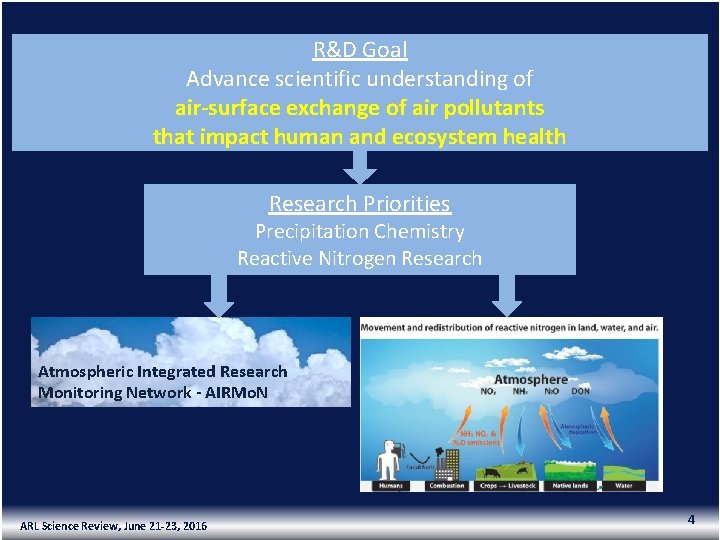
R&D Goal Advance scientific understanding of air-surface exchange of air pollutants that impact human and ecosystem health Research Priorities Precipitation Chemistry Reactive Nitrogen Research Atmospheric Integrated Research Monitoring Network - AIRMo. N ARL Science Review, June 21 -23, 2016 4
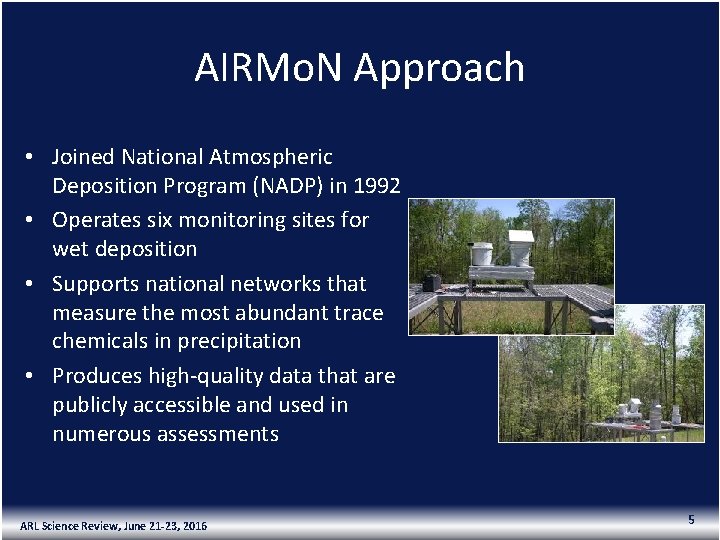
AIRMo. N Approach • Joined National Atmospheric Deposition Program (NADP) in 1992 • Operates six monitoring sites for wet deposition • Supports national networks that measure the most abundant trace chemicals in precipitation • Produces high-quality data that are publicly accessible and used in numerous assessments ARL Science Review, June 21 -23, 2016 5
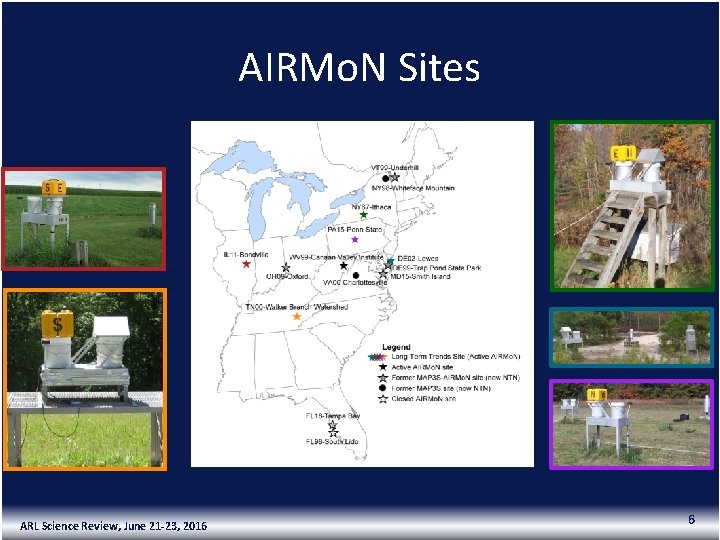
AIRMo. N Sites ARL Science Review, June 21 -23, 2016 6
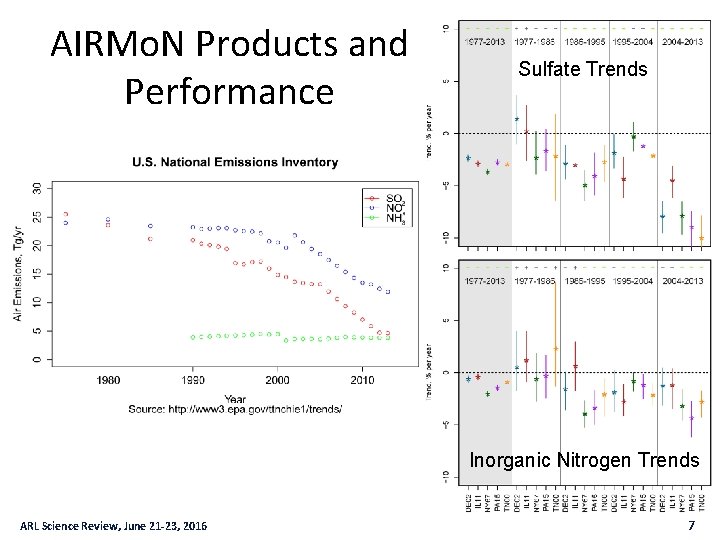
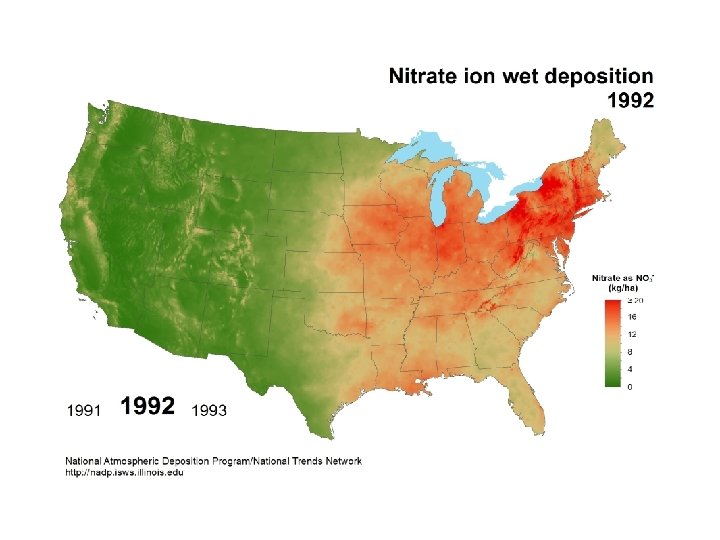
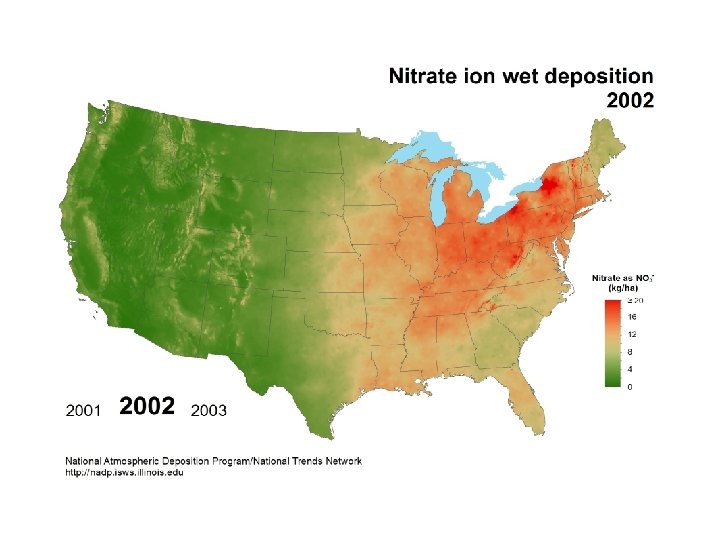
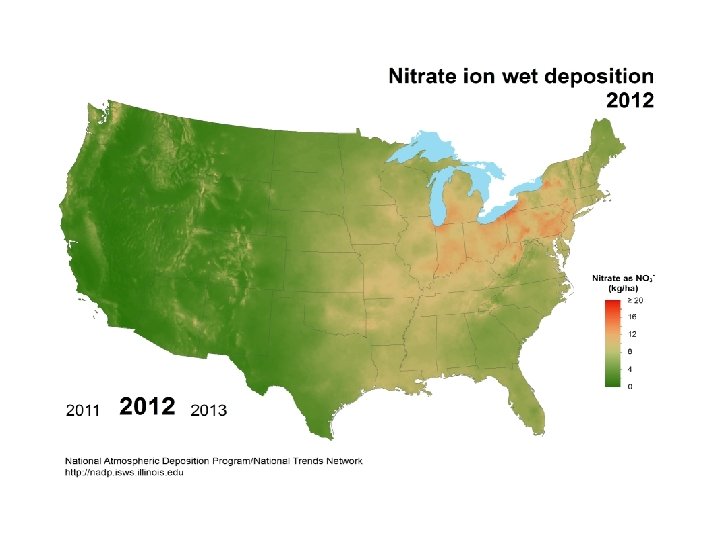
AIRMo. N Products and Performance Sulfate Trends Inorganic Nitrogen Trends ARL Science Review, June 21 -23, 2016 7
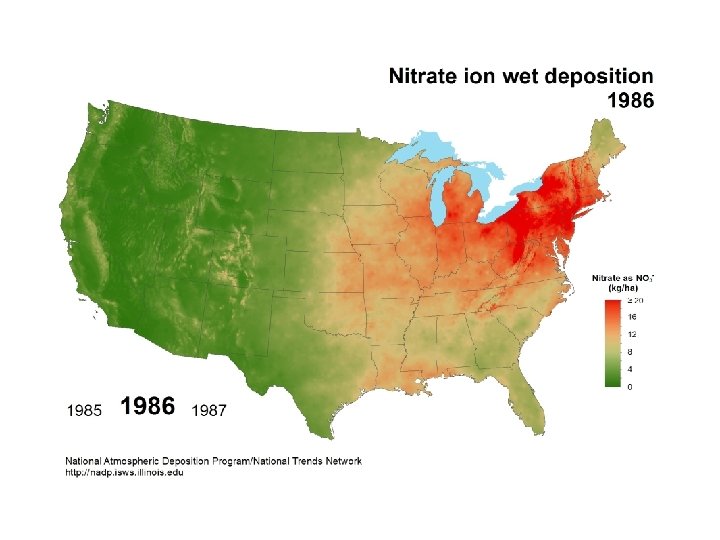
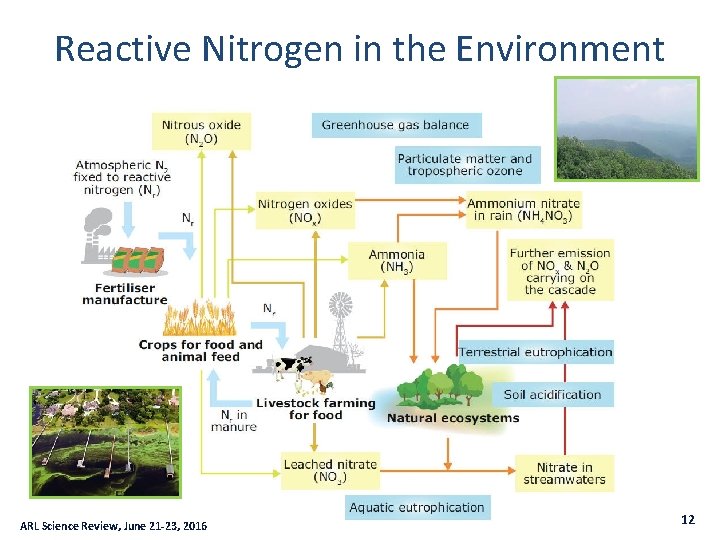
Reactive Nitrogen in the Environment ARL Science Review, June 21 -23, 2016 12
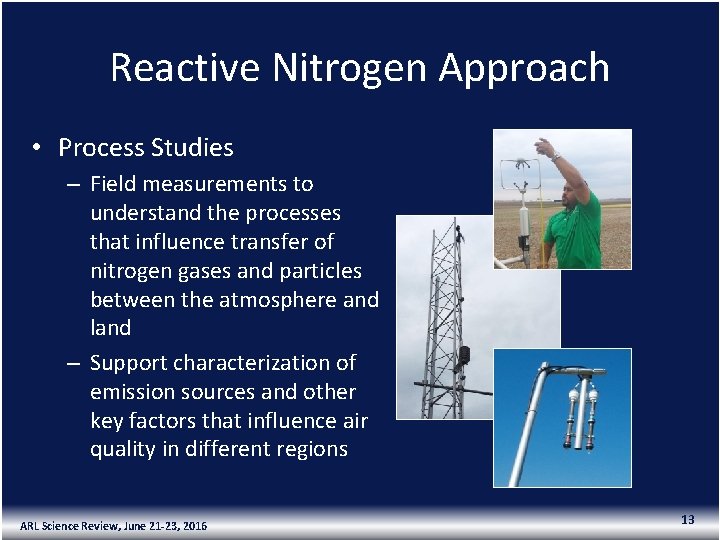
Reactive Nitrogen Approach • Process Studies – Field measurements to understand the processes that influence transfer of nitrogen gases and particles between the atmosphere and land – Support characterization of emission sources and other key factors that influence air quality in different regions ARL Science Review, June 21 -23, 2016 13
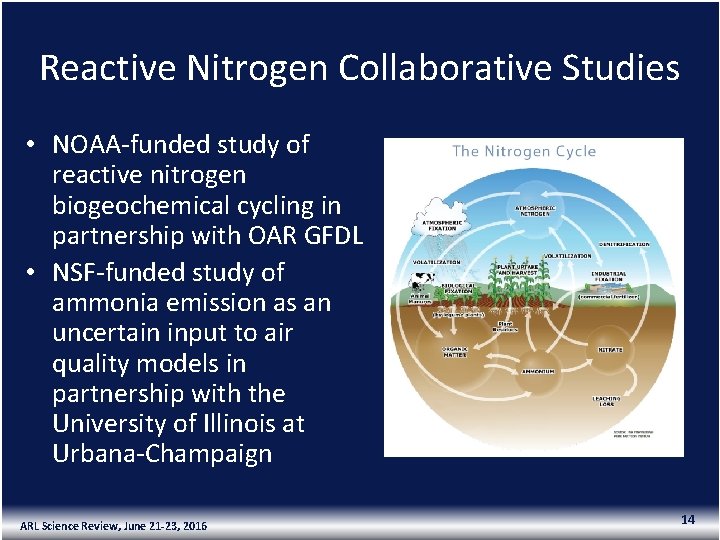
Reactive Nitrogen Collaborative Studies • NOAA-funded study of reactive nitrogen biogeochemical cycling in partnership with OAR GFDL • NSF-funded study of ammonia emission as an uncertain input to air quality models in partnership with the University of Illinois at Urbana-Champaign ARL Science Review, June 21 -23, 2016 14
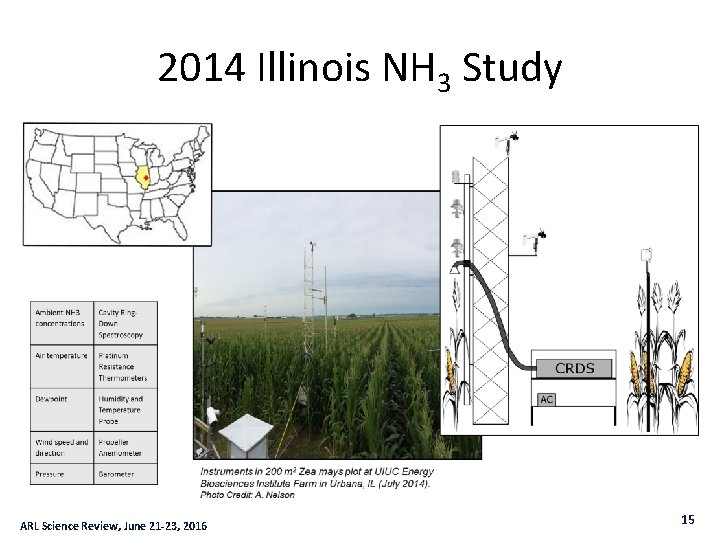
2014 Illinois NH 3 Study ARL Science Review, June 21 -23, 2016 15
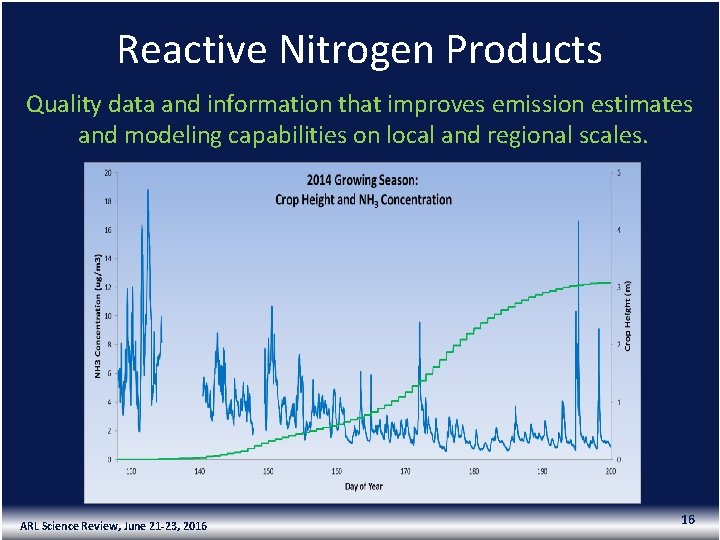
Reactive Nitrogen Products Quality data and information that improves emission estimates and modeling capabilities on local and regional scales. ARL Science Review, June 21 -23, 2016 16
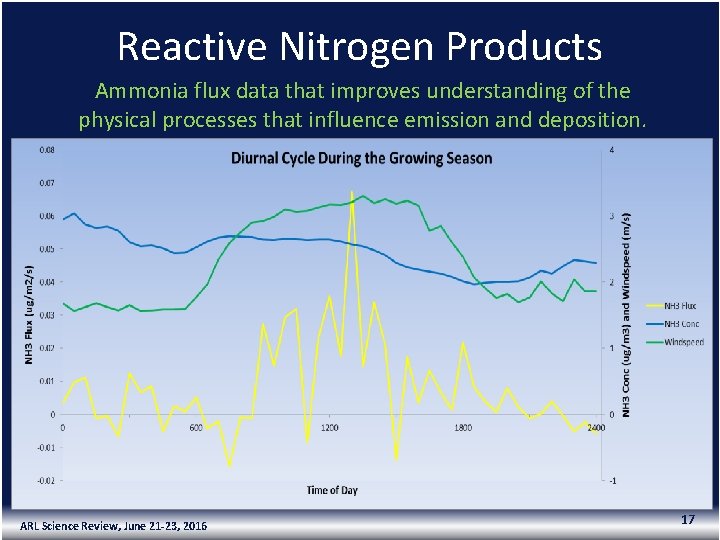
Reactive Nitrogen Products Ammonia flux data that improves understanding of the physical processes that influence emission and deposition. ARL Science Review, June 21 -23, 2016 17
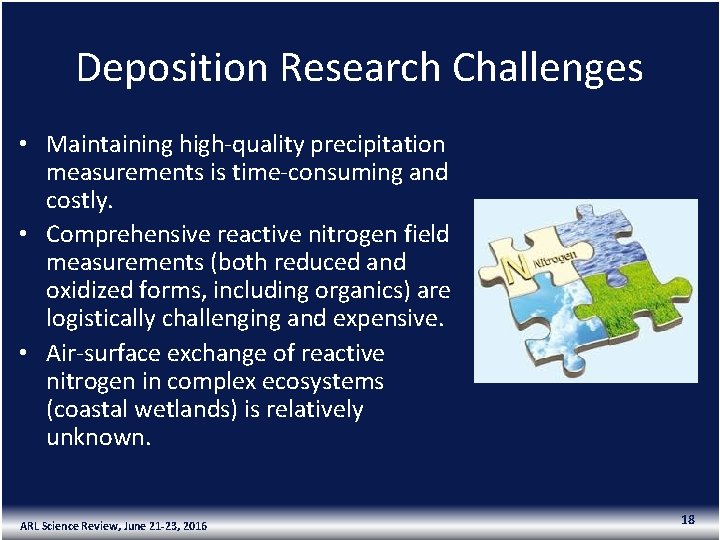
Deposition Research Challenges • Maintaining high-quality precipitation measurements is time-consuming and costly. • Comprehensive reactive nitrogen field measurements (both reduced and oxidized forms, including organics) are logistically challenging and expensive. • Air-surface exchange of reactive nitrogen in complex ecosystems (coastal wetlands) is relatively unknown. ARL Science Review, June 21 -23, 2016 18
Collaborators External Partners ARL Science Review, June 21 -23, 2016 Internal Partners 19
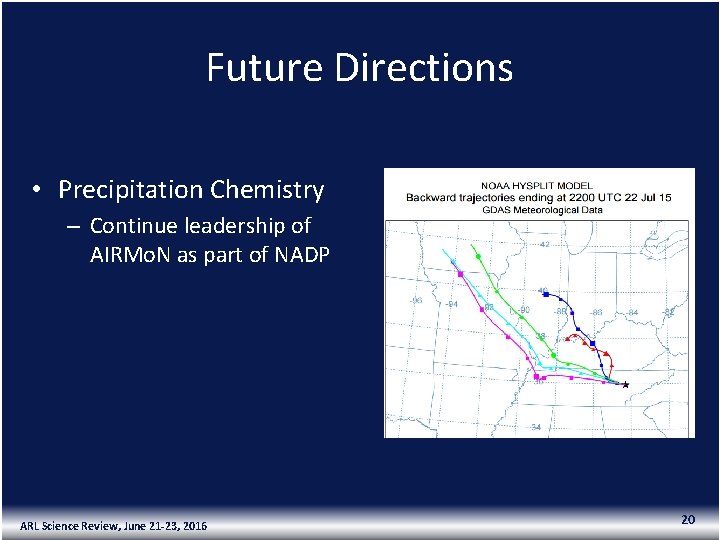
Future Directions • Precipitation Chemistry – Continue leadership of AIRMo. N as part of NADP ARL Science Review, June 21 -23, 2016 20
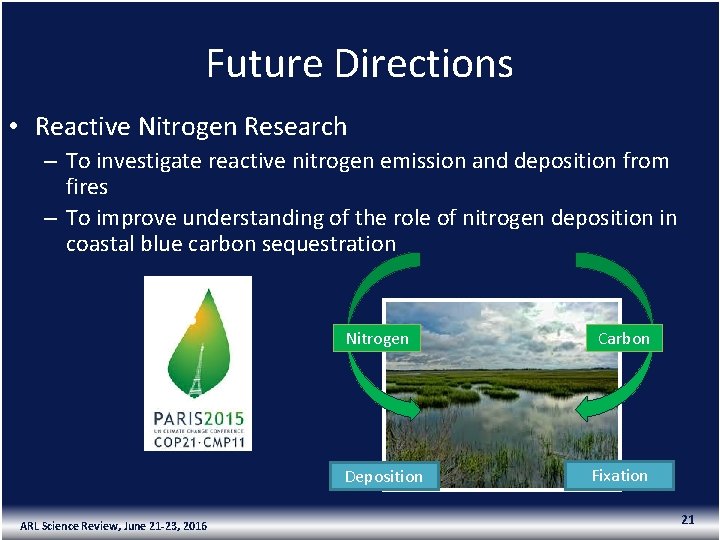
Future Directions • Reactive Nitrogen Research – To investigate reactive nitrogen emission and deposition from fires – To improve understanding of the role of nitrogen deposition in coastal blue carbon sequestration Nitrogen Deposition ARL Science Review, June 21 -23, 2016 Carbon Fixation 21
Atmospheric Deposition Acknowledgments R. Artz, M. Heuer: NOAA ARL M. Rood, S. Koloutsou-Vakakis, A. Nelson: Univ of Illinois J. Caldwell, D. Sibble: Florida A&M Univ
- Slides: 22