
Atmospheric Circulation Chapter 8 The Coriolis Effect Any
- Slides: 7
Atmospheric Circulation Chapter 8
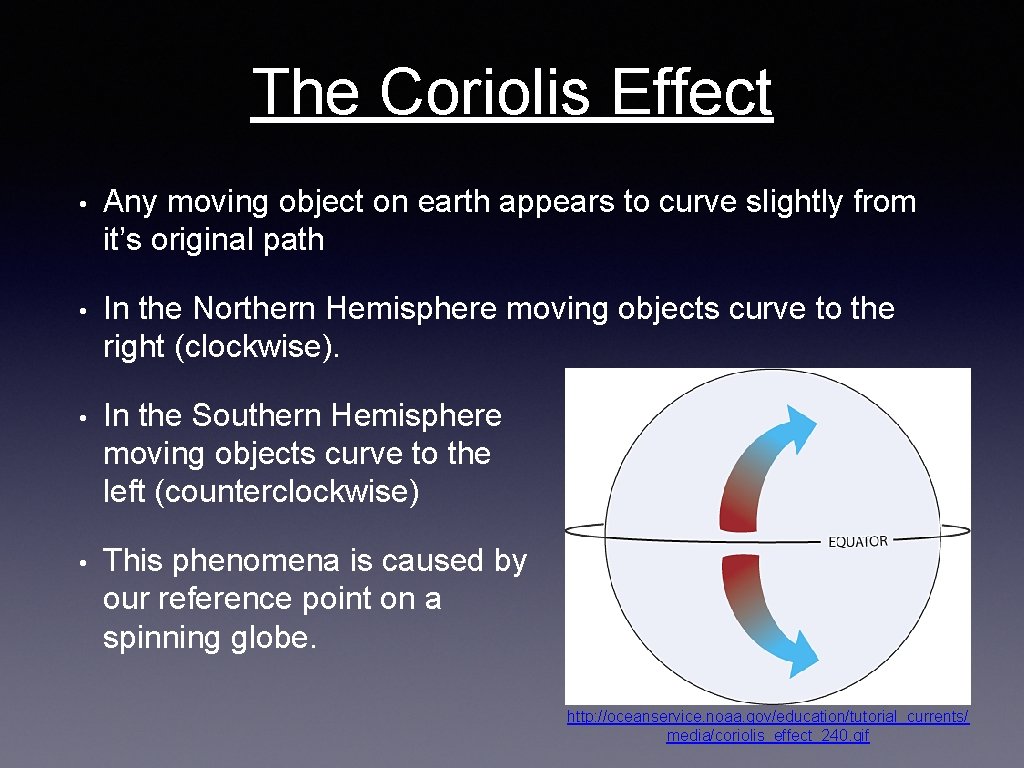
The Coriolis Effect • Any moving object on earth appears to curve slightly from it’s original path • In the Northern Hemisphere moving objects curve to the right (clockwise). • In the Southern Hemisphere moving objects curve to the left (counterclockwise) • This phenomena is caused by our reference point on a spinning globe. http: //oceanservice. noaa. gov/education/tutorial_currents/ media/coriolis_effect_240. gif
http: //www. ux 1. eiu. edu/~cfjps/1400/FIG 07_006. jpg
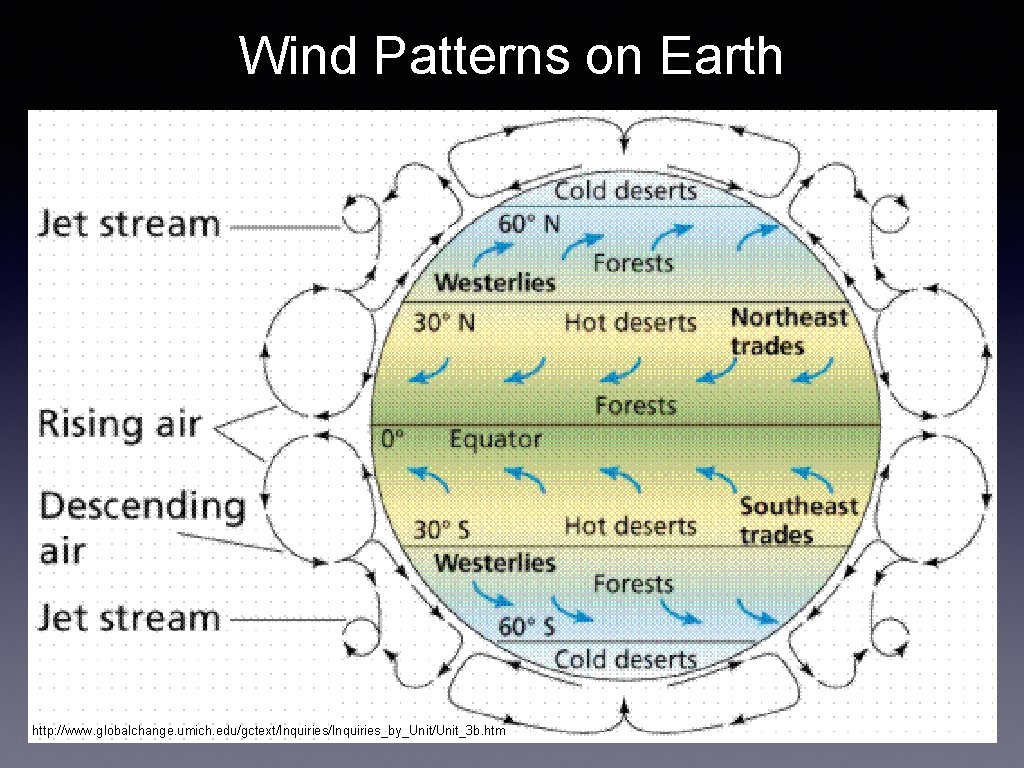
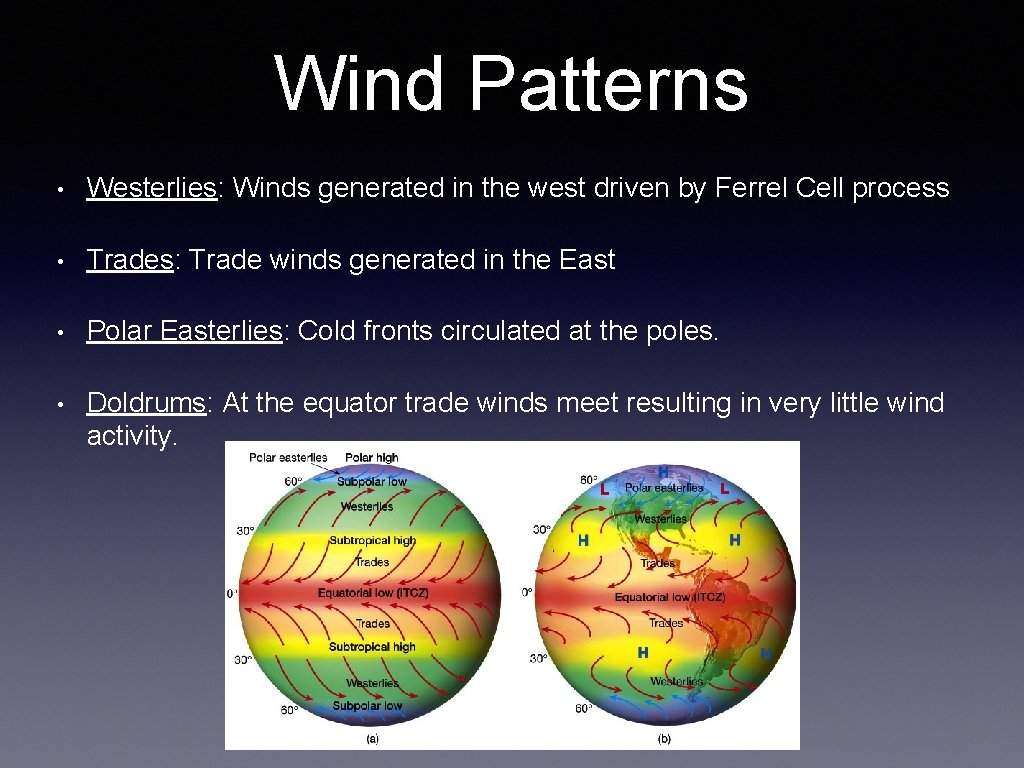
Wind Patterns on Earth http: //www. globalchange. umich. edu/gctext/Inquiries_by_Unit/Unit_3 b. htm
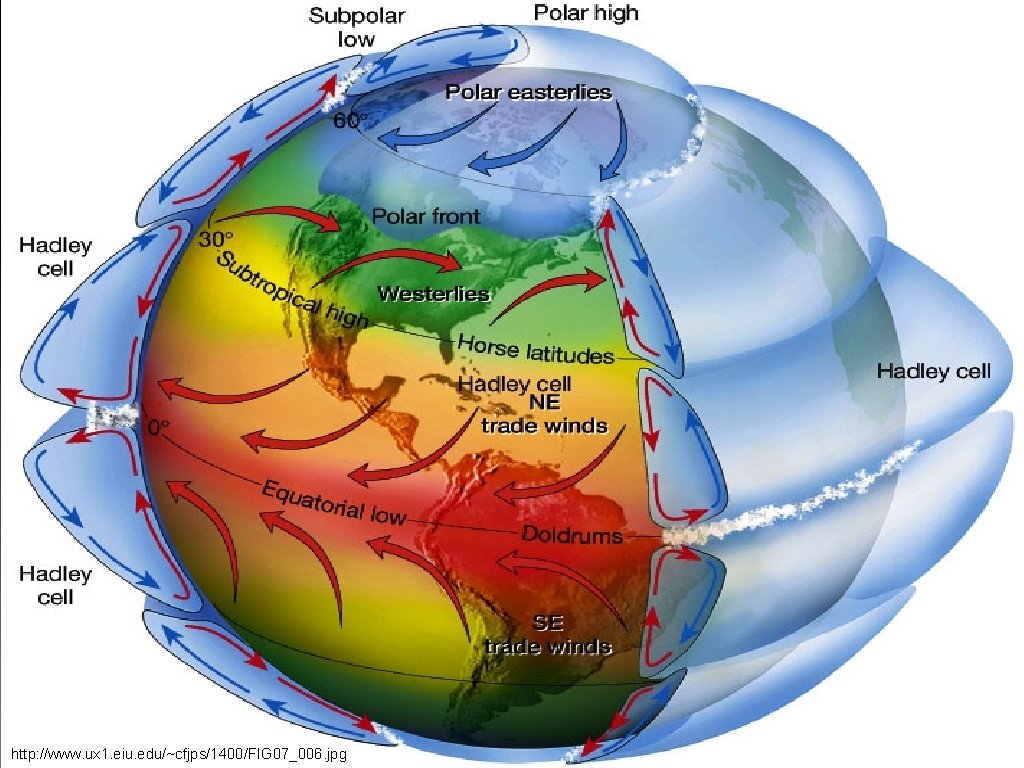
Wind Patterns • Westerlies: Winds generated in the west driven by Ferrel Cell process • Trades: Trade winds generated in the East • Polar Easterlies: Cold fronts circulated at the poles. • Doldrums: At the equator trade winds meet resulting in very little wind activity.
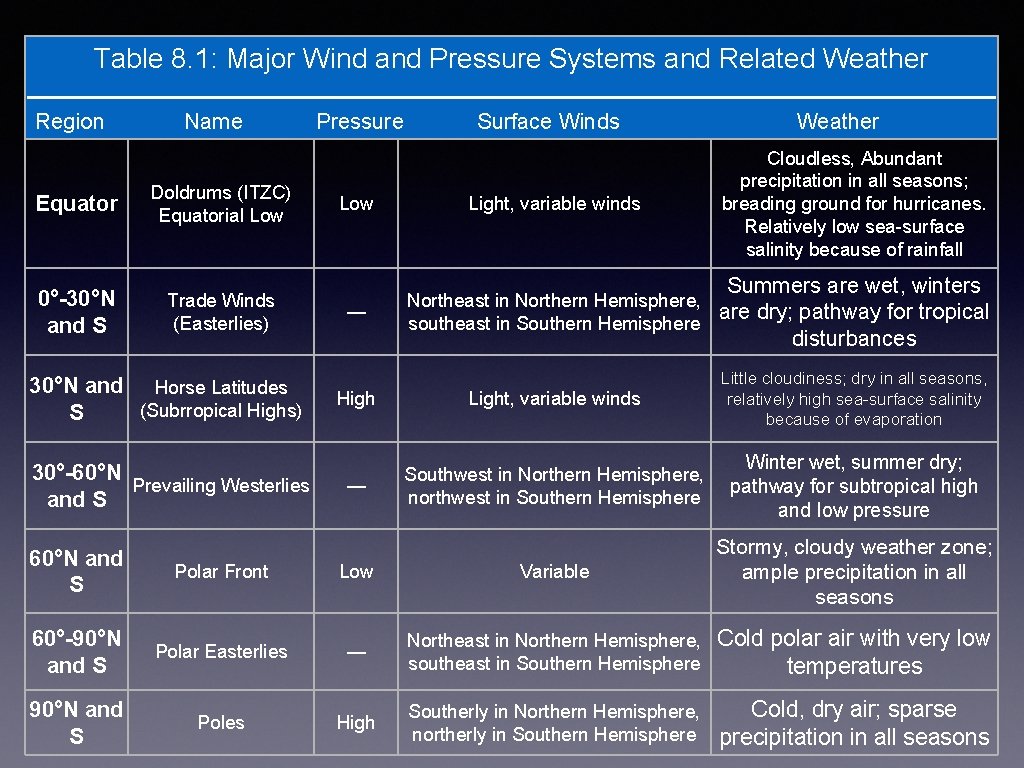
Table 8. 1: Major Wind and Pressure Systems and Related Weather Region Name Equator Doldrums (ITZC) Equatorial Low 0 o-30 o. N and S Trade Winds (Easterlies) 30 o. N and Horse Latitudes (Subrropical Highs) S 30 o-60 o. N Prevailing Westerlies and S Pressure Low Surface Winds Light, variable winds Weather Cloudless, Abundant precipitation in all seasons; breading ground for hurricanes. Relatively low sea-surface salinity because of rainfall Summers are wet, winters — Northeast in Northern Hemisphere, are dry; pathway for tropical southeast in Southern Hemisphere disturbances High Light, variable winds Little cloudiness; dry in all seasons, relatively high sea-surface salinity because of evaporation — Southwest in Northern Hemisphere, northwest in Southern Hemisphere Winter wet, summer dry; pathway for subtropical high and low pressure 60 o. N and S Polar Front Low Variable Stormy, cloudy weather zone; ample precipitation in all seasons 60 o-90 o. N and S Polar Easterlies — Northeast in Northern Hemisphere, southeast in Southern Hemisphere Cold polar air with very low temperatures 90 o. N and S Poles High Southerly in Northern Hemisphere, northerly in Southern Hemisphere Cold, dry air; sparse precipitation in all seasons
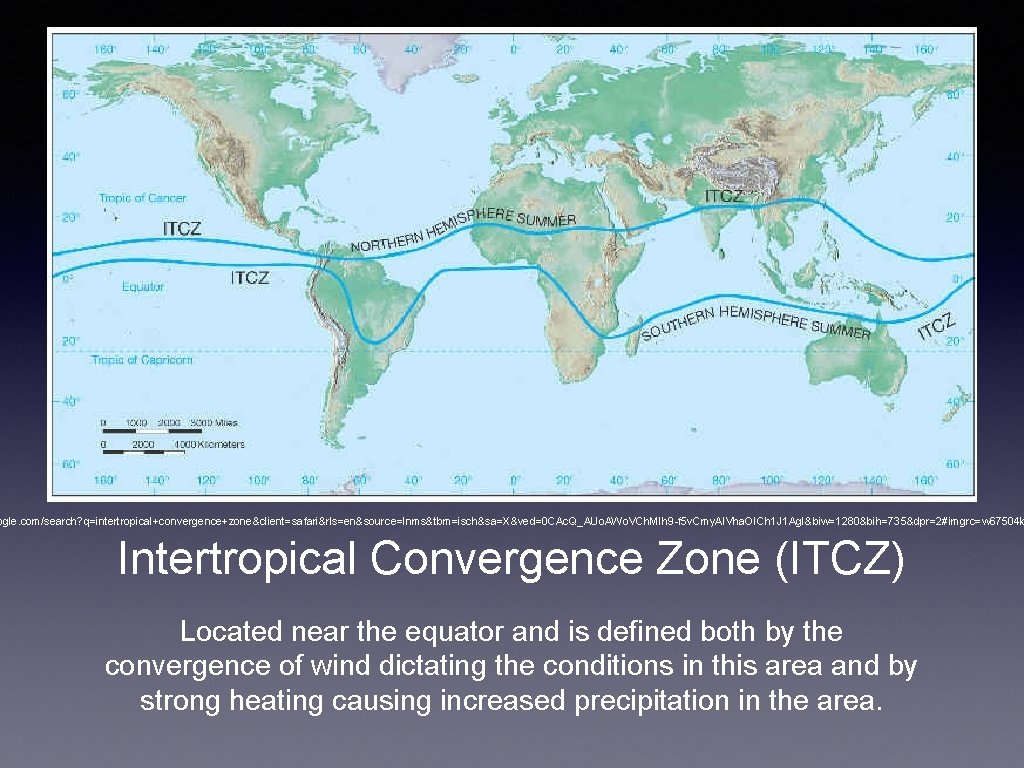
ogle. com/search? q=intertropical+convergence+zone&client=safari&rls=en&source=lnms&tbm=isch&sa=X&ved=0 CAc. Q_AUo. AWo. VCh. MIh 9 -f 5 v. Cmy. AIVha. OICh 1 J 1 Ag. I&biw=1280&bih=735&dpr=2#imgrc=w 67504 k Intertropical Convergence Zone (ITCZ) Located near the equator and is defined both by the convergence of wind dictating the conditions in this area and by strong heating causing increased precipitation in the area.