
Atmosphere The Basics Gas Composition Nitrogen 78 Oxygen
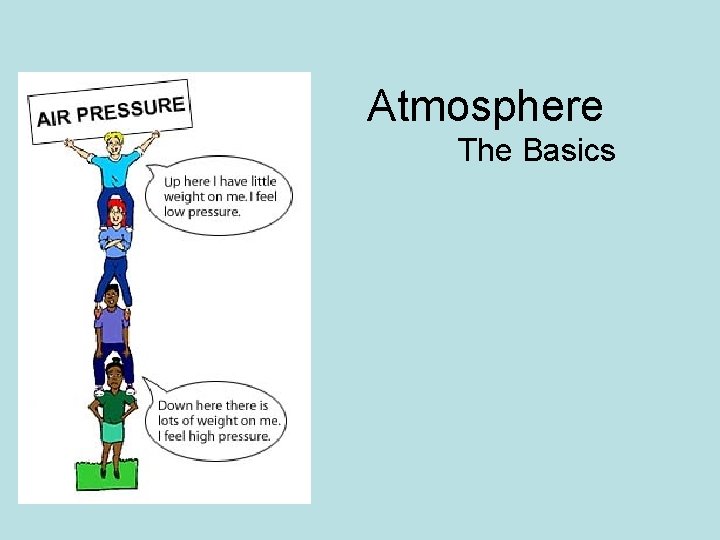
Atmosphere The Basics
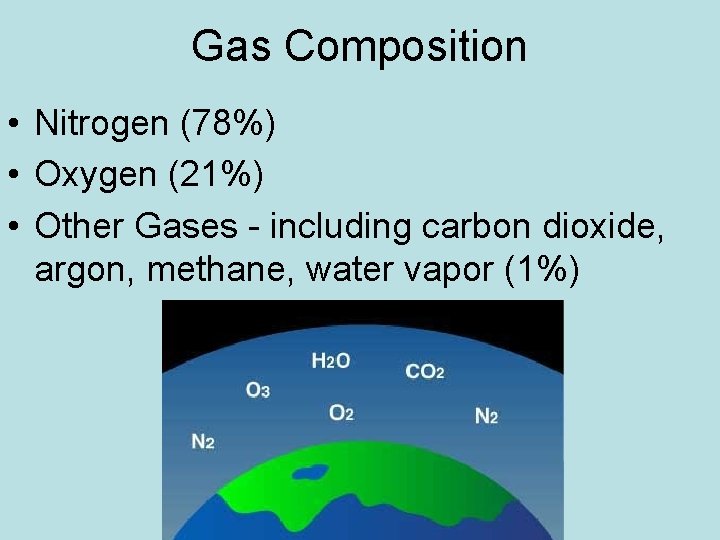
Gas Composition • Nitrogen (78%) • Oxygen (21%) • Other Gases - including carbon dioxide, argon, methane, water vapor (1%)
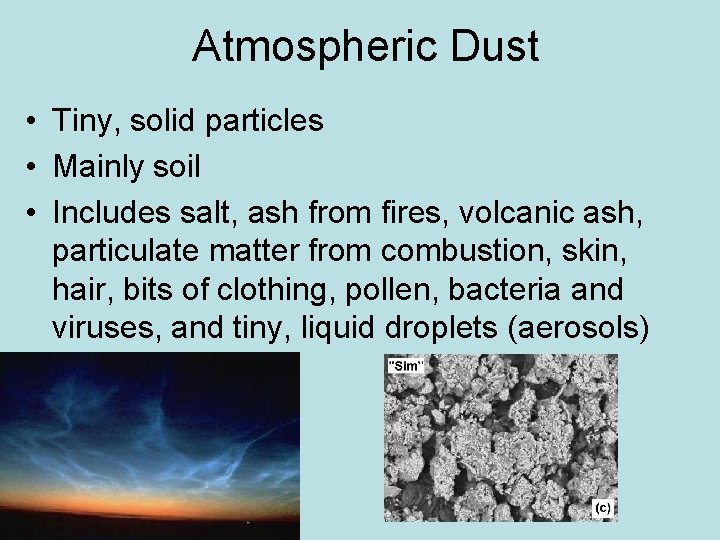
Atmospheric Dust • Tiny, solid particles • Mainly soil • Includes salt, ash from fires, volcanic ash, particulate matter from combustion, skin, hair, bits of clothing, pollen, bacteria and viruses, and tiny, liquid droplets (aerosols)
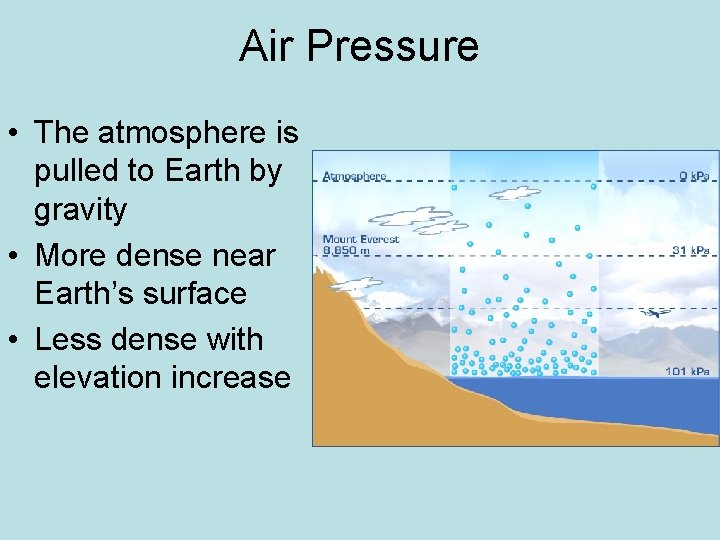
Air Pressure • The atmosphere is pulled to Earth by gravity • More dense near Earth’s surface • Less dense with elevation increase
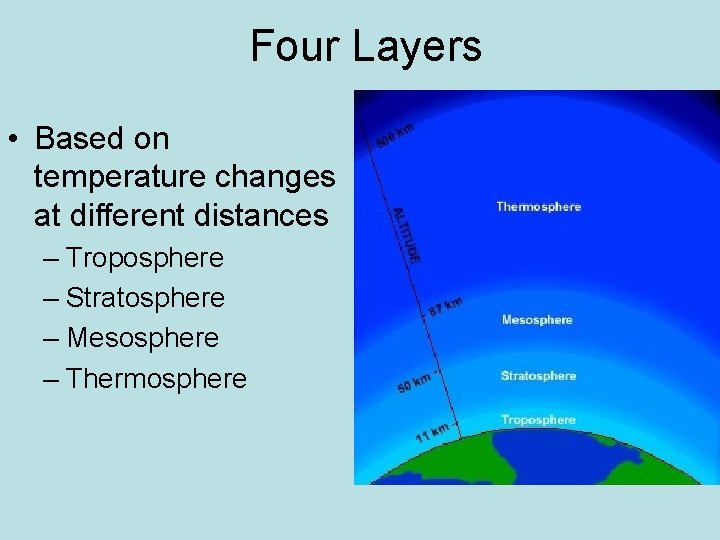
Four Layers • Based on temperature changes at different distances – Troposphere – Stratosphere – Mesosphere – Thermosphere

Energy Transfer • Radiation: Transfer of energy across space/atmosphere • Conduction: Heat from warm to cold when in direct physical contact • Convection: Transfer of heat by air currents (hot air rises)
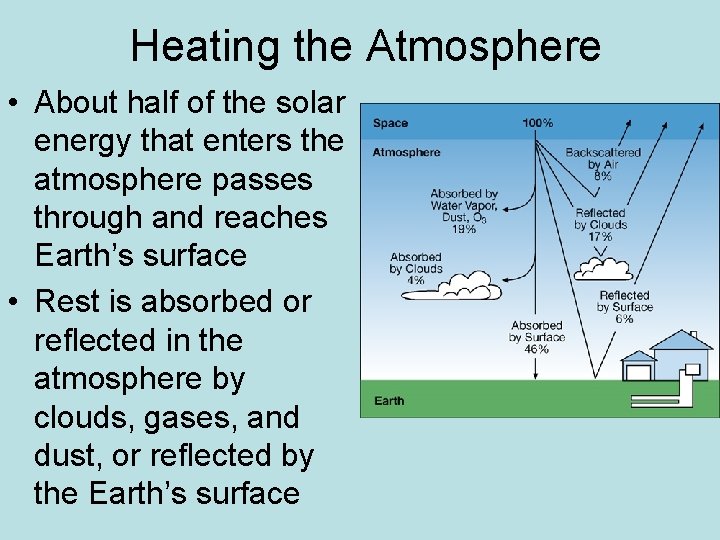
Heating the Atmosphere • About half of the solar energy that enters the atmosphere passes through and reaches Earth’s surface • Rest is absorbed or reflected in the atmosphere by clouds, gases, and dust, or reflected by the Earth’s surface
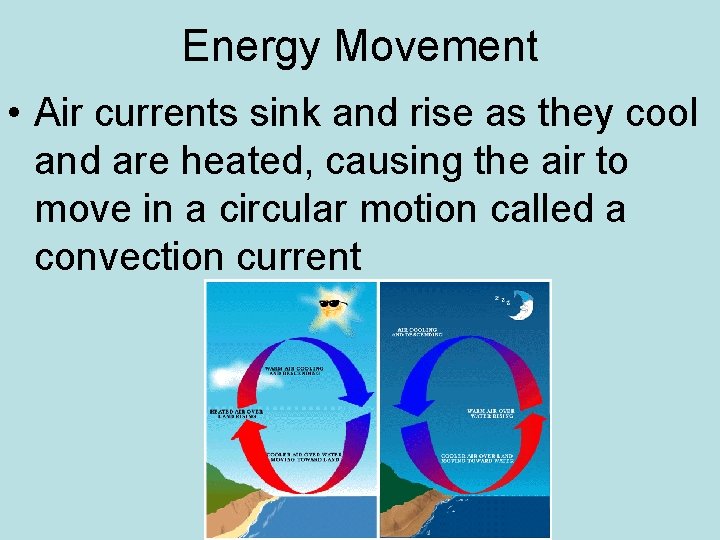
Energy Movement • Air currents sink and rise as they cool and are heated, causing the air to move in a circular motion called a convection current
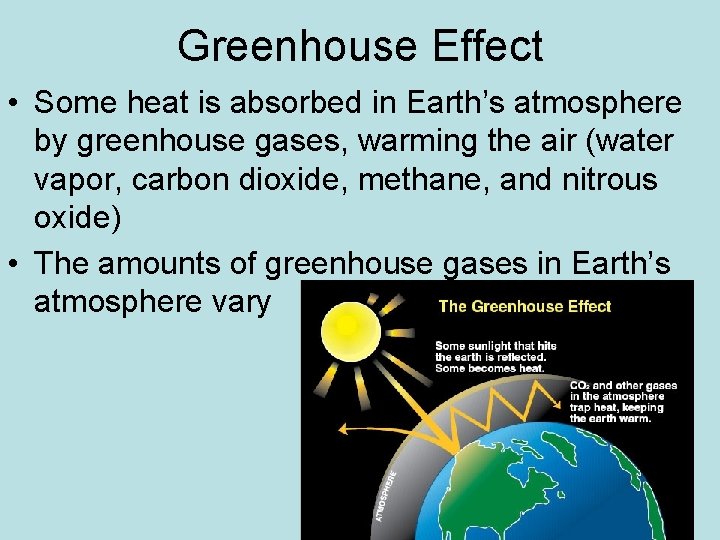
Greenhouse Effect • Some heat is absorbed in Earth’s atmosphere by greenhouse gases, warming the air (water vapor, carbon dioxide, methane, and nitrous oxide) • The amounts of greenhouse gases in Earth’s atmosphere vary
- Slides: 9