
Atmosphere gases that surround earths surface 78 Nitrogen
- Slides: 25
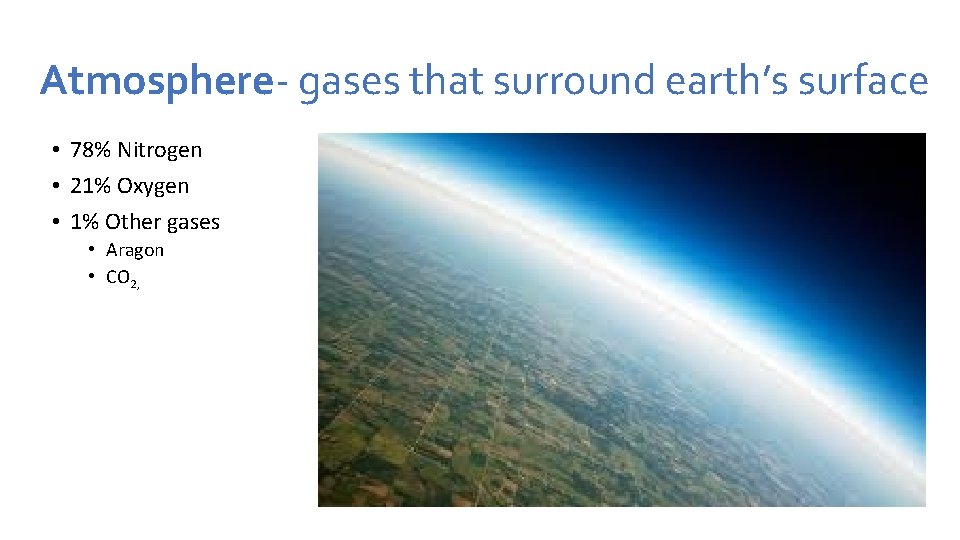
Atmosphere- gases that surround earth’s surface • 78% Nitrogen • 21% Oxygen • 1% Other gases • Aragon • CO 2,
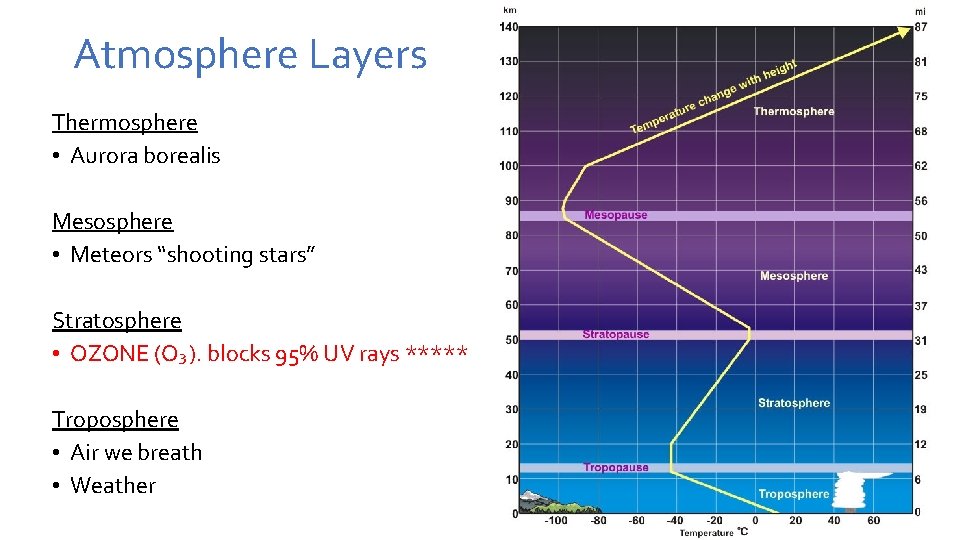
Atmosphere Layers Thermosphere • Aurora borealis Mesosphere • Meteors “shooting stars” Stratosphere • OZONE (O 3 ). blocks 95% UV rays ***** Troposphere • Air we breath • Weather
The atmosphere supports life • Weather • Temperature, precipitation, humidity, wind speed, cloud cover etc… over a period of hours or days • Climate • General pattern of atmospheric condition in a given area over periods ranging from at least 30 years to thousands of years.
What Factors Influence Climate? • An area's climate is determined mostly by 1. 2. 3. 4. 5. solar radiation earth’s rotation global patterns of air and water movement gases in the atmosphere earth’s surface features Over long periods of time, patterns of global air circulation and ocean currents distribute heat and precipitation unevenly.
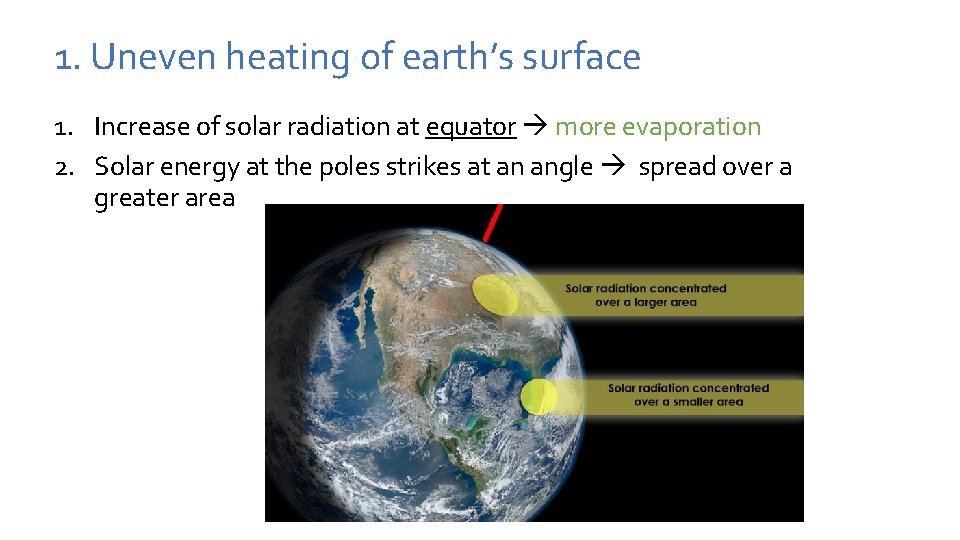
1. Uneven heating of earth’s surface 1. Increase of solar radiation at equator more evaporation 2. Solar energy at the poles strikes at an angle spread over a greater area
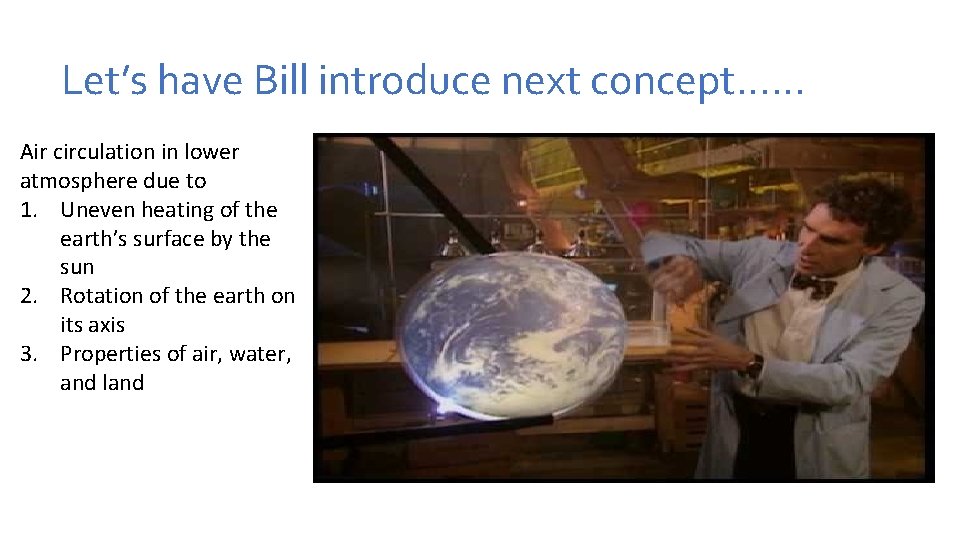
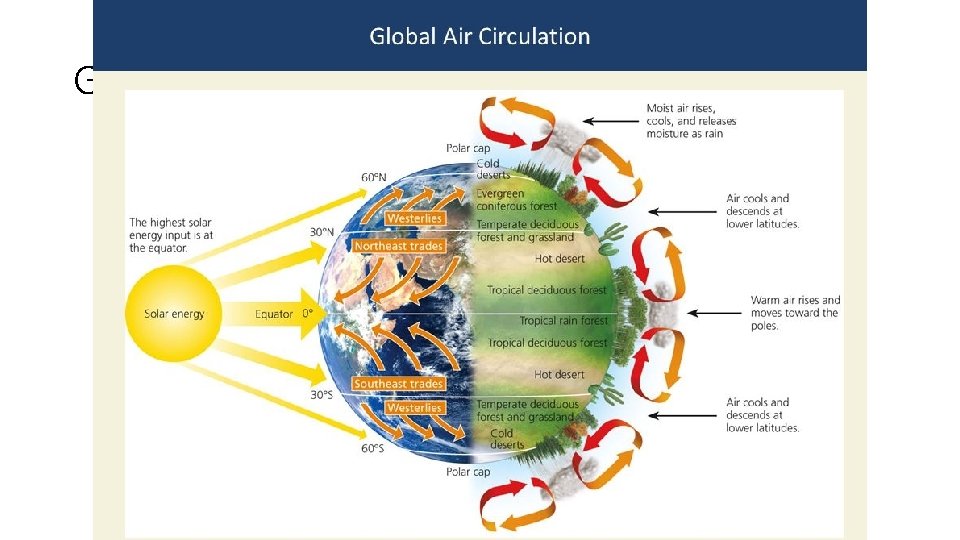
Let’s have Bill introduce next concept…… Air circulation in lower atmosphere due to 1. Uneven heating of the earth’s surface by the sun 2. Rotation of the earth on its axis 3. Properties of air, water, and land
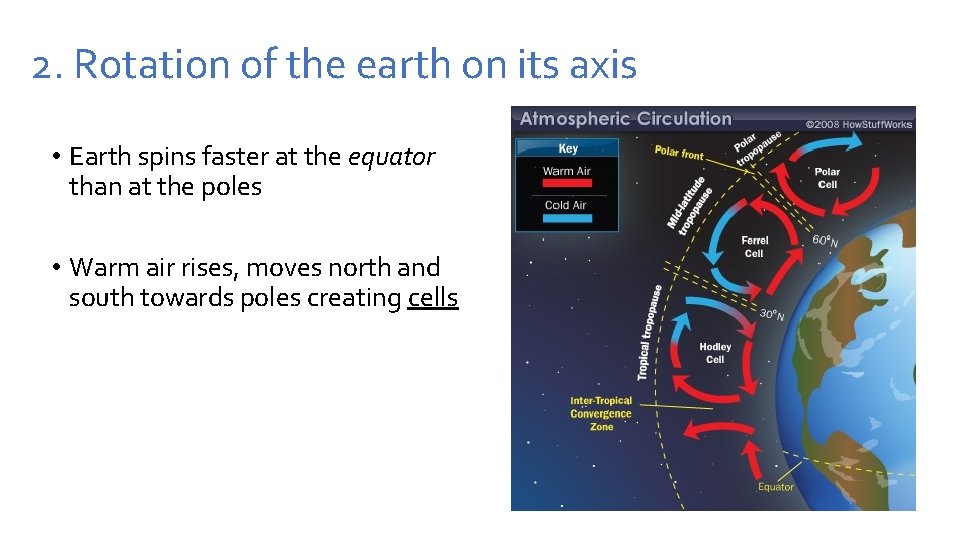
2. Rotation of the earth on its axis • Earth spins faster at the equator than at the poles • Warm air rises, moves north and south towards poles creating cells
Global Air Circulation
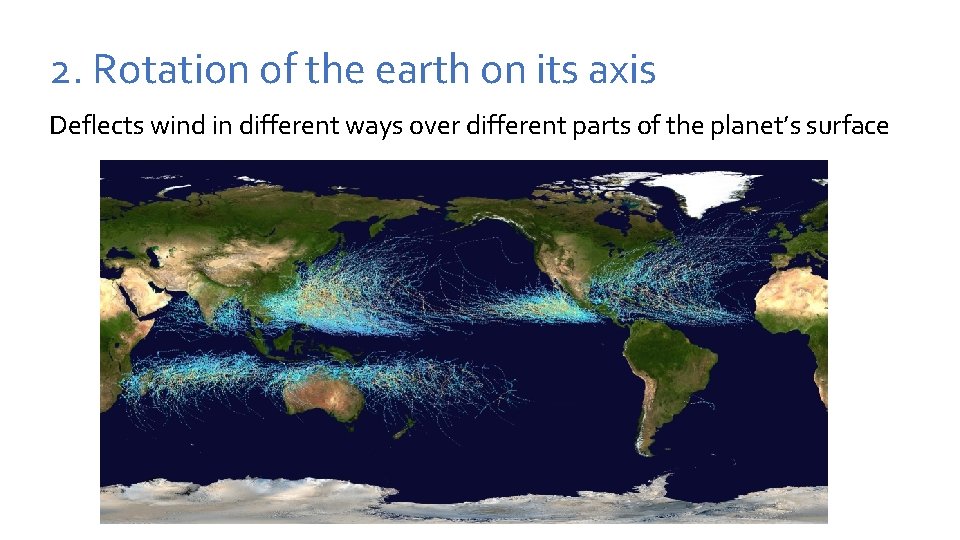
2. Rotation of the earth on its axis Deflects wind in different ways over different parts of the planet’s surface
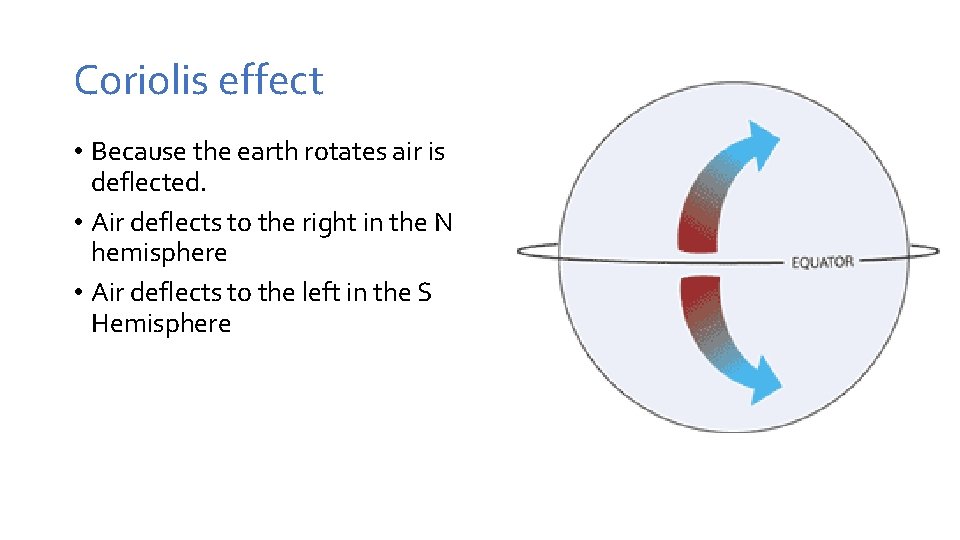
Coriolis effect • Because the earth rotates air is deflected. • Air deflects to the right in the N hemisphere • Air deflects to the left in the S Hemisphere
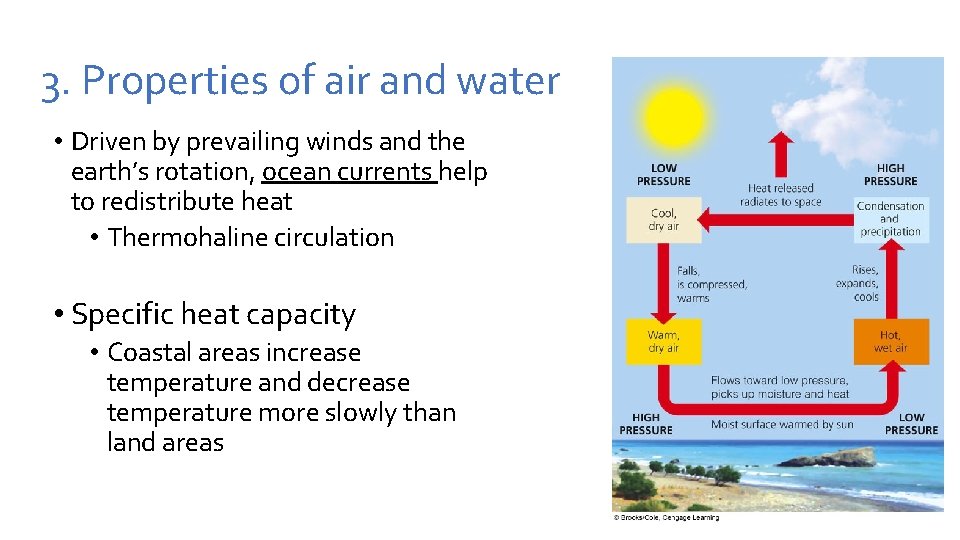
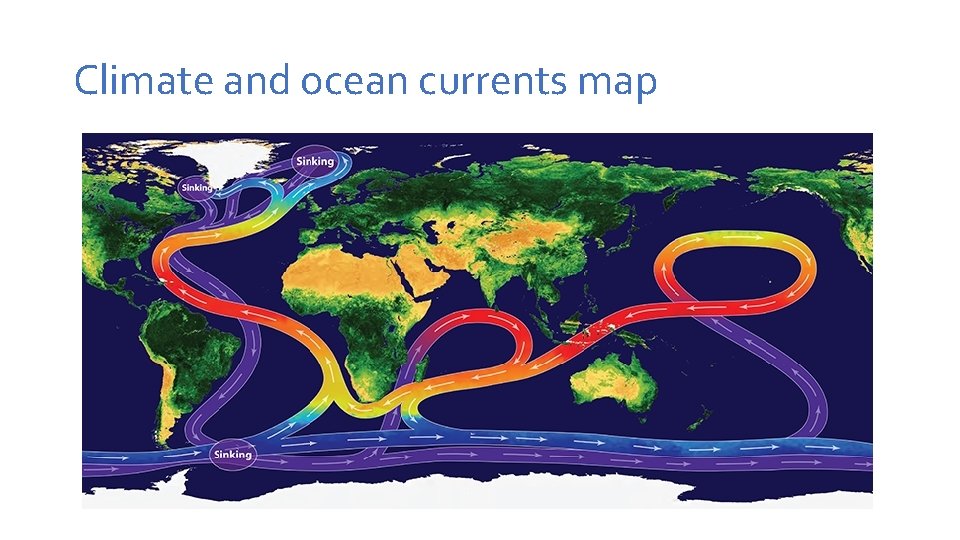
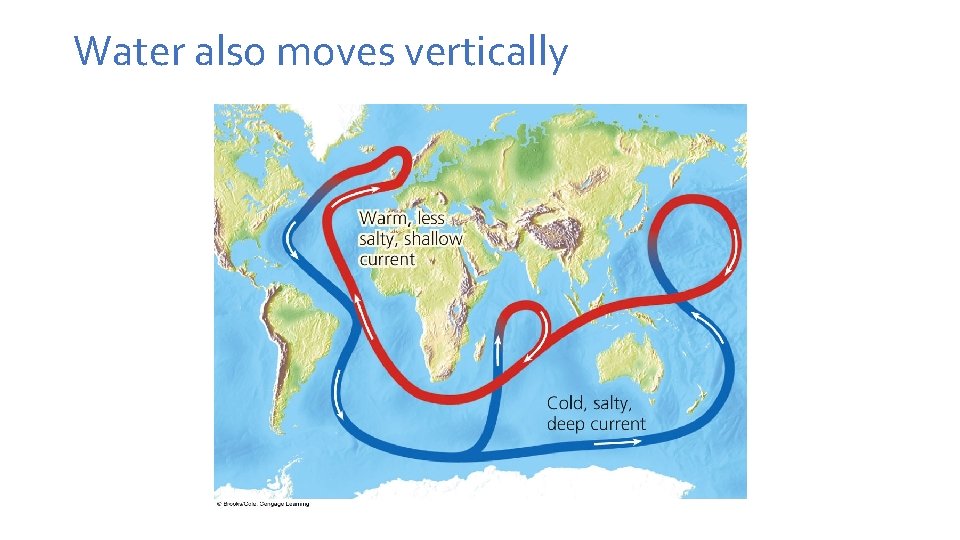
3. Properties of air and water • Driven by prevailing winds and the earth’s rotation, ocean currents help to redistribute heat • Thermohaline circulation • Specific heat capacity • Coastal areas increase temperature and decrease temperature more slowly than land areas
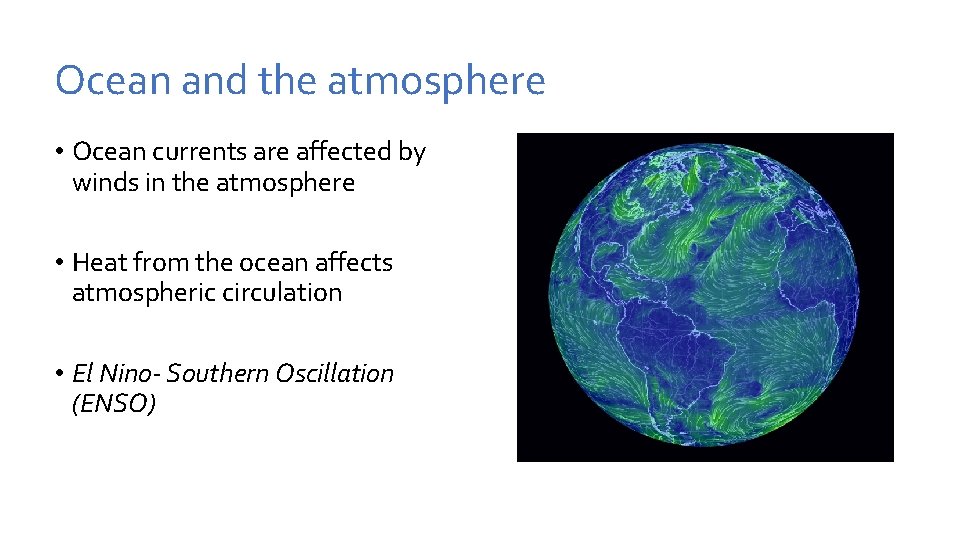
Ocean and the atmosphere • Ocean currents are affected by winds in the atmosphere • Heat from the ocean affects atmospheric circulation • El Nino- Southern Oscillation (ENSO)
Climate and ocean currents map
Water also moves vertically
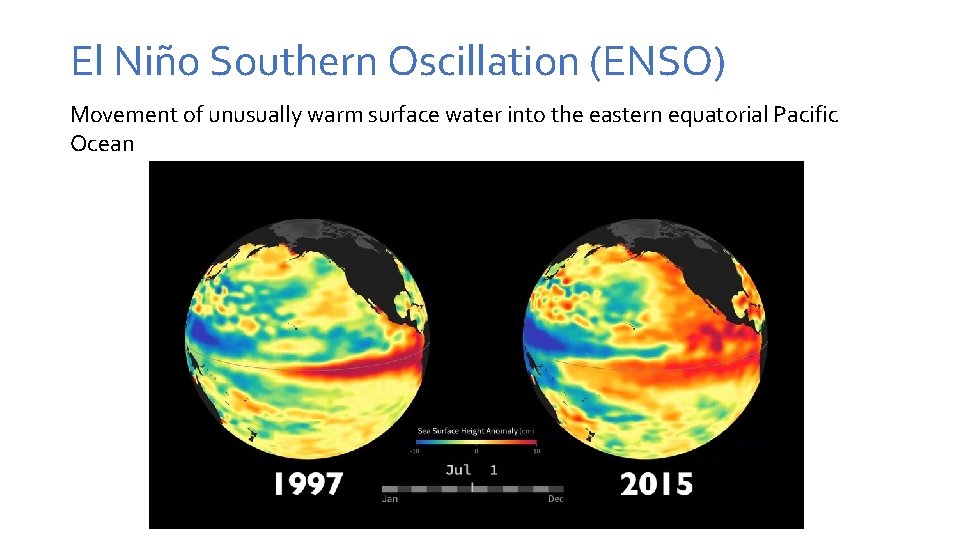
El Niño Southern Oscillation (ENSO) Movement of unusually warm surface water into the eastern equatorial Pacific Ocean
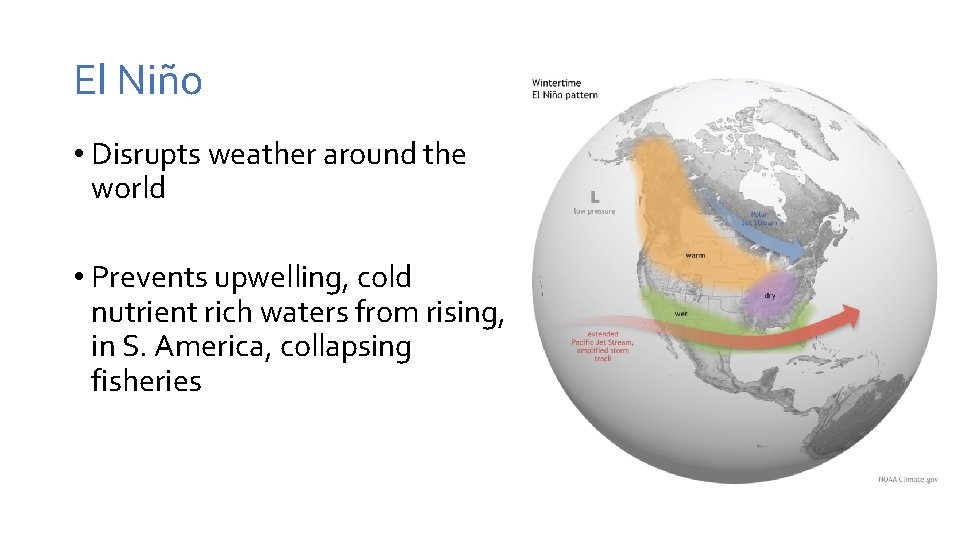
El Niño • Disrupts weather around the world • Prevents upwelling, cold nutrient rich waters from rising, in S. America, collapsing fisheries
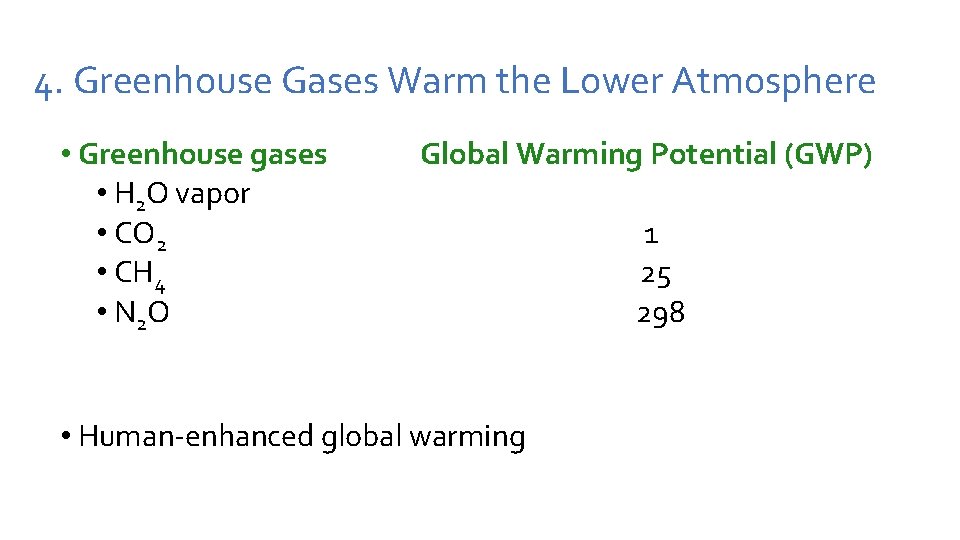
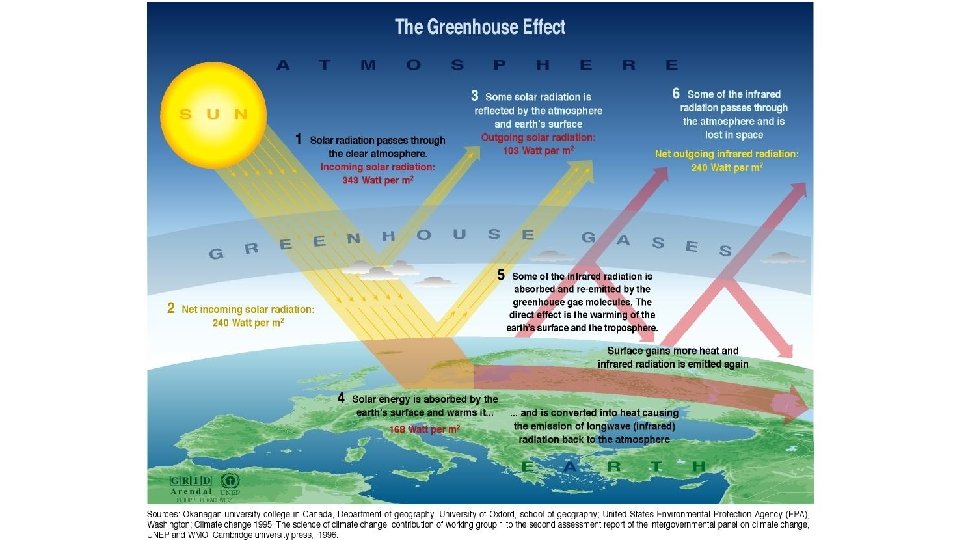
4. Greenhouse Gases Warm the Lower Atmosphere • Greenhouse gases • H 2 O vapor • CO 2 • CH 4 • N 2 O Global Warming Potential (GWP) • Human-enhanced global warming 1 25 298
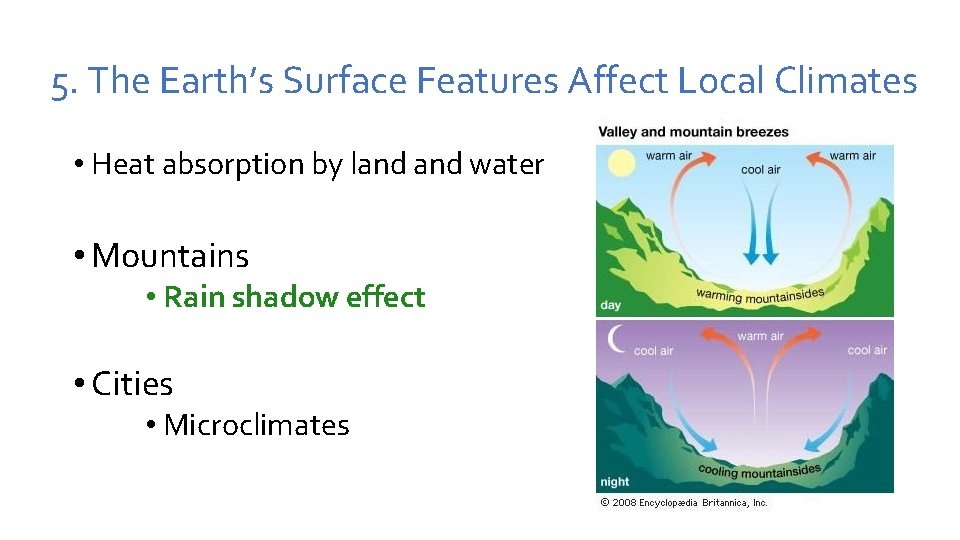
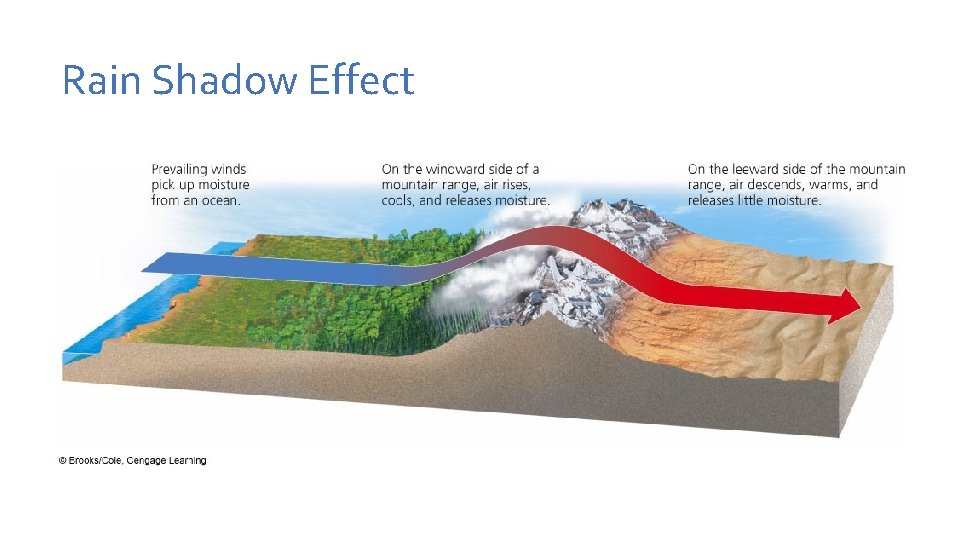
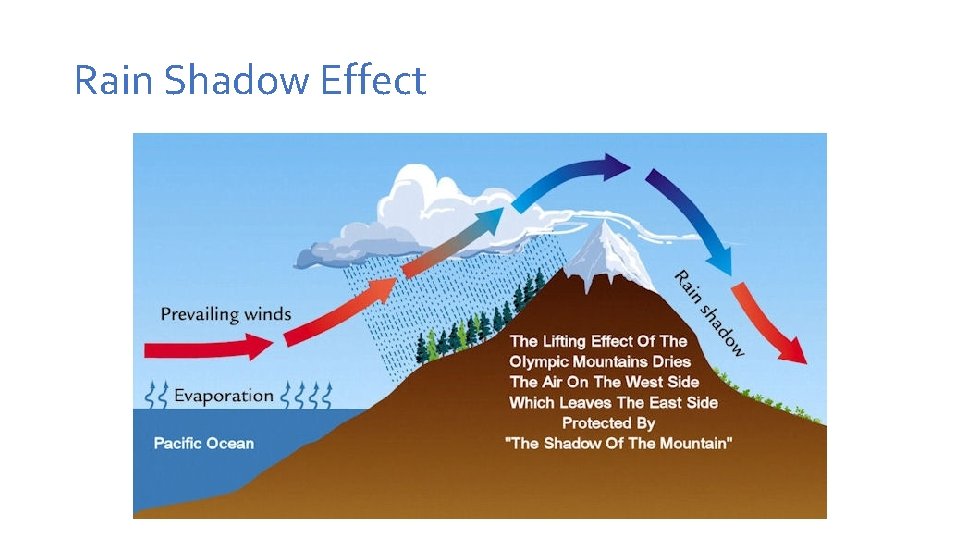
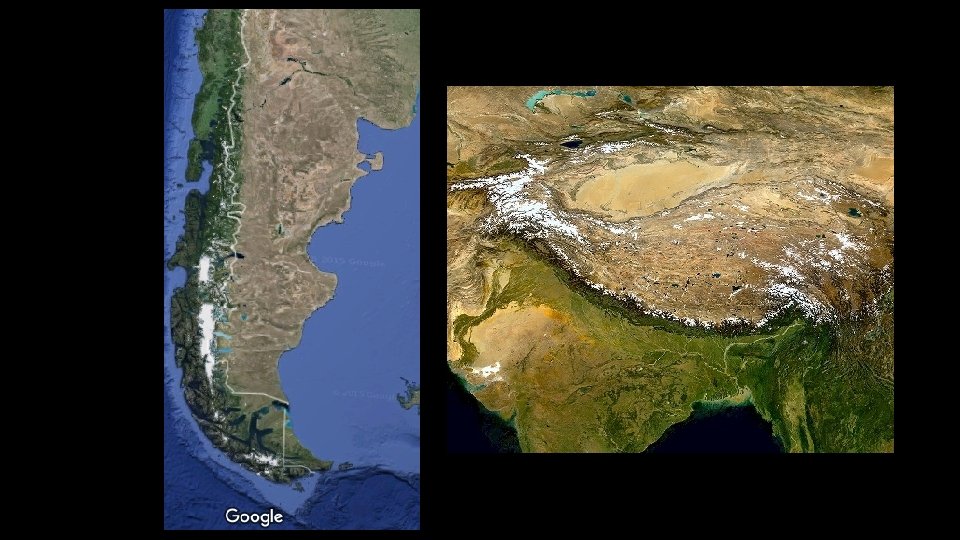
5. The Earth’s Surface Features Affect Local Climates • Heat absorption by land water • Mountains • Rain shadow effect • Cities • Microclimates
Rain Shadow Effect
Rain Shadow Effect
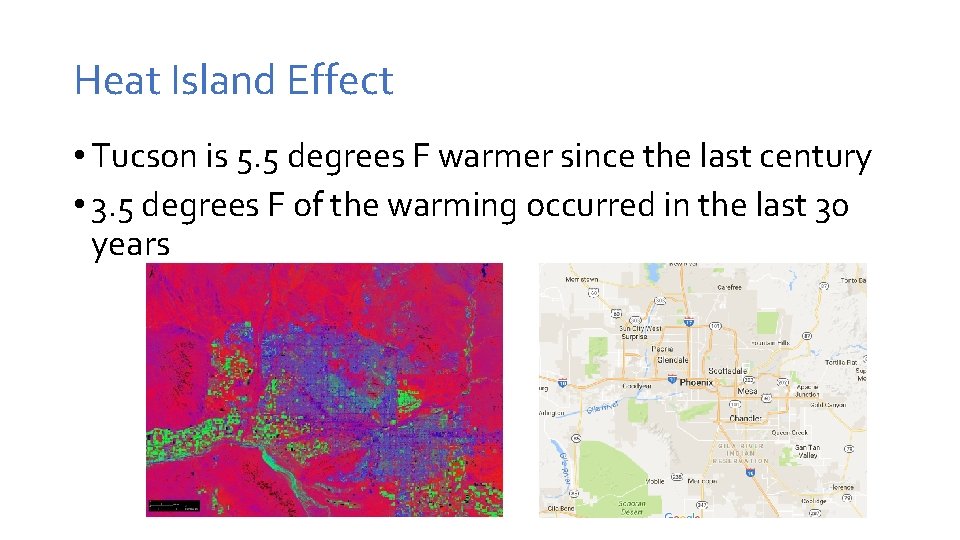
Heat Island Effect • Tucson is 5. 5 degrees F warmer since the last century • 3. 5 degrees F of the warming occurred in the last 30 years