
atmosphere Climate Factors that affect the climate World
- Slides: 28
atmosphere & Climate Factors that affect the climate, World climates, and Climate Changes
What is Climate? • Climate is the weather conditions prevailing in an area over a long period of time.
FActors that affect climate • Latitude • Elevation • Topography • Water Bodies • Atmospheric Circulation • Vegetation
Latitude Distance North or South of the equator. As Latitude Increases, the intensity of solar energy decreases.
Latitude There are 3 Climate Zones: Temperate, Tropics, and Polar.
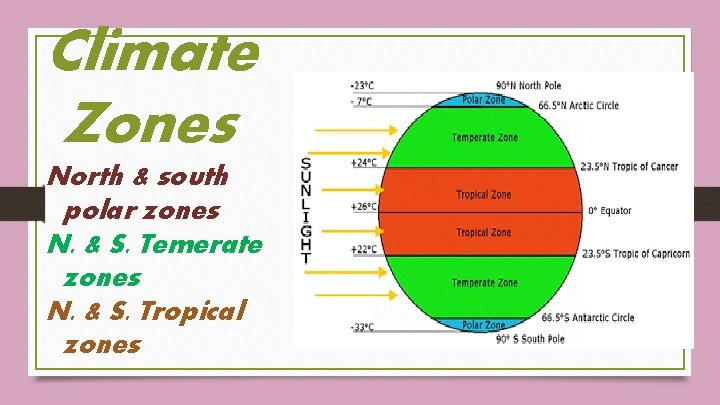
Climate Zones North & south polar zones N. & S. Temerate zones N. & S. Tropical zones
elevation Height above sea level. Air temperature decreases with elevation as well as the amount of precipitationn
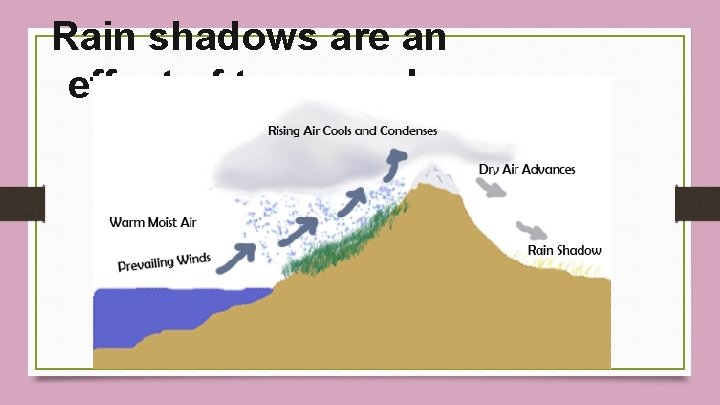
Topography The physical features of an area. Topographic features such as mountains play an important role in the amount of precipitation that falls over an area.
Rain shadows are an effect of topography
• The temperature of the water body Water Bodies influences the temperatureof the air mass above it. Places downwind of a body of water have coolersummers and milder winters compare with inland areas
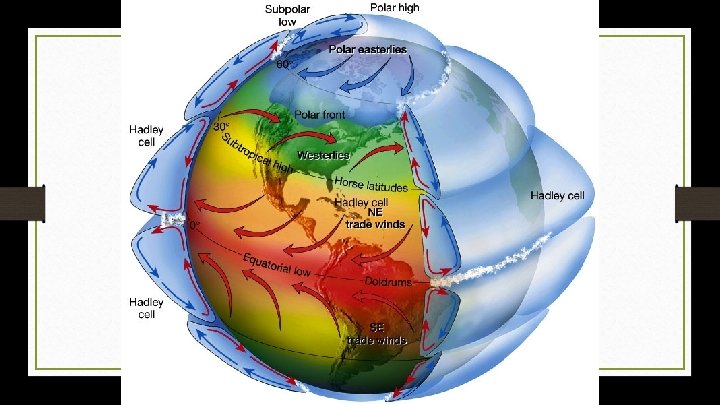
Atmospheric Circulation The movement of air in the atmosphere. Global winds influences climate because they distribute heat and moisture around Earth.
Vegetation can affect both temperature and the precipitation patterns in an area. Vegetation influences how much of the suns energy is released and abosorbed. The types of plants that grow Transpirationreleases water in a region. vapor and influences precipitation. Vegetation
World climates
Köppen Climate Classification System Classificationsystem to group climates. This uses mean monthly and annual values of temperature and precipitation to classify climates.
Classification System There are 5 principle groups: Humidtripical climates, dry climates, humid -latitude climates, polar climates, highland climates.
Climate Changes
natural processes that change climate • • Volcanic Eruptions Ocean Circulation Solar Activity Earth Motions
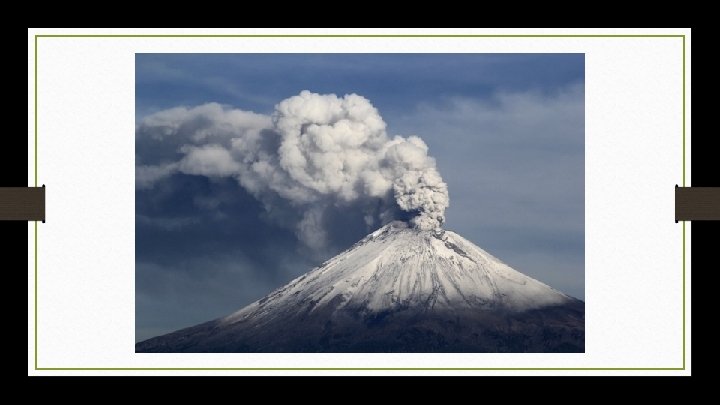
Volcanic Eruptions They emit large volumes of ash and dust into the earth's atmosphere The presence of volcanic ash, dust, and sulfur-based aerosols in the air increases the amount of solar radiation that is reflected back into space. This causes Earth’s lower atmosphere to cool.
Ocean Circulation These changes in ocean circulation can result in short-term climate fluctuations.
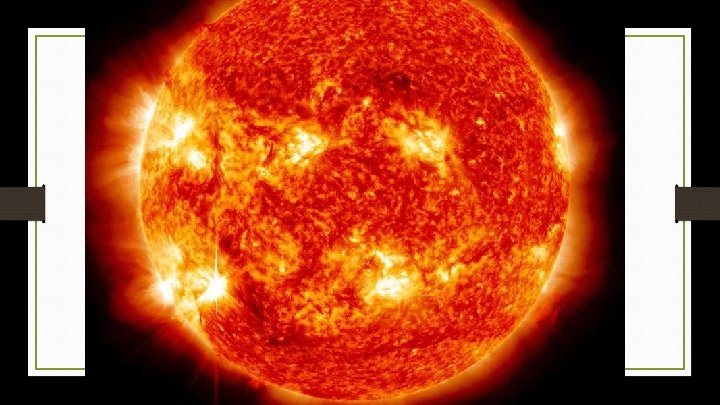
Solar Activity Changes in output of solar energy. When sunspots occur (Dark blemishes on the sun) they seem to correspond with warm periods in Europe and North America.
Earth Motions 1. Geographic changes (tectonic plates) in Earth’s land water bodies cause changes in climate. • 2. Changes in the shape of Earth’s orbit and the tilt of Earth on its axis are other Earth motions that affect global climates.
Earth Motions Tectonic plate movements, orbit, and tilt. Changes in the shape of Earth’s orbit and the tilt of Earth on its axis are other Earth motions that affect global climates.
human impact on climate changes • Greenhouse Effect • Global Warming
The greenhouse Effect The greenhouse effect is a natural warming of both Earth’s lower atmosphere and Earth’s surface.
Global Warming Warmer surface temperatures increase evaporation rates, which absorbs radiation. As a result of increase in carbon dioxide levels, as well as other greenhouse gases, global temperatures have increased. This is called global warming.