
ATMOSPHERE AND CLIMATE CHANGE CHAPTER 13 1 SECTION
- Slides: 27
ATMOSPHERE AND CLIMATE CHANGE CHAPTER 13 1
SECTION 1: CLIMATE AND CLIMATE CHANGE 2
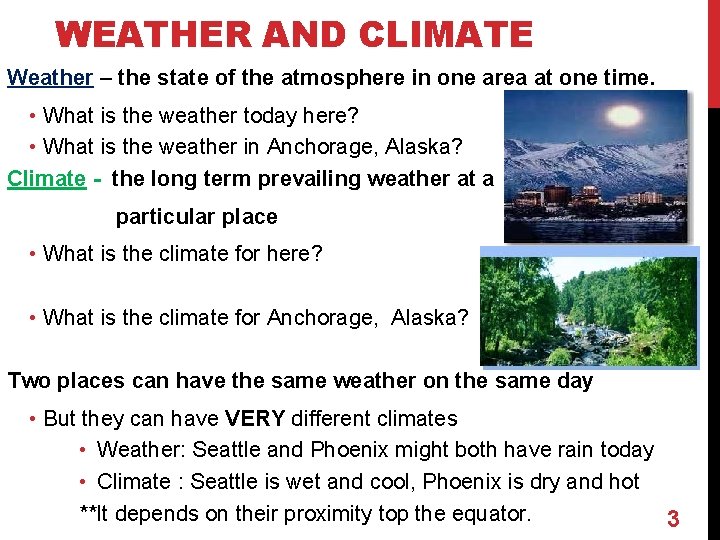
WEATHER AND CLIMATE Weather – the state of the atmosphere in one area at one time. • What is the weather today here? • What is the weather in Anchorage, Alaska? Climate - the long term prevailing weather at a particular place • What is the climate for here? • What is the climate for Anchorage, Alaska? Two places can have the same weather on the same day • But they can have VERY different climates • Weather: Seattle and Phoenix might both have rain today • Climate : Seattle is wet and cool, Phoenix is dry and hot **It depends on their proximity top the equator. 3
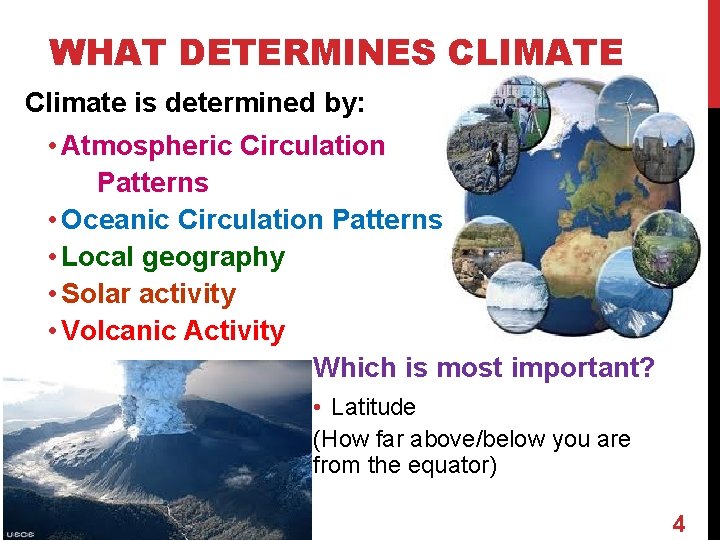
WHAT DETERMINES CLIMATE Climate is determined by: • Atmospheric Circulation Patterns • Oceanic Circulation Patterns • Local geography • Solar activity • Volcanic Activity Which is most important? • Latitude (How far above/below you are from the equator) 4
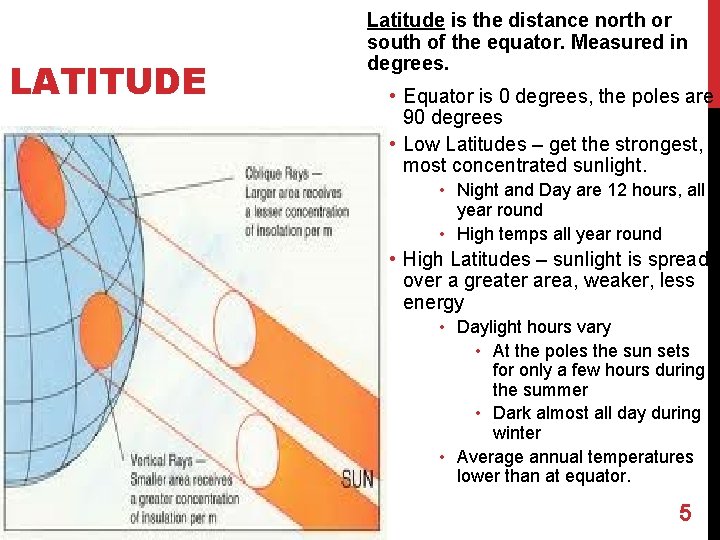
LATITUDE Latitude is the distance north or south of the equator. Measured in degrees. • Equator is 0 degrees, the poles are 90 degrees • Low Latitudes – get the strongest, most concentrated sunlight. • Night and Day are 12 hours, all year round • High temps all year round • High Latitudes – sunlight is spread over a greater area, weaker, less energy • Daylight hours vary • At the poles the sun sets for only a few hours during the summer • Dark almost all day during winter • Average annual temperatures lower than at equator. 5
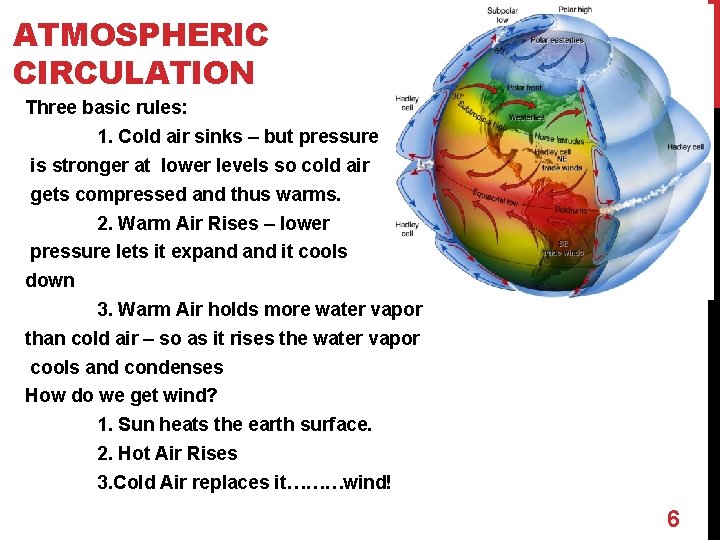
ATMOSPHERIC CIRCULATION Three basic rules: 1. Cold air sinks – but pressure is stronger at lower levels so cold air gets compressed and thus warms. 2. Warm Air Rises – lower pressure lets it expand it cools down 3. Warm Air holds more water vapor than cold air – so as it rises the water vapor cools and condenses How do we get wind? 1. Sun heats the earth surface. 2. Hot Air Rises 3. Cold Air replaces it………wind! 6
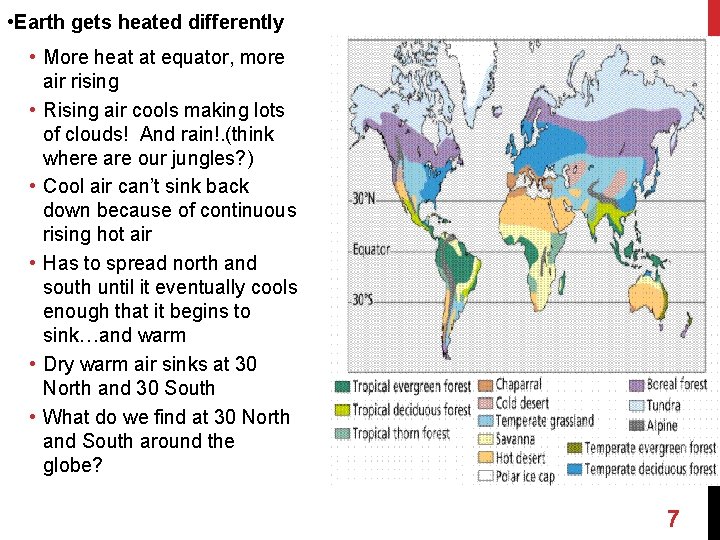
• Earth gets heated differently • More heat at equator, more air rising • Rising air cools making lots of clouds! And rain!. (think where are our jungles? ) • Cool air can’t sink back down because of continuous rising hot air • Has to spread north and south until it eventually cools enough that it begins to sink…and warm • Dry warm air sinks at 30 North and 30 South • What do we find at 30 North and South around the globe? 7
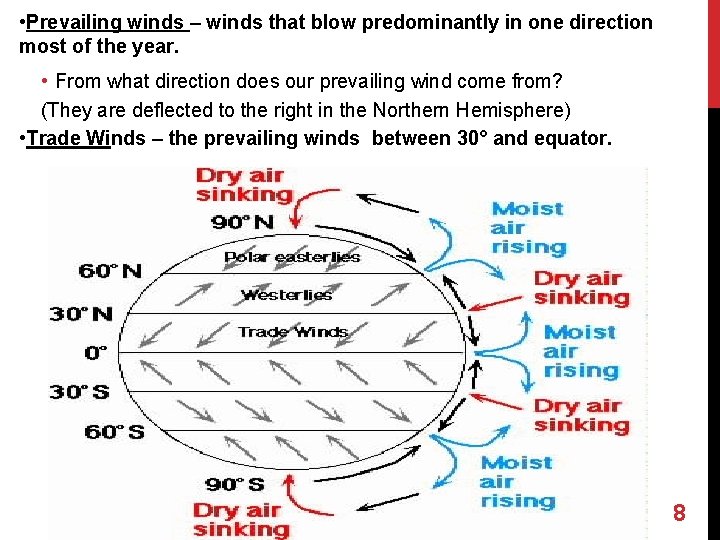
• Prevailing winds – winds that blow predominantly in one direction most of the year. • From what direction does our prevailing wind come from? (They are deflected to the right in the Northern Hemisphere) • Trade Winds – the prevailing winds between 30° and equator. 8
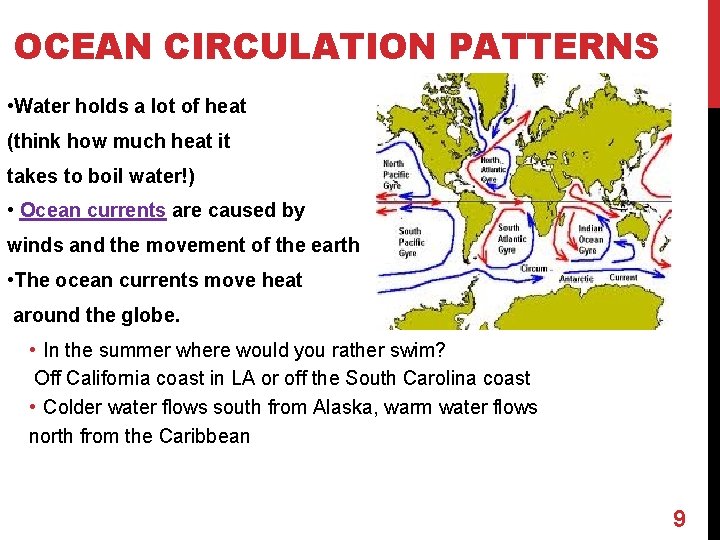
OCEAN CIRCULATION PATTERNS • Water holds a lot of heat (think how much heat it takes to boil water!) • Ocean currents are caused by winds and the movement of the earth • The ocean currents move heat around the globe. • In the summer where would you rather swim? Off California coast in LA or off the South Carolina coast • Colder water flows south from Alaska, warm water flows north from the Caribbean 9
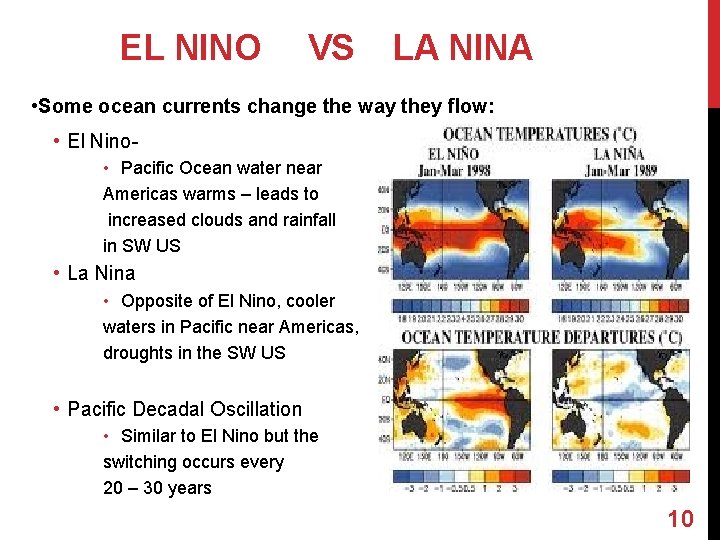
EL NINO VS LA NINA • Some ocean currents change the way they flow: • El Nino • Pacific Ocean water near Americas warms – leads to increased clouds and rainfall in SW US • La Nina • Opposite of El Nino, cooler waters in Pacific near Americas, droughts in the SW US • Pacific Decadal Oscillation • Similar to El Nino but the switching occurs every 20 – 30 years 10
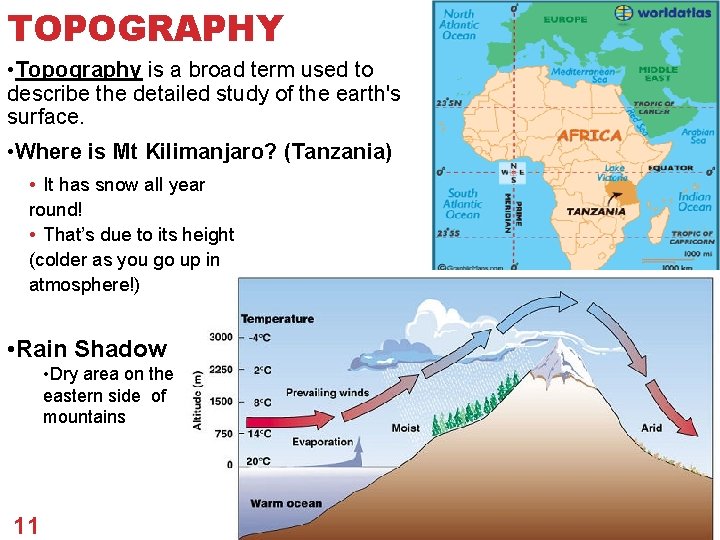
TOPOGRAPHY • Topography is a broad term used to describe the detailed study of the earth's surface. • Where is Mt Kilimanjaro? (Tanzania) • It has snow all year round! • That’s due to its height (colder as you go up in atmosphere!) • Rain Shadow • Dry area on the eastern side of mountains 11
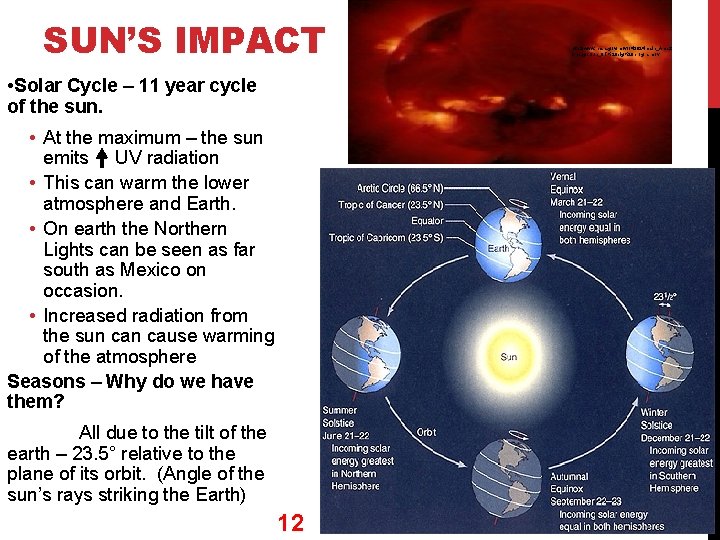
SUN’S IMPACT • Solar Cycle – 11 year cycle of the sun. • At the maximum – the sun emits UV radiation • This can warm the lower atmosphere and Earth. • On earth the Northern Lights can be seen as far south as Mexico on occasion. • Increased radiation from the sun cause warming of the atmosphere Seasons – Why do we have them? All due to the tilt of the earth – 23. 5° relative to the plane of its orbit. (Angle of the sun’s rays striking the Earth) 12 http: //www. nasa. gov/mov/143924 main_Amaz Change. Sun_QT%20 big%20 progre. mov
THAT’S ALL FOR 13. 1 Time for a reading quiz 13
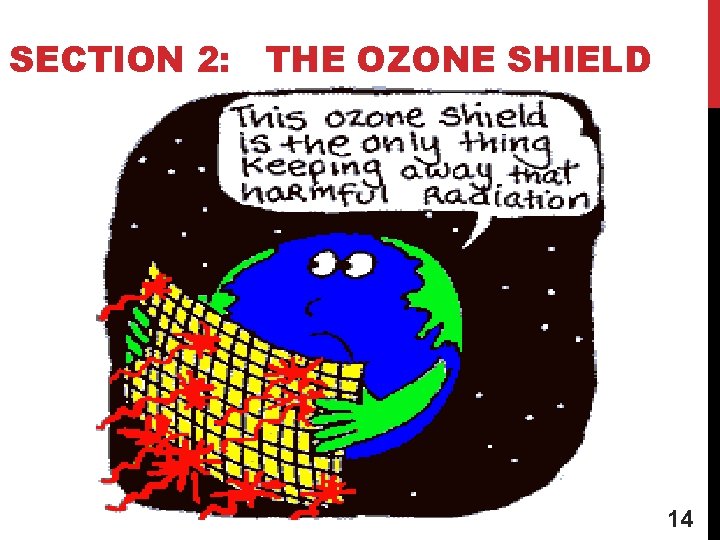
SECTION 2: THE OZONE SHIELD 14
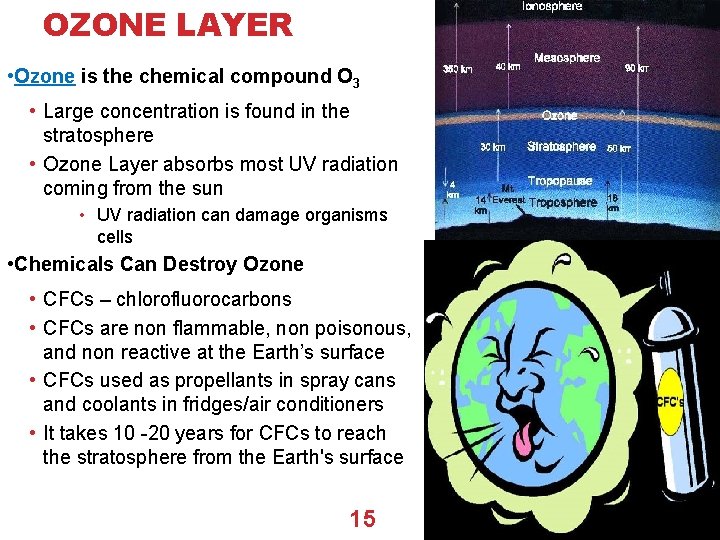
OZONE LAYER • Ozone is the chemical compound O 3 • Large concentration is found in the stratosphere • Ozone Layer absorbs most UV radiation coming from the sun • UV radiation can damage organisms cells • Chemicals Can Destroy Ozone • CFCs – chlorofluorocarbons • CFCs are non flammable, non poisonous, and non reactive at the Earth’s surface • CFCs used as propellants in spray cans and coolants in fridges/air conditioners • It takes 10 -20 years for CFCs to reach the stratosphere from the Earth's surface 15
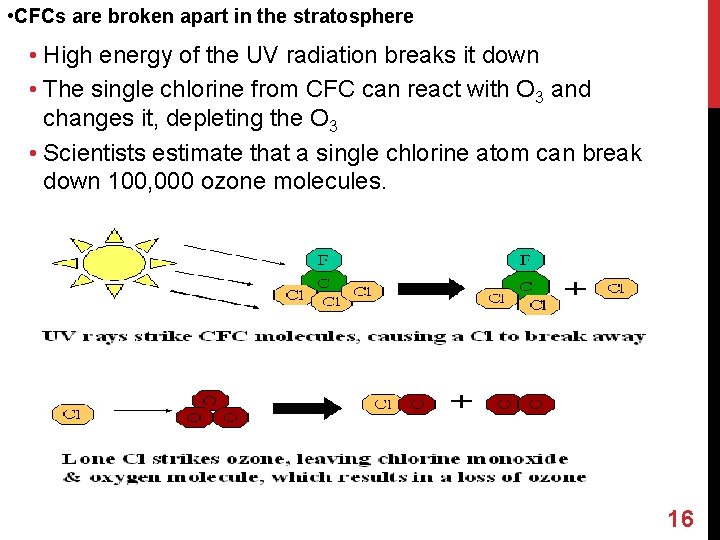
• CFCs are broken apart in the stratosphere • High energy of the UV radiation breaks it down • The single chlorine from CFC can react with O 3 and changes it, depleting the O 3 • Scientists estimate that a single chlorine atom can break down 100, 000 ozone molecules. 16
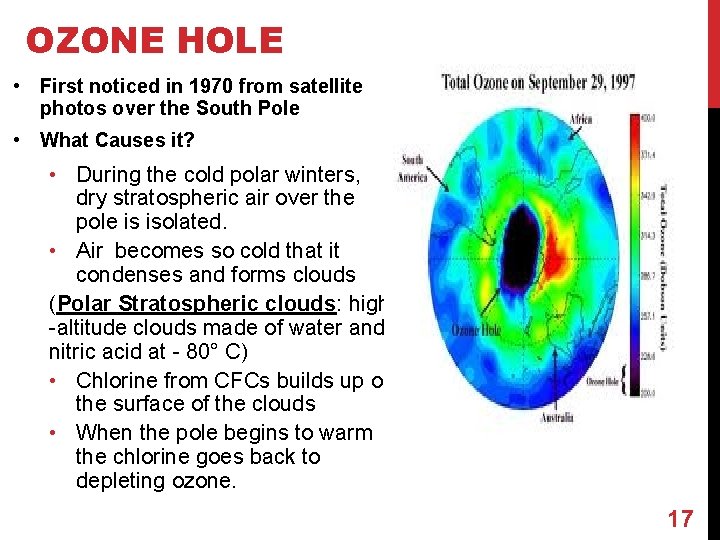
OZONE HOLE • First noticed in 1970 from satellite photos over the South Pole • What Causes it? • During the cold polar winters, dry stratospheric air over the pole is isolated. • Air becomes so cold that it condenses and forms clouds (Polar Stratospheric clouds: high -altitude clouds made of water and nitric acid at - 80° C) • Chlorine from CFCs builds up on the surface of the clouds • When the pole begins to warm the chlorine goes back to depleting ozone. 17
VIDEO ON OZONE DEPLETION http: //video. nationalgeographic. com/video/news/environmentnews/antarctica-ozone-vin/ 18
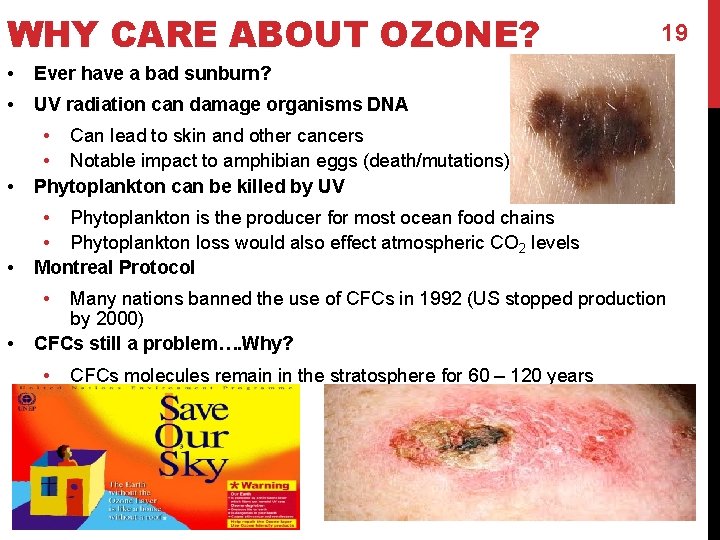
WHY CARE ABOUT OZONE? • Ever have a bad sunburn? • UV radiation can damage organisms DNA • • Can lead to skin and other cancers • Notable impact to amphibian eggs (death/mutations) Phytoplankton can be killed by UV • • Phytoplankton is the producer for most ocean food chains • Phytoplankton loss would also effect atmospheric CO 2 levels Montreal Protocol • • 19 Many nations banned the use of CFCs in 1992 (US stopped production by 2000) CFCs still a problem…. Why? • CFCs molecules remain in the stratosphere for 60 – 120 years
THAT’S ALL FOR 13. 2 Time for a reading quiz 20
SECTION 3: GLOBAL WARMING 21
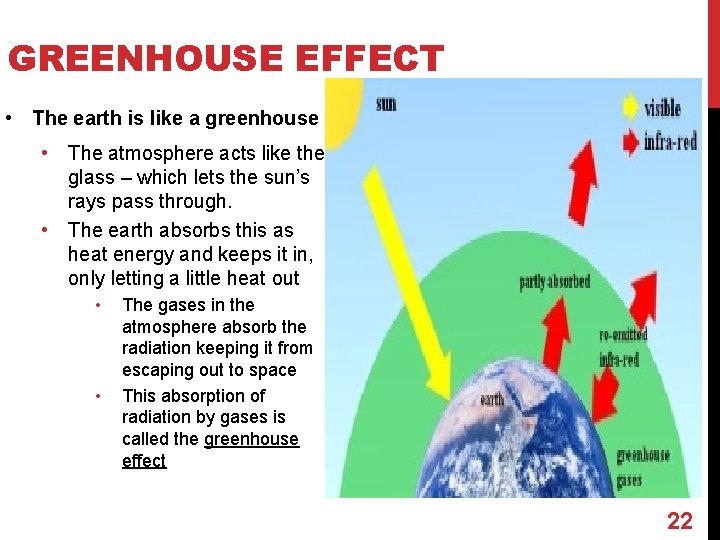
GREENHOUSE EFFECT • The earth is like a greenhouse • The atmosphere acts like the glass – which lets the sun’s rays pass through. • The earth absorbs this as heat energy and keeps it in, only letting a little heat out • • The gases in the atmosphere absorb the radiation keeping it from escaping out to space This absorption of radiation by gases is called the greenhouse effect 22
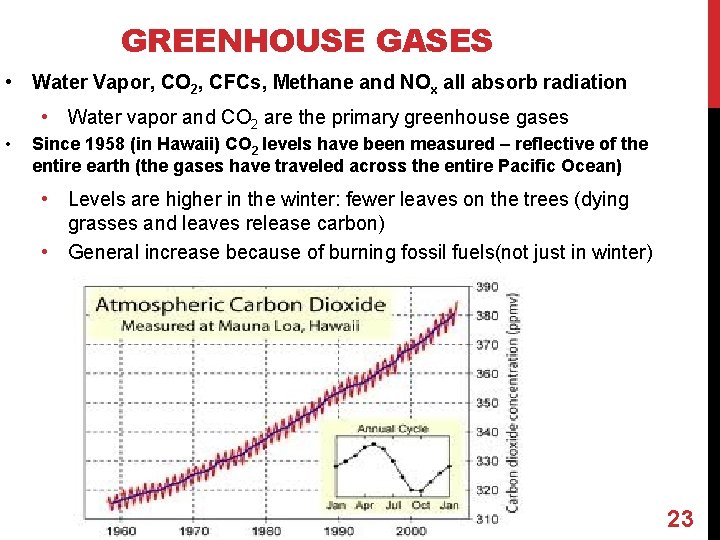
GREENHOUSE GASES • Water Vapor, CO 2, CFCs, Methane and NOx all absorb radiation • Water vapor and CO 2 are the primary greenhouse gases • Since 1958 (in Hawaii) CO 2 levels have been measured – reflective of the entire earth (the gases have traveled across the entire Pacific Ocean) • Levels are higher in the winter: fewer leaves on the trees (dying grasses and leaves release carbon) • General increase because of burning fossil fuels(not just in winter) 23
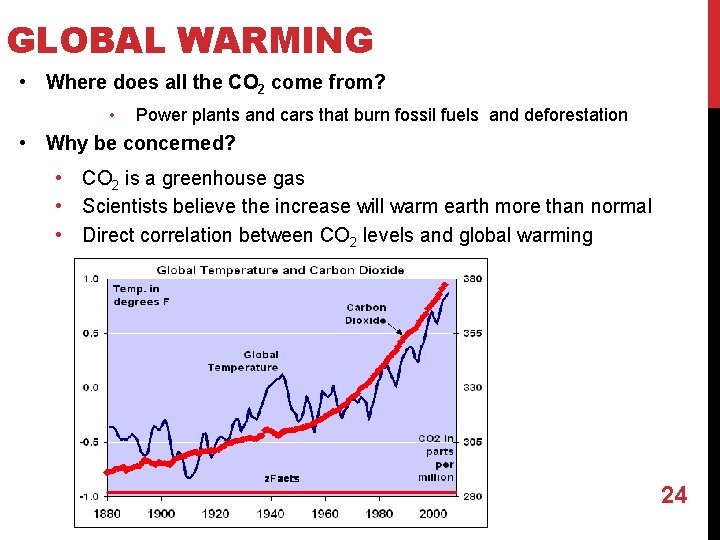
GLOBAL WARMING • Where does all the CO 2 come from? • Power plants and cars that burn fossil fuels and deforestation • Why be concerned? • CO 2 is a greenhouse gas • Scientists believe the increase will warm earth more than normal • Direct correlation between CO 2 levels and global warming 24
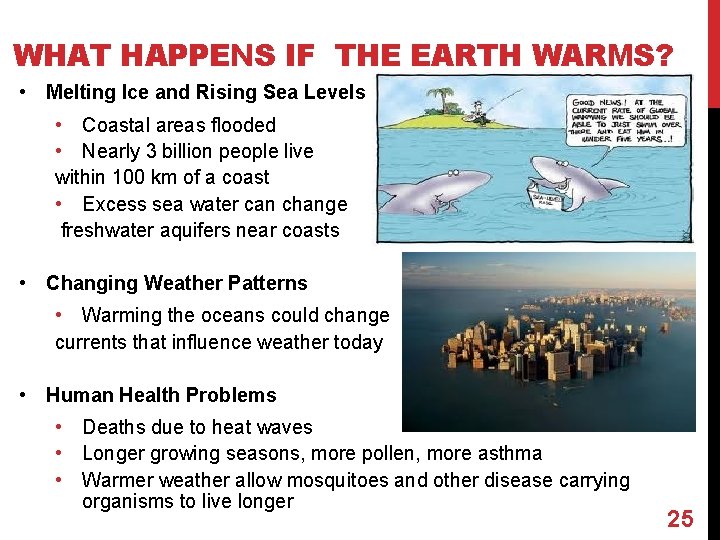
WHAT HAPPENS IF THE EARTH WARMS? • Melting Ice and Rising Sea Levels • Coastal areas flooded • Nearly 3 billion people live within 100 km of a coast • Excess sea water can change freshwater aquifers near coasts • Changing Weather Patterns • Warming the oceans could change currents that influence weather today • Human Health Problems • Deaths due to heat waves • Longer growing seasons, more pollen, more asthma • Warmer weather allow mosquitoes and other disease carrying organisms to live longer 25
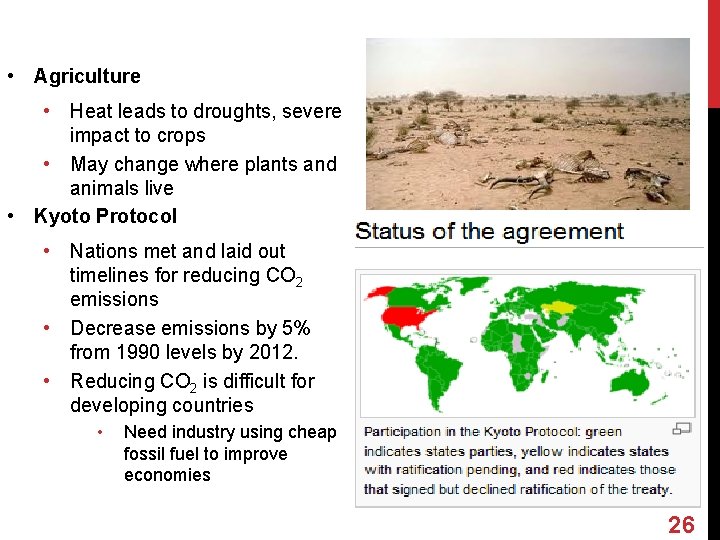
• Agriculture • Heat leads to droughts, severe impact to crops • May change where plants and animals live • Kyoto Protocol • Nations met and laid out timelines for reducing CO 2 emissions • Decrease emissions by 5% from 1990 levels by 2012. • Reducing CO 2 is difficult for developing countries • Need industry using cheap fossil fuel to improve economies 26
THAT’S ALL FOR 13. 3 Time for a reading quiz 27