
Atmosphere 17 1 Components of the Atmosphere Air
- Slides: 16
Atmosphere 17. 1
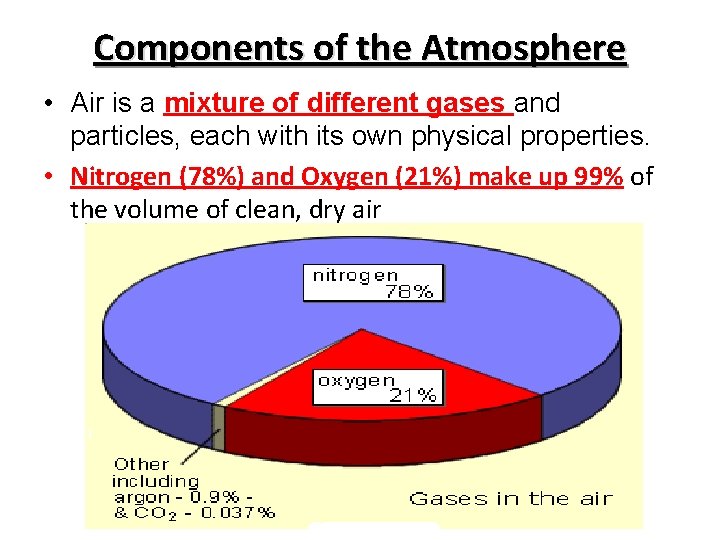
Components of the Atmosphere • Air is a mixture of different gases and particles, each with its own physical properties. • Nitrogen (78%) and Oxygen (21%) make up 99% of the volume of clean, dry air
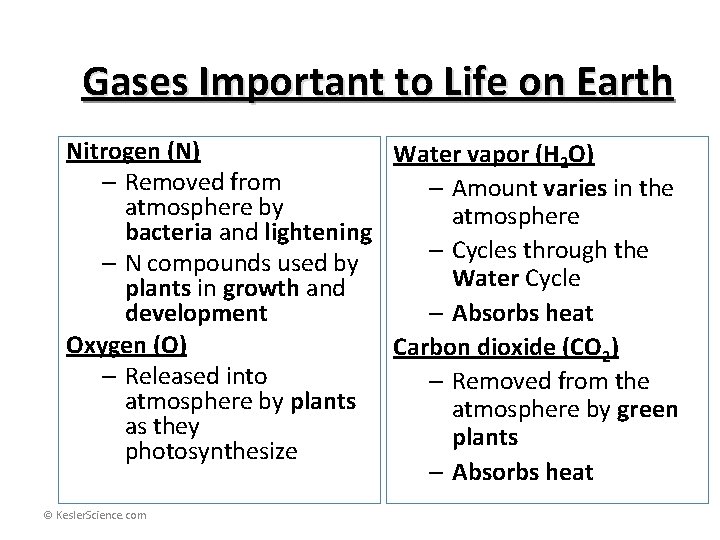
Gases Important to Life on Earth Nitrogen (N) Water vapor (H 2 O) – Removed from – Amount varies in the atmosphere by atmosphere bacteria and lightening – Cycles through the – N compounds used by Water Cycle plants in growth and – Absorbs heat development Oxygen (O) Carbon dioxide (CO 2) – Released into – Removed from the atmosphere by plants atmosphere by green as they plants photosynthesize – Absorbs heat © Kesler. Science. com
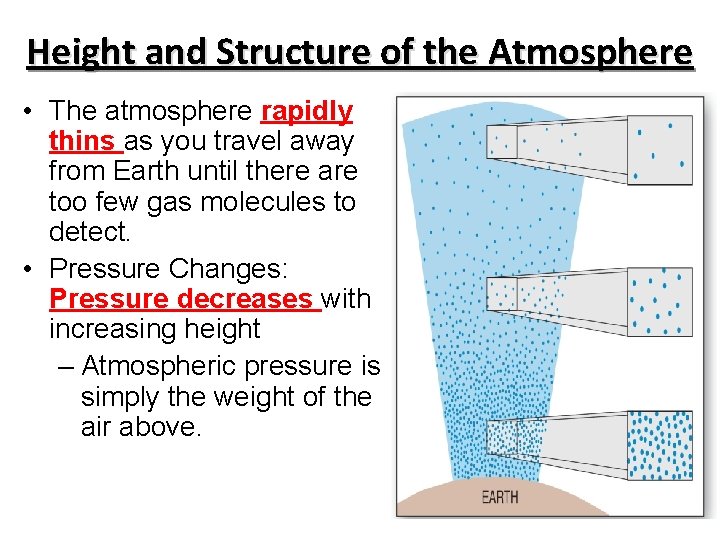
Height and Structure of the Atmosphere • The atmosphere rapidly thins as you travel away from Earth until there are too few gas molecules to detect. • Pressure Changes: Pressure decreases with increasing height – Atmospheric pressure is simply the weight of the air above.
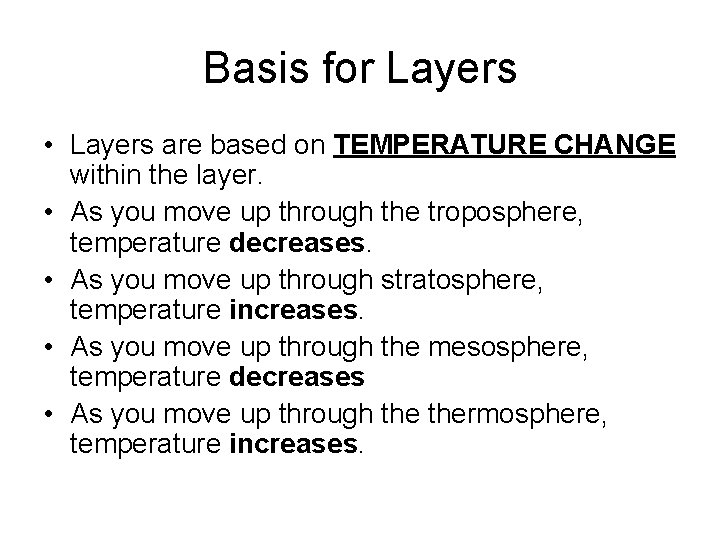
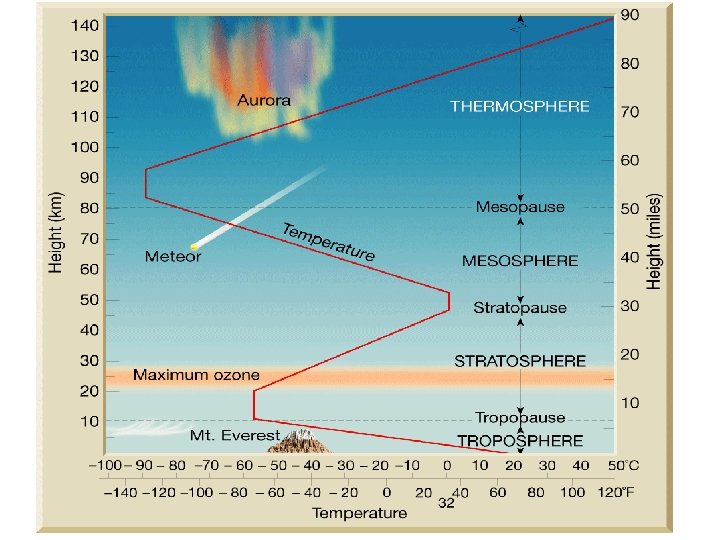
Basis for Layers • Layers are based on TEMPERATURE CHANGE within the layer. • As you move up through the troposphere, temperature decreases. • As you move up through stratosphere, temperature increases. • As you move up through the mesosphere, temperature decreases • As you move up through thermosphere, temperature increases.
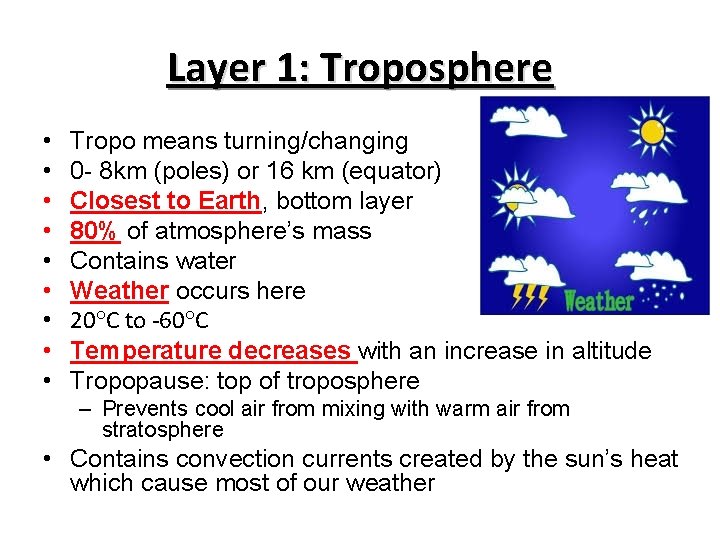
Layer 1: Troposphere • • • Tropo means turning/changing 0 - 8 km (poles) or 16 km (equator) Closest to Earth, bottom layer 80% of atmosphere’s mass Contains water Weather occurs here 20 C to -60 C Temperature decreases with an increase in altitude Tropopause: top of troposphere – Prevents cool air from mixing with warm air from stratosphere • Contains convection currents created by the sun’s heat which cause most of our weather
Graphing the Atmosphere Draw & label the following in the TROPOSPHERE: • Mount Everest • Clouds • At the top of the troposphere draw an airplane moving from left to right to represent the jet stream
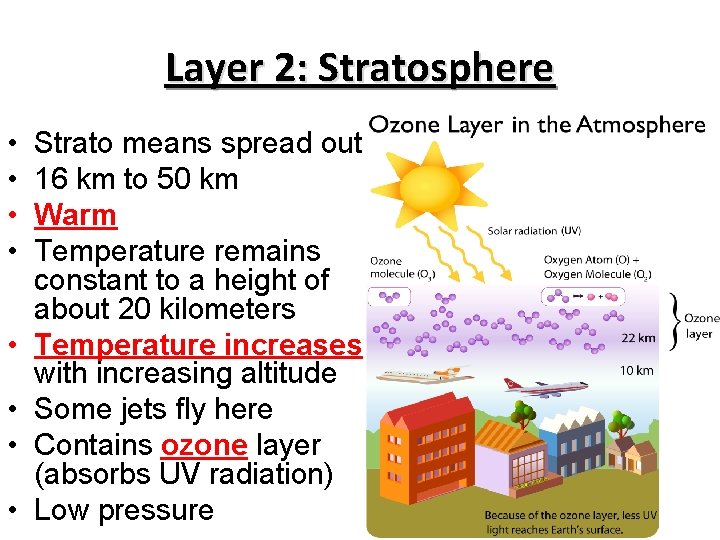
Layer 2: Stratosphere • • Strato means spread out 16 km to 50 km Warm Temperature remains constant to a height of about 20 kilometers Temperature increases with increasing altitude Some jets fly here Contains ozone layer (absorbs UV radiation) Low pressure
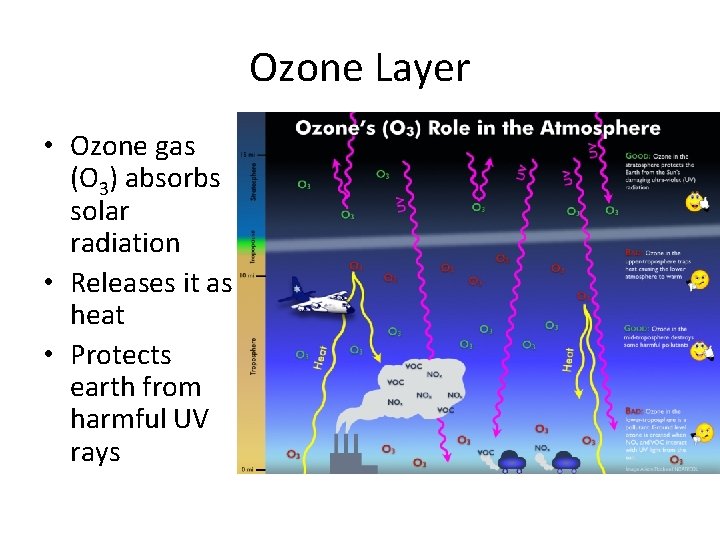
Ozone Layer • Ozone gas (O 3) absorbs solar radiation • Releases it as heat • Protects earth from harmful UV rays
Graphing the Atmosphere Draw and label the following in the STRATOSPHERE: • Draw molecules of ozone (O 3) with lightning bolts going towards the ozone
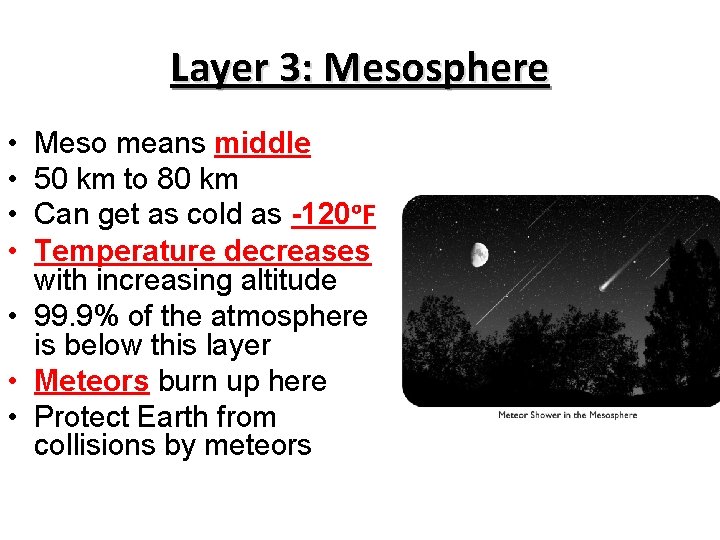
Layer 3: Mesosphere • • Meso means middle 50 km to 80 km Can get as cold as -120ᵒF Temperature decreases with increasing altitude • 99. 9% of the atmosphere is below this layer • Meteors burn up here • Protect Earth from collisions by meteors
Graphing the Atmosphere Draw and label the following in the MESOSPHERE: • At the top of the mesosphere, draw and label a meteor burning up
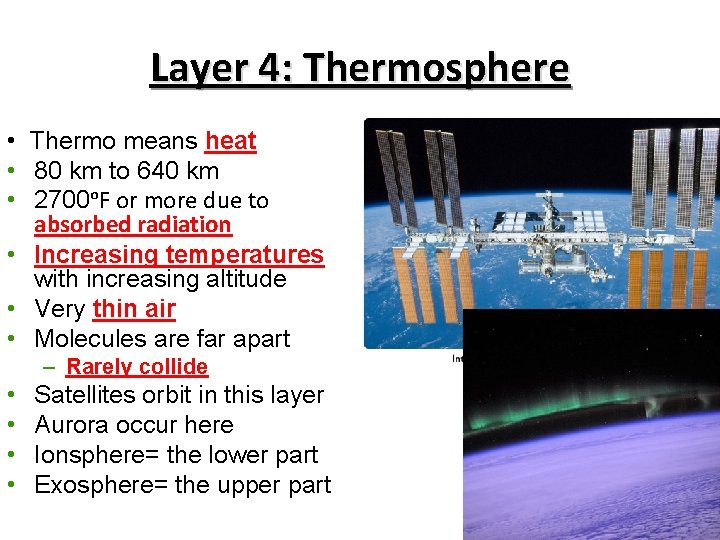
Layer 4: Thermosphere • Thermo means heat • 80 km to 640 km • 2700ᵒF or more due to absorbed radiation • Increasing temperatures with increasing altitude • Very thin air • Molecules are far apart – Rarely collide • • Satellites orbit in this layer Aurora occur here Ionsphere= the lower part Exosphere= the upper part
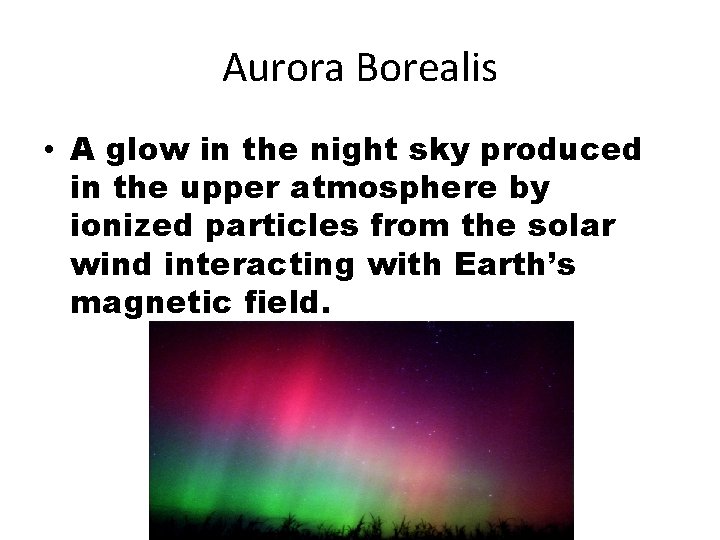
Aurora Borealis • A glow in the night sky produced in the upper atmosphere by ionized particles from the solar wind interacting with Earth’s magnetic field.
Graphing the Atmosphere Draw and label the following in the THERMOSPHERE: • Draw and label an aurora • Draw and label a satellite at the top of thermosphere