
Atlanta Travel Forecasting Methods Traditional TripBased ActivityBased Model
Atlanta Travel Forecasting Methods: Traditional Trip-Based & Activity-Based Model AMPO Travel Modeling Work Group, Nov. 4, 2010 Guy Rousseau, Modeling Manager, Atlanta Regional Commission
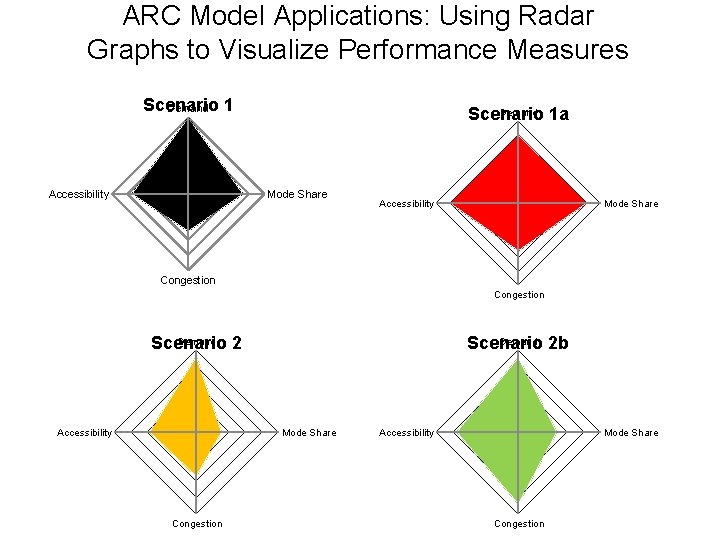
ARC Model Applications: Using Radar Graphs to Visualize Performance Measures Scenario Demand 1 Accessibility Demand 1 a Scenario Mode Share Accessibility Mode Share Congestion Demand Scenario 2 Accessibility Demand 2 b Scenario Mode Share Congestion Accessibility Mode Share Congestion
ARC Activity-Based Modeling System Based on the CT-RAMP 1 family of ABMs developed in New York, NY, Columbus OH (MORPC) and others - Explicit intra-household interactions • - Continuous temporal dimension (Hourly time periods) - Integration of location, time-of-day, and mode choice models - Java-based package for AB model implementation • Implemented with the existing Cube-based networks, GUI and ancillary models (external model, truck model, assignments, etc) • Households: 1. 7 million in 2005, 2. 7 million in 2030 • Model development parallel effort with MTC 1 Coordinated Travel-Regional Activity-Based Modeling Platform
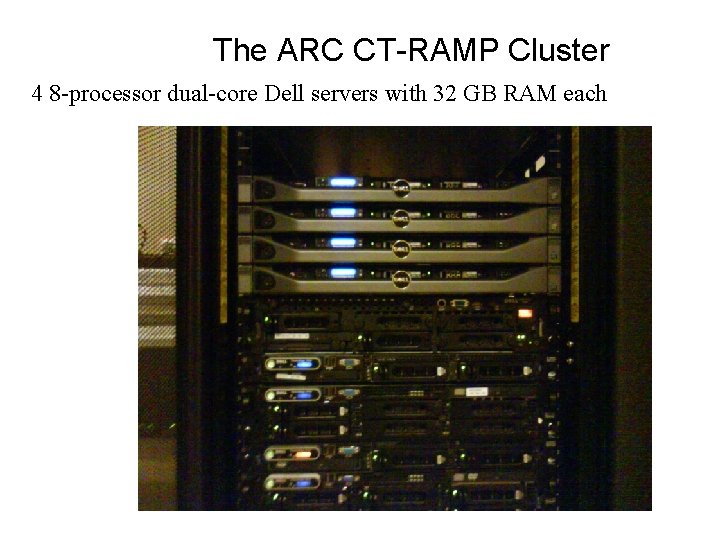
The ARC CT-RAMP Cluster 4 8 -processor dual-core Dell servers with 32 GB RAM each
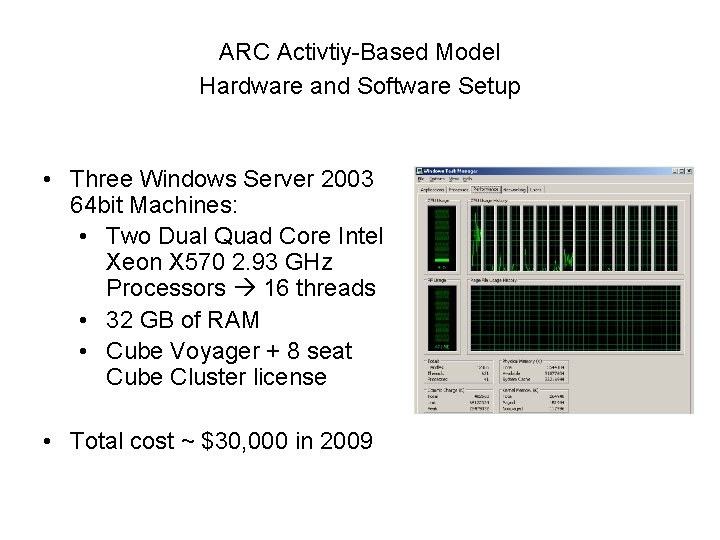
ARC Activtiy-Based Model Hardware and Software Setup • Three Windows Server 2003 64 bit Machines: • Two Dual Quad Core Intel Xeon X 570 2. 93 GHz Processors 16 threads • 32 GB of RAM • Cube Voyager + 8 seat Cube Cluster license • Total cost ~ $30, 000 in 2009
ARC Activity-Based Model Hardware and Software Setup • • • 64 bit OS for large memory addresses 64 bit Java for CT-RAMP 32 bit Java to integrate with Cube’s native matrix I/O DLL Cube Base for the GUI Cube Voyager + Cluster for running the model, assignment, etc • Java CT-RAMP software • 64 bit R for reporting/visualization
ARC’s Activity-Based Model • Provides results similar to 4 -step trip based model • Ok, so then why bother with an ABM? • Because ARC’s ABM provides additional details, more info about travel patterns & market segments • ABM allows to answer questions the 4 step model is not capable to provide • For internal use only, not for official purposes, hence dual/parallel track of models
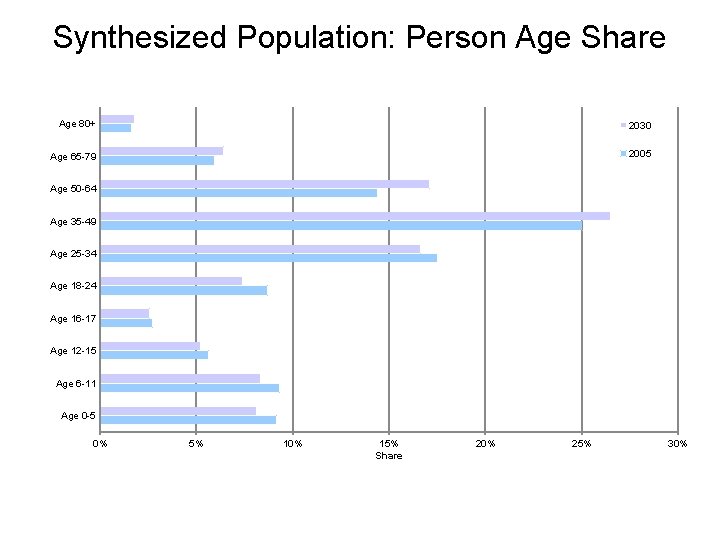
Synthesized Population: Person Age Share Age 80+ 2030 Age 65 -79 2005 Age 50 -64 Age 35 -49 Age 25 -34 Age 18 -24 Age 16 -17 Age 12 -15 Age 6 -11 Age 0 -5 0% 5% 10% 15% Share 20% 25% 30%
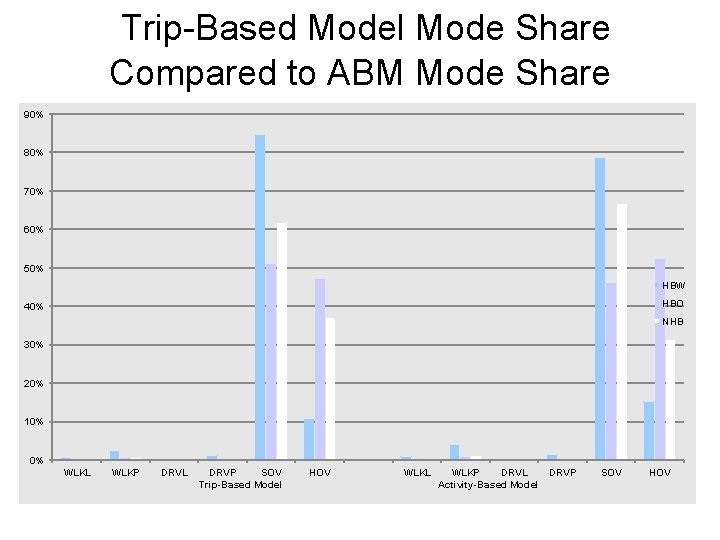
Trip-Based Model Mode Share Compared to ABM Mode Share 90% 80% 70% 60% 50% HBW HBO 40% NHB 30% 20% 10% 0% WLKL WLKP DRVL DRVP SOV Trip-Based Model HOV WLKL WLKP DRVL DRVP Activity-Based Model SOV HOV
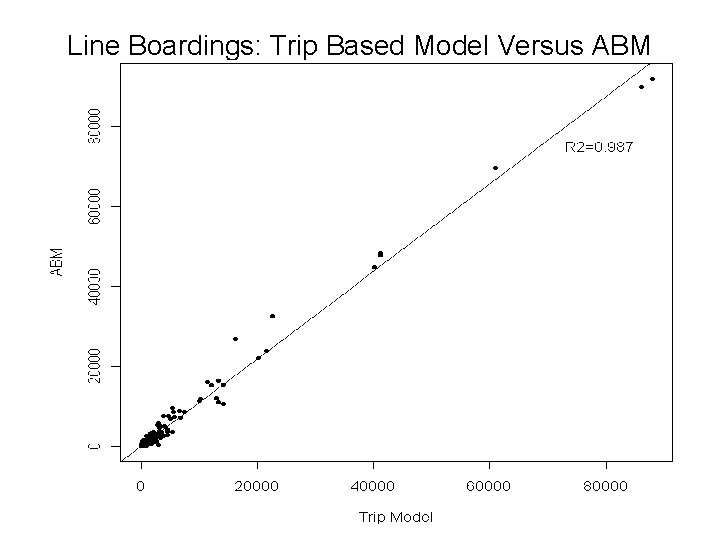
Line Boardings: Trip Based Model Versus ABM
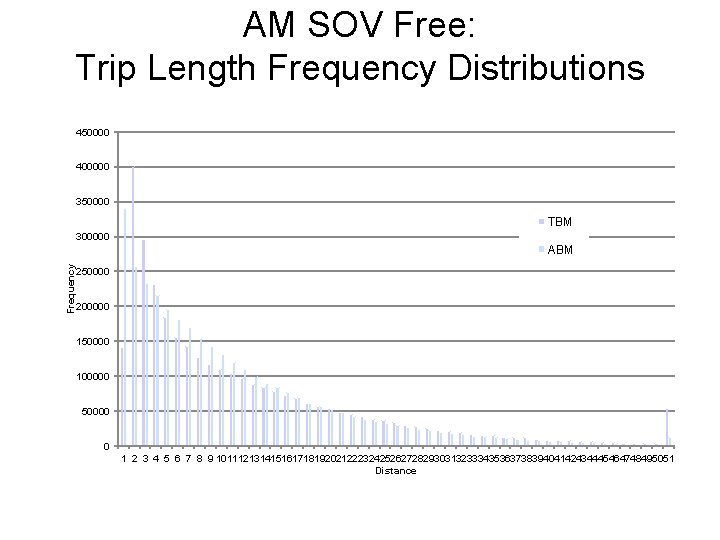
AM SOV Free: Trip Length Frequency Distributions 450000 400000 350000 TBM 300000 Frequency ABM 250000 200000 150000 100000 50000 0 1 2 3 4 5 6 7 8 9 101112131415161718192021222324252627282930313233343536373839404142434445464748495051 Distance
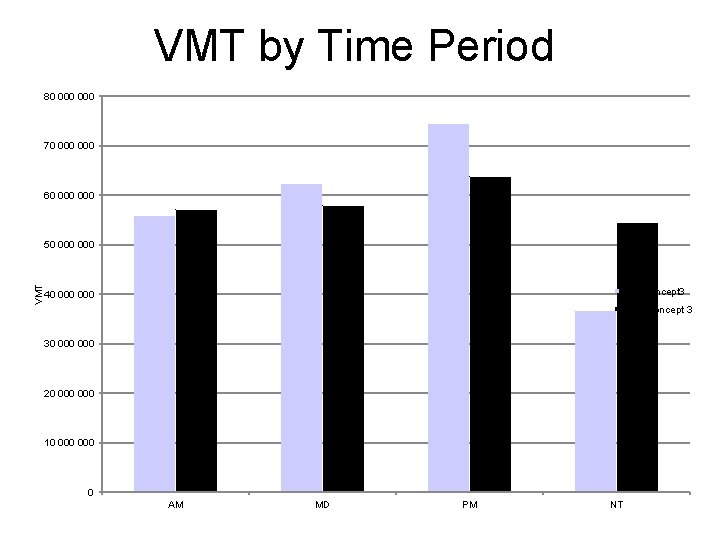
VMT by Time Period 80 000 70 000 60 000 VMT 50 000 Trip Concept 3 40 000 ABM Concept 3 30 000 20 000 10 000 0 AM MD PM NT
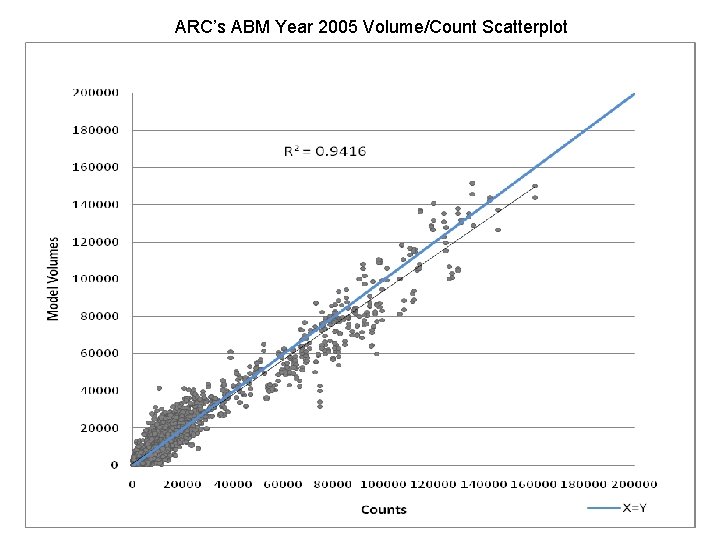
ARC’s ABM Year 2005 Volume/Count Scatterplot
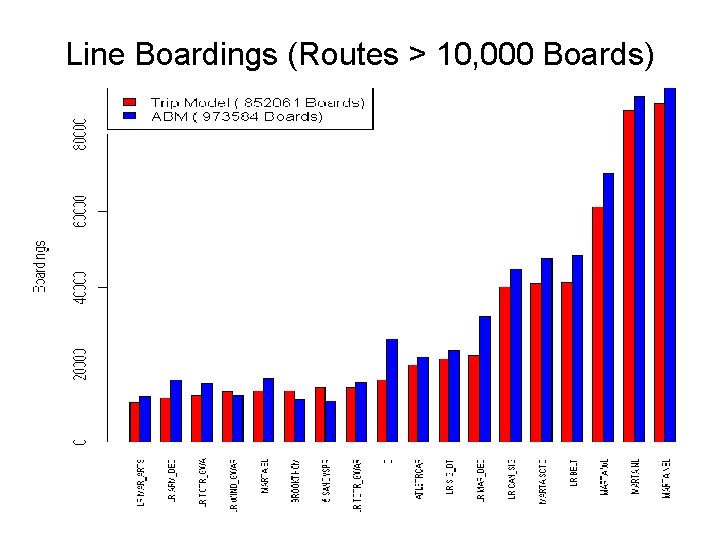
Line Boardings (Routes > 10, 000 Boards)
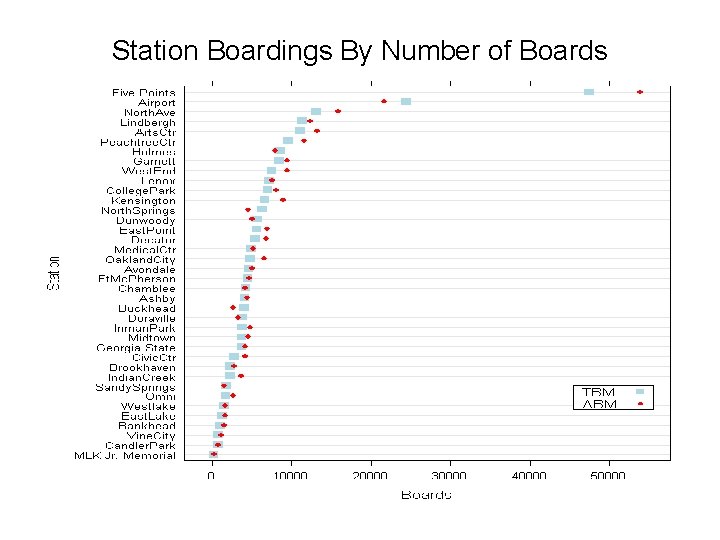
Station Boardings By Number of Boards
External Model Results
What Sort of Performance Measures & Visuals are Possible with an Activity-Based Model? ABM results in a complete activity diary for all ARC residents • A wealth of activity/travel results • Just about any custom report/query/visual is now possible • Performance Measures also available by Age, Gender & Household Types
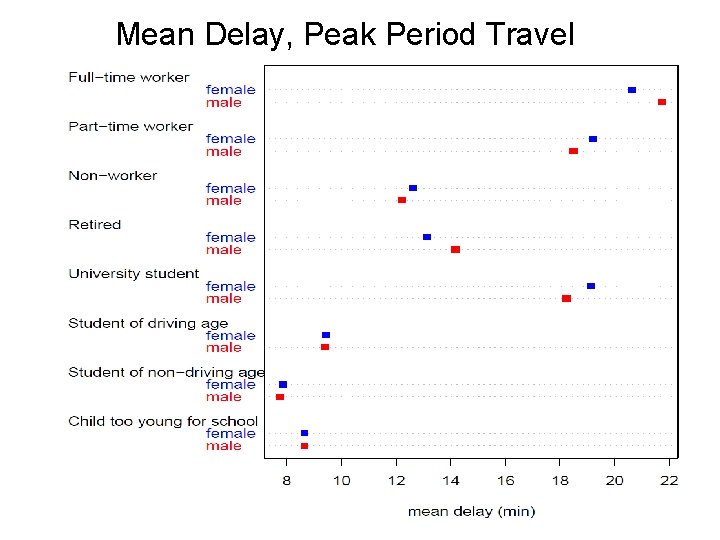
Mean Delay, Peak Period Travel
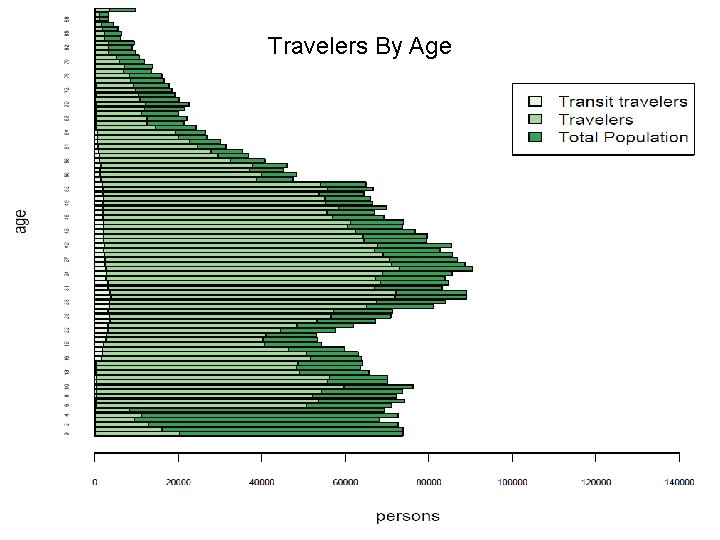
Travelers By Age
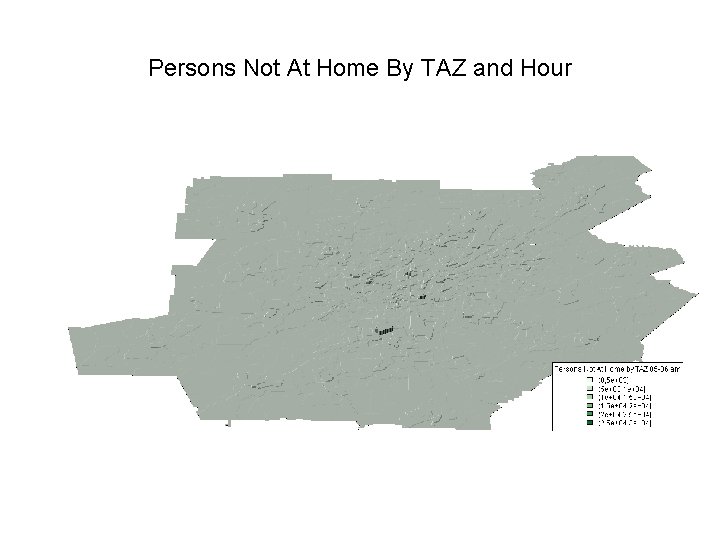
Persons Not At Home By TAZ and Hour
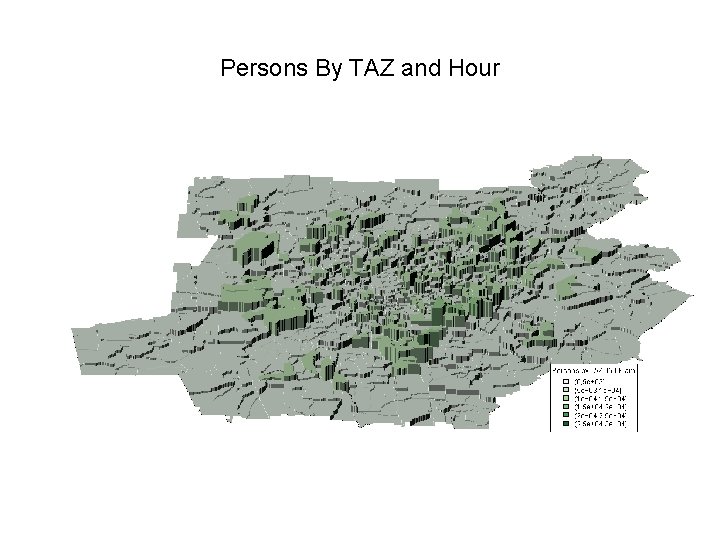
Persons By TAZ and Hour
Conclusions • Overall, the ARC ABM model appears to be displaying appropriate sensitivities when compared to the base year results and the existing trip based model runs. • Compared with the trip based model run, the ABM required increased prices in the peak periods in order to provide 1600 vphpl performance given the significant amount of toll eligible demand that could use the facilities • VMT results by time-of-day suggest that the addition of a trip time-of-day departure choice model would help reduce the over predicted night period demand
Potential Improvements • The population synthesizer works at the household level. Adding more explicit functionality for person level information and controls would be useful. • The ABM does not have a model to calculate the departure hour for each trip within the tour time window. Adding a model, or simply a distribution of probabilities by tour purpose and hour, would be an improvement

Questions / Comments Guy Rousseau (404 463 -3274) grousseau@atlantaregional. com Atlanta Regional Commission 40 Courtland Street, NE Atlanta, Georgia 30303 www. atlantaregional. com Acknowledgements: PBS&J, AECOM, Parsons Brinckerhoff, John Bowman, Mark Bradley, Bill Allen
- Slides: 24