
Athletic Injuries ATC 222 Emergency Situations and Injury

- Slides: 16
Athletic Injuries ATC 222 Emergency Situations and Injury Assessment Chapter 7
Emergency Plan • Important Issues to Consider – phone accessibility – emergency phone numbers – who call the EMS – keys to gates, doors, padlocks, etc – written and posted emergency plans – all people aware of emergency plan/role – medical history information – EMT/paramedic in charge of situation
Assessment • Primary Survey – definition • Secondary Survey – definition
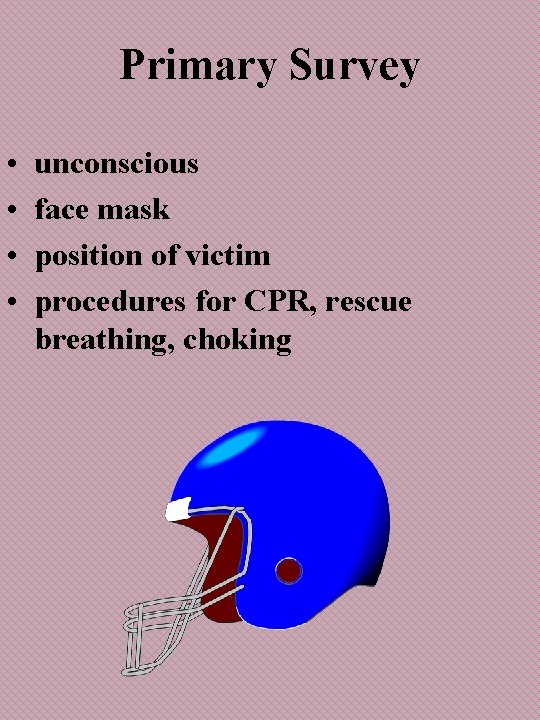
Primary Survey • • unconscious face mask position of victim procedures for CPR, rescue breathing, choking
Shock • Def. = failure of circulatory system • Types – hypovolemic – psychogenic – anaphylactic – metabolic • Signs and Symptoms – pale, cool, clammy skin – restlessness, anxiety – dilated pupils – rapid/weak pulse – rapid/shallow respiration – decreased b/p
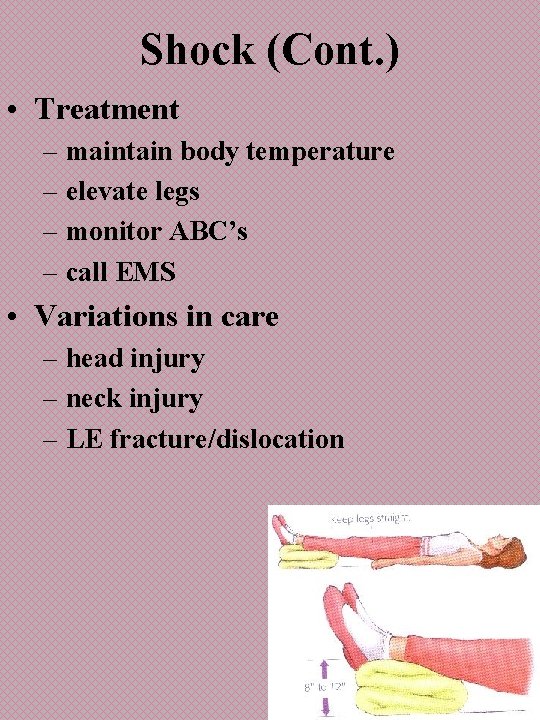
Shock (Cont. ) • Treatment – maintain body temperature – elevate legs – monitor ABC’s – call EMS • Variations in care – head injury – neck injury – LE fracture/dislocation
Secondary Survey • Vital Signs – pulse – respiration – blood pressure – temperature – skin color – pupils – state of consciousness
Pulse • Sites – adult average = 60 -80 bpm – child average = 80 -100 bpm
Respiration • adult average = 12/min. • child average = 20 -25/min.
Blood Pressure • Definition – systolic – diastolic • Ranges – 120/80 = normal – 140/90 = borderline hypertension – 160/100 = hypertension
Temperature • Types – skin – core
Skin Color • Normal skin color? – Dark complexion • Red • White • Blue (cyanotic/cyanosis)
Pupils • Constricted, dilated, or unequal • Unresponsive/sluggish
Musculoskeletal Assessment • Procedure – HOPS • Immediate care – R. I. C. E. R. • R = rest • I = ice – effects – types • C = compression • E = elevation • R = rehabilitation
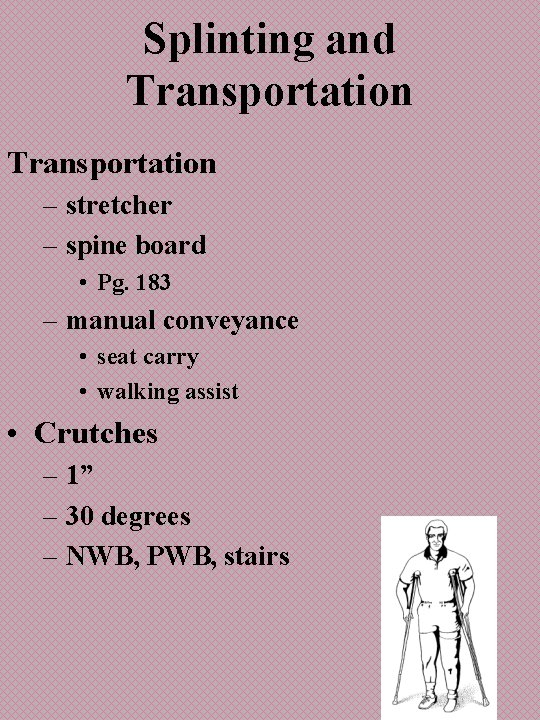
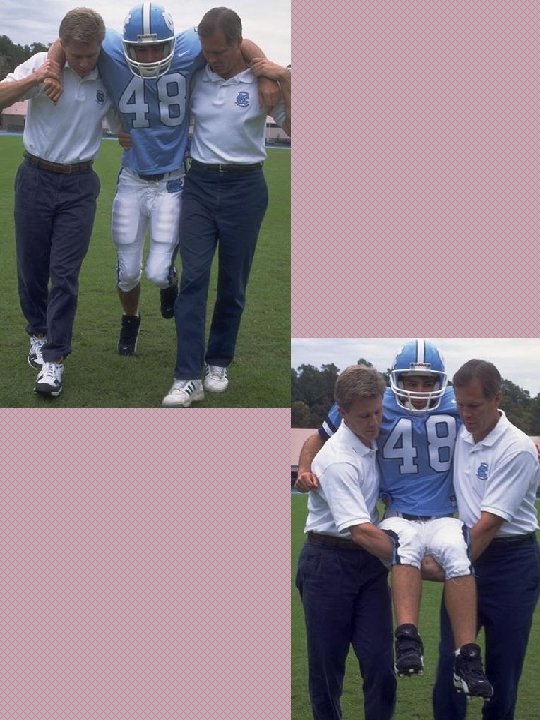
Splinting and Transportation – stretcher – spine board • Pg. 183 – manual conveyance • seat carry • walking assist • Crutches – 1” – 30 degrees – NWB, PWB, stairs