
Atherosclerosis Hisham Al Khalidi Vessel wall structure Atherosclerosis




- Slides: 24
Atherosclerosis Hisham Al Khalidi
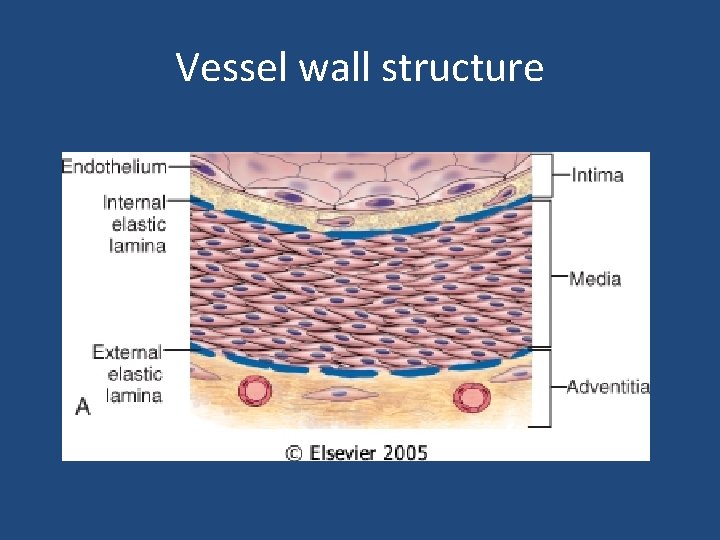
Vessel wall structure
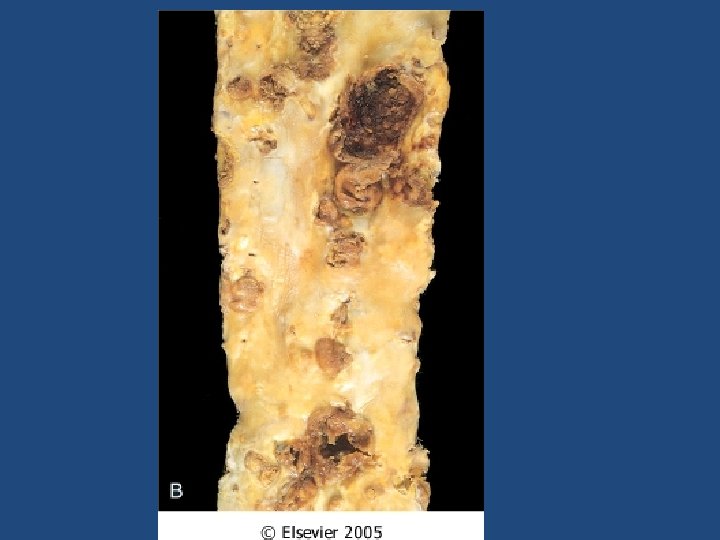
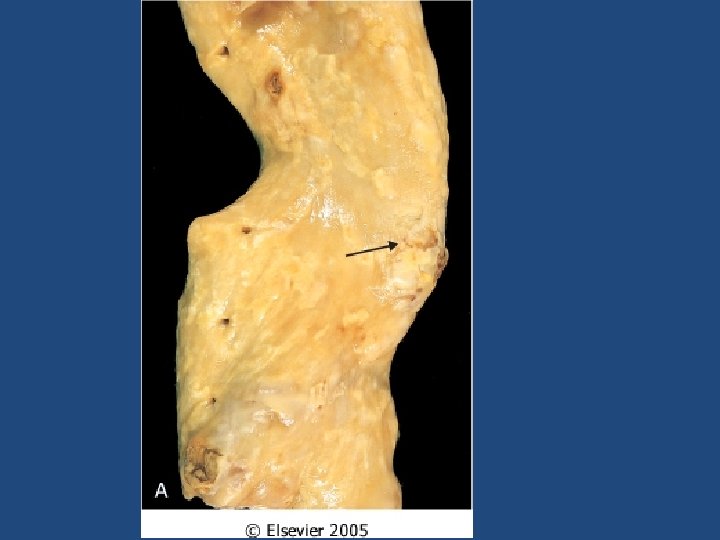
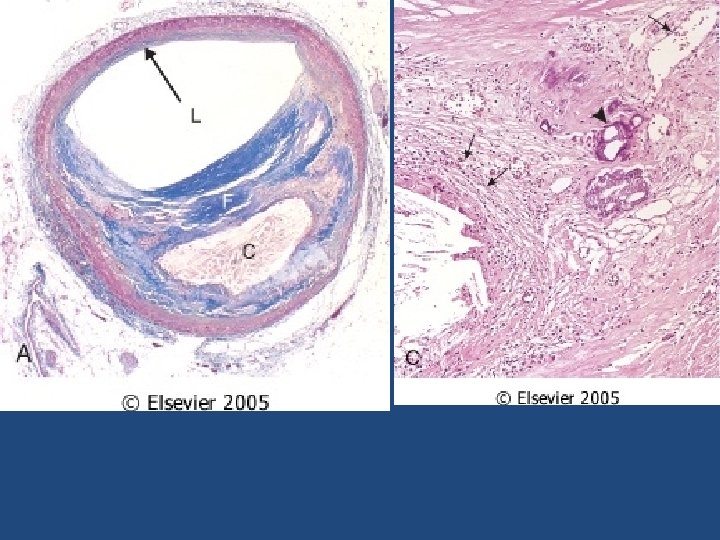
Atherosclerosis • A type of arteriosclerosis • Chronic inflammatory response in the walls of arteries • Slowly progressive • A build-up of fat (cholesterol) within the artery wall • Characterized by intimal lesions called: atheromas, atheromatous or fibrofatty plaques
Atherosclerosis Common sites • • • Abdominal aorta Coronaries Popliteal artery The internal carotid arteries The vessels of the circle of Willis
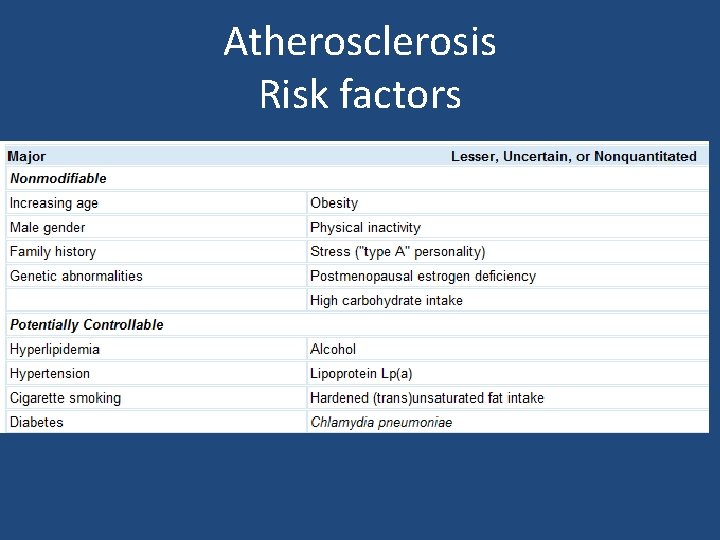
Atherosclerosis Risk factors
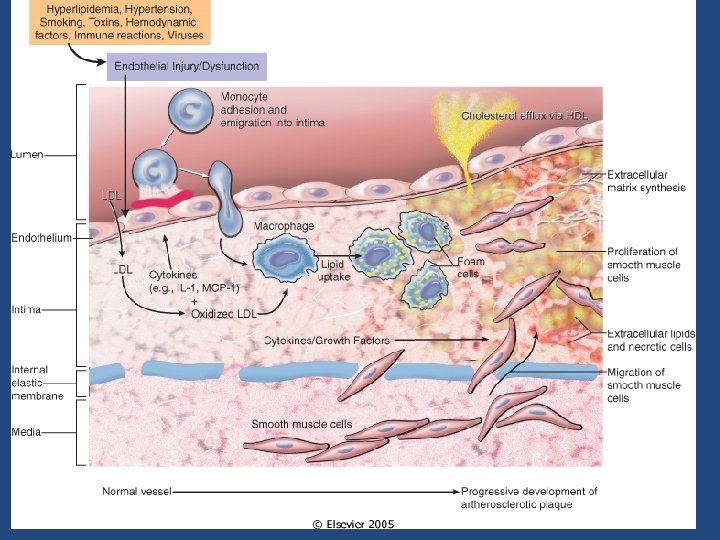
LDL Vs. HDL • LDL cholesterol : deliver cholesterol to peripheral tissues • HDL, "good cholesterol“: mobilizes cholesterol from developing and existing atheromas and transports it to the liver for excretion in the bile
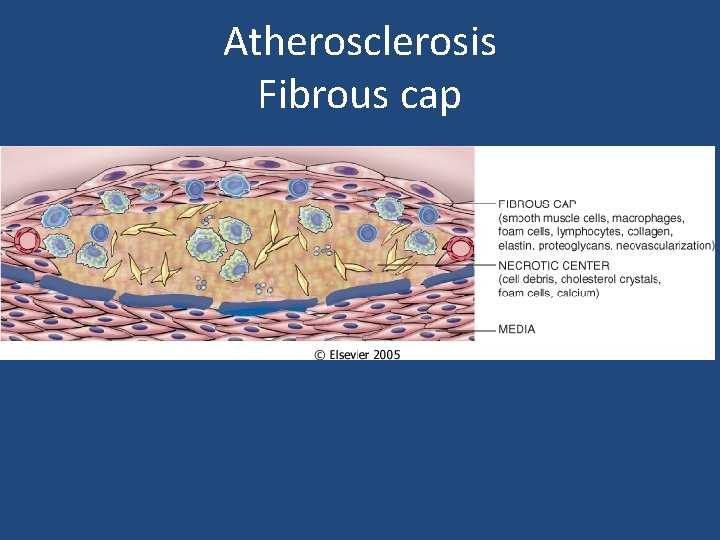
Atherosclerosis Fibrous cap
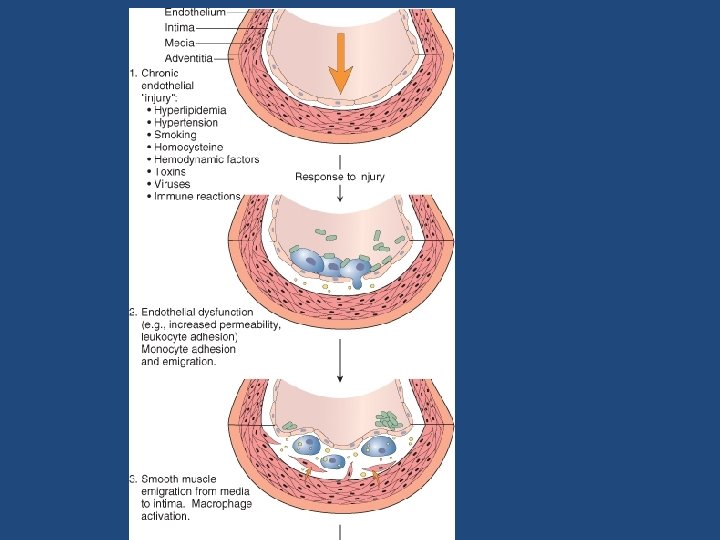
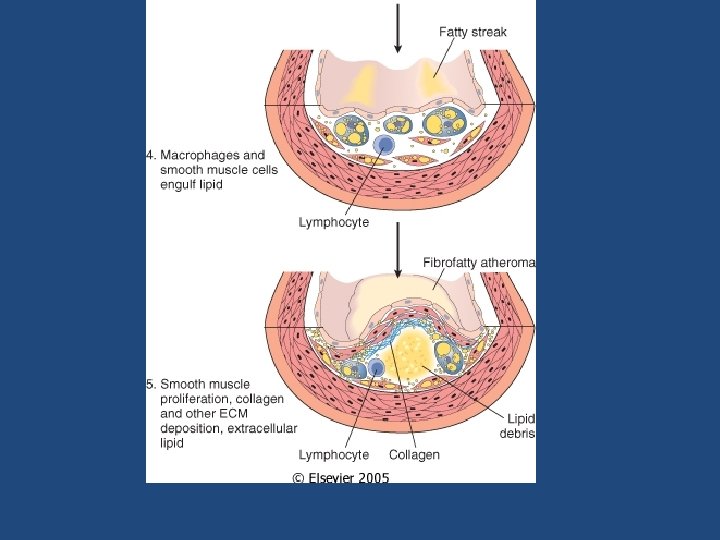
Atherosclerosis Pathogenesis • The main components of a fibrofatty plaques: – Lipids – Extracellular matrix – Cells, Proliferating smooth muscle cells
Atherosclerosis Pathogenesis response-to-injury hypothesis • Endothelial injury – Not completely understood – Nevertheless, the two most important causes of endothelial dysfunction are: • Hemodynamic disturbances • Hypercholesterolemia – Inflammation is also an important contributor. • Smooth muscle cell proliferation
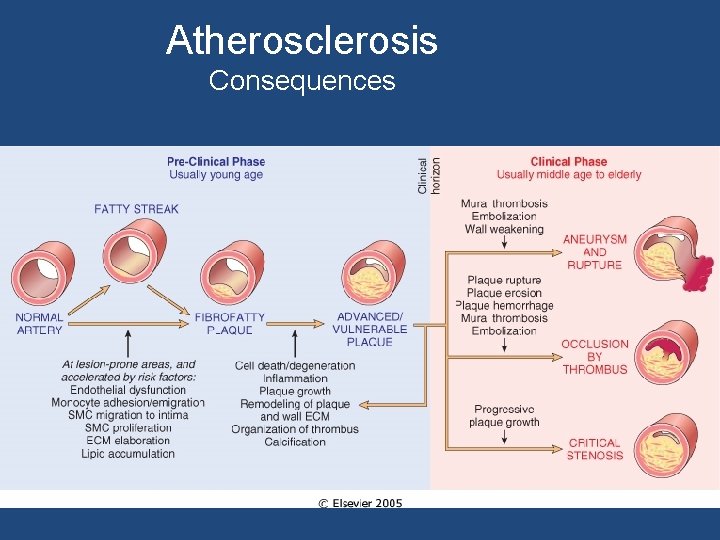
Atherosclerosis Consequences
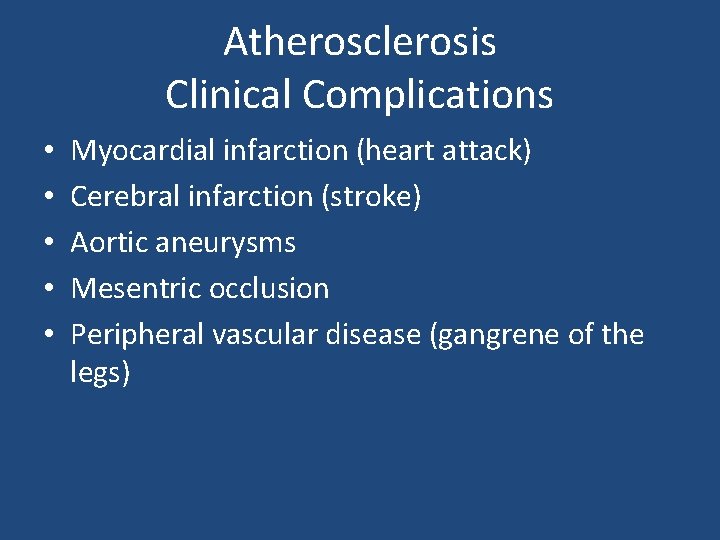
Atherosclerosis Clinical Complications • • • Myocardial infarction (heart attack) Cerebral infarction (stroke) Aortic aneurysms Mesentric occlusion Peripheral vascular disease (gangrene of the legs)
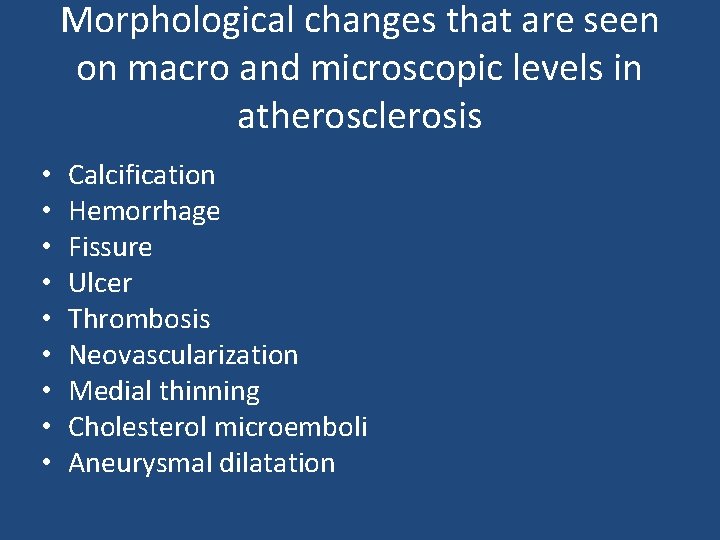
Morphological changes that are seen on macro and microscopic levels in atherosclerosis • • • Calcification Hemorrhage Fissure Ulcer Thrombosis Neovascularization Medial thinning Cholesterol microemboli Aneurysmal dilatation