
Athens vs Sparta Two city states of Ancient
- Slides: 15
Athens vs. Sparta Two city states of Ancient Greece
How would people describe your country’s… Government ¡ Education ¡ Social Structure ¡ Allies ¡ Military Strength ¡ Lifestyle ¡ Cultural Achievement ¡
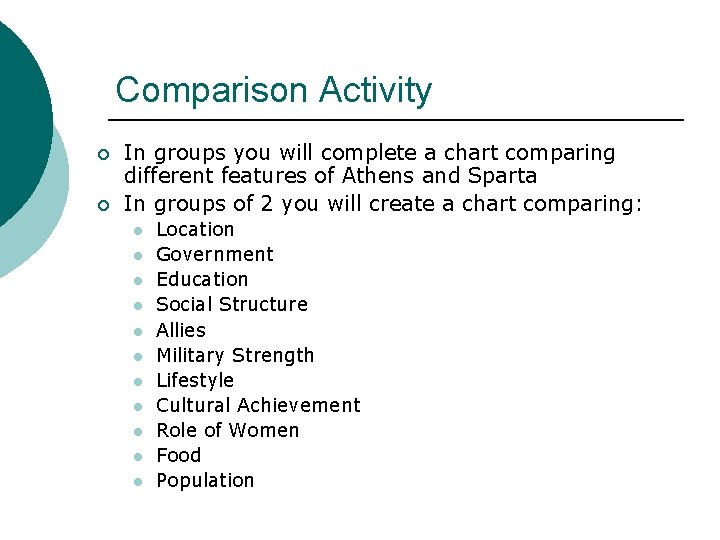
Comparison Activity ¡ ¡ In groups you will complete a chart comparing different features of Athens and Sparta In groups of 2 you will create a chart comparing: l l l Location Government Education Social Structure Allies Military Strength Lifestyle Cultural Achievement Role of Women Food Population
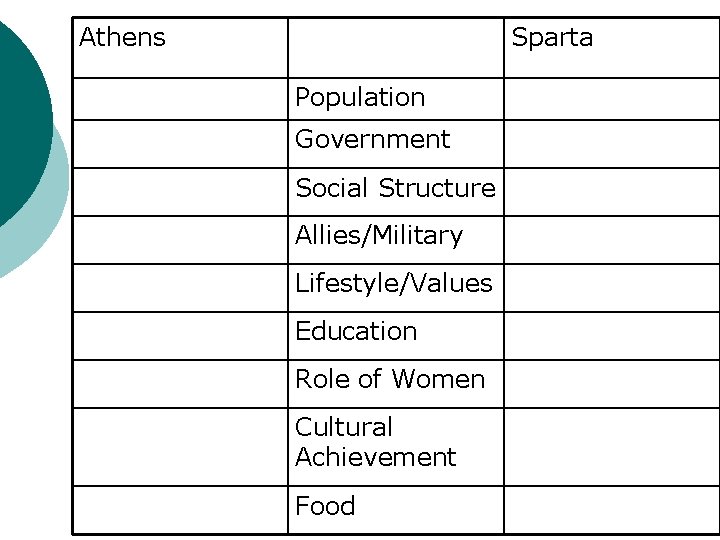
Athens Sparta Population Government Social Structure Allies/Military Lifestyle/Values Education Role of Women Cultural Achievement Food
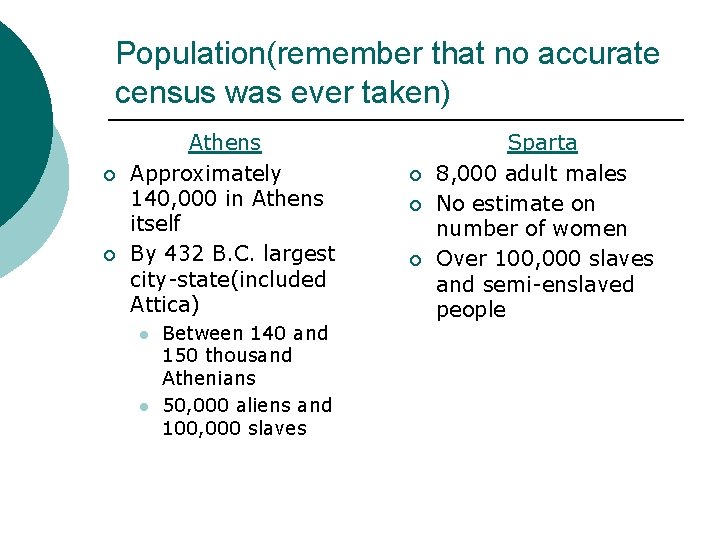
Population(remember that no accurate census was ever taken) ¡ ¡ Athens Approximately 140, 000 in Athens itself By 432 B. C. largest city-state(included Attica) l l Between 140 and 150 thousand Athenians 50, 000 aliens and 100, 000 slaves ¡ ¡ ¡ Sparta 8, 000 adult males No estimate on number of women Over 100, 000 slaves and semi-enslaved people
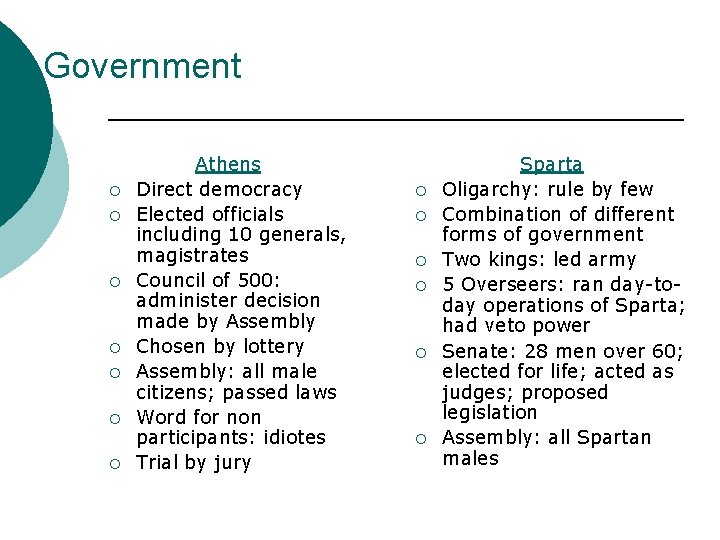
Government ¡ ¡ ¡ ¡ Athens Direct democracy Elected officials including 10 generals, magistrates Council of 500: administer decision made by Assembly Chosen by lottery Assembly: all male citizens; passed laws Word for non participants: idiotes Trial by jury ¡ ¡ ¡ Sparta Oligarchy: rule by few Combination of different forms of government Two kings: led army 5 Overseers: ran day-today operations of Sparta; had veto power Senate: 28 men over 60; elected for life; acted as judges; proposed legislation Assembly: all Spartan males
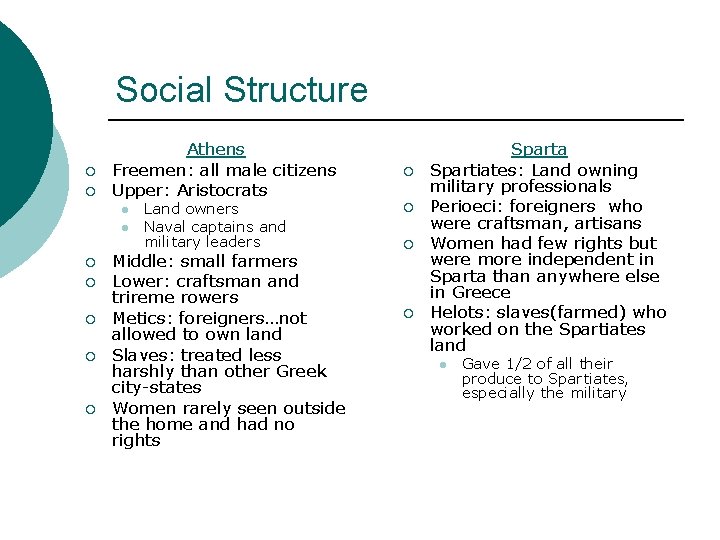
Social Structure ¡ ¡ Athens Freemen: all male citizens Upper: Aristocrats l l ¡ ¡ ¡ Land owners Naval captains and military leaders Middle: small farmers Lower: craftsman and trireme rowers Metics: foreigners…not allowed to own land Slaves: treated less harshly than other Greek city-states Women rarely seen outside the home and had no rights ¡ ¡ Sparta Spartiates: Land owning military professionals Perioeci: foreigners who were craftsman, artisans Women had few rights but were more independent in Sparta than anywhere else in Greece Helots: slaves(farmed) who worked on the Spartiates land l Gave 1/2 of all their produce to Spartiates, especially the military
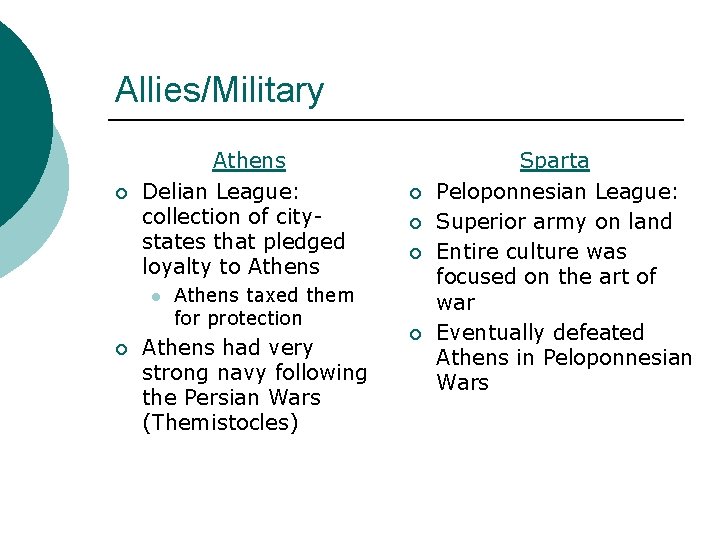
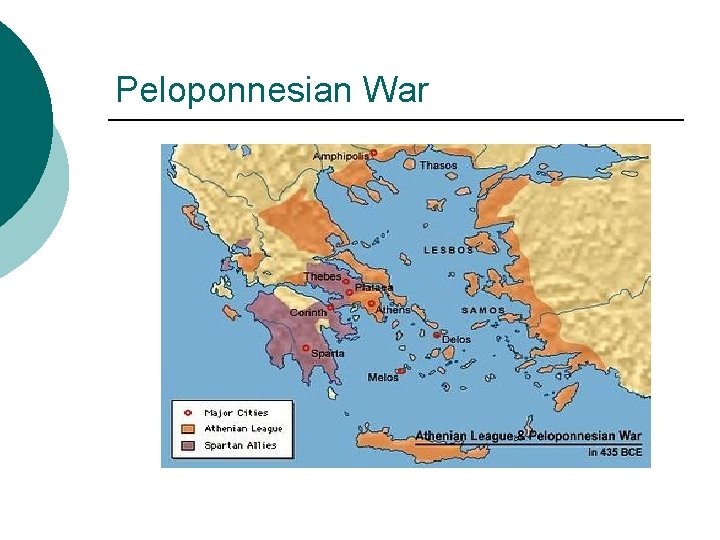
Allies/Military ¡ Athens Delian League: collection of citystates that pledged loyalty to Athens l ¡ Athens taxed them for protection Athens had very strong navy following the Persian Wars (Themistocles) ¡ ¡ Sparta Peloponnesian League: Superior army on land Entire culture was focused on the art of war Eventually defeated Athens in Peloponnesian Wars
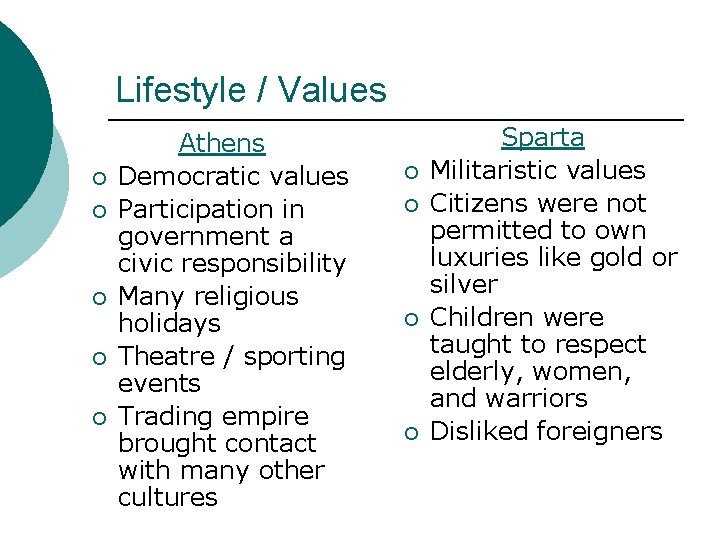
Lifestyle / Values ¡ ¡ ¡ Athens Democratic values Participation in government a civic responsibility Many religious holidays Theatre / sporting events Trading empire brought contact with many other cultures ¡ ¡ Sparta Militaristic values Citizens were not permitted to own luxuries like gold or silver Children were taught to respect elderly, women, and warriors Disliked foreigners
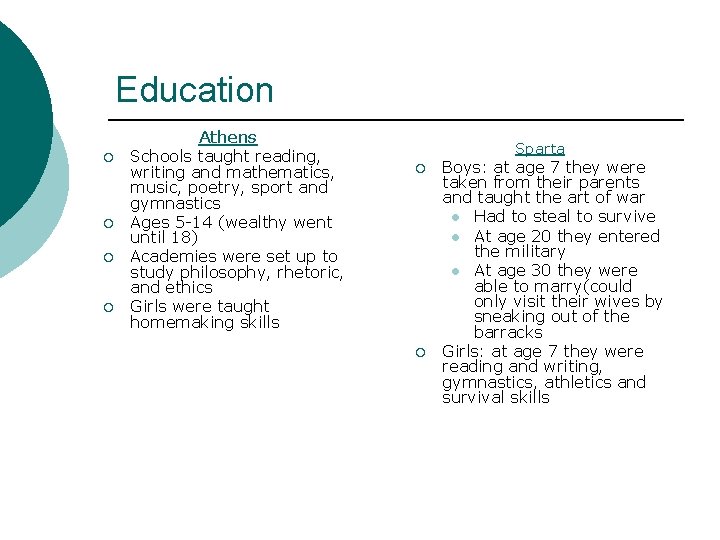
Education Athens ¡ ¡ Schools taught reading, writing and mathematics, music, poetry, sport and gymnastics Ages 5 -14 (wealthy went until 18) Academies were set up to study philosophy, rhetoric, and ethics Girls were taught homemaking skills Sparta ¡ ¡ Boys: at age 7 they were taken from their parents and taught the art of war l Had to steal to survive l At age 20 they entered the military l At age 30 they were able to marry(could only visit their wives by sneaking out of the barracks Girls: at age 7 they were reading and writing, gymnastics, athletics and survival skills
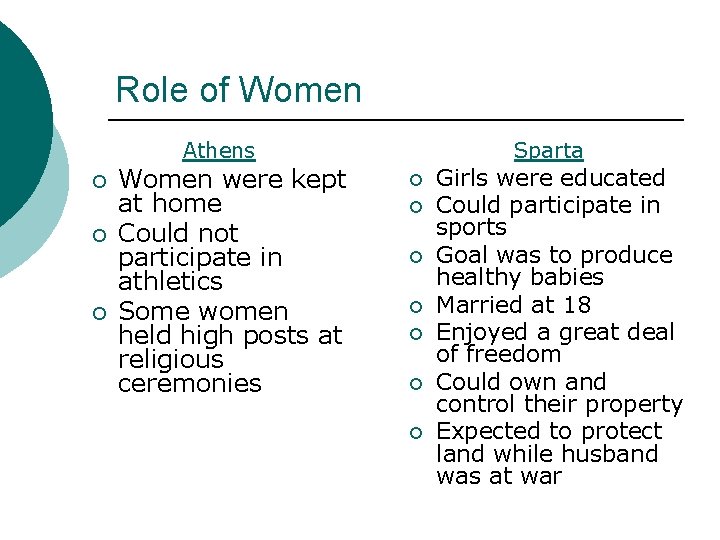
Role of Women Athens ¡ ¡ ¡ Women were kept at home Could not participate in athletics Some women held high posts at religious ceremonies Sparta ¡ ¡ ¡ ¡ Girls were educated Could participate in sports Goal was to produce healthy babies Married at 18 Enjoyed a great deal of freedom Could own and control their property Expected to protect land while husband was at war
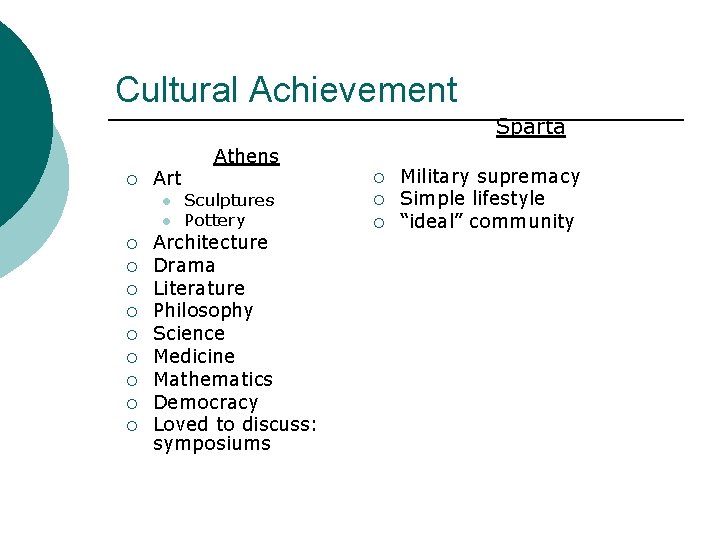
Cultural Achievement Sparta ¡ Art l l ¡ ¡ ¡ ¡ ¡ Athens ¡ Sculptures Pottery Architecture Drama Literature Philosophy Science Medicine Mathematics Democracy Loved to discuss: symposiums ¡ ¡ Military supremacy Simple lifestyle “ideal” community
Food ¡ ¡ ¡ Athens Enjoyed food from all over the empire Trade brought goods from all over the Mediterranean region Loved wine, olives bread, cheeses ¡ ¡ ¡ Spartan broth: pork, blood, salt, vinegar YIKES Trained to dislike luxuries and fancy food Men lived separate from wives for much of the time
Discussion ¡ ¡ ¡ If you were a young teenage girl of the citizen class, in which city-state would you rather live? Why? If you were a slave, in which would you rather live? Why? If you were a boy of the citizen class, in which would you rather live? Why? If you were a young soldier, in which would you rather live? Why? If you were a very wealthy person of the citizen class, in which would you rather live? Why?
Peloponnesian War