
Athenian Democracy Metal ballots used to cast votes
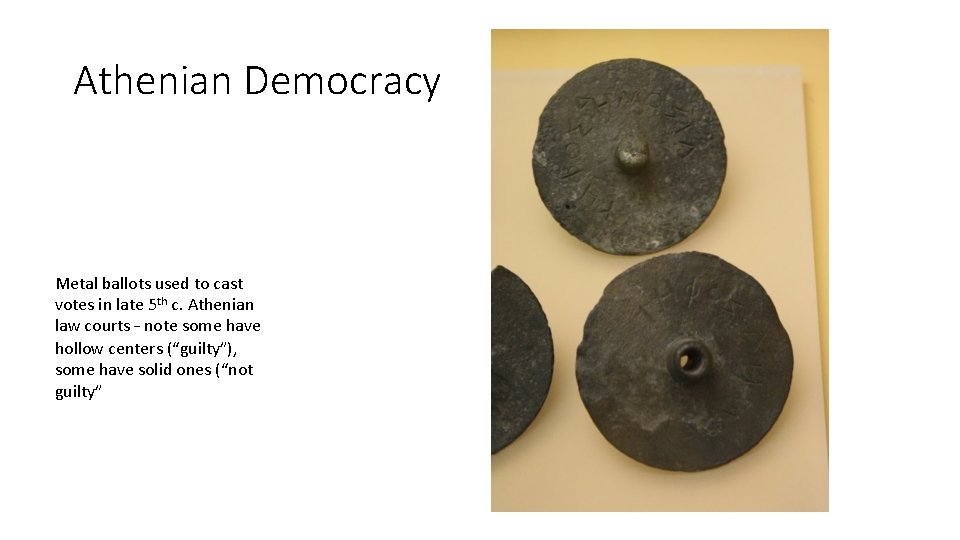
Athenian Democracy Metal ballots used to cast votes in late 5 th c. Athenian law courts – note some have hollow centers (“guilty”), some have solid ones (“not guilty”
Constitution before Solon’s reforms (i. e. pre 594 BCE) • Rule by arkhon basileus [“king archon”], polemarkhos [“war archon”], arkhon [later eponymous archon, one after whom the year is named] • Term is initially for life, later ten years, later one • Six other archons added for a total of nine • Council of the Areopagus, made up of ex-archons, choose the nine archons
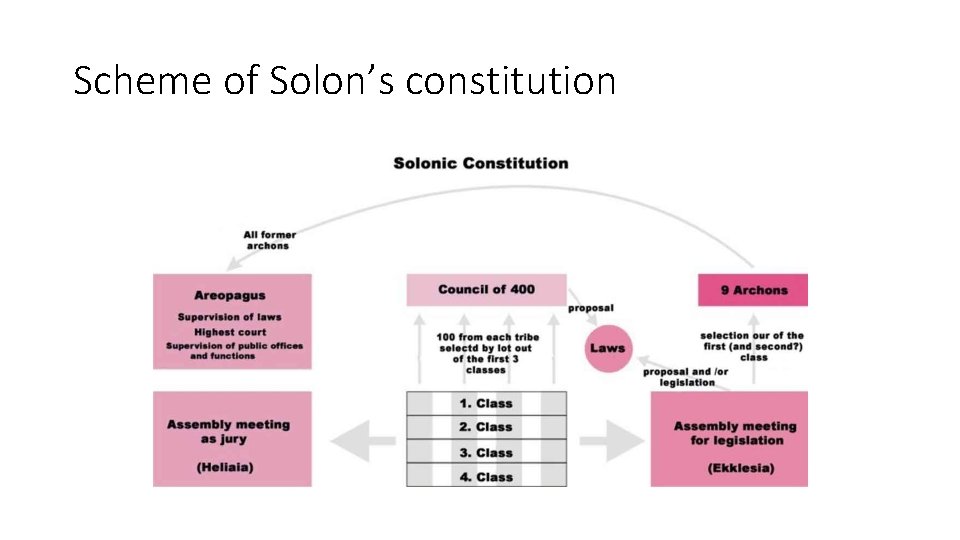
Scheme of Solon’s constitution
Reforms of Cleisthenes • What changes does he make? • How does he do this? • What is the sequence of events after expulsion of tyrants in 510? • What is the new set-up called? • Connotations and history of isonomia (“equal/fair rule/distribution”) and demokratia (“rule/control of demos)?
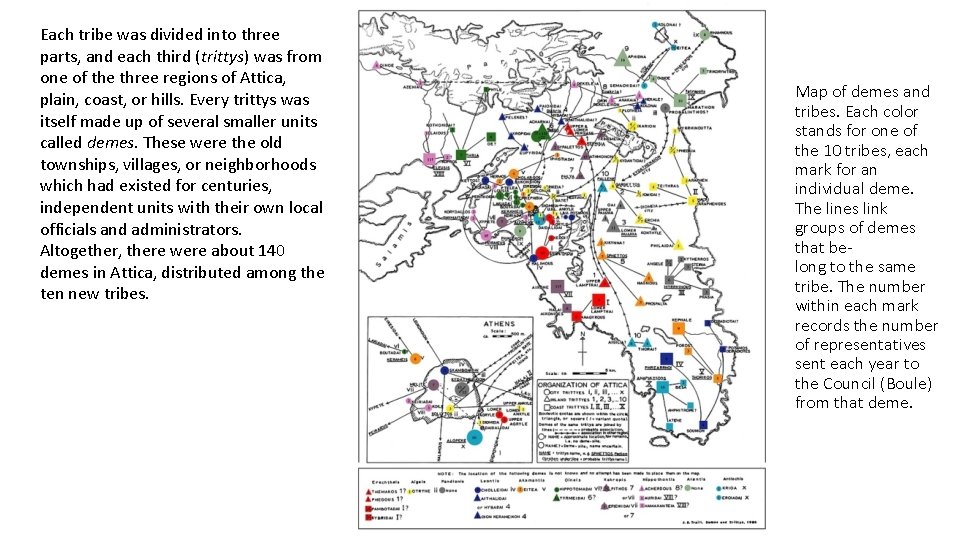
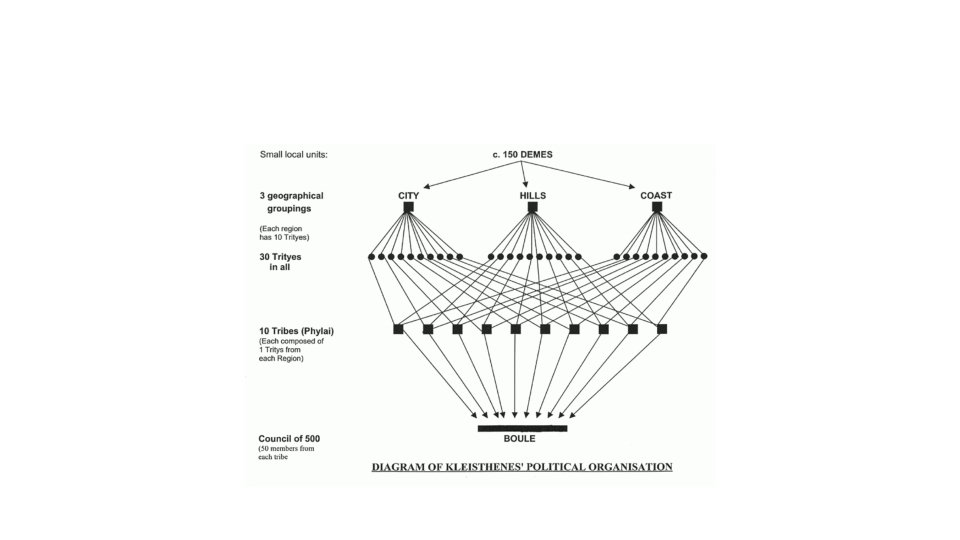
Each tribe was divided into three parts, and each third (trittys) was from one of the three regions of Attica, plain, coast, or hills. Every trittys was itself made up of several smaller units called demes. These were the old townships, villages, or neighborhoods which had existed for centuries, independent units with their own local officials and administrators. Altogether, there were about 140 demes in Attica, distributed among the ten new tribes. Map of demes and tribes. Each color stands for one of the 10 tribes, each mark for an individual deme. The lines link groups of demes that be- long to the same tribe. The number within each mark records the number of representatives sent each year to the Council (Boule) from that deme.
Cleisthenes and ostracism (6000 votes required) • Aristotle, Constitution of the Athenians, 3 -4: • “Eleven years afterwards came their victory in the battle of Marathon [490 BCE]; and in the archonship of Phaenippus, two years after the victory, the people being now in high courage, they put in force for the first time the law about ostracism, which had been enacted owing to the suspicion felt against the men in the positions of power because Peisistratus when leader of the people and general set himself up as tyrant. [4] The first person banished by ostracism was one of his relatives, Hipparchus son of Charmus of the deme of Collytus, the desire to banish whom had been Cleisthenes' principal motive in making the law. For the Athenians permitted all friends of the tyrants that had not taken part with them in their offences during the disorders to dwell in the city, —in this the customary mildness of the people was displayed; and Hipparchus was the leader and chief of these persons. ”
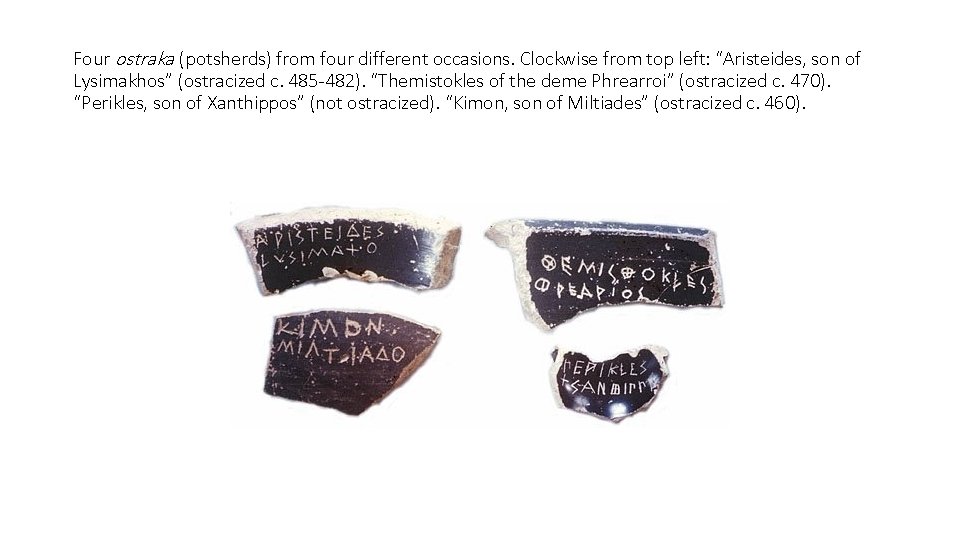
Four ostraka (potsherds) from four different occasions. Clockwise from top left: “Aristeides, son of Lysimakhos” (ostracized c. 485 -482). “Themistokles of the deme Phrearroi” (ostracized c. 470). “Perikles, son of Xanthippos” (not ostracized). “Kimon, son of Miltiades” (ostracized c. 460).
Reforms of Ephialtes • Areopagus 462 BCE • Reflection in Aeschylus Eumenides (458)
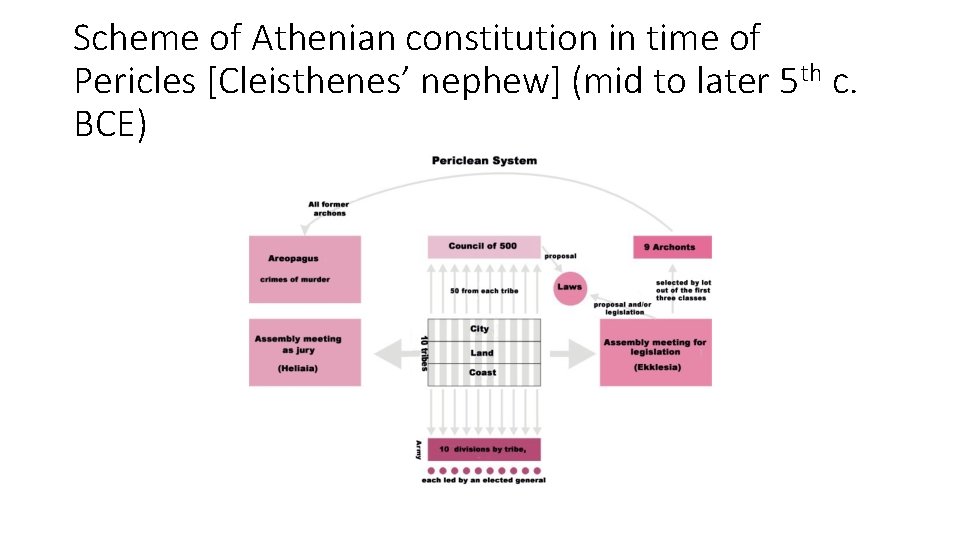
Scheme of Athenian constitution in time of Pericles [Cleisthenes’ nephew] (mid to later 5 th c. BCE)

Periclean reforms • Jury pay (1 ½ obols per day)
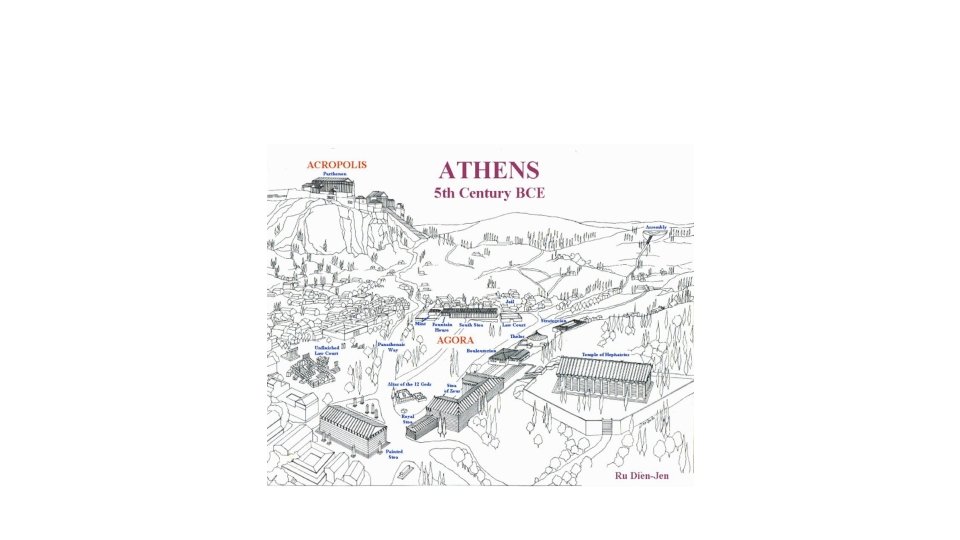
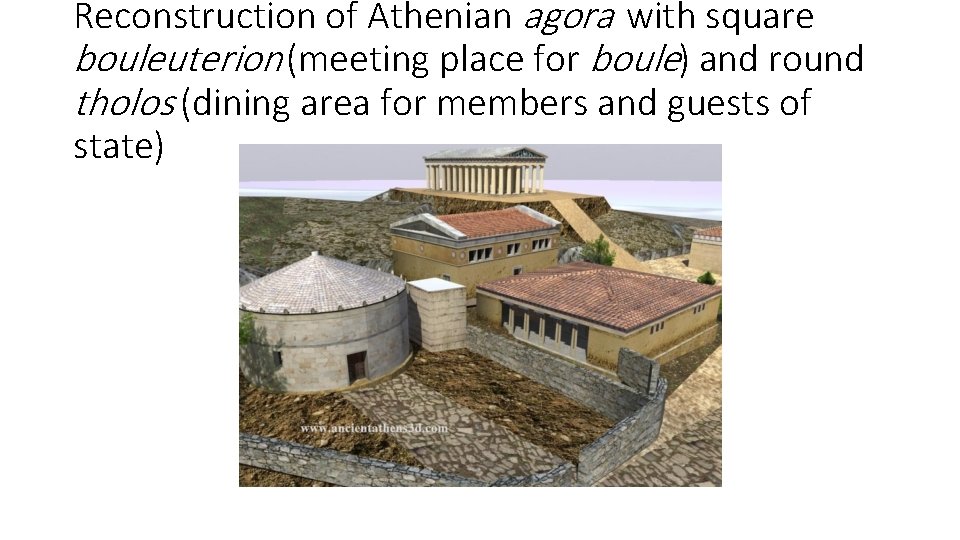
Reconstruction of Athenian agora with square bouleuterion (meeting place for boule) and round tholos (dining area for members and guests of state)
- Slides: 13