
Asylum Seekers in The UK Lesson 4 Asylum




- Slides: 23
Asylum Seekers in The UK Lesson 4 Asylum in the UK
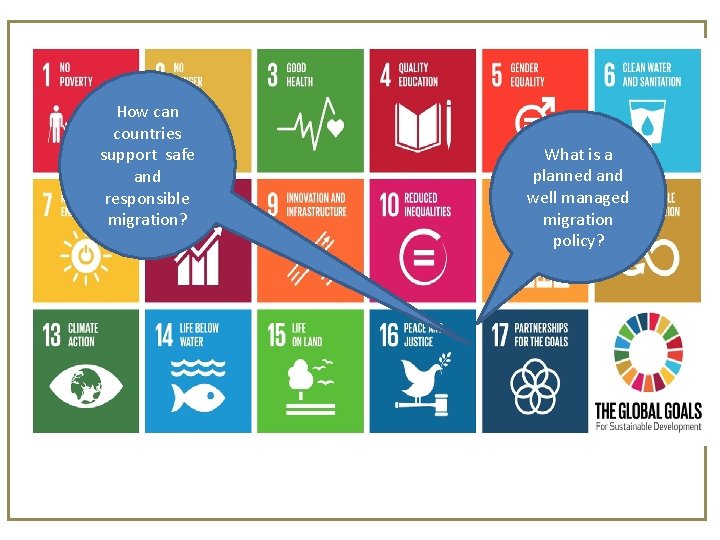
How can countries support safe and responsible migration? What is a planned and well managed migration policy?
Big ideas Big Idea 2 Causes of migration. Some people choose to migrate (e. g. for a better life), some people are forced to migrate (e. g. by war or climate change). Some forces like war, poverty, lack of services Push people out. Other forces Pull people in e. g. employment, safety, lower risk of natural hazards or better land. Refugees are pushed (forced) to migrate because of conflict, persecution or violence. Political, social, environmental and economic factors (e. g. discrimination, jobs, economic inequality between countries) can create migration flows. 98% of the USA’s population migrated there over the last 500 years, mostly for economic reasons. Every migrant has an individual story. Big Idea 11. Countries attempt to control and reduce migration e. g. by building physical barriers, passing laws to restrict benefits, investing in poorer countries and helping to resolve conflicts.
Learning Objectives- learners will • Know about, and gain an understanding of the experience of asylum seekers, and their arrival in the UK • understand that there a variety of reasons why people migrate, and there are some key ‘pull’ and ‘push’ factors. • Explore how we create a resilient community so that we can better host refugees • Explain why governments try to control migration and name some of the strategies they use. • Know some migrants’ stories and can empathise with them. • Develop skills in group work: sharing, listening, and questioning. Sustainable Development Goal 10. 7: Facilitate orderly, safe, regular and responsible migration and mobility of people, including through the implementation of planned and well-managed migration policies
Links to the SDGS ‘Full respect for human rights and the humane treatment of migrants regardless of migration status, of refugees and of displaced persons. ’ ‘strengthen the resilience of communities hosting refugees. ’
Half and Half What is meant by humane treatment of people? What is meant by a resilient country?
HUMANE TREATMENT OF MIGRANTS
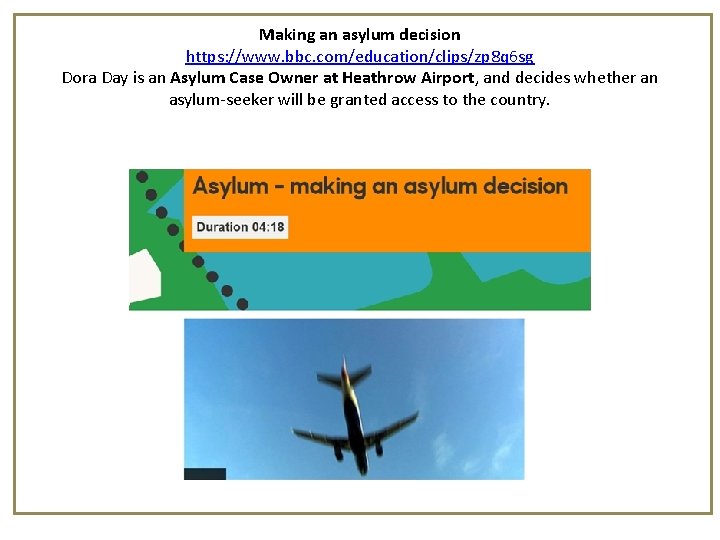
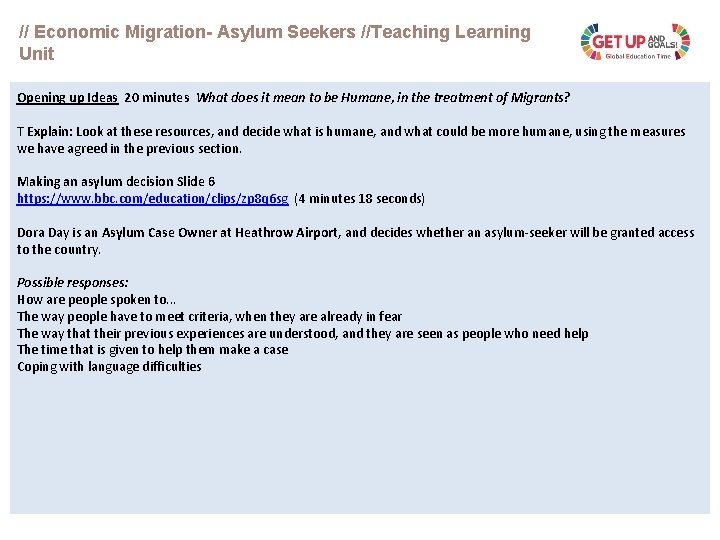
Making an asylum decision https: //www. bbc. com/education/clips/zp 8 q 6 sg Dora Day is an Asylum Case Owner at Heathrow Airport, and decides whether an asylum-seeker will be granted access to the country.
BUILD RESILIENCE IN COUNTRIES HOSTING REFUGEES
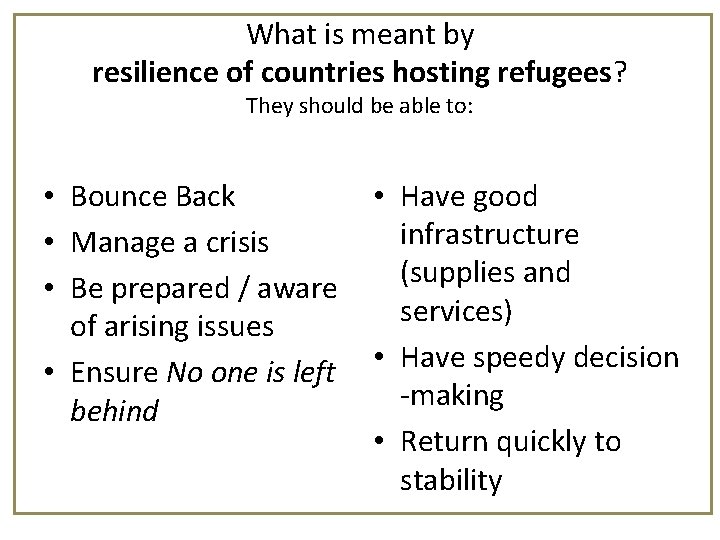
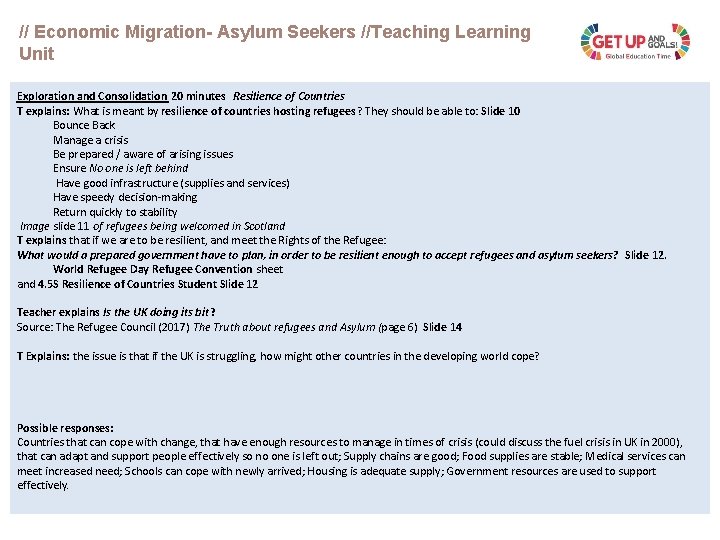
What is meant by resilience of countries hosting refugees? They should be able to: • Bounce Back • Manage a crisis • Be prepared / aware of arising issues • Ensure No one is left behind • Have good infrastructure (supplies and services) • Have speedy decision -making • Return quickly to stability
Refugees in the UK
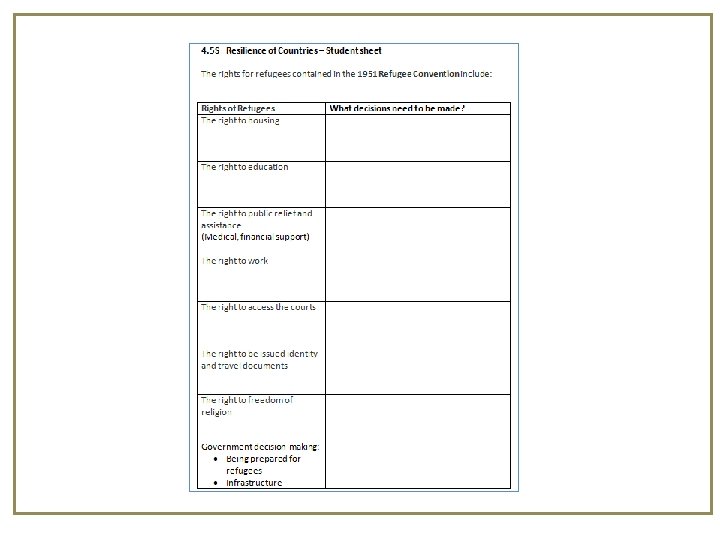
The rights for refugees contained in the 1951 Refugee Convention include: • The right not to be expelled from a country they have taken refuge in, except under certain, strictly defined conditions; • The right not to be punished for illegal entry into a country they have escaped to; • The right to work; • The right to housing; • The right to education; • The right to public relief and assistance; • The right to freedom of religion; • The right to access the courts; • The right to freedom of movement within the host territory; • The right to be issued identity and travel documents.
Poor countries, not the UK, look after most of the world’s refugees • Britain is host to less than 1% of the world’s refugees. (UNHCR Global Trends 2015) • Britain has received just 3% of all asylum claims made in the EU so far in 2016. (Eurostat 2016) • UNHCR calculates that by the end of 2015 there were nearly 5 million Syrian refugees. Only 2, 539 of these claimed asylum in the UK. (UNHCR Global Trends 2015) • Poor countries shelter the vast majority of the world’s refugees: 86% live in developing countries. (UNHCR Global Trends 2015) • In the UK in 2016, 29% of the people who applied for asylum were granted it, which was close to average for EU states. In some countries, such as Germany and Belgium, more then 40% of applications succeed. (Eurostat) The Refugee Council (2017) The Truth about refugees and asylum page 6
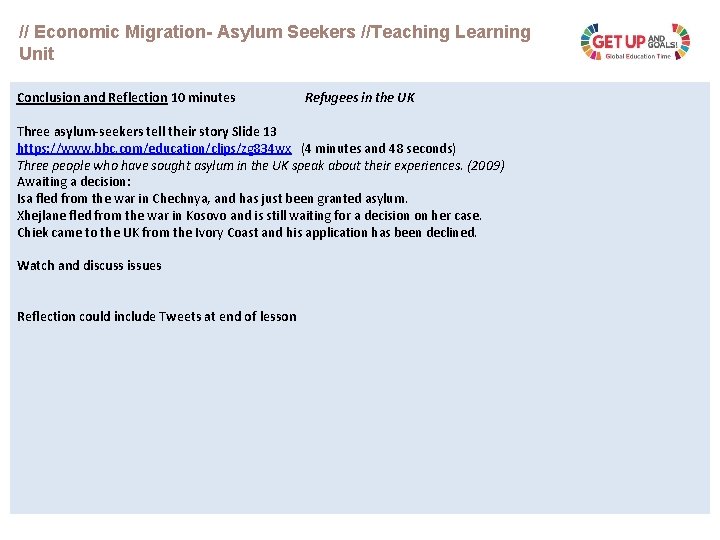
Three asylum-seekers tell their story https: //www. bbc. com/education/clips/zg 834 wx Three refugees who have found asylum in the UK speak about their experiences. Isa fled from the war in Chechnya, and has just been granted asylum. Xhejlane fled from the war in Kosovo and is still waiting for a decision on her case. Chiek came to the UK from the Ivory Coast and his application has been declined.
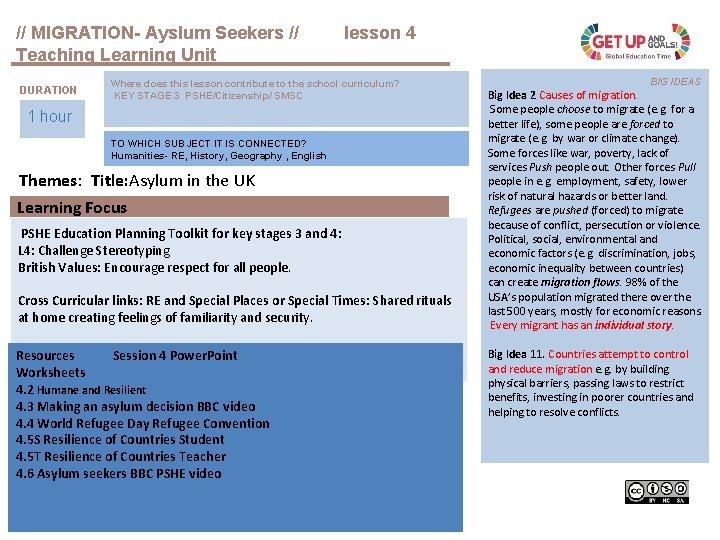
// MIGRATION- Ayslum Seekers // Teaching Learning Unit DURATION lesson 4 Where does this lesson contribute to the school curriculum? KEY STAGE 3 PSHE/Citizenship/ SMSC 1 hour TO WHICH SUBJECT IT IS CONNECTED? Humanities- RE, History, Geography , English Themes: Title: Asylum in the UK Learning Focus PSHE Education Planning Toolkit for key stages 3 and 4: L 4: Challenge Stereotyping British Values: Encourage respect for all people. Cross Curricular links: RE and Special Places or Special Times: Shared rituals at home creating feelings of familiarity and security. Resources Session 4 Power. Point Worksheets 4. 2 Humane and Resilient 4. 3 Making an asylum decision BBC video 4. 4 World Refugee Day Refugee Convention 4. 5 S Resilience of Countries Student 4. 5 T Resilience of Countries Teacher 4. 6 Asylum seekers BBC PSHE video BIG IDEAS Big Idea 2 Causes of migration. Some people choose to migrate (e. g. for a better life), some people are forced to migrate (e. g. by war or climate change). Some forces like war, poverty, lack of services Push people out. Other forces Pull people in e. g. employment, safety, lower risk of natural hazards or better land. Refugees are pushed (forced) to migrate because of conflict, persecution or violence. Political, social, environmental and economic factors (e. g. discrimination, jobs, economic inequality between countries) can create migration flows. 98% of the USA’s population migrated there over the last 500 years, mostly for economic reasons. Every migrant has an individual story. Big Idea 11. Countries attempt to control and reduce migration e. g. by building physical barriers, passing laws to restrict benefits, investing in poorer countries and helping to resolve conflicts.
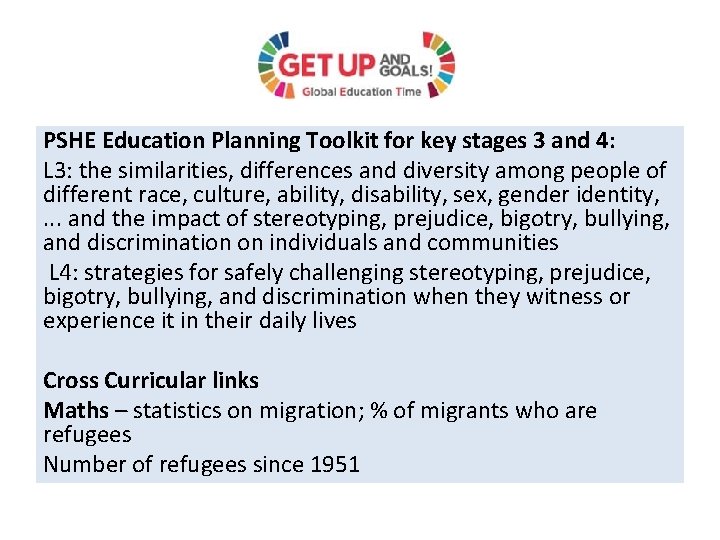
PSHE Education Planning Toolkit for key stages 3 and 4: L 3: the similarities, differences and diversity among people of different race, culture, ability, disability, sex, gender identity, . . . and the impact of stereotyping, prejudice, bigotry, bullying, and discrimination on individuals and communities L 4: strategies for safely challenging stereotyping, prejudice, bigotry, bullying, and discrimination when they witness or experience it in their daily lives Cross Curricular links Maths – statistics on migration; % of migrants who are refugees Number of refugees since 1951
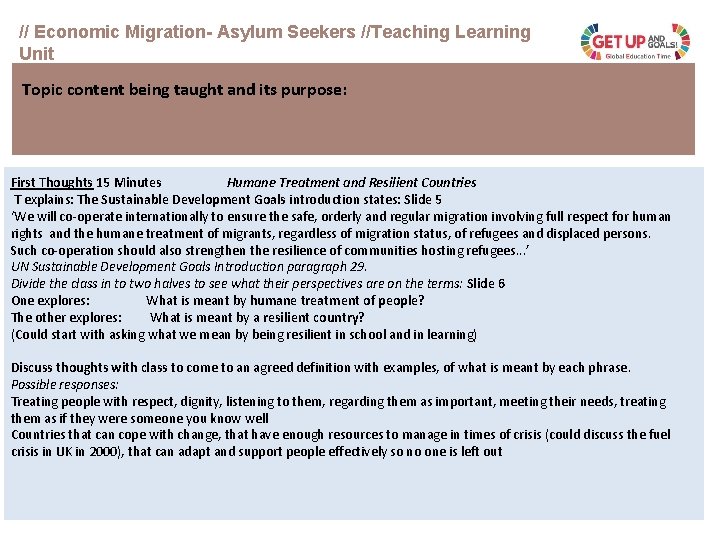
// Economic Migration- Asylum Seekers //Teaching Learning Unit Topic content being taught and its purpose: First Thoughts 15 Minutes Humane Treatment and Resilient Countries T explains: The Sustainable Development Goals introduction states: Slide 5 ‘We will co-operate internationally to ensure the safe, orderly and regular migration involving full respect for human rights and the humane treatment of migrants, regardless of migration status, of refugees and displaced persons. Such co-operation should also strengthen the resilience of communities hosting refugees. . . ’ UN Sustainable Development Goals Introduction paragraph 29. Divide the class in to two halves to see what their perspectives are on the terms: Slide 6 One explores: What is meant by humane treatment of people? The other explores: What is meant by a resilient country? (Could start with asking what we mean by being resilient in school and in learning) Discuss thoughts with class to come to an agreed definition with examples, of what is meant by each phrase. Possible responses: Treating people with respect, dignity, listening to them, regarding them as important, meeting their needs, treating them as if they were someone you know well Countries that can cope with change, that have enough resources to manage in times of crisis (could discuss the fuel crisis in UK in 2000), that can adapt and support people effectively so no one is left out
// Economic Migration- Asylum Seekers //Teaching Learning Unit Opening up Ideas 20 minutes What does it mean to be Humane, in the treatment of Migrants? T Explain: Look at these resources, and decide what is humane, and what could be more humane, using the measures we have agreed in the previous section. Making an asylum decision Slide 6 https: //www. bbc. com/education/clips/zp 8 q 6 sg (4 minutes 18 seconds) Dora Day is an Asylum Case Owner at Heathrow Airport, and decides whether an asylum-seeker will be granted access to the country. Possible responses: How are people spoken to. . . The way people have to meet criteria, when they are already in fear The way that their previous experiences are understood, and they are seen as people who need help The time that is given to help them make a case Coping with language difficulties
// Economic Migration- Asylum Seekers //Teaching Learning Unit Exploration and Consolidation 20 minutes Resilience of Countries T explains: What is meant by resilience of countries hosting refugees? They should be able to: Slide 10 Bounce Back Manage a crisis Be prepared / aware of arising issues Ensure No one is left behind Have good infrastructure (supplies and services) Have speedy decision-making Return quickly to stability Image slide 11 of refugees being welcomed in Scotland T explains that if we are to be resilient, and meet the Rights of the Refugee: What would a prepared government have to plan, in order to be resilient enough to accept refugees and asylum seekers? Slide 12. World Refugee Day Refugee Convention sheet and 4. 5 S Resilience of Countries Student Slide 12 Teacher explains Is the UK doing its bit? Source: The Refugee Council (2017) The Truth about refugees and Asylum (page 6) Slide 14 T Explains: the issue is that if the UK is struggling, how might other countries in the developing world cope? Possible responses: Countries that can cope with change, that have enough resources to manage in times of crisis (could discuss the fuel crisis in UK in 2000), that can adapt and support people effectively so no one is left out; Supply chains are good; Food supplies are stable; Medical services can meet increased need; Schools can cope with newly arrived; Housing is adequate supply; Government resources are used to support effectively.
// Economic Migration- Asylum Seekers //Teaching Learning Unit Conclusion and Reflection 10 minutes Refugees in the UK Three asylum-seekers tell their story Slide 13 https: //www. bbc. com/education/clips/zg 834 wx (4 minutes and 48 seconds) Three people who have sought asylum in the UK speak about their experiences. (2009) Awaiting a decision: Isa fled from the war in Chechnya, and has just been granted asylum. Xhejlane fled from the war in Kosovo and is still waiting for a decision on her case. Chiek came to the UK from the Ivory Coast and his application has been declined. Watch and discuss issues Reflection could include Tweets at end of lesson