
Astronomy Unit Exploring Space Use of electromagnetic spectrum
- Slides: 17
Astronomy Unit
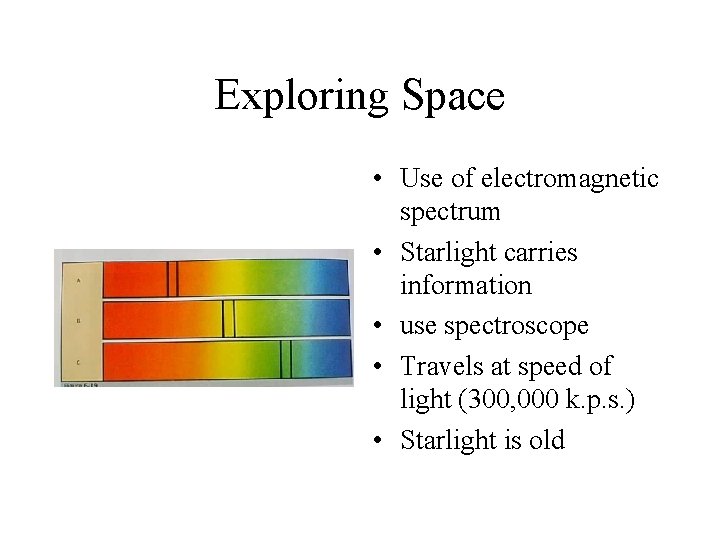
Exploring Space • Use of electromagnetic spectrum • Starlight carries information • use spectroscope • Travels at speed of light (300, 000 k. p. s. ) • Starlight is old
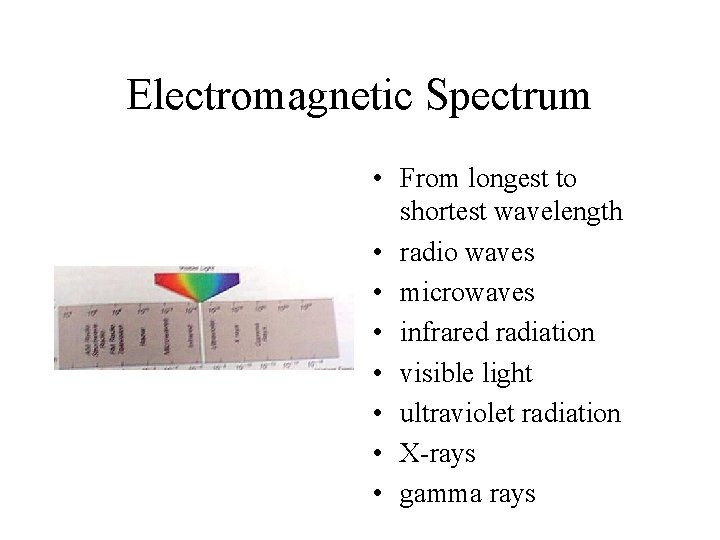
Electromagnetic Spectrum • From longest to shortest wavelength • radio waves • microwaves • infrared radiation • visible light • ultraviolet radiation • X-rays • gamma rays
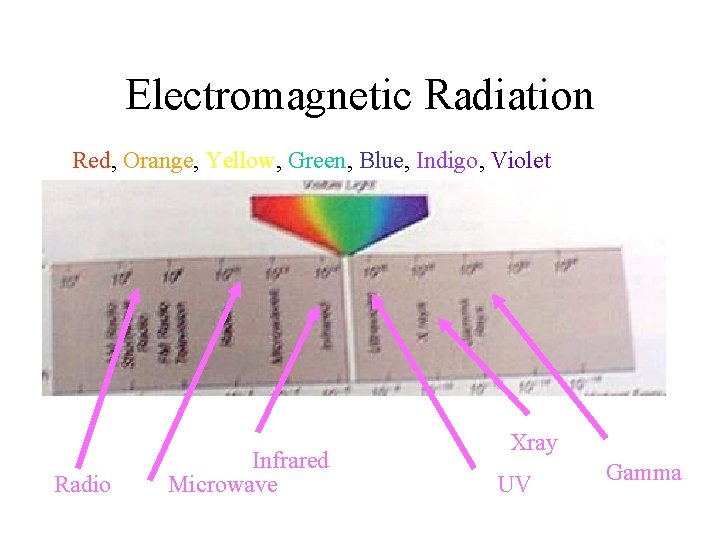
Electromagnetic Radiation Red, Orange, Yellow, Green, Blue, Indigo, Violet Radio Infrared Microwave Xray UV Gamma
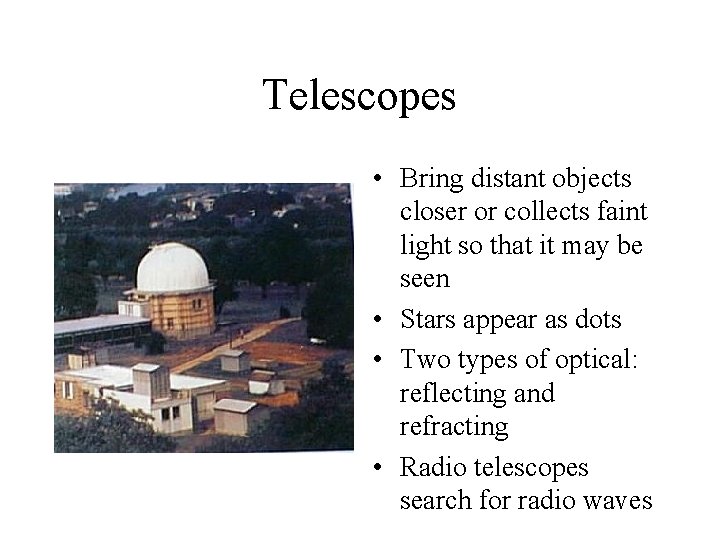
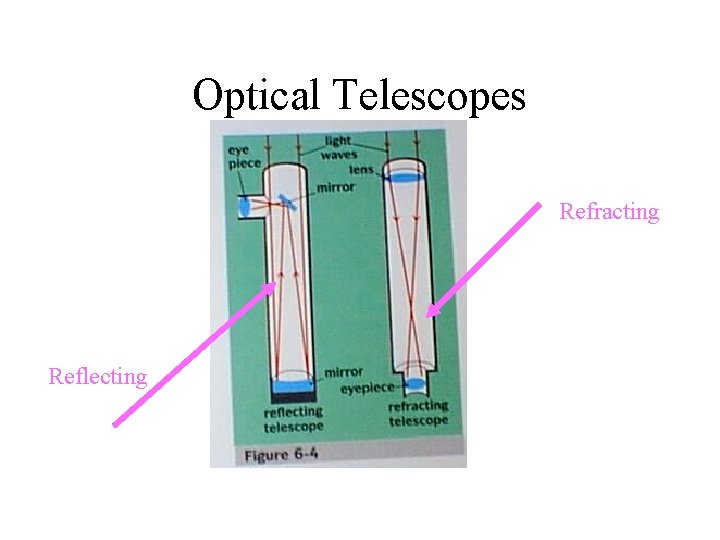
Telescopes • Bring distant objects closer or collects faint light so that it may be seen • Stars appear as dots • Two types of optical: reflecting and refracting • Radio telescopes search for radio waves
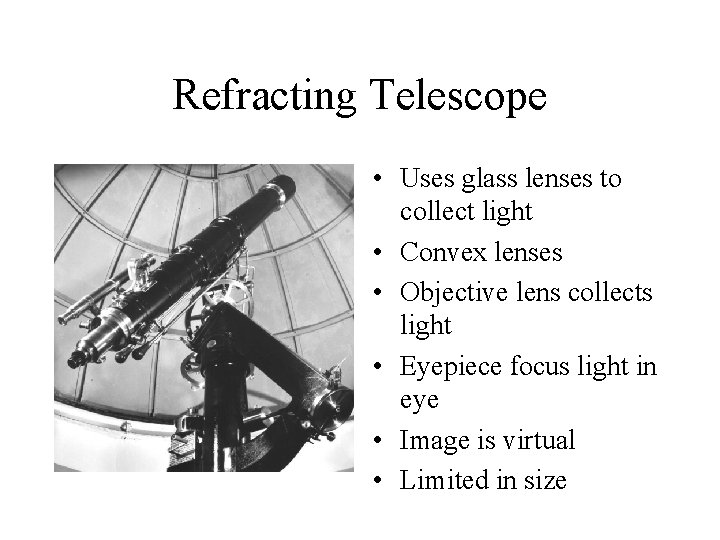
Refracting Telescope • Uses glass lenses to collect light • Convex lenses • Objective lens collects light • Eyepiece focus light in eye • Image is virtual • Limited in size
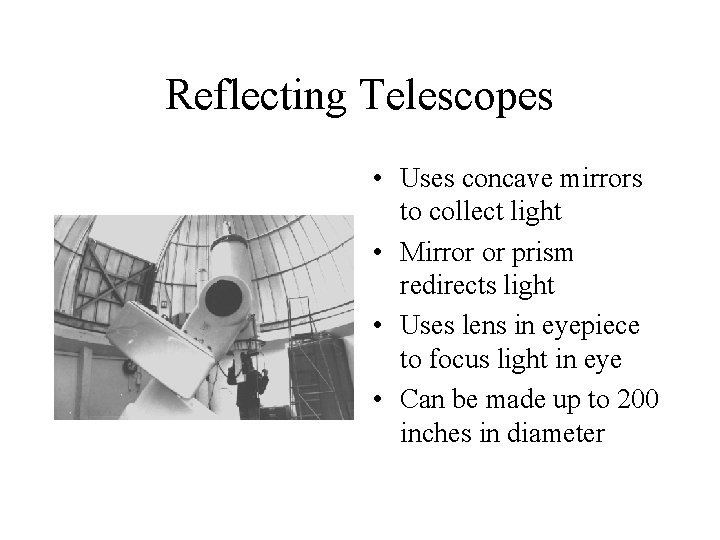
Reflecting Telescopes • Uses concave mirrors to collect light • Mirror or prism redirects light • Uses lens in eyepiece to focus light in eye • Can be made up to 200 inches in diameter
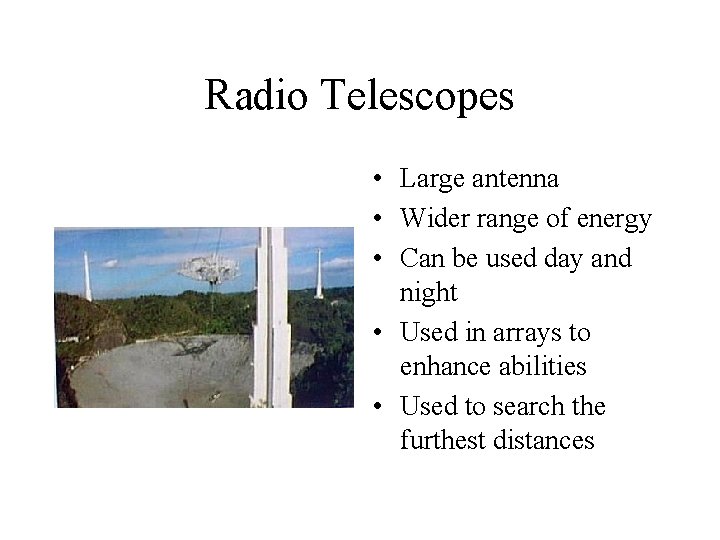
Radio Telescopes • Large antenna • Wider range of energy • Can be used day and night • Used in arrays to enhance abilities • Used to search the furthest distances
Optical Telescopes Refracting Reflecting
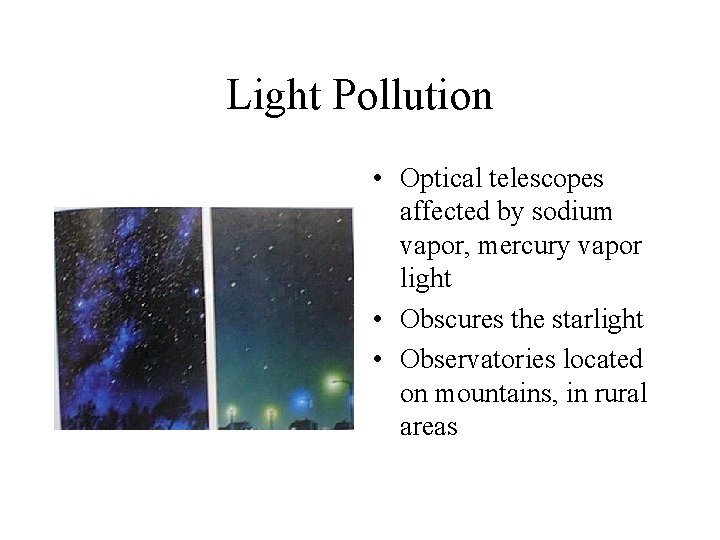
Light Pollution • Optical telescopes affected by sodium vapor, mercury vapor light • Obscures the starlight • Observatories located on mountains, in rural areas
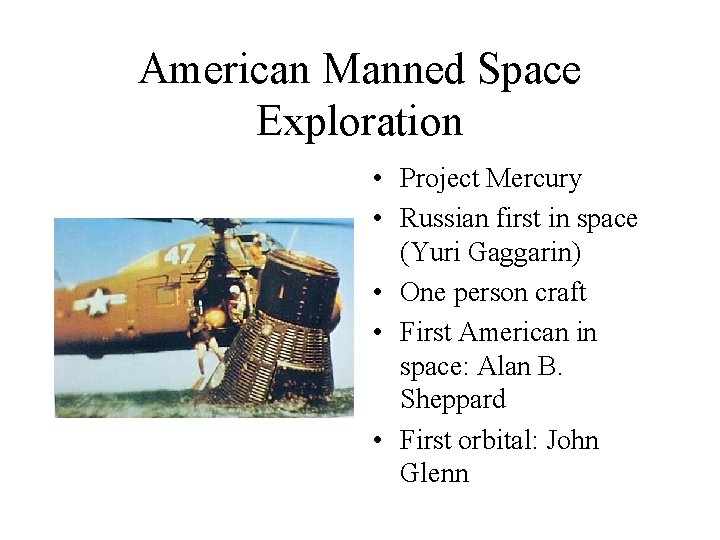
American Manned Space Exploration • Project Mercury • Russian first in space (Yuri Gaggarin) • One person craft • First American in space: Alan B. Sheppard • First orbital: John Glenn
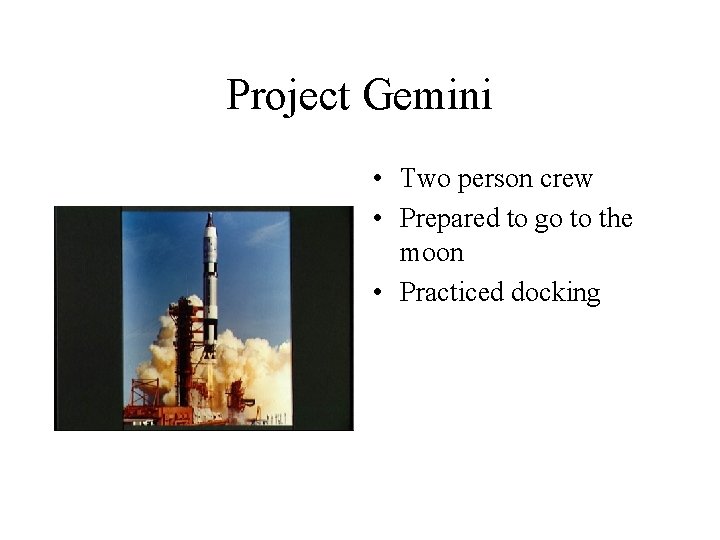
Project Gemini • Two person crew • Prepared to go to the moon • Practiced docking
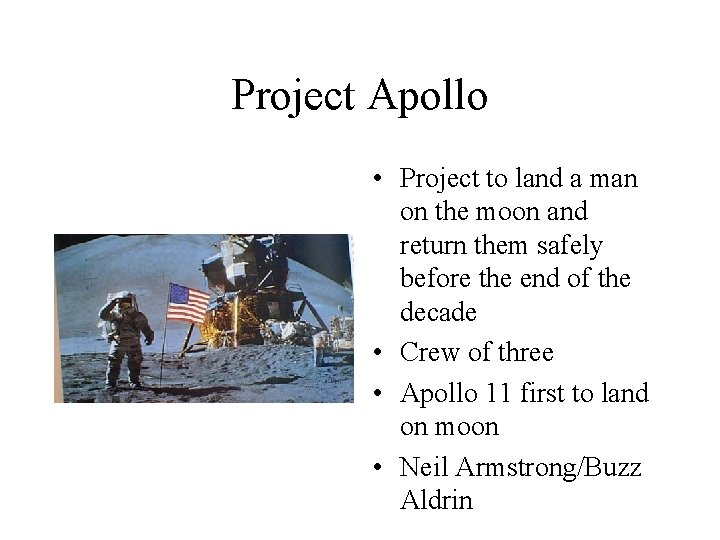
Project Apollo • Project to land a man on the moon and return them safely before the end of the decade • Crew of three • Apollo 11 first to land on moon • Neil Armstrong/Buzz Aldrin
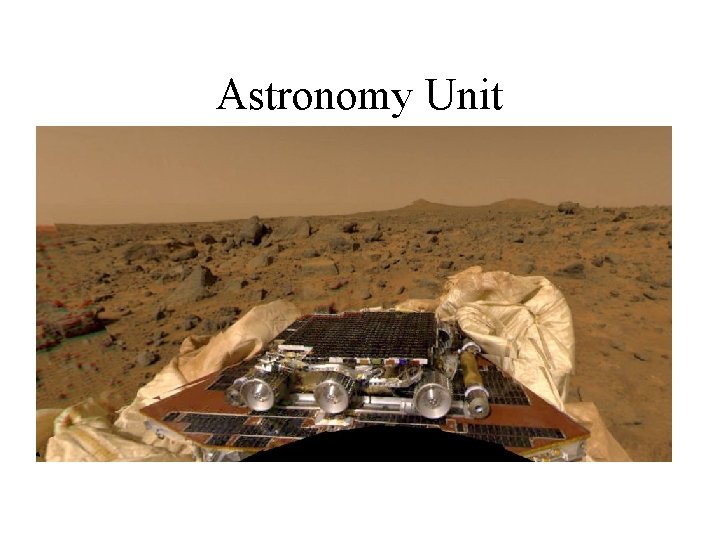
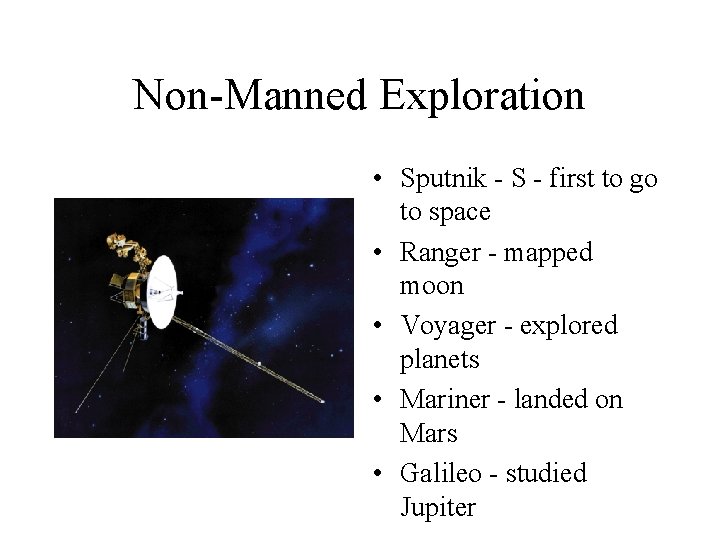
Non-Manned Exploration • Sputnik - S - first to go to space • Ranger - mapped moon • Voyager - explored planets • Mariner - landed on Mars • Galileo - studied Jupiter
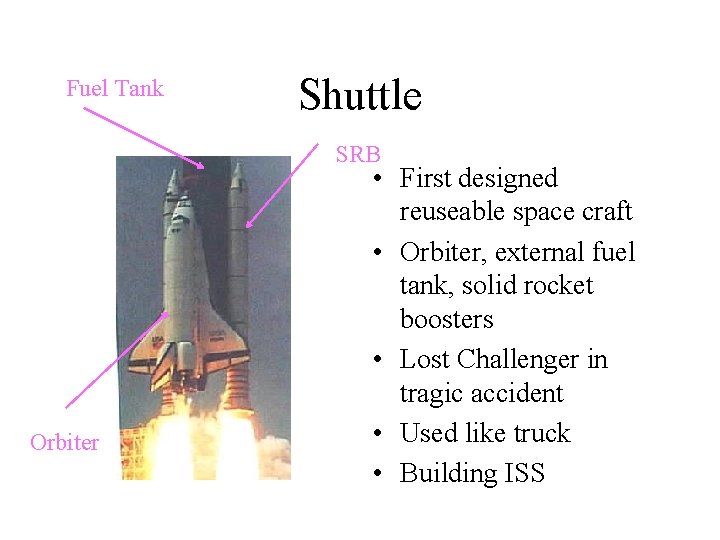
Fuel Tank Shuttle SRB Orbiter • First designed reuseable space craft • Orbiter, external fuel tank, solid rocket boosters • Lost Challenger in tragic accident • Used like truck • Building ISS
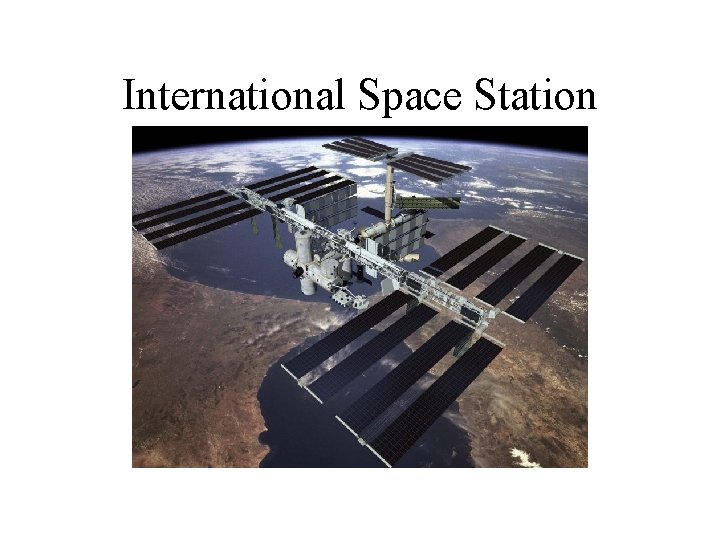
International Space Station
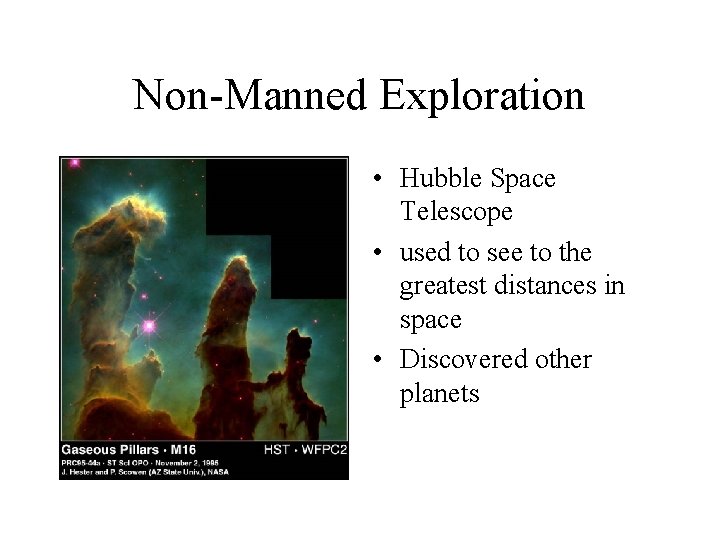
Non-Manned Exploration • Hubble Space Telescope • used to see to the greatest distances in space • Discovered other planets