
Astronomy Solar System Solar System Note Taking 1
- Slides: 17
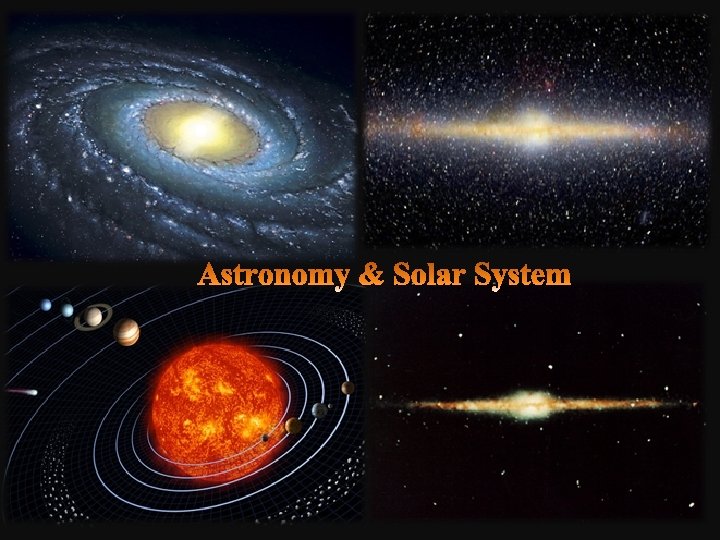
Astronomy & Solar System
Solar System Note Taking
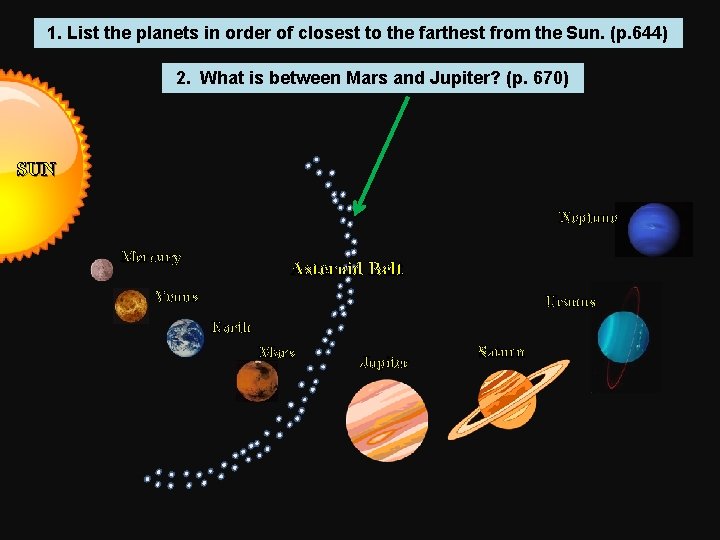
1. List the planets in order of closest to the farthest from the Sun. (p. 644) 2. What is between Mars and Jupiter? (p. 670) SUN Neptune Mercury Asteroid Belt Venus Uranus Earth Mars Jupiter Saturn
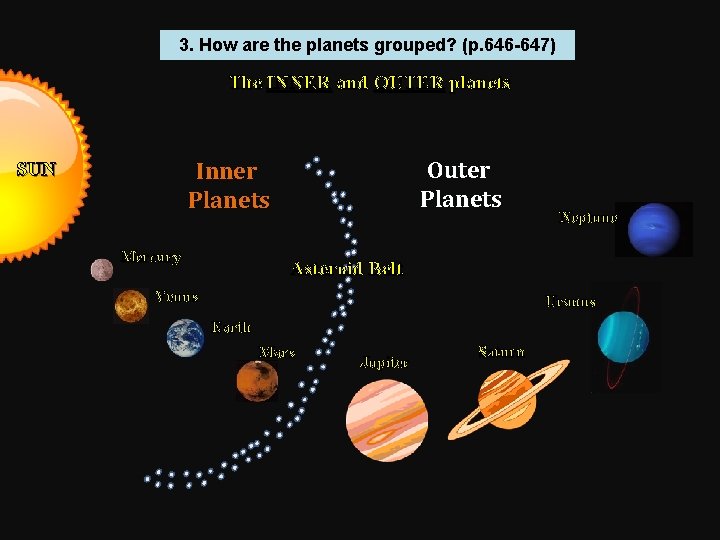
3. How are the planets grouped? (p. 646 -647) The INNER and OUTER planets Outer Planets Inner Planets SUN Mercury Neptune Asteroid Belt Venus Uranus Earth Mars Jupiter Saturn
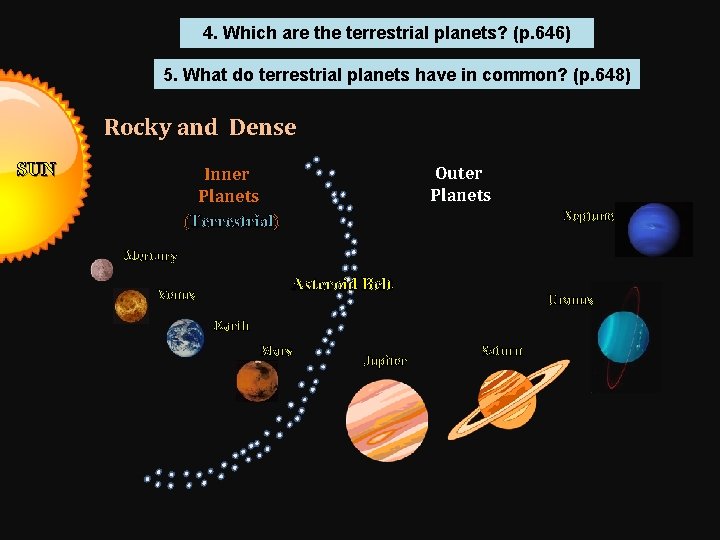
4. Which are the terrestrial planets? (p. 646) Venus, Earth 5. What do. Mercury, terrestrial planets have, Mars in common? (p. 648) Rocky and Dense SUN Outer Planets Inner Planets (Terrestrial) Neptune Mercury Asteroid Belt Venus Uranus Earth Mars Jupiter Saturn
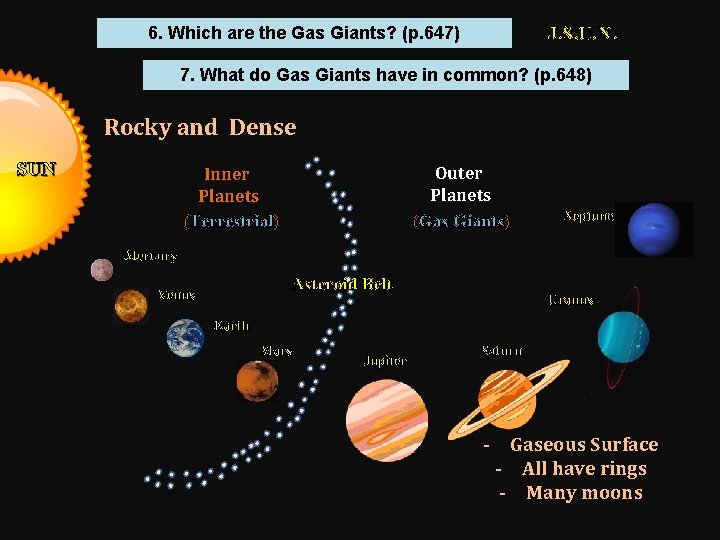
J. S. U. N. 6. Which are the Gas Giants? (p. 647) 7. What do Gas Giants have in common? (p. 648) Rocky and Dense SUN Outer Planets (Gas Giants) Inner Planets (Terrestrial) Neptune Mercury Asteroid Belt Venus Uranus Earth Mars Jupiter Saturn - Gaseous Surface - All have rings - Many moons
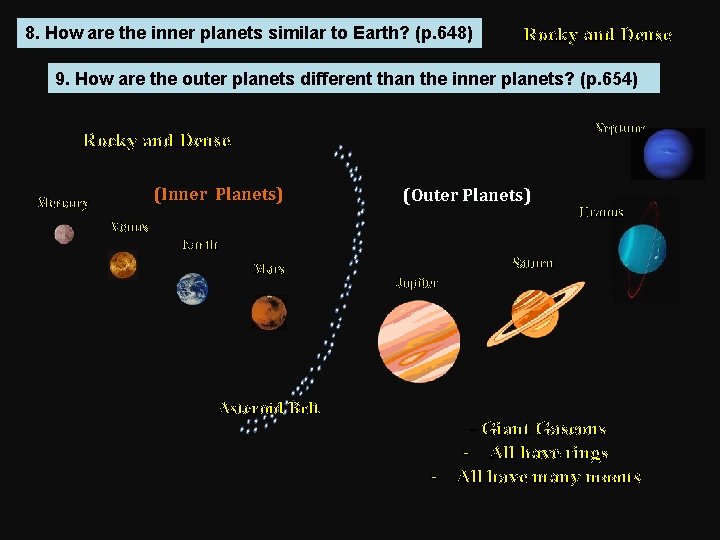
8. How are the inner planets similar to Earth? (p. 648) Rocky and Dense 9. How are the outer planets different than the inner planets? (p. 654) Neptune Rocky and Dense (Inner Planets) Mercury (Outer Planets) Venus Uranus Earth Mars Asteroid Belt Saturn Jupiter - Giant Gaseous - All have rings - All have many moons
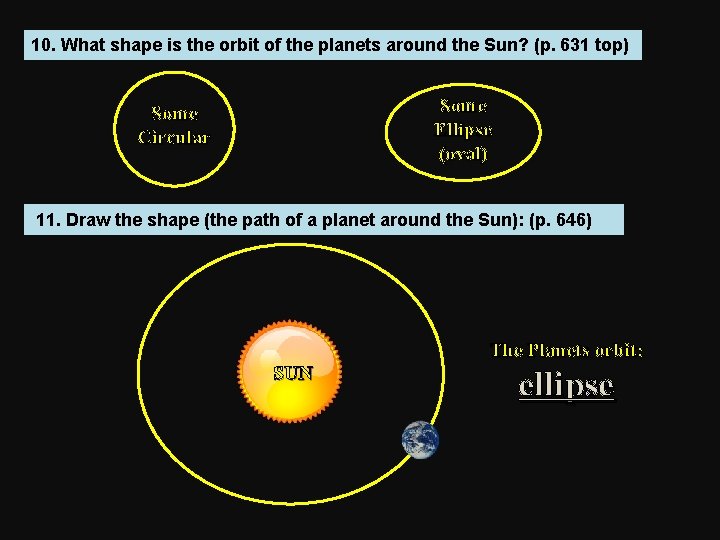
10. What shape is the orbit of the planets around the Sun? (p. 631 top) Some Ellipse (oval) Some Circular 11. Draw the shape (the path of a planet around the Sun): (p. 646) SUN The Planets orbit: ellipse
Astronomy Note taking
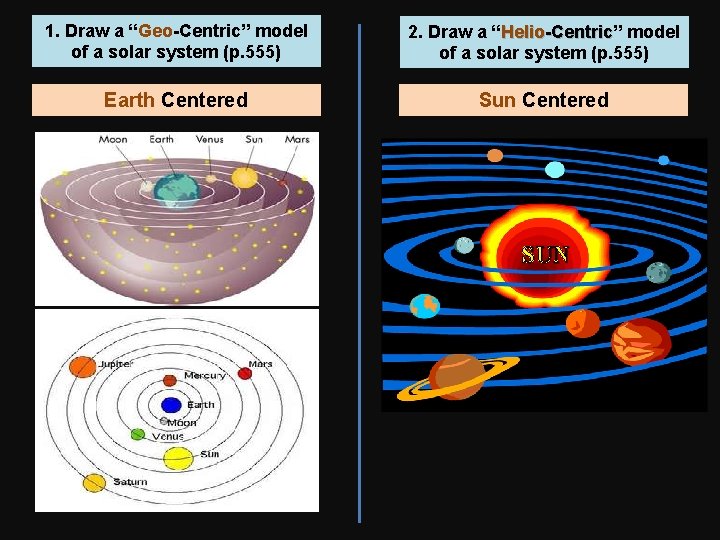
1. Draw a “Geo-Centric” -Centric model of a solar system (p. 555) 2. Draw a “Helio-Centric” -Centric model of a solar system (p. 555) Earth Centered Sun Centered SUN
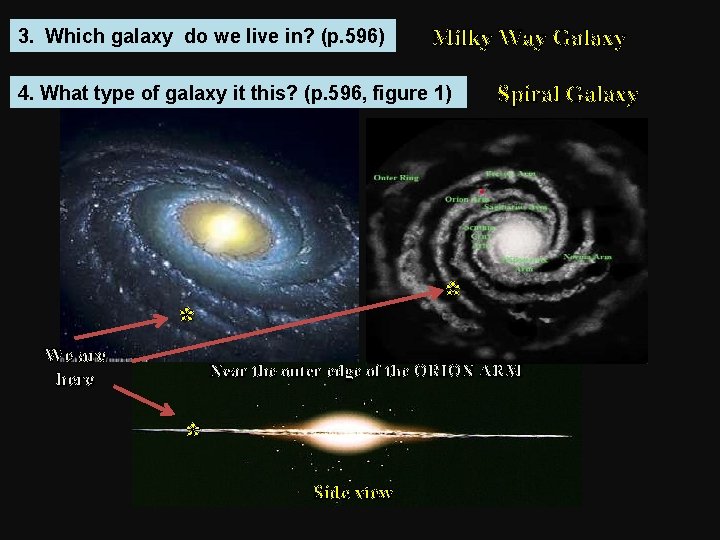
3. Which galaxy do we live in? (p. 596) Milky Way Galaxy 4. What type of galaxy it this? (p. 596, figure 1) * * We are here Spiral Galaxy Near the outer edge of the ORION ARM * Side view
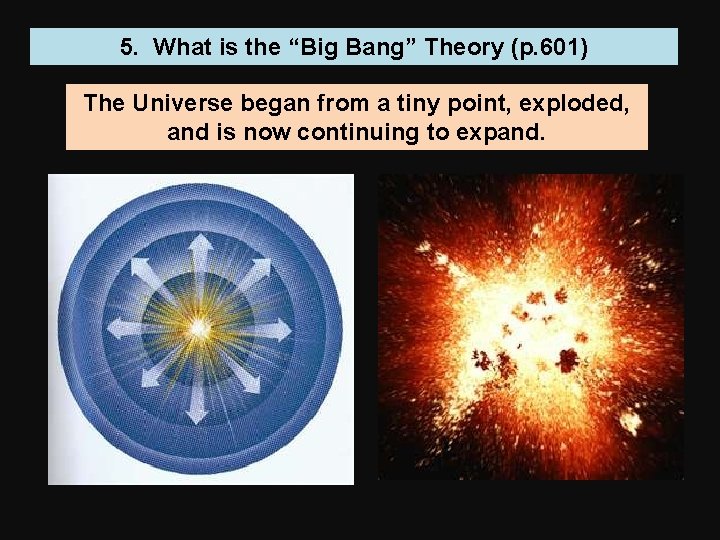
5. What is the “Big Bang” Theory (p. 601) The Universe began from a tiny point, exploded, and is now continuing to expand.
6. About how old is our UNIVERSE? (p. 601) About 13 – 15 Billion years old 7. About how old is our solar system? (p. 614) About 4 - 5 Billion years old
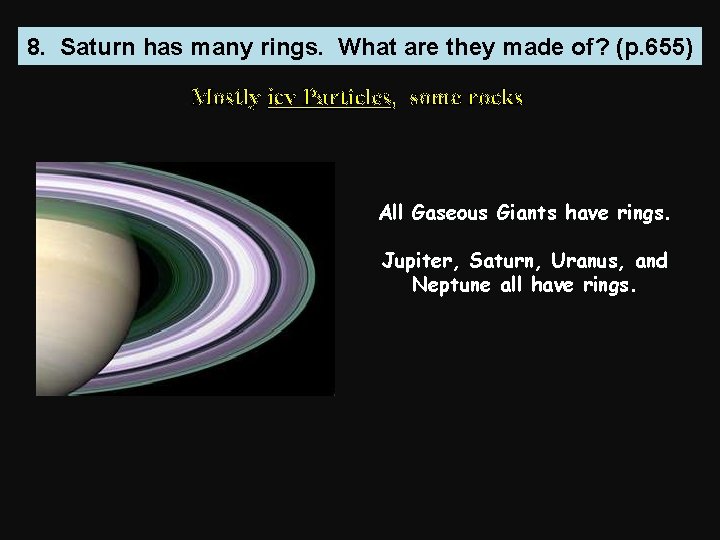
8. Saturn has many rings. What are they made of? (p. 655) Mostly icy Particles, some rocks All Gaseous Giants have rings. Jupiter, Saturn, Uranus, and Neptune all have rings.
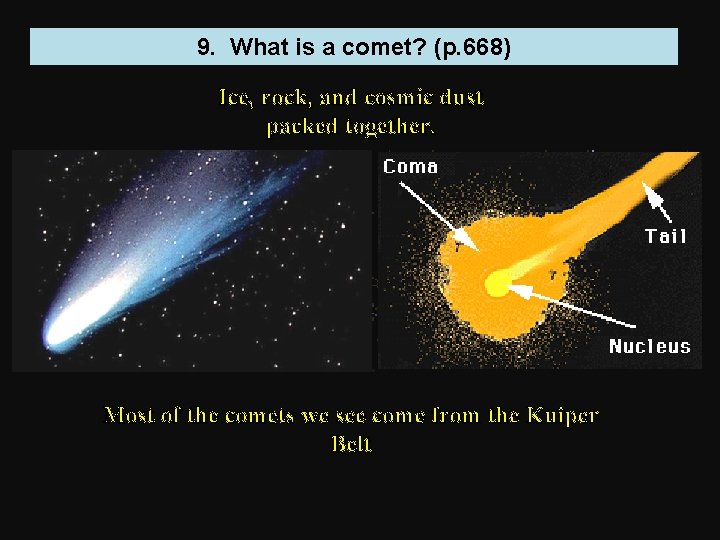
9. What is a comet? (p. 668) Ice, rock, and cosmic dust packed together. Most of the comets we see come from the Kuiper Belt
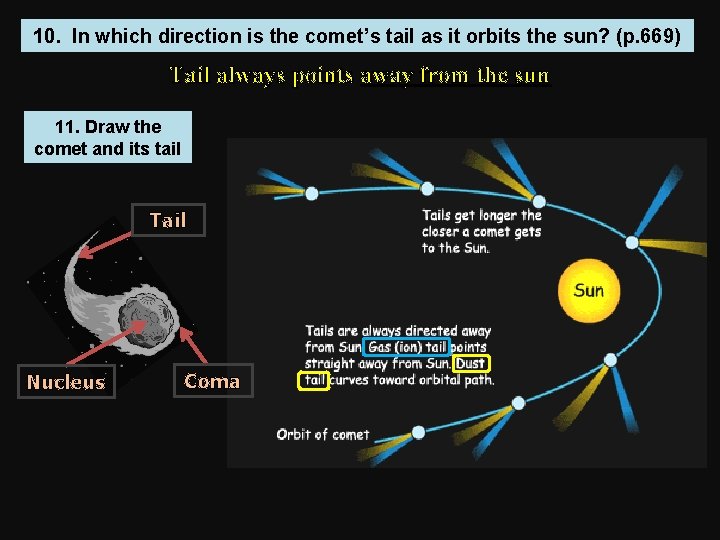
10. In which direction is the comet’s tail as it orbits the sun? (p. 669) Tail always points away from the sun 11. Draw the comet and its tail Tail Nucleus Coma
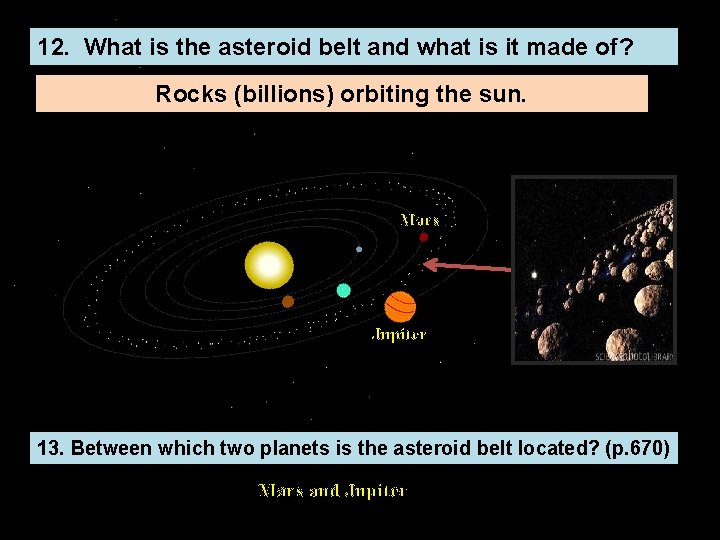
12. What is the asteroid belt and what is it made of? Rocks (billions) orbiting the sun. Mars Jupiter 13. Between which two planets is the asteroid belt located? (p. 670) Mars and Jupiter