
Astronomy Chapter 1 Earth in Space Astronomy Study
- Slides: 30
Astronomy Chapter 1: Earth in Space
Astronomy Study of moon, stars, and objects in space Not “astrology”
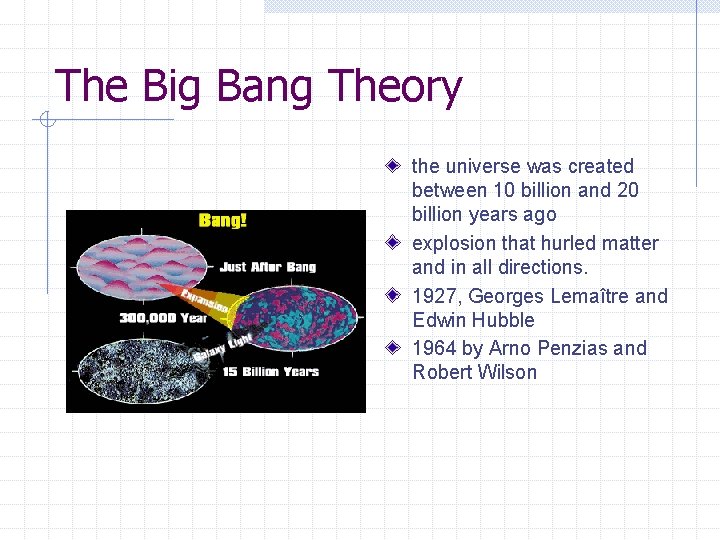
The Big Bang Theory the universe was created between 10 billion and 20 billion years ago explosion that hurled matter and in all directions. 1927, Georges Lemaître and Edwin Hubble 1964 by Arno Penzias and Robert Wilson
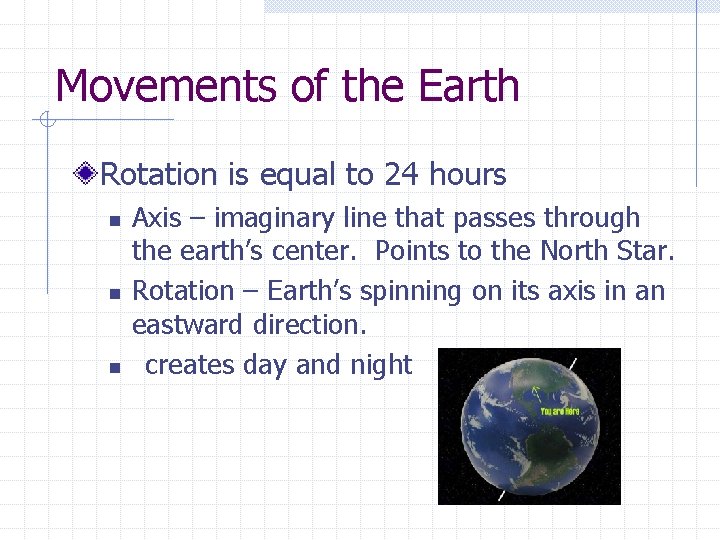
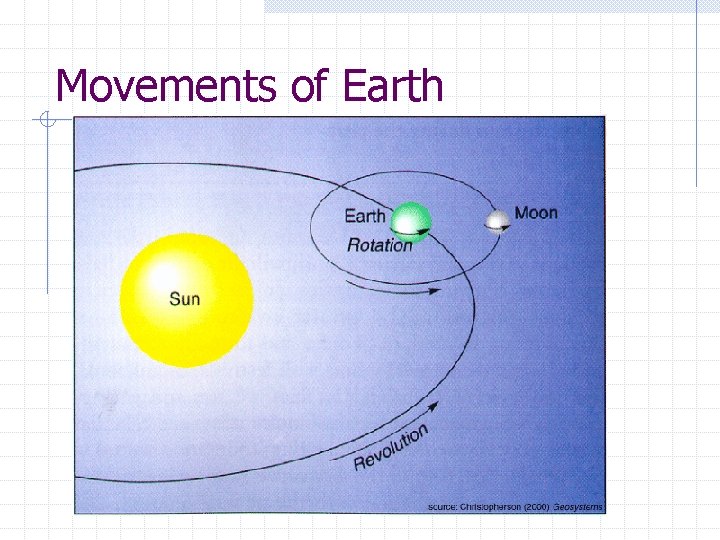
Movements of the Earth Rotation is equal to 24 hours n n n Axis – imaginary line that passes through the earth’s center. Points to the North Star. Rotation – Earth’s spinning on its axis in an eastward direction. creates day and night
Movements of Earth
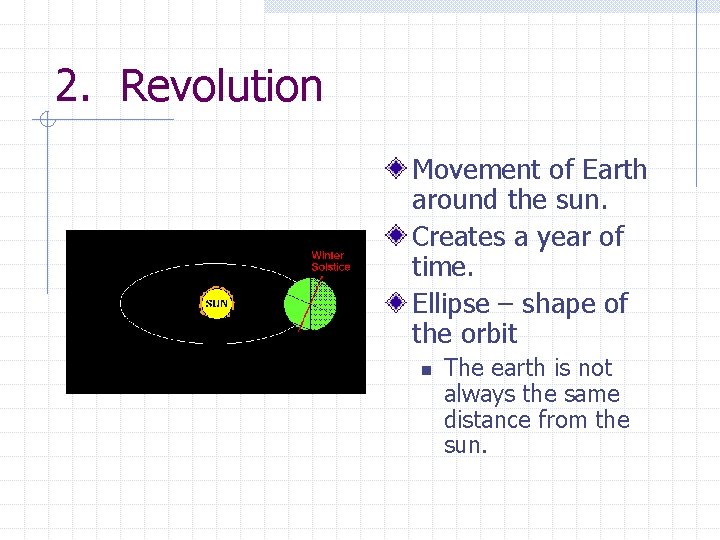
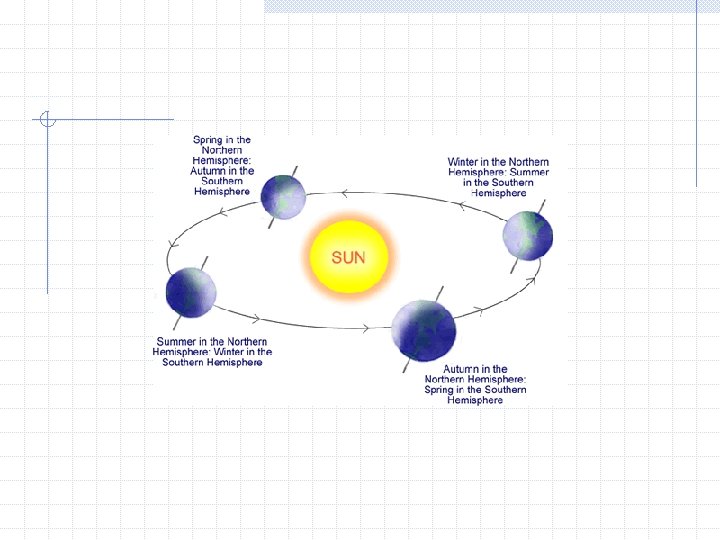
2. Revolution Movement of Earth around the sun. Creates a year of time. Ellipse – shape of the orbit n The earth is not always the same distance from the sun.
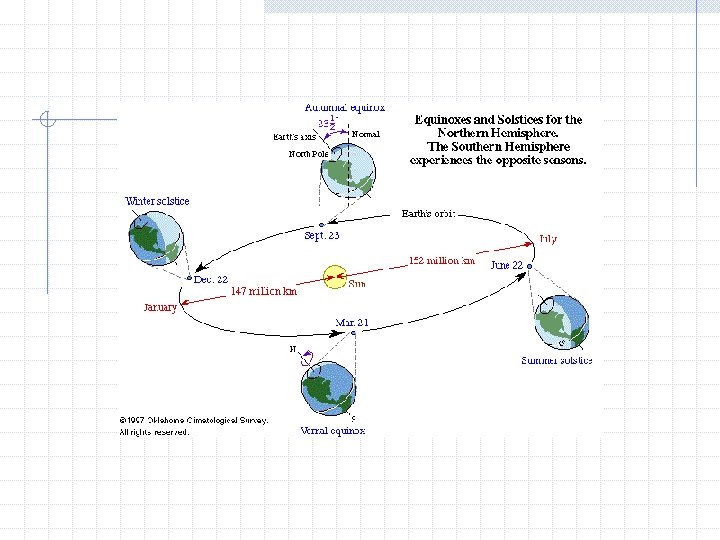
What causes the seasons? The tilt of the Earth, not the rotation around the sun. Axis is tilted 23. 5 degrees
Summer Solstice June 21 or 22 Longest day length in Northern Hemisphere Shortest day length in Southern Hemisphere.
Fall Equinox September 22 or 23 Equal hours of day and night Suns rays directly at the equator
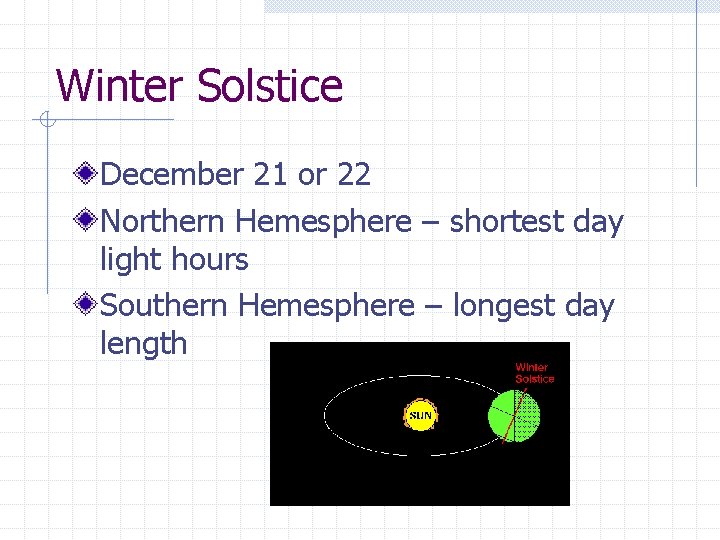
Winter Solstice December 21 or 22 Northern Hemesphere – shortest day light hours Southern Hemesphere – longest day length
Spring Equinox (Vernal) March 21 or 22 Equal day and night hours
Section 2: Phases, Eclipses, Tides Earth – Moon System n n Average Earth- Moon distance = 240, 000 miles Average distance of sun-Earth = 93, 000 miles Earth’s Diameter = 8, 000 miles Moon’s Diameter = 2, 000 miles w Earth is 4 x the size of the moon
If 1” = 2, 000 miles Earth will be 10 feet away from the moon Earth-Moon system will be ¾ mile away from the sun.
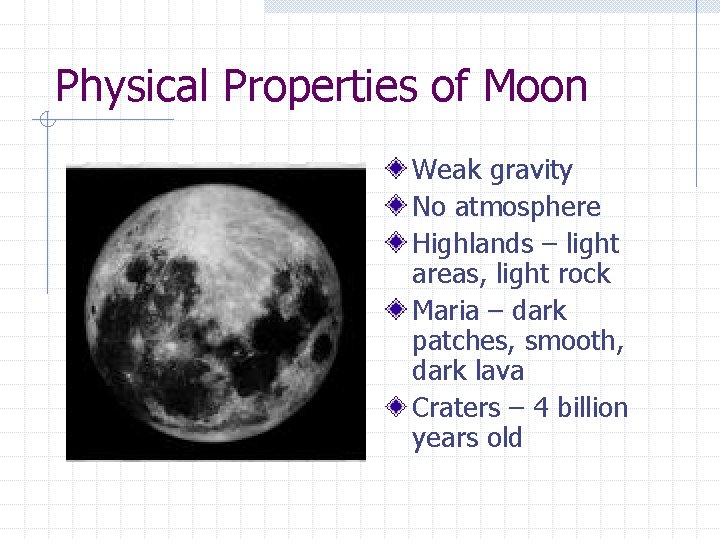
Physical Properties of Moon Weak gravity No atmosphere Highlands – light areas, light rock Maria – dark patches, smooth, dark lava Craters – 4 billion years old
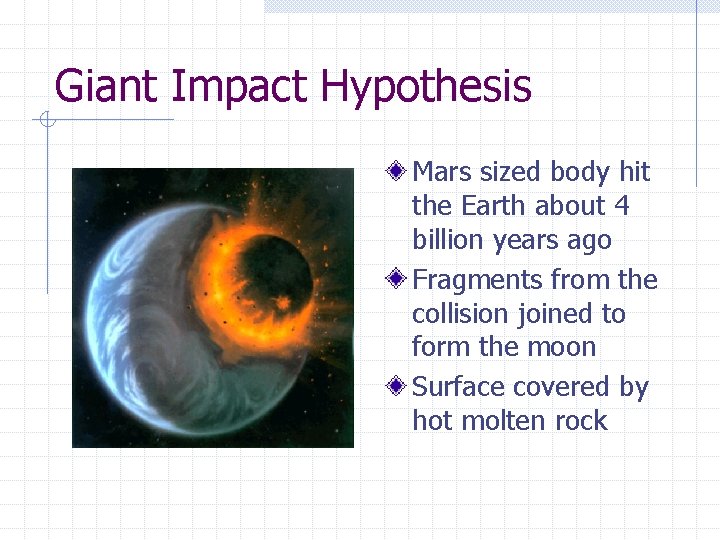
Giant Impact Hypothesis Mars sized body hit the Earth about 4 billion years ago Fragments from the collision joined to form the moon Surface covered by hot molten rock
Movements of the moon Moon rise and sets 50 minutes later each night Rotation: 27. 3 days Revolution around the Earth – 27. 3 days Rotation on Earth’s
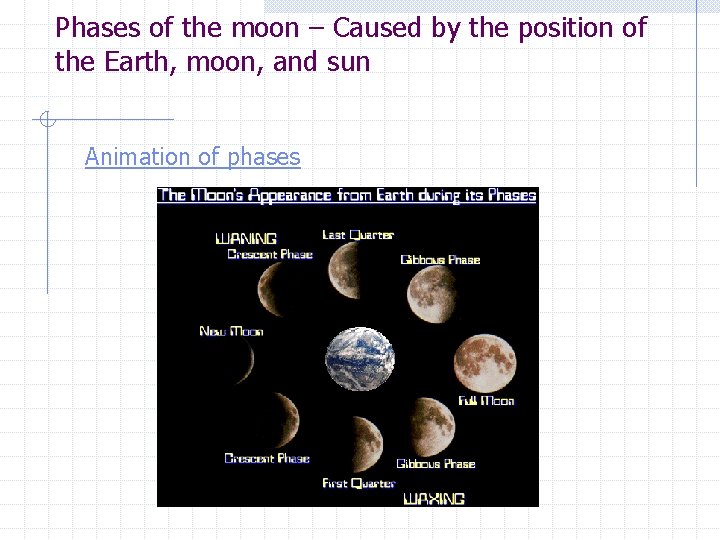
Phases of the moon – Caused by the position of the Earth, moon, and sun Animation of phases
2 Main phases of the moon Waning – Moon getting smaller, less lit up Waxing – Moon appears to get larger, more lit up
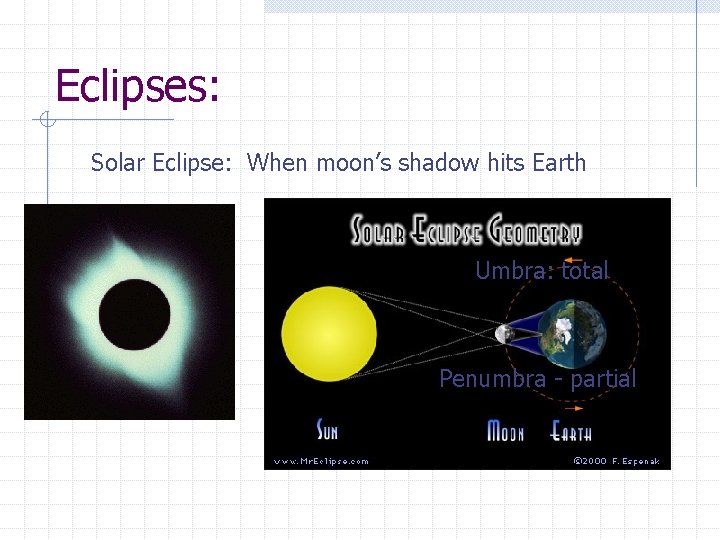
Eclipses: Solar Eclipse: When moon’s shadow hits Earth Umbra: total Penumbra - partial
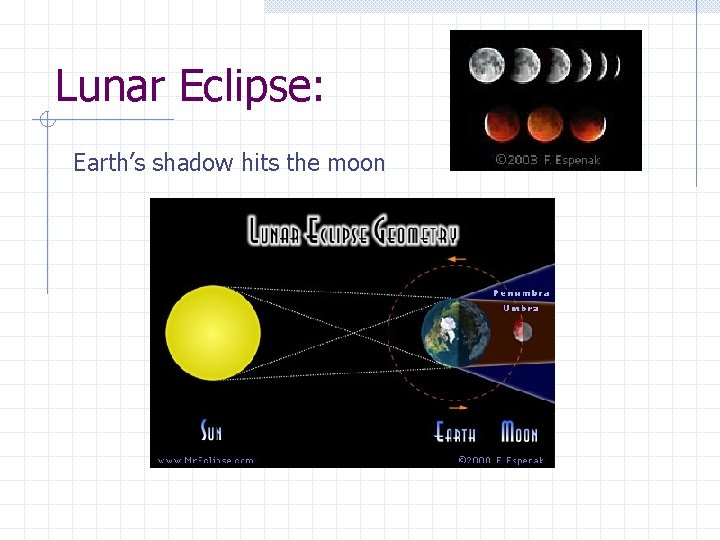
Lunar Eclipse: Earth’s shadow hits the moon
Tides: Occur due to differences in how much the moon pulls on different parts of Earth.
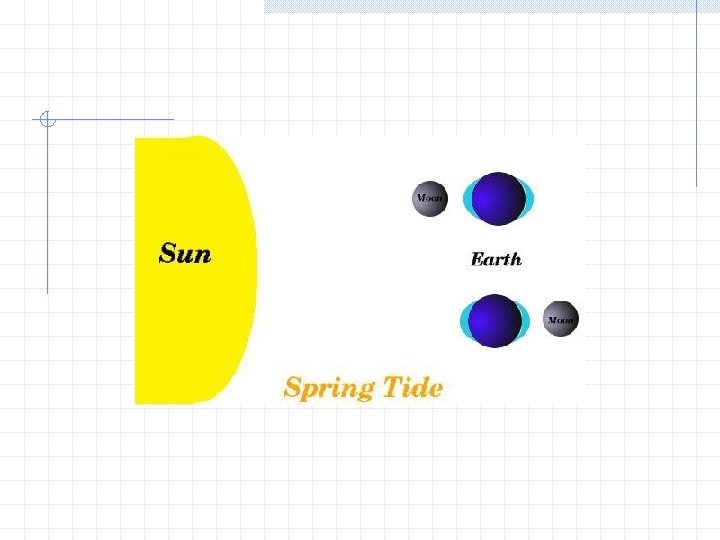
Spring Tide Takes place during new or full moon – Gravity of sun/moon pull in the dame direction Causes a greater difference between High and Low tide
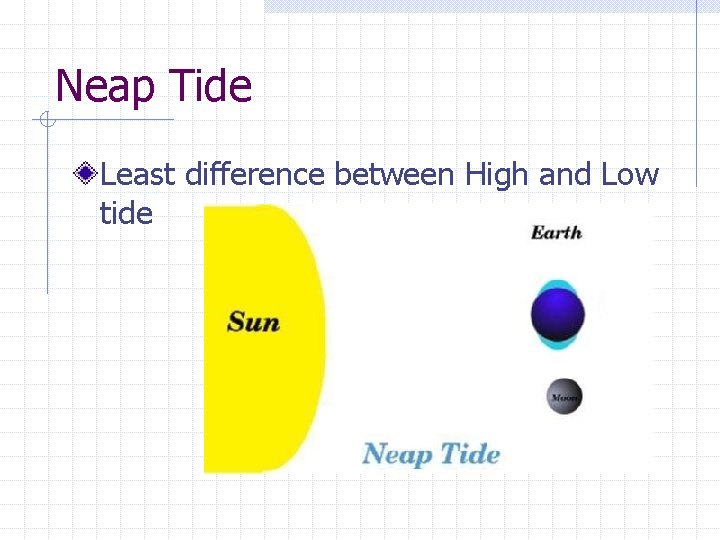
Neap Tide Least difference between High and Low tide
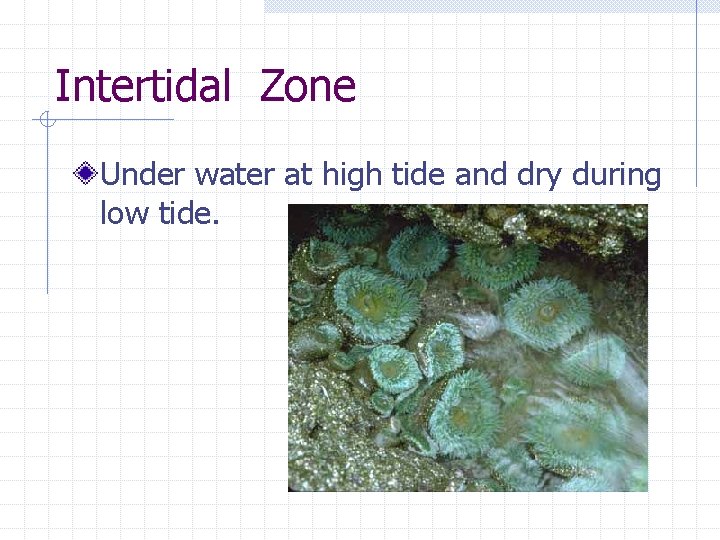
Intertidal Zone Under water at high tide and dry during low tide.
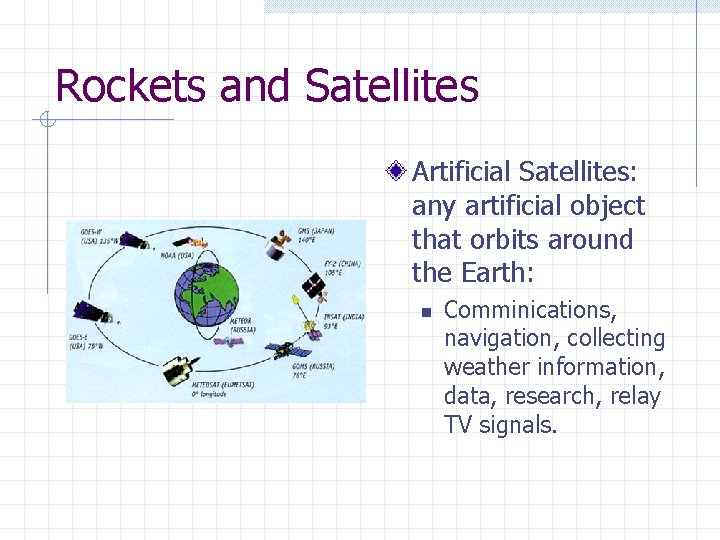
Rockets and Satellites Artificial Satellites: any artificial object that orbits around the Earth: n Comminications, navigation, collecting weather information, data, research, relay TV signals.
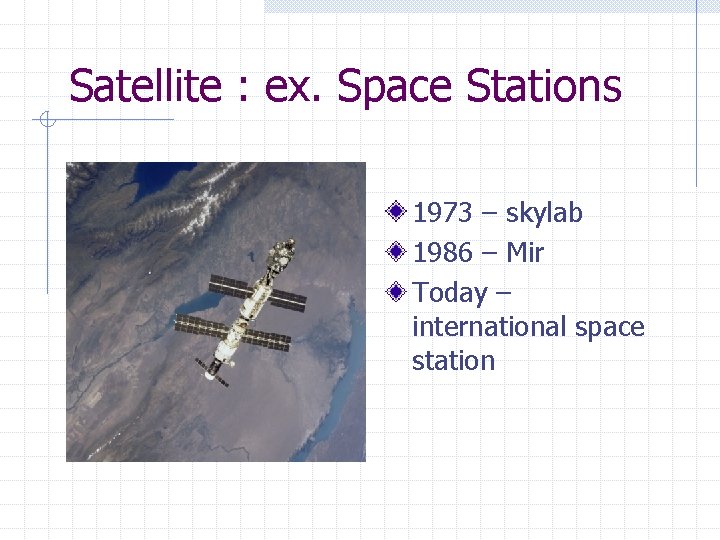
Satellite : ex. Space Stations 1973 – skylab 1986 – Mir Today – international space station
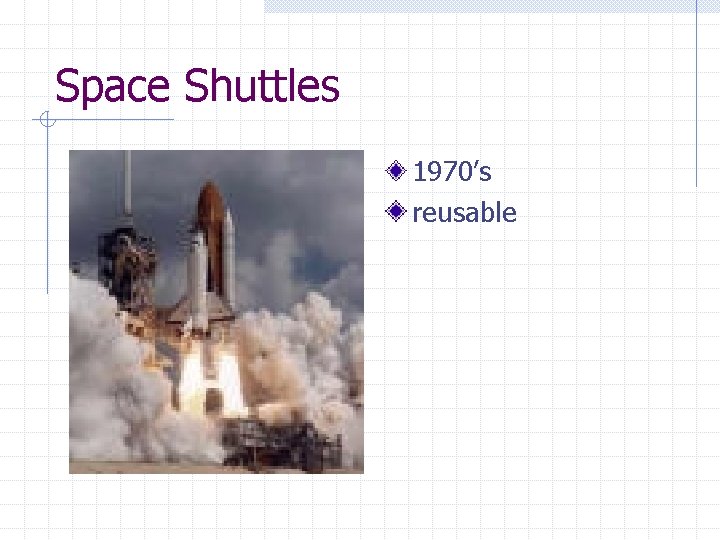
Space Shuttles 1970’s reusable