
Astrometry of planets through their satellites J E
- Slides: 18
Astrometry of planets through their satellites J. -E. Arlot IMCCE/CNRS/observatoire de Paris
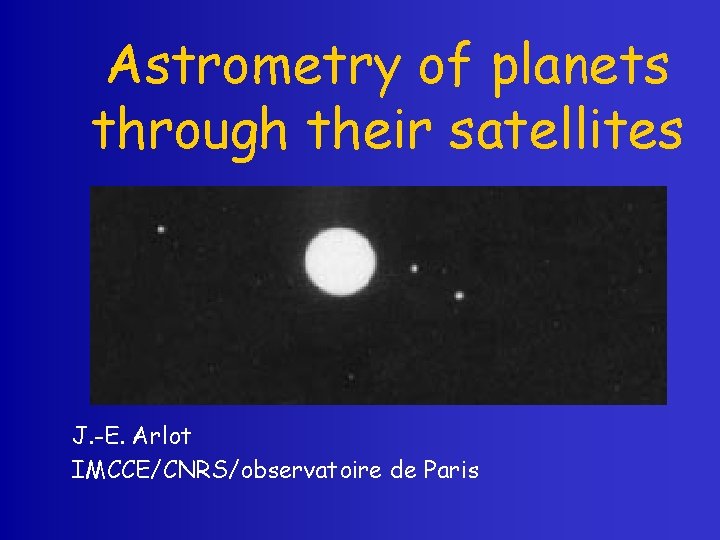
Pseudo positions of planets through their satellites • Jupiter and Saturn not directly observable (too bright and too large) • Better to observe their satellites and coming back to the center of mass of the system through the dynamics of the satellites • What dynamical model to be used for the satellites? The best (!) made through relative observations. In fact, it is not critical because of the high accuracy of the relative ephemerides. • Maybe we should buid ephemerides especially made for that purpose 2
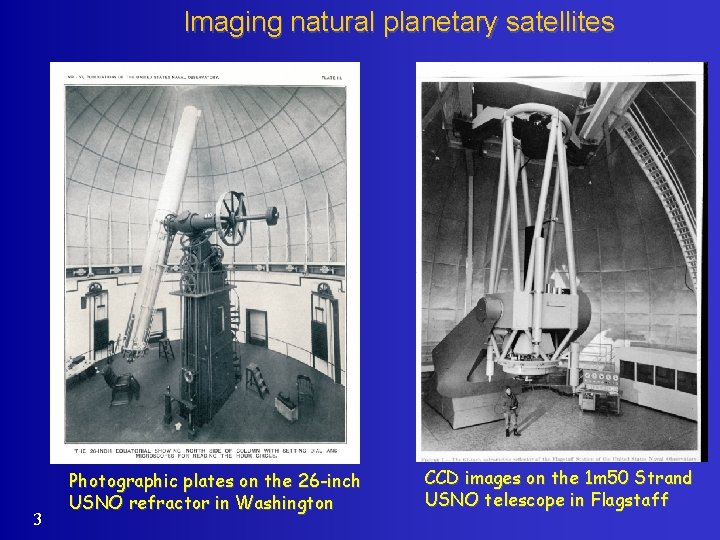
Imaging natural planetary satellites 3 Photographic plates on the 26 -inch USNO refractor in Washington CCD images on the 1 m 50 Strand USNO telescope in Flagstaff
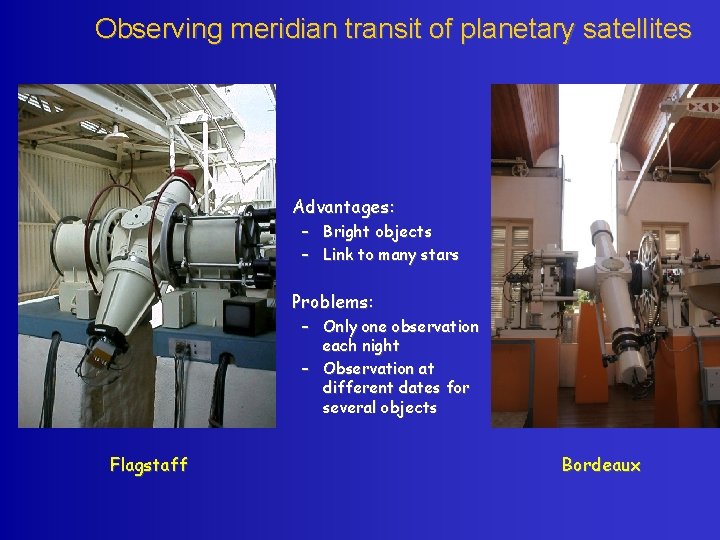
Observing meridian transit of planetary satellites Flagstaff • Advantages: • Problems: – Bright objects – Link to many stars – Only one observation each night – Observation at different dates for several objects Bordeaux
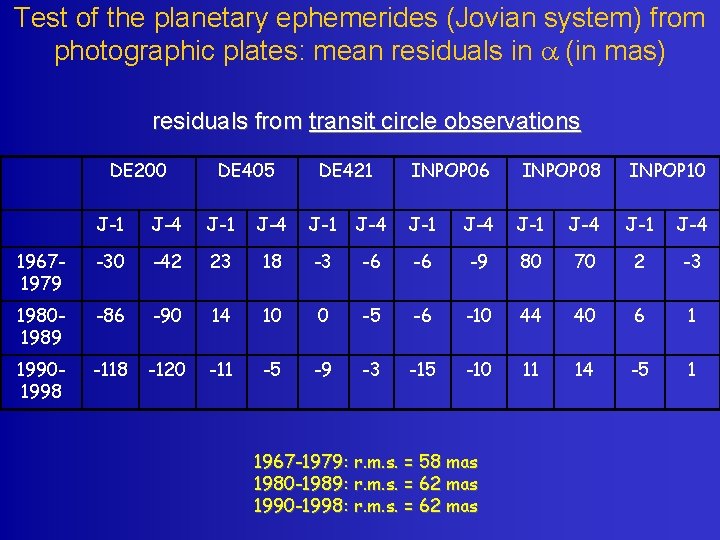
Test of the planetary ephemerides (Jovian system) from photographic plates: mean residuals in a (in mas) residuals from transit circle observations DE 200 DE 405 DE 421 INPOP 06 INPOP 08 INPOP 10 J-1 J-4 J-1 J-4 19671979 -30 -42 23 18 -3 -6 -6 -9 80 70 2 -3 19801989 -86 -90 14 10 0 -5 -6 -10 44 40 6 1 19901998 -118 -120 -11 -5 -9 -3 -15 -10 11 14 -5 1 1967 -1979: r. m. s. = 58 mas 1980 -1989: r. m. s. = 62 mas 1990 -1998: r. m. s. = 62 mas
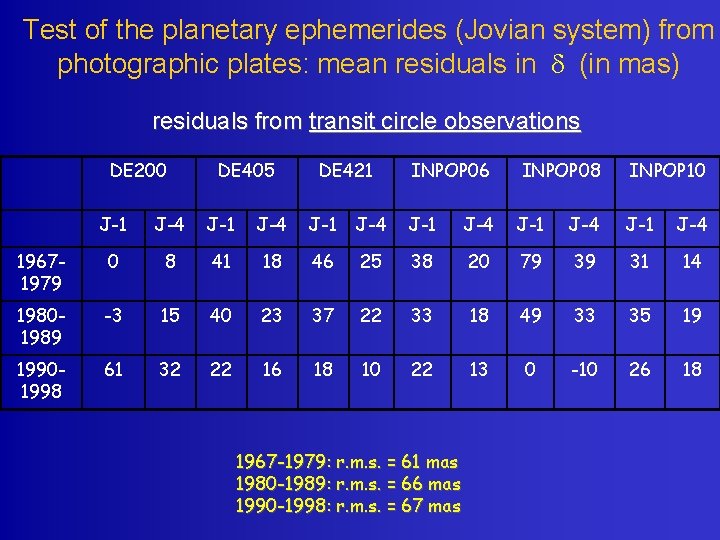
Test of the planetary ephemerides (Jovian system) from photographic plates: mean residuals in d (in mas) residuals from transit circle observations DE 200 DE 405 DE 421 INPOP 06 INPOP 08 INPOP 10 J-1 J-4 J-1 J-4 19671979 0 8 41 18 46 25 38 20 79 39 31 14 19801989 -3 15 40 23 37 22 33 18 49 33 35 19 19901998 61 32 22 16 18 10 22 13 0 -10 26 18 1967 -1979: r. m. s. = 61 mas 1980 -1989: r. m. s. = 66 mas 1990 -1998: r. m. s. = 67 mas
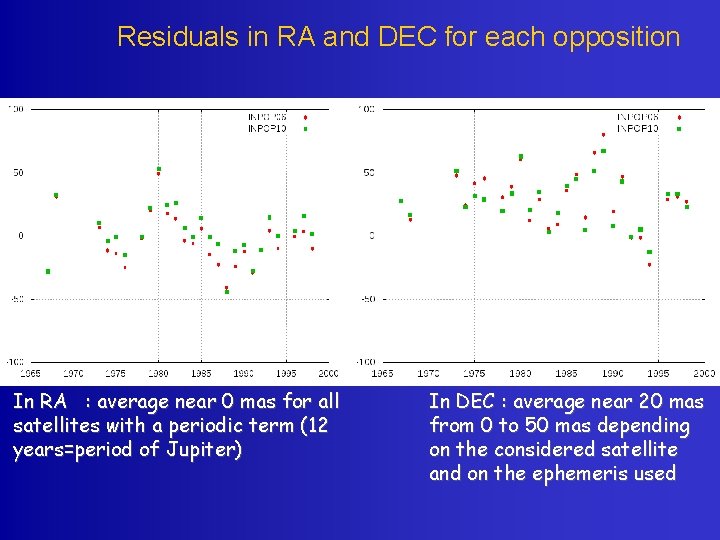
Residuals in RA and DEC for each opposition In RA : average near 0 mas for all satellites with a periodic term (12 years=period of Jupiter) In DEC : average near 20 mas from 0 to 50 mas depending on the considered satellite and on the ephemeris used
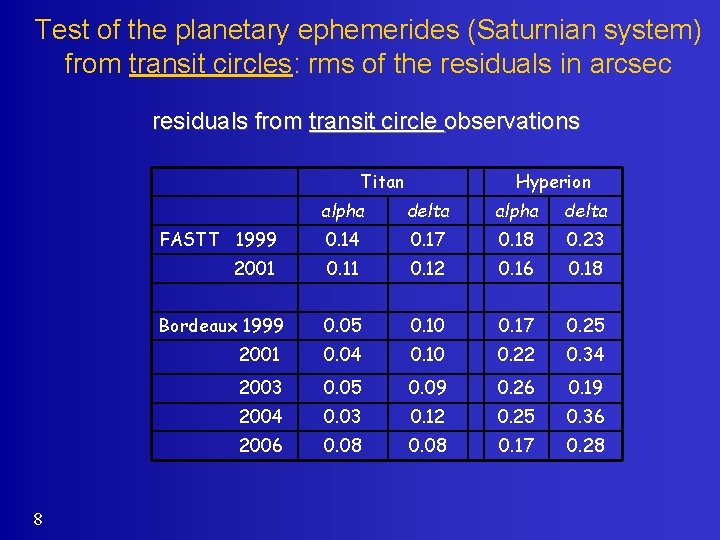
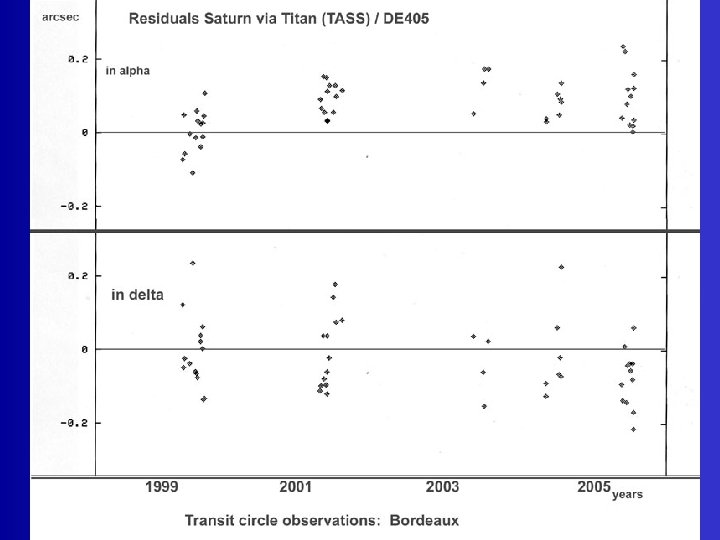
Test of the planetary ephemerides (Saturnian system) from transit circles: rms of the residuals in arcsec residuals from transit circle observations Titan 8 Hyperion alpha delta FASTT 1999 0. 14 0. 17 0. 18 0. 23 2001 0. 12 0. 16 0. 18 Bordeaux 1999 0. 05 0. 10 0. 17 0. 25 2001 0. 04 0. 10 0. 22 0. 34 2003 0. 05 0. 09 0. 26 0. 19 2004 0. 03 0. 12 0. 25 0. 36 2006 0. 08 0. 17 0. 28
9
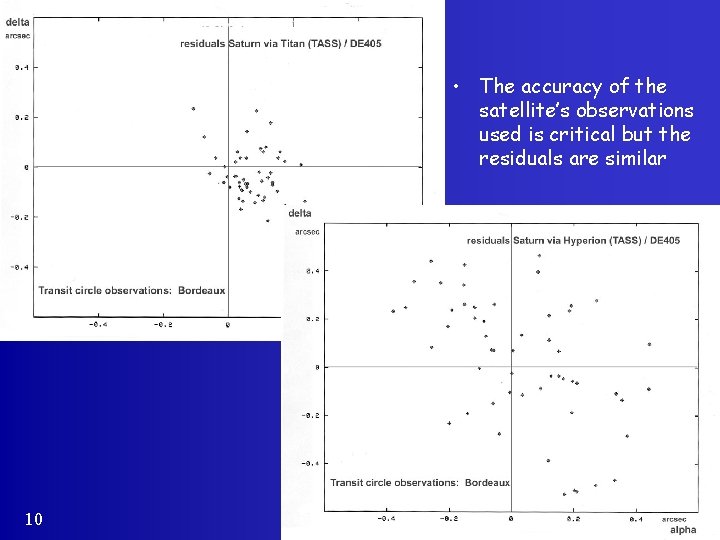
• The accuracy of the satellite’s observations used is critical but the residuals are similar 10
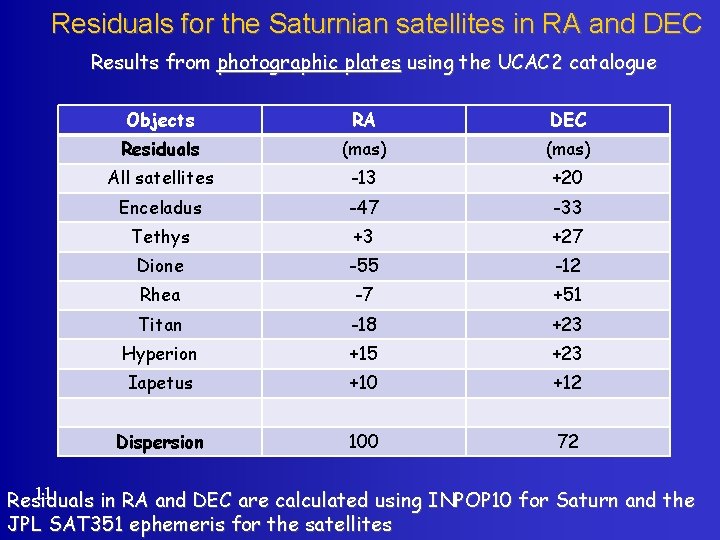
Residuals for the Saturnian satellites in RA and DEC Results from photographic plates using the UCAC 2 catalogue Objects RA DEC Residuals (mas) All satellites -13 +20 Enceladus -47 -33 Tethys +3 +27 Dione -55 -12 Rhea -7 +51 Titan -18 +23 Hyperion +15 +23 Iapetus +10 +12 Dispersion 100 72 11 Residuals in RA and DEC are calculated using INPOP 10 for Saturn and the JPL SAT 351 ephemeris for the satellites
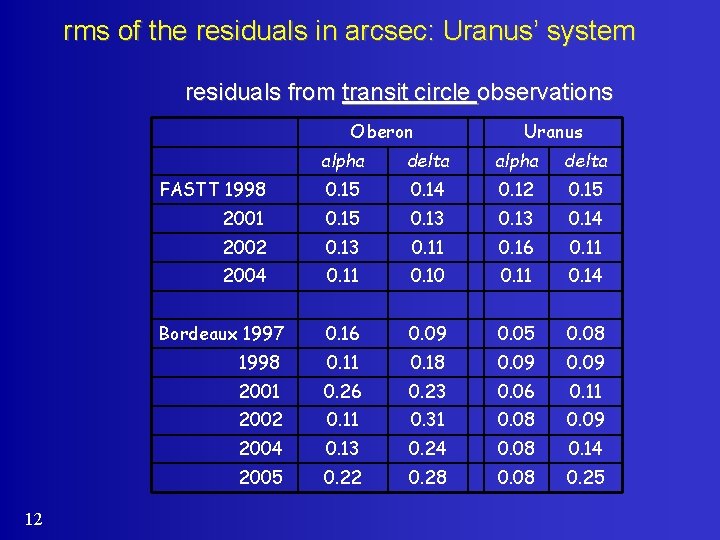
rms of the residuals in arcsec: Uranus’ system residuals from transit circle observations Oberon 12 Uranus alpha delta FASTT 1998 0. 15 0. 14 0. 12 0. 15 2001 0. 15 0. 13 0. 14 2002 0. 13 0. 11 0. 16 0. 11 2004 0. 11 0. 10 0. 11 0. 14 Bordeaux 1997 0. 16 0. 09 0. 05 0. 08 1998 0. 11 0. 18 0. 09 2001 0. 26 0. 23 0. 06 0. 11 2002 0. 11 0. 31 0. 08 0. 09 2004 0. 13 0. 24 0. 08 0. 14 2005 0. 22 0. 28 0. 08 0. 25
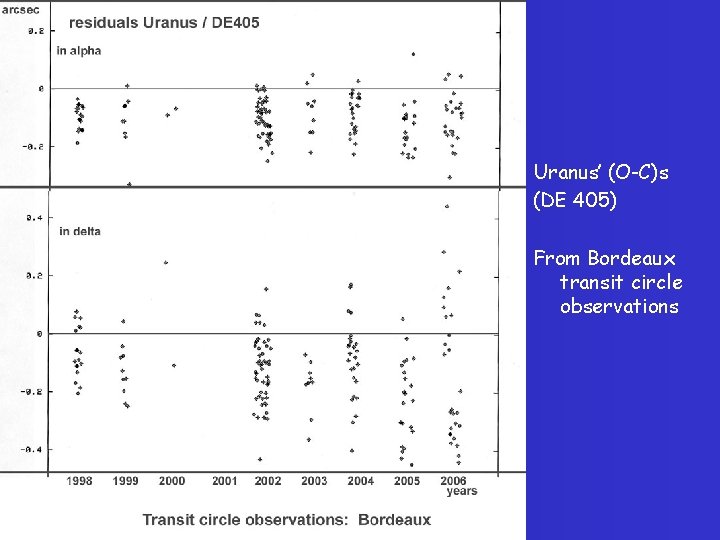
Uranus’ (O-C)s (DE 405) From Bordeaux transit circle observations 13
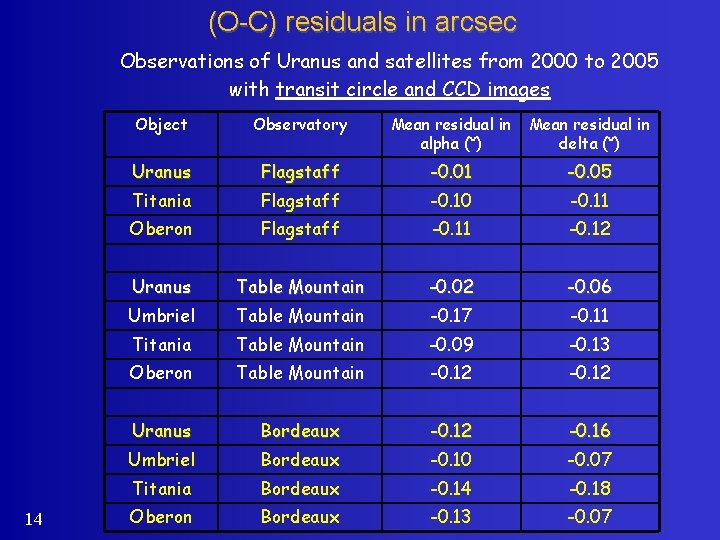
(O-C) residuals in arcsec Observations of Uranus and satellites from 2000 to 2005 with transit circle and CCD images 14 Object Observatory Mean residual in alpha (‘’) Mean residual in delta (‘’) Uranus Flagstaff -0. 01 -0. 05 Titania Flagstaff -0. 10 -0. 11 Oberon Flagstaff -0. 11 -0. 12 Uranus Table Mountain -0. 02 -0. 06 Umbriel Table Mountain -0. 17 -0. 11 Titania Table Mountain -0. 09 -0. 13 Oberon Table Mountain -0. 12 Uranus Bordeaux -0. 12 -0. 16 Umbriel Bordeaux -0. 10 -0. 07 Titania Bordeaux -0. 14 -0. 18 Oberon Bordeaux -0. 13 -0. 07
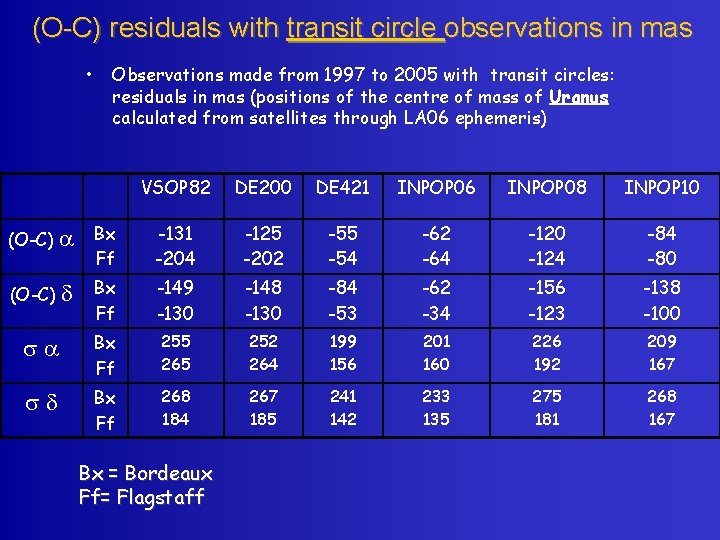
(O-C) residuals with transit circle observations in mas • Observations made from 1997 to 2005 with transit circles: residuals in mas (positions of the centre of mass of Uranus calculated from satellites through LA 06 ephemeris) VSOP 82 DE 200 DE 421 INPOP 06 INPOP 08 INPOP 10 (O-C) a Bx Ff -131 -204 -125 -202 -55 -54 -62 -64 -120 -124 -80 (O-C) d Bx Ff -149 -130 -148 -130 -84 -53 -62 -34 -156 -123 -138 -100 sa Bx Ff 255 265 252 264 199 156 201 160 226 192 209 167 sd Bx Ff 268 184 267 185 241 142 233 135 275 181 268 167 Bx = Bordeaux Ff= Flagstaff
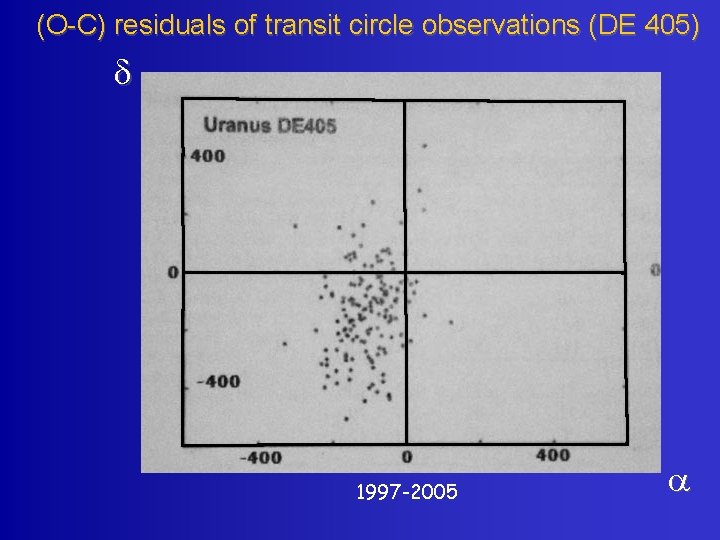
(O-C) residuals of transit circle observations (DE 405) d 1997 -2005 a
More recent data • After analyzing the 1997 -2005 transit circle observations (Bordeaux and Flagstaff) what about the 2006 -2014 observations? • At the present time, I confirm unexplained starnge biases 17
Conclusion • Planets are observable through their satellites and we may use: • Positions of space probes around the planets • Positions of natural satellites easily measurable from ground based telescopes • Natural satellites orbiting around the center of mass of the system • Need of a good dynamical model of the planetary satellites 18