
ASTM International Roberts Rules of Order ASTM Headquarters

© ASTM International
Robert’s Rules of Order ASTM Headquarters September 2018 Steve Mawn & Tom O’Toole www. astm. org © ASTM International
Objectives Ø What are Robert’s Rules? Ø Why do we use Robert’s Rules? Ø When do we use Robert’s Rules? Ø Who needs to use Robert’s Rules? Ø How to implement Robert’s Rules in ASTM meetings? © ASTM International www. astm. org // 3
What are Robert’s Rules? Ø A book containing rules of order intended to be adopted as a parliamentary authority for use by a deliberative assembly. Written in 1876 by then – Major, later General Henry M. Robert Ø Provides common rules and procedures for deliberation and debate in order to place the whole membership on the same footing and speaking the same language. Ø Provides for constructive and democratic meetings, to help, not hinder, the business of the assembly. © ASTM International www. astm. org // 4
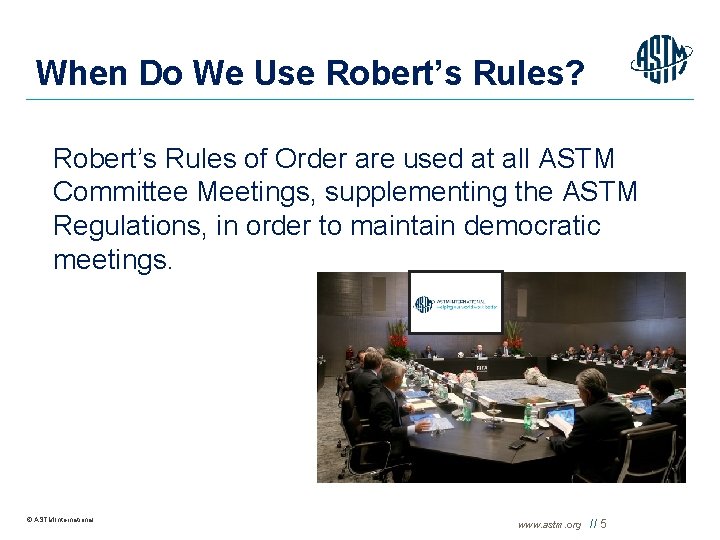
When Do We Use Robert’s Rules? Robert’s Rules of Order are used at all ASTM Committee Meetings, supplementing the ASTM Regulations, in order to maintain democratic meetings. © ASTM International www. astm. org // 5
Why Have Rules? Ø The need to provide order and structure to meetings so that business can be conducted and issues can be resolved in an orderly and expedient fashion. Implemented by: Committee Chairman; Agenda ASTM Regulations: Ø 1. 2 The purpose of the Regulations Governing ASTM Technical Committees is to provide a set of rules that will ensure the development of consensus in accordance with rigorous democratic procedures. © ASTM International www. astm. org // 6
Why Have Rules? Section 7. 4 of the Society Bylaws - Meeting Rules ØThe current edition of Robert’s Rules of Order shall govern the Committee and Subcommittee meetings in all cases, except where there are rules in conflict with the Regulations or the Committee or ASTM Bylaws. ØASTM’s Regulations are based on the principals of Robert’s Rules. Regulations are specific to ASTM Committee work. ØRobert’s Rules are the default rules, they govern only if there are no related provisions in the ASTM Regulations. In any case where there is an ASTM Regulation, the ASTM Regulation takes precedence. © ASTM International www. astm. org // 7
Who uses Robert’s Rules? Do I need to know about Robert’s Rules? Meetings are led by a committee or subcommittee chairman, who will utilize Robert’s Rules of Order. Vice-chairmen should also be familiar with Robert’s Rules, as they are responsible for chairing meetings in the Chairman’s absence. © ASTM International www. astm. org // 8
How to Implement Robert’s Rules in ASTM meetings The Agenda is your primary tool. ØIs a component of the meeting notification ØIs approved at the beginning of the meeting. Any proposed changes to the agenda are made at this time. After that, stick to the agenda. ØIs enforced by the Chairman • Members have the opportunity to raise additional items during unfinished business and new business sections of the agenda. The Chairman follows the agenda and ensures that the ASTM Regulations and Robert’s Rules are followed. Recognizes speakers in the order that they requested the floor. Ø“Out of Order”. Meeting is “on hold” until “Out of order” situation is resolved (ex. Recording taking place, any interruption of the order of business). © ASTM International www. astm. org // 9
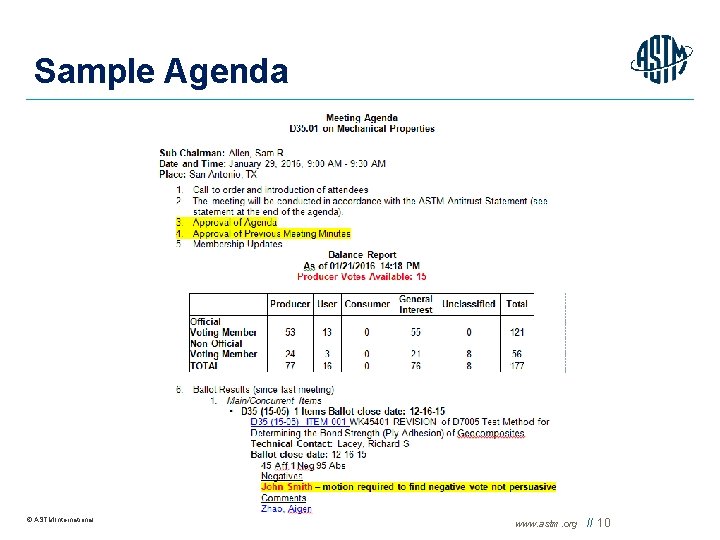
Sample Agenda © ASTM International www. astm. org // 10
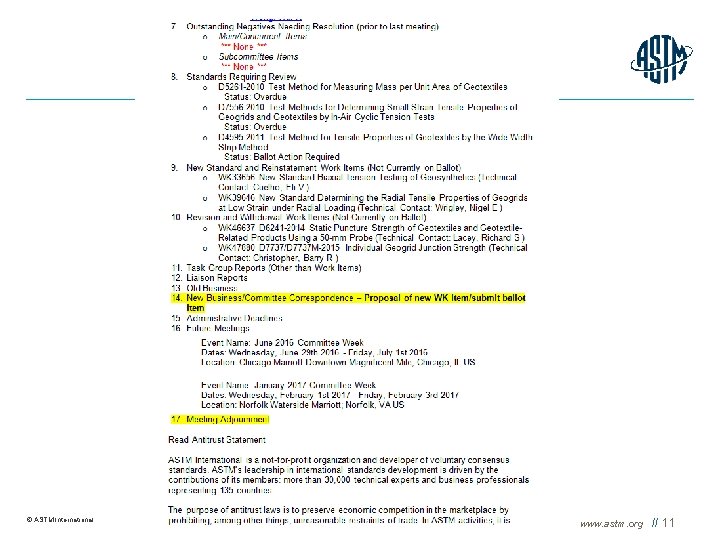
© ASTM International www. astm. org // 11
The Motion for Not Persuasive Ø Subcommittee Meeting - 11. 4 Subcommittee Handling of Negative Votes Ø Main Committee Meeting - 12. 4 Main Committee Handling of Negative Votes It is always a motion to find the negative not persuasive; never a motion to find the negative persuasive. ØMust be seconded ØDiscussion ØOnly those with Official Voting status can vote. © ASTM International www. astm. org // 12
What Do I Need to Know About Motions? A motion is one whose introduction brings business before the meeting attendees. Note: Only a member makes a motion How to make a motion: ØMotion made ØMotion seconded ØChairman calls for discussion of the motion. The chairman recognizes the speakers in order. ØFollowing discussion the chairman “calls the question”; the motion is repeated and the chairman calls for a vote on the motion. © ASTM International www. astm. org // 13
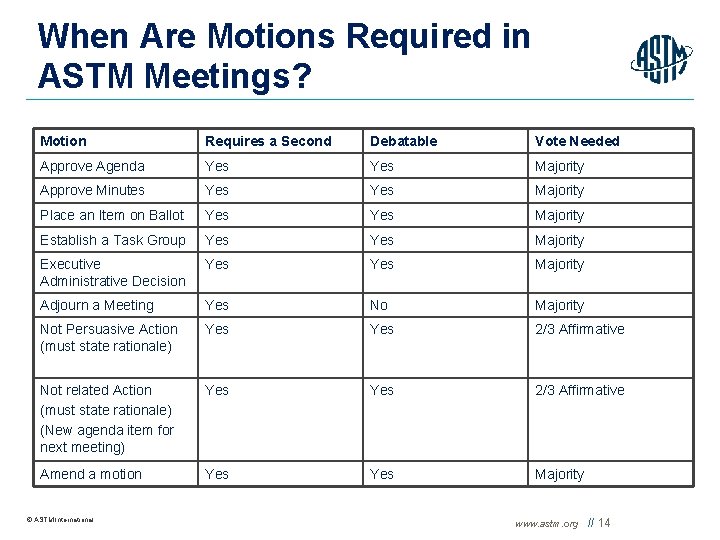
When Are Motions Required in ASTM Meetings? Motion Requires a Second Debatable Vote Needed Approve Agenda Yes Majority Approve Minutes Yes Majority Place an Item on Ballot Yes Majority Establish a Task Group Yes Majority Executive Administrative Decision Yes Majority Adjourn a Meeting Yes No Majority Not Persuasive Action (must state rationale) Yes 2/3 Affirmative Not related Action (must state rationale) (New agenda item for next meeting) Yes 2/3 Affirmative Amend a motion Yes Majority © ASTM International www. astm. org // 14
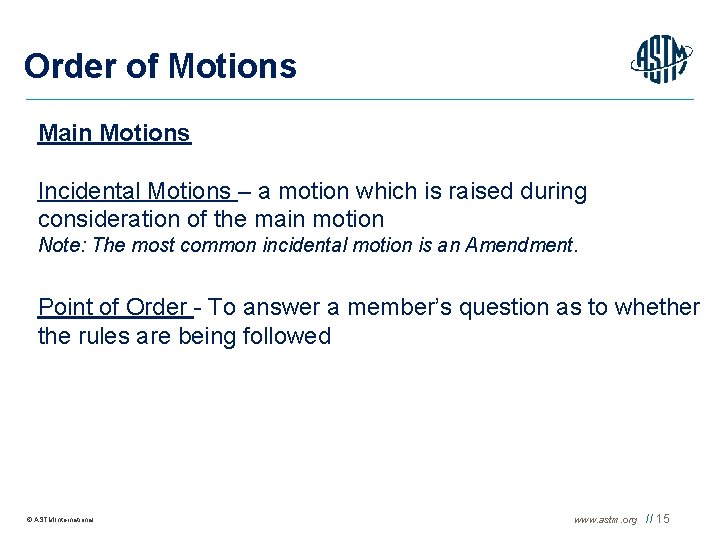
Order of Motions Main Motions Incidental Motions – a motion which is raised during consideration of the main motion Note: The most common incidental motion is an Amendment. Point of Order - To answer a member’s question as to whether the rules are being followed © ASTM International www. astm. org // 15
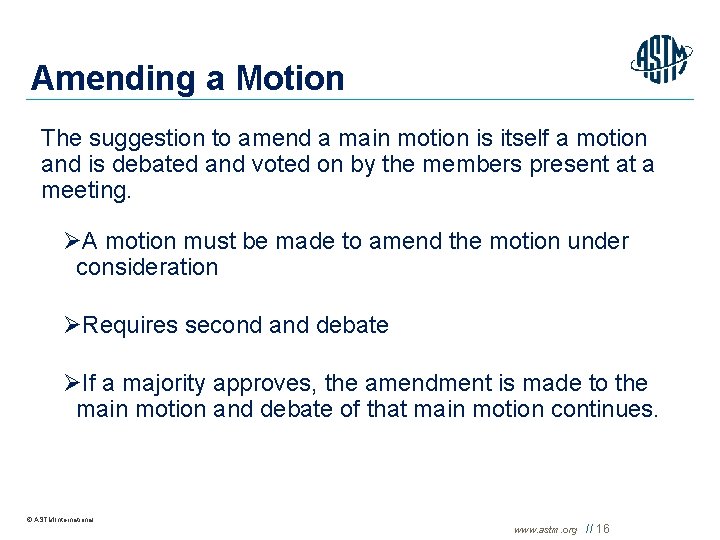
Amending a Motion The suggestion to amend a main motion is itself a motion and is debated and voted on by the members present at a meeting. ØA motion must be made to amend the motion under consideration ØRequires second and debate ØIf a majority approves, the amendment is made to the main motion and debate of that main motion continues. © ASTM International www. astm. org // 16
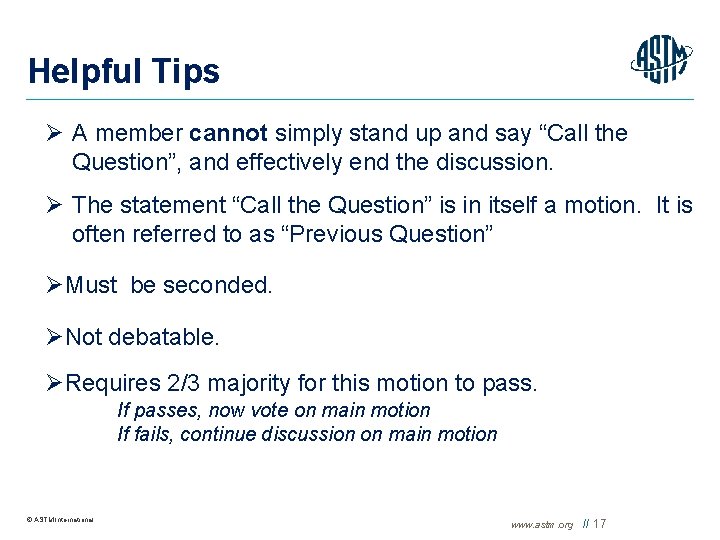
Helpful Tips Ø A member cannot simply stand up and say “Call the Question”, and effectively end the discussion. Ø The statement “Call the Question” is in itself a motion. It is often referred to as “Previous Question” ØMust be seconded. ØNot debatable. ØRequires 2/3 majority for this motion to pass. If passes, now vote on main motion If fails, continue discussion on main motion © ASTM International www. astm. org // 17
Additional Tips Ø A motion is the item under discussion, never the person who introduced it; personal remarks are always out of order. Ø All members have equal rights to speak in debate. Ø An established minimum number of voting members must be present in order to transact business (quorum). Quorum is defined in each committee’s bylaws. Ø Unanimous consent: “Any Opposed? Hearing none the motion is approved” Ø Silence gives consent. Those who do not vote when the vote is taken agree, by their silence, to allow the decision to be made by those who do vote. © ASTM International www. astm. org // 18
For Help with Robert’s Rules Ø Use common sense and apply consensus principles Ø Contact your Staff Manager Ø Resources: v www. robertsrules. com v ASTM Regulations v Committee Officer’s Handbook v Staff Manager v Robert’s Rules of Order Newly Revised In Brief © ASTM International www. astm. org // 19
Questions? © ASTM International
Thank you for your attention! © ASTM International
- Slides: 21