
Asthma Updated March 2021 Overview Asthma Hormonal Influence






















- Slides: 48
Asthma Updated: March, 2021
Overview Asthma
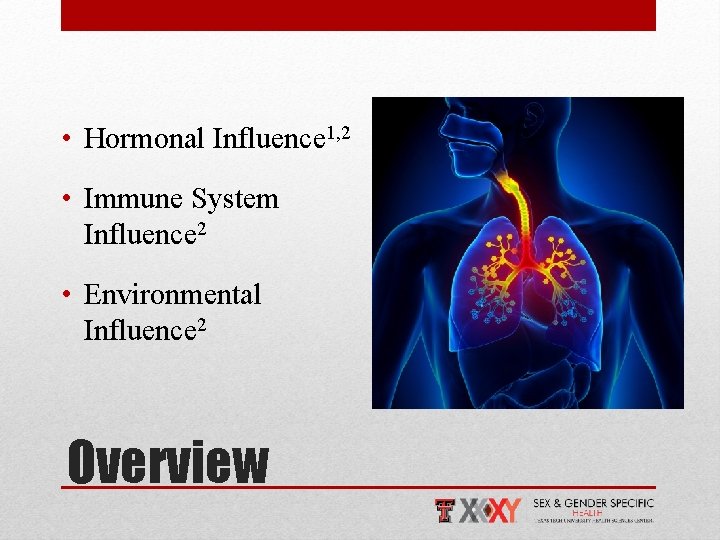
• Hormonal Influence 1, 2 • Immune System Influence 2 • Environmental Influence 2 Overview
Anatomy Asthma
Compared to males, females have: • Smaller Lungs 1 • Decreased overall resistance 1 • Higher FEV 1/FVC 1, 2 Anatomy
Female Fetus Male Fetus t Lung developm 1, e 2 n occurs faster 1, 2 ctant Produce surfa earlier 1 More bronchi d Larger central an 3 ys peripheral airwa Larger lungs Prenatal and Fetal 1, 2
Growth between the parenchyma and the airways distinguish male and female development in puberty 1, 2: • Females experience proportional growth • Males experience dysanapsis (lagged growth of parenchyma behind airway growth) Puberty During Puberty: • Testosterone increases respiratory pressure 1, 2 • Females demonstrate greater expiratory flow rates 1, 2
• Changes from puberty still hold true 1, 2 • Consequences from dysanapsis continue throughout a male’s life time 1, 2 • Over time, elastic recoil and expiratory flow rates worsen more rapidly in males 1, 2 Adolescence
Epidemiology Asthma
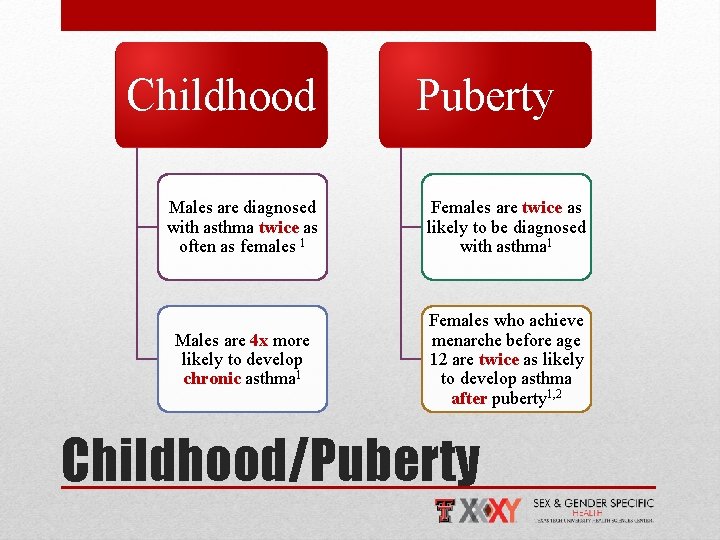
Childhood Puberty Males are diagnosed with asthma twice as often as females 1 Females are twice as likely to be diagnosed with asthma 1 Males are 4 x more likely to develop chronic asthma 1 Females who achieve menarche before age 12 are twice as likely to develop asthma after puberty 1, 2 Childhood/Puberty
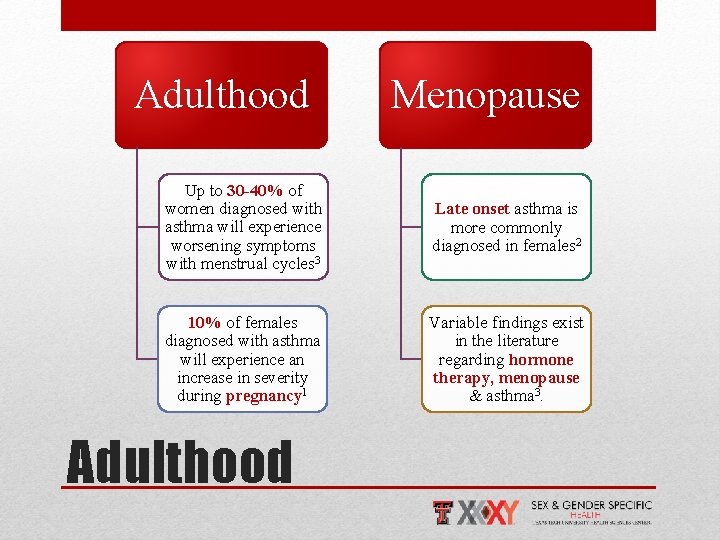
Adulthood Menopause Up to 30 -40% of women diagnosed with asthma will experience worsening symptoms with menstrual cycles 3 Late onset asthma is more commonly diagnosed in females 2 10% of females diagnosed with asthma will experience an increase in severity during pregnancy 1 Variable findings exist in the literature regarding hormone therapy, menopause & asthma 3. Adulthood
Clinical Presentation Asthma
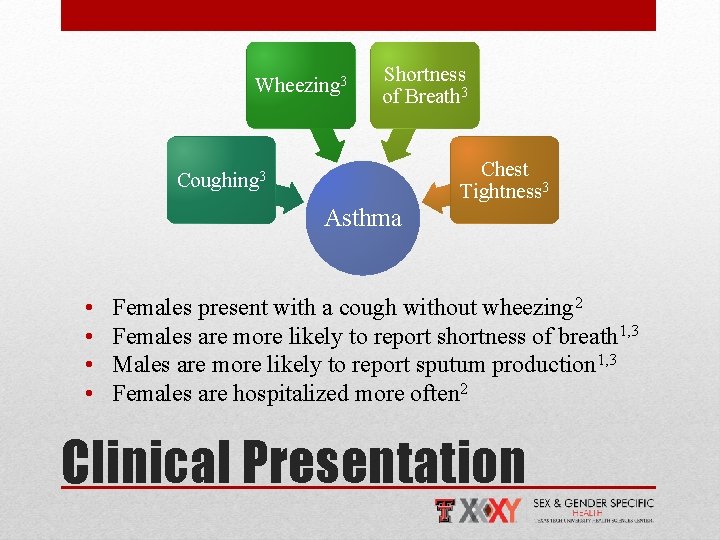
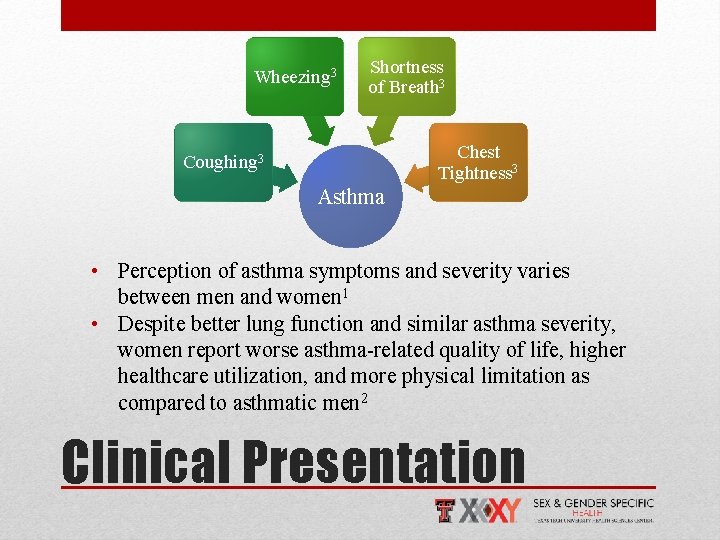
Wheezing 3 Shortness of Breath 3 Chest Tightness 3 Coughing 3 Asthma • • Females present with a cough without wheezing 2 Females are more likely to report shortness of breath 1, 3 Males are more likely to report sputum production 1, 3 Females are hospitalized more often 2 Clinical Presentation
Wheezing 3 Shortness of Breath 3 Chest Tightness 3 Coughing 3 Asthma • Perception of asthma symptoms and severity varies between men and women 1 • Despite better lung function and similar asthma severity, women report worse asthma-related quality of life, higher healthcare utilization, and more physical limitation as compared to asthmatic men 2 Clinical Presentation
Physiology Asthma
Hormonal Influence
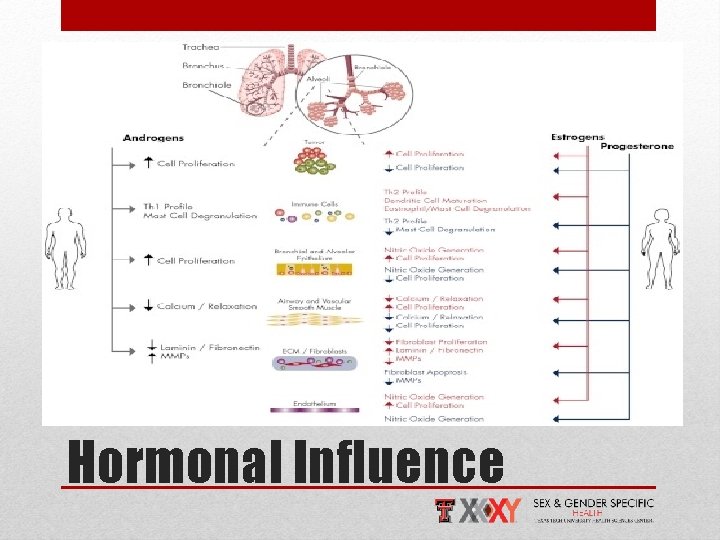
Estrogen 1 Progesterone 1 • Increased during follicular phase • Stimulates bronchodilation • Decreases exhaled nitric oxide • • Increased during luteal phase Increases exhaled nitric oxide Increases inflammation Role in premenstrual asthma Menstrual Cycle Hormones
Cell Biology Asthma
Smooth Muscle 1 • Causes airway narrowing • Responds to either acetylcholine or histamine release Cell Biology Epithelium 1, 2 • Stimulate inflammation and mucus secretions • Females have less surface area of epithelium and produce less expired nitric oxide than males
Immune System Asthma
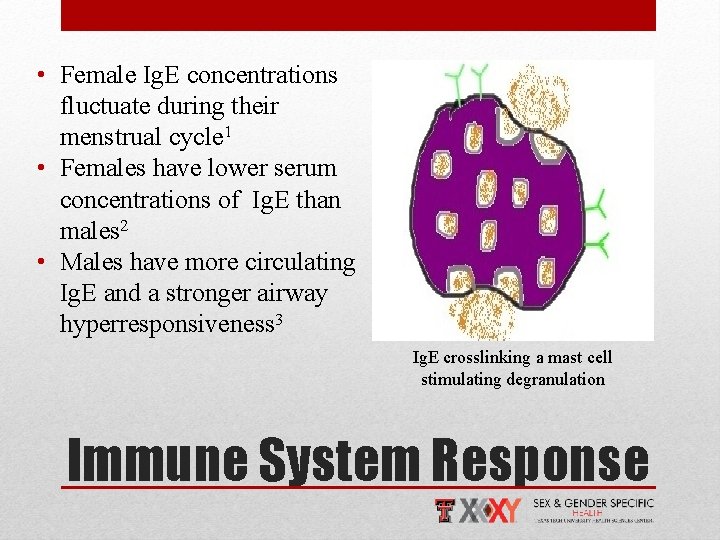
• Female Ig. E concentrations fluctuate during their menstrual cycle 1 • Females have lower serum concentrations of Ig. E than males 2 • Males have more circulating Ig. E and a stronger airway hyperresponsiveness 3 Ig. E crosslinking a mast cell stimulating degranulation Immune System Response
Environmental & Social Triggers Asthma
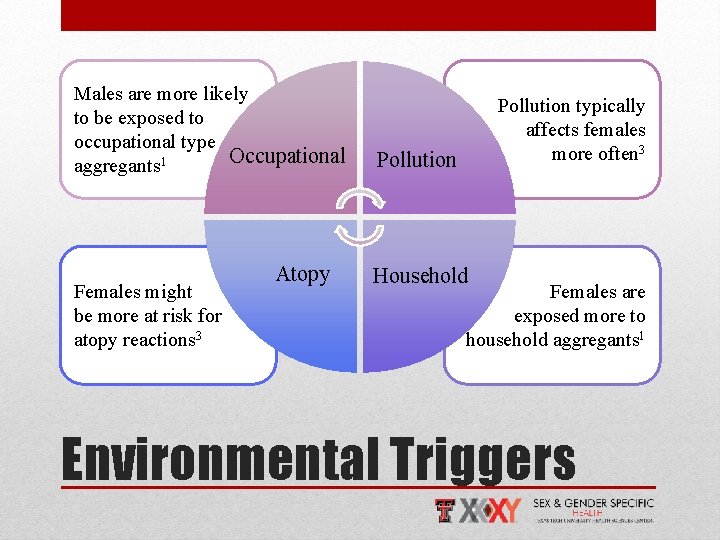
Males are more likely to be exposed to occupational type Occupational aggregants 1 Females might be more at risk for atopy reactions 3 Atopy Pollution typically affects females more often 3 Pollution Household Females are exposed more to household aggregants 1 Environmental Triggers
Sex/Gender Differences: • Asthmatic women who smoke report more wheezing compared to males 1 • Asthmatic adolescent girls have more physical dependence to tobacco than non-asthmatic adolescent females 1 • Asthmatic women have a higher incidence of owning a furry pet as compared to asthmatic men 1 Environmental Triggers
• Childhood obesity is associated with asthma in young girls but not boys 1 • Asthma impairment related to obesity is highest in women ages 12 - 442 • Higher serum leptin levels were associated with obesity, female sex, and asthma 3 Obesity
• The course of asthma in pregnancy is variable • Current guidelines recommend continuation of pre-pregnancy asthma medications to prevent exacerbations, which risk the health of the mother and the developing fetus 1 Pregnancy
• During pregnancy, the growing fetus pushes up on the diaphragm, which decreases TLC and FRC 1 • Asthma symptoms may worsen between 29 and 32 weeks 2 • Acute asthma attacks occur most frequently between weeks 17 and 242 Pregnancy
In utero smoking: • Has a larger effect on lung and airway growth in males 1 • Causes males to have decreased lung volume 2 • Causes an increase in resistance in females 2 • Poses a greater deficit in genetically predisposed asthmatic fetuses 1 Smoking
• Postnatal smoke exposure leads to: • Increased prevalence of wheezing • Increased asthma development 2, 3 • Decreased lung function mainly affecting females 1 • Males who smoke during childhood are more likely to develop asthma than females 1 Childhood Exposure to Smoke
Treatment Asthma
Step 1 Step 2 Step 3 Step 4 Step 5 Step 6 SABA LTRA Low-dose ICS Medium-dose ICS LABA Theophylline Oral Glucocoriticoids ✔ * ✔ * ✔ * * ✔ ✔ * ✔ Omalizumab * ✔-Preferred Treatment, *-alternative treatments, SABA- short acting β 2 agonists, LTRALeukotriene receptor antagonist, ICS-inhaled corticosteroids, LABA- long acting β 2 agonist 1 Treatment in Pregnancy
Treatment Plan: • • • Albuterol and oral/intravenous corticosteroids 1, 2 95% oxygen 3 Nebulized ipratropium bromide 1, 2 Prednisone 1 Fetal evaluation 1 Acute Exacerbations During Pregnancy
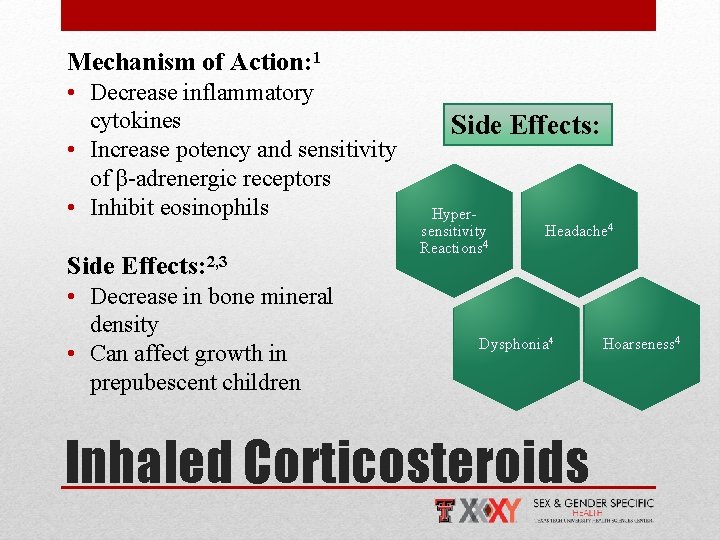
Mechanism of Action: 1 • Decrease inflammatory cytokines • Increase potency and sensitivity of β-adrenergic receptors • Inhibit eosinophils Side Effects: 2, 3 • Decrease in bone mineral density • Can affect growth in prepubescent children Side Effects: Hypersensitivity Reactions 4 Headache 4 Dysphonia 4 Inhaled Corticosteroids Hoarseness 4
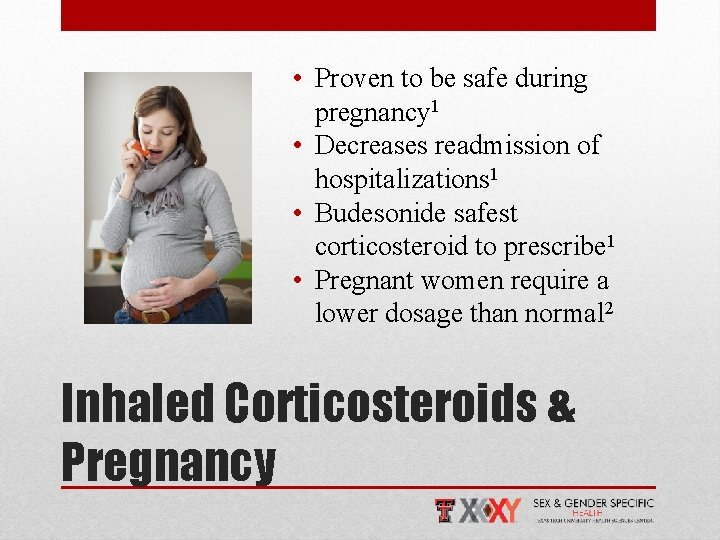
• Proven to be safe during pregnancy 1 • Decreases readmission of hospitalizations 1 • Budesonide safest corticosteroid to prescribe 1 • Pregnant women require a lower dosage than normal 2 Inhaled Corticosteroids & Pregnancy
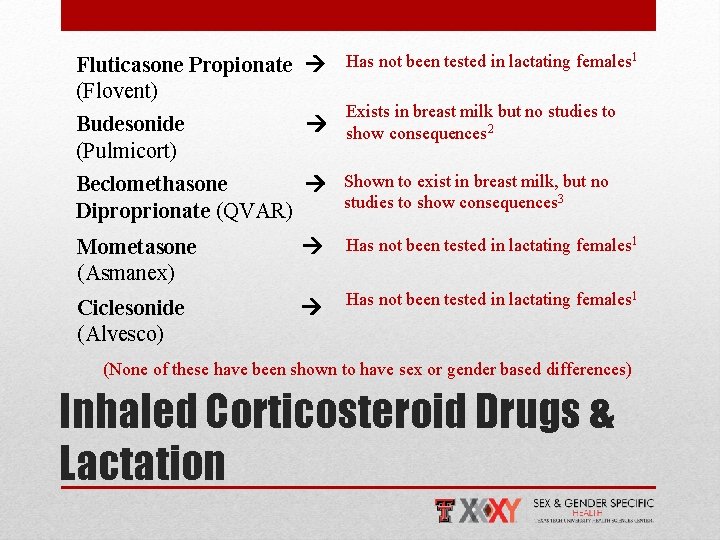
Fluticasone Propionate Has not been tested in lactating females 1 (Flovent) Budesonide (Pulmicort) Exists in breast milk but no studies to show consequences 2 Beclomethasone Shown to exist in breast milk, but no studies to show consequences 3 Diproprionate (QVAR) Mometasone (Asmanex) Ciclesonide (Alvesco) Has not been tested in lactating females 1 (None of these have been shown to have sex or gender based differences) Inhaled Corticosteroid Drugs & Lactation
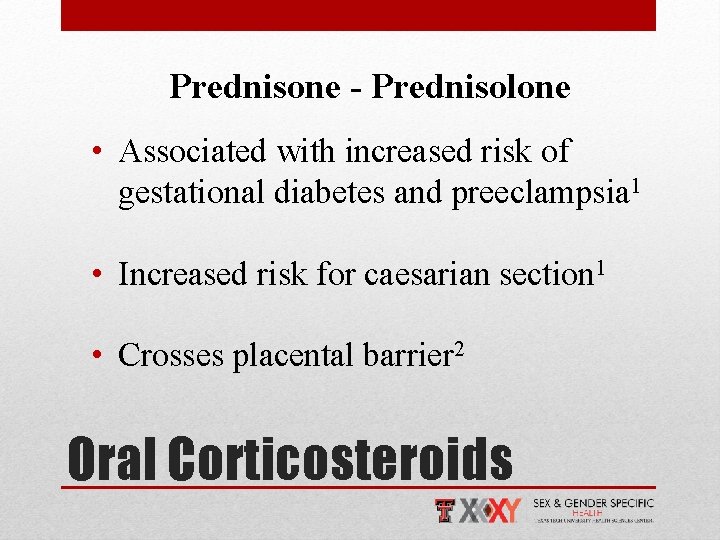
Prednisone - Prednisolone • Associated with increased risk of gestational diabetes and preeclampsia 1 • Increased risk for caesarian section 1 • Crosses placental barrier 2 Oral Corticosteroids
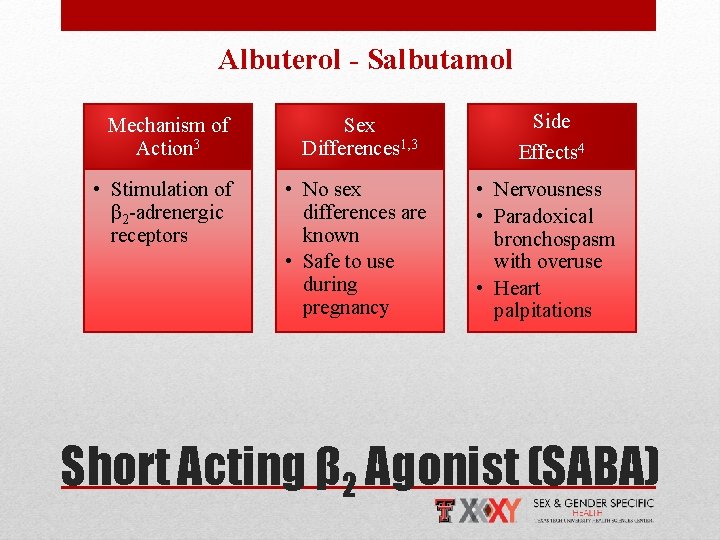
Albuterol - Salbutamol Mechanism of Action 3 Sex Differences 1, 3 Side Effects 4 • Stimulation of β 2 -adrenergic receptors • No sex differences are known • Safe to use during pregnancy • Nervousness • Paradoxical bronchospasm with overuse • Heart palpitations Short Acting β 2 Agonist (SABA)
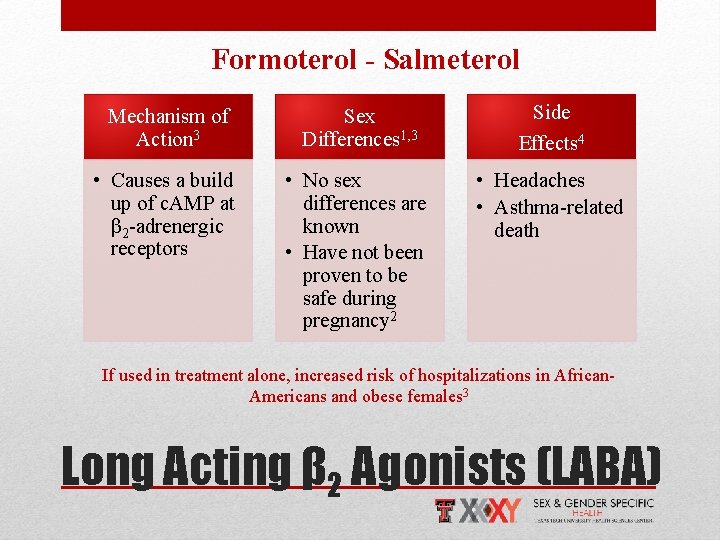
Formoterol - Salmeterol Mechanism of Action 3 Sex Differences 1, 3 Side Effects 4 • Causes a build up of c. AMP at β 2 -adrenergic receptors • No sex differences are known • Have not been proven to be safe during pregnancy 2 • Headaches • Asthma-related death If used in treatment alone, increased risk of hospitalizations in African. Americans and obese females 3 Long Acting β 2 Agonists (LABA)
Corticosteroid + Long Acting β 2 -agonist 2 Mechanism of Action: 1 • Combined actions of a corticosteroid and a LABA Side Effects: 2 • Increased heart rate • Tremors • Cough/Hoarseness Combination Inhalers
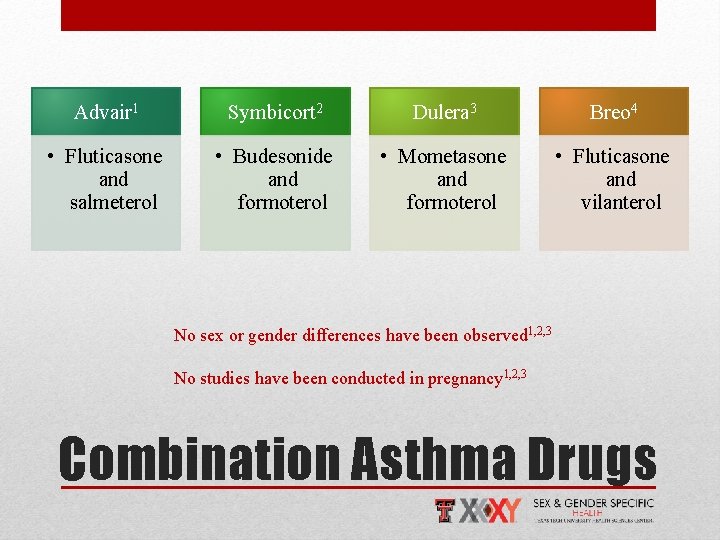
Advair 1 Symbicort 2 Dulera 3 Breo 4 • Fluticasone and salmeterol • Budesonide and formoterol • Mometasone and formoterol • Fluticasone and vilanterol No sex or gender differences have been observed 1, 2, 3 No studies have been conducted in pregnancy 1, 2, 3 Combination Asthma Drugs
Cromolyn sodium, Nedocromil sodium Mechanism of Action: 1, 2 • Blocks calcium channels that stimulate histamine release from mast cells • Inhibits activation of other inflammatory responses Side Effects: 3 • Headache • Sore throat/cough • Sneezing Proven safe during pregnancy 1 Mast Cell Stabilizers
Mechanism of Action: 1, 2 • Prevents Ig. E stimulation of basophils and mast cells • Decreases number of high affinity Ig. E receptors on basophils Side Effects: 3 • Pain in extremities • Skin rash • Ear discomfort or pain Omalizumab
Unsure of efficacy during pregnancy 1 Has not been shown to cause fetal abnormalities 1 No sex or gender differences have been observed 2 Unknown effects related to breast feeding 2 Very effective in non-pregnant women 1 Omalizumab Sex/Gender Differences
Mechanisms of Action: 1 • Inhibits 5 -lipoxygenase pathway • Antagonizes cysteinyl-leukotriene receptor Common Side Effects: 3, 4, 5 • Suicidal Thoughts • Depression • Headache Leukotriene-associated inflammation is more intense in females 2 Leukotriene Antagonists
Leukotriene Antagonists Zileuton Montelukast Zafirlukast Similarites: 2, 3, 4 • Similar effects in males and females • No studies in pregnancy Differences: 1, 4 • Montelukast has a safer effect on lactation • Zafirlukast does not interfere with oral contraceptives 5 • Zafirlukast is associated with hepatotoxicity, largely in females 5 Leukotriene Antagonists
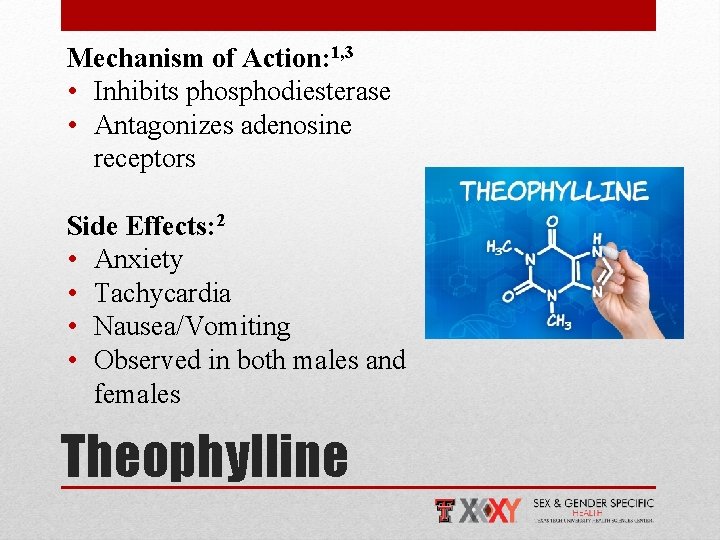
Mechanism of Action: 1, 3 • Inhibits phosphodiesterase • Antagonizes adenosine receptors Side Effects: 2 • Anxiety • Tachycardia • Nausea/Vomiting • Observed in both males and females Theophylline
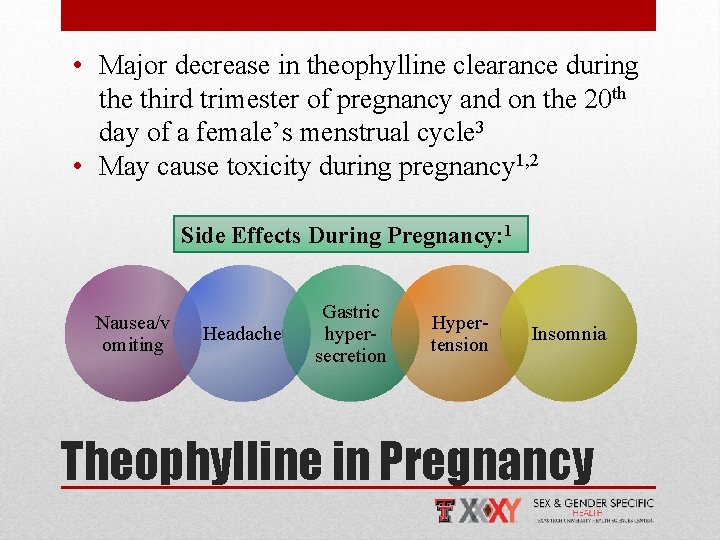
• Major decrease in theophylline clearance during the third trimester of pregnancy and on the 20 th day of a female’s menstrual cycle 3 • May cause toxicity during pregnancy 1, 2 Side Effects During Pregnancy: 1 Nausea/v omiting Headache Gastric hypersecretion Hypertension Insomnia Theophylline in Pregnancy
Mechanism of Action: 2, 3 • Inhibits cholinergic receptors Side Effects: 2 • Dizziness • Sore throat • Bronchospasm Tested in both sexes 3 Not known to be safe or effective during pregnancy 1, 3 Ipratropium