
ASTHMA and the updated GINA Global initiative for

ASTHMA and the updated GINA Global initiative for asthma 2006 R. Louis Department of Pneumology CHU Sart-Tilman Liege
Definition of Asthma A chronic inflammatory disorder of the airways Many cells and cellular elements play a role Chronic inflammation is associated with airway hyperresponsiveness that leads to recurrent episodes of wheezing, breathlessness, chest tightness, and coughing Widespread, variable, and often reversible airflow limitation
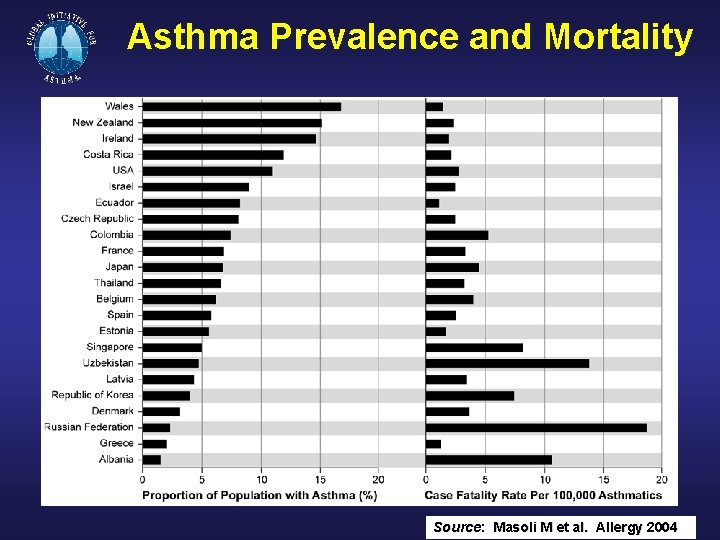
Asthma Prevalence and Mortality Source: Masoli M et al. Allergy 2004
Asthma Diagnosis History and patterns of symptoms Measurements of lung function - Spirometry - Peak expiratory flow Measurement of airway responsiveness Measurements of allergic status to identify risk factors Extra measures may be required to diagnose asthma in children 5 years and younger
Is it Asthma? Recurrent episodes of wheezing Troublesome cough at night Cough or wheeze after exercise Cough, wheeze or chest tightness after exposure to airborne allergens or pollutants Colds “go to the chest” or take more than 10 days to clear

Typical Spirometric (FEV 1) Tracings Bronchodilating test Volume FEV 1 Normal Subject ≥ 12% Asthmatic (After Bronchodilator) Asthmatic (Before Bronchodilator) 1 2 3 4 Time (sec) 5 Note: Each FEV 1 curve represents the highest of three repeat measurements
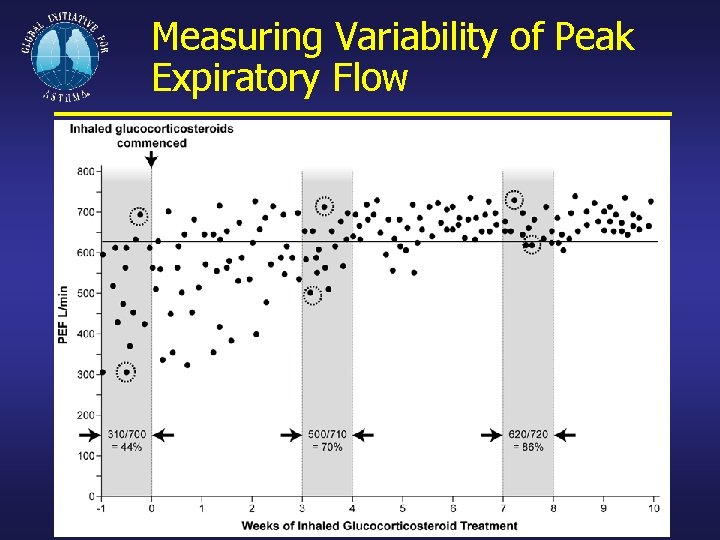
Measuring Variability of Peak Expiratory Flow
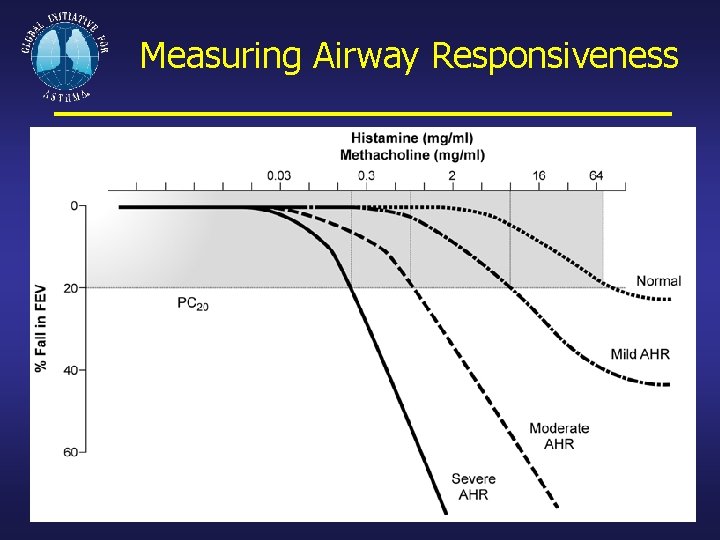
Measuring Airway Responsiveness
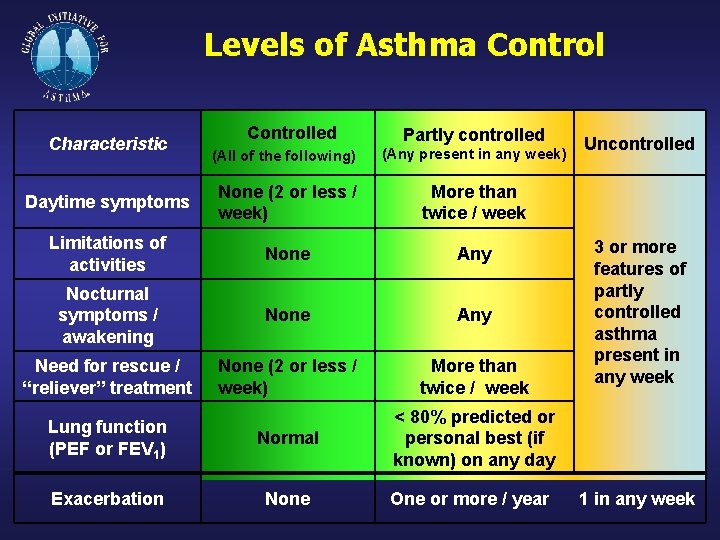
Levels of Asthma Control Characteristic Controlled Partly controlled (All of the following) (Any present in any week) Daytime symptoms None (2 or less / week) More than twice / week Limitations of activities None Any Nocturnal symptoms / awakening None Any Need for rescue / “reliever” treatment None (2 or less / week) More than twice / week Lung function (PEF or FEV 1) Normal < 80% predicted or personal best (if known) on any day Exacerbation None One or more / year Uncontrolled 3 or more features of partly controlled asthma present in any week 1 in any week
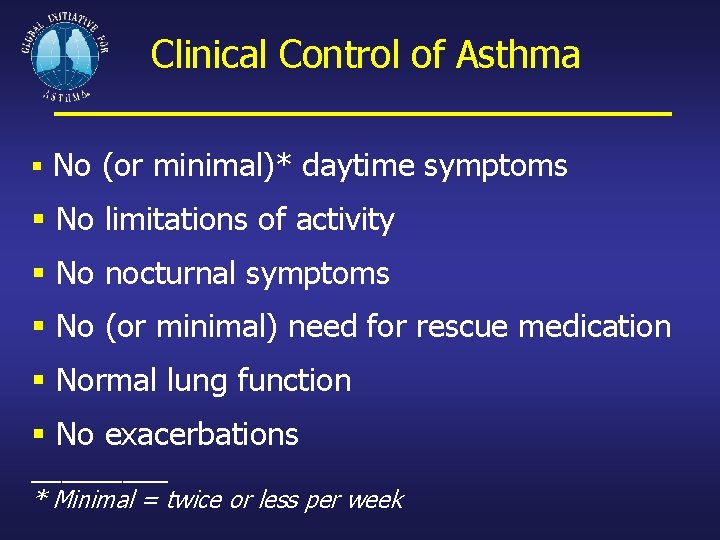
Clinical Control of Asthma § No (or minimal)* daytime symptoms § No limitations of activity § No nocturnal symptoms § No (or minimal) need for rescue medication § Normal lung function § No exacerbations _____ * Minimal = twice or less per week
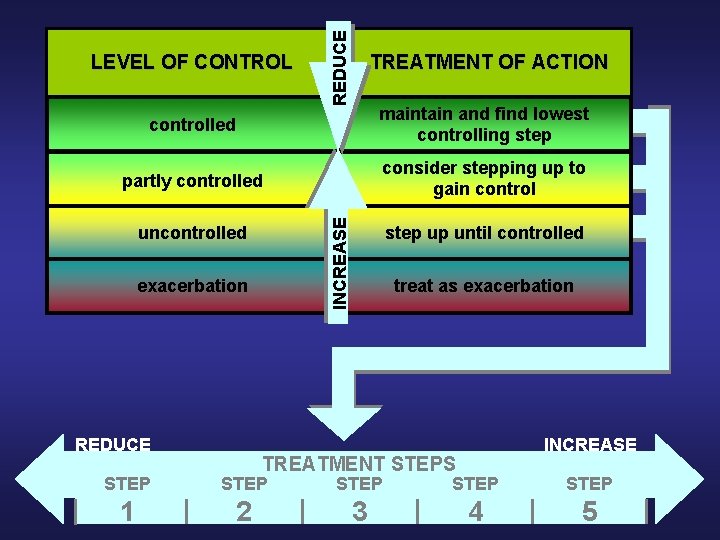
REDUCE LEVEL OF CONTROL TREATMENT OF ACTION maintain and find lowest controlling step partly controlled consider stepping up to gain control INCREASE controlled uncontrolled exacerbation REDUCE step up until controlled treat as exacerbation INCREASE TREATMENT STEPS STEP STEP 1 2 3 4 5
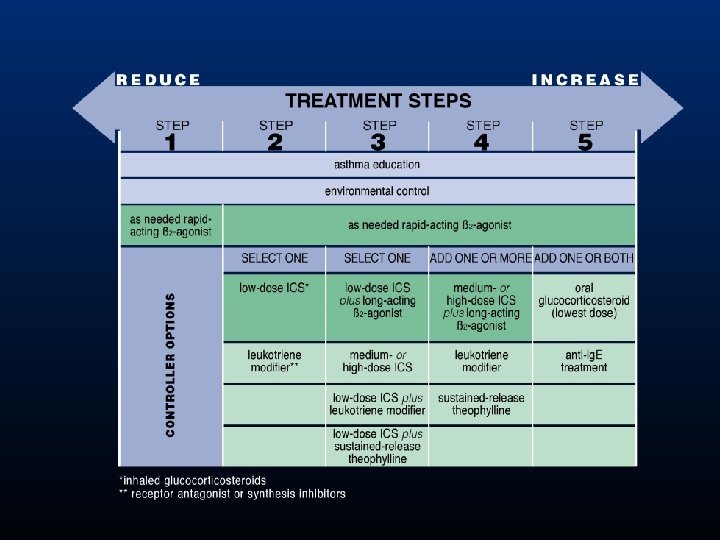
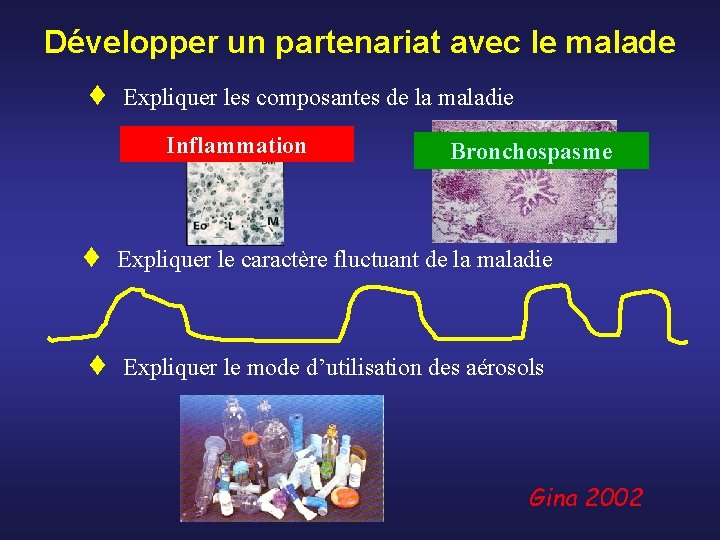
Développer un partenariat avec le malade ¨ Expliquer les composantes de la maladie Inflammation Bronchospasme ¨ Expliquer le caractère fluctuant de la maladie ¨ Expliquer le mode d’utilisation des aérosols Gina 2002
- Slides: 13