
Asthma and Allergies Part 3 Mold and Moisture
- Slides: 18
Asthma and Allergies: Part 3 Mold and Moisture
Review of Signs and Symptoms �People with allergies have hyperactive immune systems that think harmless things, such as pet dander, are dangerous. Their bodies react to try to fight off the danger. �Allergies -itchy, stuffy nose, red eyes, coughing, wheezing, shortness of breath, rash �Asthma is a disease that causes inflammation and narrows the airways, making it difficult to breathe �Asthma- coughing , wheezing, chest tightness, shortness of breath
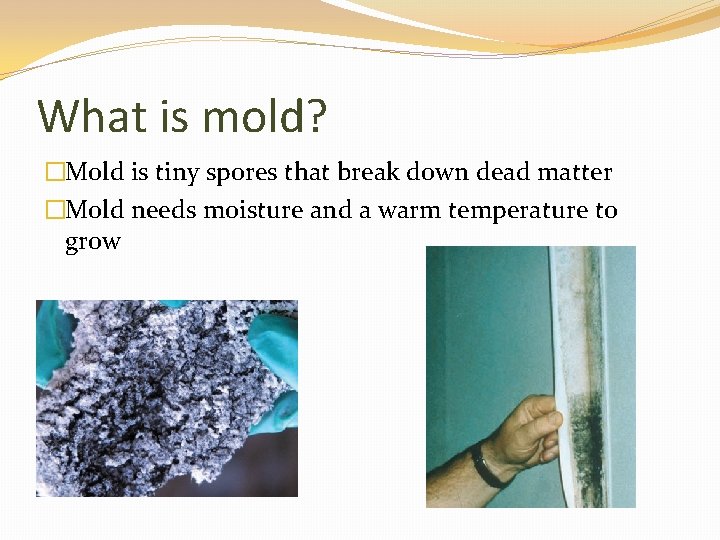
What is mold? �Mold is tiny spores that break down dead matter �Mold needs moisture and a warm temperature to grow
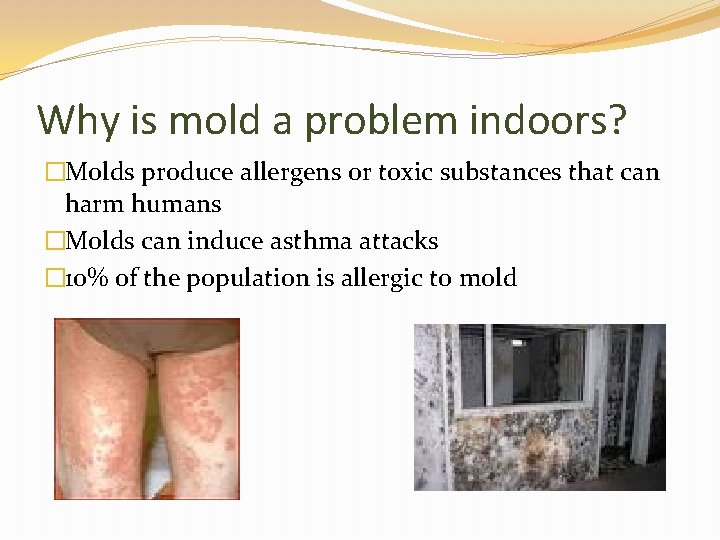
Why is mold a problem indoors? �Molds produce allergens or toxic substances that can harm humans �Molds can induce asthma attacks � 10% of the population is allergic to mold
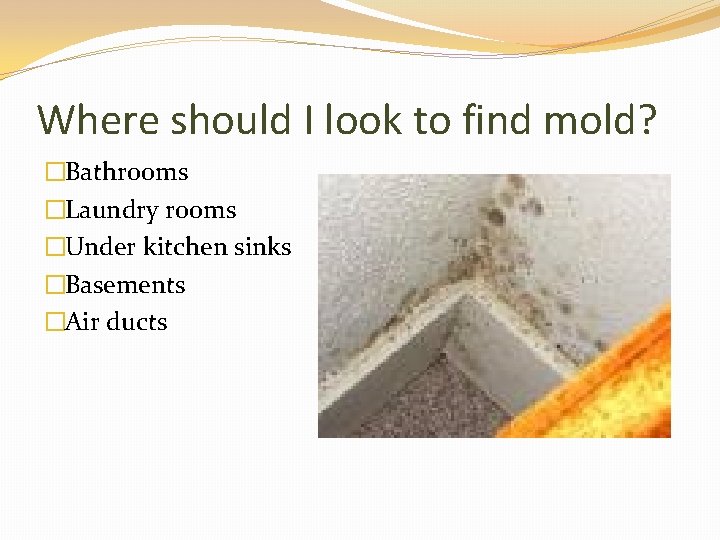
Where should I look to find mold? �Bathrooms �Laundry rooms �Under kitchen sinks �Basements �Air ducts
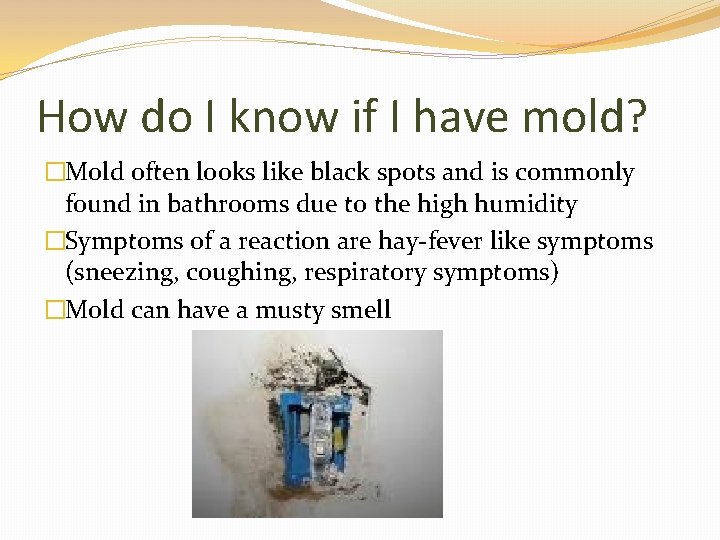
How do I know if I have mold? �Mold often looks like black spots and is commonly found in bathrooms due to the high humidity �Symptoms of a reaction are hay-fever like symptoms (sneezing, coughing, respiratory symptoms) �Mold can have a musty smell
Review Question 1 �Which of these is not a common symptom of mold allergies? �A) coughing �B)sneezing �C) vomiting �D) runny nose
How do I prevent mold inside? �Act fast-if wet areas are dried within 24 -48 hours most of the time mold will not grow �Keep indoor humidity low-use humidifiers if necessary, use vents in bathrooms �Vent appliances such as dryers, stoves, or heaters �Avoid having carpet in bathrooms, kitchens, or basements �Take wet items outside if possible-direct sunlight can prevent mold growth
Review Question 2 �Which of these will help prevent mold growth? Choose all that apply. �A) Make sure wet surfaces are dried within 24 -48 hours �B)Vent dryers into the attic �C) Avoid carpets in bathrooms �D) Take wet items outside to dry in sunlight
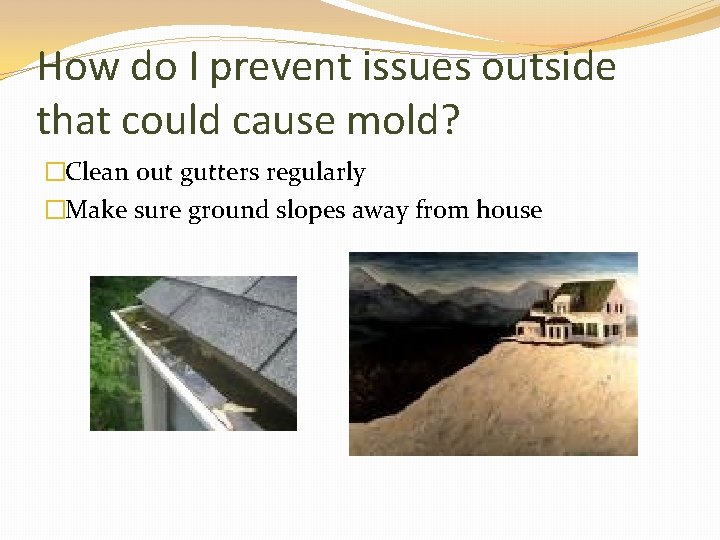
How do I prevent issues outside that could cause mold? �Clean out gutters regularly �Make sure ground slopes away from house
How do I fix mold in my house? �Make sure to clean up mold AND fix the problem, otherwise the mold will come back �Scrub mold with detergent and water �Do not cover up mold with paint—it will still be there underneath the paint unless you clean it up �Fix any leaks you may find �Make sure to let areas dry completely after cleaning
Review Question 3 �True or False �A mixture of ammonia and bleach should be used to clean up mold.
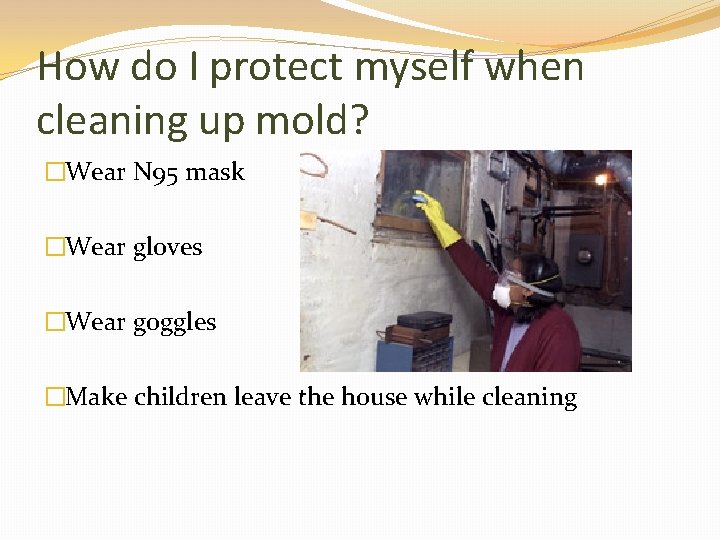
How do I protect myself when cleaning up mold? �Wear N 95 mask �Wear gloves �Wear goggles �Make children leave the house while cleaning
Review Question 4 �Which of these is not necessary to use when cleaning up mold? �A)Hazmat suit �B) N 95 mask �C)gloves �D)goggles
Why is it so important? �Mold can attract cockroaches, rodents, or dust mites �Exposure to these pests can lead to more respiratory issues, further complicating the problem
References �Community environmental health resource center. (2010). Mold and moisture. Retrieved from http: //www. afhh. org/hps_cehrc_mold&moisture _materials. pdf �Environmental health and safety online. (2011). A brief guide to mold, moisture, and your home. Retrieved from http: //www. ehso. com/indoorairmold. php �Minnesota department of health. (2010). Moisture and mold in my home. Retrieved from http: //www. energy. wsu. edu/Documents/mold_moist ure. pdf
References �United States Department of Housing and Development. (2010). About mold and moisture. Retrieved from http: //www. hud. gov/offices/lead/healthyhomes/mold. cfm �United States EPA. (2010). A brief guide to mold, moisture, and your home. Retrieved from http: //www. epa. gov/iedmold 1/preventionandcontrol. html
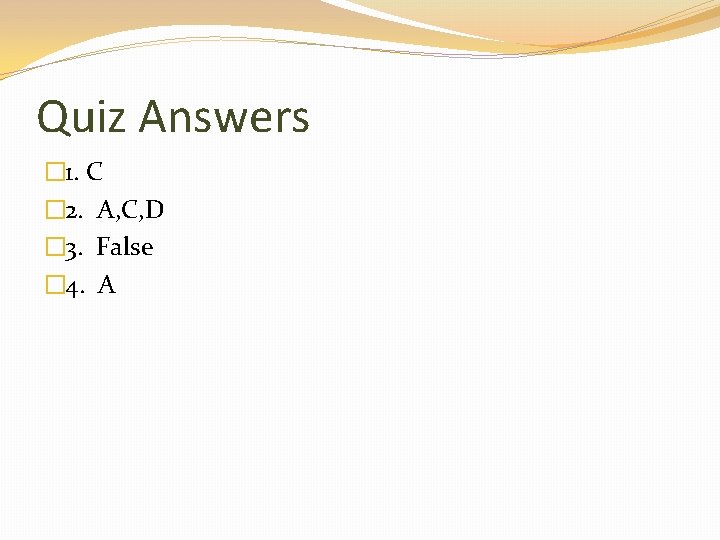
Quiz Answers � 1. C � 2. A, C, D � 3. False � 4. A