
Assyria Mesopotamia ASSYRIANS THE ASSYRIAN EMPIRE ASSYRIA Capital
- Slides: 17
Assyria, Mesopotamia ASSYRIANS
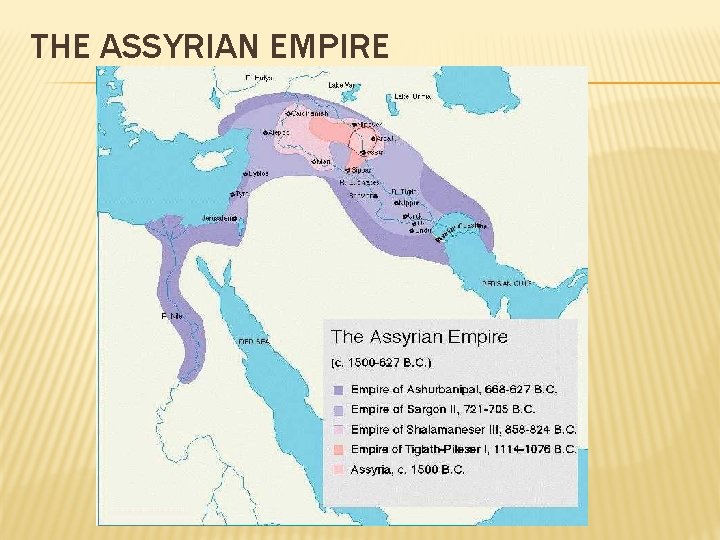
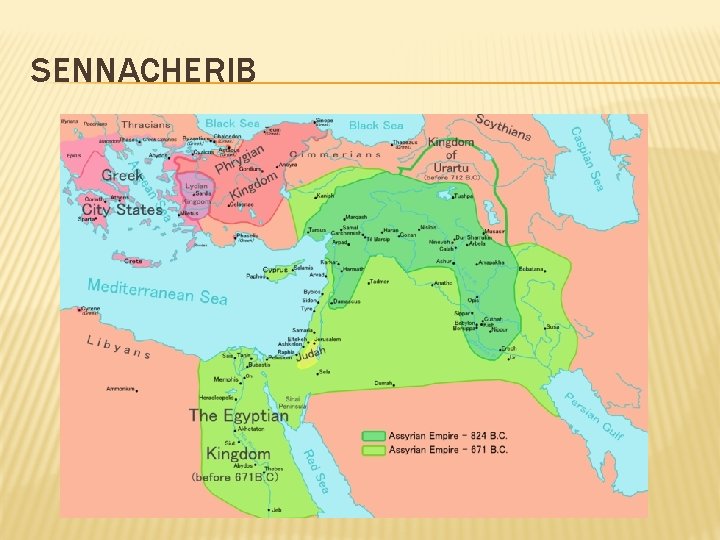
THE ASSYRIAN EMPIRE
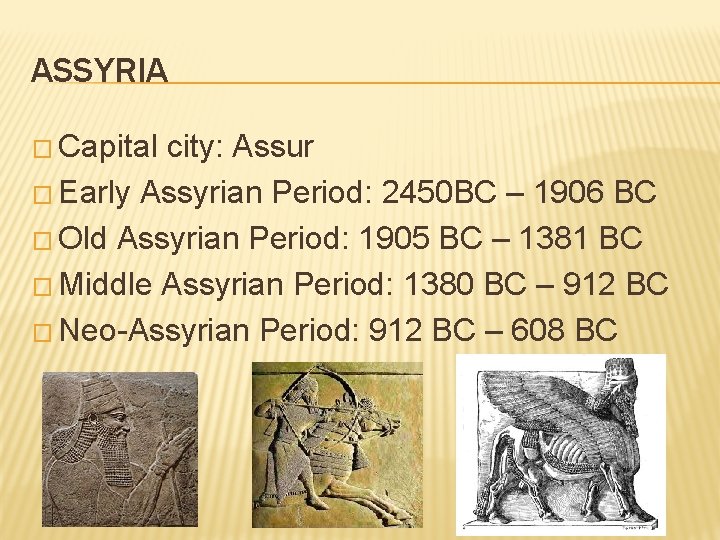
ASSYRIA � Capital city: Assur � Early Assyrian Period: 2450 BC – 1906 BC � Old Assyrian Period: 1905 BC – 1381 BC � Middle Assyrian Period: 1380 BC – 912 BC � Neo-Assyrian Period: 912 BC – 608 BC
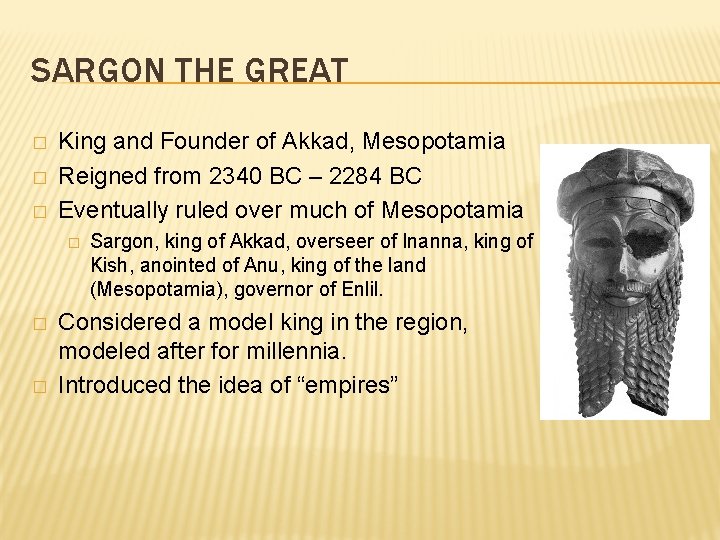
SARGON THE GREAT � � � King and Founder of Akkad, Mesopotamia Reigned from 2340 BC – 2284 BC Eventually ruled over much of Mesopotamia � � � Sargon, king of Akkad, overseer of Inanna, king of Kish, anointed of Anu, king of the land (Mesopotamia), governor of Enlil. Considered a model king in the region, modeled after for millennia. Introduced the idea of “empires”
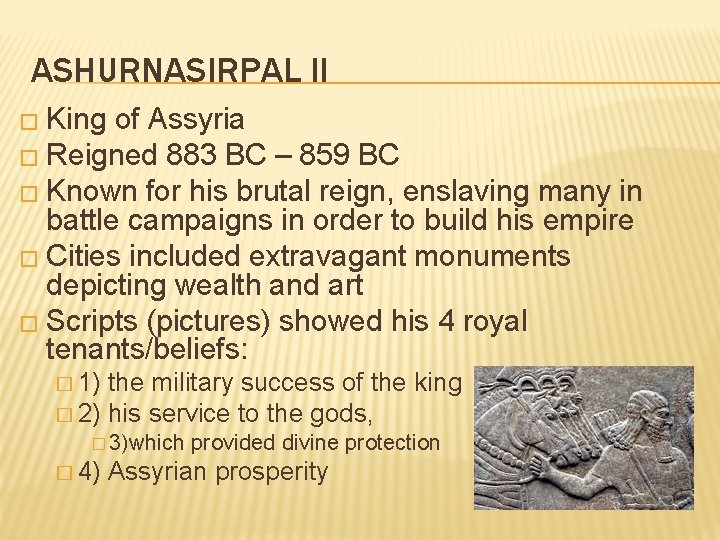
ASHURNASIRPAL II � King of Assyria � Reigned 883 BC – 859 BC � Known for his brutal reign, enslaving many in battle campaigns in order to build his empire � Cities included extravagant monuments depicting wealth and art � Scripts (pictures) showed his 4 royal tenants/beliefs: � 1) the military success of the king � 2) his service to the gods, � 3)which � 4) provided divine protection Assyrian prosperity
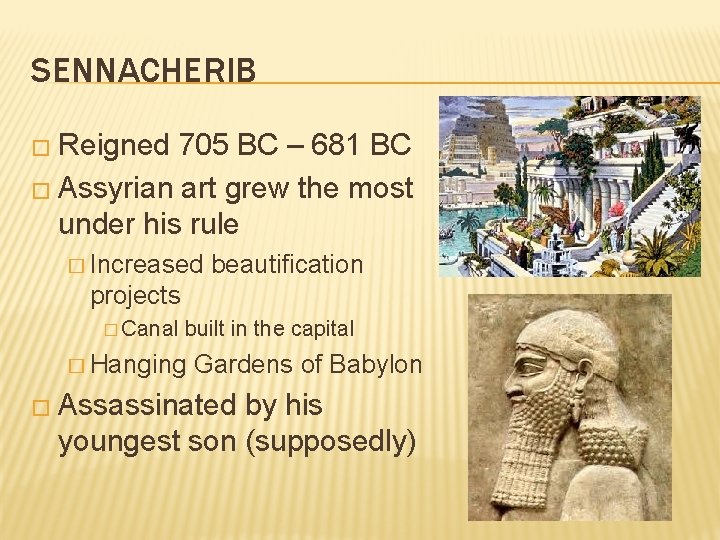
SENNACHERIB � Reigned 705 BC – 681 BC � Assyrian art grew the most under his rule � Increased beautification projects � Canal built in the capital � Hanging Gardens of Babylon � Assassinated by his youngest son (supposedly)
SENNACHERIB
SENNACHERIB � “Babylonian Problem” � Local rulers and Sennacherib’s ancestors split power amongst the land � Sennacherib’s immediate predecessor conquered split land, creating divides between Babylonians and Assyrians � Had little care about Babylon, and eventually destroyed Babylon in 689 BC. � Destroyed temples and images of gods
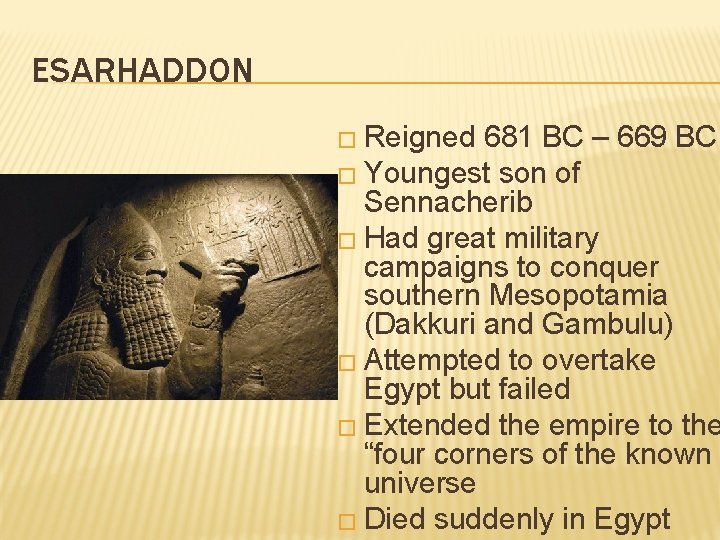
ESARHADDON � Reigned 681 BC – 669 BC � Youngest son of Sennacherib � Had great military campaigns to conquer southern Mesopotamia (Dakkuri and Gambulu) � Attempted to overtake Egypt but failed � Extended the empire to the “four corners of the known universe � Died suddenly in Egypt
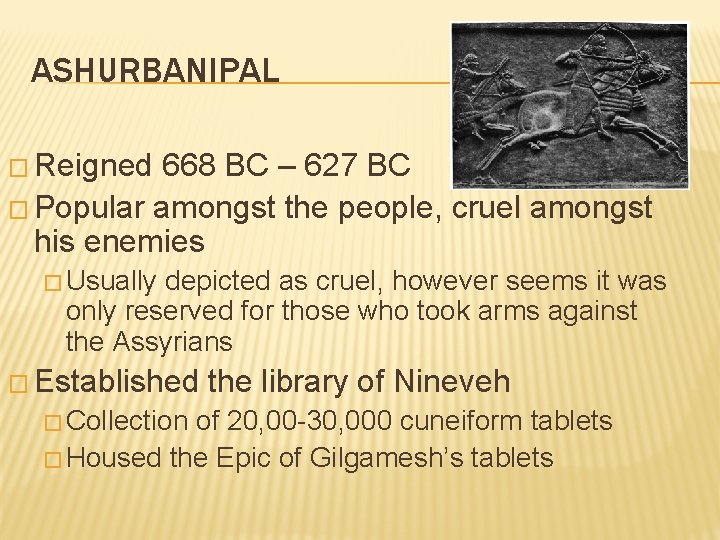
ASHURBANIPAL � Reigned 668 BC – 627 BC � Popular amongst the people, cruel amongst his enemies � Usually depicted as cruel, however seems it was only reserved for those who took arms against the Assyrians � Established � Collection the library of Nineveh of 20, 00 -30, 000 cuneiform tablets � Housed the Epic of Gilgamesh’s tablets
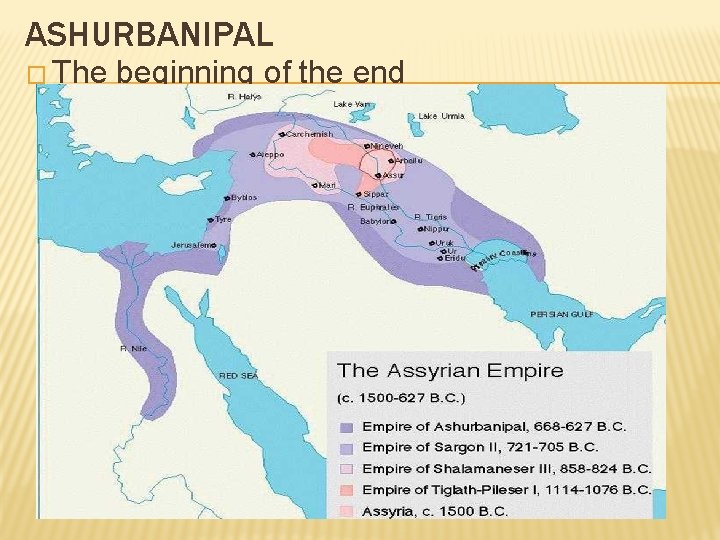
ASHURBANIPAL � The beginning of the end
ASHURBANIPAL � Saw the decline of the Assyrian Empire � Over-expansion; no money, resources, insufficient troops � Fall into years of civil war � Babylonia will take advantage of the crumbling Assyrian rule to eventually take over
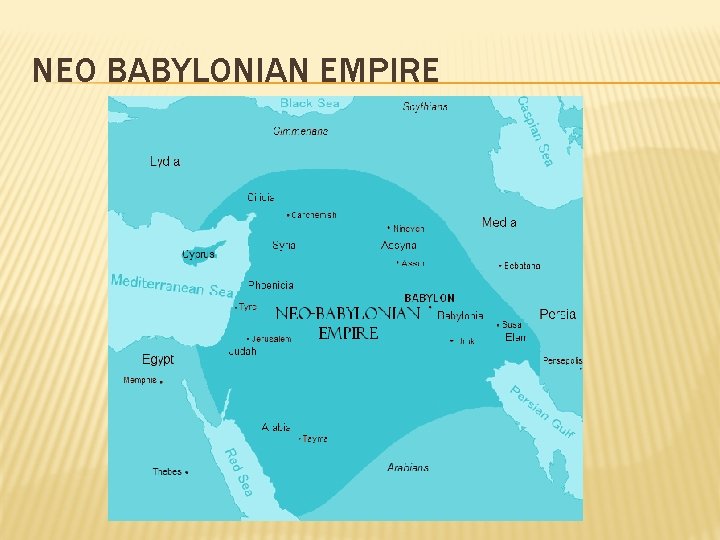
NEO BABYLONIAN EMPIRE � 626 BC – 539 BC � Maintained historical records � Considered a renaissance (revival) period � Increased land cultivation use � Rule held locally by large estates � Cities had local autonomy – ruling from city centers
NEO BABYLONIAN EMPIRE
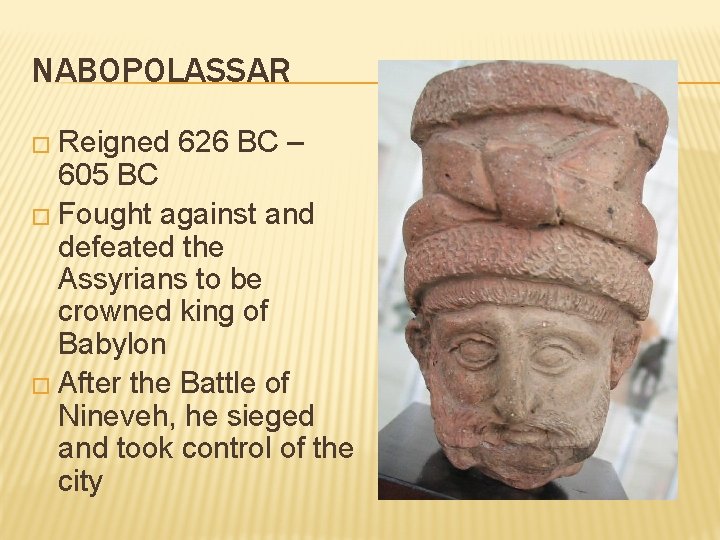
NABOPOLASSAR � Reigned 626 BC – 605 BC � Fought against and defeated the Assyrians to be crowned king of Babylon � After the Battle of Nineveh, he sieged and took control of the city
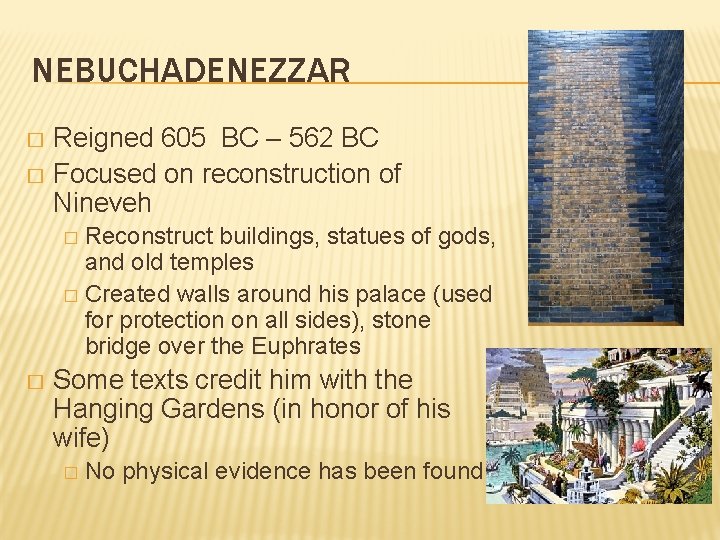
NEBUCHADENEZZAR Reigned 605 BC – 562 BC � Focused on reconstruction of Nineveh � Reconstruct buildings, statues of gods, and old temples � Created walls around his palace (used for protection on all sides), stone bridge over the Euphrates � � Some texts credit him with the Hanging Gardens (in honor of his wife) � No physical evidence has been found
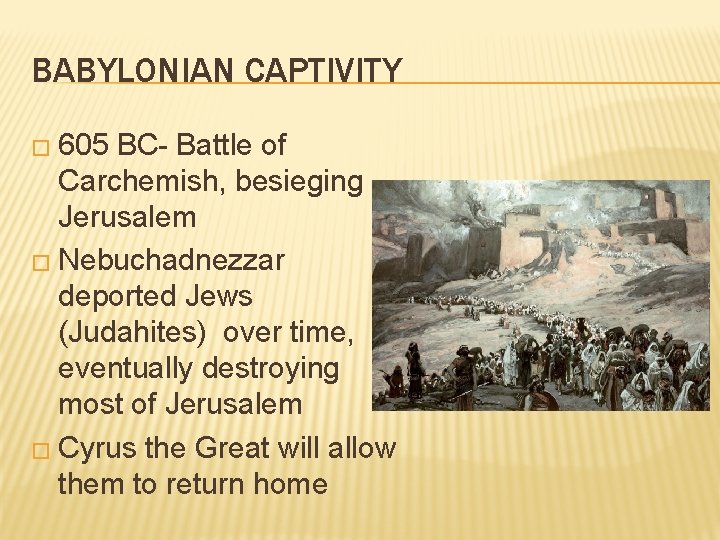
BABYLONIAN CAPTIVITY � 605 BC- Battle of Carchemish, besieging Jerusalem � Nebuchadnezzar deported Jews (Judahites) over time, eventually destroying most of Jerusalem � Cyrus the Great will allow them to return home