
Assumptions for Generating Fracture Loci Procedure for Generating
- Slides: 15
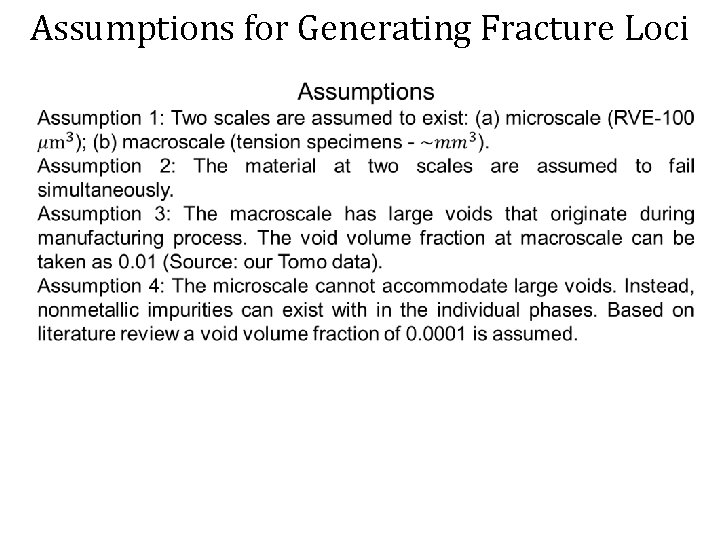
Assumptions for Generating Fracture Loci
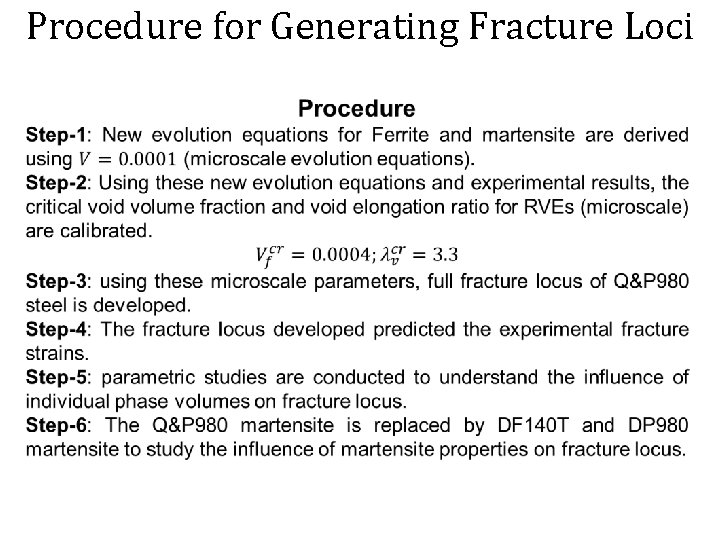
Procedure for Generating Fracture Loci
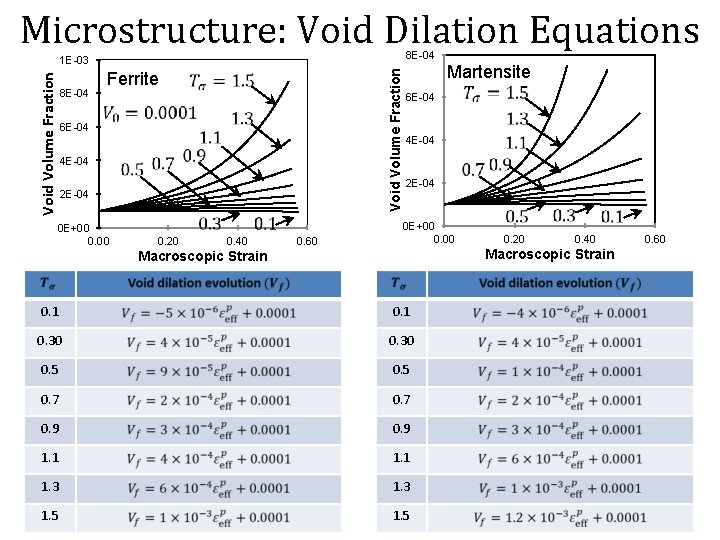
Microstructure: Void Dilation Equations 8 E-04 Ferrite 8 E-04 6 E-04 4 E-04 Void Volume Fraction 1 E-03 2 E-04 0 E+00 0. 00 0. 20 0. 40 0. 60 6 E-04 4 E-04 2 E-04 Martensite 0 E+00 0. 00 0. 20 0. 40 Macroscopic Strain 0. 1 0. 30 0. 5 0. 7 0. 9 1. 1 1. 3 1. 5 0. 60
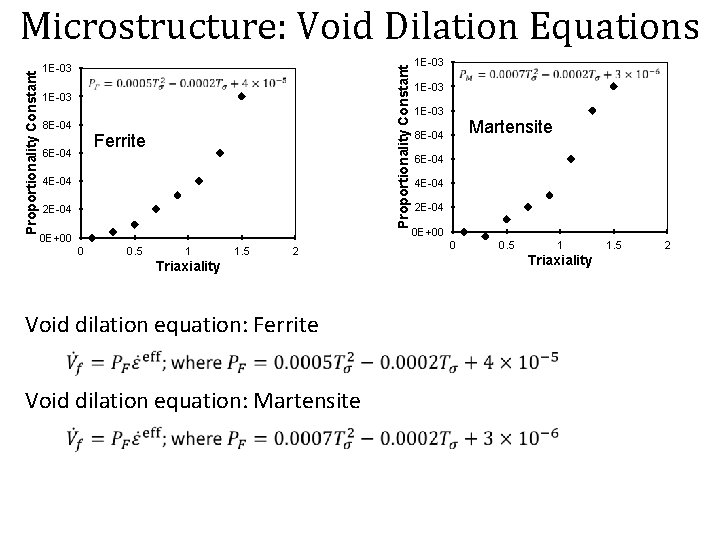
1 E-03 Proportionality Constant Microstructure: Void Dilation Equations 1 E-03 8 E-04 Ferrite 6 E-04 4 E-04 2 E-04 0 E+00 0 0. 5 1 1. 5 2 Triaxiality Void dilation equation: Ferrite Void dilation equation: Martensite 1 E-03 Martensite 8 E-04 6 E-04 4 E-04 2 E-04 0 E+00 0 0. 5 1 Triaxiality 1. 5 2
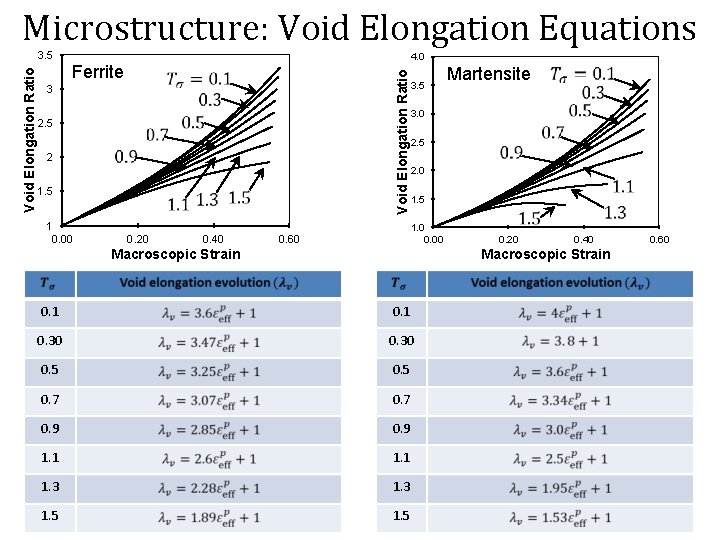
Microstructure: Void Elongation Equations 4. 0 Ferrite 3 2. 5 2 1. 5 1 0. 00 Void Elongation Ratio 3. 5 0. 20 0. 40 3. 5 3. 0 2. 5 2. 0 1. 5 1. 0 0. 00 0. 60 Martensite 0. 20 0. 40 Macroscopic Strain 0. 1 0. 30 0. 5 0. 7 0. 9 1. 1 1. 3 1. 5 0. 60
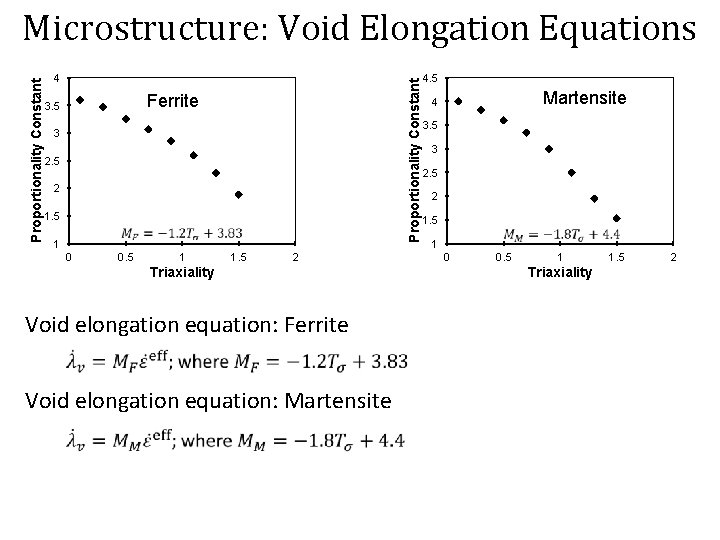
4 Proportionality Constant Microstructure: Void Elongation Equations Ferrite 3. 5 3 2. 5 2 1. 5 1 0 0. 5 1 1. 5 2 Triaxiality Void elongation equation: Ferrite Void elongation equation: Martensite 4. 5 Martensite 4 3. 5 3 2. 5 2 1. 5 1 0 0. 5 1 Triaxiality 1. 5 2
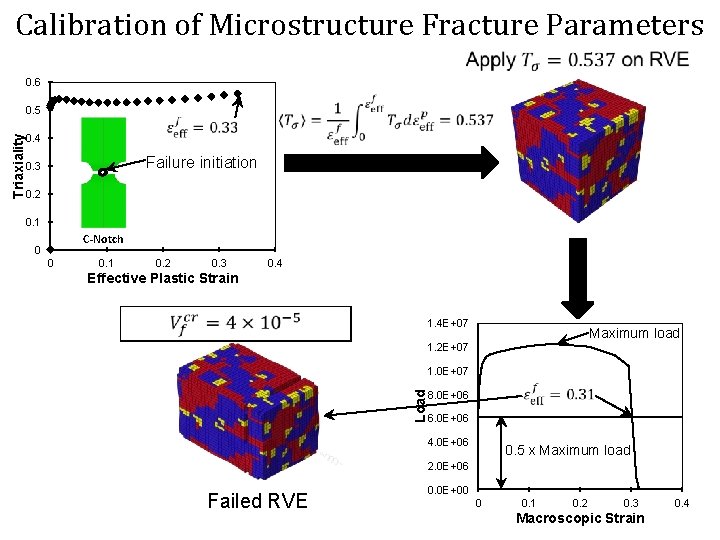
Calibration of Microstructure Fracture Parameters 0. 6 0. 4 Failure initiation 0. 3 0. 2 0. 1 C-Notch 0 0 0. 1 0. 2 0. 3 0. 4 Effective Plastic Strain 1. 4 E+07 Maximum load 1. 2 E+07 1. 0 E+07 Load Triaxiality 0. 5 8. 0 E+06 6. 0 E+06 4. 0 E+06 0. 5 x Maximum load 2. 0 E+06 Failed RVE 0. 0 E+00 0 0. 1 0. 2 0. 3 Macroscopic Strain 0. 4
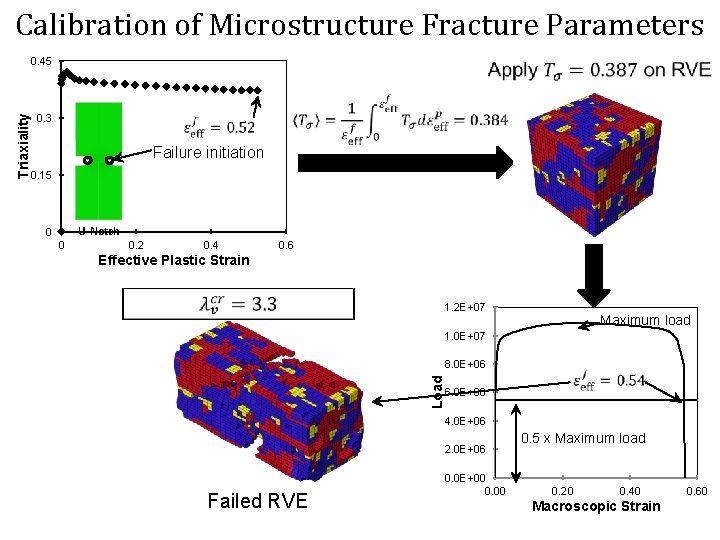
Calibration of Microstructure Fracture Parameters 0. 3 Failure initiation 0. 15 U-Notch 0 0 0. 2 0. 4 0. 6 Effective Plastic Strain 1. 2 E+07 Maximum load 1. 0 E+07 8. 0 E+06 Load Triaxiality 0. 45 6. 0 E+06 4. 0 E+06 2. 0 E+06 Failed RVE 0. 0 E+00 0. 5 x Maximum load 0. 20 0. 40 Macroscopic Strain 0. 60
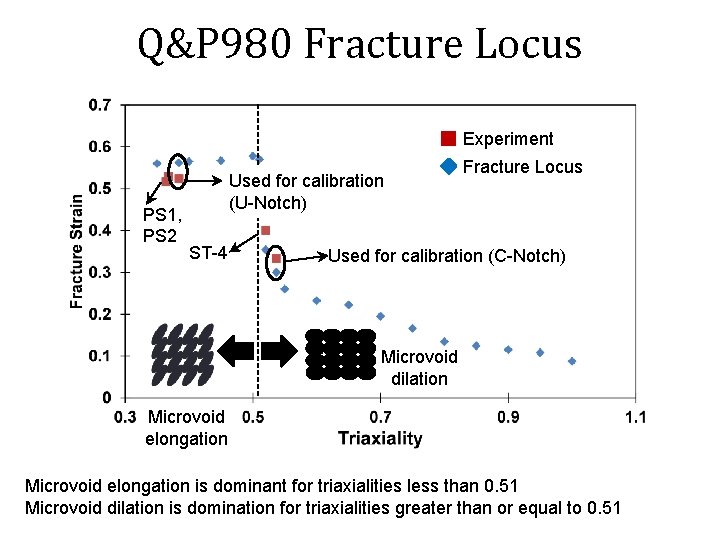
Q&P 980 Fracture Locus Experiment PS 1, PS 2 Used for calibration (U-Notch) ST-4 Fracture Locus Used for calibration (C-Notch) Microvoid dilation Microvoid elongation is dominant for triaxialities less than 0. 51 Microvoid dilation is domination for triaxialities greater than or equal to 0. 51
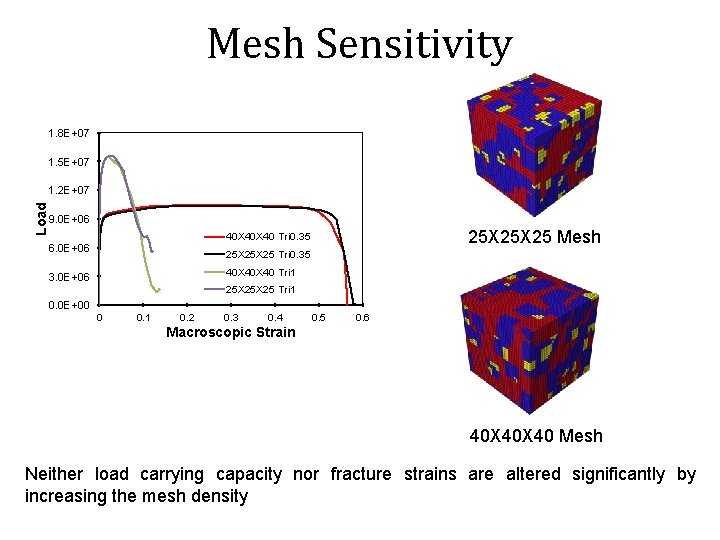
Load Mesh Sensitivity Macroscopic Strain
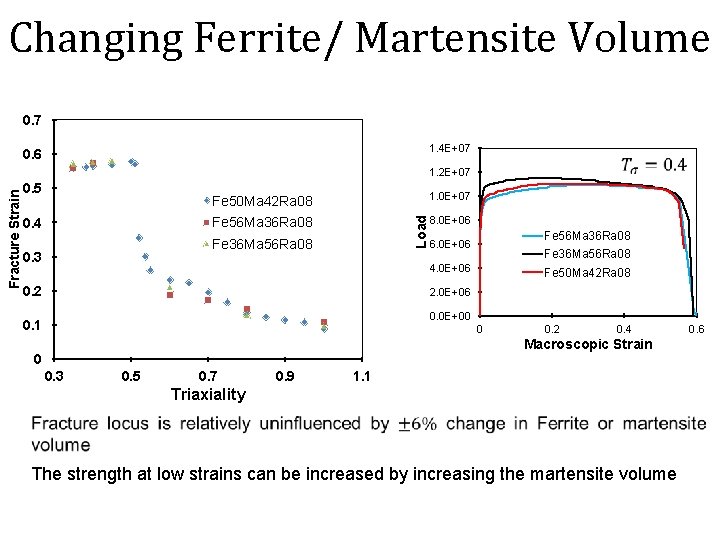
Changing Ferrite/ Martensite Volume 0. 7 1. 4 E+07 0. 6 0. 5 0. 4 Fe 50 Ma 42 Ra 08 1. 0 E+07 Fe 56 Ma 36 Ra 08 8. 0 E+06 Load Fracture Strain 1. 2 E+07 Fe 36 Ma 56 Ra 08 0. 3 Fe 56 Ma 36 Ra 08 6. 0 E+06 Fe 36 Ma 56 Ra 08 4. 0 E+06 0. 2 Fe 50 Ma 42 Ra 08 2. 0 E+06 0. 0 E+00 0. 1 0 0. 2 0. 4 Macroscopic Strain 0 0. 3 0. 5 0. 7 0. 9 1. 1 Triaxiality The strength at low strains can be increased by increasing the martensite volume 0. 6
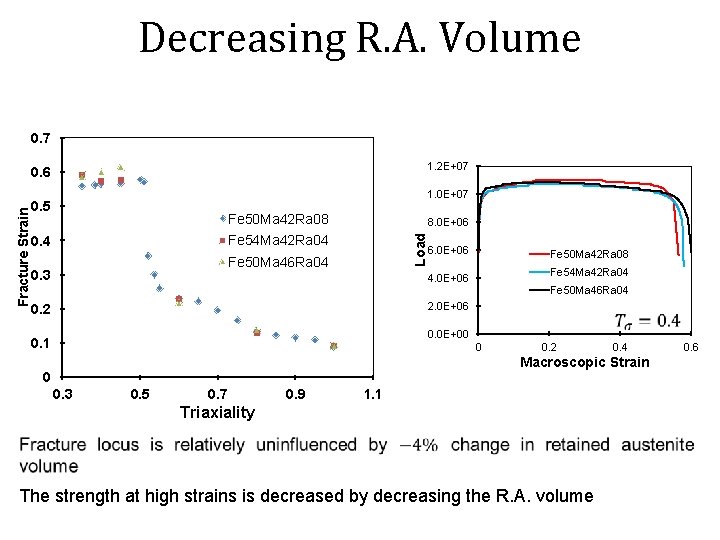
Decreasing R. A. Volume 0. 7 0. 5 Fe 50 Ma 42 Ra 08 Fe 54 Ma 42 Ra 04 0. 4 Load Fracture Strain 0. 6 Fe 50 Ma 46 Ra 04 0. 3 0. 2 0. 1 Macroscopic Strain 0 0. 3 0. 5 0. 7 Triaxiality 0. 9 1. 1
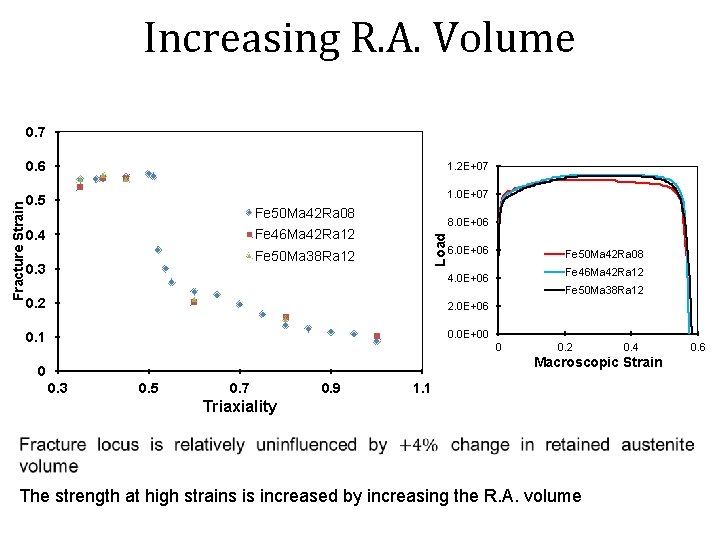
Increasing R. A. Volume 0. 7 0. 5 Fe 50 Ma 42 Ra 08 Fe 46 Ma 42 Ra 12 0. 4 Fe 50 Ma 38 Ra 12 0. 3 Load Fracture Strain 0. 6 0. 2 0. 1 Macroscopic Strain 0 0. 3 0. 5 0. 7 Triaxiality 0. 9 1. 1
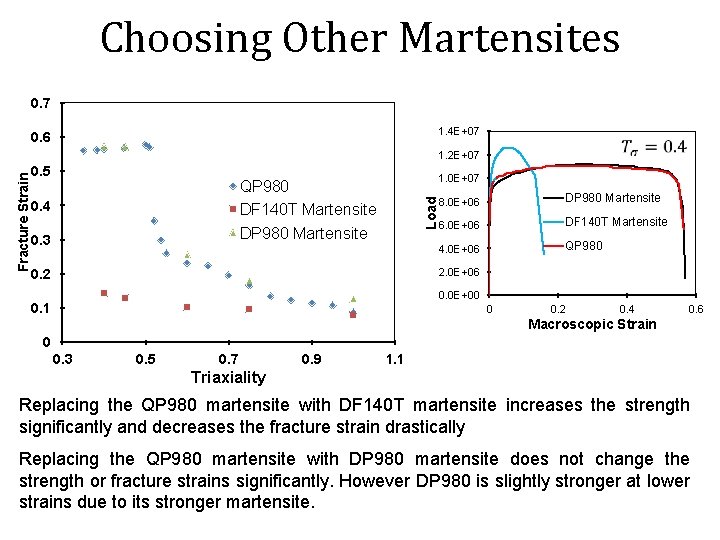
Choosing Other Martensites 0. 7 1. 4 E+07 0. 6 0. 5 1. 0 E+07 QP 980 DF 140 T Martensite DP 980 Martensite 0. 4 0. 3 Load Fracture Strain 1. 2 E+07 8. 0 E+06 DP 980 Martensite 6. 0 E+06 DF 140 T Martensite 4. 0 E+06 QP 980 2. 0 E+06 0. 2 0. 0 E+00 0. 1 0 0. 2 0. 4 0. 6 Macroscopic Strain 0 0. 3 0. 5 0. 7 0. 9 1. 1 Triaxiality Replacing the QP 980 martensite with DF 140 T martensite increases the strength significantly and decreases the fracture strain drastically Replacing the QP 980 martensite with DP 980 martensite does not change the strength or fracture strains significantly. However DP 980 is slightly stronger at lower strains due to its stronger martensite.
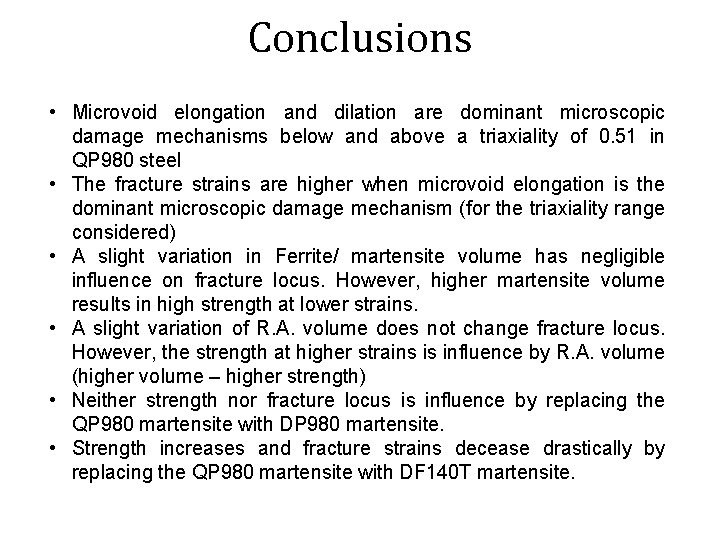
Conclusions • Microvoid elongation and dilation are dominant microscopic damage mechanisms below and above a triaxiality of 0. 51 in QP 980 steel • The fracture strains are higher when microvoid elongation is the dominant microscopic damage mechanism (for the triaxiality range considered) • A slight variation in Ferrite/ martensite volume has negligible influence on fracture locus. However, higher martensite volume results in high strength at lower strains. • A slight variation of R. A. volume does not change fracture locus. However, the strength at higher strains is influence by R. A. volume (higher volume – higher strength) • Neither strength nor fracture locus is influence by replacing the QP 980 martensite with DP 980 martensite. • Strength increases and fracture strains decease drastically by replacing the QP 980 martensite with DF 140 T martensite.