
Association of Oral Anticoagulants and Proton Pump Inhibitor
Association of Oral Anticoagulants and Proton Pump Inhibitor Cotherapy With Hospitalization for Upper Gastrointestinal Tract Bleeding JAMA. 2018; 320: 2221– 2230. DOI: 10. 1001/jama. 2018. 17242 Tu, Hui-Tzu Jan. 16, 2019
INTRODUCTION In pivotal efficacy trials, non–vitamin K oral anticoagulants (NOACs) were at least as effective as warfarin for prevention of stroke, but some were associated with an increased risk of major gastrointestinal bleeding. Although individual NOACs have not been compared in large clinical trials, observational data suggest that the incidence of serious anticoagulant-related gastrointestinal bleeding is higher in patients prescribed rivaroxaban than dabigatran and lower in patients prescribed apixaban than other oral anticoagulants. However, the clinical importance of anticoagulant choice for patients with elevated gastrointestinal bleeding risk is unknown.
INTRODUCTION PPIs, which reduce gastric acid production, promote ulcer healing, and prevent ulcer recurrence, could affect the relative safety of oral anticoagulants, particularly in high-risk patients. PPI cotherapy is associated with reduced incidence of upper gastrointestinal tract bleeding in patients prescribed warfarin and dabigatran; the absolute reduction in risk increases with the prevalence of several known risk factors for gastrointestinal bleeding. However, whether PPI cotherapy is associated with a lower incidence of anticoagulant-related serious upper gastrointestinal tract bleeding for other NOACs or alters the relative upper gastrointestinal tract safety associated with individual oral anticoagulants is unknown.
AIMS to compare the incidence of serious upper gastrointestinal tract bleeding for individual anticoagulants with and without PPI cotherapy to determine how the risk associated with individual anticoagulants and PPI cotherapy varied according to the patient’s risk of gastrointestinal bleeding.
METHODS Sources of Data US Medicare beneficiary files (medical care encounters for pharmacy, hospital, outpatient, and nursing home services) January 1, 2011~September 30, 2015 Cohort inclusion-exclusion criteria left the cohort on the first of the following dates
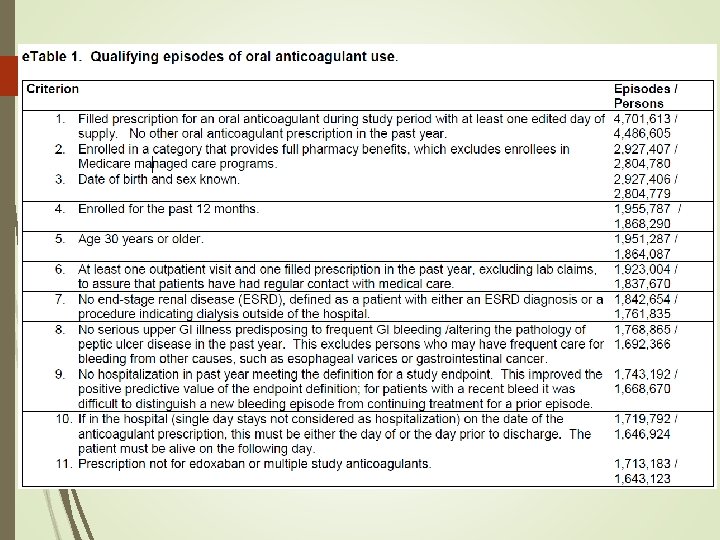
inclusion-exclusion criteria 1. Filled prescription for an oral anticoagulant during study period with at least one edited day of supply. 2. Enrolled in a category that provides full pharmacy benefits, 3. Date of birth and sex known. 4. Enrolled for the past 12 months. 5. Age 30 years or older. 6. At least one outpatient visit and one filled prescription in the past year, 7. No end-stage renal disease (ESRD), 8. No serious upper GI illness predisposing to frequent GI bleeding. 9. No hospitalization in past year meeting the definition for a study endpoint. 10. If in the hospital (single day stays not considered as hospitalization) on the date of the anticoagulant prescription, this must be either the day of or the day prior to discharge. The patient must be alive on the following day. 11. Prescription not for edoxaban or multiple study nticoagulants.
left the cohort 1. End of oral anticoagulant use: after one year with no filled prescription; 2. Switch to a different oral anticoagulant; 3. The last day of the study, 9/30/2015; 4. Last day of enrollment, including either loss of enrollment or transition to a category without full pharmacy benefits. Transfer to Medicare Part C was considered loss of enrollment. 5. Day prior to failure to meet inclusion/exclusion criteria; 6. Day of a study endpoint; 7. Date of death.
METHODS Medication Exposure (based on the dispensed days of supply) OAC: This period began on the date the prescription was filled, and, given potential residual anticoagulant effects, ended either 1 day (for patients prescribed apixaban, dabigatran, or rivaroxaban) or 3 days (for patients prescribed warfarin) after the end of the days of supply. PPI Cotherapy: the interval between the date a PPI prescription was filled through the end of days of supply No cotherapy: with no filled PPI prescription in the past year Former cotherapy: a) the period between the end of current cotherapy and the beginning of no co-therapy; or b) the first day for a new course of therapy (none past 365 days) NSAIDs and other anticoagulants (eg, heparin, enoxaparin): the interval between the date the prescription was filled through the end of the days of supply Antiplatelet drugs (eg, ticlopidine, clopidogrel, prasugrel, ticagrelor, dipyridamole, cilostazol): this interval was extended 7 days
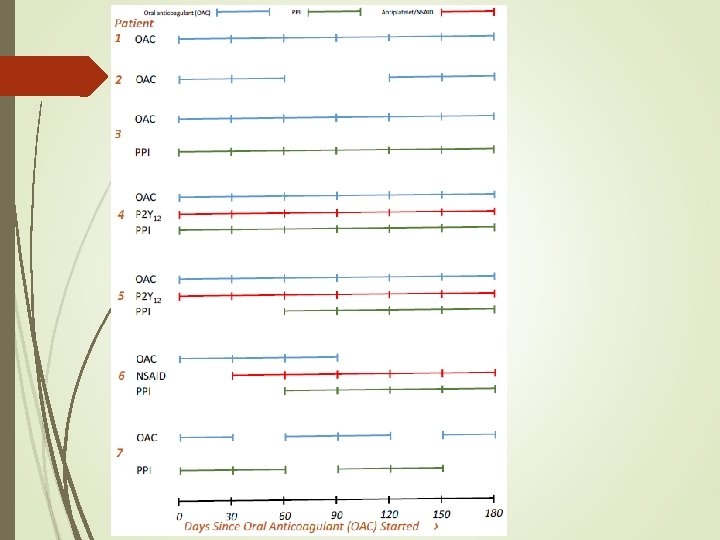
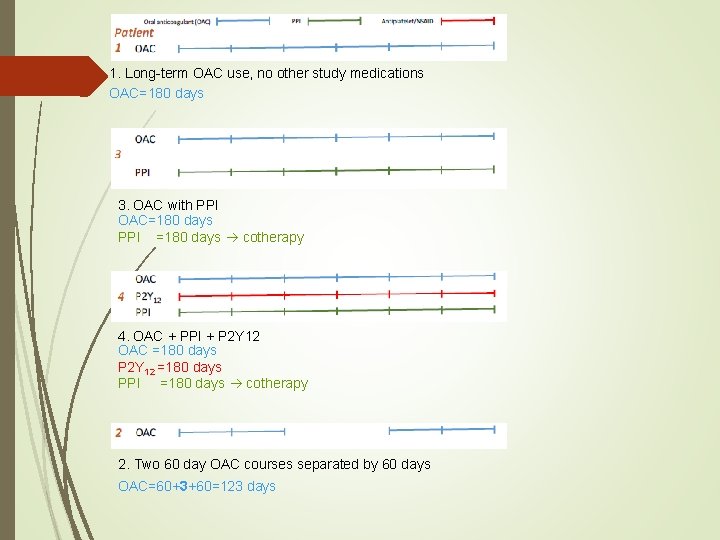
1. Long-term OAC use, no other study medications OAC=180 days 3. OAC with PPI OAC=180 days PPI =180 days cotherapy 4. OAC + PPI + P 2 Y 12 OAC =180 days P 2 Y 12 =180 days PPI =180 days cotherapy 2. Two 60 day OAC courses separated by 60 days OAC=60+3+60=123 days

5. OAC + P 2 Y 12, PPI starts after OAC (but there is no PPI prescription within the past year, PPI is started at day 61. ) PPI (day 1~60) PPI (day 62~180) cotherapy former no cotherapy PPI (day 61) cotherapy 6. 90 day OAC course, NSAID after OAC start and subsequently PPI Ø 1 st 30 days PPI co-therapy nor concurrent antiplatelet drug/NSAID use. Ø 2 nd 30 days is anticoagulant treatment with concurrent antiplatelet drug/NSAID use, but with no PPI co-therapy. Ø The remaining person-time is anticoagulant treatment with both concurrent antiplatelet drug/NSAID use and PPI co-therapy. 7. Intermittent OAC and PPI therapy Ø The periods where anticoagulant and PPI use overlap are anticoagulant treatment with PPI co-therapy Ø the other periods of anticoagulant therapy are anticoagulant treatment with former PPI co-therapy.
METHODS End points Serious bleeding endpoints were hospitalizations with diagnoses and procedures indicating that the hospitalization was primarily related to a major bleed. These hospitalizations were classified according to the probable site of the bleeding: 1. Gastroduodenal; 2. Esophageal, other than gastroesophageal reflux disease; 3. Upper gastrointestinal, unspecified as to esophageal or gastroduodenal; 4. Upper gastrointestinal, angiodysplasia; 5. Lower gastrointestinal; 6. Unspecified gastrointestinal, possibly esophageal, upper, or lower; 7. Multiple gastrointestinal; 8. Genitourinary; 9. Cerebral; 10. Other specified site; 11. Unspecified site; 12. Multiple sites.
METHODS Analysis Covariates (85 covariates) demographic information, anticoagulant indication, time since treatment initiation, history of upper gastrointestinal tract disease or signs of bleeding, other gastrointestinal disease or symptoms, medications that affect bleeding risk, cardiovascular disease for which low-dose aspirin prophylaxis (surrogate for low-dose aspirin) is recommended, other cardiovascular conditions or risk factors, medical care encounters indicating frailty or alcohol abuse, liver disease, and recent hospitalizations or emergency department visits
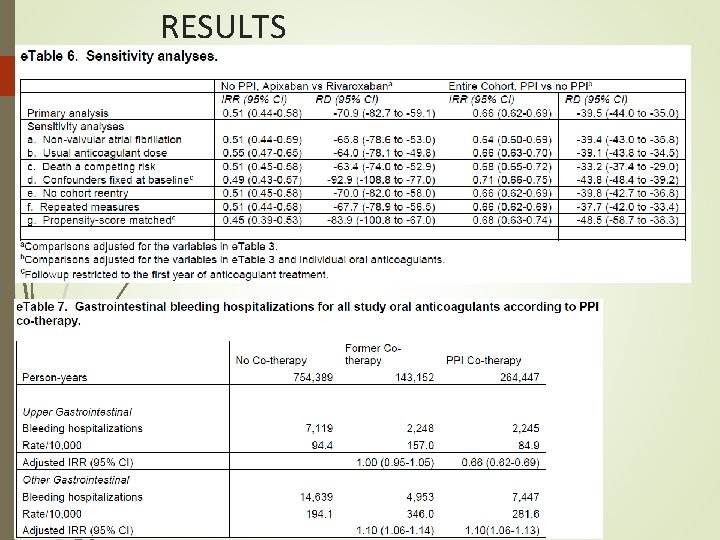
METHODS Analysis Statistical Analysis Time-dependent Poisson regression models incidence ratios (IRRs) risk difference (RD) Gastrointestinal Bleeding Risk Score (85 covariates) Sensitivity analyses
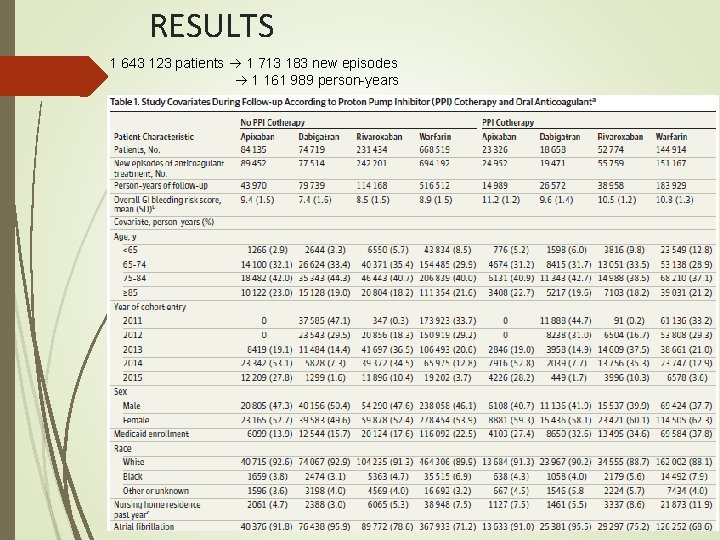
RESULTS 1 643 123 patients 1 713 183 new episodes 1 161 989 person-years
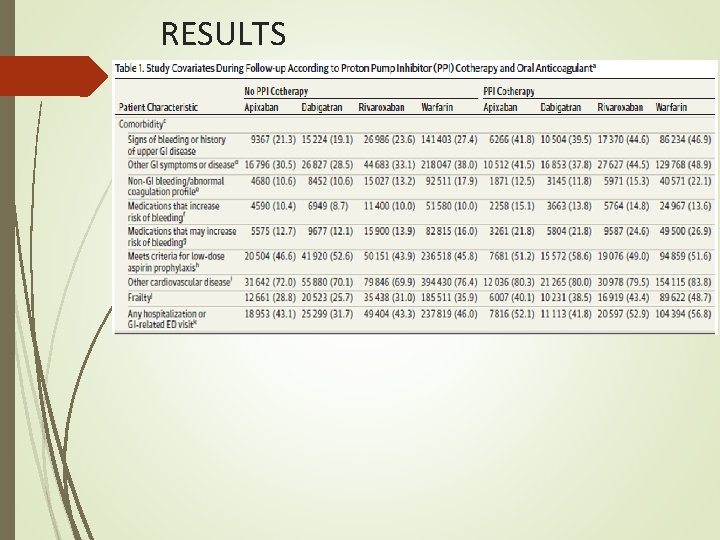
RESULTS
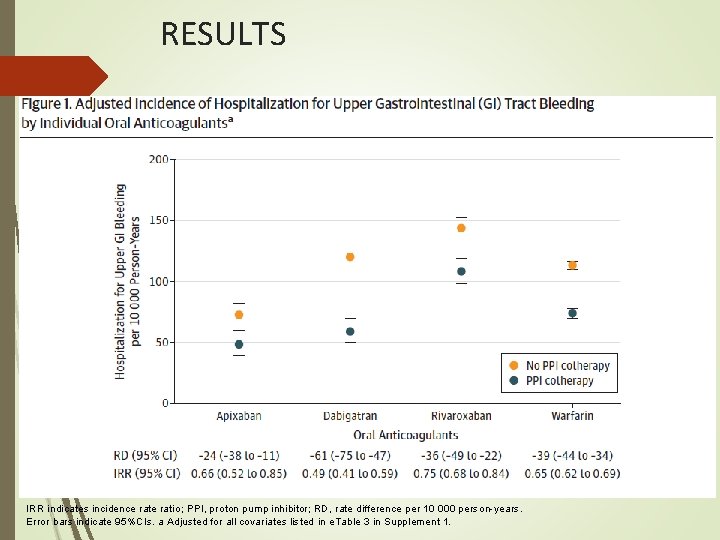
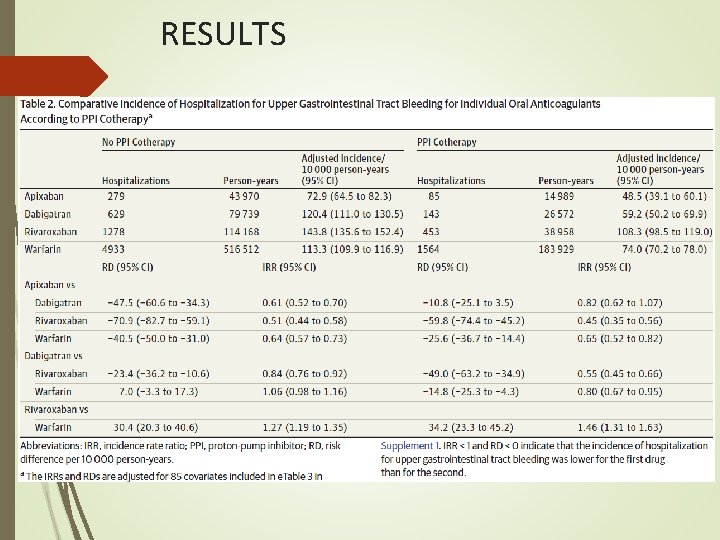
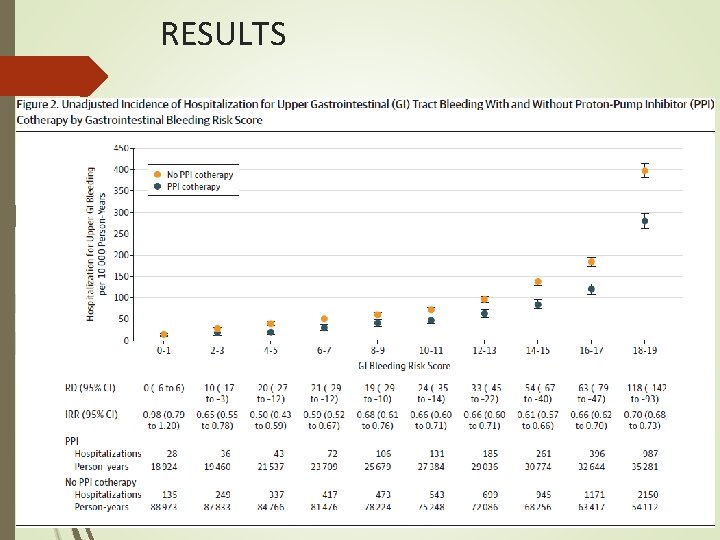
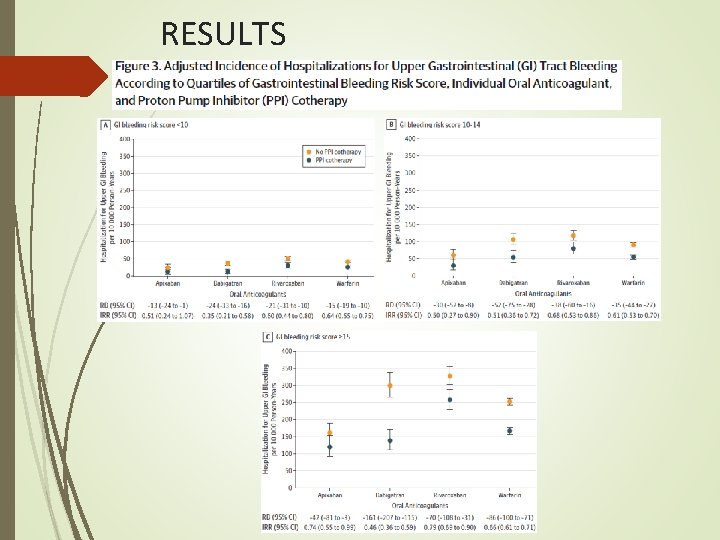
RESULTS IRR indicates incidence ratio; PPI, proton pump inhibitor; RD, rate difference per 10 000 person-years. Error bars indicate 95%CIs. a Adjusted for all covariates listed in e. Table 3 in Supplement 1.
RESULTS
RESULTS
RESULTS
RESULTS
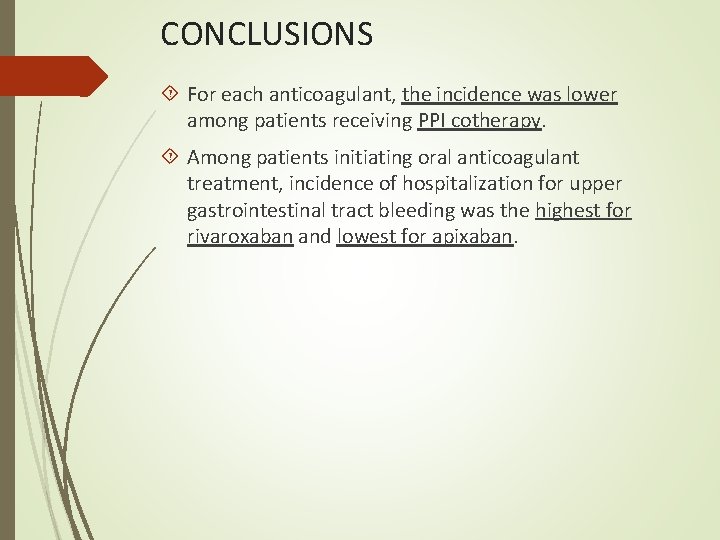
CONCLUSIONS For each anticoagulant, the incidence was lower among patients receiving PPI cotherapy. Among patients initiating oral anticoagulant treatment, incidence of hospitalization for upper gastrointestinal tract bleeding was the highest for rivaroxaban and lowest for apixaban.
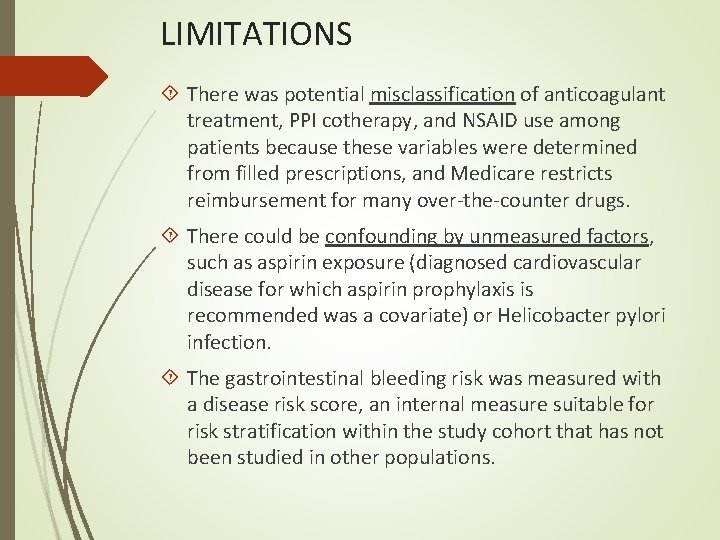
LIMITATIONS There was potential misclassification of anticoagulant treatment, PPI cotherapy, and NSAID use among patients because these variables were determined from filled prescriptions, and Medicare restricts reimbursement for many over-the-counter drugs. There could be confounding by unmeasured factors, such as aspirin exposure (diagnosed cardiovascular disease for which aspirin prophylaxis is recommended was a covariate) or Helicobacter pylori infection. The gastrointestinal bleeding risk was measured with a disease risk score, an internal measure suitable for risk stratification within the study cohort that has not been studied in other populations.
- Slides: 24