
ASSISTIVE TECHNOLOGY OVERVIEW June 2016 WHAT IS AND







- Slides: 25
ASSISTIVE TECHNOLOGY OVERVIEW June 2016
WHAT IS AND WHY ASSISTIVE TECHNOLOGY IS IMPORTANT! Assistive technology (AT) is any item, piece of equipment, software program, or product system that is used to increase, maintain, or improve the functional capabilities of persons with disabilities. Paraphrasing the legal definition, assistive technologies, or “AT”, are tools (and associated supporting services) which help an individual work around the functional limitations imposed by a disability. AT for learning disabilities and learning differences includes not only computers and hightech devices, but also innovative uses of everyday technology like voice recorders, cameras, and smart phones, and even low tech items like day planners, timers, and sticky notes. § Information regarding what AT is and how to asses was obtained from Shelley Haven ATP, RET, website
WHY IS AT IMPORTANT? Overall, assistive technology aims to allow people with disabilities to "participate more fully in all aspects of life (home, work, and community)" and increases their opportunities for "education, social interactions, and potential for meaningful employment. “ It creates greater independence and control for disabled individuals. § "Considering Assistive Technology”, Center for Parent Information and Resources". www. parentcenterhub. org.
AT ASSESSMENT STARTS WITH ASKING THE RIGHT QUESTIONS More than anything, matching an individual with the appropriate assistive technology involves asking, and seeking answers to the right questions: • Which tasks does the person have difficulties with? • What are the Person’s abilities and challenges? • In which context will the person perform those tasks?
AT ASSESSMENT STARTS WITH ASKING THE RIGHT QUESTIONS The most effective technology tools are those selected with these factors in mind. The more we understand about the interaction between the PERSON, the TASK or activity they have difficulty with, and the ENVIRONMENT or context in which they perform that task -- WHO needs to do WHAT, WHERE? -- the better equipped we are to identify TOOLS (the assistive technology) to help produce the desired outcomes.
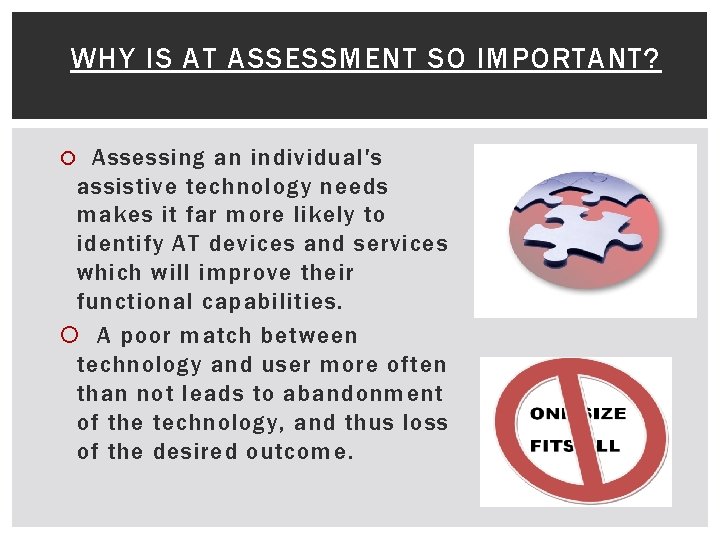
WHY IS AT ASSESSMENT SO IMPORTANT? Assessing an individual's assistive technology needs makes it far more likely to identify AT devices and services which will improve their functional capabilities. A poor match between technology and user more often than not leads to abandonment of the technology, and thus loss of the desired outcome.
WHY IS AT ASSESSMENT SO IMPORTANT? Various studies and surveys indicate that half and possibly as much as 80% of assistive technology is abandoned by the prospective user. Often, this is because the technology was not a good match for the user's abilities, needs, preferences, the task to be accomplished, or the context of the technology's use. So the first and arguably most important step is to identify the right tool for the job.
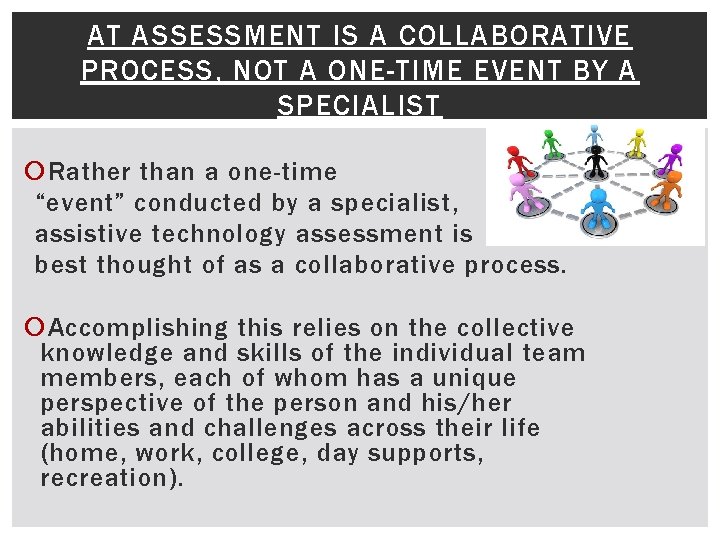
AT ASSESSMENT IS A COLLABORATIVE PROCESS, NOT A ONE-TIME EVENT BY A SPECIALIST Rather than a one-time “event” conducted by a specialist, assistive technology assessment is best thought of as a collaborative process. Accomplishing this relies on the collective knowledge and skills of the individual team members, each of whom has a unique perspective of the person and his/her abilities and challenges across their life (home, work, college, day supports, recreation).
AT ASSESSMENT IS A COLLABORATIVE PROCESS, NOT A ONE-TIME EVENT BY A SPECIALIST The inputs and involvement of the entire team are what produce successful results. § An AT assessment always considers the perspective and inputs of the person. § Determining which AT will be effective often requires an "assessment of assistive technology needs".
AT ASSESSMENT IS A COLLABORATIVE PROCESS, NOT A ONE-TIME EVENT BY A SPECIALIST Depending on the expertise within the team, they may seek the services of an outside AT specialist to conduct specialized evaluation and training, recommend specific assistive technologies, and coordinate the needs assessment process.
ASSISTIVE TECHNOLOGY SPECIALIST (ATP) Assistive Technology Specialists (ATP) – Are certified. are two types of certification There § The Assistive Technology Certification (ATP) recognizes demonstrated competence in analyzing the needs of consumers with disabilities, assisting in the selection of appropriate assistive technology for the consumer’s needs, and providing training in the use of the selected device(s). § Seating and Mobility Specialist Certification - The SMS certification is a specialty certification for professionals working in seating and mobility. While the ATP is a broadbased exam covering all major areas of assistive technology, the SMS exam is focused specifically on seating, positioning, and mobility.
AT ASSESSMENT Lastly, a proper AT assessment also considers necessary supporting services. § Training for the person and/or staff § Integration of the AT into day/work and home life § Technical support issues § It also provides a plan for implementation and for evaluating progress with the AT.
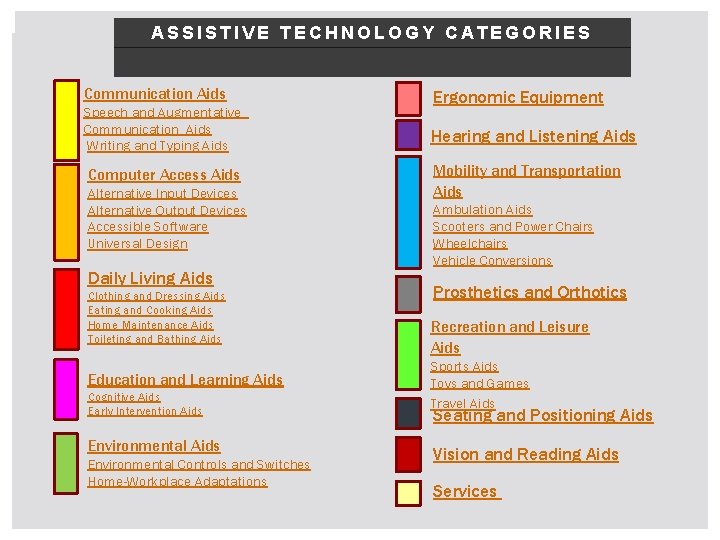
ASSISTIVE TECHNOLOGY CATEGORIES • Communication Aids Ergonomic Equipment Speech and Augmentative Communication Aids Writing and Typing Aids Hearing and Listening Aids Computer Access Aids Mobility and Transportation Aids Alternative Input Devices Alternative Output Devices Accessible Software Universal Design Daily Living Aids Clothing and Dressing Aids Eating and Cooking Aids Home Maintenance Aids Toileting and Bathing Aids Education and Learning Aids Cognitive Aids Early Intervention Aids Environmental Controls and Switches Home-Workplace Adaptations Ambulation Aids Scooters and Power Chairs Wheelchairs Vehicle Conversions Prosthetics and Orthotics Recreation and Leisure Aids Sports Aids Toys and Games Travel Aids Seating and Positioning Aids Vision and Reading Aids Services
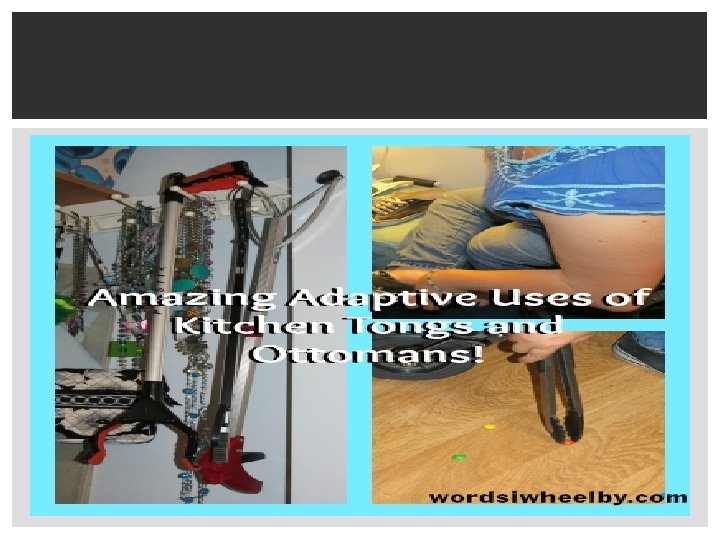
AT EXAMPLES
Technology Use – Novelty to Necessity: No Longer Optional for Full Access to Society
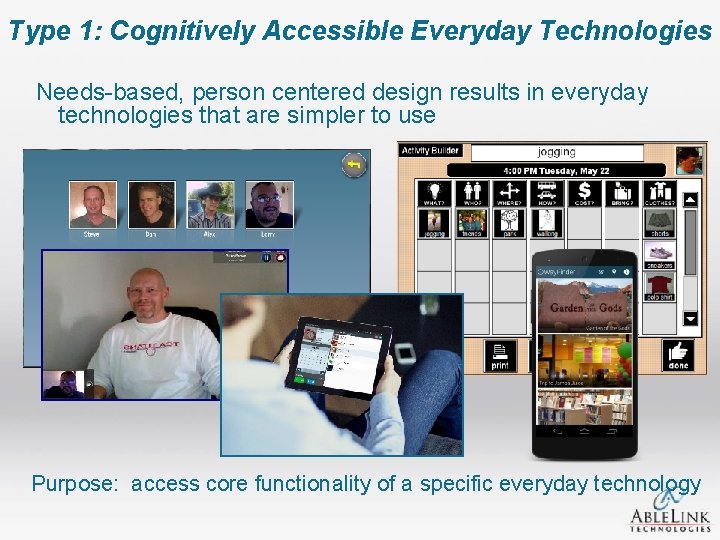
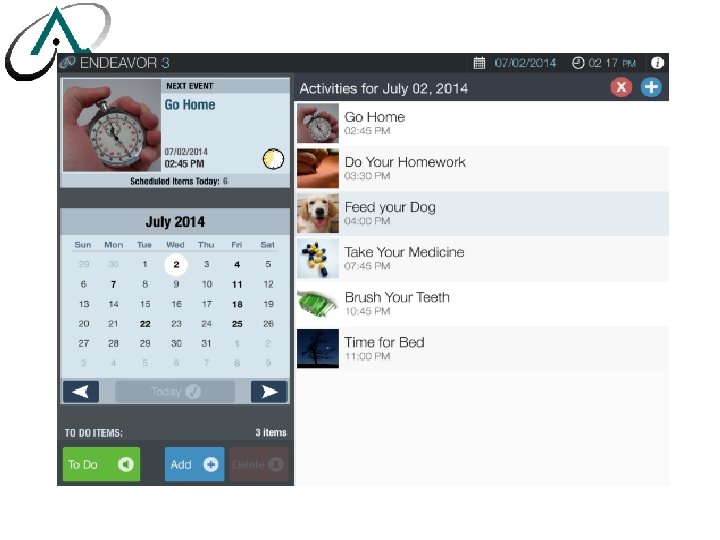
Type 1: Cognitively Accessible Everyday Technologies Needs-based, person centered design results in everyday technologies that are simpler to use Purpose: access core functionality of a specific everyday technology
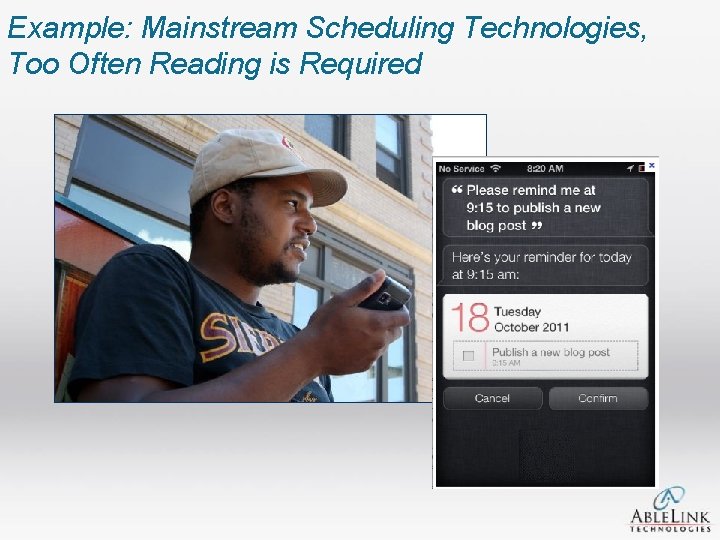
Example: Mainstream Scheduling Technologies, Too Often Reading is Required
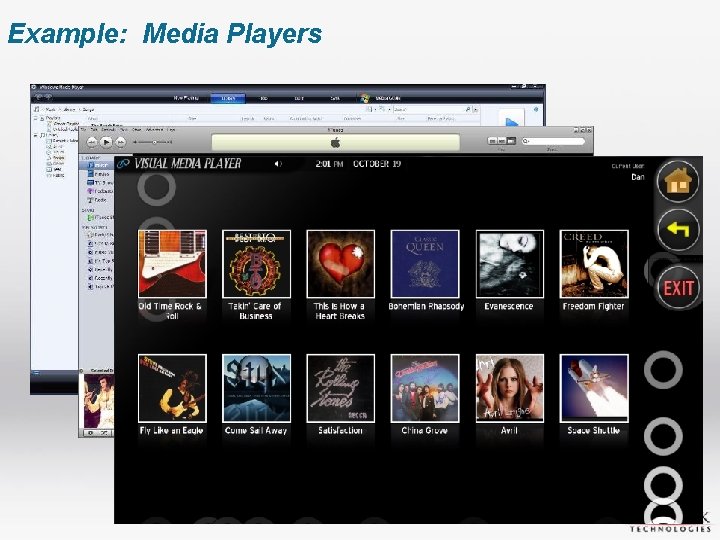
Example: Media Players
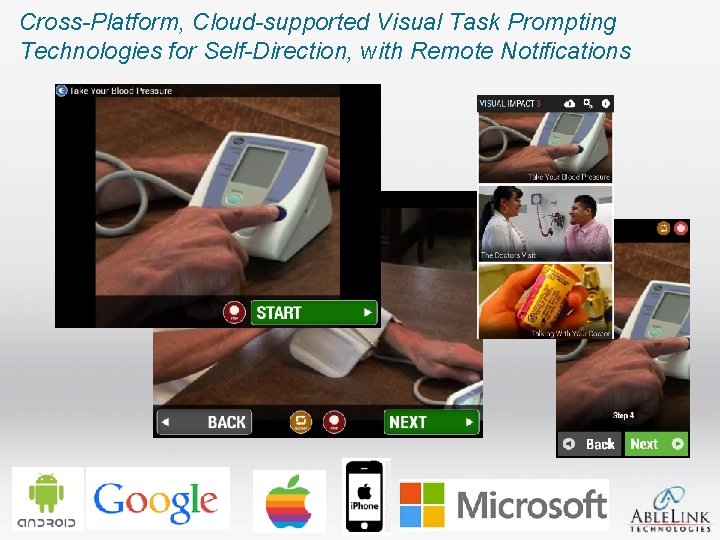
Cross-Platform, Cloud-supported Visual Task Prompting Technologies for Self-Direction, with Remote Notifications
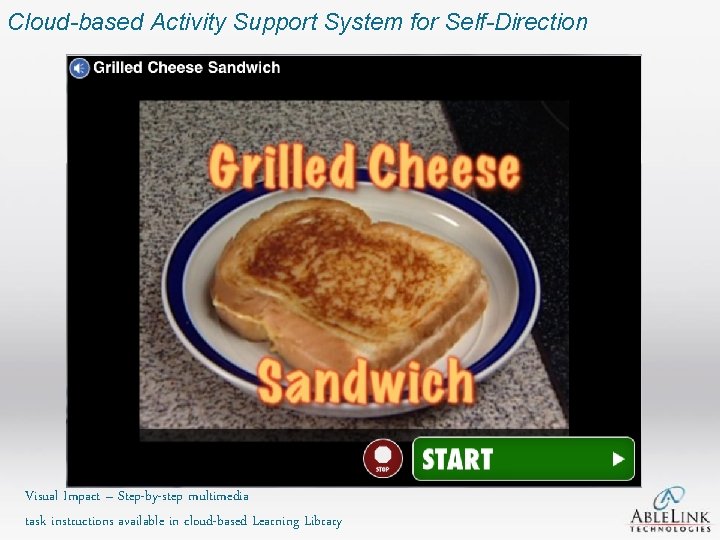
Cloud-based Activity Support System for Self-Direction Visual Impact – Step-by-step multimedia task instructions available in cloud-based Learning Library
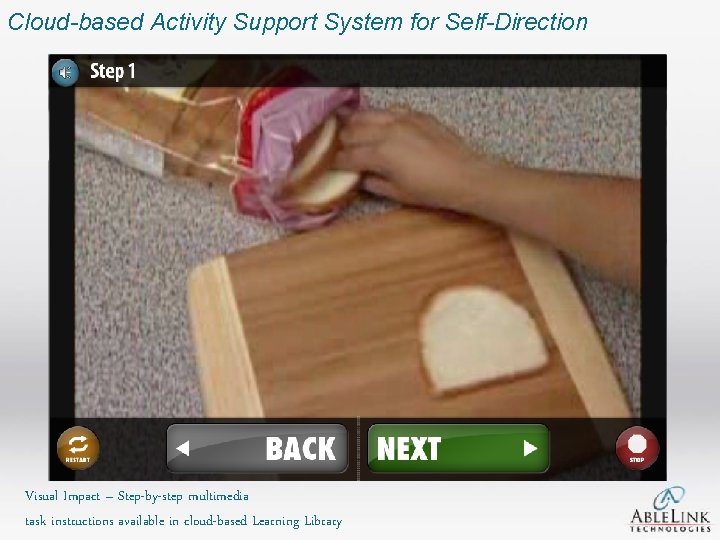
Cloud-based Activity Support System for Self-Direction Visual Impact – Step-by-step multimedia task instructions available in cloud-based Learning Library
ASSISTIVE TECHNOLOGY RESOURCES http: //www. mass. gov/eohhs/gov/departments/dds/assistivetechnology. html