
Assistive Technology for addressing Multiple Sclerosis in older
- Slides: 17
Assistive Technology for addressing Multiple Sclerosis in older adults Maximillian Castoreno
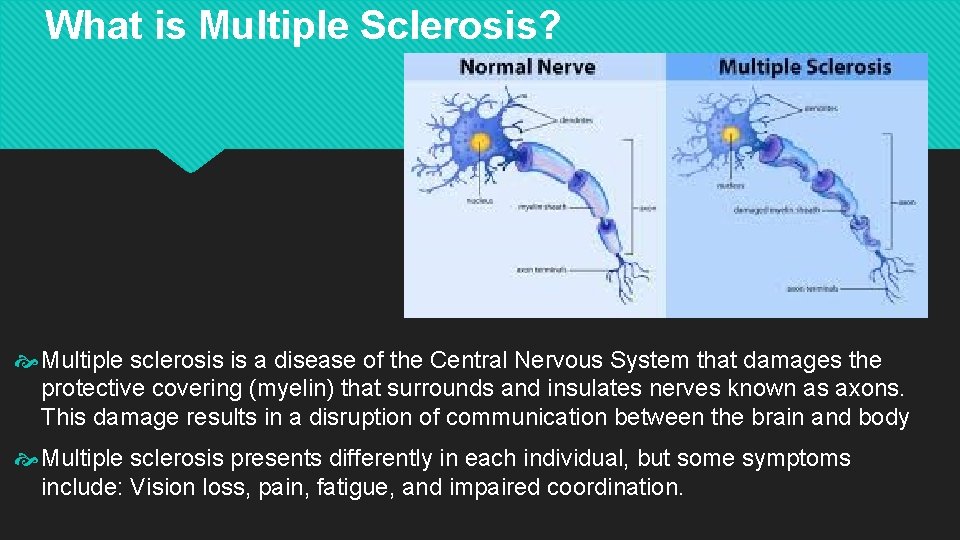
What is Multiple Sclerosis? Multiple sclerosis is a disease of the Central Nervous System that damages the protective covering (myelin) that surrounds and insulates nerves known as axons. This damage results in a disruption of communication between the brain and body Multiple sclerosis presents differently in each individual, but some symptoms include: Vision loss, pain, fatigue, and impaired coordination.
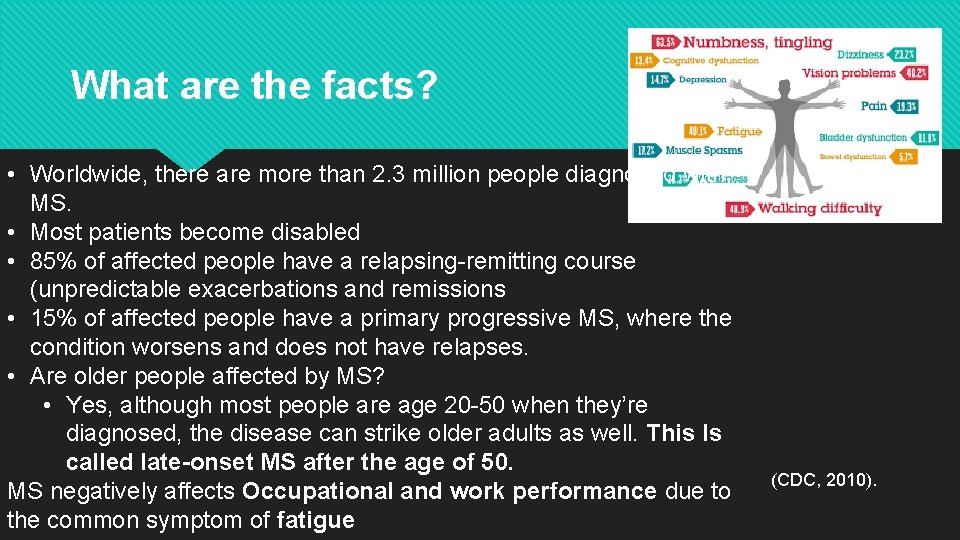
What are the facts? • Worldwide, there are more than 2. 3 million people diagnosed with MS. • Most patients become disabled • 85% of affected people have a relapsing-remitting course (unpredictable exacerbations and remissions • 15% of affected people have a primary progressive MS, where the condition worsens and does not have relapses. • Are older people affected by MS? • Yes, although most people are age 20 -50 when they’re diagnosed, the disease can strike older adults as well. This Is called late-onset MS after the age of 50. MS negatively affects Occupational and work performance due to the common symptom of fatigue (CDC, 2010).
What can we do to help with MS in older adults? Occupational Therapy addresses MS in a variety of ways. Energy conservation techniques are very useful because one of the biggest debilitating challenges for people living with MS is energy conservation. Humans in general need energy conservation, but with MS this energy conservation is crucial to completing essential daily tasks. Energy conservation can be achieved through the use of assistive devices and through educating the individual. Setting up adaptive devices at work or in the home.
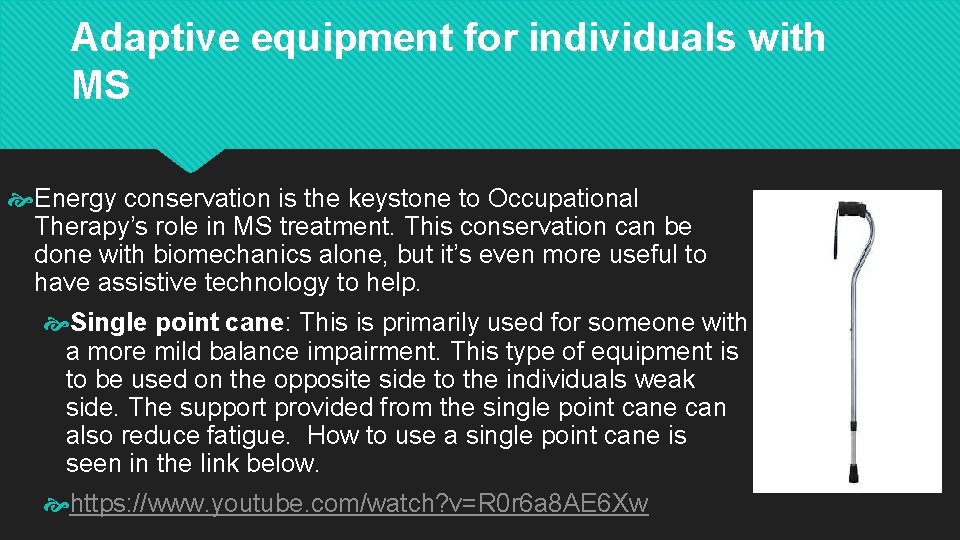
Adaptive equipment for individuals with MS Energy conservation is the keystone to Occupational Therapy’s role in MS treatment. This conservation can be done with biomechanics alone, but it’s even more useful to have assistive technology to help. Single point cane: This is primarily used for someone with a more mild balance impairment. This type of equipment is to be used on the opposite side to the individuals weak side. The support provided from the single point cane can also reduce fatigue. How to use a single point cane is seen in the link below. https: //www. youtube. com/watch? v=R 0 r 6 a 8 AE 6 Xw
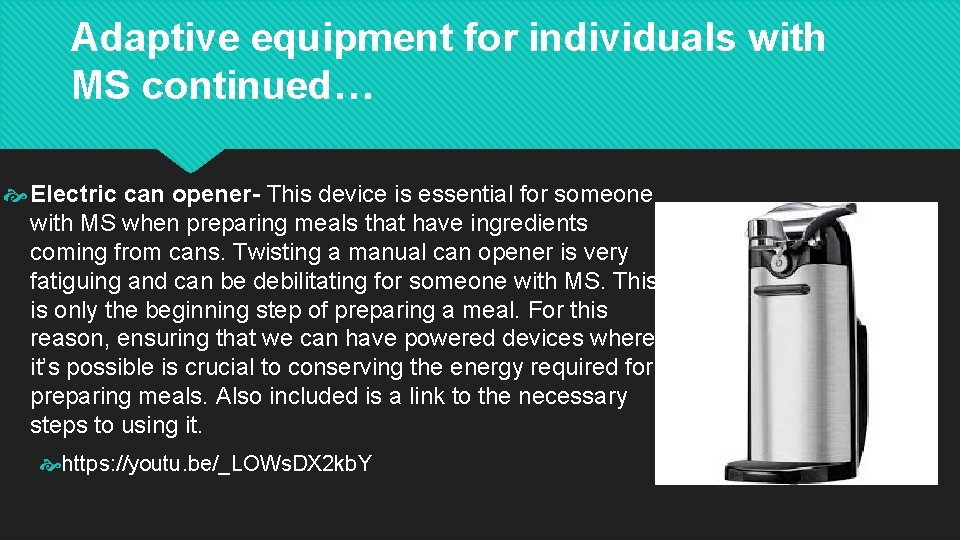
Adaptive equipment for individuals with MS continued… Electric can opener- This device is essential for someone with MS when preparing meals that have ingredients coming from cans. Twisting a manual can opener is very fatiguing and can be debilitating for someone with MS. This is only the beginning step of preparing a meal. For this reason, ensuring that we can have powered devices where it’s possible is crucial to conserving the energy required for preparing meals. Also included is a link to the necessary steps to using it. https: //youtu. be/_LOWs. DX 2 kb. Y
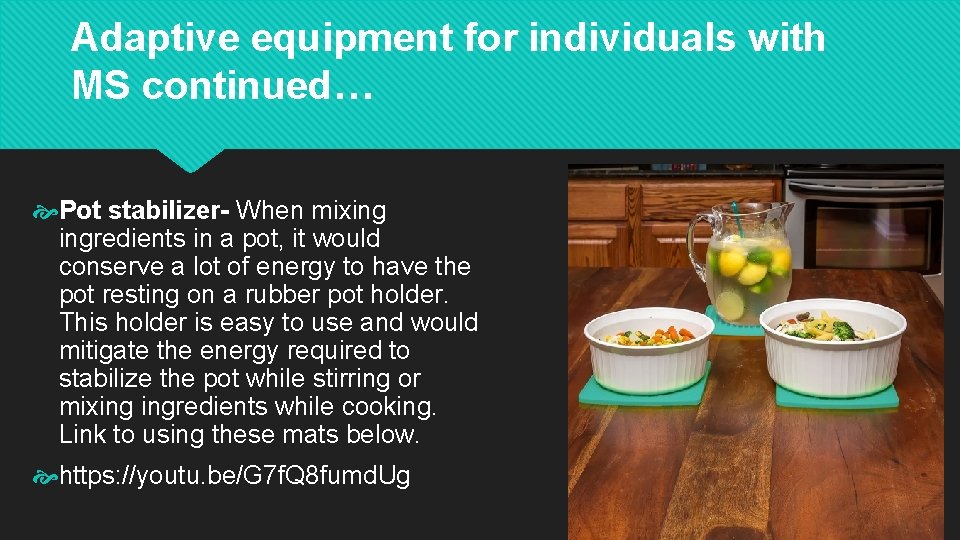
Adaptive equipment for individuals with MS continued… Pot stabilizer- When mixing ingredients in a pot, it would conserve a lot of energy to have the pot resting on a rubber pot holder. This holder is easy to use and would mitigate the energy required to stabilize the pot while stirring or mixing ingredients while cooking. Link to using these mats below. https: //youtu. be/G 7 f. Q 8 fumd. Ug
Cooking a pasta meal using adaptive equipment: Educating intervention Most people might know the logical steps required to preparing a pasta meal. However, not many people are aware of the amount of energy they could be conserving while performing this delicious task. This intervention will be focused on educating clients on the adaptive equipment, biomechanics, and adaptations that are available.
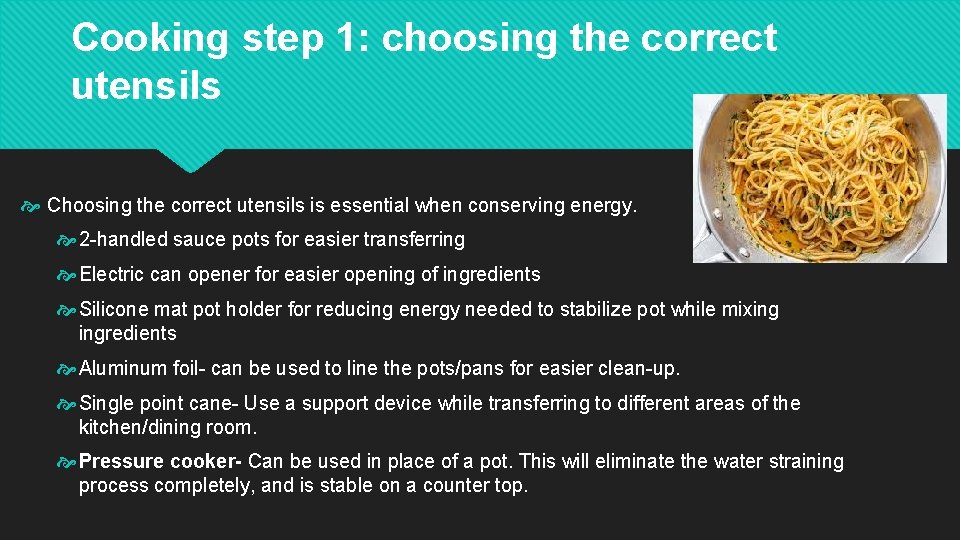
Cooking step 1: choosing the correct utensils Choosing the correct utensils is essential when conserving energy. 2 -handled sauce pots for easier transferring Electric can opener for easier opening of ingredients Silicone mat pot holder for reducing energy needed to stabilize pot while mixing ingredients Aluminum foil- can be used to line the pots/pans for easier clean-up. Single point cane- Use a support device while transferring to different areas of the kitchen/dining room. Pressure cooker- Can be used in place of a pot. This will eliminate the water straining process completely, and is stable on a counter top.
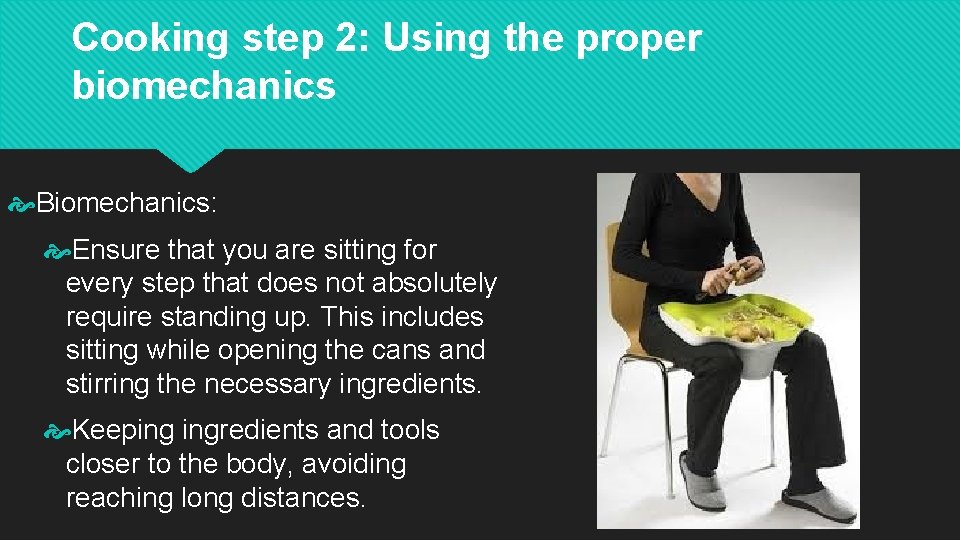
Cooking step 2: Using the proper biomechanics Biomechanics: Ensure that you are sitting for every step that does not absolutely require standing up. This includes sitting while opening the cans and stirring the necessary ingredients. Keeping ingredients and tools closer to the body, avoiding reaching long distances.
Step 3: Adaptation: Using less water to cook the pasta will make straining the excess water an easier task Using tools with comfortable grips for easier transferring of pots Keep a sturdy stool next to the counter for resting as you cook Setting up cooking utensils in easy-to-reach areas to conserve energy Using a pot with a built-in strainer
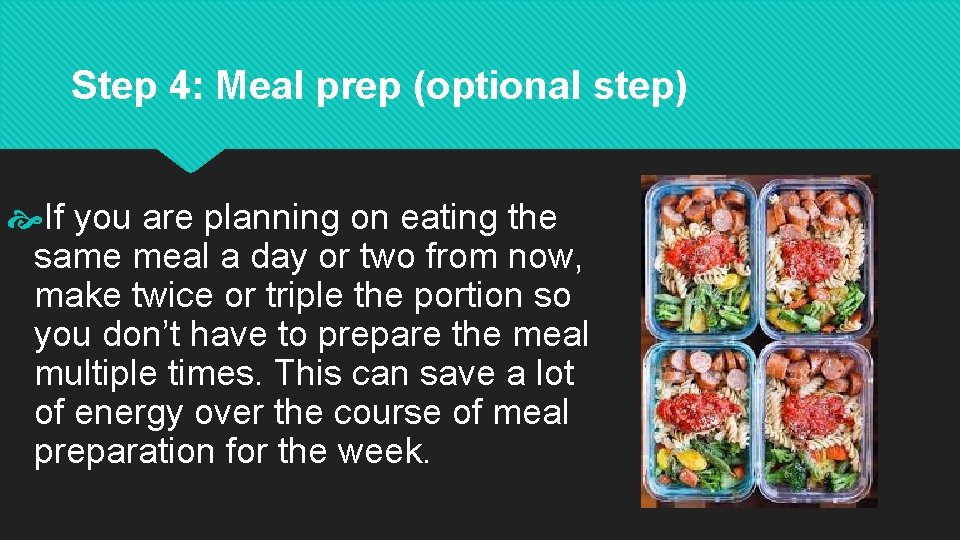
Step 4: Meal prep (optional step) If you are planning on eating the same meal a day or two from now, make twice or triple the portion so you don’t have to prepare the meal multiple times. This can save a lot of energy over the course of meal preparation for the week.
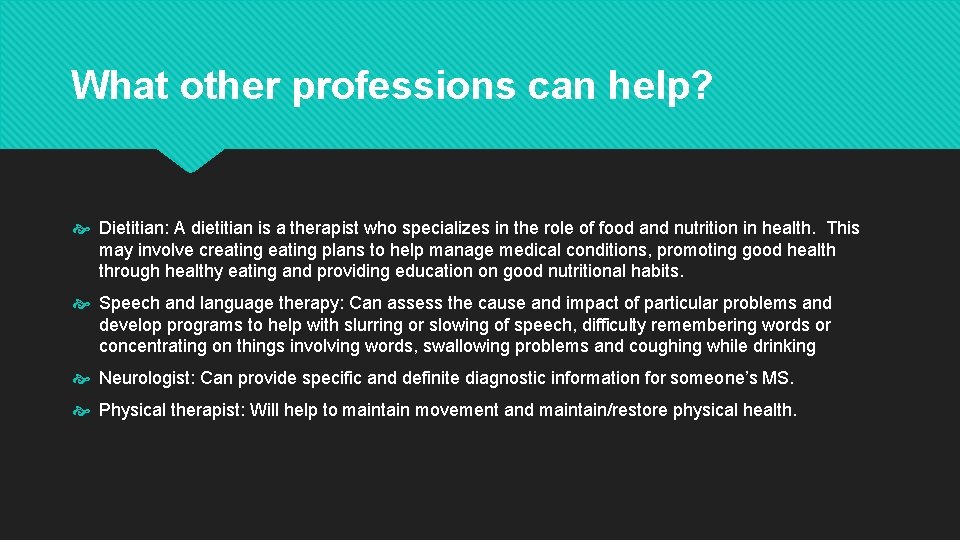
What other professions can help? Dietitian: A dietitian is a therapist who specializes in the role of food and nutrition in health. This may involve creating plans to help manage medical conditions, promoting good health through healthy eating and providing education on good nutritional habits. Speech and language therapy: Can assess the cause and impact of particular problems and develop programs to help with slurring or slowing of speech, difficulty remembering words or concentrating on things involving words, swallowing problems and coughing while drinking Neurologist: Can provide specific and definite diagnostic information for someone’s MS. Physical therapist: Will help to maintain movement and maintain/restore physical health.
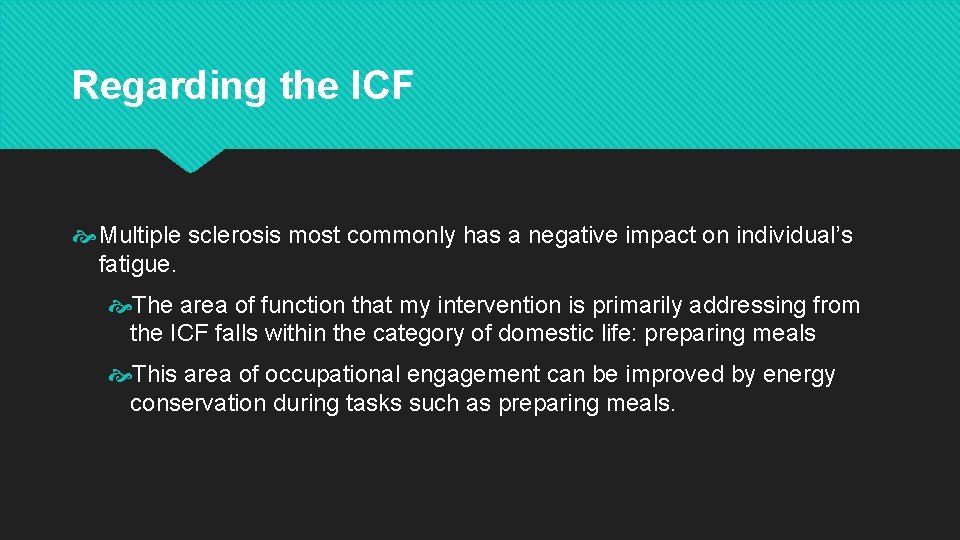
Regarding the ICF Multiple sclerosis most commonly has a negative impact on individual’s fatigue. The area of function that my intervention is primarily addressing from the ICF falls within the category of domestic life: preparing meals This area of occupational engagement can be improved by energy conservation during tasks such as preparing meals.
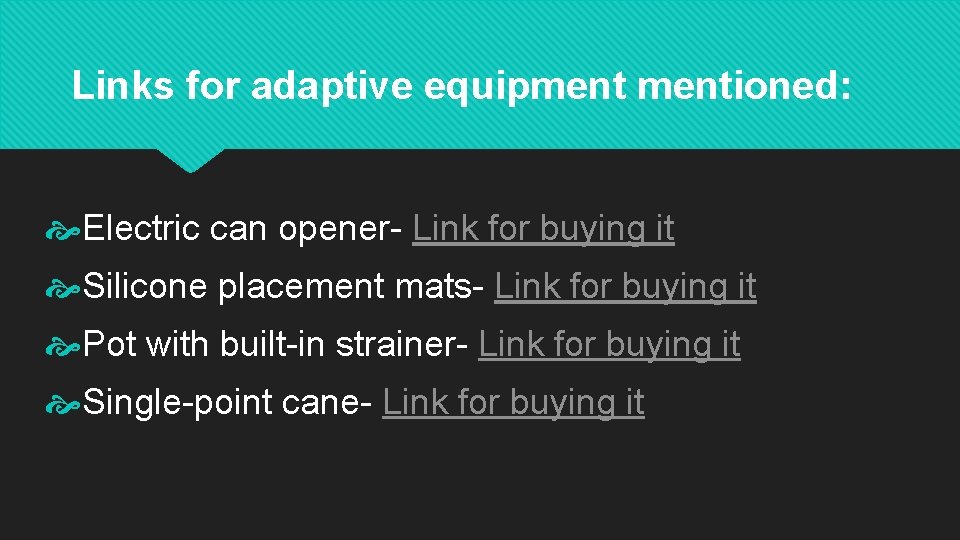
Links for adaptive equipmentioned: Electric can opener- Link for buying it Silicone placement mats- Link for buying it Pot with built-in strainer- Link for buying it Single-point cane- Link for buying it
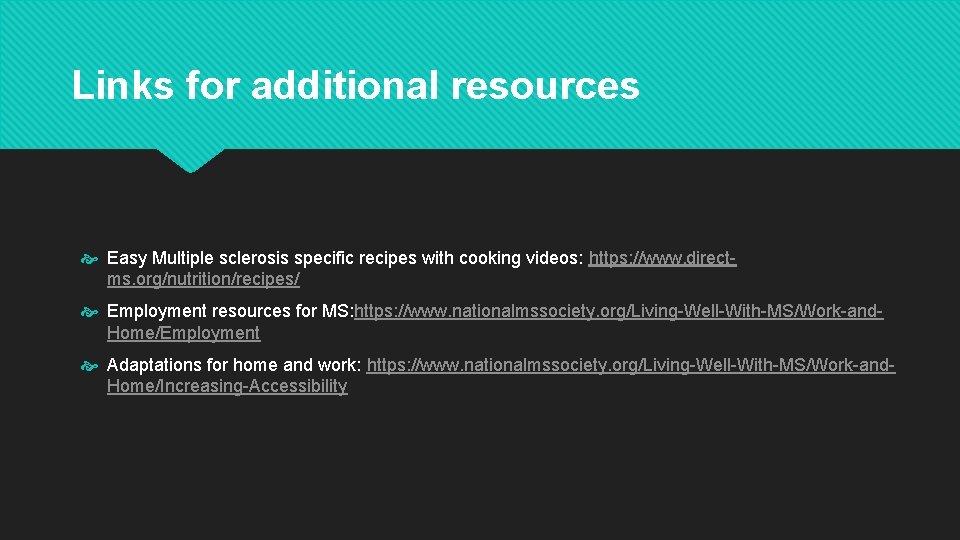
Links for additional resources Easy Multiple sclerosis specific recipes with cooking videos: https: //www. directms. org/nutrition/recipes/ Employment resources for MS: https: //www. nationalmssociety. org/Living-Well-With-MS/Work-and. Home/Employment Adaptations for home and work: https: //www. nationalmssociety. org/Living-Well-With-MS/Work-and. Home/Increasing-Accessibility
References Preventing Chronic Disease: January 2010: 08_0241. (n. d. ). Retrieved June 12, 2020, from https: //www. cdc. gov/pcd/issues/2010/jan/08_0241. htm