
ASSISTING INDIVIDUALS IN CRISIS George S Everly Jr


- Slides: 136
ASSISTING INDIVIDUALS IN CRISIS George S. Everly. Jr. , Ph. D, ABPP, FAPA © George S. Everly, Jr. 2014. All rights reserved
The following guidelines are provided as general recommendations only and are not intended to be clinical prescriptions, nor are they intended to be used by those other than individuals qualified to do so. Attendees should note that sometimes during course of the discussion of human trauma and disasters, it is natural that some material may be revealed that some may perceive as distressing. While this is not by intention nor design, exposure to affect-laden information is should be expected and attendees are hereby warned of that possibility.
ASSISTING INDIVIDUALS IN CRISIS Topical Outline Revised 2015 Section One: Key Definitions, Terms, & Concepts Section Two: Are You Listening? Section Three: Crisis Communication Techniques Section Four: Using the “Diamond” Communication Structure Section Five: Common Psychological Reactions in Crisis Section Six: Mechanisms of Action and Cautions in Crisis Intervention Section Seven: The SAFER-Revised Model of Individual Crisis Intervention Section Eight: The SAFER-Revised Model of Individual Crisis Intervention in Suicidal Ideation
OBJECTIVES: Participants will… 1. Understand the natures & definitions of a psychological crisis and psychological crisis intervention. 2. Understand the resistance, resiliency, recovery continuum. 3. Understand the nature and definition of critical incident stress management and its role as a continuum of care. 4. Practice basic crisis communication techniques. 5. Be familiar with common psychological and behavioral crisis reactions.
OBJECTIVES: Continued… 6. Understand the putative and empirically-derived mechanisms of action in psychological crisis intervention. 7. Practice the SAFER-Revised model of individual psychological crisis intervention. 8. Understand how the SAFER-Revised model may be altered for suicide intervention. 9. Understand discuss the risks of iatrogenic “harm” associated with psychological crisis intervention and will further discuss how to reduce those risks.
SECTION ONE KEY TERMS & CONCEPTS
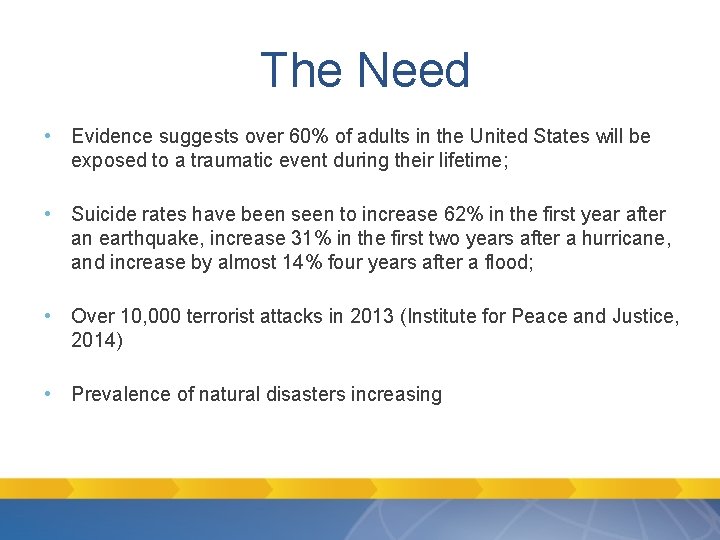
The Need • Evidence suggests over 60% of adults in the United States will be exposed to a traumatic event during their lifetime; • Suicide rates have been seen to increase 62% in the first year after an earthquake, increase 31% in the first two years after a hurricane, and increase by almost 14% four years after a flood; • Over 10, 000 terrorist attacks in 2013 (Institute for Peace and Justice, 2014) • Prevalence of natural disasters increasing
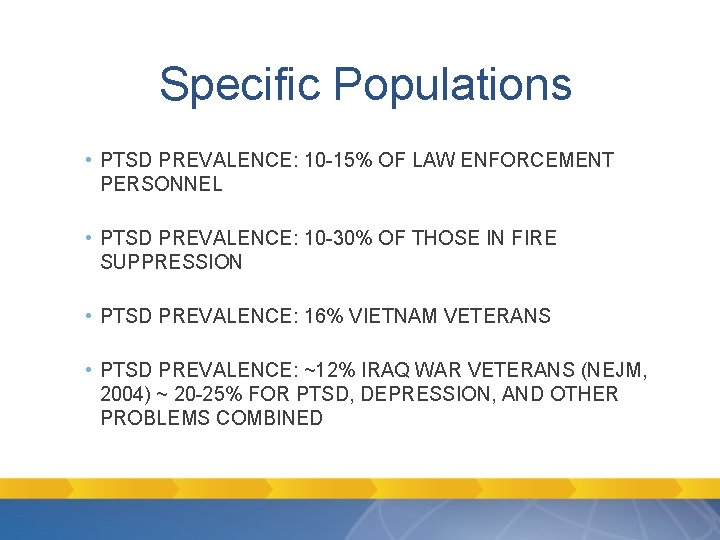
Specific Populations • PTSD PREVALENCE: 10 -15% OF LAW ENFORCEMENT PERSONNEL • PTSD PREVALENCE: 10 -30% OF THOSE IN FIRE SUPPRESSION • PTSD PREVALENCE: 16% VIETNAM VETERANS • PTSD PREVALENCE: ~12% IRAQ WAR VETERANS (NEJM, 2004) ~ 20 -25% FOR PTSD, DEPRESSION, AND OTHER PROBLEMS COMBINED
At the heart of any field of study or practice resides a basic vocabulary. The following definitions will set the stage for the material we will cover in this course.
Definitions CRITICAL INCIDENTS are unusually challenging events that have the potential to create significant human distress and can overwhelm one’s usual coping mechanisms.
Terrorism: A Special Case Terrorism may be understood from several perspectives: 1. From a law enforcement perspective, terrorism may be thought of as the premeditated and unlawful use, or threatened use, of force or violence as a coercive or punitive agent. 2. From a military perspective, terrorism represents war waged against civilians (Carr, 2002). 3. From a psychological/ behavioral perspective, terrorism represents psychological warfare. The psychoactively toxic mechanism inherent in terrorism is demoralization. Its behavioral corollary is capitulation. (Everly & Castellano, 2005).
THE ICEBERG EFFECT OF TERRORISM (and disasters)… more psychological casualties than physical casualties… 80/20 Effect? (Holloway, et al. , 1997, JAMA; Di. Giovanni, 1999, Am. J. Psychiatry)
Definitions The psychological DISTRESS in response to critical incidents such as emergencies, disasters, traumatic events, terrorism, or catastrophes is called a PSYCHOLOGICAL CRISIS (Everly & Mitchell, 1999)
Psychological Crisis An acute RESPONSE to a trauma, disaster, or other critical incident wherein: 1. Psychological homeostasis (balance) is disrupted (increased stress) 2. One’s usual coping mechanisms have failed 3. There is evidence of significant distress, impairment, dysfunction (adapted from Caplan, 1964, Preventive Psychiatry)
Definitions CRISIS INTERVENTION • A short-tem helping process. • Acute intervention designed to stabilize • and mitigate the crisis response. Not psychotherapy.
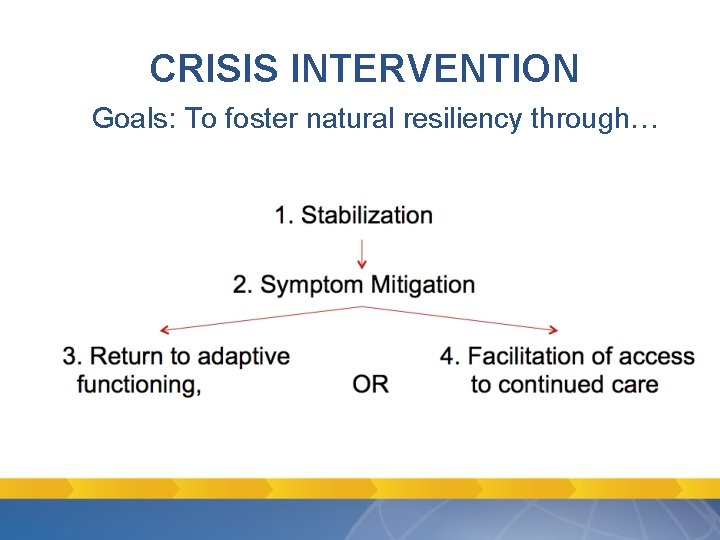
CRISIS INTERVENTION Goals: To foster natural resiliency through…
IMPORTANT! Crisis intervention targets the RESPONSE, not the EVENT, per se. Thus, crisis intervention and disaster mental health interventions must be predicated upon assessment of need.
CRISIS INTERVENTION Historical roots of current crisis intervention practices can be found in military psychiatry, community mental health, and suicide intervention initiatives.
Foundations of Military “Crisis Intervention” • WWI – 1916, Postes de chirurgie d’urgence, 66% returned to combat after 7 days treatment • WWI – 1917, 1919, Thomas SLA Marshall describes immediacy & proximity, ie, “treatment within the sound of artillery” • Sargant, W. (1942). Physical treatment of acute war neurosis. British Medical Journal, Nov 14, 1942, pp. 574 -576: “Our most important finding has been the supreme need for immediate first aid treatment of the acute neurosis…”p 574) • SLA Marshall (Island Victory, 1944) described the manner and value of group intervention via historical event reconstruction
Military foundations for crisis intervention have evolved since 1919: • PROXIMITY – outreach • IMMEDIACY – as quickly as possible after some indication of need • EXPECTANCY – behavioral reactions are viewed as “adjustment reactions” as opposed to evidence of pathology
And later added: • Brevity • Simplicity (keep it short and simple)
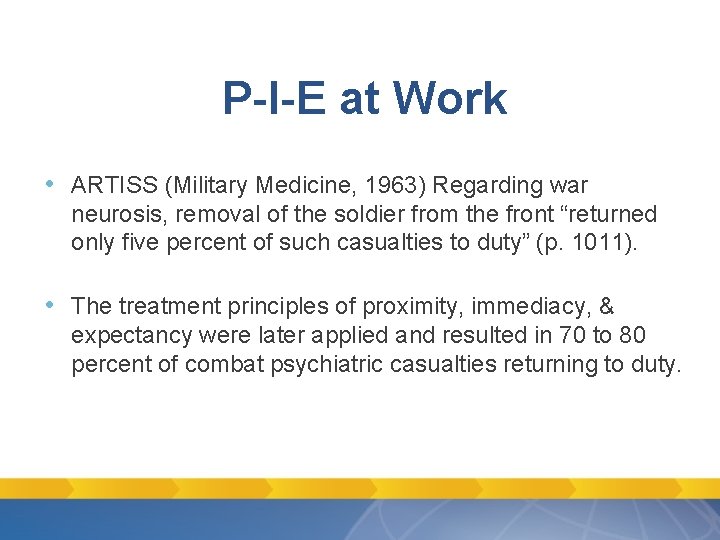
P-I-E at Work • ARTISS (Military Medicine, 1963) Regarding war neurosis, removal of the soldier from the front “returned only five percent of such casualties to duty” (p. 1011). • The treatment principles of proximity, immediacy, & expectancy were later applied and resulted in 70 to 80 percent of combat psychiatric casualties returning to duty.
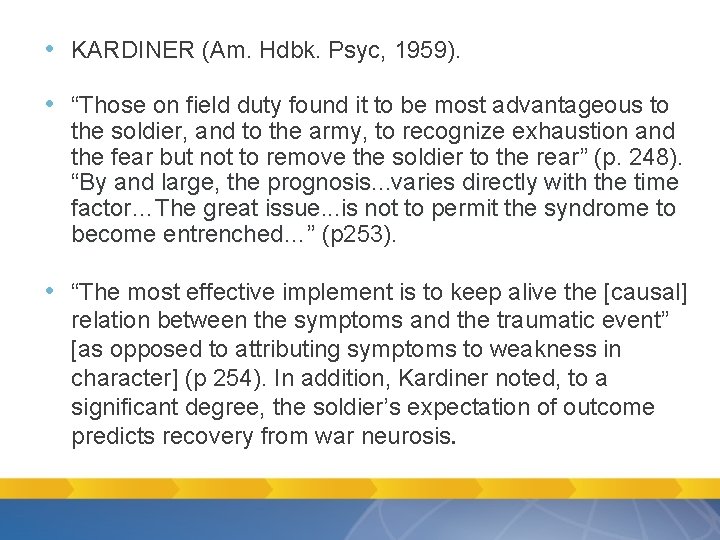
• KARDINER (Am. Hdbk. Psyc, 1959). • “Those on field duty found it to be most advantageous to the soldier, and to the army, to recognize exhaustion and the fear but not to remove the soldier to the rear” (p. 248). “By and large, the prognosis. . . varies directly with the time factor…The great issue. . . is not to permit the syndrome to become entrenched…” (p 253). • “The most effective implement is to keep alive the [causal] relation between the symptoms and the traumatic event” [as opposed to attributing symptoms to weakness in character] (p 254). In addition, Kardiner noted, to a significant degree, the soldier’s expectation of outcome predicts recovery from war neurosis.
Recent recommendations for early intervention include the use of a variety of interventions matched to the needs of the situation and the recipient populations. (Mental Health & Mass Violence, 2002; IOM, 2003)
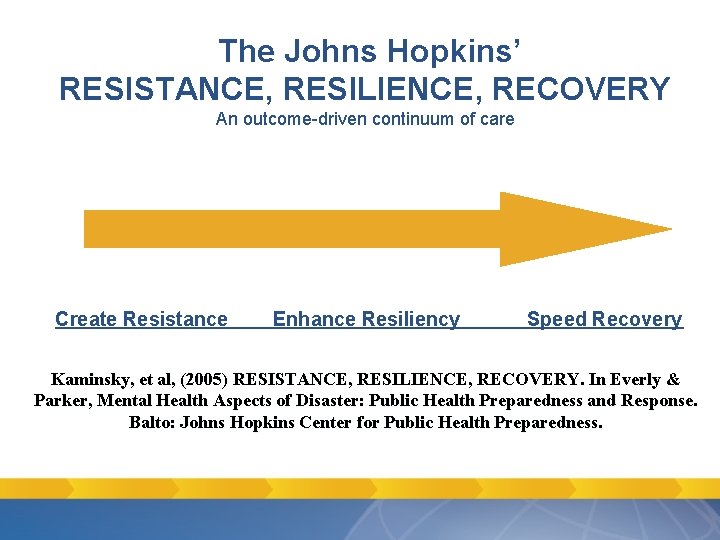
The Johns Hopkins’ RESISTANCE, RESILIENCE, RECOVERY An outcome-driven continuum of care Create Resistance Enhance Resiliency Speed Recovery Kaminsky, et al, (2005) RESISTANCE, RESILIENCE, RECOVERY. In Everly & Parker, Mental Health Aspects of Disaster: Public Health Preparedness and Response. Balto: Johns Hopkins Center for Public Health Preparedness.
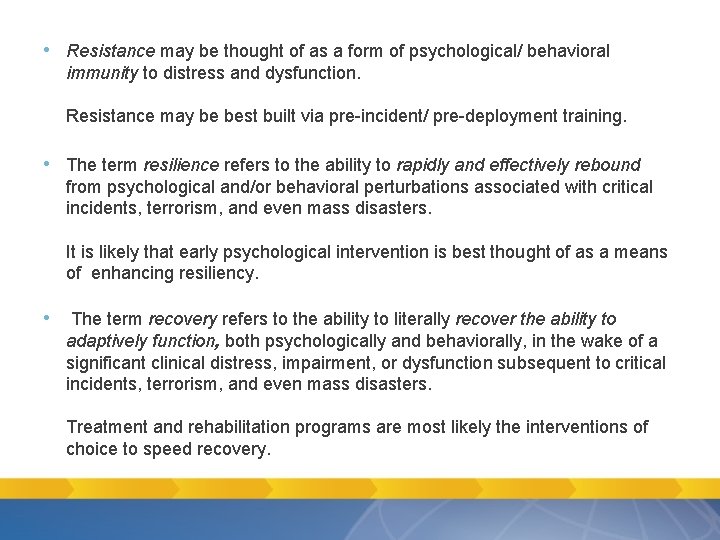
• Resistance may be thought of as a form of psychological/ behavioral immunity to distress and dysfunction. Resistance may be best built via pre-incident/ pre-deployment training. • The term resilience refers to the ability to rapidly and effectively rebound from psychological and/or behavioral perturbations associated with critical incidents, terrorism, and even mass disasters. It is likely that early psychological intervention is best thought of as a means of enhancing resiliency. • The term recovery refers to the ability to literally recover the ability to adaptively function, both psychologically and behaviorally, in the wake of a significant clinical distress, impairment, or dysfunction subsequent to critical incidents, terrorism, and even mass disasters. Treatment and rehabilitation programs are most likely the interventions of choice to speed recovery.
One approach, that has been frequently used, to integrate such an array of crisis/disaster mental health interventions across a continuum of need is Critical Incident Stress Management formulated by Jeffrey Mitchell in the 1980 s and expanded upon by Everly and others (CISM; Everly & Mitchell, 1999).
CRITICAL INCIDENT STRESS MANAGEMENT (CISM) (Everly & Mitchell, 1997, 1999; Everly & Langlieb, 2003) A comprehensive, phase sensitive, and integrated, multicomponent approach to crisis/disaster intervention.
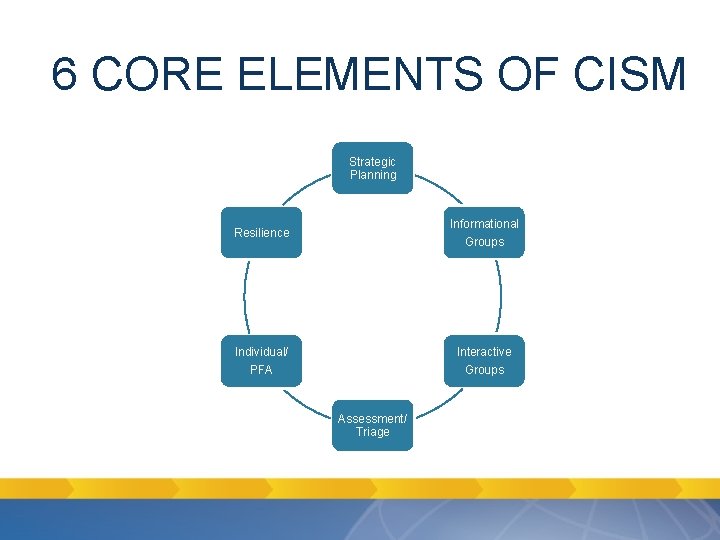
6 CORE ELEMENTS OF CISM Strategic Planning Informational Resilience Groups Individual/ Interactive PFA Groups Assessment/ Triage
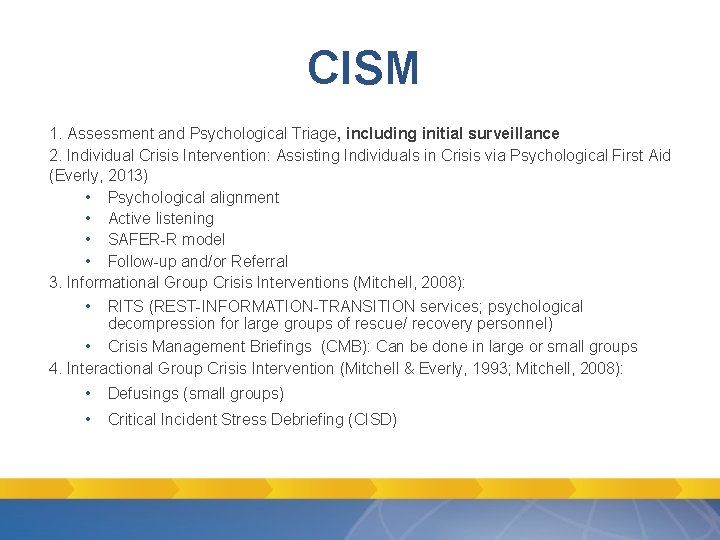
CISM 1. Assessment and Psychological Triage, including initial surveillance 2. Individual Crisis Intervention: Assisting Individuals in Crisis via Psychological First Aid (Everly, 2013) • Psychological alignment • Active listening • SAFER-R model • Follow-up and/or Referral 3. Informational Group Crisis Interventions (Mitchell, 2008): • RITS (REST-INFORMATION-TRANSITION services; psychological decompression for large groups of rescue/ recovery personnel) • Crisis Management Briefings (CMB): Can be done in large or small groups 4. Interactional Group Crisis Intervention (Mitchell & Everly, 1993; Mitchell, 2008): • Defusings (small groups) • Critical Incident Stress Debriefing (CISD)
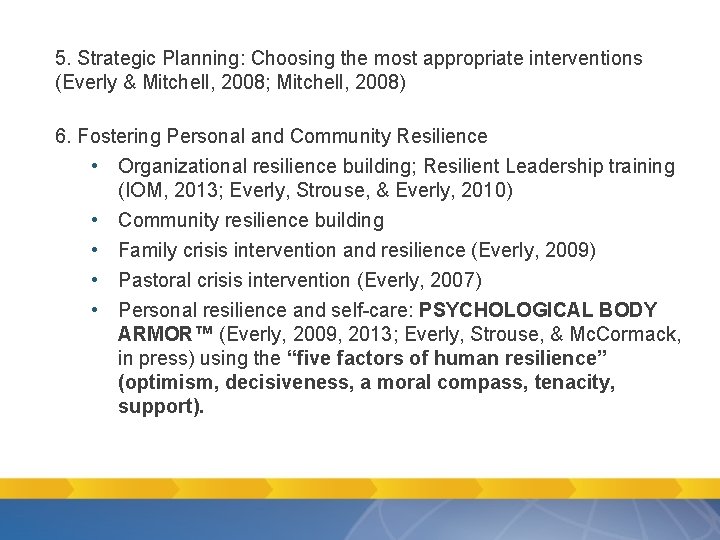
5. Strategic Planning: Choosing the most appropriate interventions (Everly & Mitchell, 2008; Mitchell, 2008) 6. Fostering Personal and Community Resilience • Organizational resilience building; Resilient Leadership training (IOM, 2013; Everly, Strouse, & Everly, 2010) • Community resilience building • Family crisis intervention and resilience (Everly, 2009) • Pastoral crisis intervention (Everly, 2007) • Personal resilience and self-care: PSYCHOLOGICAL BODY ARMOR™ (Everly, 2009, 2013; Everly, Strouse, & Mc. Cormack, in press) using the “five factors of human resilience” (optimism, decisiveness, a moral compass, tenacity, support).
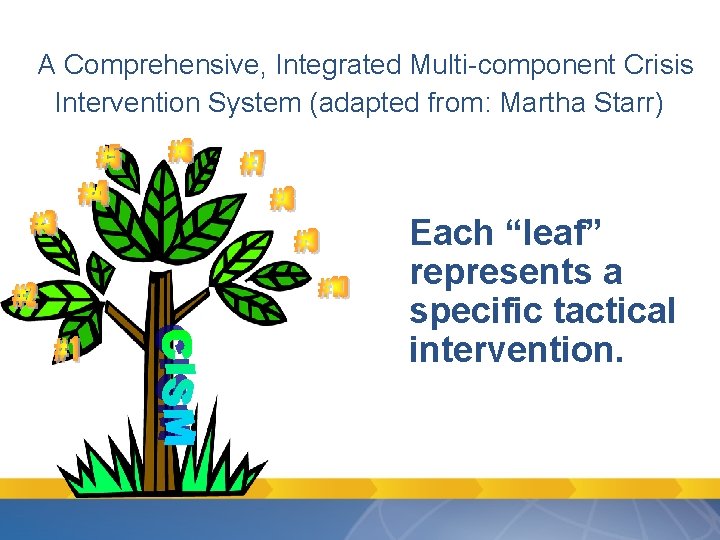
A Comprehensive, Integrated Multi-component Crisis Intervention System (adapted from: Martha Starr) Each “leaf” represents a specific tactical intervention.
The challenge in crisis intervention is not only developing TACTICAL skills in the “core intervention competencies, ” but is in knowing WHEN to best STRATEGICALLY employ the most appropriate intervention for the situation.
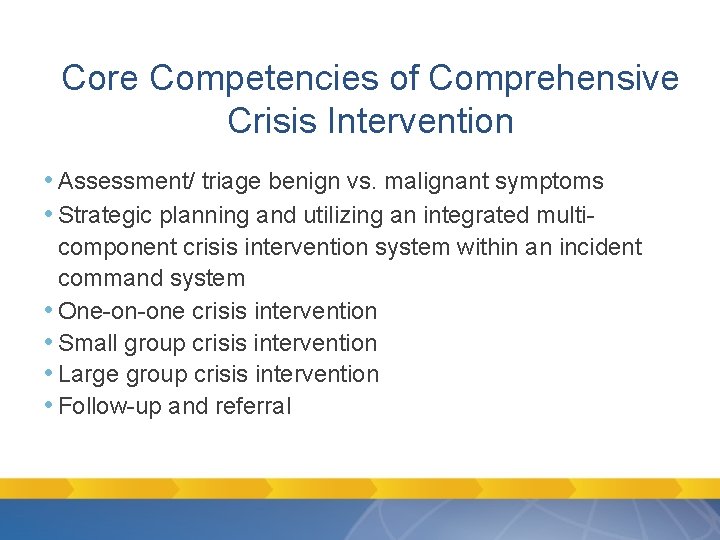
Core Competencies of Comprehensive Crisis Intervention • Assessment/ triage benign vs. malignant symptoms • Strategic planning and utilizing an integrated multicomponent crisis intervention system within an incident command system • One-on-one crisis intervention • Small group crisis intervention • Large group crisis intervention • Follow-up and referral
RESEARCH FINDINGS Does crisis intervention work?
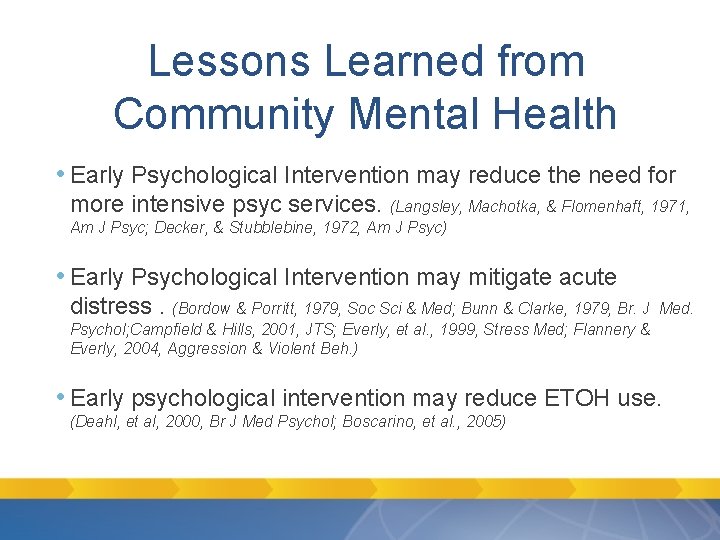
Lessons Learned from Community Mental Health • Early Psychological Intervention may reduce the need for more intensive psyc services. (Langsley, Machotka, & Flomenhaft, 1971, Am J Psyc; Decker, & Stubblebine, 1972, Am J Psyc) • Early Psychological Intervention may mitigate acute distress. (Bordow & Porritt, 1979, Soc Sci & Med; Bunn & Clarke, 1979, Br. J Med. Psychol; Campfield & Hills, 2001, JTS; Everly, et al. , 1999, Stress Med; Flannery & Everly, 2004, Aggression & Violent Beh. ) • Early psychological intervention may reduce ETOH use. (Deahl, et al, 2000, Br J Med Psychol; Boscarino, et al. , 2005)
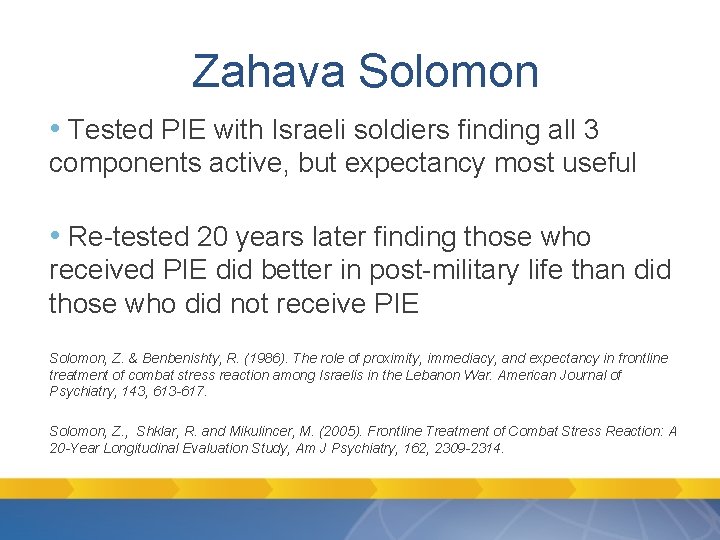
Zahava Solomon • Tested PIE with Israeli soldiers finding all 3 components active, but expectancy most useful • Re-tested 20 years later finding those who received PIE did better in post-military life than did those who did not receive PIE Solomon, Z. & Benbenishty, R. (1986). The role of proximity, immediacy, and expectancy in frontline treatment of combat stress reaction among Israelis in the Lebanon War. American Journal of Psychiatry, 143, 613 -617. Solomon, Z. , Shklar, R. and Mikulincer, M. (2005). Frontline Treatment of Combat Stress Reaction: A 20 -Year Longitudinal Evaluation Study, Am J Psychiatry, 162, 2309 -2314.
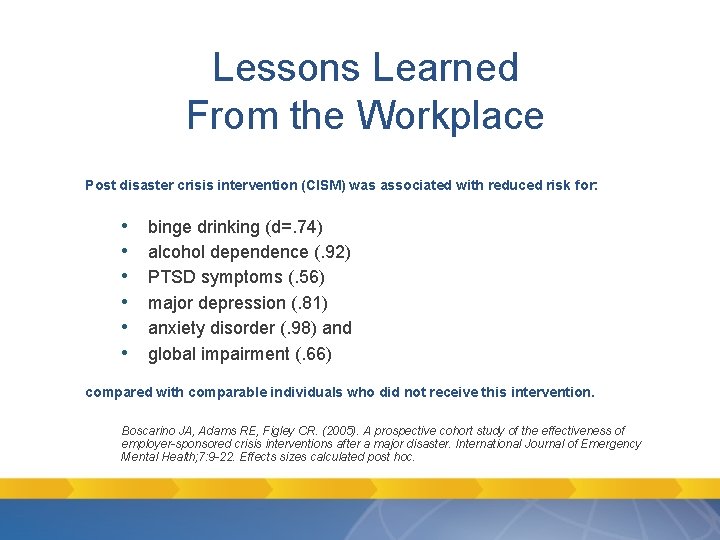
Lessons Learned From the Workplace Post disaster crisis intervention (CISM) was associated with reduced risk for: • • • binge drinking (d=. 74) alcohol dependence (. 92) PTSD symptoms (. 56) major depression (. 81) anxiety disorder (. 98) and global impairment (. 66) compared with comparable individuals who did not receive this intervention. Boscarino JA, Adams RE, Figley CR. (2005). A prospective cohort study of the effectiveness of employer-sponsored crisis interventions after a major disaster. International Journal of Emergency Mental Health; 7: 9 -22. Effects sizes calculated post hoc.
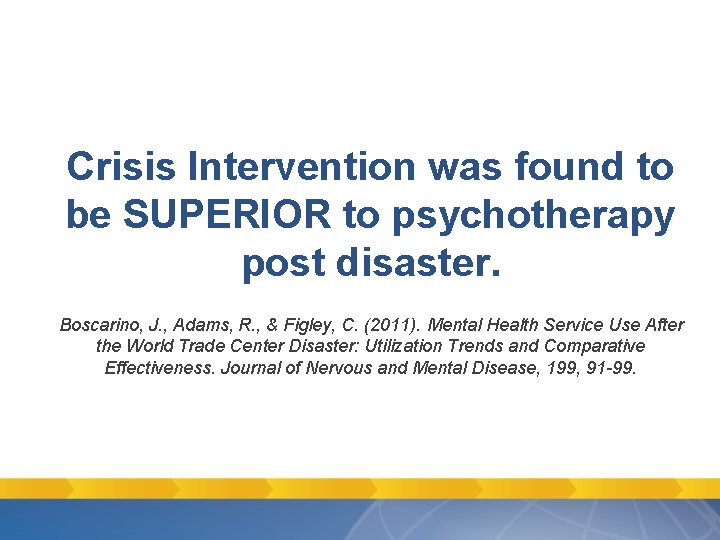
Crisis Intervention was found to be SUPERIOR to psychotherapy post disaster. Boscarino, J. , Adams, R. , & Figley, C. (2011). Mental Health Service Use After the World Trade Center Disaster: Utilization Trends and Comparative Effectiveness. Journal of Nervous and Mental Disease, 199, 91 -99.
Not all mental health professionals agree that crisis intervention/ disaster psychological intervention is useful. Note: The term “debriefing” is often used as a synonym for crisis intervention/ disaster mental health/ early psychological intervention.
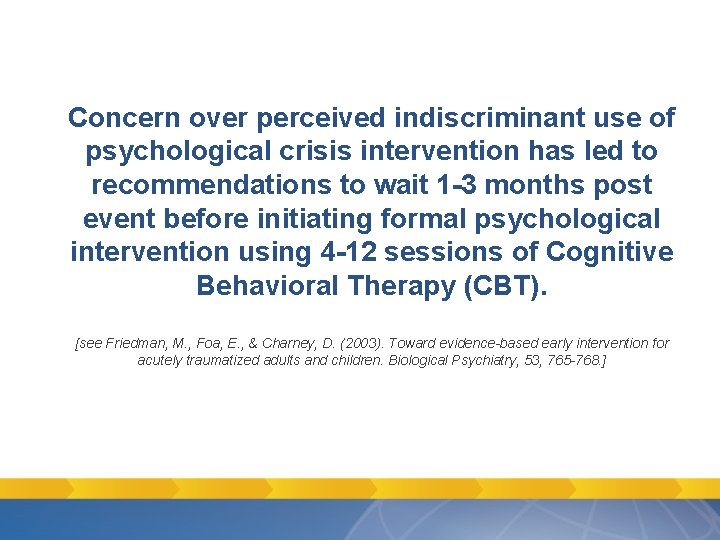
Concern over perceived indiscriminant use of psychological crisis intervention has led to recommendations to wait 1 -3 months post event before initiating formal psychological intervention using 4 -12 sessions of Cognitive Behavioral Therapy (CBT). [see Friedman, M. , Foa, E. , & Charney, D. (2003). Toward evidence-based early intervention for acutely traumatized adults and children. Biological Psychiatry, 53, 765 -768. ]
Concerns have been fueled by publication of the Cochrane Reviews…
Major concern over the applicability of early psychological intervention arose largely from the Cochrane Reviews (1998, 2002). Other negative reviews (van Emmerick, et al. , 2002; Mc. Nally, et al. , 2003) were based largely upon Cochrane data sets, and subsequent theoretical speculation as to potential mechanisms of pathogenic iatrogenesis.
Cochrane Review (2002) • “Debriefing” = 11 RCT studies of 1: 1 counseling with medical/ surgical patients, “loosely based” upon outdated (1983) model • “Debriefing” = “single session individual debriefing did not reduce psychological distress nor prevent PTSD” • 3 studies showed worsening of Sx However, NO credible evidence has emerged that CISD is harmful when used with first responder populations adhering to the formal CISD protocol! The authors conclude: “We are unable to comment on the use of group debriefing, nor the use of debriefing after mass traumas. ”
Value added of Crisis Intervention: SCREENING & INCREASING ACCESS TO CARE Clients who were told about the crisis intervention approach were less likely to withdraw from intervention programs against MH advice compared to those not given short-term expectations. (Parad & Parad, Social Casework, 1968).
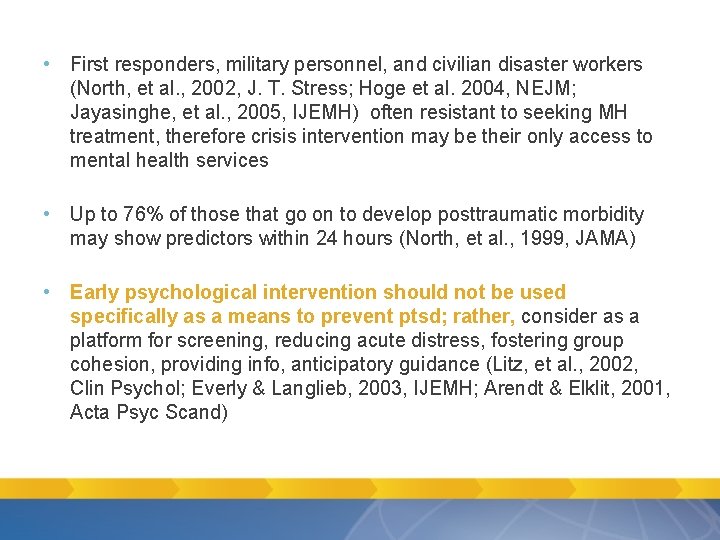
• First responders, military personnel, and civilian disaster workers (North, et al. , 2002, J. T. Stress; Hoge et al. 2004, NEJM; Jayasinghe, et al. , 2005, IJEMH) often resistant to seeking MH treatment, therefore crisis intervention may be their only access to mental health services • Up to 76% of those that go on to develop posttraumatic morbidity may show predictors within 24 hours (North, et al. , 1999, JAMA) • Early psychological intervention should not be used specifically as a means to prevent ptsd; rather, consider as a platform for screening, reducing acute distress, fostering group cohesion, providing info, anticipatory guidance (Litz, et al. , 2002, Clin Psychol; Everly & Langlieb, 2003, IJEMH; Arendt & Elklit, 2001, Acta Psyc Scand)
Consensus Reviews Support Multi-Component Intervention Systems. . .
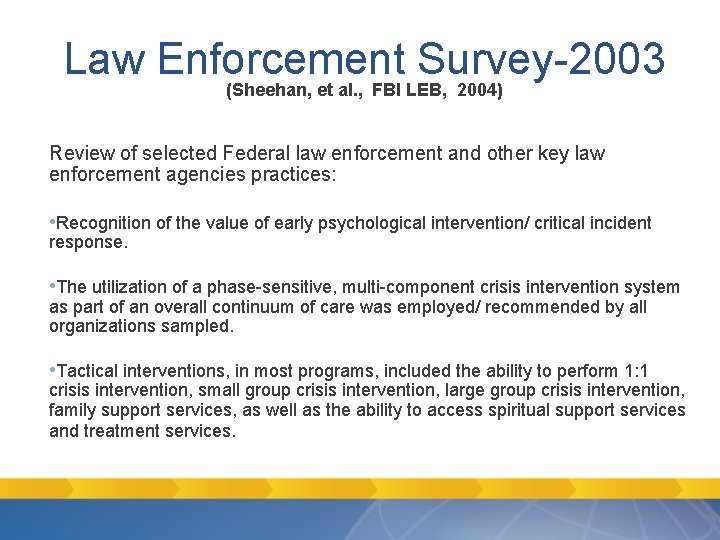
Law Enforcement Survey-2003 (Sheehan, et al. , FBI LEB, 2004) Review of selected Federal law enforcement and other key law enforcement agencies practices: • Recognition of the value of early psychological intervention/ critical incident response. • The utilization of a phase-sensitive, multi-component crisis intervention system as part of an overall continuum of care was employed/ recommended by all organizations sampled. • Tactical interventions, in most programs, included the ability to perform 1: 1 crisis intervention, small group crisis intervention, large group crisis intervention, family support services, as well as the ability to access spiritual support services and treatment services.
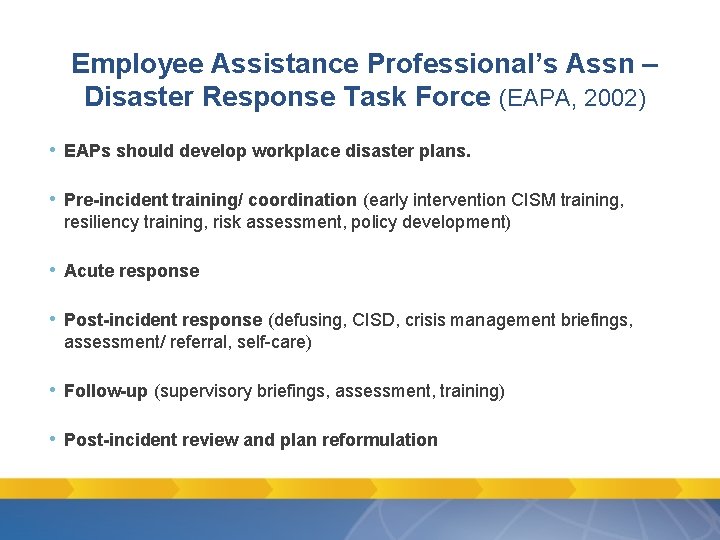
Employee Assistance Professional’s Assn – Disaster Response Task Force (EAPA, 2002) • EAPs should develop workplace disaster plans. • Pre-incident training/ coordination (early intervention CISM training, resiliency training, risk assessment, policy development) • Acute response • Post-incident response (defusing, CISD, crisis management briefings, assessment/ referral, self-care) • Follow-up (supervisory briefings, assessment, training) • Post-incident review and plan reformulation
By way of background… The National Volunteer Organizations Active in Disaster (NVOAD) represents a consortium of non-governmental agencies providing disaster relief. NVOAD member organizations represent the largest group of non-governmental providers of disaster mental health services in North America.
NVOAD Consensus Points (2005) • • • Early Psychological Intervention (EPI) is valued EPI is a multi-component system to meet the needs of those impacted Specialized training in early psychological intervention is necessary EPI is one point on a continuum of psychological care. This spectrum ranges from pre-incident preparedness to post-incident psychotherapy, when needed Cooperation, communication, coordination and collaboration are essential to the delivery of EPI
NVOAD Interventions (2005) • • • • Pre-incident preparation Incident assessment and strategic planning Risk and crisis communication Acute psychological assessment and triage Crisis intervention with large groups Crisis intervention with small groups Crisis intervention with individuals, face-to-face and hotlines Crisis planning and intervention with communities Crisis planning and intervention with organizations Psychological first aid Facilitating of access to appropriate levels of care when needed Assisting special and diverse populations Spiritual assessment and care Self care and family care including safety and security Post incident evaluation and training based on lessons learned
“In all the controversy, criticism and research debate on the merits of debriefing [early intervention], certain constants are emerging. The most effective methods for mitigating the effects of exposure to trauma…, those which will help keep our people healthy and in service, are those which use early intervention, are multi-modal and multi-component. That is, they use different ‘active ingredients’ …, and these components are used at the appropriate time with the right target group. ” -Dr. Hayden Duggan International Association of Fire Chiefs‘ ICHIEFS on-line resource, Sept 1, 2002
Who should do crisis intervention? BOTH Mental health clinicians AND peer support personnel may perform crisis intervention and CISM services.
Peer Support: Has emerged as the virtual “standard of care” in law enforcement and fire suppression communities
Use Peers When: • Recipient group is specially trained/ educated. • Group possesses a unique culture. • Group members perceive themselves as unique, little understood, misunderstood. • Group extends minimal trust to those outside the group. • Generally not necessary with groups from general populations of primary victims.
Empirical Effectiveness of Peers Documented: Truax & Carkhuff, 1967, Toward Effective Counseling Durlak, 1979, Psychological Bulletin Hattie, Sharpley, Rogers, 1984, Psychological Bulletin
CAUTIONS: Peer Support - The need to work with professional mental health guidance/ support - The need to view peer support/ first aid as only one point on the overall continuum of care - Knowing when one is over one’s head (underestimating severity) - Countertransference (getting too close; over-identification; taking too much for granted)
SECTION TWO ARE YOU LISTENING?
GROUP EXERCISE
Dynamics • Assumptions – conclusions based upon inference • Values – deeply held beliefs regarding the valence of some action or understanding. Highly personal, emotionally laden, resistant to change. Conflicts in values often lead to arguments. • Countertransference – the degree to which the person rendering help identifies with the person receiving the help
Having completed the group exercise… • What role did “assumptions” play? • What role did values play? • What are the implications for countertransference reactions, especially with regard to peer interventionists?
SECTION THREE CRISIS COMMUNICATIONS
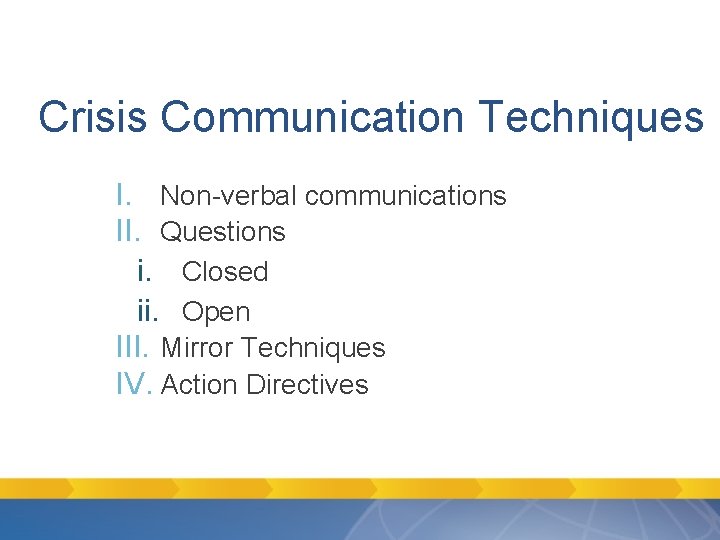
Crisis Communication Techniques I. Non-verbal communications II. Questions i. Closed ii. Open III. Mirror Techniques IV. Action Directives
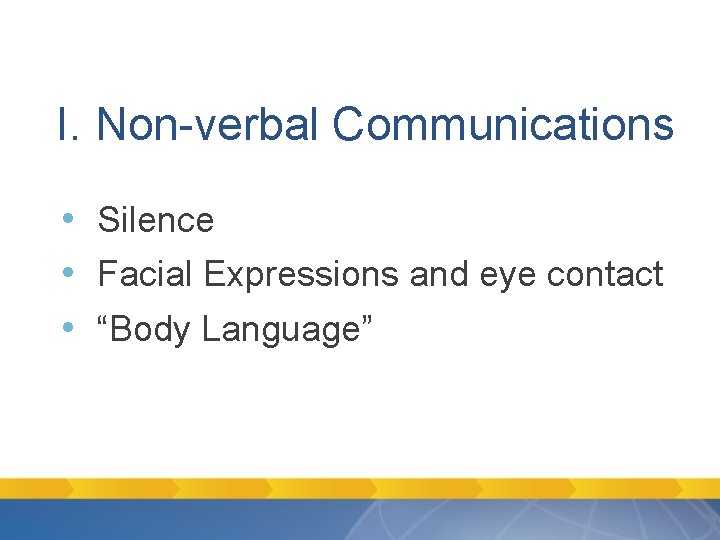
I. Non-verbal Communications • Silence • Facial Expressions and eye contact • “Body Language”
BEWARE! Excessive use of silence in crisis situations can communicate lack of interest, thus causing an escalation.
Nonverbal behavior sends a powerful message. Often, the first impression you make is based upon how you look. The challenge is how to make that impression useful in the service of crisis intervention.
II. Questions Closed – questions that restrict the response options available • Yes - No questions are the most restrictive • Stems include…”Do you, Don’t you, Is this, Isn’t this, Did you, Was it, Were you, etc…” • CAUTION: Be careful not to ask too many serial yes-no questions Open – questions that, in varying degrees, tend not restrict answers • Stems include…”What, When, Where, Why, How”
III. Mirror Techniques Mirror techniques are designed to “reflect back” info and emotions so as to create… • a check for accurate listening • an opportunity for introspection • a sense of EMPATHY
“Mirror” Techniques • Are effective when placed at a natural pause in the conversation • Or, may be used to redirect the flow of a tangential conversation • Or, can be used break an escalating emotional spiral
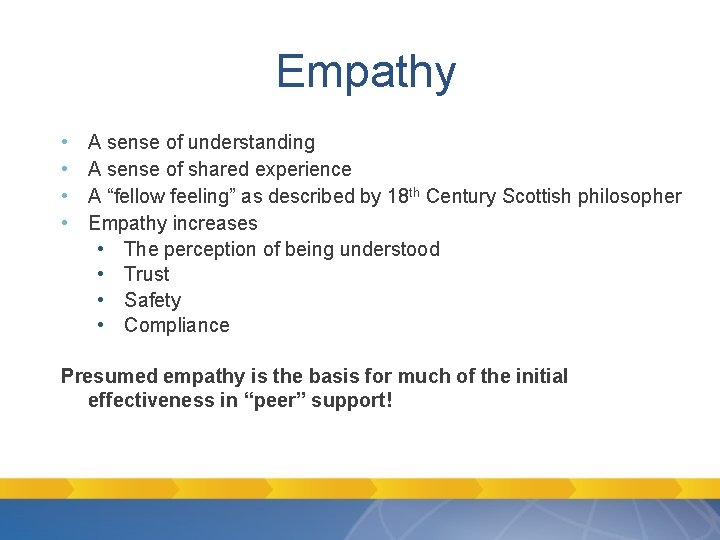
Empathy • • A sense of understanding A sense of shared experience A “fellow feeling” as described by 18 th Century Scottish philosopher Empathy increases • The perception of being understood • Trust • Safety • Compliance Presumed empathy is the basis for much of the initial effectiveness in “peer” support!
Empathic Techniques • Restatement • Paraphrase - Thoughts - Emotions
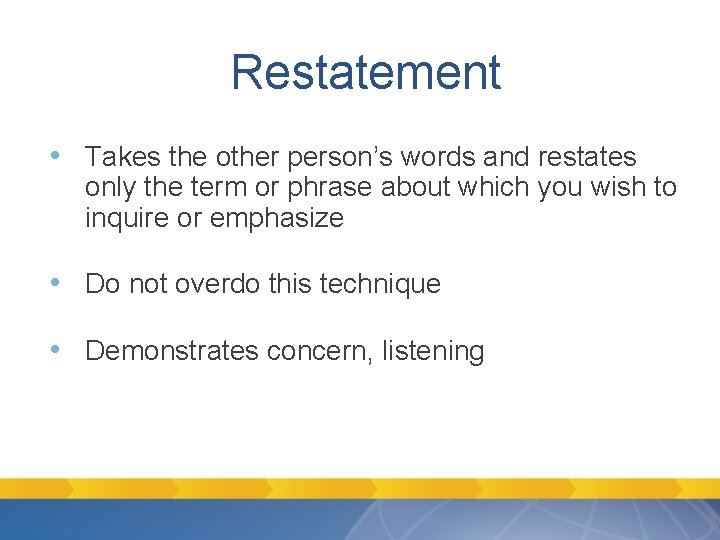
Restatement • Takes the other person’s words and restates only the term or phrase about which you wish to inquire or emphasize • Do not overdo this technique • Demonstrates concern, listening
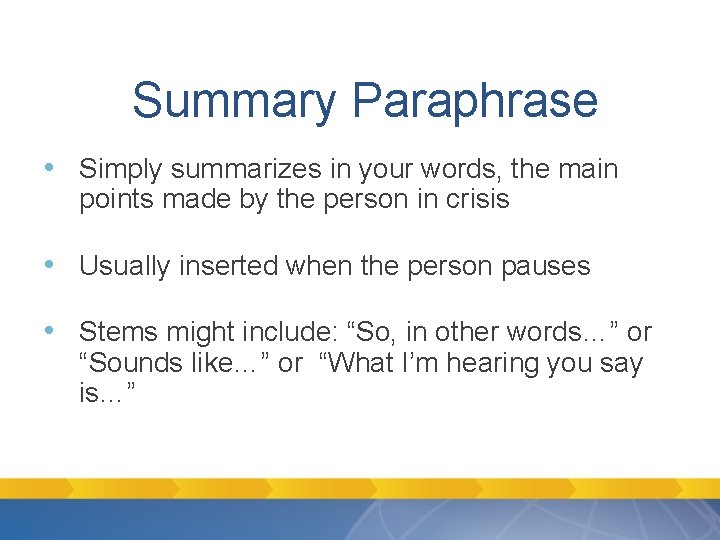
Summary Paraphrase • Simply summarizes in your words, the main points made by the person in crisis • Usually inserted when the person pauses • Stems might include: “So, in other words…” or “Sounds like…” or “What I’m hearing you say is…”
Reflecting emotion • Based upon verbal or nonverbal cues • Attempts to accurately label the experienced emotion of the other person (“you seem really angry…”) • Builds empathy, rapport • Encourages ventilation • Helps defuse anger
Why Foster EMPATHY: The Empathy Cascade • Active, reflective listening coveys… • Understanding… • Which fosters trust… • Which increases the likelihood of compliance!
IV. Action Directives • Providing direction on what to do • If someone asks a direct question, it is usually best to provide a direct answer, unless the answer will cause an escalation of the crisis
SECTION FOUR USING THE “DIAMOND” COMMUNICATION STRUCTURE
Those are the tools, now let’s look at a structure…
A simple structure for asking questions is called the “diamond” structure.
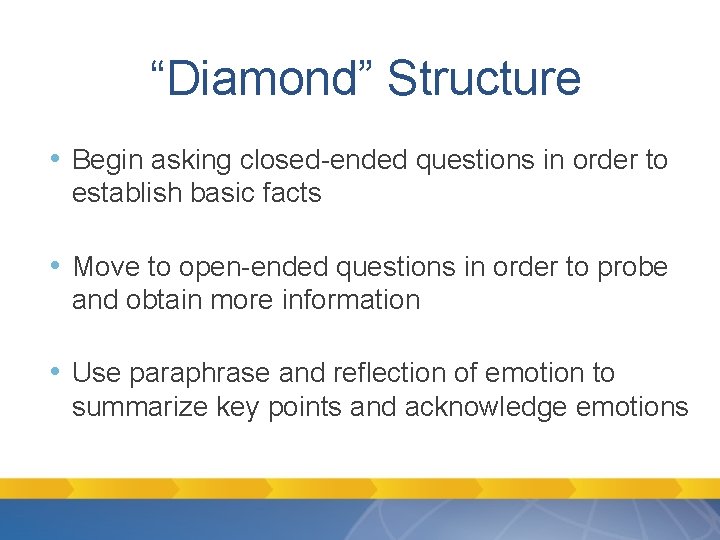
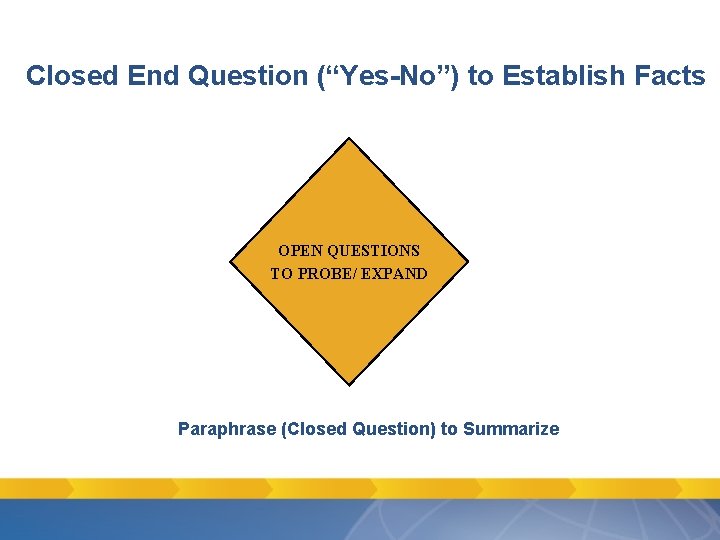
“Diamond” Structure • Begin asking closed-ended questions in order to establish basic facts • Move to open-ended questions in order to probe and obtain more information • Use paraphrase and reflection of emotion to summarize key points and acknowledge emotions
Closed End Question (“Yes-No”) to Establish Facts OPEN QUESTIONS TO PROBE/ EXPAND Paraphrase (Closed Question) to Summarize
Communication Exercise: Interview Using Summary Paraphrasing & Reflecting Emotion
SECTION FIVE COMMON PSYCHOLOGICAL REACTIONS
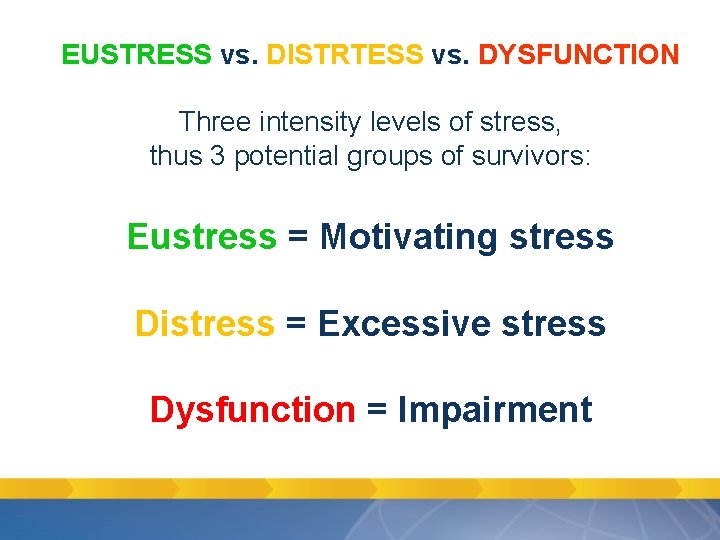
EUSTRESS vs. DISTRTESS vs. DYSFUNCTION Three intensity levels of stress, thus 3 potential groups of survivors: Eustress = Motivating stress Distress = Excessive stress Dysfunction = Impairment
In her book, When Disaster Strikes, Beverley Raphael noted, “…in hours after a disaster, at least 25% of the population maybe stunned and dazed, apathetic and wandering—suffering from the disaster syndrome—especially if impact has been sudden and totally …” (Raphael, 1986, p. 257).
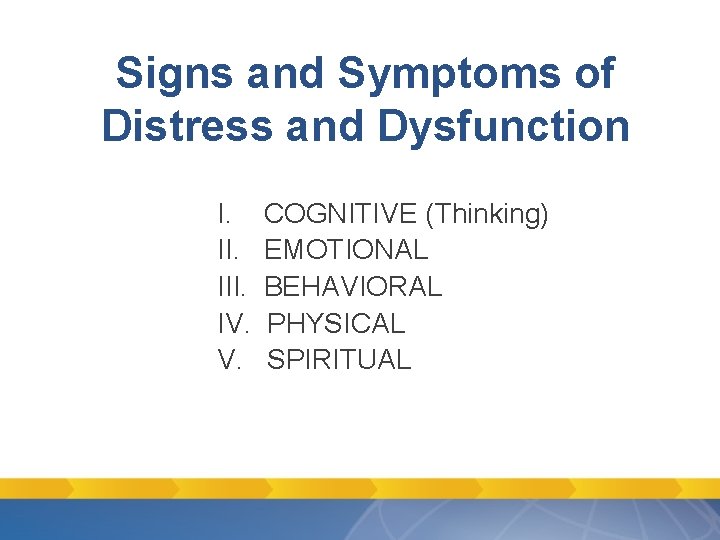
Signs and Symptoms of Distress and Dysfunction I. COGNITIVE (Thinking) II. EMOTIONAL III. BEHAVIORAL IV. PHYSICAL V. SPIRITUAL
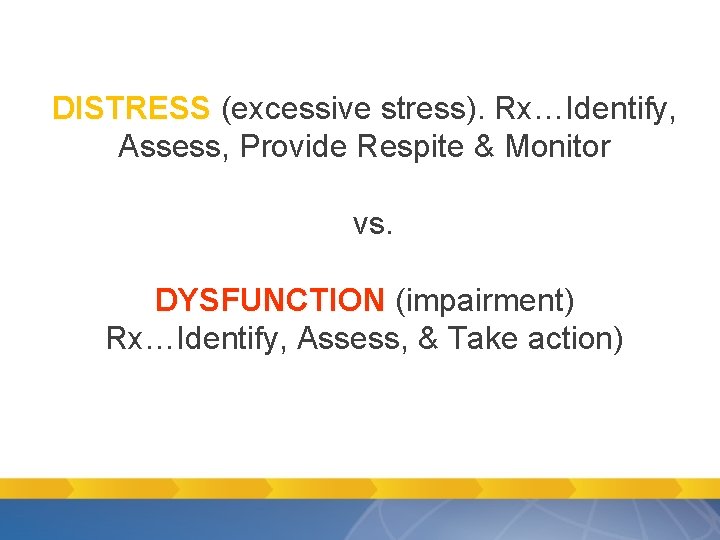
DISTRESS (excessive stress). Rx…Identify, DISTRESS Assess, Provide Respite & Monitor vs. DYSFUNCTION (impairment) Rx…Identify, Assess, & Take action)
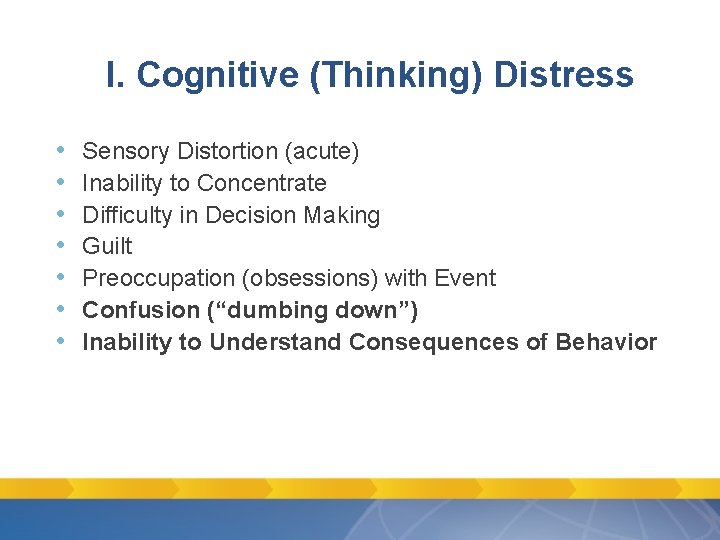
I. Cognitive (Thinking) Distress • • Sensory Distortion (acute) Inability to Concentrate Difficulty in Decision Making Guilt Preoccupation (obsessions) with Event Confusion (“dumbing down”) Inability to Understand Consequences of Behavior
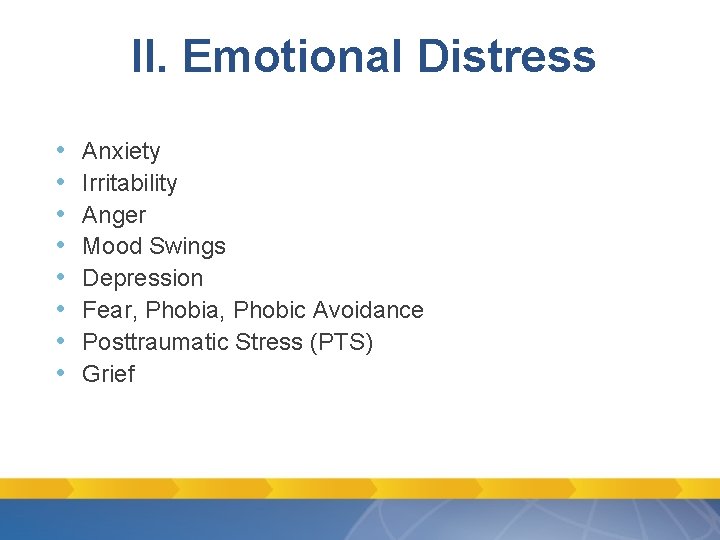
II. Emotional Distress • • Anxiety Irritability Anger Mood Swings Depression Fear, Phobia, Phobic Avoidance Posttraumatic Stress (PTS) Grief
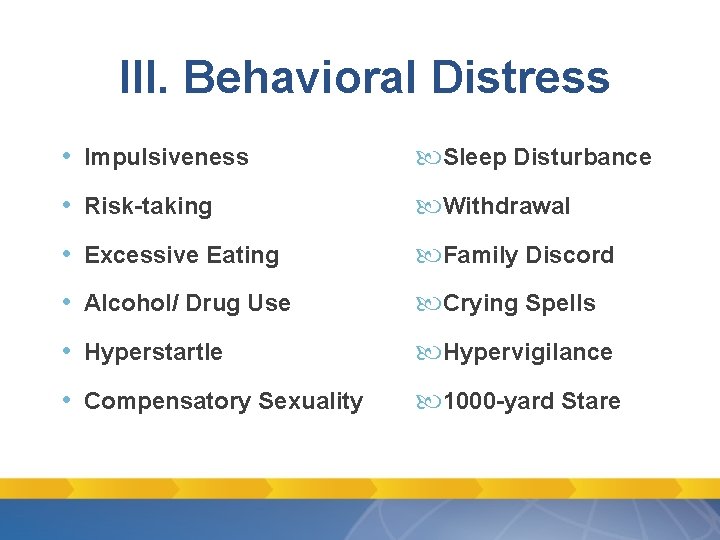
III. Behavioral Distress • Impulsiveness Sleep Disturbance • Risk-taking Withdrawal • Excessive Eating Family Discord • Alcohol/ Drug Use Crying Spells • Hyperstartle Hypervigilance • Compensatory Sexuality 1000 -yard Stare
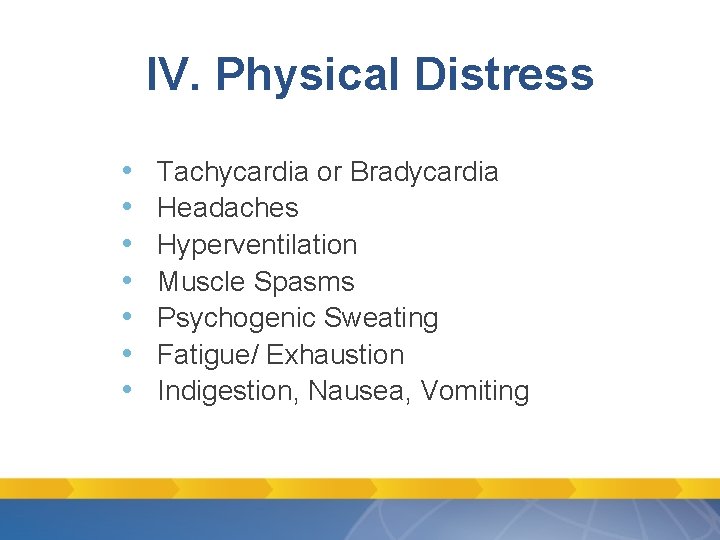
IV. Physical Distress • • Tachycardia or Bradycardia Headaches Hyperventilation Muscle Spasms Psychogenic Sweating Fatigue/ Exhaustion Indigestion, Nausea, Vomiting
V. Spiritual Distress • • • Anger at God Withdrawal from Faith-based Community Crisis of Faith
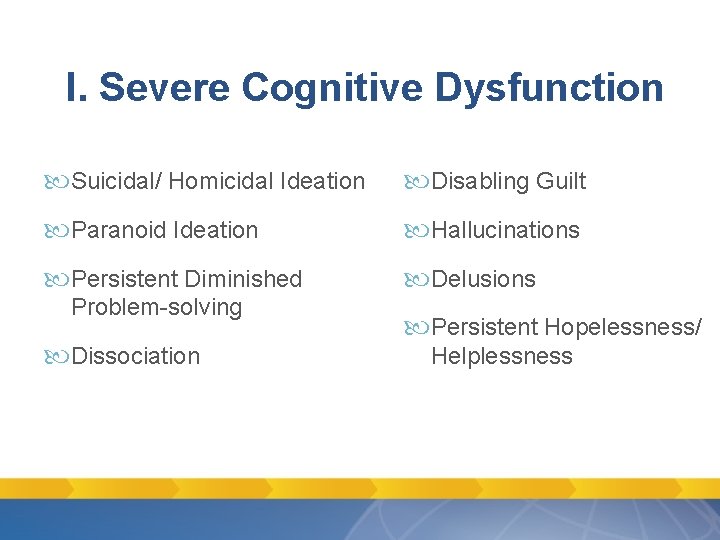
I. Severe Cognitive Dysfunction Suicidal/ Homicidal Ideation Disabling Guilt Paranoid Ideation Hallucinations Persistent Diminished Delusions Problem-solving Dissociation Persistent Hopelessness/ Helplessness
II. Severe Emotional Dysfunction • Panic Attacks • Infantile Emotions in Adults • Immobilizing Depression • Posttraumatic Stress Disorder (PTSD)
Posttraumatic stress (PTS) is a normal survival response; Posttraumatic Stress Disorder (PTSD) is a pathologic variant of that normal survival reaction.
PTSD: DSM - V A. B. C. D. E. F. G. Traumatic event Intrusive memories Avoidance, numbing, Stress arousal Depression Symptoms last > 30 days Impaired functioning
Predicting PTSD 1. Dose - response relationship with exposure 2. Personal identification with event 3. Very important beliefs violated
PTSD results from violation of: 1. Expectations 2. Deeply held beliefs (Worldviews) 3. Extreme physical pain
Core Beliefs (Worldviews) • • • Belief in a just and fair world Need to trust others Self-esteem, Self-efficacy Need for a predictable and SAFE world Spirituality, belief in an order and congruence in life and the universe
Severity of PTSD • • • Dissociation/ flashbacks Psychogenic amnesia Persistent sleep disturbance Panic Severe exaggerated startle response Evidence of seizures
III. Severe Behavioral Dysfunction • • • Violence Antisocial Acts Abuse of Others Diminished Personal Hygiene Immobility Self-medication
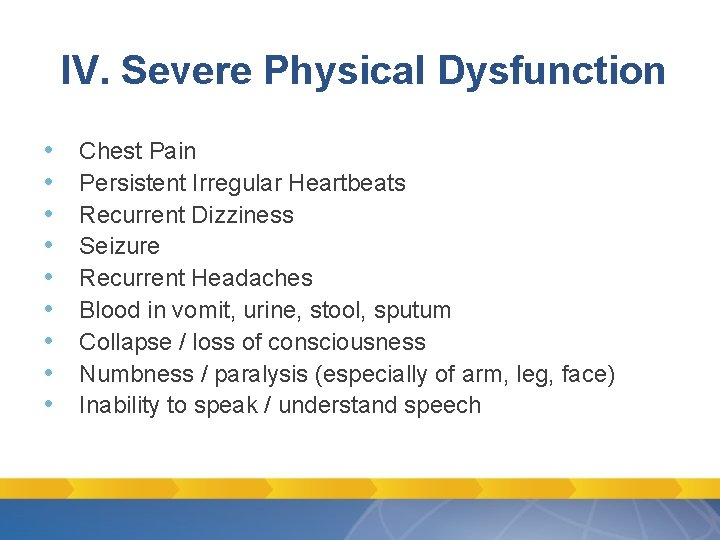
IV. Severe Physical Dysfunction • • • Chest Pain Persistent Irregular Heartbeats Recurrent Dizziness Seizure Recurrent Headaches Blood in vomit, urine, stool, sputum Collapse / loss of consciousness Numbness / paralysis (especially of arm, leg, face) Inability to speak / understand speech
It is imperative that all evidence of physical dysfunction be taken seriously and referred to a physician. The same is true when dealing with any physical distress that does not remit, may be suggestive of a medical disorder, or seems ambiguous.
V. Severe Spiritual Dysfunction • Cessation from Practice of Faith • Religious Hallucinations or Delusions
NOTE! All of the signs and symptoms of severe dysfunction warrant referral to the next level of care! Also refer whenever in doubt.
SECTION SIX MECHANISMS OF ACTION and CAUTIONS IN CRISIS INTERVENTION
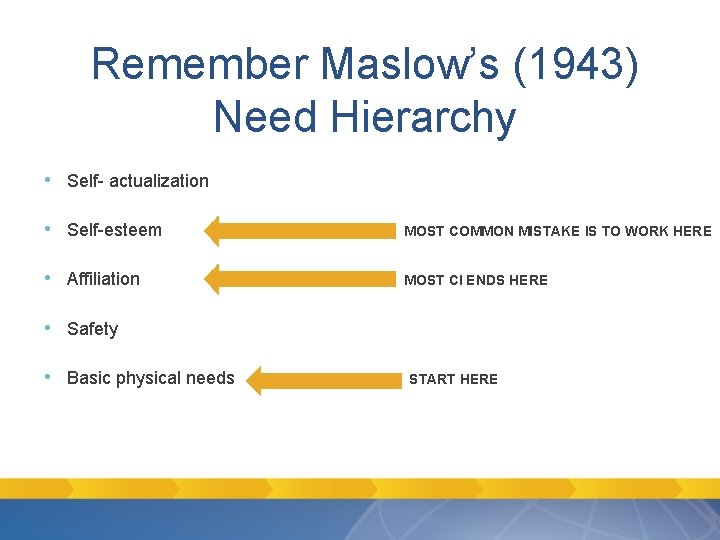
Remember Maslow’s (1943) Need Hierarchy • Self- actualization • Self-esteem MOST COMMON MISTAKE IS TO WORK HERE • Affiliation MOST CI ENDS HERE • Safety • Basic physical needs START HERE
Hobfoll et al (2007) distilled previous definitions of psychological first aid into five generic intervention principles/ mechanisms/goals: • • • establishing a sense of safety calm instilling a sense of being able to solve problems for oneself or as part of a group (such as family, school, religious, or community group) establishing social support fostering hope Hobfoll SE, Watson P, Bell CC, Bryant RA, Brymer MJ, Friedman MH, Friedman M, Gersons BPR, de Jong JTVM, Layne CM, Maguen S, Neria, Y, Norwood AE, Pynoos RS, Reissman D, Ruzek JI, Shalev AY, Solomon Z, Steinberg AM, Ursano RJ. (2007). Five Essential Elements of Immediate and Mid-Term Mass Trauma Interventions: Empirical Evidence. Psychiatry: Interpers Biol Processes, 70(4): 283 -315.
Psychological Alignment • Don’t argue • Don’t minimize problem • Find something to agree upon
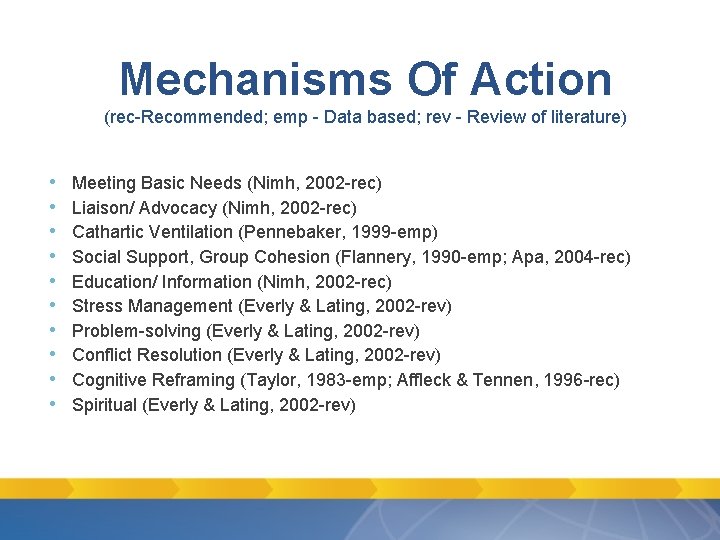
Mechanisms Of Action (rec-Recommended; emp - Data based; rev - Review of literature) • • • Meeting Basic Needs (Nimh, 2002 -rec) Liaison/ Advocacy (Nimh, 2002 -rec) Cathartic Ventilation (Pennebaker, 1999 -emp) Social Support, Group Cohesion (Flannery, 1990 -emp; Apa, 2004 -rec) Education/ Information (Nimh, 2002 -rec) Stress Management (Everly & Lating, 2002 -rev) Problem-solving (Everly & Lating, 2002 -rev) Conflict Resolution (Everly & Lating, 2002 -rev) Cognitive Reframing (Taylor, 1983 -emp; Affleck & Tennen, 1996 -rec) Spiritual (Everly & Lating, 2002 -rev)
DO NO HARM: Cautions & Contraindications
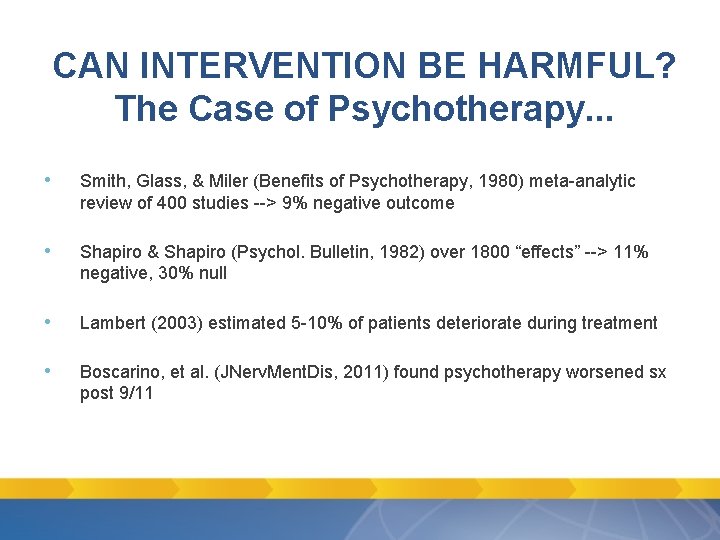
CAN INTERVENTION BE HARMFUL? The Case of Psychotherapy. . . • Smith, Glass, & Miler (Benefits of Psychotherapy, 1980) meta-analytic review of 400 studies --> 9% negative outcome • Shapiro & Shapiro (Psychol. Bulletin, 1982) over 1800 “effects” --> 11% negative, 30% null • Lambert (2003) estimated 5 -10% of patients deteriorate during treatment • Boscarino, et al. (JNerv. Ment. Dis, 2011) found psychotherapy worsened sx post 9/11
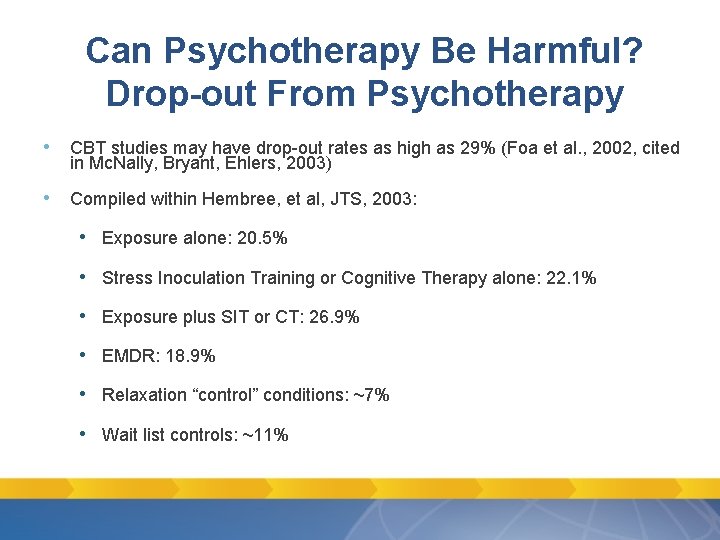
Can Psychotherapy Be Harmful? Drop-out From Psychotherapy • CBT studies may have drop-out rates as high as 29% (Foa et al. , 2002, cited in Mc. Nally, Bryant, Ehlers, 2003) • Compiled within Hembree, et al, JTS, 2003: • Exposure alone: 20. 5% • Stress Inoculation Training or Cognitive Therapy alone: 22. 1% • Exposure plus SIT or CT: 26. 9% • EMDR: 18. 9% • Relaxation “control” conditions: ~7% • Wait list controls: ~11%
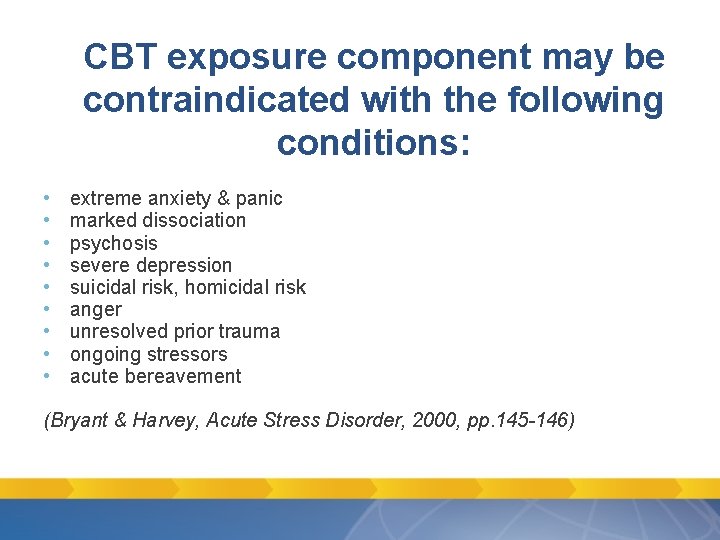
CBT exposure component may be contraindicated with the following conditions: • • • extreme anxiety & panic marked dissociation psychosis severe depression suicidal risk, homicidal risk anger unresolved prior trauma ongoing stressors acute bereavement (Bryant & Harvey, Acute Stress Disorder, 2000, pp. 145 -146)
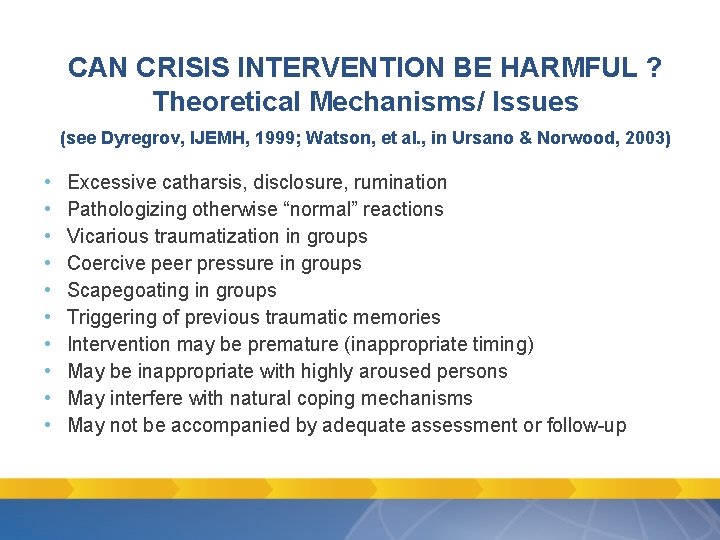
CAN CRISIS INTERVENTION BE HARMFUL ? Theoretical Mechanisms/ Issues (see Dyregrov, IJEMH, 1999; Watson, et al. , in Ursano & Norwood, 2003) • • • Excessive catharsis, disclosure, rumination Pathologizing otherwise “normal” reactions Vicarious traumatization in groups Coercive peer pressure in groups Scapegoating in groups Triggering of previous traumatic memories Intervention may be premature (inappropriate timing) May be inappropriate with highly aroused persons May interfere with natural coping mechanisms May not be accompanied by adequate assessment or follow-up
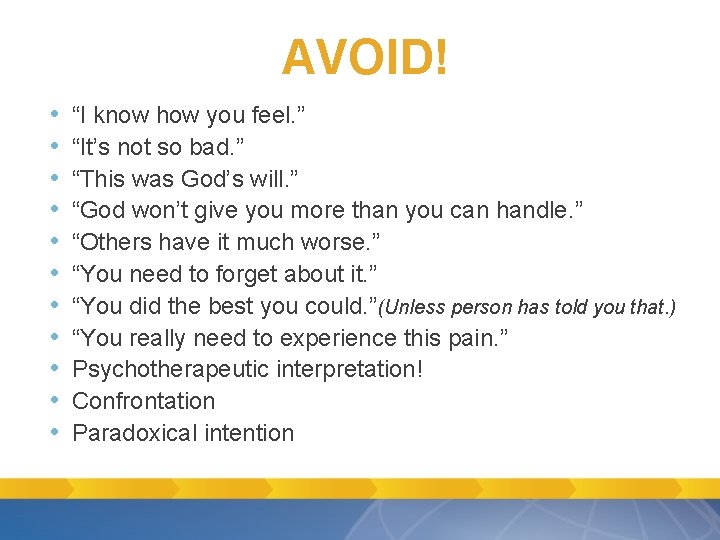
AVOID! • • • “I know how you feel. ” “It’s not so bad. ” “This was God’s will. ” “God won’t give you more than you can handle. ” “Others have it much worse. ” “You need to forget about it. ” “You did the best you could. ”(Unless person has told you that. ) “You really need to experience this pain. ” Psychotherapeutic interpretation! Confrontation Paradoxical intention
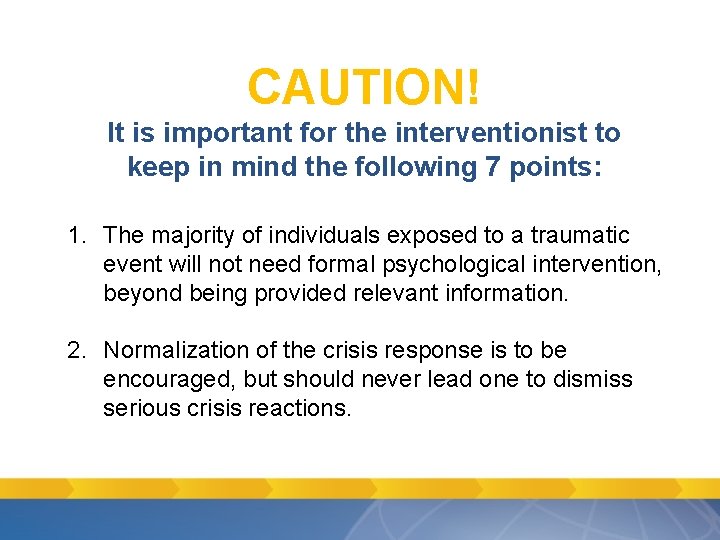
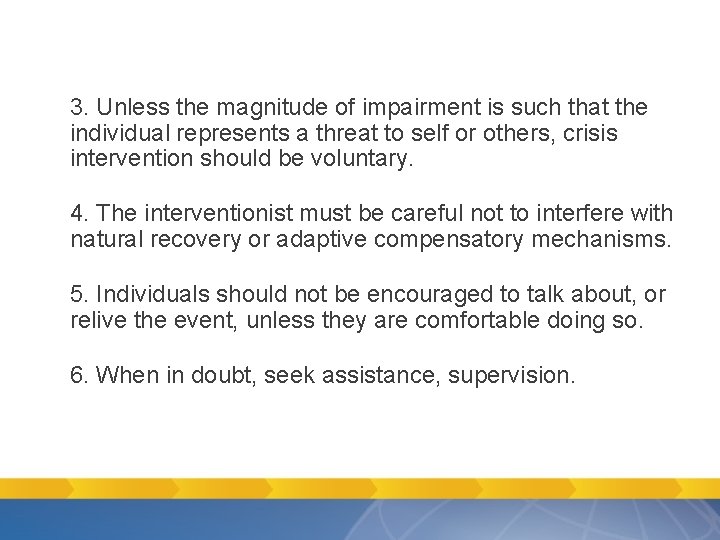
CAUTION! It is important for the interventionist to keep in mind the following 7 points: 1. The majority of individuals exposed to a traumatic event will not need formal psychological intervention, beyond being provided relevant information. 2. Normalization of the crisis response is to be encouraged, but should never lead one to dismiss serious crisis reactions.
3. Unless the magnitude of impairment is such that the individual represents a threat to self or others, crisis intervention should be voluntary. 4. The interventionist must be careful not to interfere with natural recovery or adaptive compensatory mechanisms. 5. Individuals should not be encouraged to talk about, or relive the event, unless they are comfortable doing so. 6. When in doubt, seek assistance, supervision.
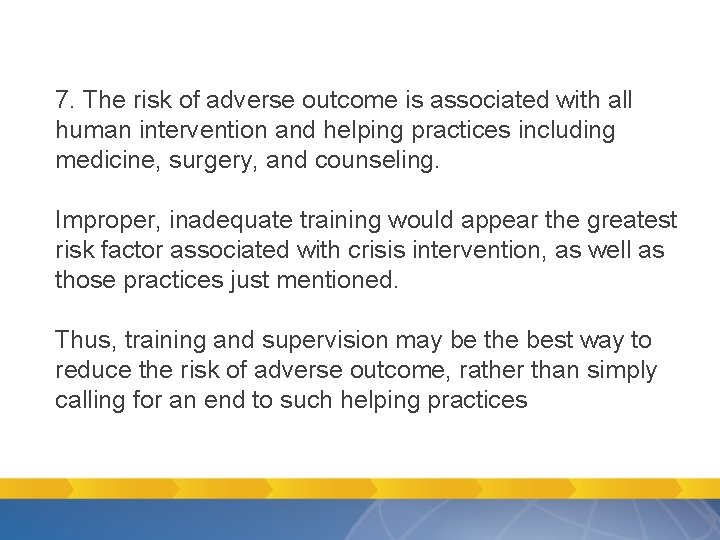
7. The risk of adverse outcome is associated with all human intervention and helping practices including medicine, surgery, and counseling. Improper, inadequate training would appear the greatest risk factor associated with crisis intervention, as well as those practices just mentioned. Thus, training and supervision may be the best way to reduce the risk of adverse outcome, rather than simply calling for an end to such helping practices
EXERCISE PRACTICE IN CRISIS INTERVENTION MECHANISMS
SECTION SEVEN SAFER-REVISED MODEL OF INDIVIDUAL CRISIS INTERVENTION
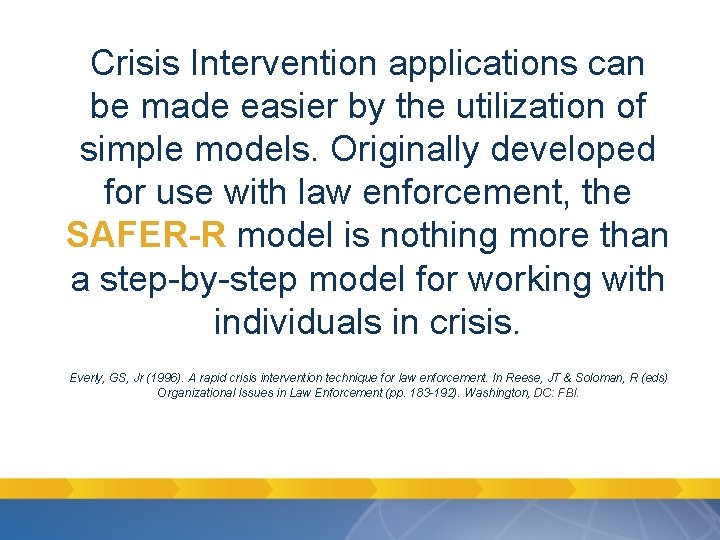
Crisis Intervention applications can be made easier by the utilization of simple models. Originally developed for use with law enforcement, the SAFER-R model is nothing more than a step-by-step model for working with individuals in crisis. Everly, GS, Jr (1996). A rapid crisis intervention technique for law enforcement. In Reese, JT & Soloman, R (eds) Organizational Issues in Law Enforcement (pp. 183 -192). Washington, DC: FBI.
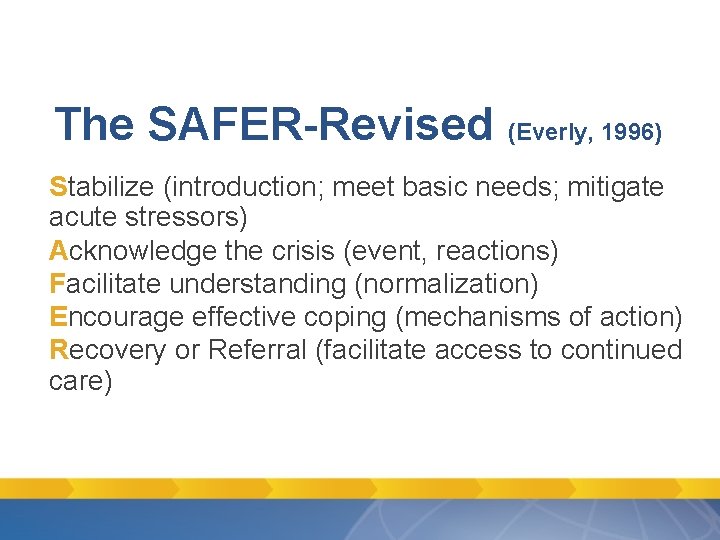
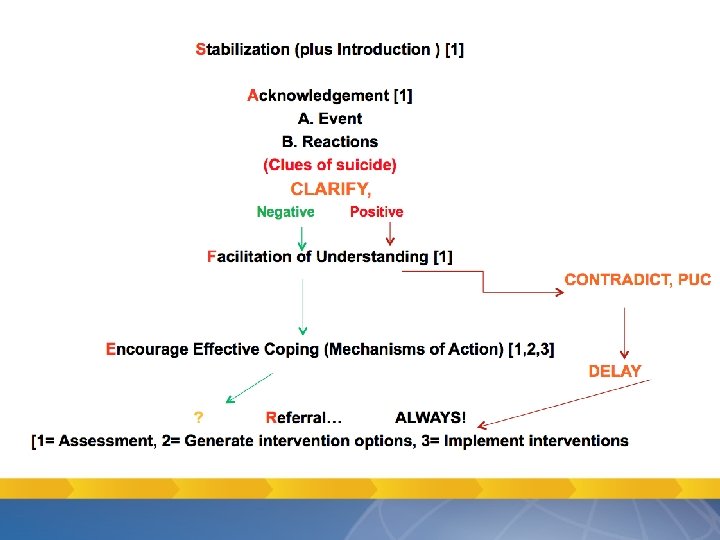
The SAFER-Revised (Everly, 1996) Stabilize (introduction; meet basic needs; mitigate acute stressors) Acknowledge the crisis (event, reactions) Facilitate understanding (normalization) Encourage effective coping (mechanisms of action) Recovery or Referral (facilitate access to continued care)
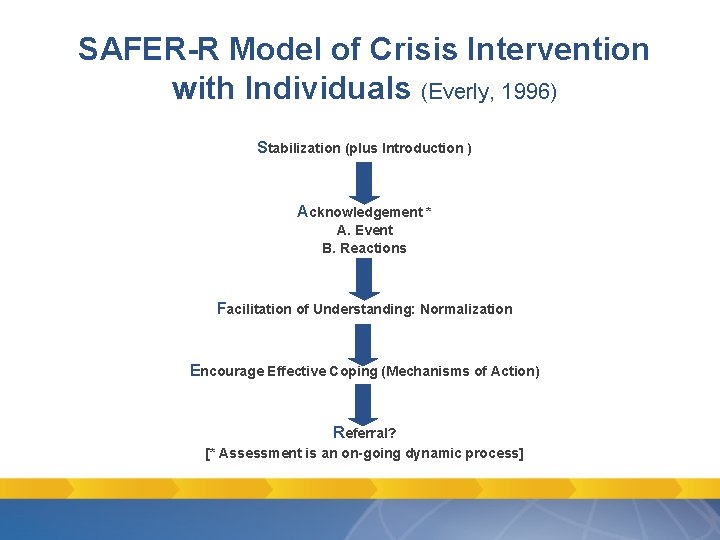
SAFER-R Model of Crisis Intervention with Individuals (Everly, 1996) Stabilization (plus Introduction ) Acknowledgement * A. Event B. Reactions Facilitation of Understanding: Normalization Encourage Effective Coping (Mechanisms of Action) Referral? [* Assessment is an on-going dynamic process]
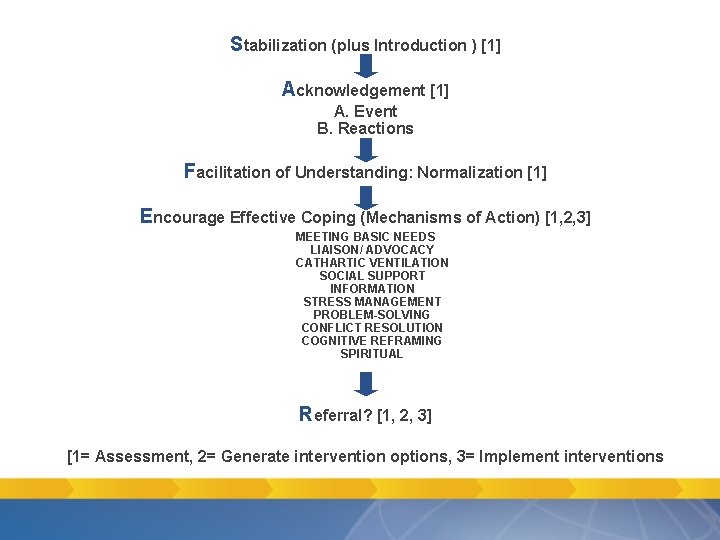
Stabilization (plus Introduction ) [1] Acknowledgement [1] A. Event B. Reactions Facilitation of Understanding: Normalization [1] Encourage Effective Coping (Mechanisms of Action) [1, 2, 3] MEETING BASIC NEEDS LIAISON/ ADVOCACY CATHARTIC VENTILATION SOCIAL SUPPORT INFORMATION STRESS MANAGEMENT PROBLEM-SOLVING CONFLICT RESOLUTION COGNITIVE REFRAMING SPIRITUAL Referral? [1, 2, 3] [1= Assessment, 2= Generate intervention options, 3= Implement interventions
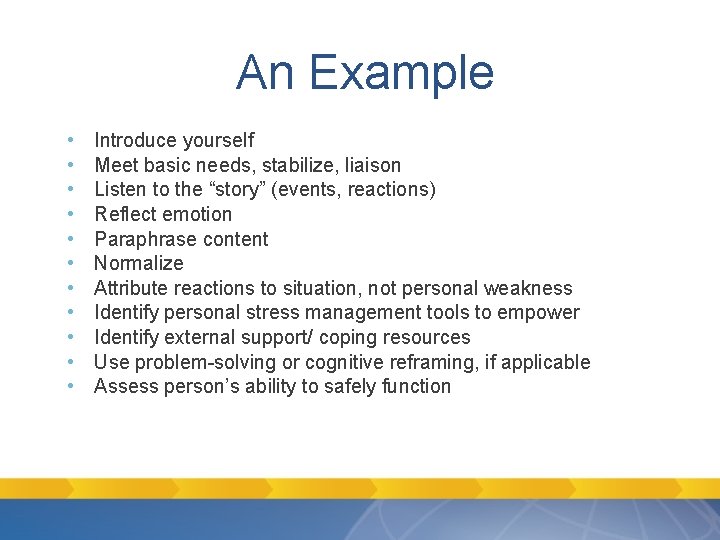
An Example • • • Introduce yourself Meet basic needs, stabilize, liaison Listen to the “story” (events, reactions) Reflect emotion Paraphrase content Normalize Attribute reactions to situation, not personal weakness Identify personal stress management tools to empower Identify external support/ coping resources Use problem-solving or cognitive reframing, if applicable Assess person’s ability to safely function
EXERCISE PRACTICE IN SAFER-Revised
SECTION EIGHT SAFER-REVISED MODEL OF INDIVIDUAL CRISIS INTERVENTION IN SUICIDAL IDEATION
This course is not a course on suicide intervention, per se. More advanced training is necessary prior to doing suicide intervention. But some introductory thoughts on suicide intervention seem warranted.
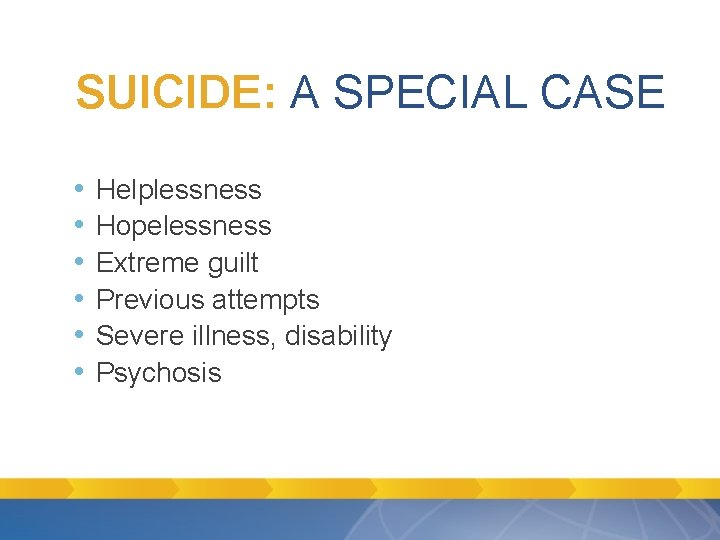
SUICIDE: A SPECIAL CASE • • • Helplessness Hopelessness Extreme guilt Previous attempts Severe illness, disability Psychosis
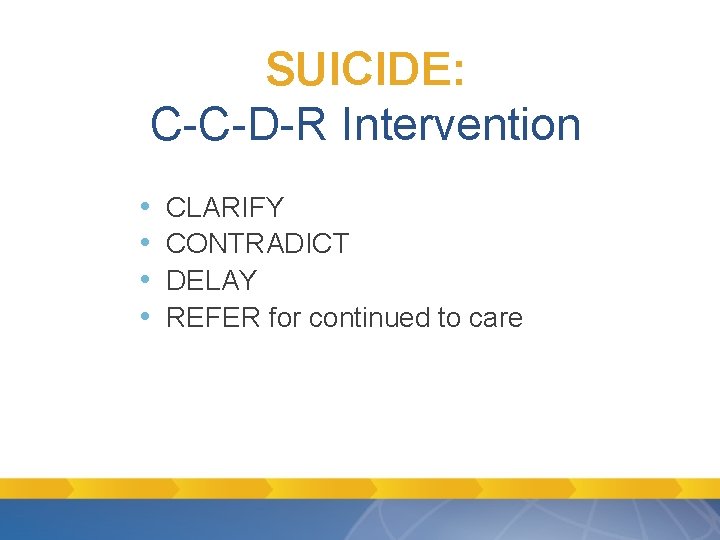
SUICIDE: C-C-D-R Intervention • • CLARIFY CONTRADICT DELAY REFER for continued to care
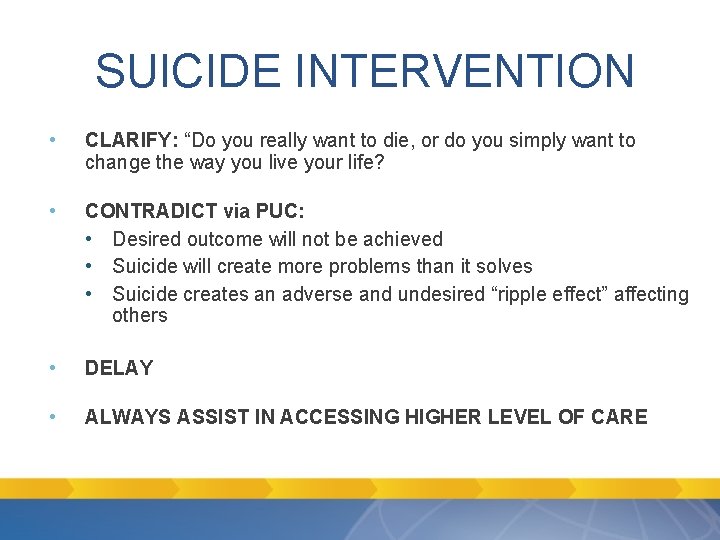
SUICIDE INTERVENTION • CLARIFY: “Do you really want to die, or do you simply want to change the way you live your life? • CONTRADICT via PUC: • Desired outcome will not be achieved • Suicide will create more problems than it solves • Suicide creates an adverse and undesired “ripple effect” affecting others • DELAY • ALWAYS ASSIST IN ACCESSING HIGHER LEVEL OF CARE
EXERCISE PRACTICE in SAFERRevised in Suicidal Ideation
© George S. Everly, Jr. 2014 END Materials not designed specifically for this program used with permission of the author.