
Assisted vaginal delivery by forceps Forceps An Obstetric
Assisted vaginal delivery by forceps
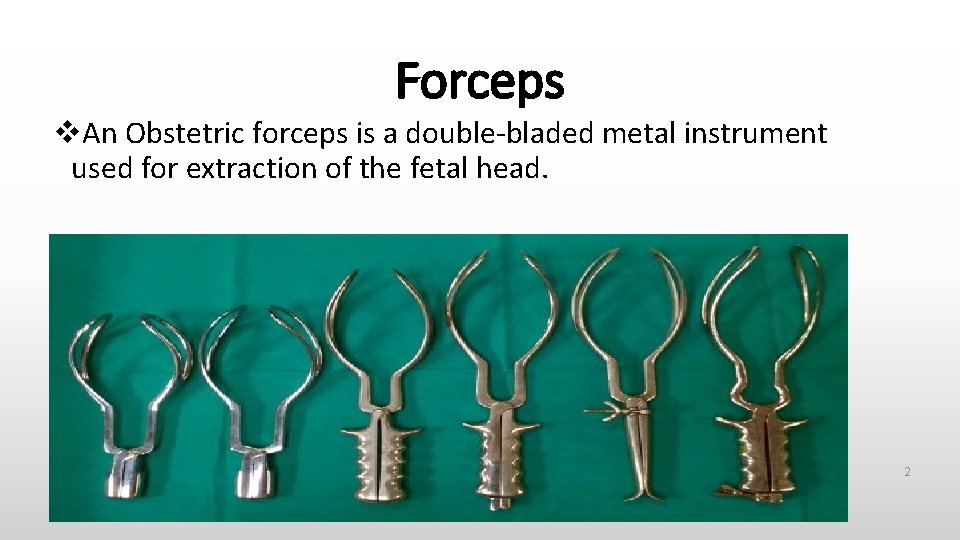
Forceps An Obstetric forceps is a double-bladed metal instrument used for extraction of the fetal head. 2
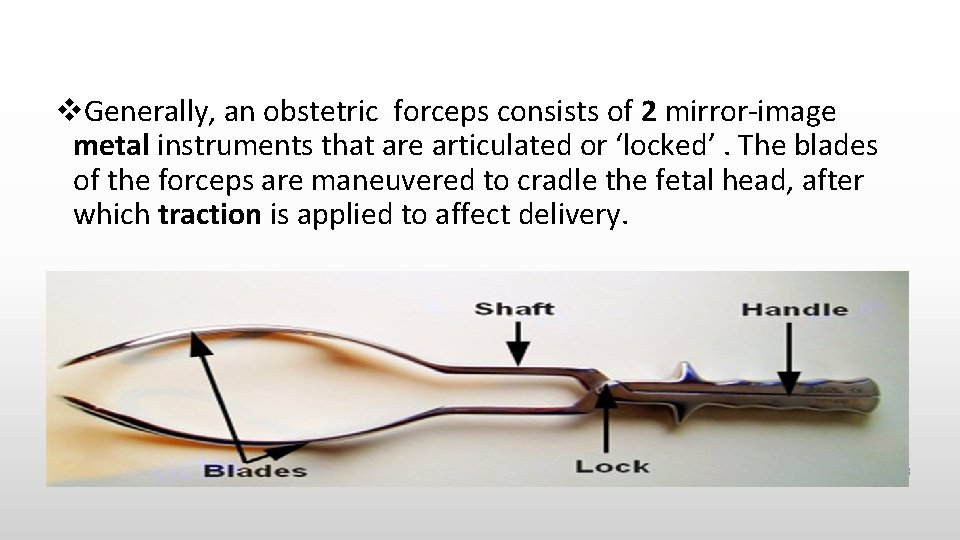
Generally, an obstetric forceps consists of 2 mirror-image metal instruments that are articulated or ‘locked’. The blades of the forceps are maneuvered to cradle the fetal head, after which traction is applied to affect delivery. 3
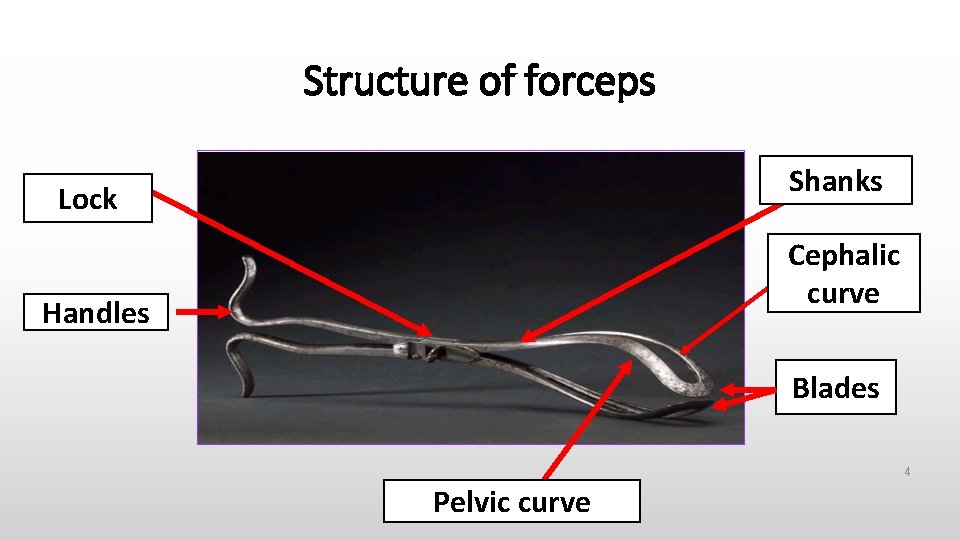
Structure of forceps Shanks Lock Cephalic curve Handles Blades 4 Pelvic curve
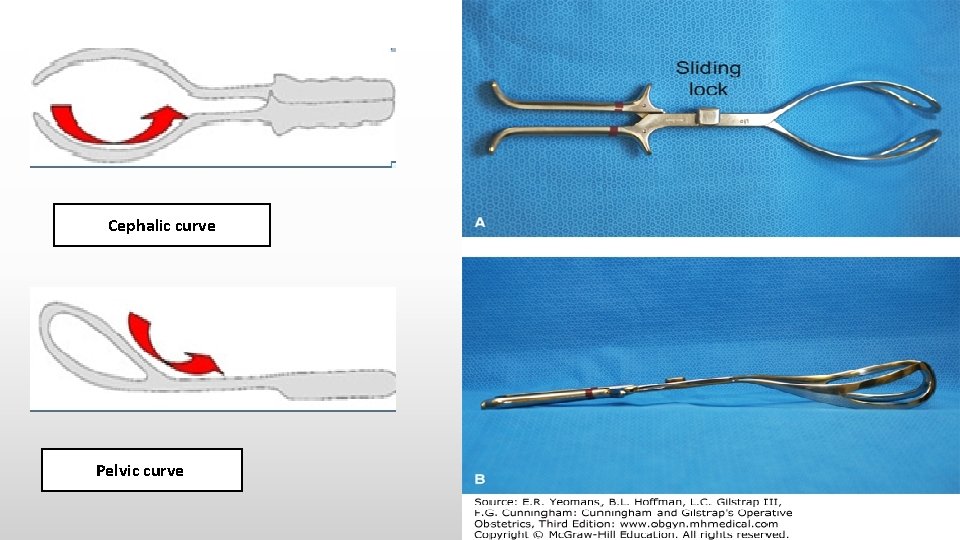
Cephalic curve Pelvic curve 5
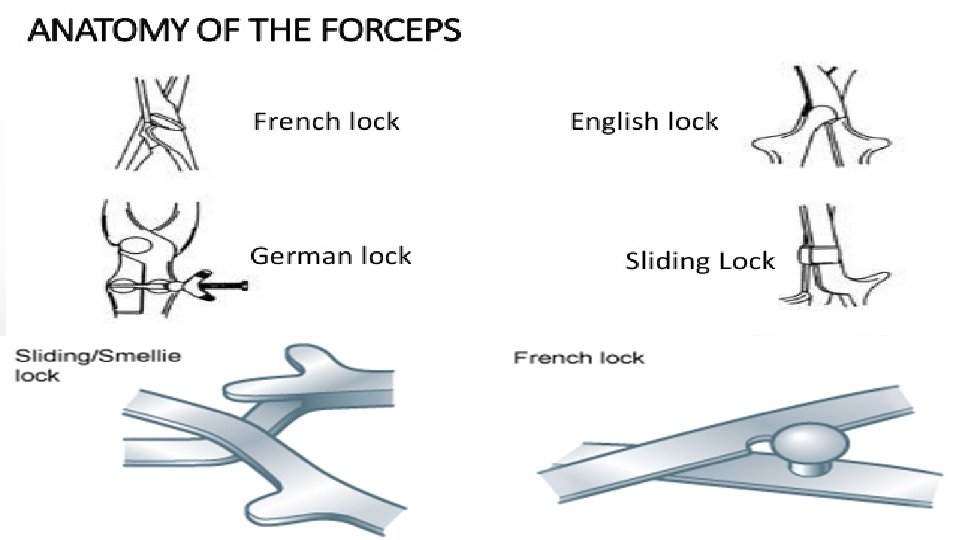
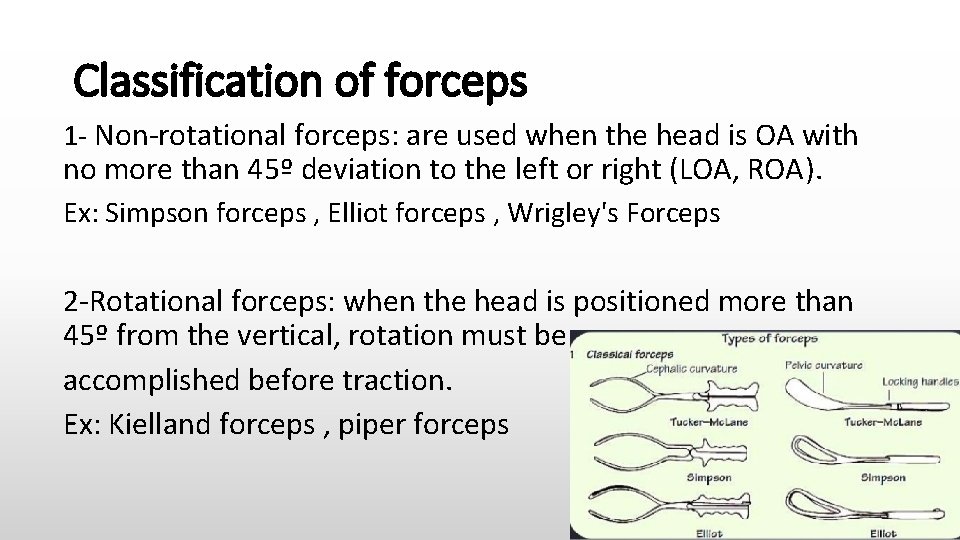
Classification of forceps 1 - Non-rotational forceps: are used when the head is OA with no more than 45º deviation to the left or right (LOA, ROA). Ex: Simpson forceps , Elliot forceps , Wrigley's Forceps 2 -Rotational forceps: when the head is positioned more than 45º from the vertical, rotation must be accomplished before traction. Ex: Kielland forceps , piper forceps
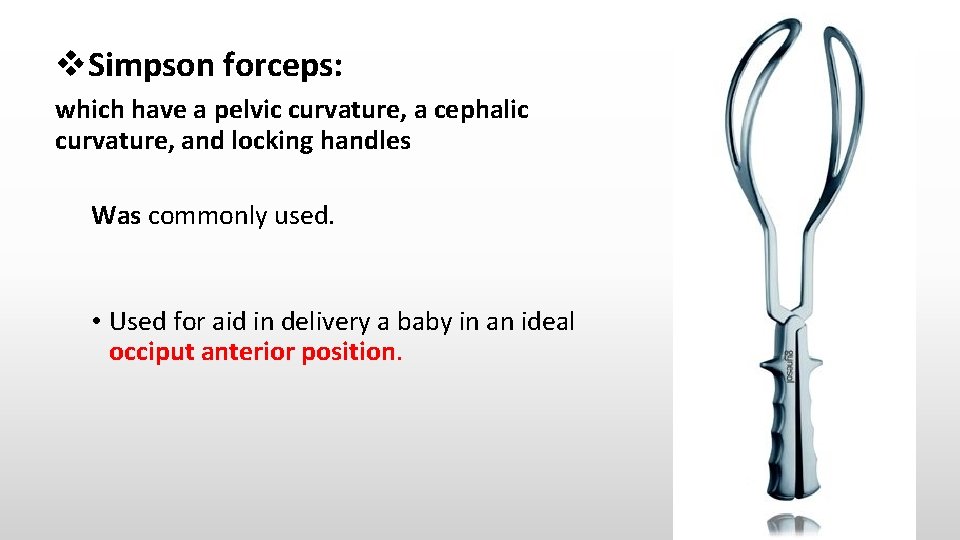
Simpson forceps: which have a pelvic curvature, a cephalic curvature, and locking handles Was commonly used. • Used for aid in delivery a baby in an ideal occiput anterior position. 8
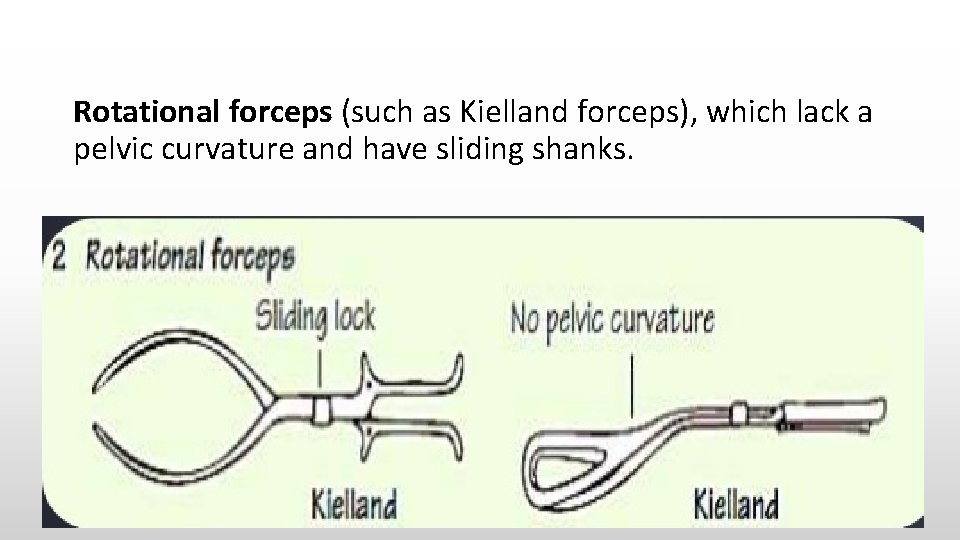
Rotational forceps (such as Kielland forceps), which lack a pelvic curvature and have sliding shanks.
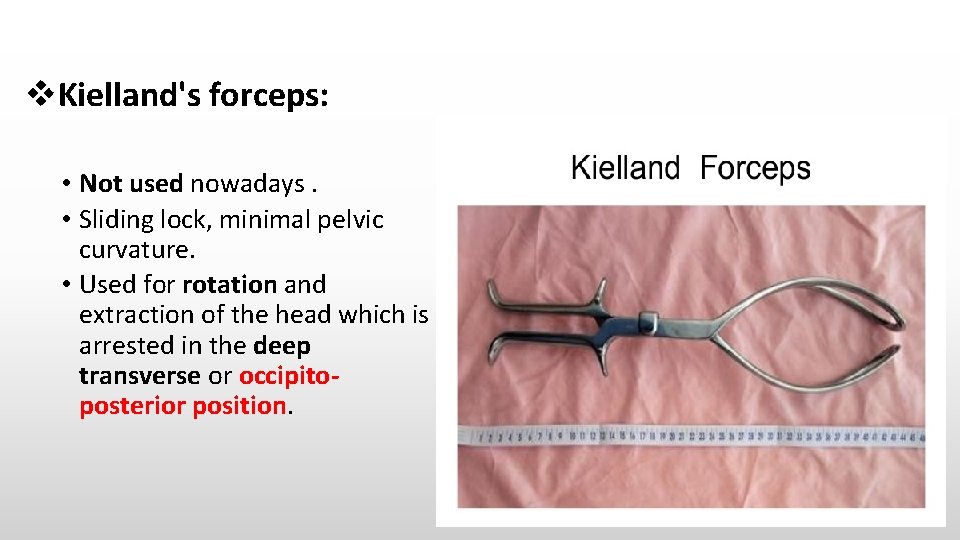
Kielland's forceps: • Not used nowadays. • Sliding lock, minimal pelvic curvature. • Used for rotation and extraction of the head which is arrested in the deep transverse or occipitoposterior position. 10
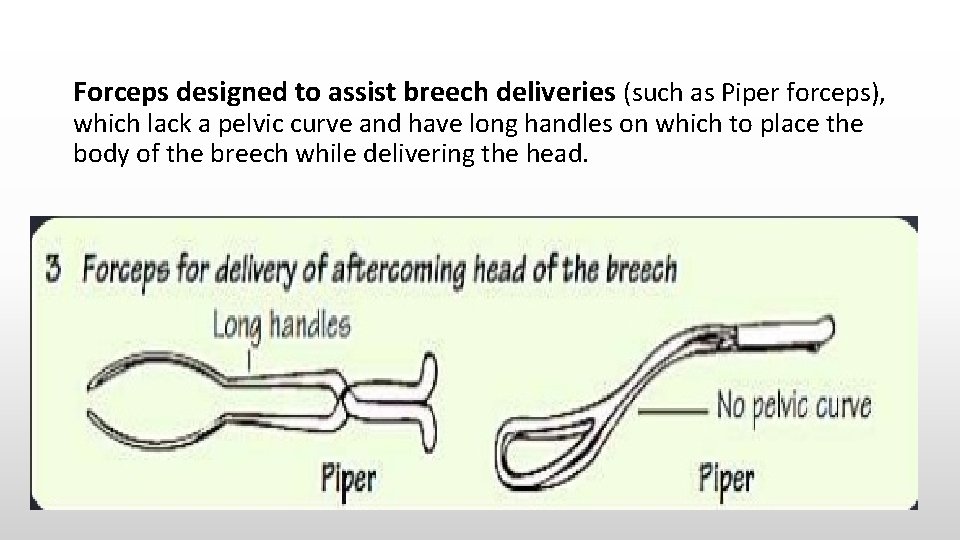
Forceps designed to assist breech deliveries (such as Piper forceps), which lack a pelvic curve and have long handles on which to place the body of the breech while delivering the head.
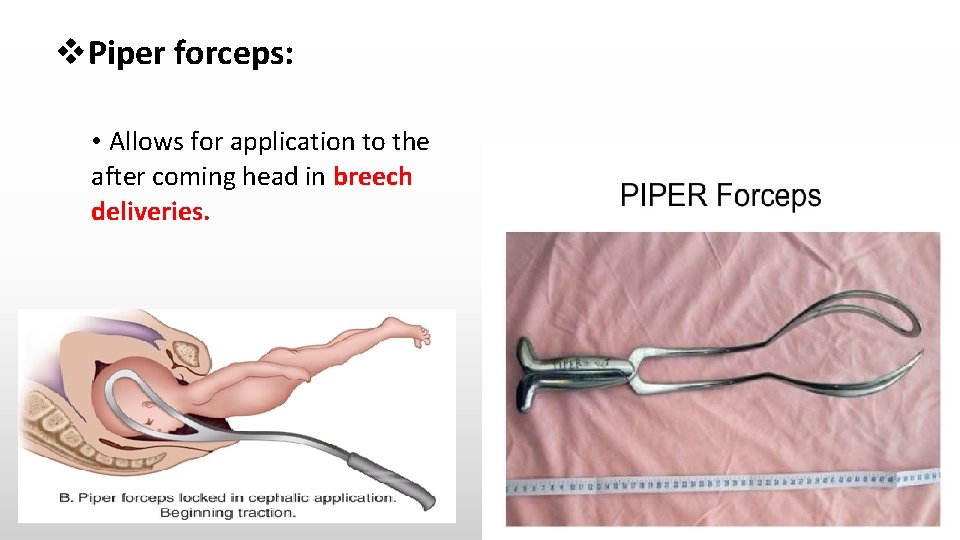
Piper forceps: • Allows for application to the after coming head in breech deliveries. 12
function 1) Traction: the most important function. • • • Should be steady (not rocking) and in the line of the birth canal. Should be exerted with each contraction and in conjunction with maternal expulsive efforts. Forceps can be relaxed between contractions to reduce fetal cranial compression. 2) Rotation of head: (Kielland's forceps) never done now. 3) Protective cage: When applied on a premature baby it protects from the pressure of the birth canal, and when applied on the after-coming head it reduces the sudden decompression effect. 13
Contraindications : The following are contraindications to forceps-assisted vaginal deliveries: • Any contraindication to vaginal delivery • Inability to obtain adequate verbal consent • A cervix that is not fully dilated or retracted • Inability to determine the presentation and fetal head position • Inadequate pelvic size • Confirmed cephalopelvic disproportion • Unsuccessful trial of vacuum extraction (relative contraindication) • Absence of adequate anesthesia or analgesia (relative contraindication) • Inadequate facilities and support staff • An insufficiently experienced operator
Technique of forceps vaginal delivery
Technique Application technique for occiput anterior position. After proper anesthesia is achieved an empty bladder ensured, the fetal position is checked again. The presence of the sagittal suture in the anteroposterior diameter of the pelvic outlet is confirmed. 16
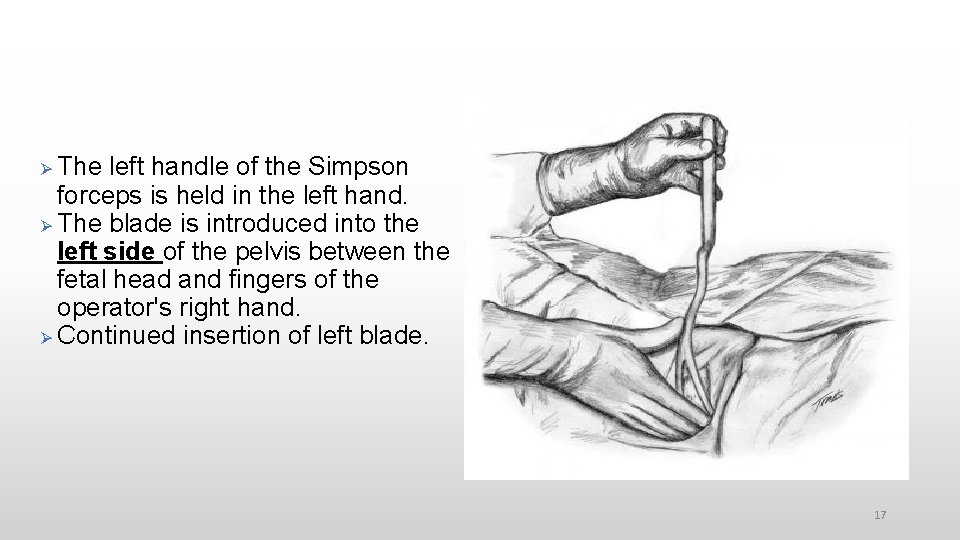
The left handle of the Simpson forceps is held in the left hand. The blade is introduced into the left side of the pelvis between the fetal head and fingers of the operator's right hand. Continued insertion of left blade. 17
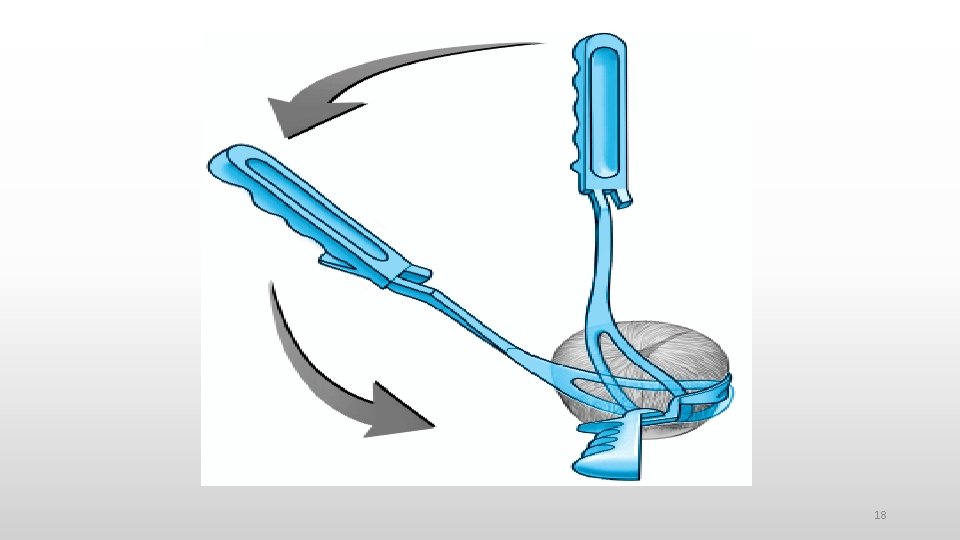
18
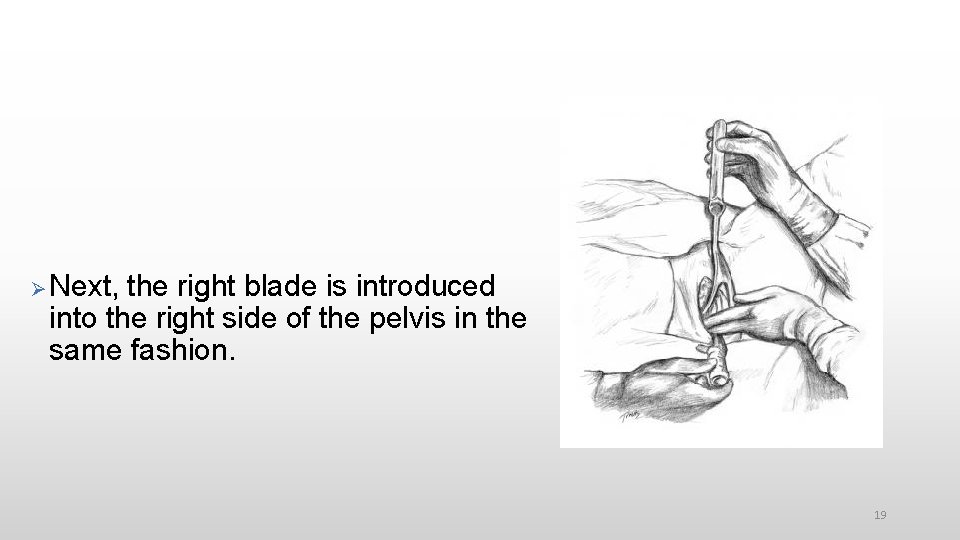
Next, the right blade is introduced into the right side of the pelvis in the same fashion. 19
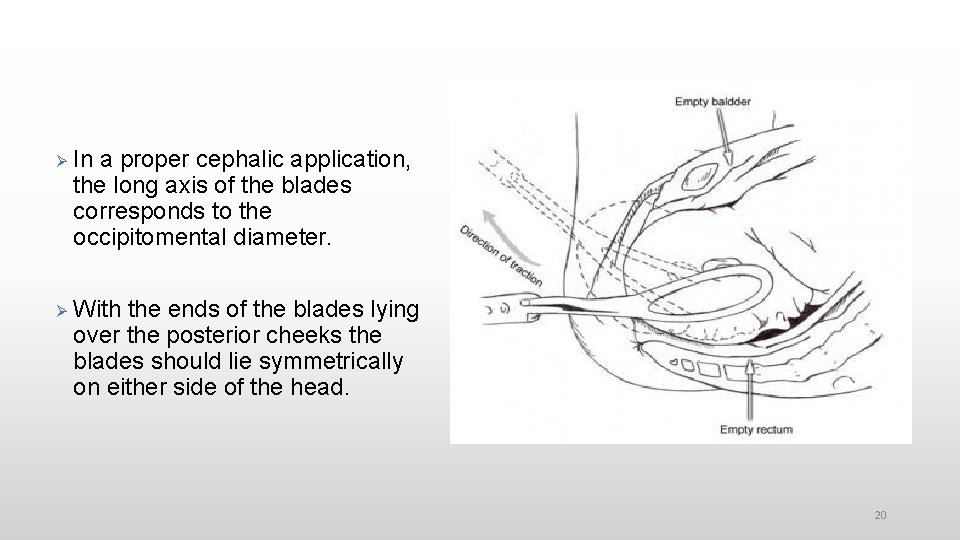
In a proper cephalic application, the long axis of the blades corresponds to the occipitomental diameter. With the ends of the blades lying over the posterior cheeks the blades should lie symmetrically on either side of the head. 20
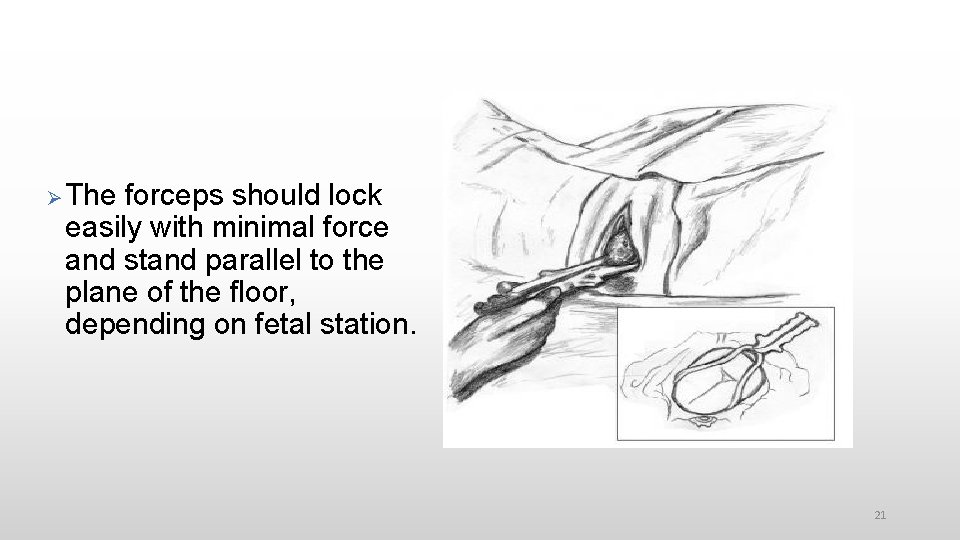
The forceps should lock easily with minimal force and stand parallel to the plane of the floor, depending on fetal station. 21
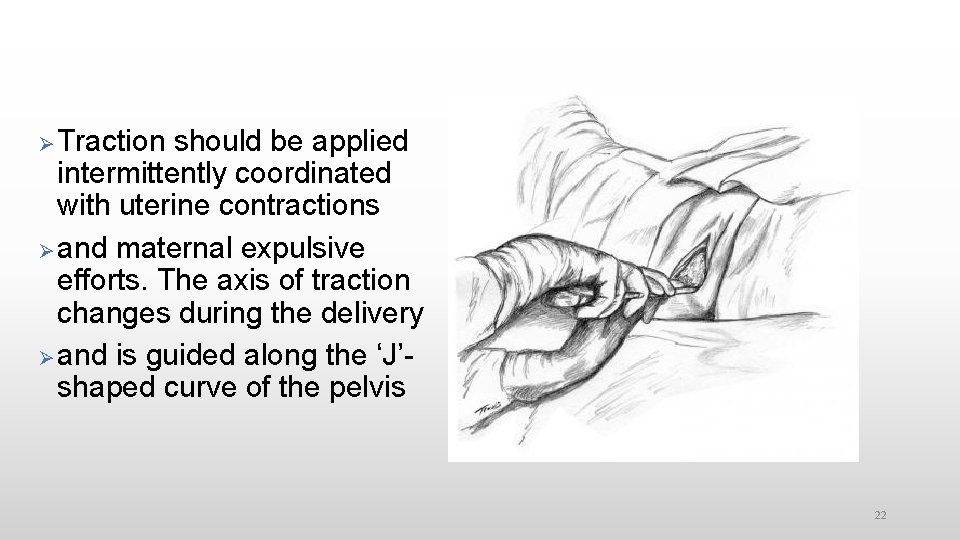
Traction should be applied intermittently coordinated with uterine contractions and maternal expulsive efforts. The axis of traction changes during the delivery and is guided along the ‘J’shaped curve of the pelvis 22
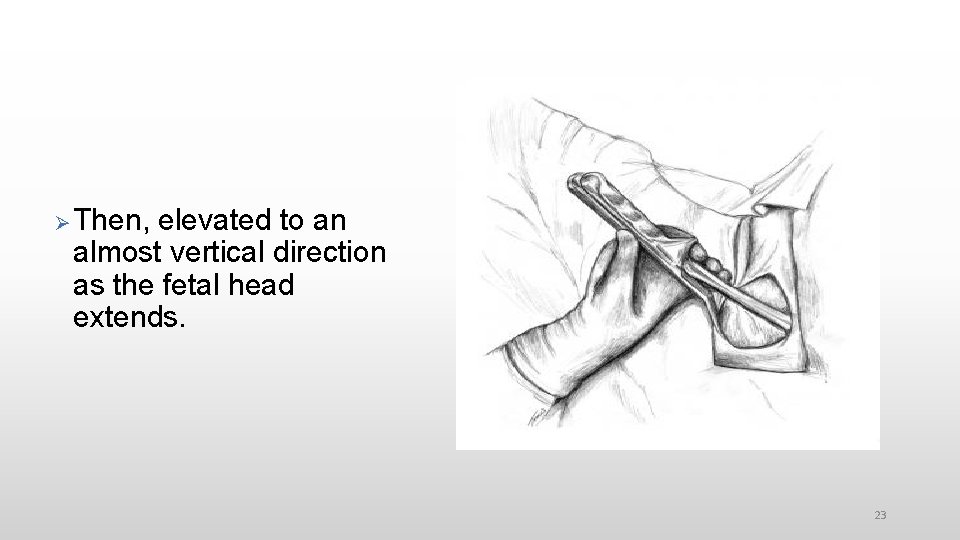
Then, elevated to an almost vertical direction as the fetal head extends. 23
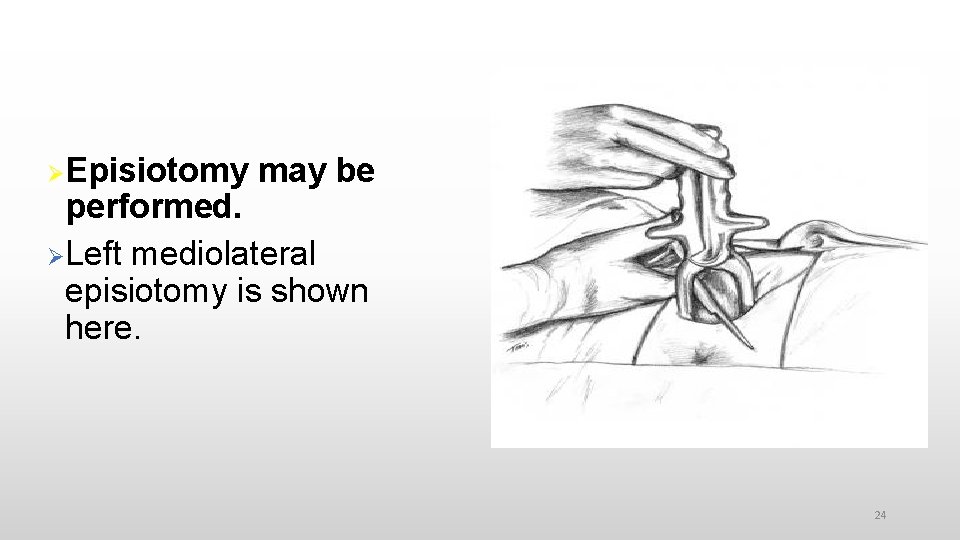
Episiotomy may be performed. Left mediolateral episiotomy is shown here. 24
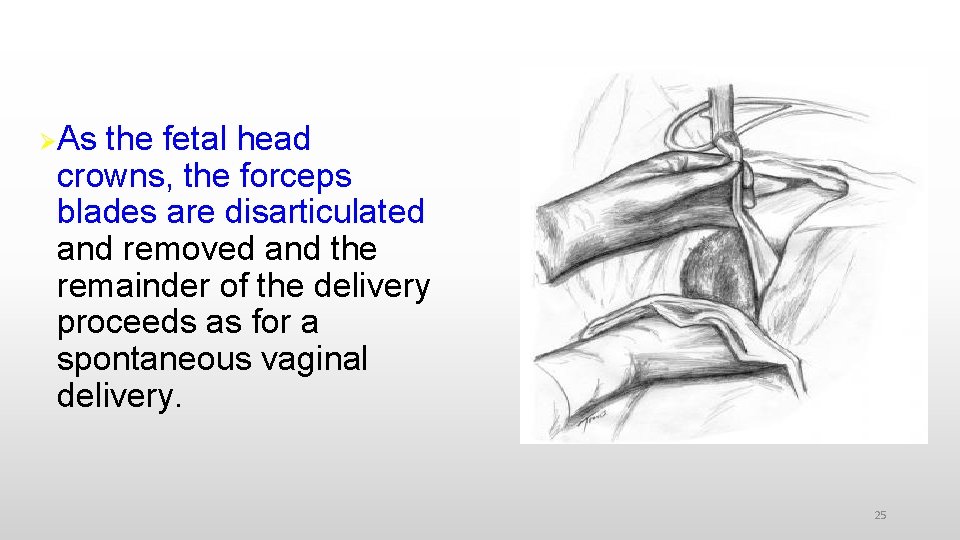
As the fetal head crowns, the forceps blades are disarticulated and removed and the remainder of the delivery proceeds as for a spontaneous vaginal delivery. 25
complications Mostly due to faulty technique rather than the instrument. Maternal: 1) Injury: • • Extension of the episiotomy involving anus & rectum or vaginal vault. Vaginal lacerations and cervical tear if cervix was not fully dilated. 2) Post partum haemorrhage: Due to trauma or Atonic uterus. 3) Shock, due to blood loss, dehydration or prolonged labour. 26
Cont. . 4) Urinary incontinence has been reported in up to 24% of women within 6 months of a forceps delivery. 5) Decrease in pelvic muscle strength, as a result increase in fecal incontinence and in a general index of pelvic floor disorders (incontinence of urine and feces and pelvic organ prolapse). 27
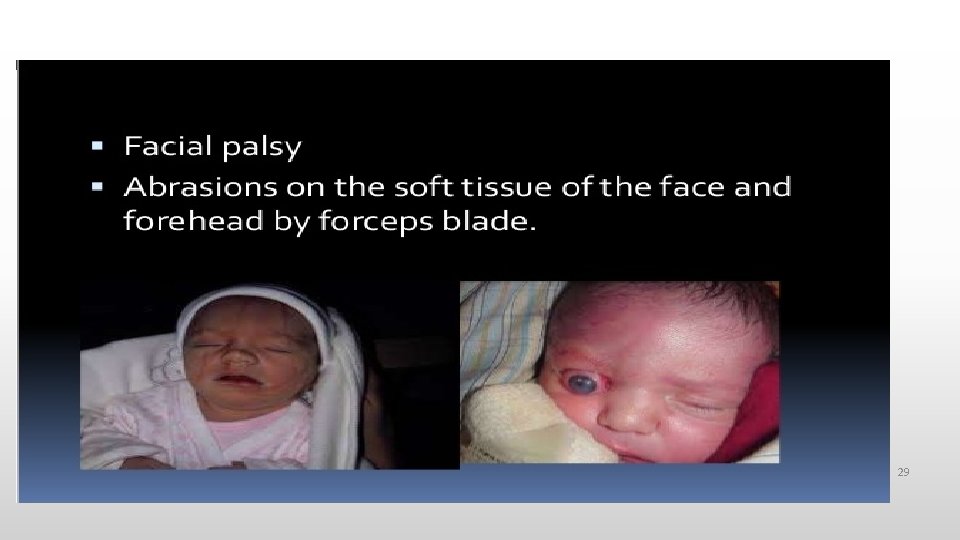
Cont. . Fetal complications: 1) Asphyxia. 2) Trauma: Intracranial haemorrhage. Cephalic haematoma. Facial / Brachial palsy. Injury to the soft tissues of face & forehead. Skull fractures. 3) Cerebral palsy, mental retardation, and behavioral problems. 4) The risk for serious morbidity is 1. 5% and the risk of fetal or neonatal death is 0. 05%. 28
29

Done by: mohamad-alhmouz. Supervised by: Dr. Alaa owais Reference: obstetrics of ten teachers 20 th edition 30
- Slides: 30