
Assimilation in America The People the Problems the
Assimilation in America The People, the Problems, the Poetry.
Assimilation in America: Defining an Idea �“…the merging of cultural traits from previously distinct cultural groups, not involving biological amalgamation…” � Random House Dictionary, 2010 �“The process whereby a minority group gradually adopts the customs and attitudes of the prevailing culture. ” � American Heritage Dictionary, 2010 �“…the social process of absorbing one cultural group into harmony with another…” � Word. Net, Princeton University, 2010
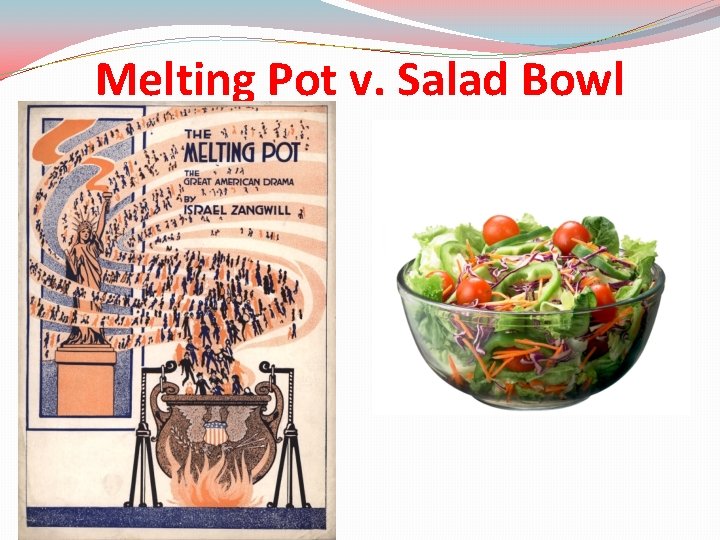
Melting Pot v. Salad Bowl
DREAM Act, 2010 �Development, Relief and Education for Alien Minors Act. �Started in 2001, has gone through many changes since then. �“The United States is missing out on talented workers and entrepreneurs, and is losing vital tax revenues and other economic contributions. ” � http: //www. immigrationpolicy. org/just-facts/dream-act-2010
Approach �Interviews �I first conducted some interviews with immigrants/2 nd generation immigrants I knew. �Asked questions on culture shock, language and other societal obstacles. �“I never thought about that. ” �Poetry �Asked each person I interviewed if they’d be interested in sharing poetry on their experience with me. �Submitting my own poetry. �Circulation �I created very cheap versions of “chapbooks” �Each section contains a brief description of the poets and the country they came from. �Distributing the chapbooks just to sort of “get the word out”. And shoe similarities between experiences.
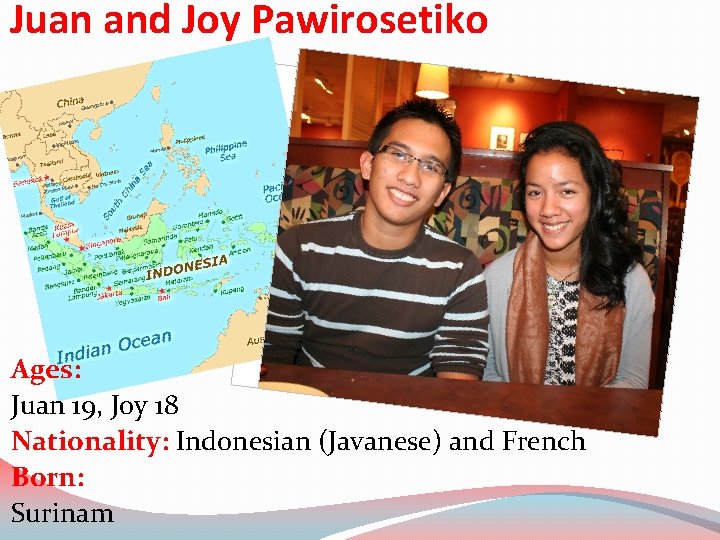
Juan and Joy Pawirosetiko Ages: Juan 19, Joy 18 Nationality: Indonesian (Javanese) and French Born: Surinam
Selected Q&A – Juan & Joy � Q: Why come to America? When? � Parents wanted a better educational opportunity for them. � August 3 rd, 2001. � Acquisition of Language? Culture? � Parents were both fluent in English before moving. � Babysitter was Guianese and Jamaican and spoke very Pidgin’d English to them both. � They both felt that assimilation was easier for them because of the age. � Culture Shock? � Felt more of a culture shock when they returned to Surinam. � Teased and called Americanized.
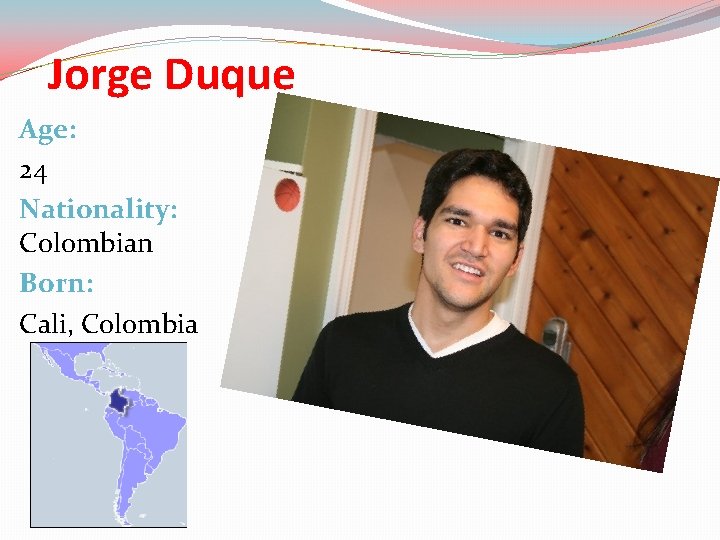
Jorge Duque Age: 24 Nationality: Colombian Born: Cali, Colombia
Selected Q&A – Jorge Duque � Q: Why come to America? When? � Because of violence, mostly due to drug trafficking � 1989, at age 3 � Acquisition of Language? Culture? � Parents and two sisters only spoke Spanish � Since he moved while young, learned it very quick. � Learning English was different for parents. (Worries) � People assuming you’re dumb because of an accent. � Interesting Comments � “My American friends do not consider me American…and my Colombian relatives do not consider me Colombian. ” � “I have now moved to France…in no way under the same circumstances as my parents…but it has taught me that assimilation is truly important…”
“Returning Home” �Joy & Juan �On either of their visits back to Surinam, they have felt that their family didn’t truly accept them as their own. �Most notable were the differences between cultures. �The attitude in Surinam is easy going, doing one thing at a time, as opposed to American (specifically New Yorker) attitudes. �Judged on their clothes. �Insisted on them speaking Dutch. �Movie theaters considered a fancy outting. �“It was like a weird kind of middle.
“Returning Home” �Jorge �Felt a mixture of emotions, “like I was ‘home’” �“I also felt alienated by a ‘mass culture’ I was unaccustomed to. ” �Describes having grown up feeling like his “house” being Colombian and his “world” being American. �Called “el gringo” by cousins and family. �At first afraid of speaking to strangers because they would hear his accent and know he didn’t live there.
And Now, Some Poetry. �Seemingly So, by Joy Pawirosetiko. �Untitled, by Juan Pawirosetiko.
Reflection �I think what mostly struck me were the similarities between the people I interviewed. �I’d hoped to show more, but I ran out of chapbooks but can bring in more Thursday if you all really want some! �I feel poetry is a great medium for expression of these different peoples, especially with bilingual poetry.
- Slides: 13