
Assets Anything of Value Owned by the Business

Assets Anything of Value Owned by the Business
Types of Assests Cash n Furniture n Equipment n Automobiles n Property n Accounts Receivable n Prepaid Insurance n
Liabilities Financial Obligations of the Business
Types of Liabilities Accounts Payable n Loans Payable n Taxes Payable n Notes Payable n Interest Payable n Rent Payable n Any Payable n

Owner’s Equity The Difference between the Value of the Assests and the Value of the Liabilities = What the Business is worth if it were sold today!
Owner’s Equity Accounts Owner’s Capital Account (value of cash contributed by owner plus income and minus expenses) Accounts that effect Owner’s Capital n Expense Accounts n ä Rent Expense ä Insurance Expense n Revenue Accounts ä Sales ä Other Income

Assets MUST Equal Liabilities + Owner’s Equity!
Debits and Credits What do they mean? n On your bank statement? ä Debit means the bank has reduced its liability to you. ä Credit means the bank has increased its liability n On your credit card statement? ä Each time you use the card, you increase your liability (credit). n ATM (Debit Card) ä Each time you use it, the bank’s liability is reduced.
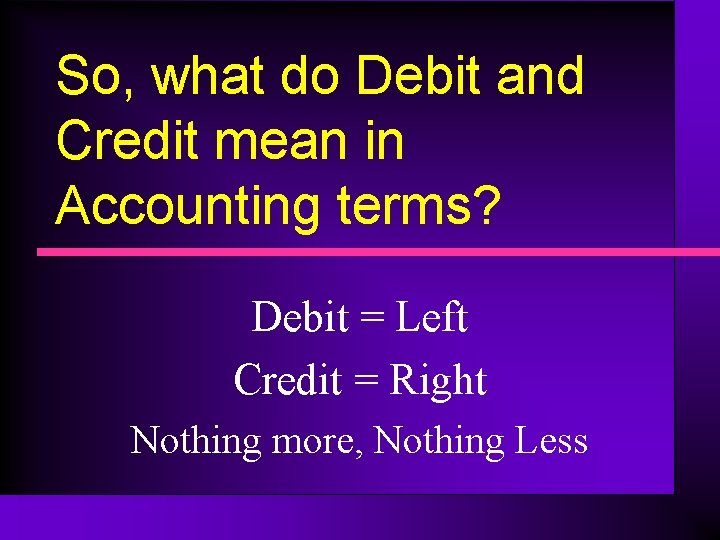
So, what do Debit and Credit mean in Accounting terms? Debit = Left Credit = Right Nothing more, Nothing Less
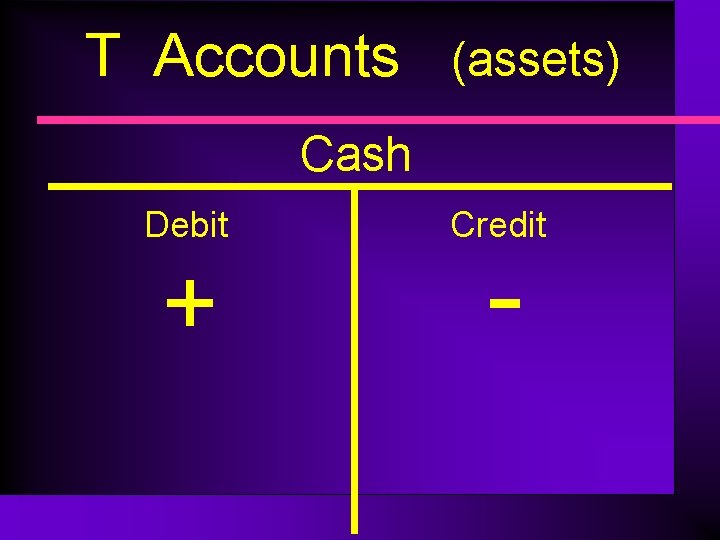
T Accounts (assets) Cash Debit + Credit -
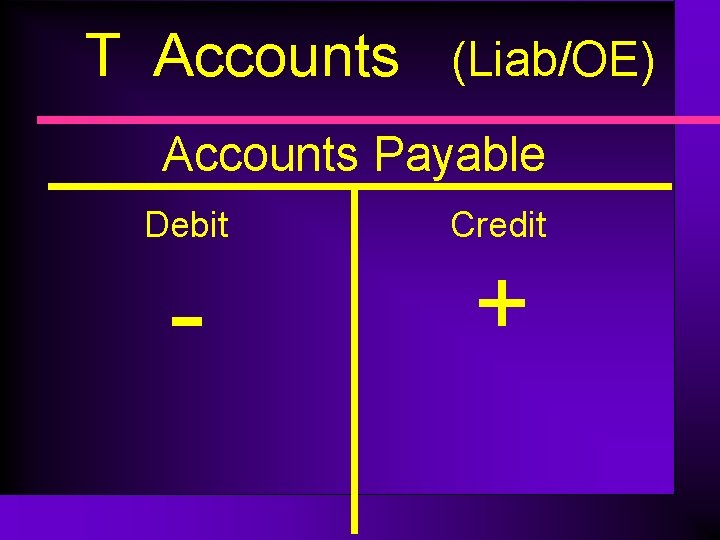
T Accounts (Liab/OE) Accounts Payable Debit Credit - +
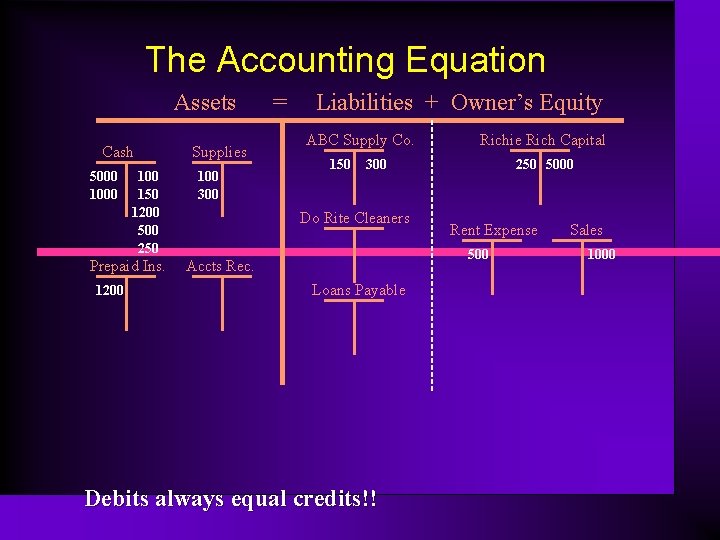
The Accounting Equation Assets Cash 5000 100 150 1200 500 250 Prepaid Ins. 1200 Supplies 100 300 = Liabilities + Owner’s Equity ABC Supply Co. 150 Richie Rich Capital 300 Do Rite Cleaners 250 5000 Rent Expense 500 Accts Rec. Loans Payable Debits always equal credits!! Sales 1000
- Slides: 12