
ASSET TUTORING REVISION 2020 HUMAN ORIGINS 1 Humans



- Slides: 18
ASSET TUTORING REVISION 2020 HUMAN ORIGINS 1: Humans and African Apes, Evidence for Evolution, Phylogenetic trees For each section please read the exam guidelines first before going on to the content. Learn all the content in this presentation
Exam guidelines
Humans as primates along with many African apes Kingdom Animalia Phylum Chordata Order Primates Genus Homo Species sapiens
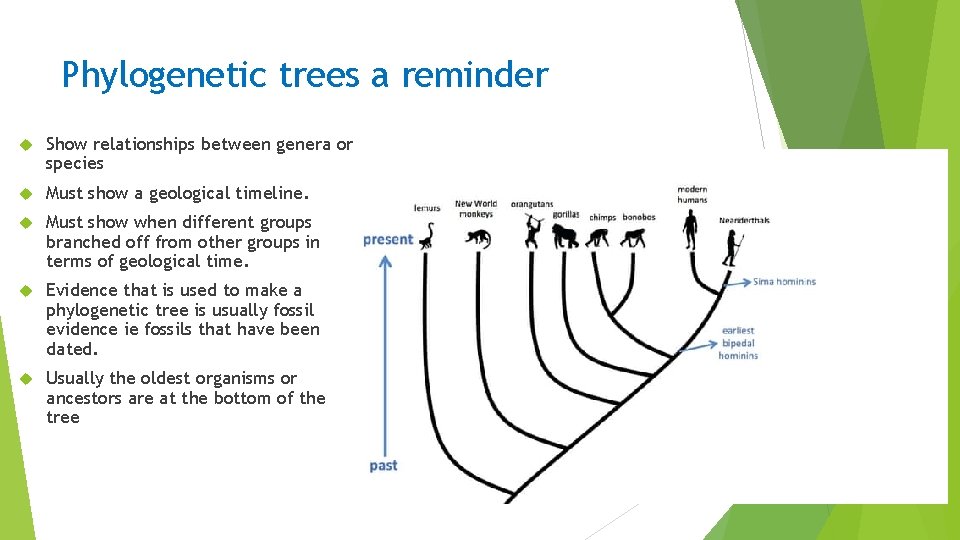
Phylogenetic trees a reminder Show relationships between genera or species Must show a geological timeline. Must show when different groups branched off from other groups in terms of geological time. Evidence that is used to make a phylogenetic tree is usually fossil evidence ie fossils that have been dated. Usually the oldest organisms or ancestors are at the bottom of the tree
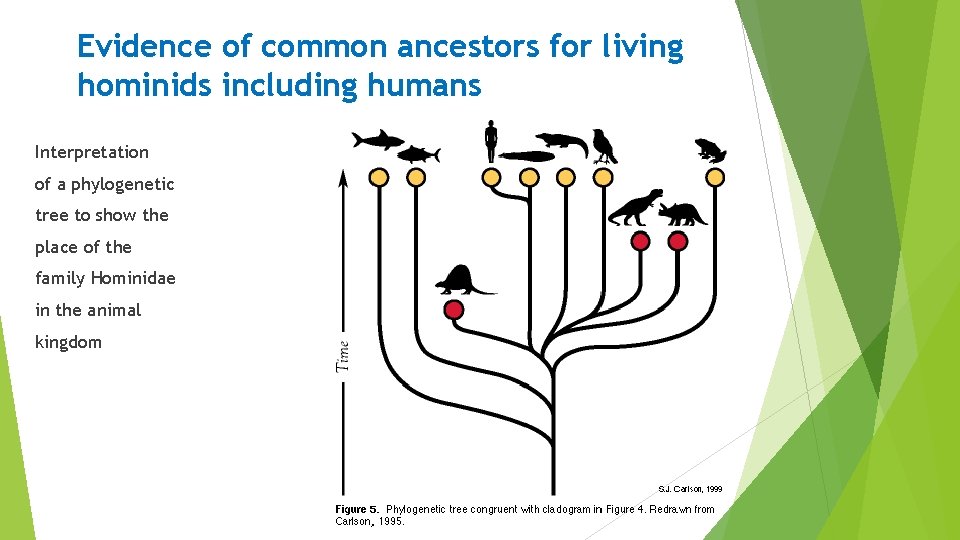
Evidence of common ancestors for living hominids including humans Interpretation of a phylogenetic tree to show the place of the family Hominidae in the animal kingdom
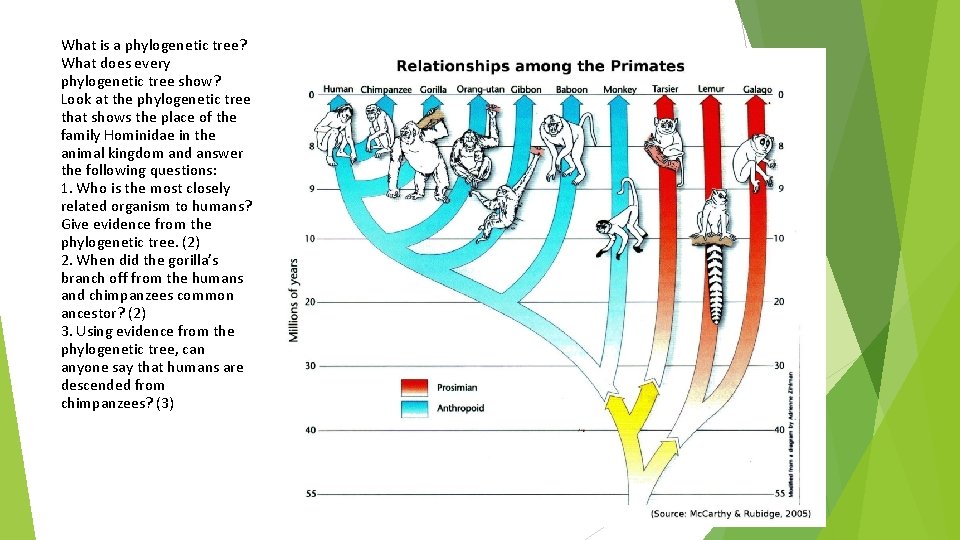
What is a phylogenetic tree? What does every phylogenetic tree show? Look at the phylogenetic tree that shows the place of the family Hominidae in the animal kingdom and answer the following questions: 1. Who is the most closely related organism to humans? Give evidence from the phylogenetic tree. (2) 2. When did the gorilla’s branch off from the humans and chimpanzees common ancestor? (2) 3. Using evidence from the phylogenetic tree, can anyone say that humans are descended from chimpanzees? (3)
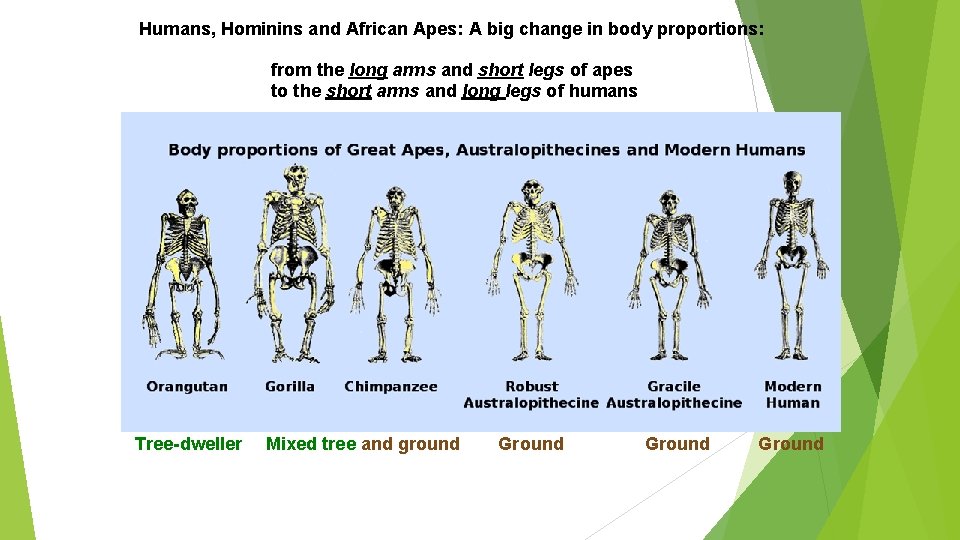
Humans, Hominins and African Apes: A big change in body proportions: from the long arms and short legs of apes to the short arms and long legs of humans Tree-dweller Mixed tree and ground Ground
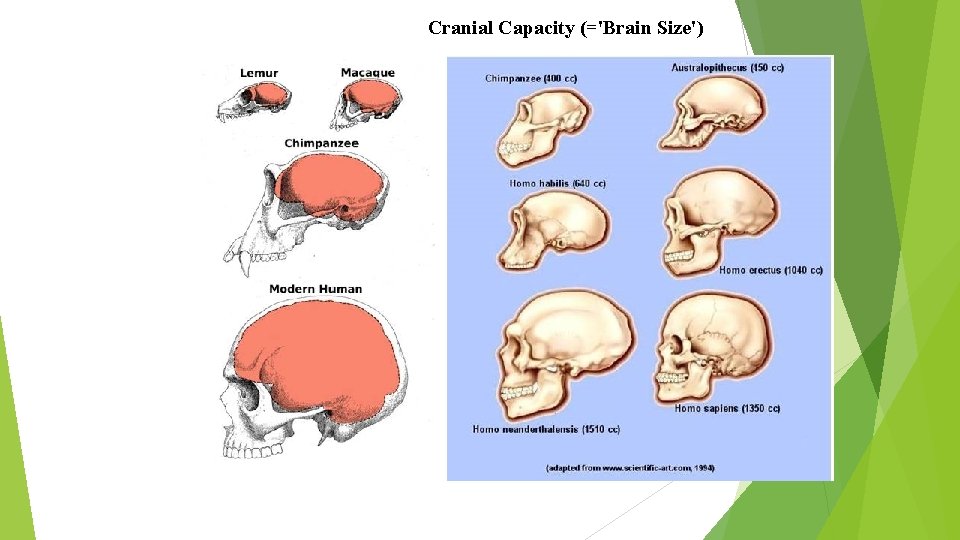
Cranial Capacity (='Brain Size')
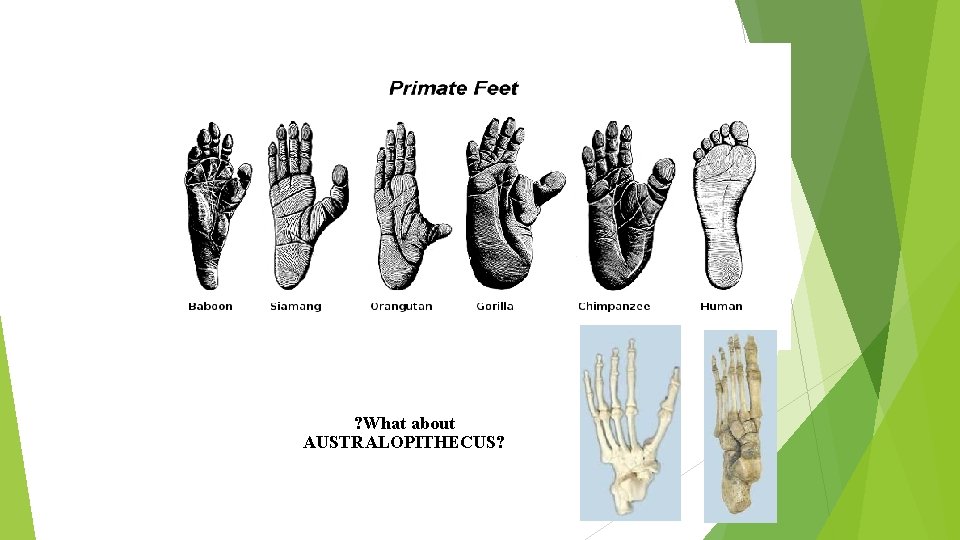
? What about AUSTRALOPITHECUS?
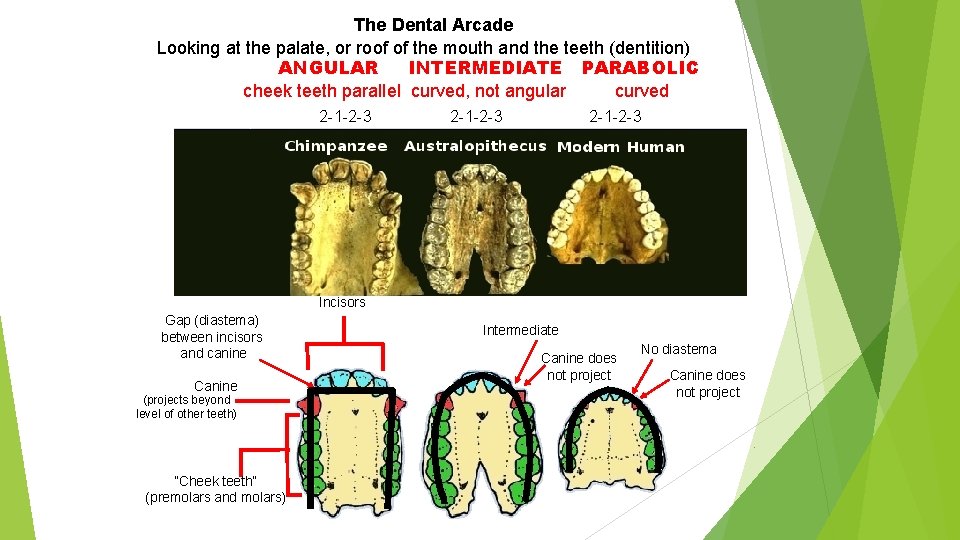
The Dental Arcade Looking at the palate, or roof of the mouth and the teeth (dentition) INTERMEDIATE PARABOLIC ANGULAR cheek teeth parallel curved, not angular curved 2 -1 -2 -3 Incisors Gap (diastema) between incisors and canine Canine (projects beyond level of other teeth) “Cheek teeth” (premolars and molars) Intermediate Canine does not project No diastema Canine does not project
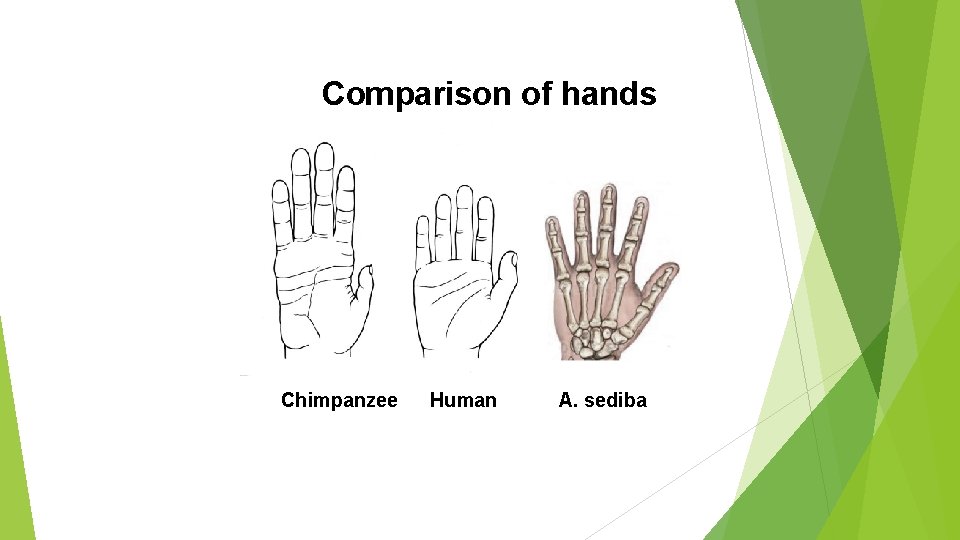
Comparison of hands Chimpanzee Human A. sediba
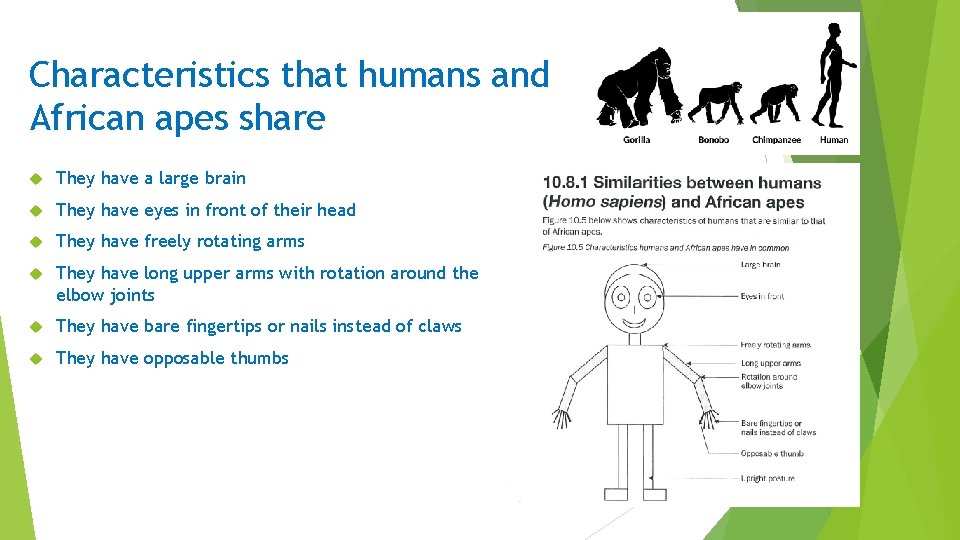
Characteristics that humans and African apes share They have a large brain They have eyes in front of their head They have freely rotating arms They have long upper arms with rotation around the elbow joints They have bare fingertips or nails instead of claws They have opposable thumbs
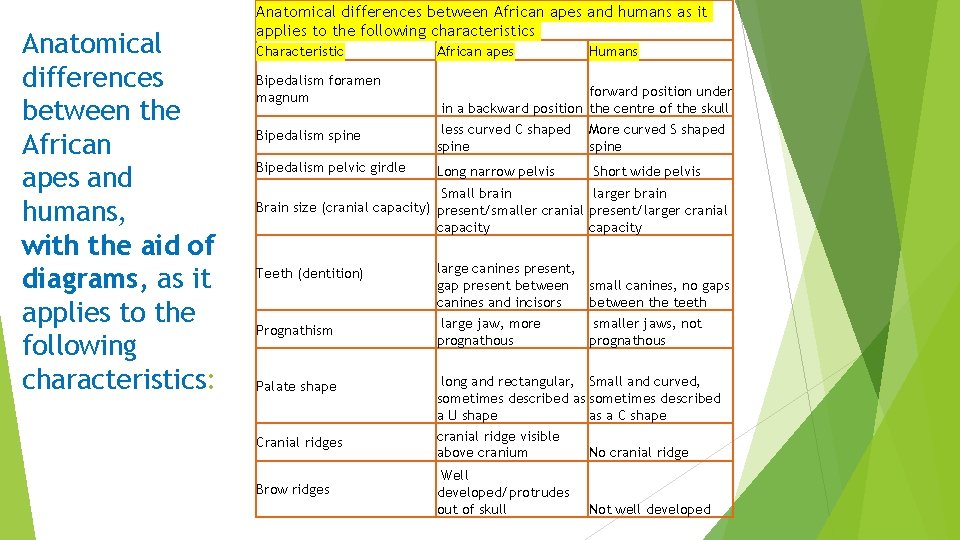
Anatomical differences between the African apes and humans, with the aid of diagrams, as it applies to the following characteristics: Anatomical differences between African apes and humans as it applies to the following characteristics Characteristic Bipedalism foramen magnum African apes Humans forward position under in a backward position the centre of the skull Bipedalism spine less curved C shaped spine More curved S shaped spine Bipedalism pelvic girdle Long narrow pelvis Short wide pelvis Small brain larger brain Brain size (cranial capacity) present/smaller cranial present/larger cranial capacity Teeth (dentition) large canines present, gap present between small canines, no gaps canines and incisors between the teeth Prognathism large jaw, more prognathous Palate shape long and rectangular, Small and curved, sometimes described as sometimes described a U shape as a C shape Cranial ridges cranial ridge visible above cranium No cranial ridge Brow ridges Well developed/protrudes out of skull Not well developed smaller jaws, not prognathous
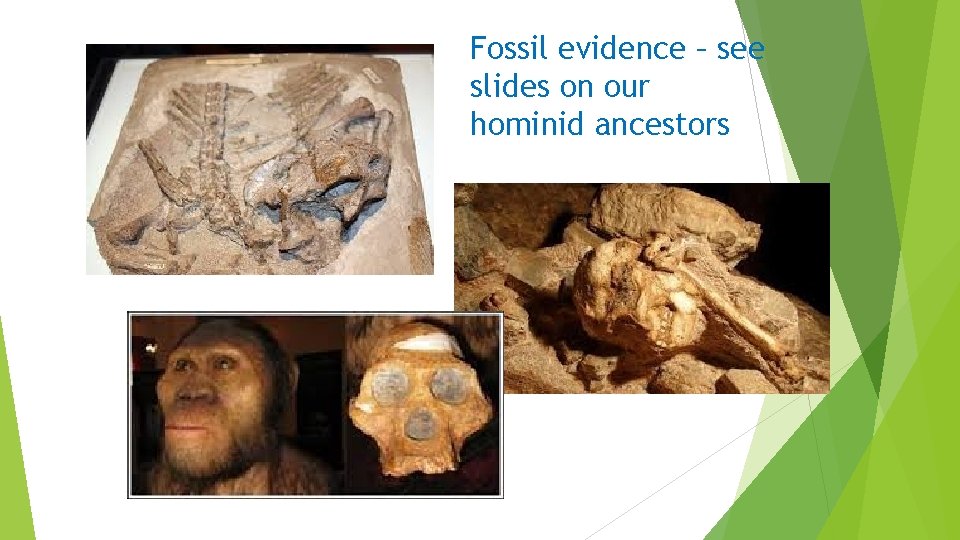
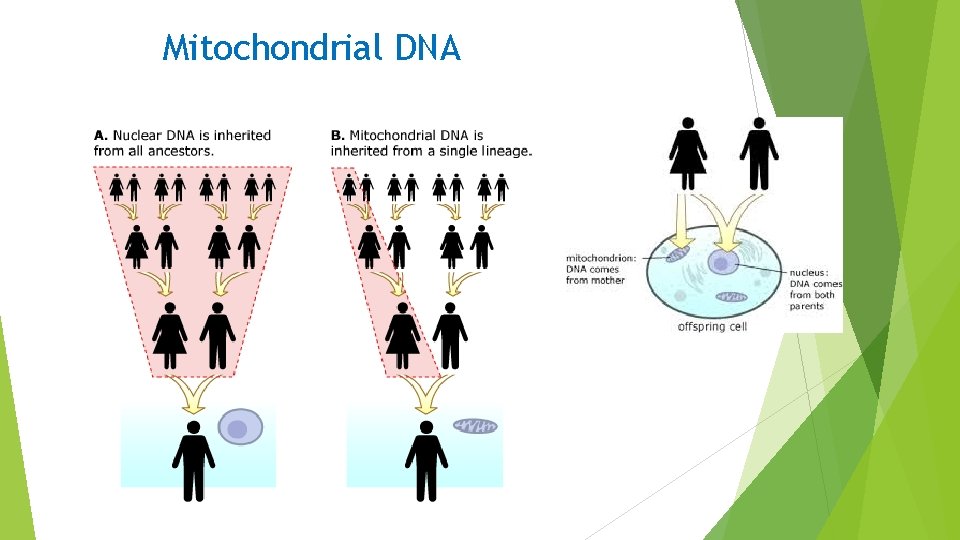
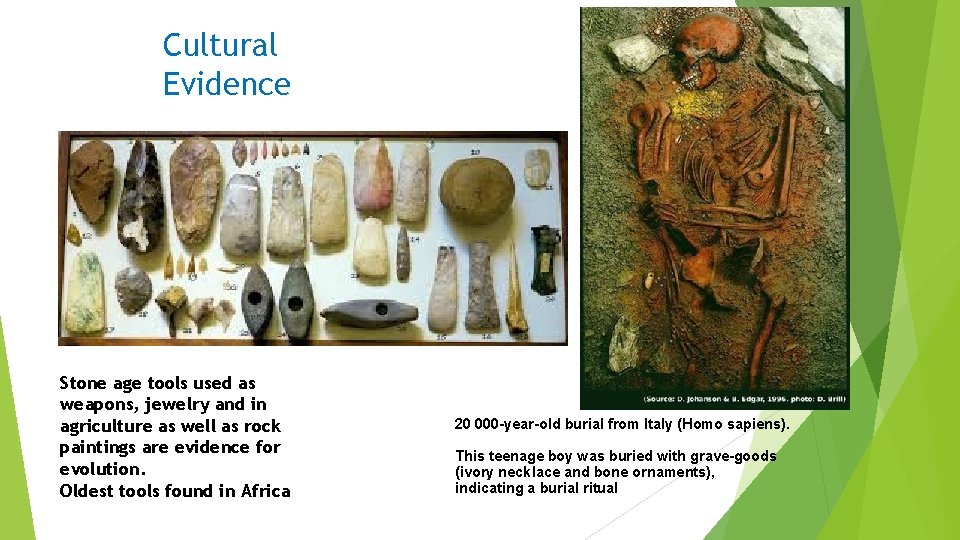
Lines of evidence that support the idea of common ancestors for living hominids including humans Fossil evidence: Evidence from fossils of different ages show that the anatomical characteristics of organisms changed gradually over time. • Genetic evidence: Mitochondrial DNA – tracking Mt. DNA back through female ancestors • Cultural evidence: Tool-making. Looking at more recent aspects of humans as social animals eg tools and grave goods
Fossil evidence – see slides on our hominid ancestors
Mitochondrial DNA
Cultural Evidence Stone age tools used as weapons, jewelry and in agriculture as well as rock paintings are evidence for evolution. Oldest tools found in Africa 20 000 -year-old burial from Italy (Homo sapiens). This teenage boy was buried with grave-goods (ivory necklace and bone ornaments), indicating a burial ritual
Go to Human Origins 2