
Asset Model Sustainment Normalizing PSM Elements to Most
- Slides: 17
Asset Model Sustainment: Normalizing PSM Elements to Most Current Physical Assets Deidra Armstrong, Business Enablement, Manager - Sinclair Oil Corporation David Horn, Consultant, Gemba. Sys Bruce Taylor, Business Enablement, Director - Sinclair Oil Corporation
The Story Line…. Business Themes Technical Themes • • • The Enterprise Situational Needs The Opportunity The Approach Results Physical architecture Data process flow Business rules / logic Advantage of approach
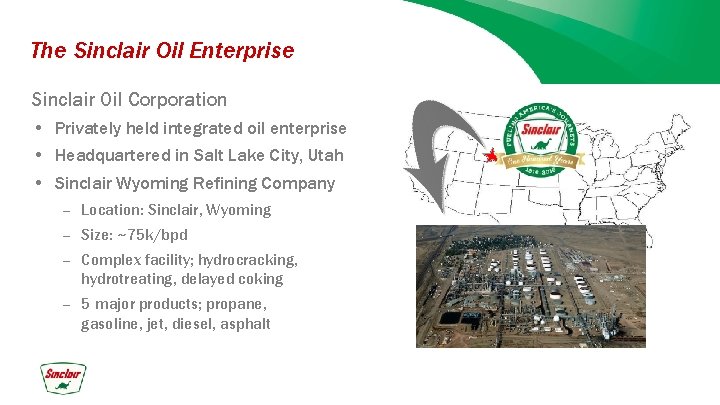
The Sinclair Oil Enterprise Sinclair Oil Corporation • Privately held integrated oil enterprise • Headquartered in Salt Lake City, Utah • Sinclair Wyoming Refining Company – Location: Sinclair, Wyoming – Size: ~75 k/bpd – Complex facility; hydrocracking, hydrotreating, delayed coking – 5 major products; propane, gasoline, jet, diesel, asphalt
The Situation • Vision: Achieve and sustain industry leading performance – Safety – Reliability – Profitability • Progress: Significant advancements in past 5 years – Mechanical – Cultural – Work processes and performance measurements • Next Step: Leverage Investments / Address Key Opportunity – Information Technologies – Business and Operational Discipline
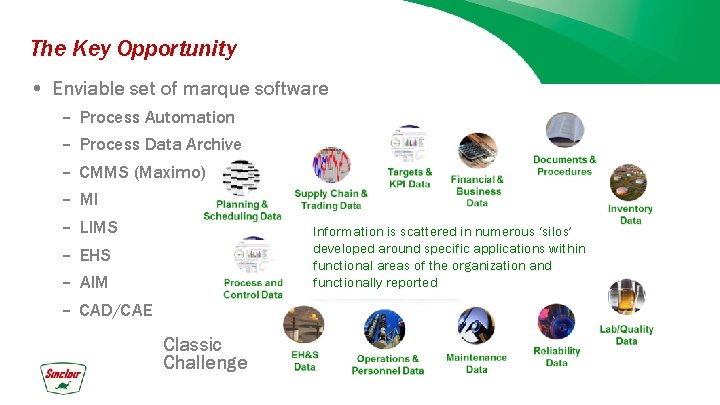
The Key Opportunity • Enviable set of marque software – – – – Process Automation Process Data Archive CMMS (Maximo) MI LIMS Information is scattered in numerous ‘silos’ developed around specific applications within functional areas of the organization and functionally reported EHS AIM CAD/CAE Classic Challenge
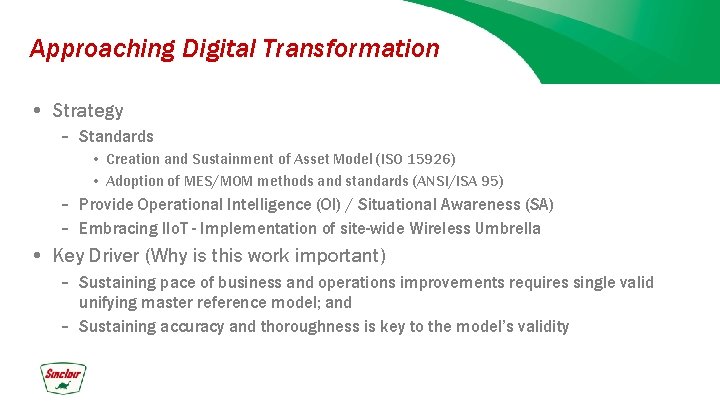
Approaching Digital Transformation • Strategy – Standards • Creation and Sustainment of Asset Model (ISO 15926) • Adoption of MES/MOM methods and standards (ANSI/ISA 95) – Provide Operational Intelligence (OI) / Situational Awareness (SA) – Embracing IIo. T - Implementation of site-wide Wireless Umbrella • Key Driver (Why is this work important) – Sustaining pace of business and operations improvements requires single valid unifying master reference model; and – Sustaining accuracy and thoroughness is key to the model’s validity
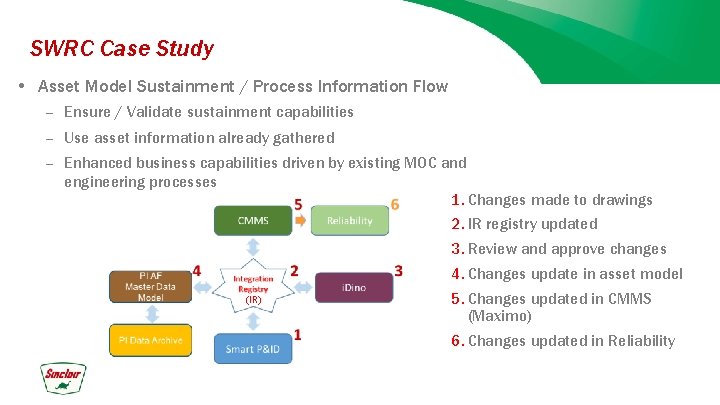
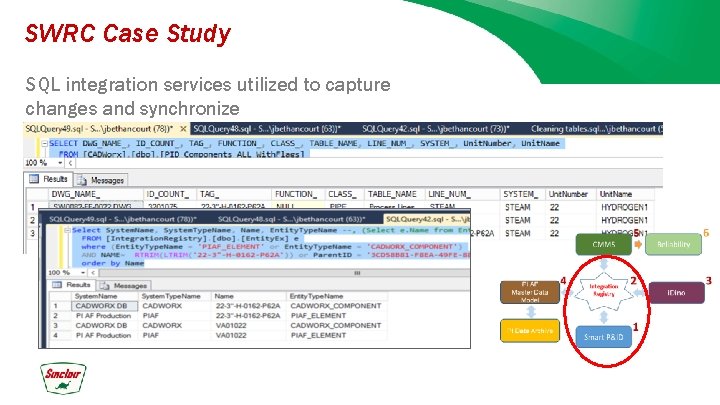
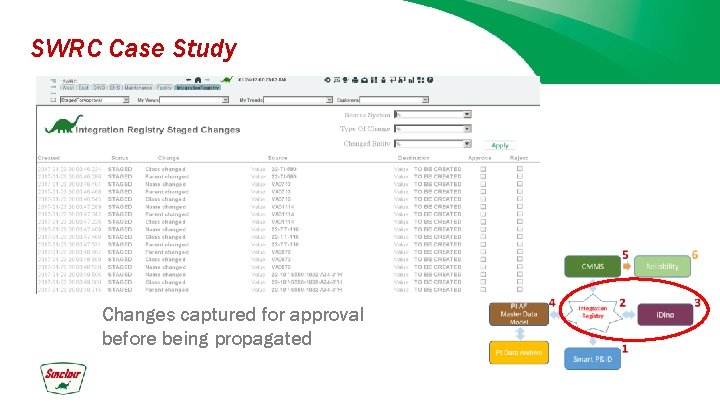
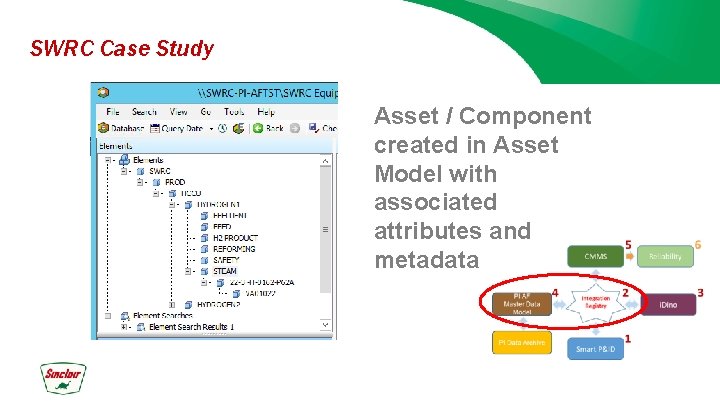
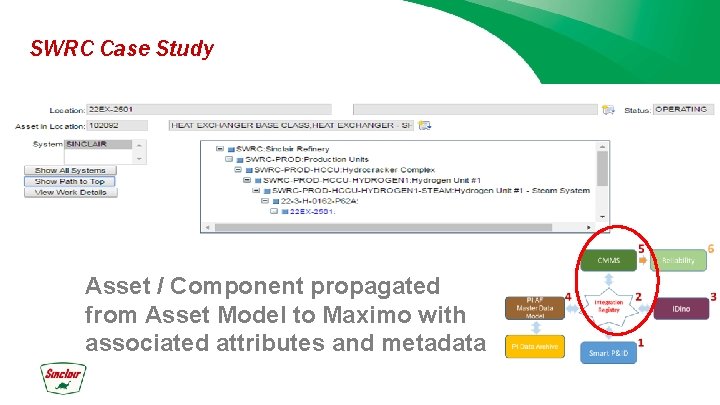
SWRC Case Study • Asset Model Sustainment / Process Information Flow – Ensure / Validate sustainment capabilities – Use asset information already gathered – Enhanced business capabilities driven by existing MOC and engineering processes 1. Changes made to drawings 2. IR registry updated 3. Review and approve changes 4. Changes update in asset model (IR) 5. Changes updated in CMMS (Maximo) 6. Changes updated in Reliability
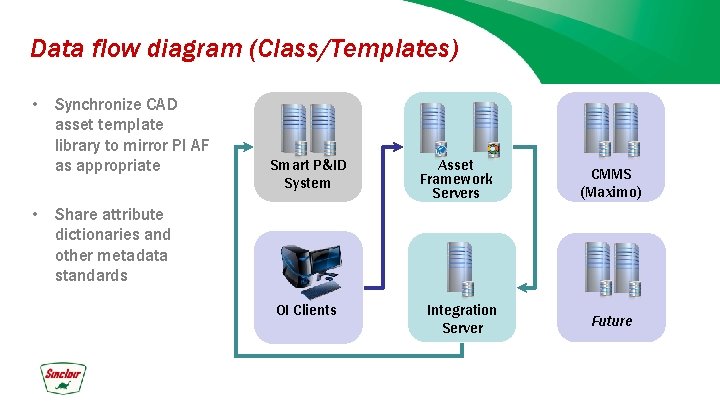
Data flow diagram (Class/Templates) • Synchronize CAD asset template library to mirror PI AF as appropriate Smart P&ID System Asset Framework Servers CMMS (Maximo) • Share attribute dictionaries and other metadata standards OI Clients Integration Server Future
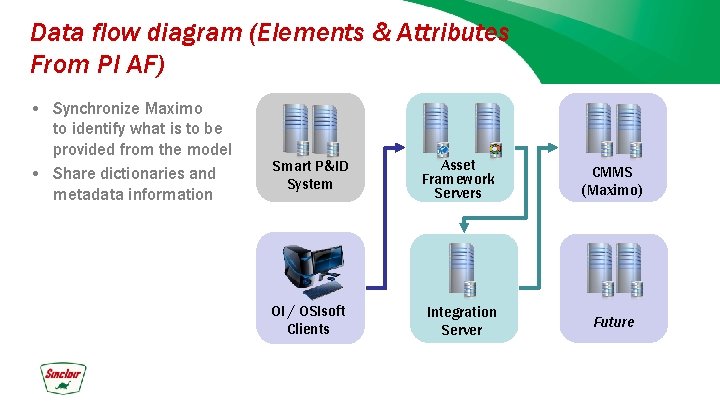
Data flow diagram (Elements & Attributes From PI AF) • Synchronize Maximo to identify what is to be provided from the model • Share dictionaries and metadata information Smart P&ID System Asset Framework Servers CMMS (Maximo) OI / OSIsoft Clients Integration Server Future
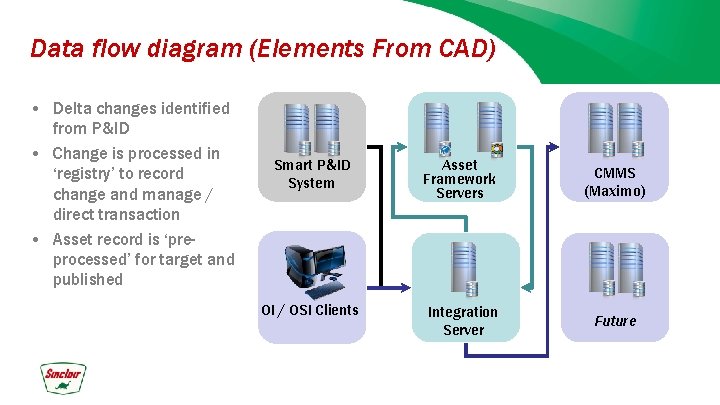
Data flow diagram (Elements From CAD) • Delta changes identified from P&ID • Change is processed in ‘registry’ to record change and manage / direct transaction • Asset record is ‘preprocessed’ for target and published Smart P&ID System Asset Framework Servers CMMS (Maximo) OI / OSI Clients Integration Server Future
SWRC Case Study SQL integration services utilized to capture changes and synchronize
SWRC Case Study Changes captured for approval before being propagated
SWRC Case Study Asset / Component created in Asset Model with associated attributes and metadata
SWRC Case Study Asset / Component propagated from Asset Model to Maximo with associated attributes and metadata
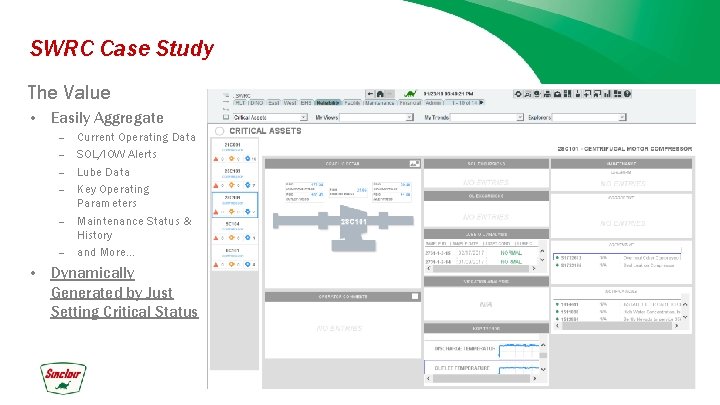
SWRC Case Study The Value • Easily Aggregate – – Current Operating Data SOL/IOW Alerts Lube Data Key Operating Parameters – Maintenance Status & History – and More… • Dynamically Generated by Just Setting Critical Status
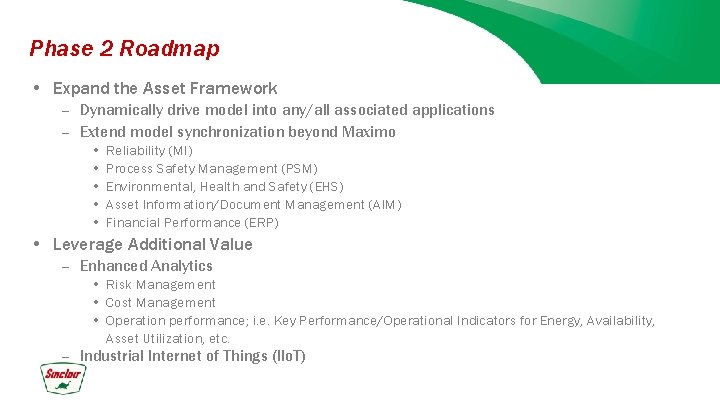
Phase 2 Roadmap • Expand the Asset Framework – Dynamically drive model into any/all associated applications – Extend model synchronization beyond Maximo • • • Reliability (MI) Process Safety Management (PSM) Environmental, Health and Safety (EHS) Asset Information/Document Management (AIM) Financial Performance (ERP) • Leverage Additional Value – Enhanced Analytics • Risk Management • Cost Management • Operation performance; i. e. Key Performance/Operational Indicators for Energy, Availability, Asset Utilization, etc. – Industrial Internet of Things (IIo. T)
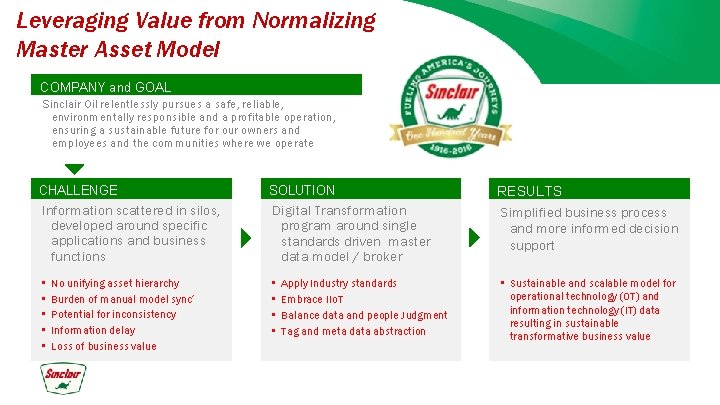
Leveraging Value from Normalizing Master Asset Model COMPANY and GOAL Sinclair Oil relentlessly pursues a safe, reliable, environmentally responsible and a profitable operation, ensuring a sustainable future for our owners and employees and the communities where we operate CHALLENGE SOLUTION RESULTS Information scattered in silos, developed around specific applications and business functions Digital Transformation program around single standards driven master data model / broker Simplified business process and more informed decision support • • • Sustainable and scalable model for operational technology (OT) and information technology (IT) data resulting in sustainable transformative business value No unifying asset hierarchy Burden of manual model sync’ Potential for inconsistency Information delay Loss of business value Apply Industry standards Embrace IIo. T Balance data and people Judgment Tag and meta data abstraction