
ASSET GRADE 12 LIFE SCIENCES REVISION 2020 GENETICS
- Slides: 15
ASSET GRADE 12 LIFE SCIENCES REVISION 2020 GENETICS PART 2 For each section please read the exam guidelines first before going on to the content. Learn all the content in this presentation
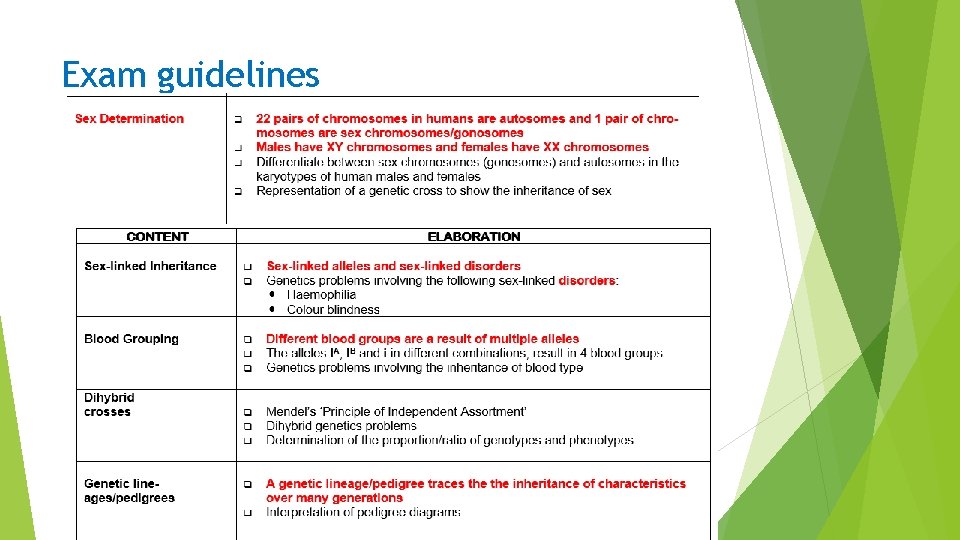
Exam guidelines
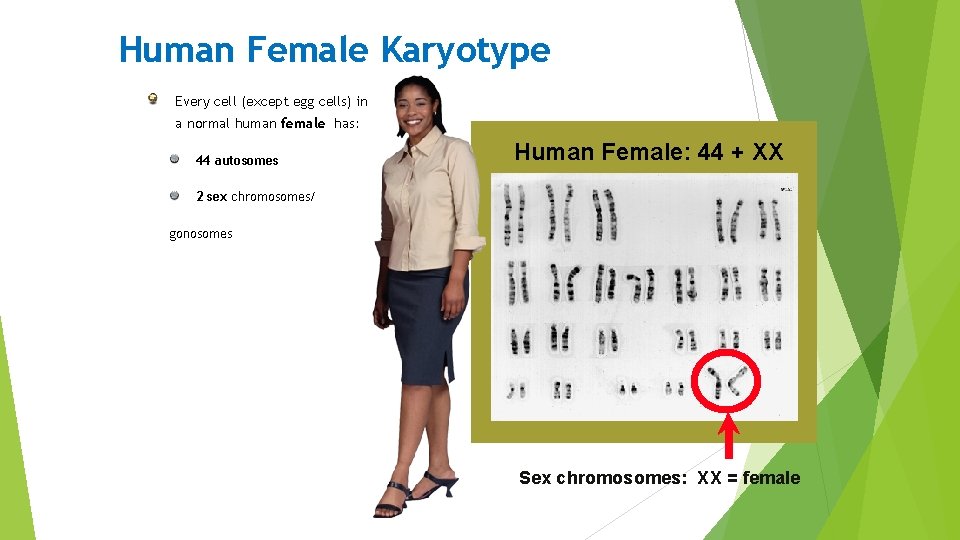
Human Female Karyotype Every cell (except egg cells) in a normal human female has: 44 autosomes Human Female: 44 + XX 2 sex chromosomes/ gonosomes Sex chromosomes: XX = female
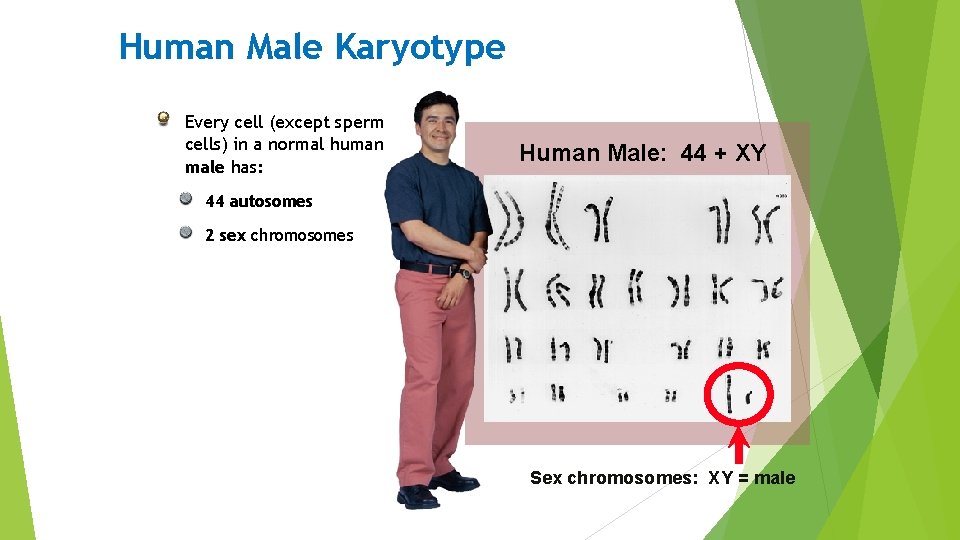
Human Male Karyotype Every cell (except sperm cells) in a normal human male has: Human Male: 44 + XY 44 autosomes 2 sex chromosomes Sex chromosomes: XY = male
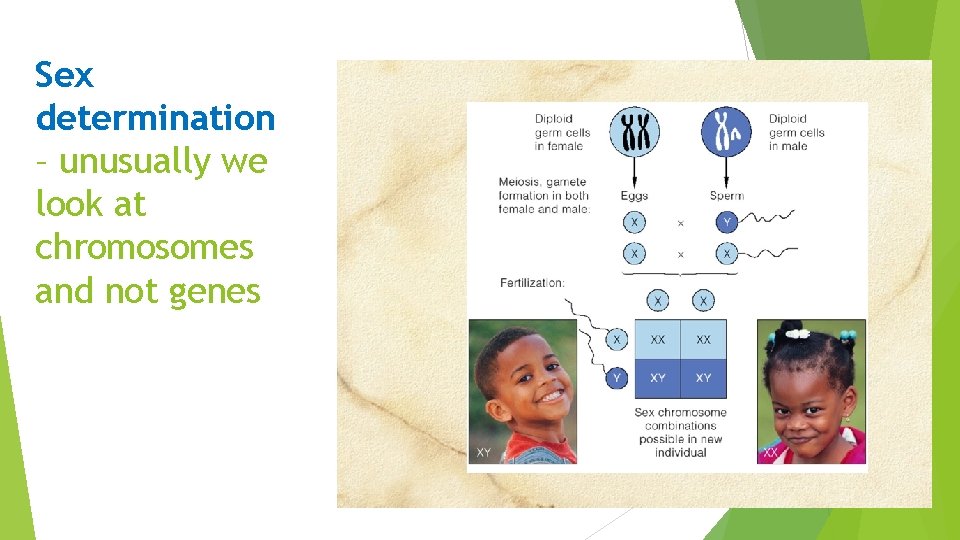
Sex determination – unusually we look at chromosomes and not genes
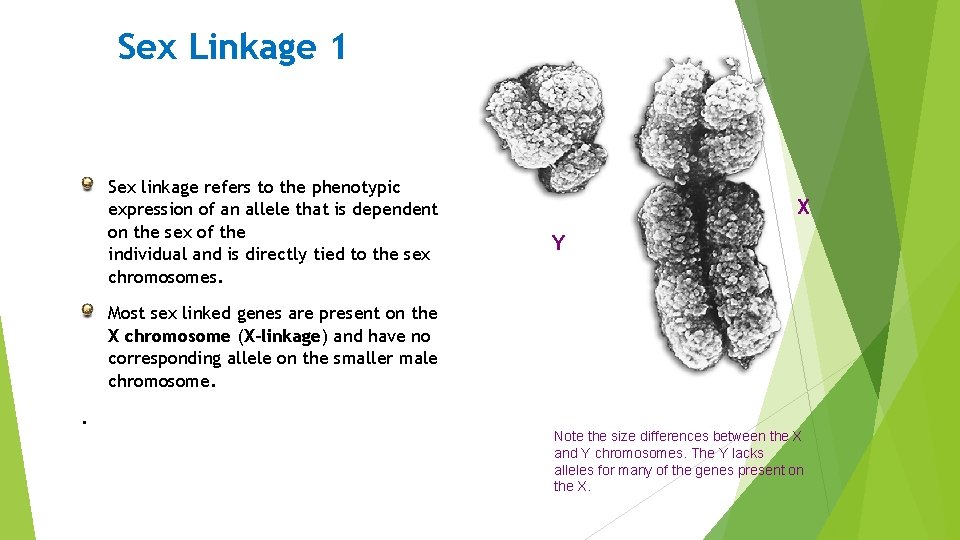
Sex Linkage 1 Sex linkage refers to the phenotypic expression of an allele that is dependent on the sex of the individual and is directly tied to the sex chromosomes. X Y Most sex linked genes are present on the X chromosome (X-linkage) and have no corresponding allele on the smaller male chromosome. . Note the size differences between the X and Y chromosomes. The Y lacks alleles for many of the genes present on the X.
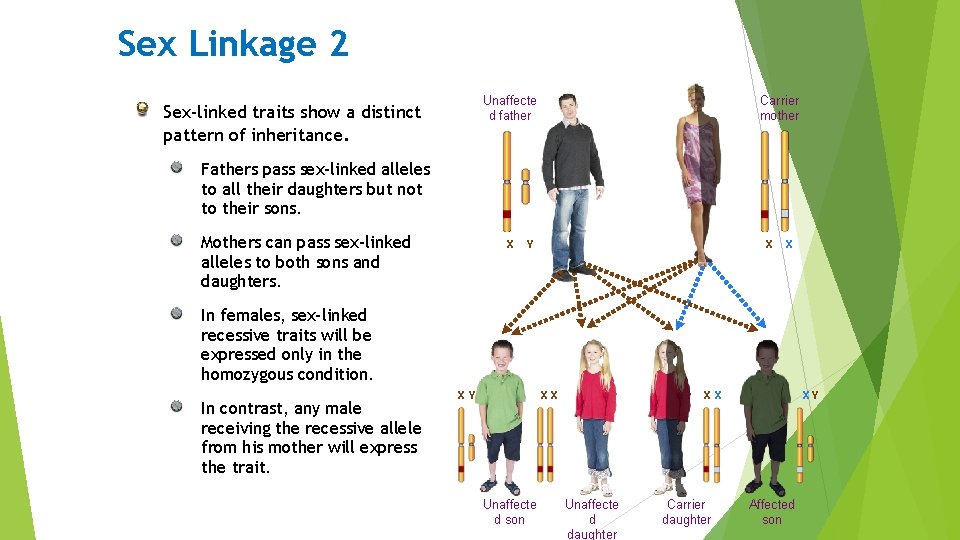
Sex Linkage 2 Unaffecte d father Sex-linked traits show a distinct pattern of inheritance. Carrier mother Fathers pass sex-linked alleles to all their daughters but not to their sons. Mothers can pass sex-linked alleles to both sons and daughters. X Y X X In females, sex-linked recessive traits will be expressed only in the homozygous condition. In contrast, any male receiving the recessive allele from his mother will express the trait. XY XX XX Unaffecte d son Unaffecte d daughter Carrier daughter XY Affected son
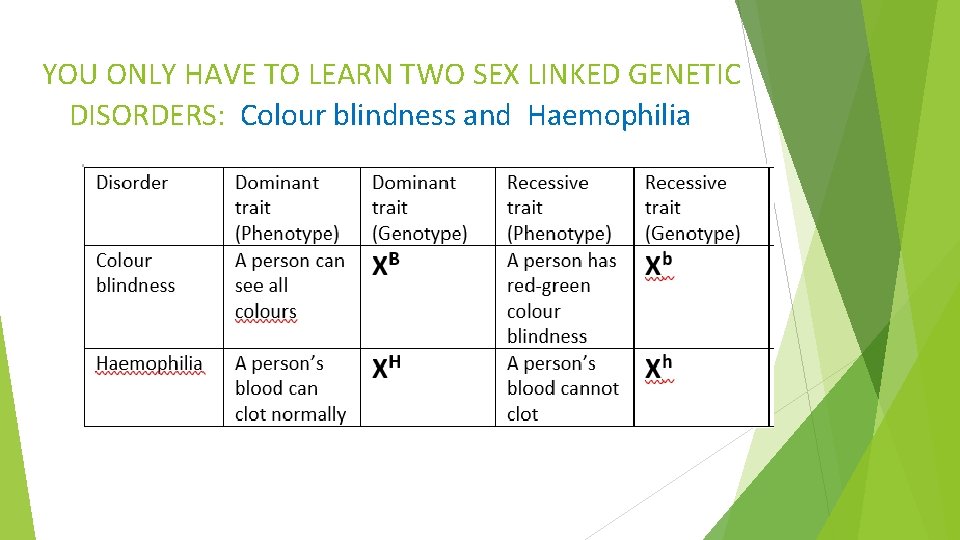
YOU ONLY HAVE TO LEARN TWO SEX LINKED GENETIC DISORDERS: Colour blindness and Haemophilia
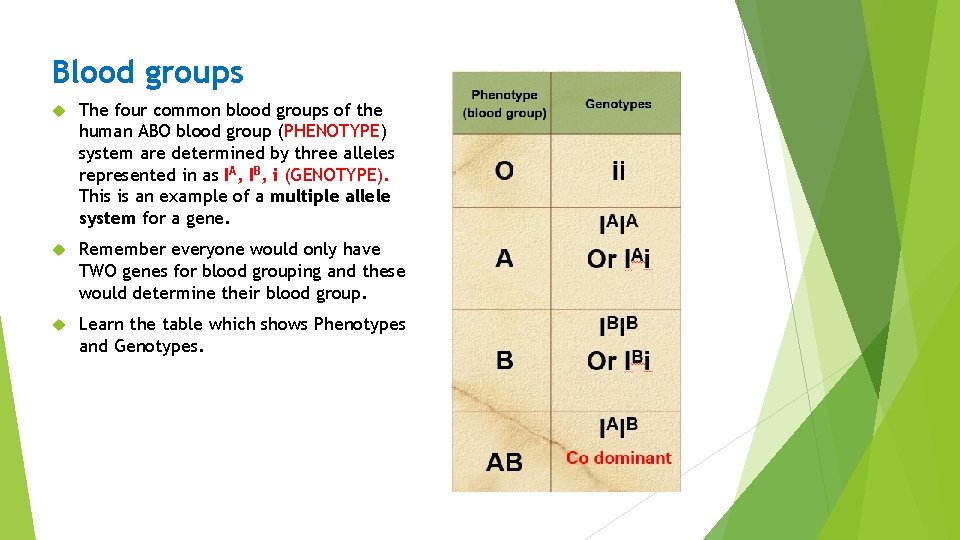
Blood groups The four common blood groups of the human ABO blood group (PHENOTYPE) system are determined by three alleles represented in as IA, IB, i (GENOTYPE). This is an example of a multiple allele system for a gene. Remember everyone would only have TWO genes for blood grouping and these would determine their blood group. Learn the table which shows Phenotypes and Genotypes.
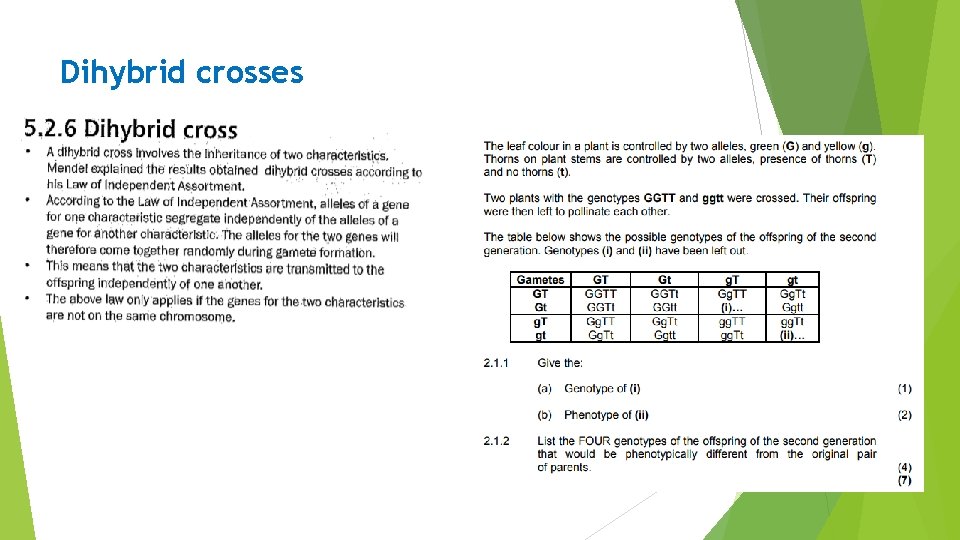
Dihybrid crosses
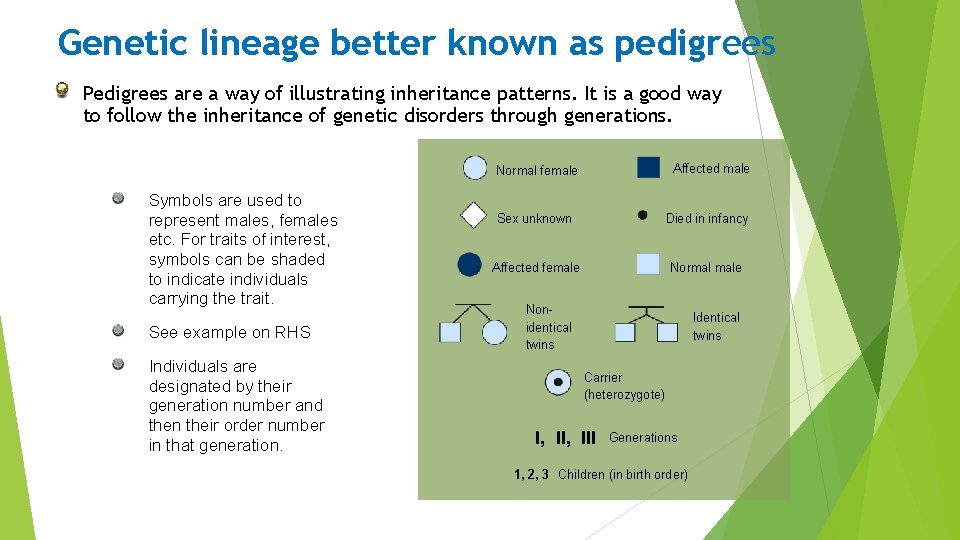
Genetic lineage better known as pedigrees Pedigrees are a way of illustrating inheritance patterns. It is a good way to follow the inheritance of genetic disorders through generations. Affected male Normal female Symbols are used to represent males, females etc. For traits of interest, symbols can be shaded to indicate individuals carrying the trait. See example on RHS Individuals are designated by their generation number and then their order number in that generation. Sex unknown Died in infancy Affected female Normal male Nonidentical twins Identical twins Carrier (heterozygote) I, III Generations 1, 2, 3 Children (in birth order)
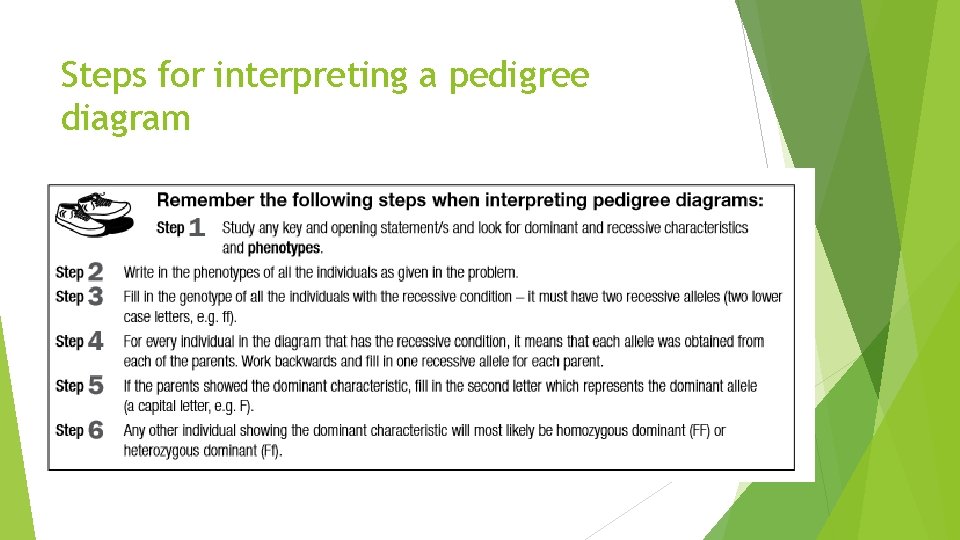
Steps for interpreting a pedigree diagram
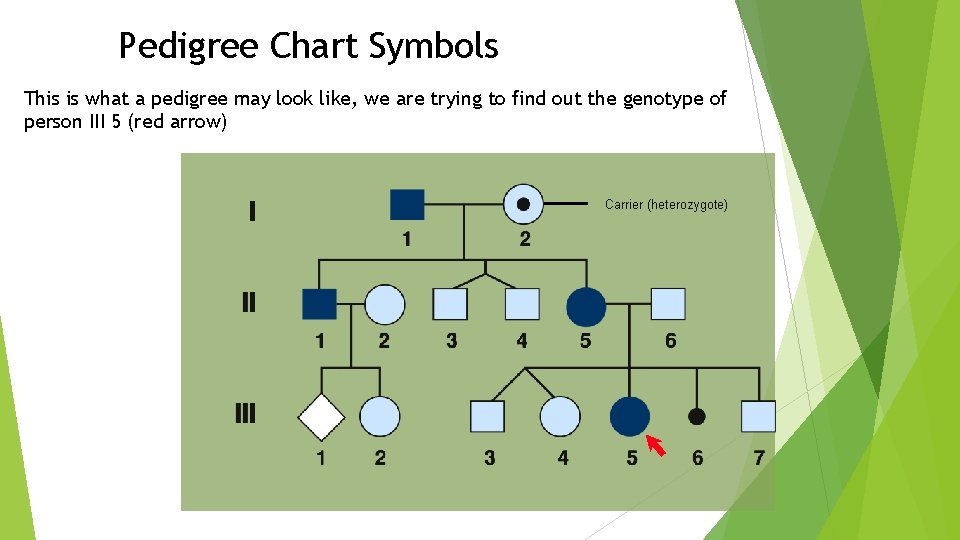
Pedigree Chart Symbols This is what a pedigree may look like, we are trying to find out the genotype of person III 5 (red arrow) Carrier (heterozygote)
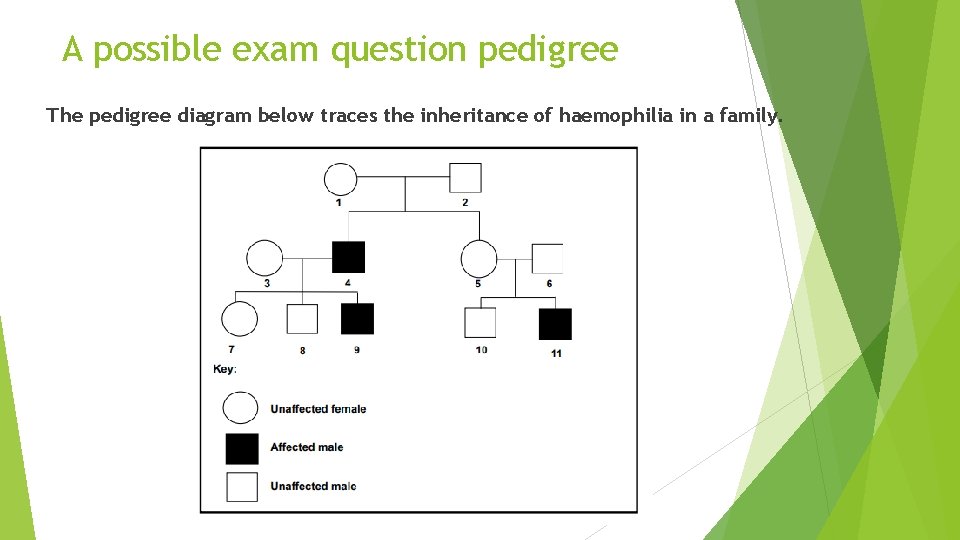
A possible exam question pedigree The pedigree diagram below traces the inheritance of haemophilia in a family.
If you have time, practise answering pedigree questions on your own Go to Genetics Part 3