
Asset Based Community Development What we will cover
Asset Based Community Development
What we will cover: 1. What are Asset Based Community Development approaches? (ABCD) From 3 years of age children should use a pea 2. Moving towards Asset Based sized amount of 1350 -1500 ppm fluoride toothpaste Approaches 3. Asset based approaches - some examples
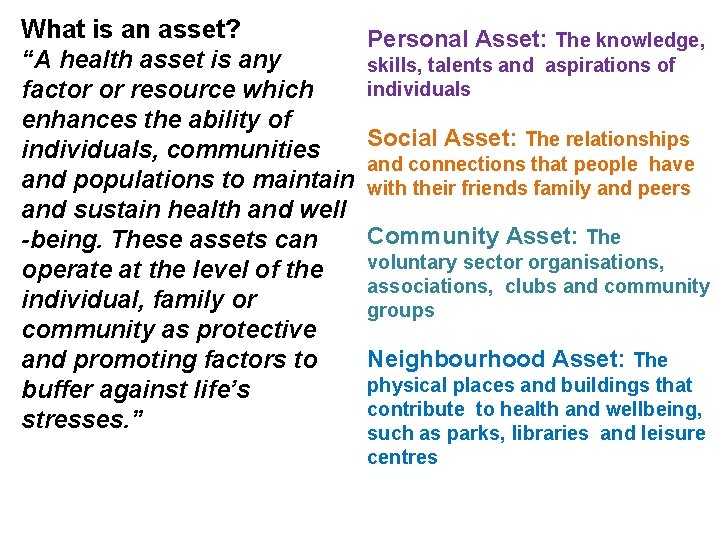
What is an asset? “A health asset is any factor or resource which enhances the ability of individuals, communities and populations to maintain and sustain health and well -being. These assets can operate at the level of the individual, family or community as protective and promoting factors to buffer against life’s stresses. ” Personal Asset: The knowledge, skills, talents and aspirations of individuals Social Asset: The relationships and connections that people have with their friends family and peers Community Asset: The voluntary sector organisations, associations, clubs and community groups Neighbourhood Asset: The physical places and buildings that contribute to health and wellbeing, such as parks, libraries and leisure centres
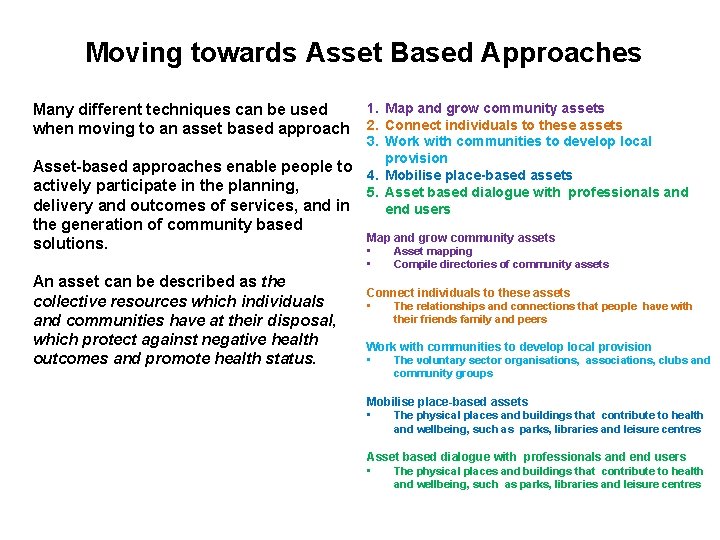
Moving towards Asset Based Approaches Many different techniques can be used when moving to an asset based approach Asset-based approaches enable people to actively participate in the planning, delivery and outcomes of services, and in the generation of community based solutions. An asset can be described as the collective resources which individuals and communities have at their disposal, which protect against negative health outcomes and promote health status. 1. Map and grow community assets 2. Connect individuals to these assets 3. Work with communities to develop local provision 4. Mobilise place-based assets 5. Asset based dialogue with professionals and end users Map and grow community assets • Asset mapping • Compile directories of community assets Connect individuals to these assets • The relationships and connections that people have with their friends family and peers Work with communities to develop local provision • The voluntary sector organisations, associations, clubs and community groups Mobilise place-based assets • The physical places and buildings that contribute to health and wellbeing, such as parks, libraries and leisure centres Asset based dialogue with professionals and end users • The physical places and buildings that contribute to health and wellbeing, such as parks, libraries and leisure centres
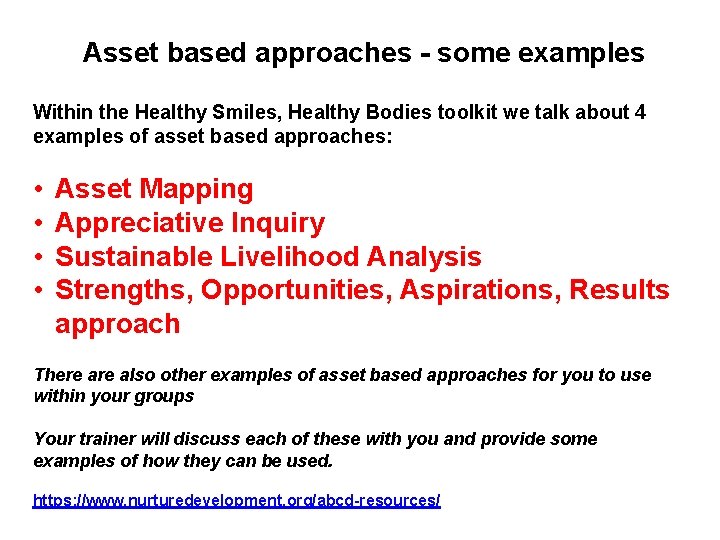
Asset based approaches - some examples Within the Healthy Smiles, Healthy Bodies toolkit we talk about 4 examples of asset based approaches: • • Asset Mapping Appreciative Inquiry Sustainable Livelihood Analysis Strengths, Opportunities, Aspirations, Results approach There also other examples of asset based approaches for you to use within your groups Your trainer will discuss each of these with you and provide some examples of how they can be used. https: //www. nurturedevelopment. org/abcd-resources/
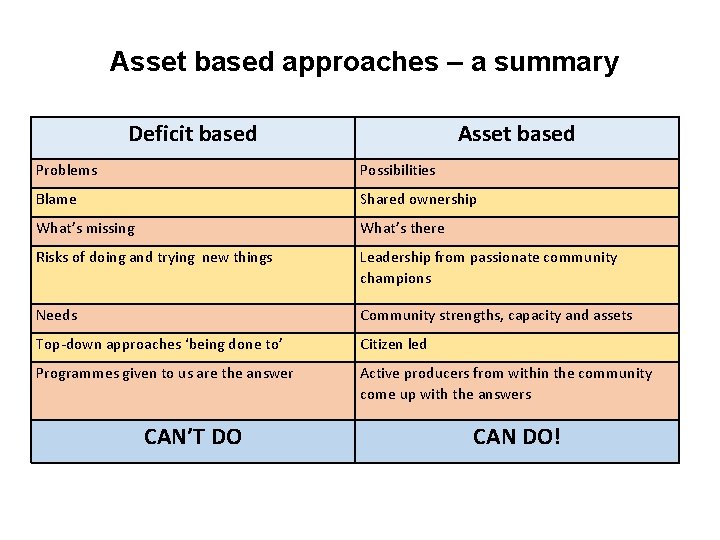
Asset based approaches – a summary Deficit based Asset based Problems Possibilities Blame Shared ownership What’s missing What’s there Risks of doing and trying new things Leadership from passionate community champions Needs Community strengths, capacity and assets Top-down approaches ‘being done to’ Citizen led Programmes given to us are the answer Active producers from within the community come up with the answers CAN’T DO CAN DO!
- Slides: 6