
Assessment vs Evaluation n What are the most
- Slides: 17
Assessment vs. Evaluation n What are the most striking differences between the two?
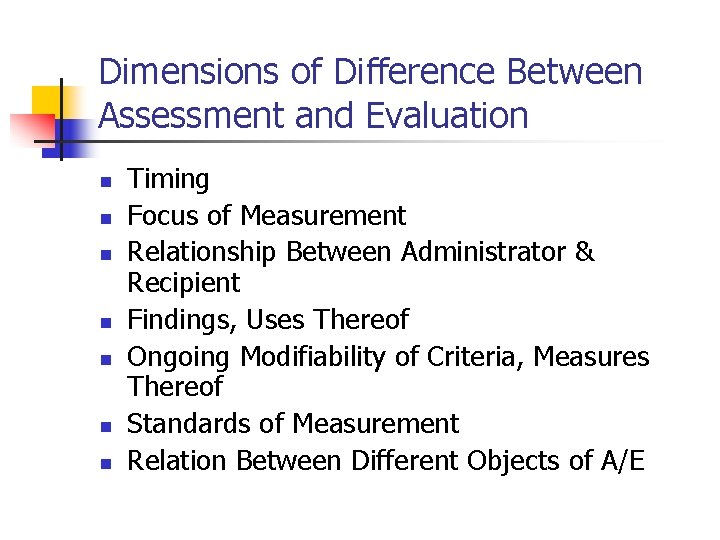
Dimensions of Difference Between Assessment and Evaluation n n n Timing Focus of Measurement Relationship Between Administrator & Recipient Findings, Uses Thereof Ongoing Modifiability of Criteria, Measures Thereof Standards of Measurement Relation Between Different Objects of A/E
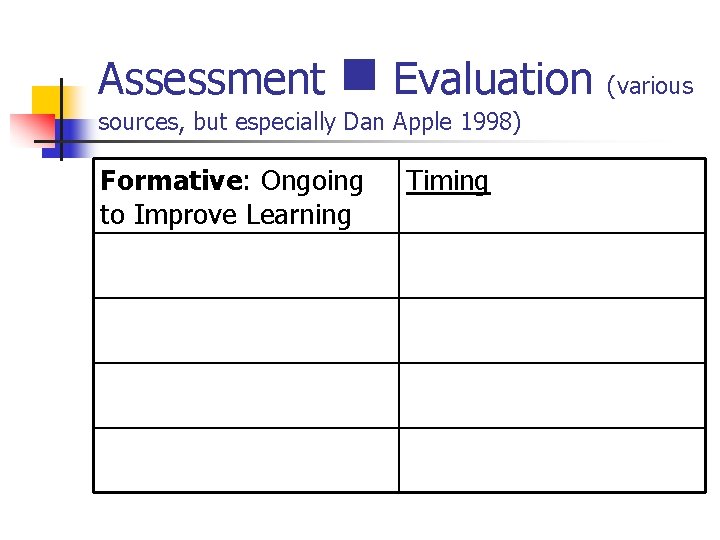
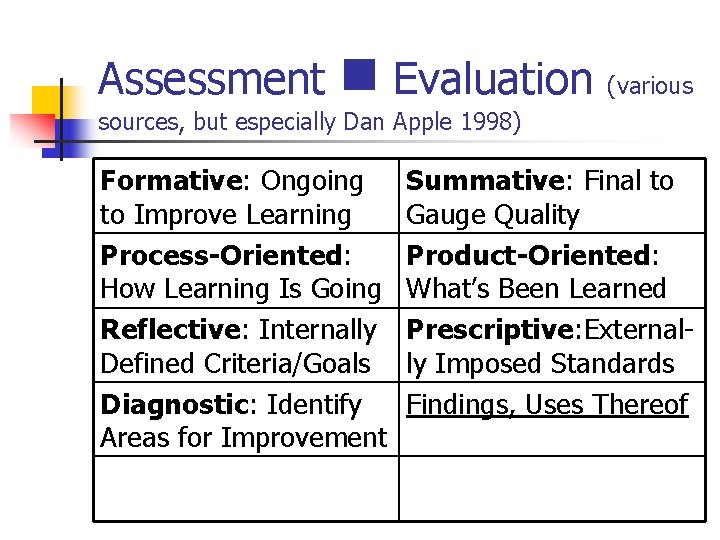
Assessment n Evaluation (various sources, but especially Dan Apple 1998) Formative: Ongoing to Improve Learning Timing
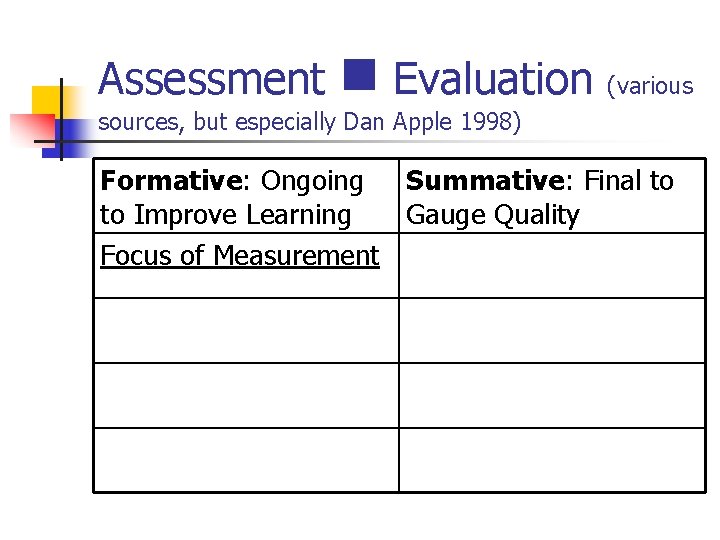
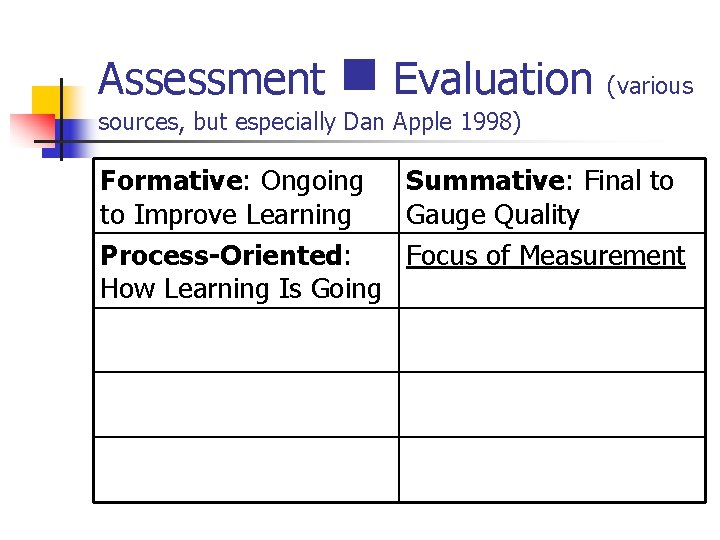
Assessment n Evaluation (various sources, but especially Dan Apple 1998) Formative: Ongoing Summative: Final to to Improve Learning Gauge Quality Focus of Measurement
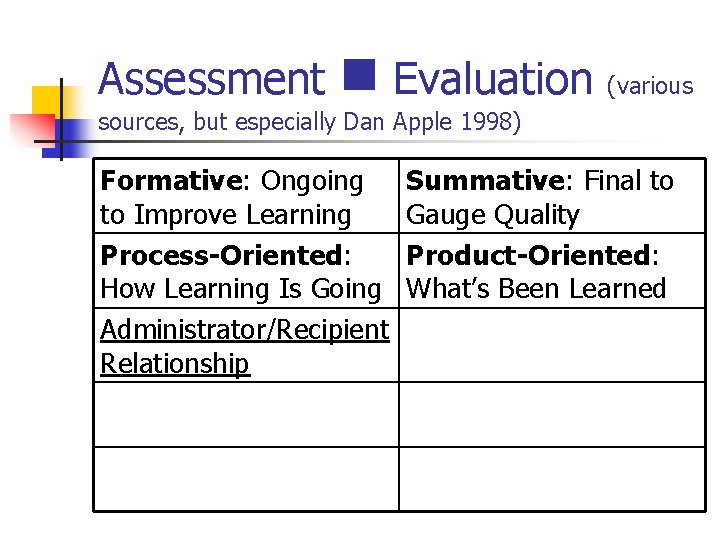
Assessment n Evaluation (various sources, but especially Dan Apple 1998) Formative: Ongoing Summative: Final to to Improve Learning Gauge Quality Process-Oriented: Focus of Measurement How Learning Is Going
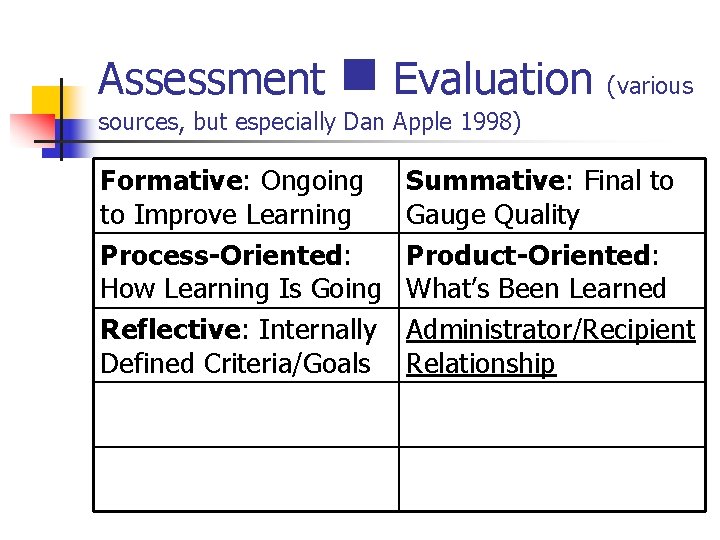
Assessment n Evaluation (various sources, but especially Dan Apple 1998) Formative: Ongoing to Improve Learning Process-Oriented: How Learning Is Going Administrator/Recipient Relationship Summative: Final to Gauge Quality Product-Oriented: What’s Been Learned
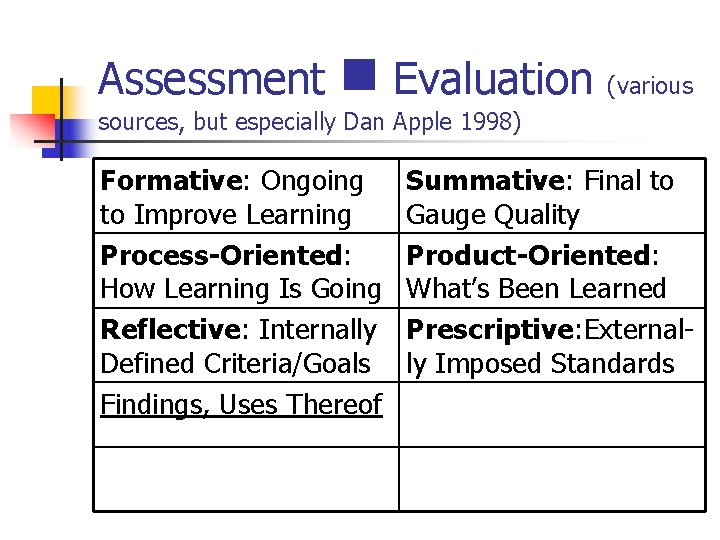
Assessment n Evaluation (various sources, but especially Dan Apple 1998) Formative: Ongoing to Improve Learning Process-Oriented: How Learning Is Going Reflective: Internally Defined Criteria/Goals Summative: Final to Gauge Quality Product-Oriented: What’s Been Learned Administrator/Recipient Relationship
Assessment n Evaluation (various sources, but especially Dan Apple 1998) Formative: Ongoing to Improve Learning Process-Oriented: How Learning Is Going Reflective: Internally Defined Criteria/Goals Findings, Uses Thereof Summative: Final to Gauge Quality Product-Oriented: What’s Been Learned Prescriptive: Externally Imposed Standards
Assessment n Evaluation (various sources, but especially Dan Apple 1998) Formative: Ongoing to Improve Learning Process-Oriented: How Learning Is Going Reflective: Internally Defined Criteria/Goals Diagnostic: Identify Areas for Improvement Summative: Final to Gauge Quality Product-Oriented: What’s Been Learned Prescriptive: Externally Imposed Standards Findings, Uses Thereof
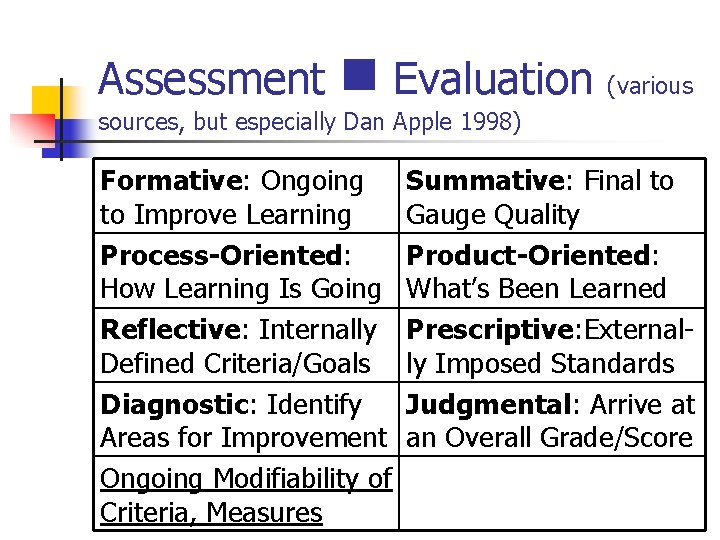
Assessment n Evaluation (various sources, but especially Dan Apple 1998) Formative: Ongoing to Improve Learning Process-Oriented: How Learning Is Going Reflective: Internally Defined Criteria/Goals Diagnostic: Identify Areas for Improvement Ongoing Modifiability of Criteria, Measures Summative: Final to Gauge Quality Product-Oriented: What’s Been Learned Prescriptive: Externally Imposed Standards Judgmental: Arrive at an Overall Grade/Score
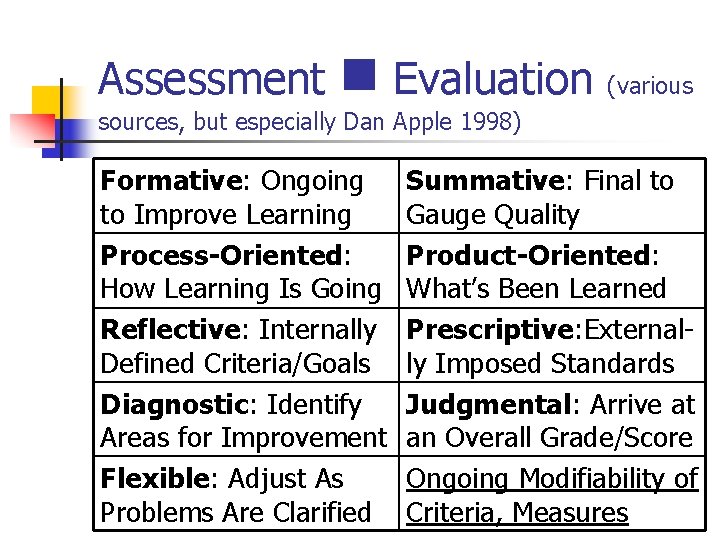
Assessment n Evaluation (various sources, but especially Dan Apple 1998) Formative: Ongoing to Improve Learning Process-Oriented: How Learning Is Going Reflective: Internally Defined Criteria/Goals Diagnostic: Identify Areas for Improvement Flexible: Adjust As Problems Are Clarified Summative: Final to Gauge Quality Product-Oriented: What’s Been Learned Prescriptive: Externally Imposed Standards Judgmental: Arrive at an Overall Grade/Score Ongoing Modifiability of Criteria, Measures
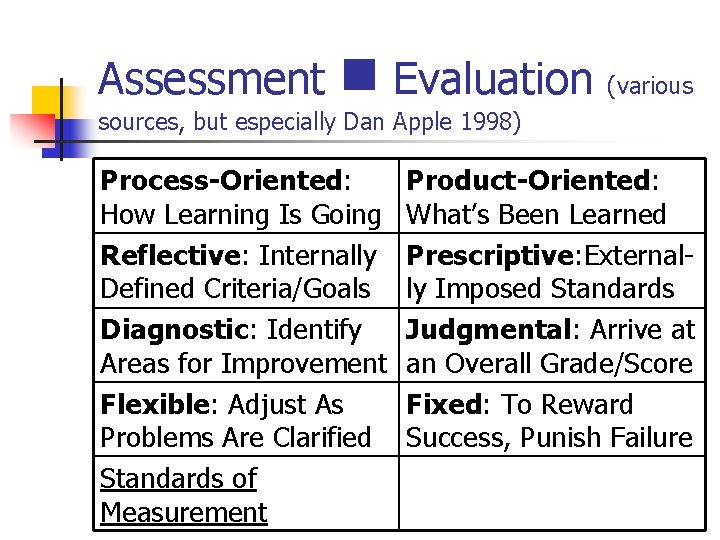
Assessment n Evaluation (various sources, but especially Dan Apple 1998) Process-Oriented: How Learning Is Going Reflective: Internally Defined Criteria/Goals Diagnostic: Identify Areas for Improvement Flexible: Adjust As Problems Are Clarified Standards of Measurement Product-Oriented: What’s Been Learned Prescriptive: Externally Imposed Standards Judgmental: Arrive at an Overall Grade/Score Fixed: To Reward Success, Punish Failure
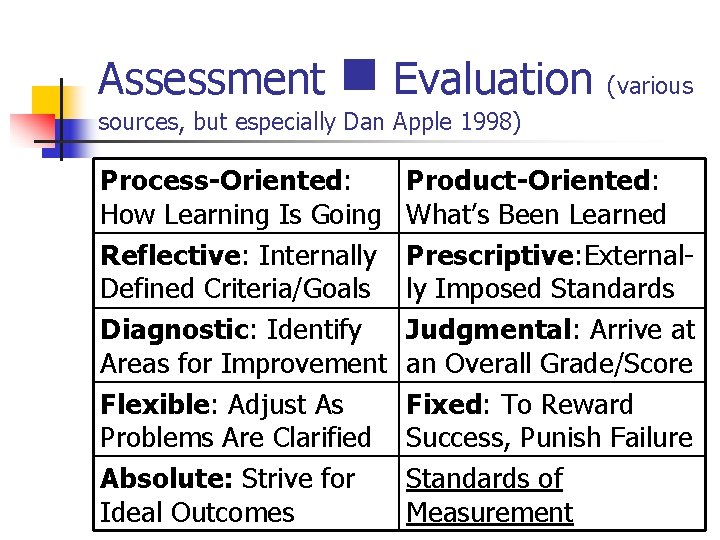
Assessment n Evaluation (various sources, but especially Dan Apple 1998) Process-Oriented: How Learning Is Going Reflective: Internally Defined Criteria/Goals Diagnostic: Identify Areas for Improvement Flexible: Adjust As Problems Are Clarified Absolute: Strive for Ideal Outcomes Product-Oriented: What’s Been Learned Prescriptive: Externally Imposed Standards Judgmental: Arrive at an Overall Grade/Score Fixed: To Reward Success, Punish Failure Standards of Measurement
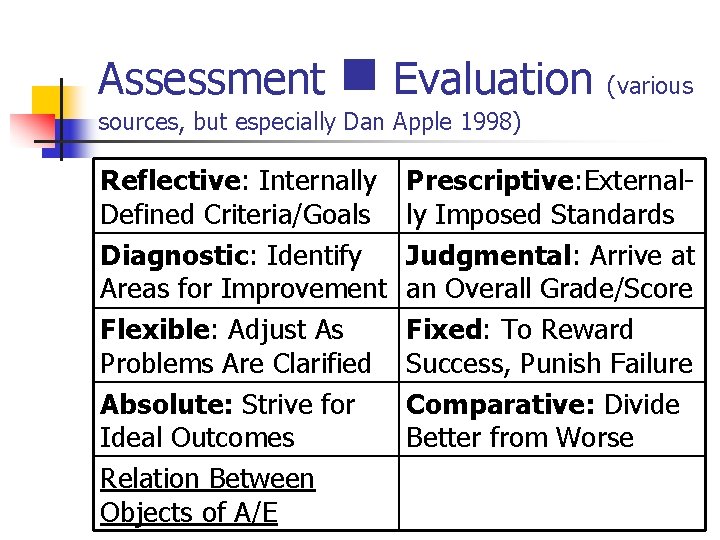
Assessment n Evaluation (various sources, but especially Dan Apple 1998) Reflective: Internally Defined Criteria/Goals Diagnostic: Identify Areas for Improvement Flexible: Adjust As Problems Are Clarified Absolute: Strive for Ideal Outcomes Relation Between Objects of A/E Prescriptive: Externally Imposed Standards Judgmental: Arrive at an Overall Grade/Score Fixed: To Reward Success, Punish Failure Comparative: Divide Better from Worse
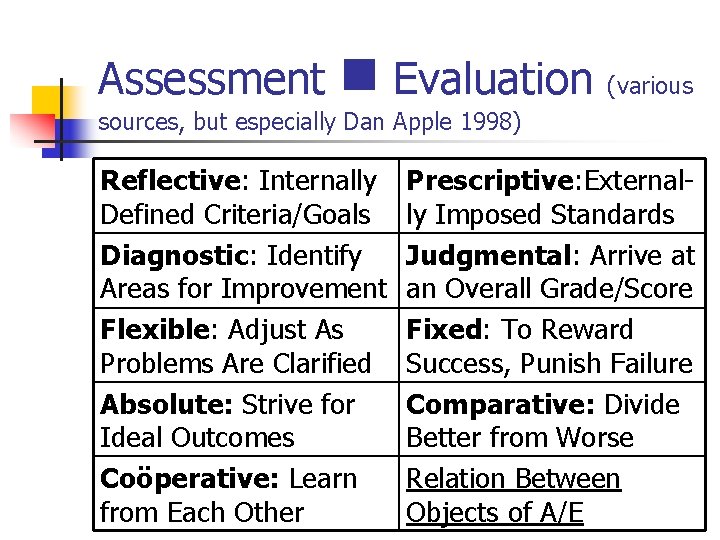
Assessment n Evaluation (various sources, but especially Dan Apple 1998) Reflective: Internally Defined Criteria/Goals Diagnostic: Identify Areas for Improvement Flexible: Adjust As Problems Are Clarified Absolute: Strive for Ideal Outcomes Coöperative: Learn from Each Other Prescriptive: Externally Imposed Standards Judgmental: Arrive at an Overall Grade/Score Fixed: To Reward Success, Punish Failure Comparative: Divide Better from Worse Relation Between Objects of A/E
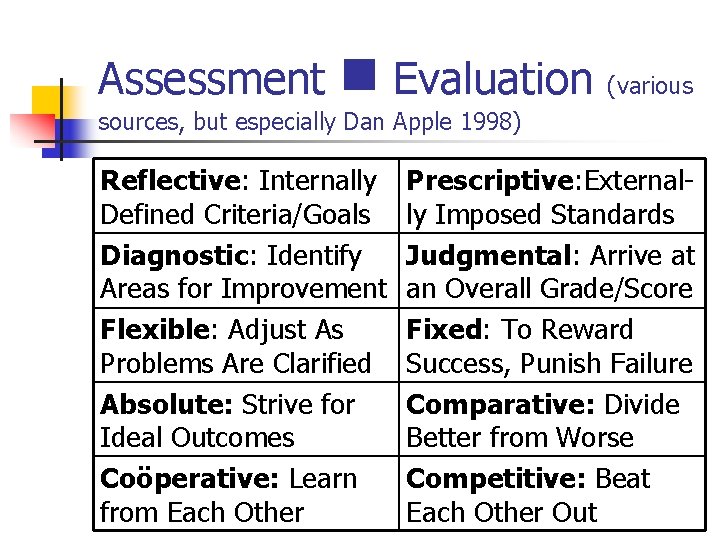
Assessment n Evaluation (various sources, but especially Dan Apple 1998) Reflective: Internally Defined Criteria/Goals Diagnostic: Identify Areas for Improvement Flexible: Adjust As Problems Are Clarified Absolute: Strive for Ideal Outcomes Coöperative: Learn from Each Other Prescriptive: Externally Imposed Standards Judgmental: Arrive at an Overall Grade/Score Fixed: To Reward Success, Punish Failure Comparative: Divide Better from Worse Competitive: Beat Each Other Out
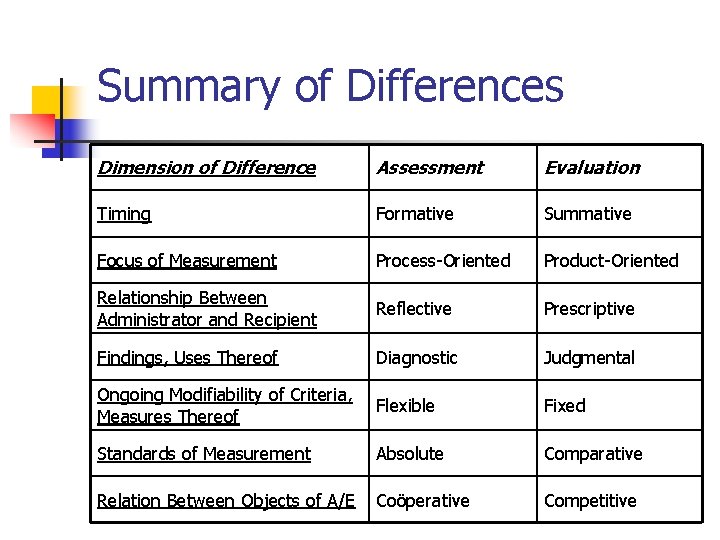
Summary of Differences Dimension of Difference Assessment Evaluation Timing Formative Summative Focus of Measurement Process-Oriented Product-Oriented Relationship Between Administrator and Recipient Reflective Prescriptive Findings, Uses Thereof Diagnostic Judgmental Ongoing Modifiability of Criteria, Measures Thereof Flexible Fixed Standards of Measurement Absolute Comparative Relation Between Objects of A/E Coöperative Competitive