
Assessment of the Webbased Audience Response System ARS
Assessment of the Web-based Audience Response System (ARS) Socrative for Biomedical Science Revision Classes Dr Matthew Mc. Kenzie LES Deakin University Learning and Teaching Conference 2019
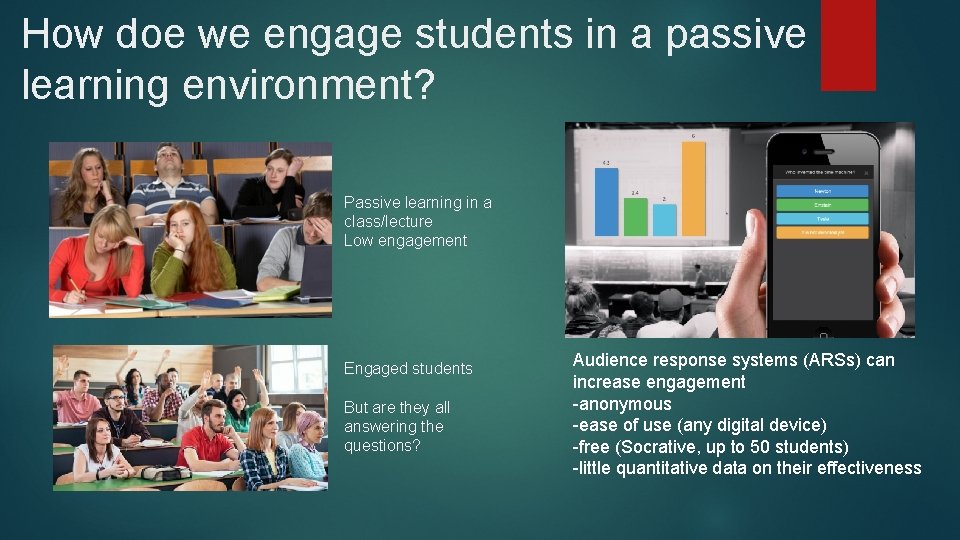
How doe we engage students in a passive learning environment? Passive learning in a class/lecture Low engagement Engaged students But are they all answering the questions? Audience response systems (ARSs) can increase engagement -anonymous -ease of use (any digital device) -free (Socrative, up to 50 students) -little quantitative data on their effectiveness
Revision Classes in SLE 346 Molecular Basis of Disease 110 students 5 Revision Classes ~18 multiple choice and short answer questions ‘Traditional Class’ – verbal question and answer format ‘Socrative Class’ – Socrative app with anonymous answers Both classes livestreamed What do the students think about the 2 formats? Student Survey: Which format do the students prefer? (and why? ) Non-compulsory and anonymous (hardcopy or online) 14 questions comparing the revision classes 12 multiple choice, 2 short answer 18 responses How do the 2 revision class formats compare?
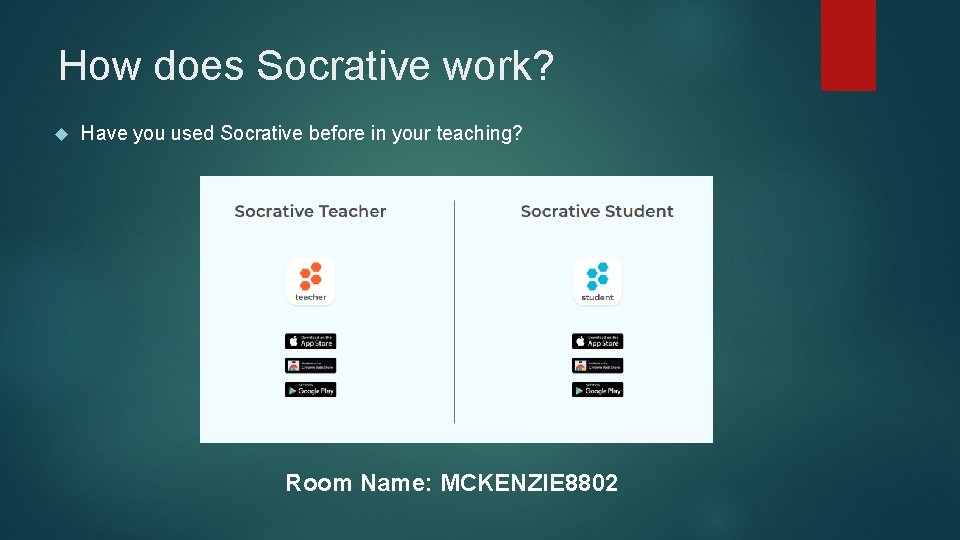
How does Socrative work? Have you used Socrative before in your teaching? Room Name: MCKENZIE 8802
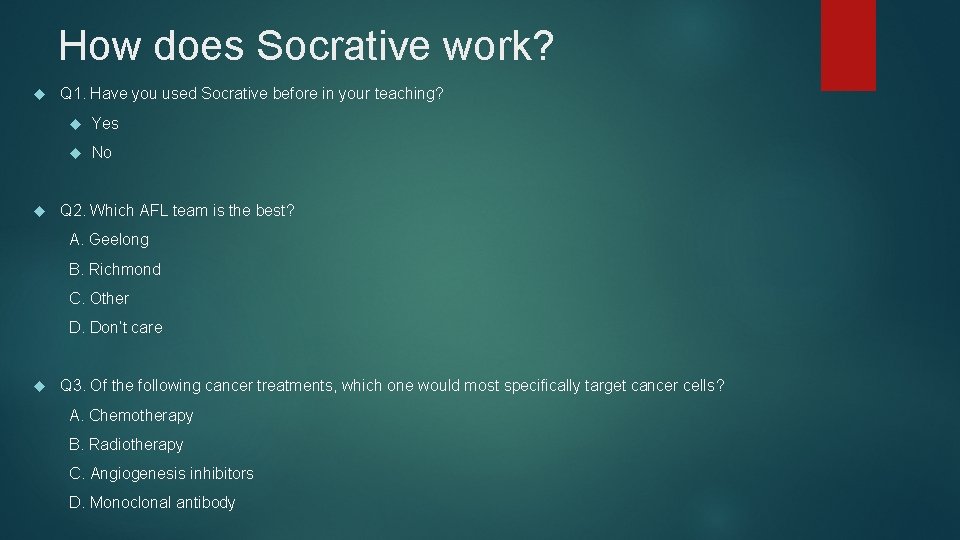
How does Socrative work? Q 1. Have you used Socrative before in your teaching? Yes No Q 2. Which AFL team is the best? A. Geelong B. Richmond C. Other D. Don’t care Q 3. Of the following cancer treatments, which one would most specifically target cancer cells? A. Chemotherapy B. Radiotherapy C. Angiogenesis inhibitors D. Monoclonal antibody
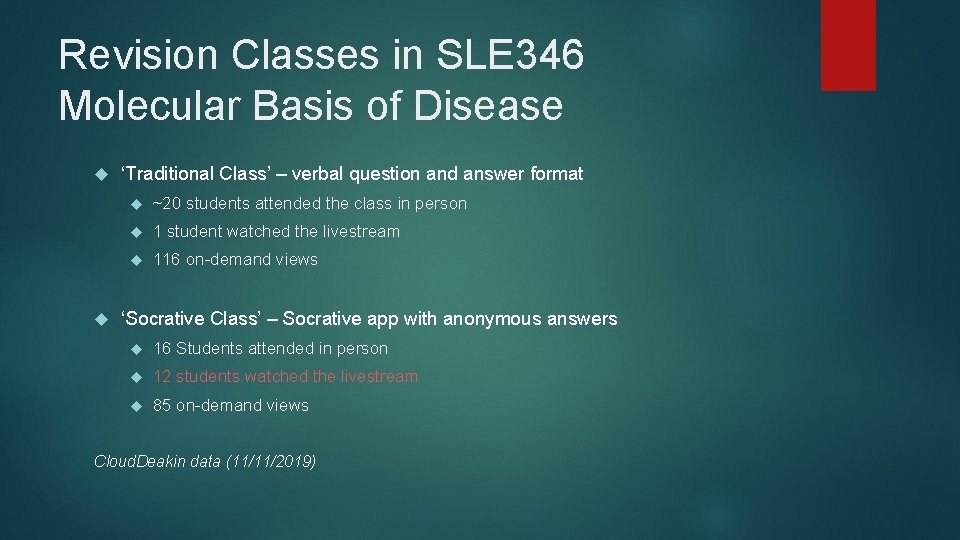
Revision Classes in SLE 346 Molecular Basis of Disease ‘Traditional Class’ – verbal question and answer format ~20 students attended the class in person 1 student watched the livestream 116 on-demand views ‘Socrative Class’ – Socrative app with anonymous answers 16 Students attended in person 12 students watched the livestream 85 on-demand views Cloud. Deakin data (11/11/2019)
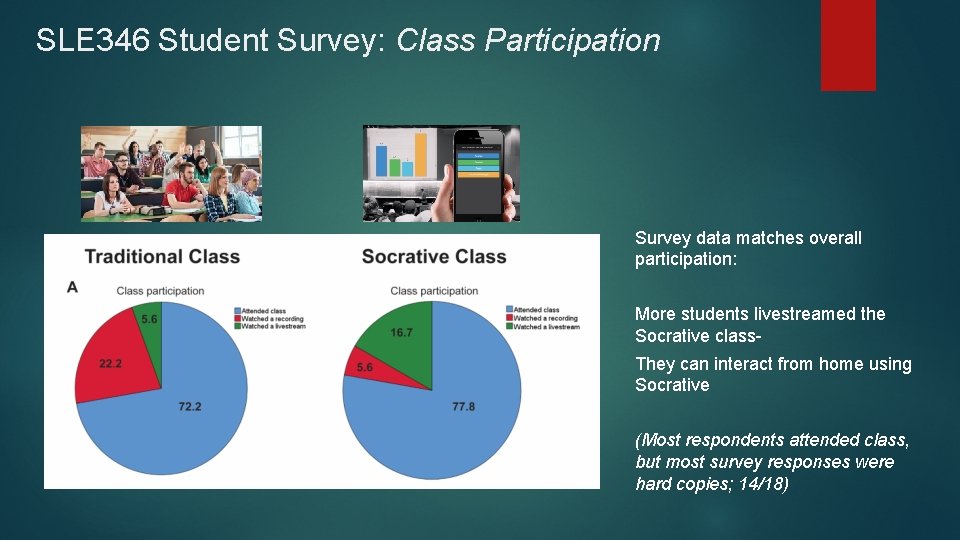
SLE 346 Student Survey: Class Participation Survey data matches overall participation: More students livestreamed the Socrative class. They can interact from home using Socrative (Most respondents attended class, but most survey responses were hard copies; 14/18)
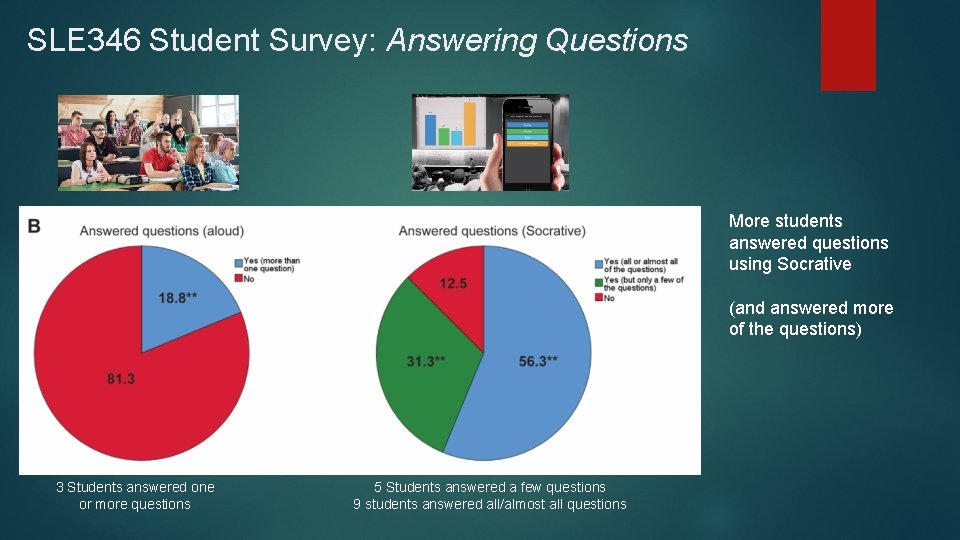
SLE 346 Student Survey: Answering Questions More students answered questions using Socrative (and answered more of the questions) 3 Students answered one or more questions 5 Students answered a few questions 9 students answered all/almost all questions
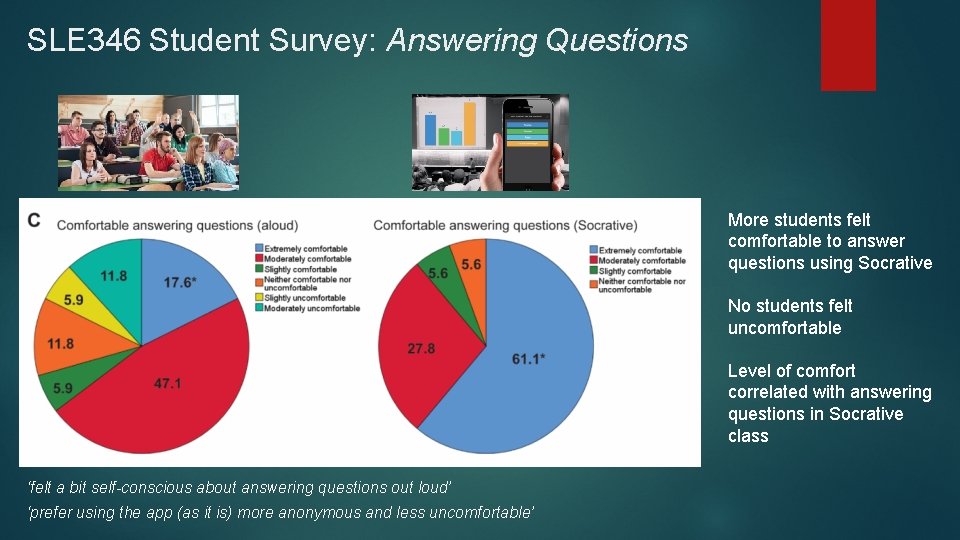
SLE 346 Student Survey: Answering Questions More students felt comfortable to answer questions using Socrative No students felt uncomfortable Level of comfort correlated with answering questions in Socrative class ‘felt a bit self-conscious about answering questions out loud’ ‘prefer using the app (as it is) more anonymous and less uncomfortable’
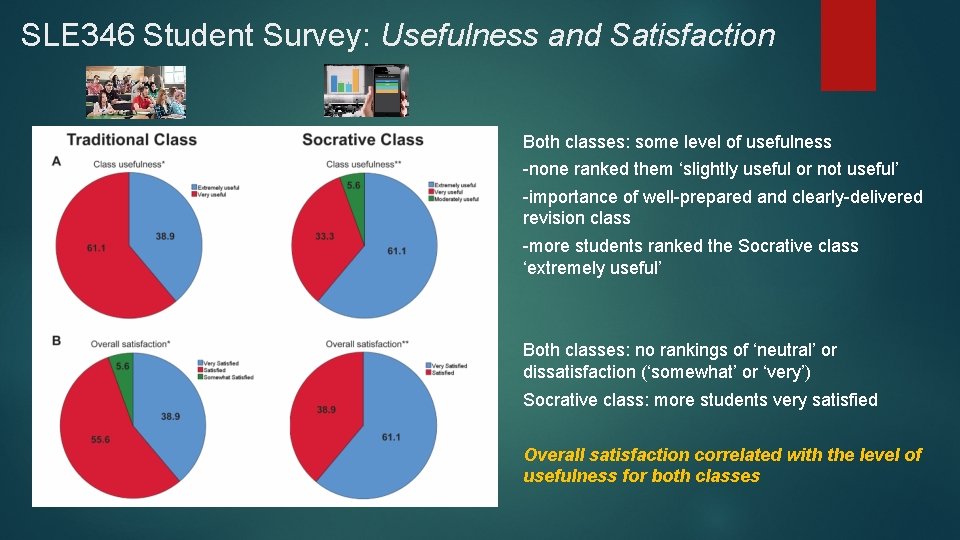
SLE 346 Student Survey: Usefulness and Satisfaction Both classes: some level of usefulness -none ranked them ‘slightly useful or not useful’ -importance of well-prepared and clearly-delivered revision class -more students ranked the Socrative class ‘extremely useful’ Both classes: no rankings of ‘neutral’ or dissatisfaction (‘somewhat’ or ‘very’) Socrative class: more students very satisfied Overall satisfaction correlated with the level of usefulness for both classes
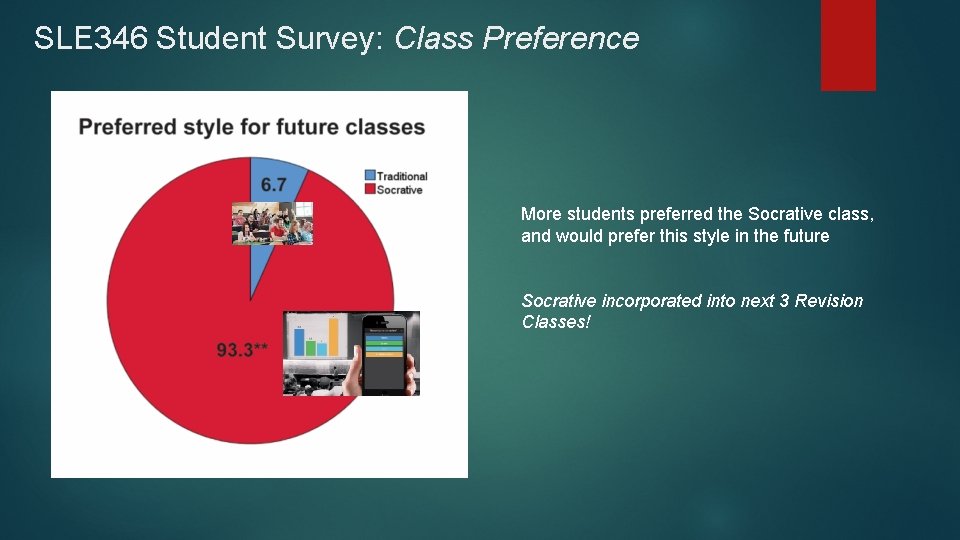
SLE 346 Student Survey: Class Preference More students preferred the Socrative class, and would prefer this style in the future Socrative incorporated into next 3 Revision Classes!
SLE 346 Student Survey: Conclusions Socrative • Increased student interaction • More students answered questions • More questions answered per student • Increased sense of usefulness and satisfaction • Instant formative feedback for students • Allows teacher to pace class and revise content as required
Thank you for your attention!
- Slides: 13