
Assessment of the Surface Mixed Layer Using Glider
- Slides: 21
Assessment of the Surface Mixed Layer Using Glider and Buoy Data LT Jeremiah Chaplin Operational Oceanography Winter 2009
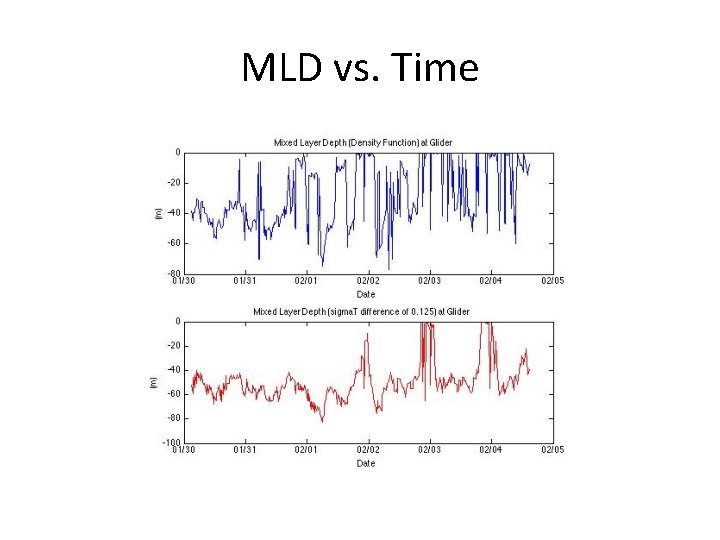
Objectives • Make observations concerning the relationship between Mixed Layer Depth (MLD), Atmospheric Forcing Mechanisms, and Waves • Compare two methods for calculating MLD – Simple Density Difference of 0. 125 – Curvature method developed by Scripps
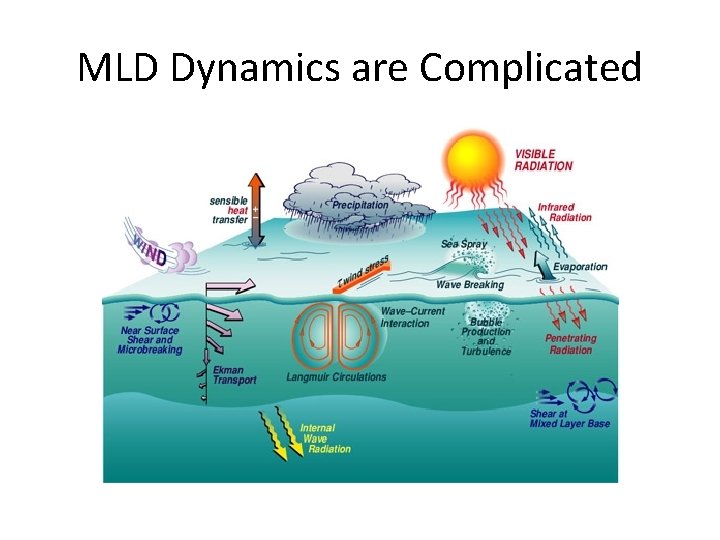
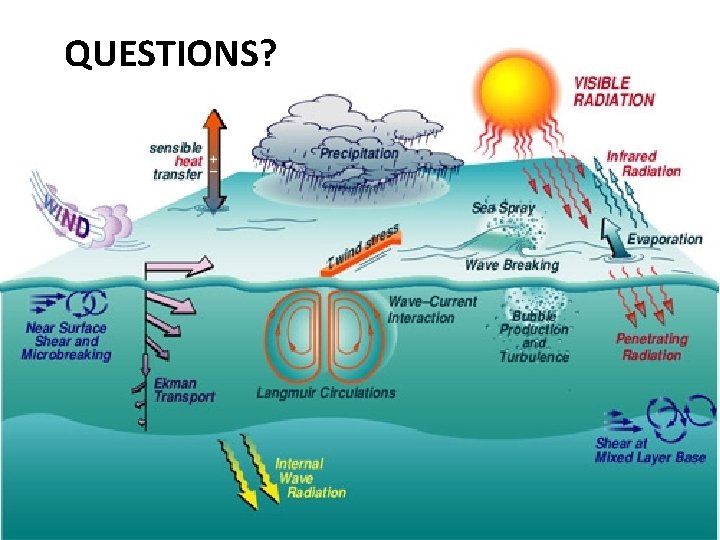
MLD Dynamics are Complicated
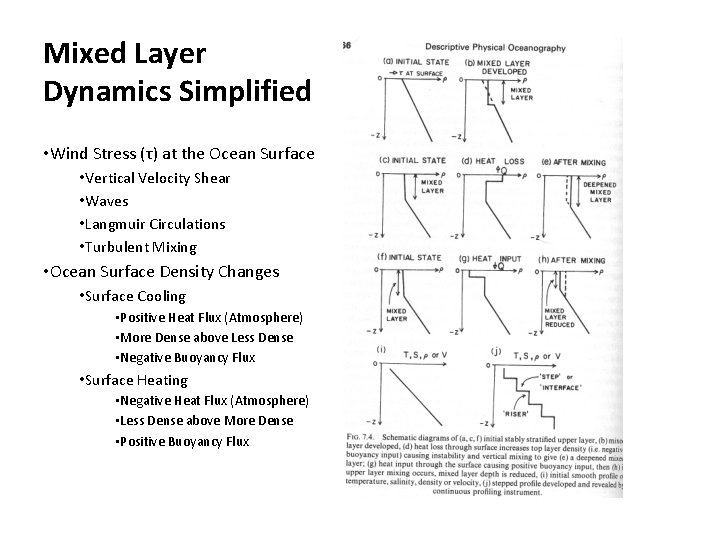
Mixed Layer Dynamics Simplified • Wind Stress (τ) at the Ocean Surface • Vertical Velocity Shear • Waves • Langmuir Circulations • Turbulent Mixing • Ocean Surface Density Changes • Surface Cooling • Positive Heat Flux (Atmosphere) • More Dense above Less Dense • Negative Buoyancy Flux • Surface Heating • Negative Heat Flux (Atmosphere) • Less Dense above More Dense • Positive Buoyancy Flux
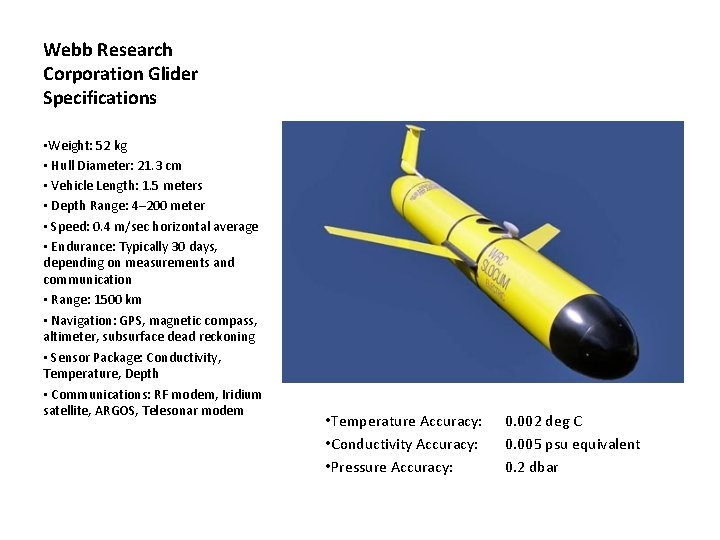
Webb Research Corporation Glider Specifications • Weight: 52 kg • Hull Diameter: 21. 3 cm • Vehicle Length: 1. 5 meters • Depth Range: 4– 200 meter • Speed: 0. 4 m/sec horizontal average • Endurance: Typically 30 days, depending on measurements and communication • Range: 1500 km • Navigation: GPS, magnetic compass, altimeter, subsurface dead reckoning • Sensor Package: Conductivity, Temperature, Depth • Communications: RF modem, Iridium satellite, ARGOS, Telesonar modem • Temperature Accuracy: • Conductivity Accuracy: • Pressure Accuracy: 0. 002 deg C 0. 005 psu equivalent 0. 2 dbar
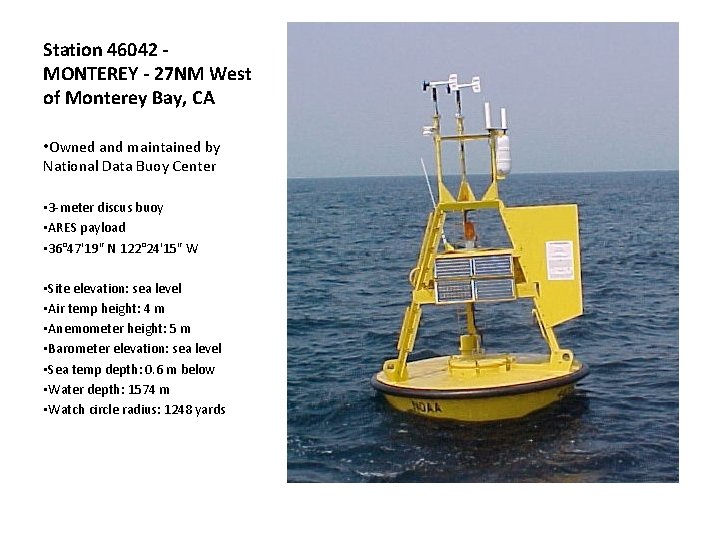
Station 46042 MONTEREY - 27 NM West of Monterey Bay, CA • Owned and maintained by National Data Buoy Center • 3 -meter discus buoy • ARES payload • 36° 47'19" N 122° 24'15" W • Site elevation: sea level • Air temp height: 4 m • Anemometer height: 5 m • Barometer elevation: sea level • Sea temp depth: 0. 6 m below • Water depth: 1574 m • Watch circle radius: 1248 yards
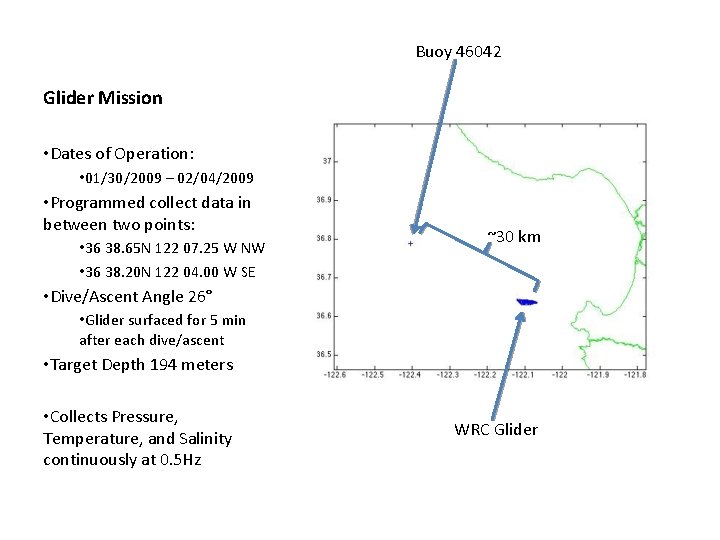
Buoy 46042 Glider Mission • Dates of Operation: • 01/30/2009 – 02/04/2009 • Programmed collect data in between two points: • 36 38. 65 N 122 07. 25 W NW • 36 38. 20 N 122 04. 00 W SE ~30 km • Dive/Ascent Angle 26° • Glider surfaced for 5 min after each dive/ascent • Target Depth 194 meters • Collects Pressure, Temperature, and Salinity continuously at 0. 5 Hz WRC Glider
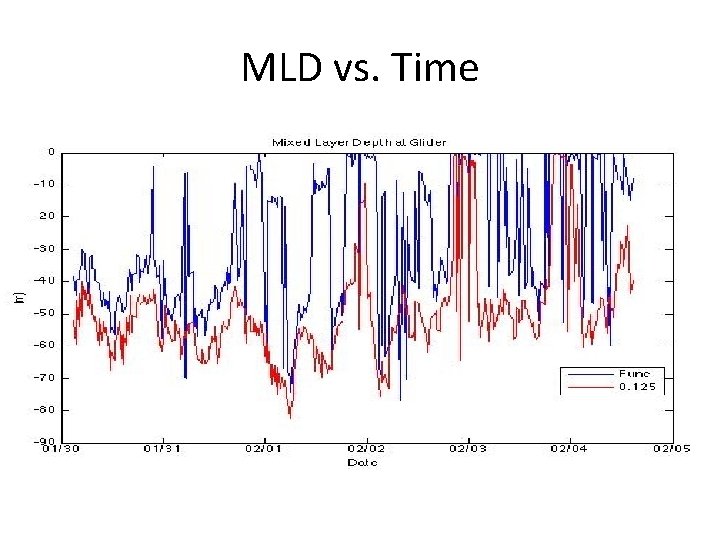
MLD vs. Time
MLD vs. Time
MLD Comparison
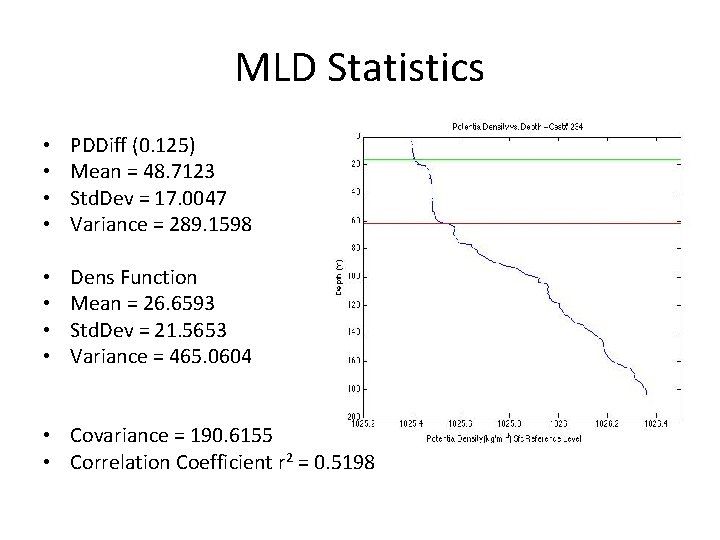
MLD Statistics • • PDDiff (0. 125) Mean = 48. 7123 Std. Dev = 17. 0047 Variance = 289. 1598 • • Dens Function Mean = 26. 6593 Std. Dev = 21. 5653 Variance = 465. 0604 • Covariance = 190. 6155 • Correlation Coefficient r 2 = 0. 5198
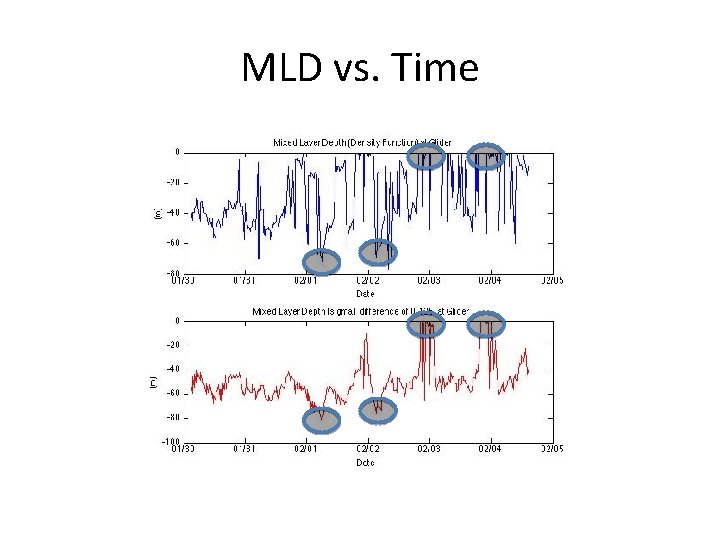
MLD vs. Time
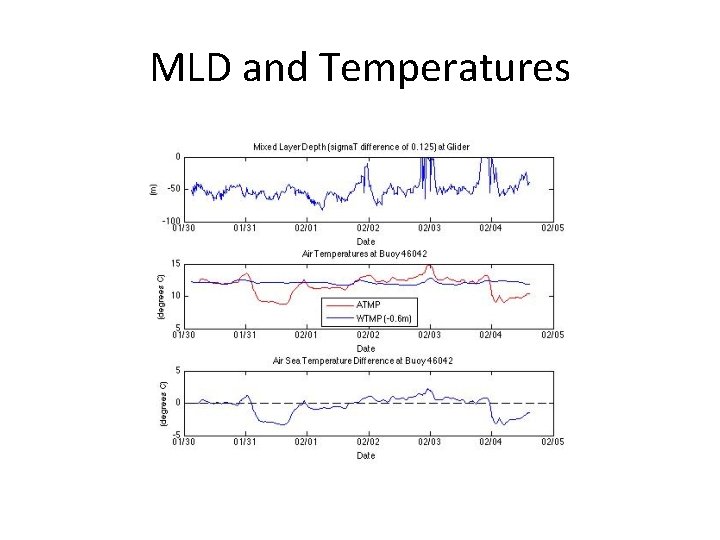
MLD and Temperatures
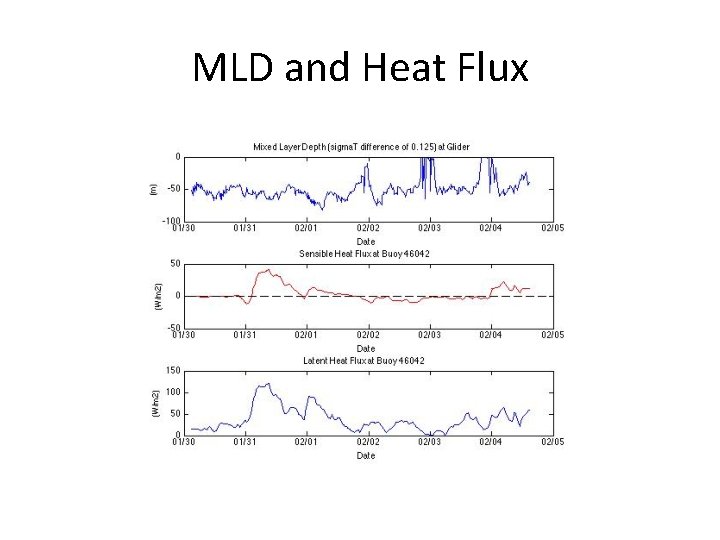
MLD and Heat Flux
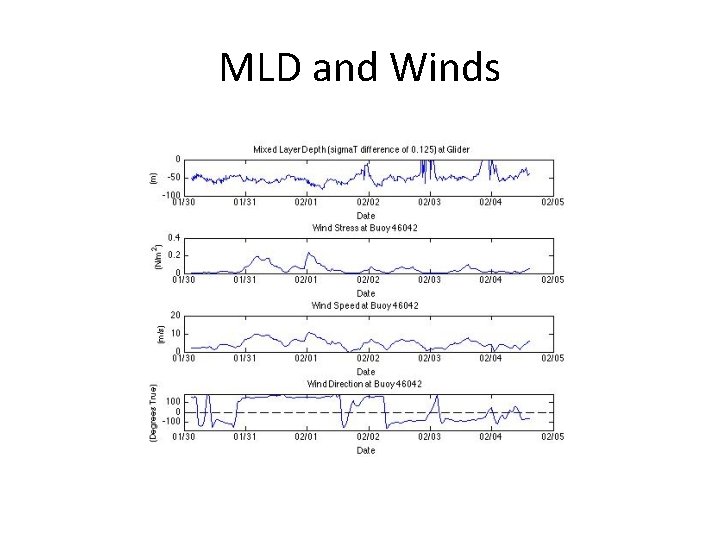
MLD and Winds
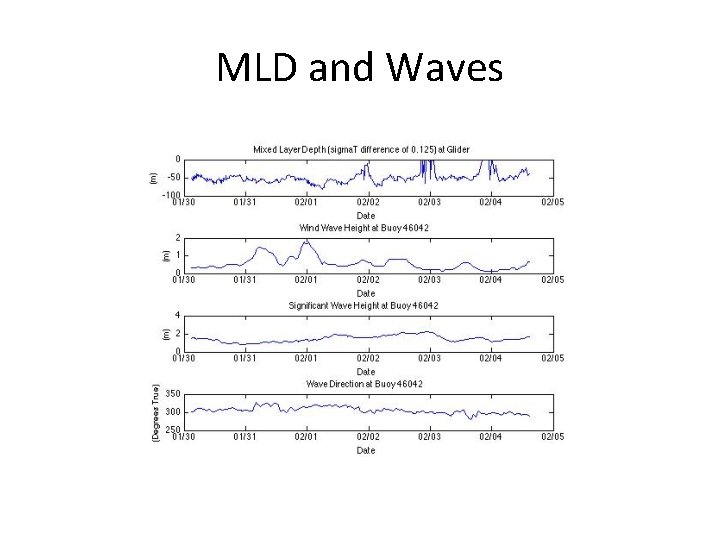
MLD and Waves
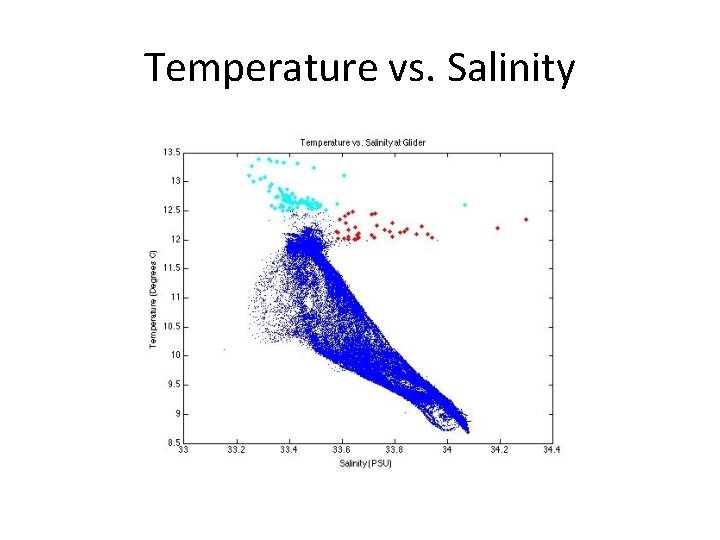
Temperature vs. Salinity
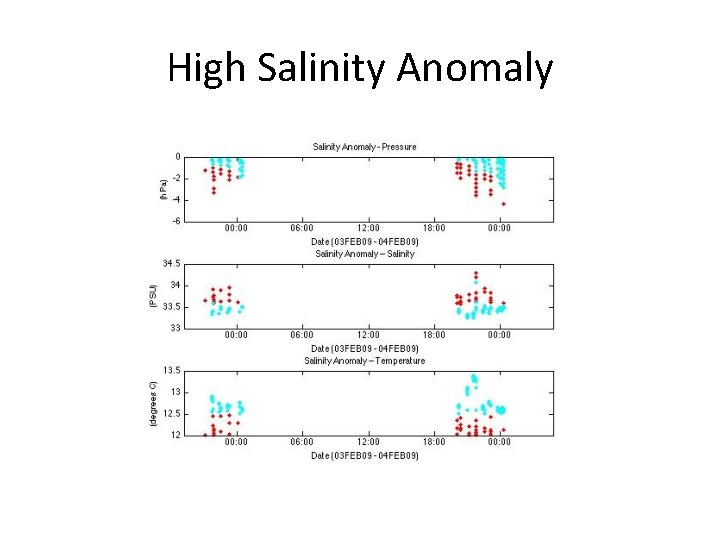
High Salinity Anomaly
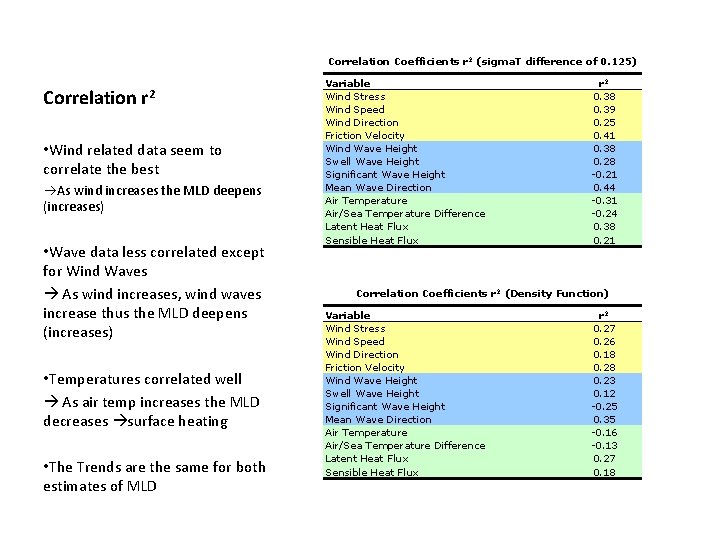
Correlation Coefficients r 2 (sigma. T difference of 0. 125) Correlation r 2 • Wind related data seem to correlate the best As wind increases the MLD deepens (increases) • Wave data less correlated except for Wind Waves As wind increases, wind waves increase thus the MLD deepens (increases) • Temperatures correlated well As air temp increases the MLD decreases surface heating • The Trends are the same for both estimates of MLD Variable Wind Stress Wind Speed Wind Direction Friction Velocity Wind Wave Height Swell Wave Height Significant Wave Height Mean Wave Direction Air Temperature Air/Sea Temperature Difference Latent Heat Flux Sensible Heat Flux r 2 0. 38 0. 39 0. 25 0. 41 0. 38 0. 28 -0. 21 0. 44 -0. 31 -0. 24 0. 38 0. 21 Correlation Coefficients r 2 (Density Function) Variable Wind Stress Wind Speed Wind Direction Friction Velocity Wind Wave Height Swell Wave Height Significant Wave Height Mean Wave Direction Air Temperature Air/Sea Temperature Difference Latent Heat Flux Sensible Heat Flux r 2 0. 27 0. 26 0. 18 0. 23 0. 12 -0. 25 0. 35 -0. 16 -0. 13 0. 27 0. 18
Conclusions • Both methods of calculating MLD perform well independently, and when compared to each other, both statistically and observationally. • It is difficult to quantify the relationships between atmospheric forcing mechanisms and the MLD. However, qualitatively the relationships are clearly evident in the observations.
QUESTIONS?