
Assessment of the Neonatal Golden Hour Goal Assessment
- Slides: 1
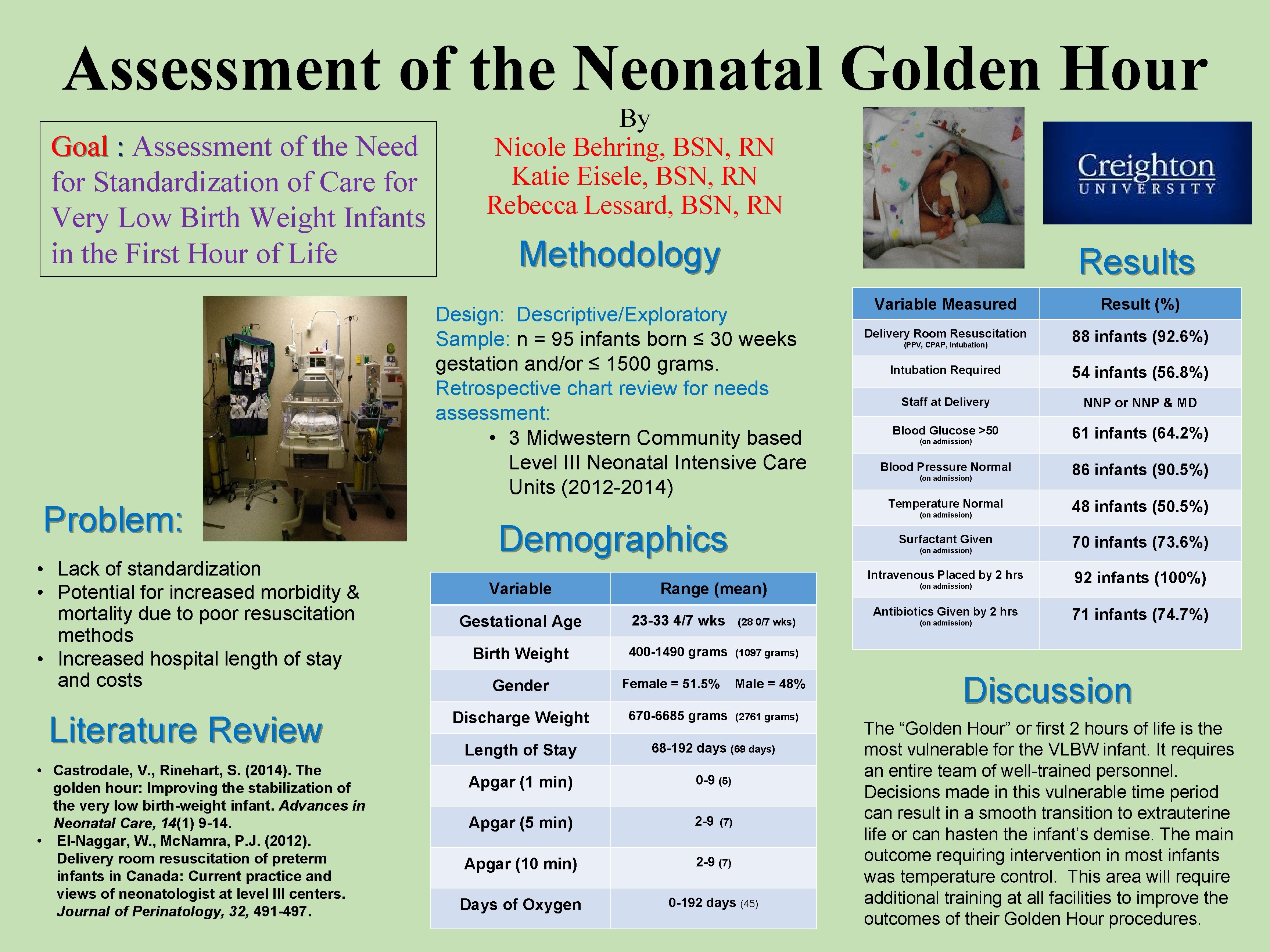
Assessment of the Neonatal Golden Hour Goal : Assessment of the Need for Standardization of Care for Very Low Birth Weight Infants in the First Hour of Life By Nicole Behring, BSN, RN Katie Eisele, BSN, RN Rebecca Lessard, BSN, RN Methodology Results Design: Descriptive/Exploratory Sample: n = 95 infants born ≤ 30 weeks gestation and/or ≤ 1500 grams. Retrospective chart review for needs assessment: • 3 Midwestern Community based Level III Neonatal Intensive Care Units (2012 -2014) Problem: • Lack of standardization • Potential for increased morbidity & mortality due to poor resuscitation methods • Increased hospital length of stay and costs Literature Review • Castrodale, V. , Rinehart, S. (2014). The golden hour: Improving the stabilization of the very low birth-weight infant. Advances in Neonatal Care, 14(1) 9 -14. • El-Naggar, W. , Mc. Namra, P. J. (2012). Delivery room resuscitation of preterm infants in Canada: Current practice and views of neonatologist at level III centers. Journal of Perinatology, 32, 491 -497. 23 -33 4/7 wks (28 0/7 wks) Birth Weight 400 -1490 grams (1097 grams) Discharge Weight 670 -6685 grams 88 infants (92. 6%) (PPV, CPAP, Intubation) Intubation Required 54 infants (56. 8%) Staff at Delivery NNP or NNP & MD Blood Glucose >50 61 infants (64. 2%) (on admission) Blood Pressure Normal (on admission) Temperature Normal (on admission) Range (mean) Female = 51. 5% Delivery Room Resuscitation Surfactant Given Gestational Age Gender Result (%) (on admission) Demographics Variable Measured Male = 48% (2761 grams) Length of Stay 68 -192 days (69 days) Apgar (1 min) 0 -9 (5) Apgar (5 min) 2 -9 (7) Apgar (10 min) 2 -9 (7) Days of Oxygen 0 -192 days (45) Intravenous Placed by 2 hrs (on admission) Antibiotics Given by 2 hrs (on admission) 86 infants (90. 5%) 48 infants (50. 5%) 70 infants (73. 6%) 92 infants (100%) 71 infants (74. 7%) Discussion The “Golden Hour” or first 2 hours of life is the most vulnerable for the VLBW infant. It requires an entire team of well-trained personnel. Decisions made in this vulnerable time period can result in a smooth transition to extrauterine life or can hasten the infant’s demise. The main outcome requiring intervention in most infants was temperature control. This area will require additional training at all facilities to improve the outcomes of their Golden Hour procedures.