
Assessment of Stability of Pesticides During Sample Processing
Assessment of Stability of Pesticides During Sample Processing Richard Fussell CSL York, UK e-mail: r. fussell@csl. gov. uk

Analytical Strategies for Pesticide Residues Analysis SAMPLING RECEIPT OF SAMPLES SAMPLE PROCESSING ambient / cryogenic / acid EXTRACTION ethyl acetate / acetonitrile / SFE Derivatisation CLEAN-UP GPC / HPGPC / SPE / SPME DETECTION / QUANTITATION / CONFIRMATION Gas Liquid Chromatography AED / ECD / NPD / FPD / MS-MS Liquid Chromatography FL / UV / DAD / MS-MS REPORTS Oxidation
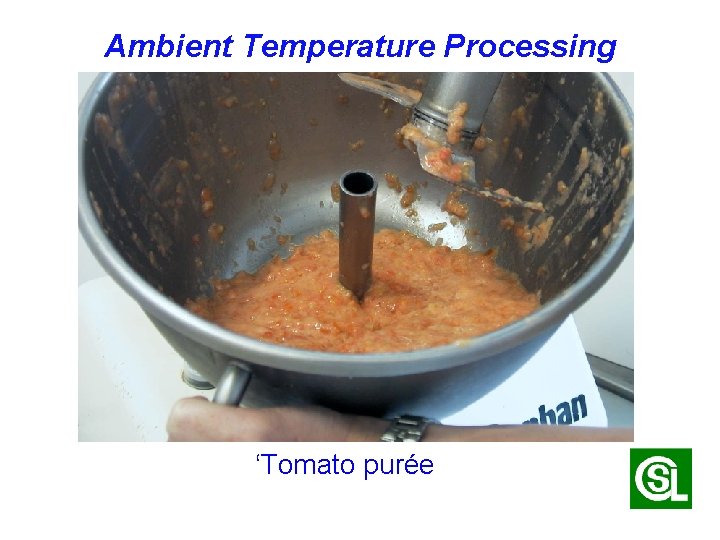
Ambient Temperature Processing ‘Tomato purée
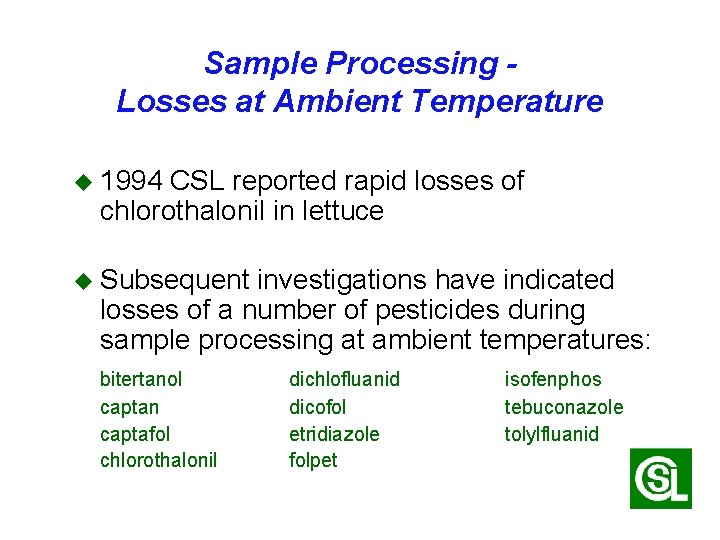
Sample Processing Losses at Ambient Temperature u 1994 CSL reported rapid losses of chlorothalonil in lettuce u Subsequent investigations have indicated losses of a number of pesticides during sample processing at ambient temperatures: bitertanol captan captafol chlorothalonil dichlofluanid dicofol etridiazole folpet isofenphos tebuconazole tolylfluanid
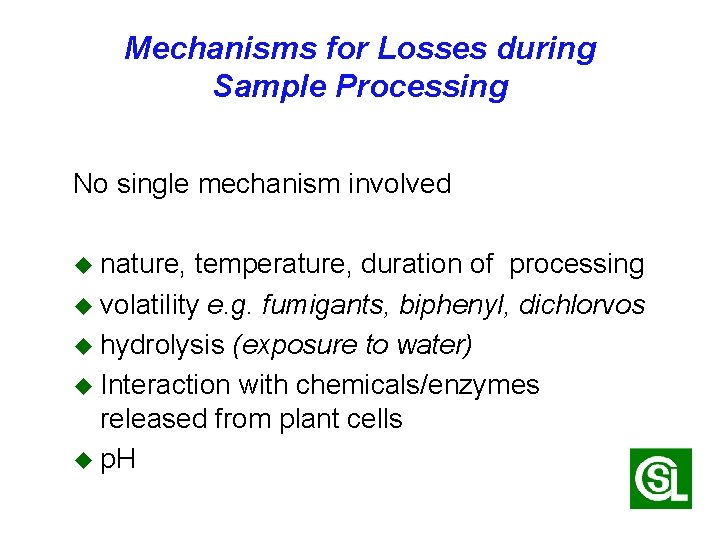
Mechanisms for Losses during Sample Processing No single mechanism involved u nature, temperature, duration of processing u volatility e. g. fumigants, biphenyl, dichlorvos u hydrolysis (exposure to water) u Interaction with chemicals/enzymes released from plant cells u p. H
Sample Processing Implications of the Losses u Unlikely to cause an underestimate of consumer risk u MRL exceedances and misuse may not be detected ‘Cryogenic’ processing may help to minimise some of the losses and is used in the generation of registration data

‘Cryogenic’ Sample Processing Temperature Conditions u Freeze u Add Sample (-20°C) ‘dry ice’ (-69°C) u Homogenise to produce a flowable powder (-25 to -30°C) samples must not defrost
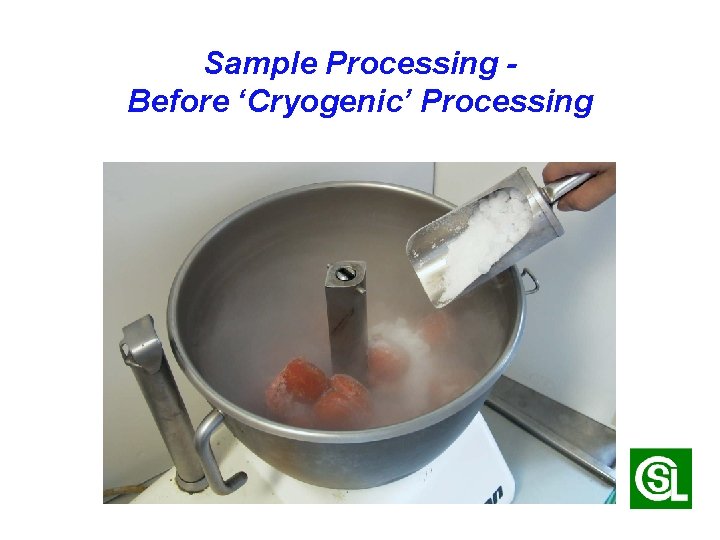
Sample Processing Before ‘Cryogenic’ Processing
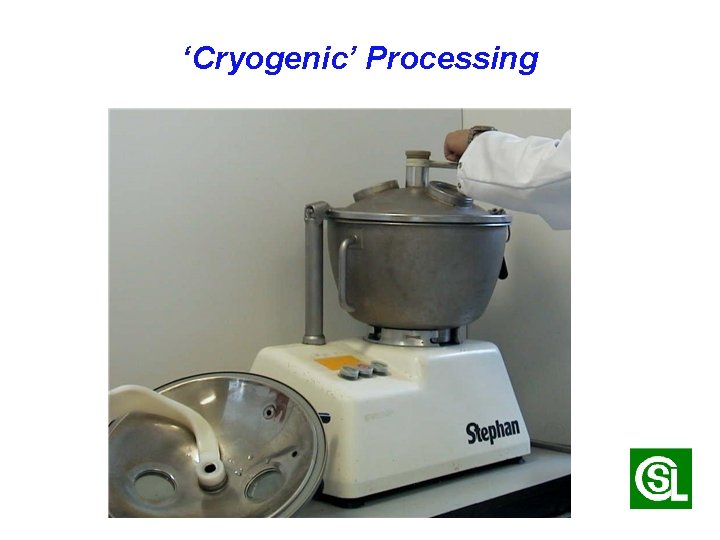
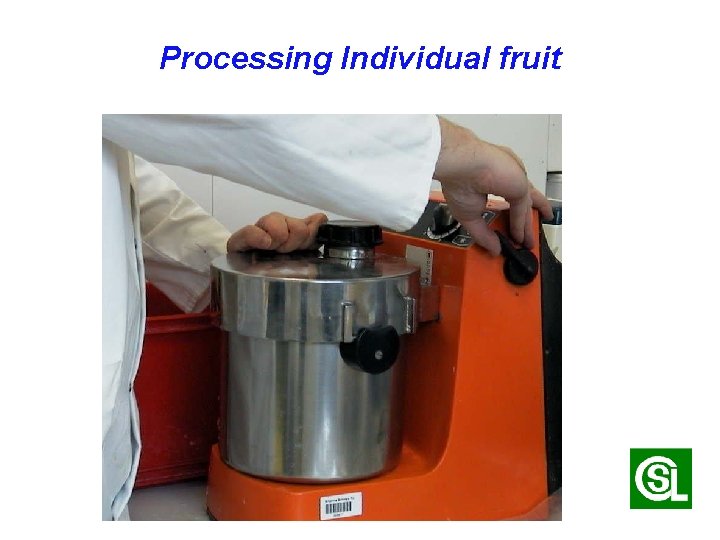
‘Cryogenic’ Processing
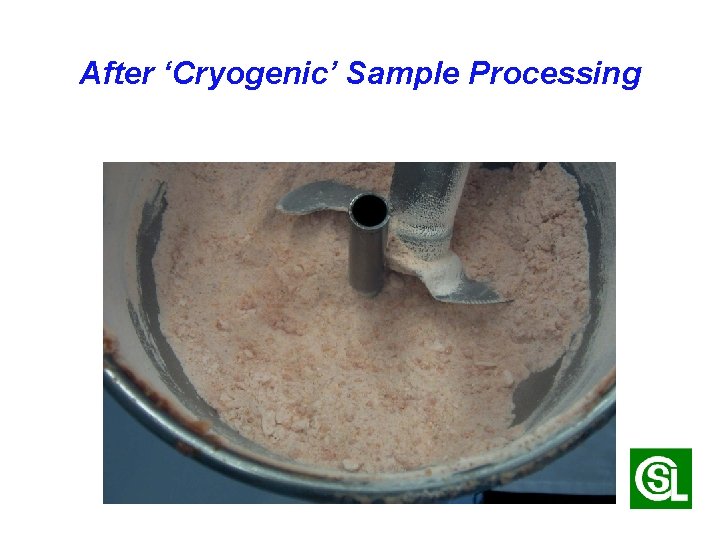
After ‘Cryogenic’ Sample Processing
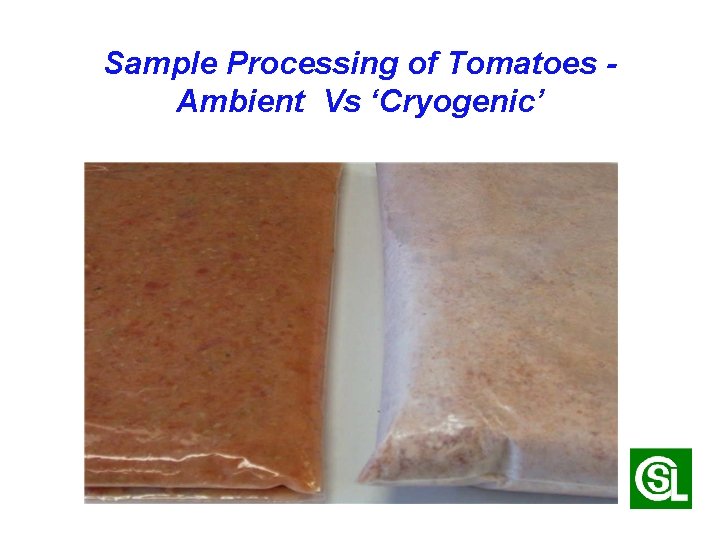
Sample Processing of Tomatoes Ambient Vs ‘Cryogenic’
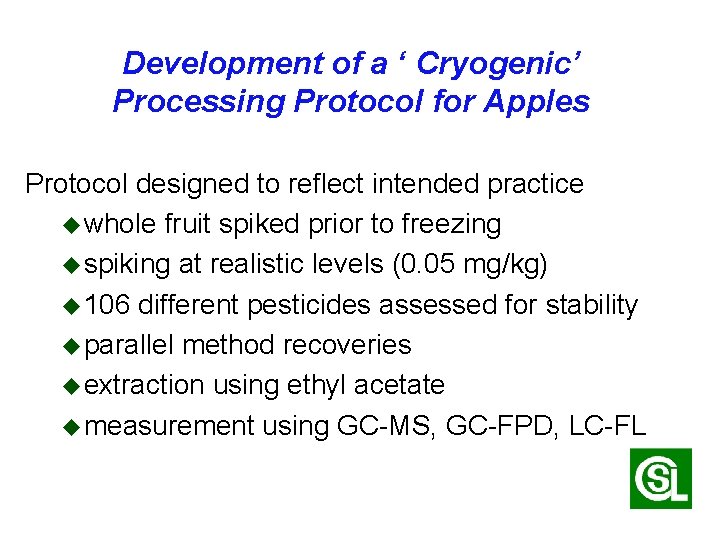
Development of a ‘ Cryogenic’ Processing Protocol for Apples Protocol designed to reflect intended practice u whole fruit spiked prior to freezing u spiking at realistic levels (0. 05 mg/kg) u 106 different pesticides assessed for stability u parallel method recoveries u extraction using ethyl acetate u measurement using GC-MS, GC-FPD, LC-FL

Spiking Procedure 250 µl of pesticides standard in ethyl acetate
Development of a ‘ Cryogenic’ Processing Protocol for Apples Protocol designed to reflect intended practice u whole fruit spiked prior to freezing u spiking at realistic levels (0. 05 mg/kg) u 106 different pesticides assessed for stability u parallel method recoveries u extraction using ethyl acetate u measurement using GC-MS, GC-FPD, LC-FL
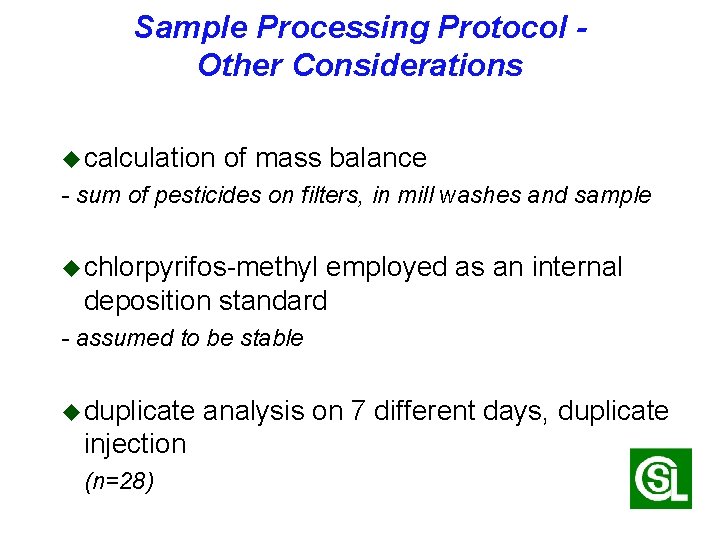
Sample Processing Protocol Other Considerations u calculation of mass balance - sum of pesticides on filters, in mill washes and sample u chlorpyrifos-methyl employed as an internal deposition standard - assumed to be stable u duplicate injection (n=28) analysis on 7 different days, duplicate
Processing Individual fruit
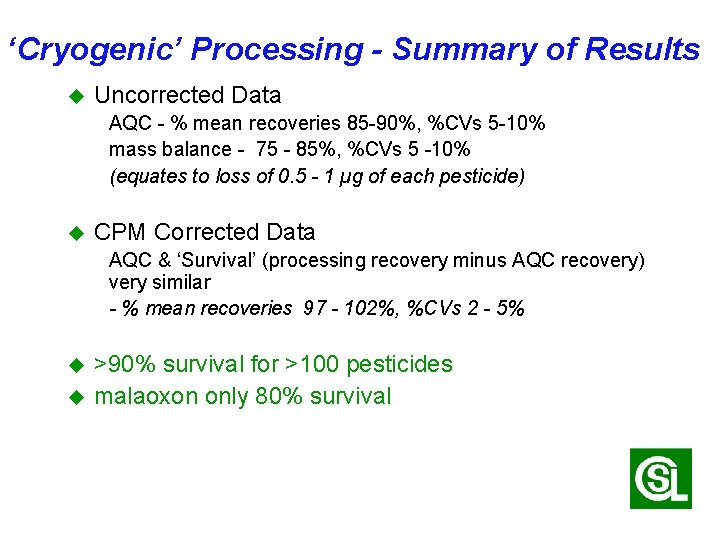
‘Cryogenic’ Processing - Summary of Results u Uncorrected Data AQC - % mean recoveries 85 -90%, %CVs 5 -10% mass balance - 75 - 85%, %CVs 5 -10% (equates to loss of 0. 5 - 1 µg of each pesticide) u CPM Corrected Data AQC & ‘Survival’ (processing recovery minus AQC recovery) very similar - % mean recoveries 97 - 102%, %CVs 2 - 5% u u >90% survival for >100 pesticides malaoxon only 80% survival
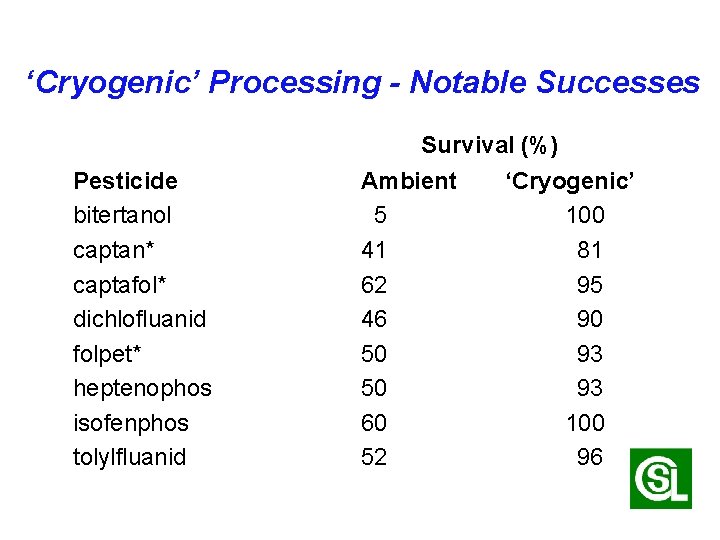
‘Cryogenic’ Processing - Notable Successes Pesticide bitertanol captan* captafol* dichlofluanid folpet* heptenophos isofenphos tolylfluanid Survival (%) Ambient ‘Cryogenic’ 5 100 41 81 62 95 46 90 50 93 60 100 52 96
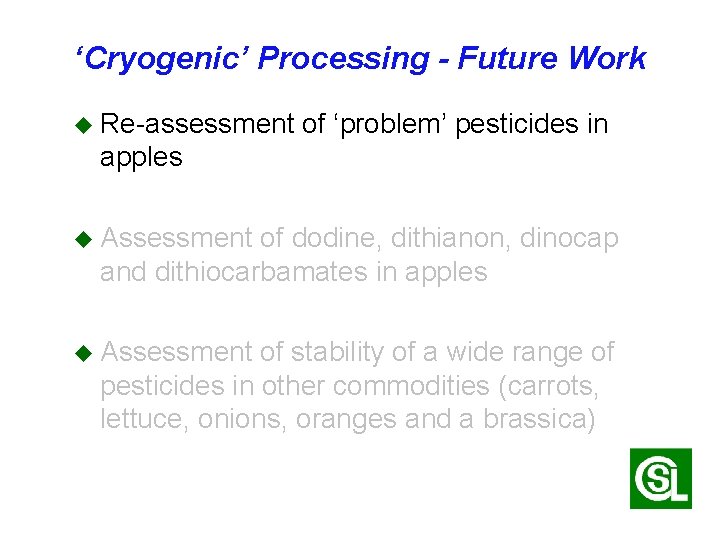
‘Cryogenic’ Processing - Future Work u Re-assessment of ‘problem’ pesticides in apples u Assessment of dodine, dithianon, dinocap and dithiocarbamates in apples u Assessment of stability of a wide range of pesticides in other commodities (carrots, lettuce, onions, oranges and a brassica)
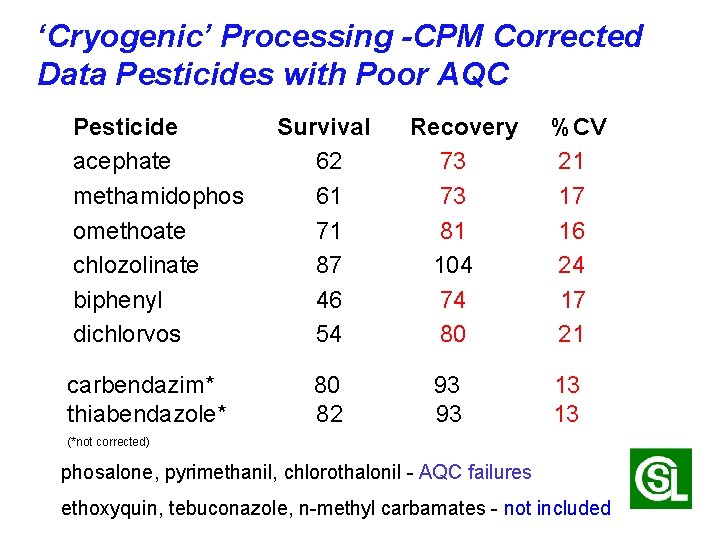
‘Cryogenic’ Processing -CPM Corrected Data Pesticides with Poor AQC Pesticide acephate methamidophos omethoate chlozolinate biphenyl dichlorvos carbendazim* thiabendazole* Survival 62 61 71 87 46 54 80 82 Recovery 73 73 81 104 74 80 93 93 %CV 21 17 16 24 17 21 13 13 (*not corrected) phosalone, pyrimethanil, chlorothalonil - AQC failures ethoxyquin, tebuconazole, n-methyl carbamates - not included
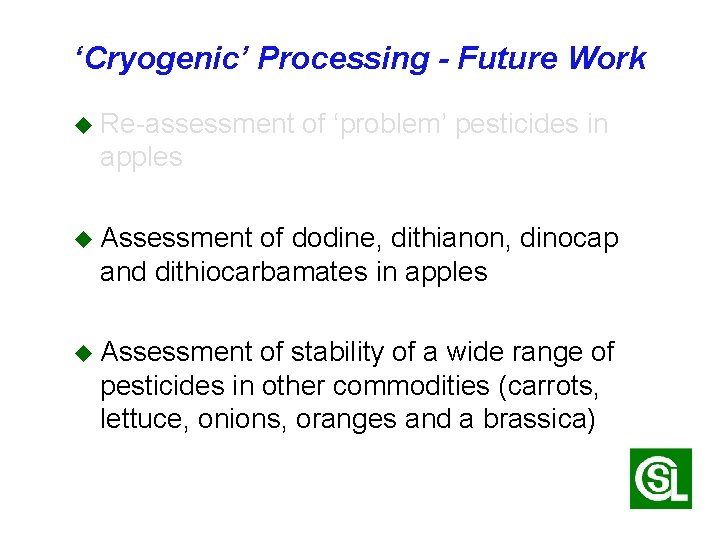
‘Cryogenic’ Processing - Future Work u Re-assessment of ‘problem’ pesticides in apples u Assessment of dodine, dithianon, dinocap and dithiocarbamates in apples u Assessment of stability of a wide range of pesticides in other commodities (carrots, lettuce, onions, oranges and a brassica)
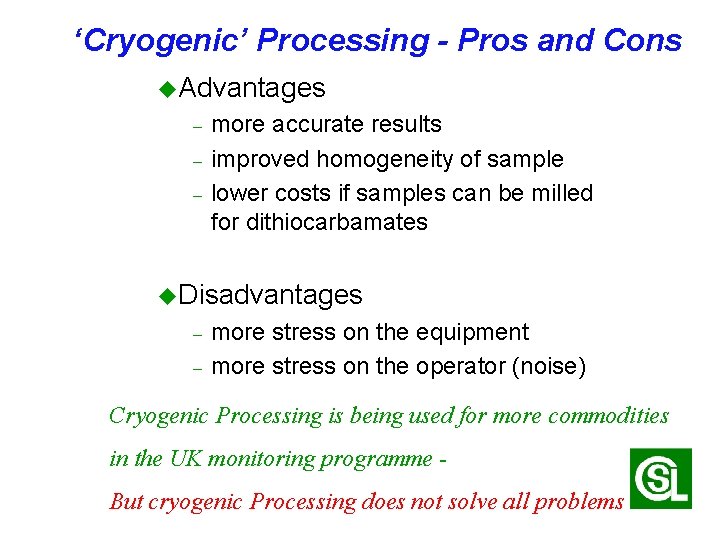
‘Cryogenic’ Processing - Pros and Cons u. Advantages – – – more accurate results improved homogeneity of sample lower costs if samples can be milled for dithiocarbamates u. Disadvantages – – more stress on the equipment more stress on the operator (noise) Cryogenic Processing is being used for more commodities in the UK monitoring programme But cryogenic Processing does not solve all problems
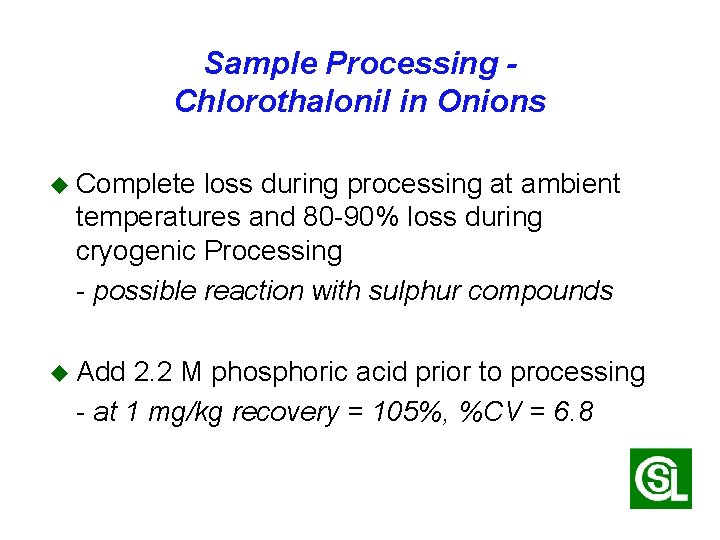
Sample Processing Chlorothalonil in Onions u Complete loss during processing at ambient temperatures and 80 -90% loss during cryogenic Processing - possible reaction with sulphur compounds u Add 2. 2 M phosphoric acid prior to processing - at 1 mg/kg recovery = 105%, %CV = 6. 8
Sample Processing Further Information u ARC Hill et al - Effects of Sample Processing on Pesticide Residues in Fruit and Vegetables Principles and Practices of Method Validation 2000 Ed A Fajelj and A Ambrus, RSC, ISBN 0 -85404 -783 -2 u. R Fussell et al - Assessment of the Stability of Pesticides During Cryogenic sample Processing Part 1: Apples J. Agricultural & Food Chemistry, 2002, 50, 5, 441 -448 u www. iaea. org/programmes/ri/uc. html
Acknowledgments u Alan Hill, CSL, UK u Pesticides Safety Directorate, UK u Pesticides Team, CSL, UK
- Slides: 25