
Assessment of Oxygenation and Perfusion Taylor ch 25

- Slides: 27
Assessment of Oxygenation and Perfusion Taylor, ch 25 Jensen, ch 16, 17, 18
History Collection n Reason for seeking care n Review risk factors n Ask about sx n Past medical hx (PMH), hospitalizations, tests, meds, O 2 use n Family hx (FH) n Ask about health maintenance activities (HMA) n If child, ask specific questions
Risk Factors n Non-modifiable: n Age n Race n Gender n Fa hx n Modifiable: n HTN n CAD n DM n Smoking n Occupational n Obesity n Inactivity n Stress n BCPs
Symptom history n Chest pain n Dyspnea, on exertion (DOE), orthopnea, paroxysmal nocturnal dyspnea (PND) n Dizziness, syncope n Activity intolerance, fatigue n Palpitations
Symptoms (cont’d) n Edema/wt gain n Cough—dry or wet, productive or not n Nocturia, oliguria n Extremity pain n HAs, nosebleeds, blurred vision n Easy bruising n Anxiety
PMH n HTN n “Heart problems” (murmurs, arrhythmias, MI, congenital, rheumatic fever) n Hyperlipidemia n Lung disease n Tumors n Blood disorders n Kidney disease
History (cont’d) n CVA n Thyroid disease n Surgery n Hospitalizations n Dx tests n Injuries/accidents n Communicable diseases n Meds n Allergies
History cont’d n Lifestyle: n ETOH, drugs, tobacco, home and work environment n HMA: n sleep, diet, exercise, stress management, checkups
Children’s history n Feed and play without tiring? n Cyanosis, esp with crying or exertion? n Growth up to standard? n Position changes during activity? n Hx strep, unexplained joint pain, fever? n Hx lung problems? n HA, nosebleeds? n Sib with heart defect? n Chromosomal abnormalities?
Initial Assessment…. do you notice… n Skin color n Respiratory effort n Anxiety n Audible lung sounds n Coughing n Clubbing n Use of O 2
Physical Assessment n Check VS and O 2 sat n Auscultate heart and lungs n Inspect extremities n Palpate peripheral pulses n Assess abdomen
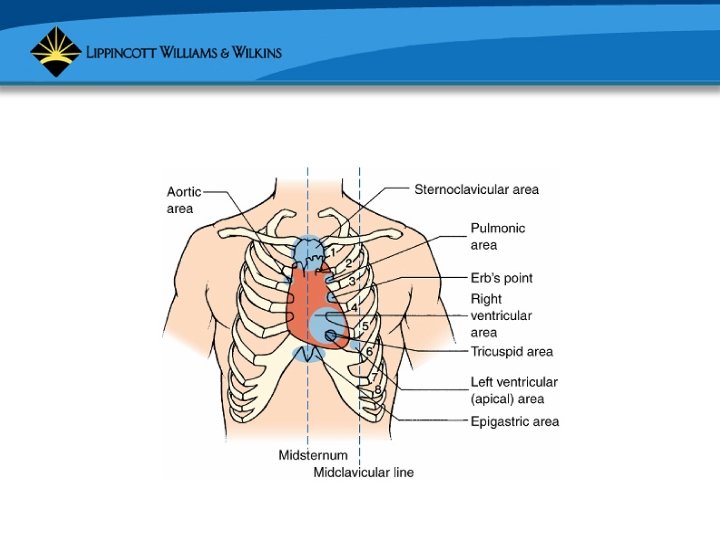
Physical Assessment—Heart n Inspect for apical impulse (PMI) n Palpate for apical impulse and across precordium—no other impulse should be felt (thrill) n Percuss starting at 5 th space and anterior axillary line and move right n Auscultate—APETM, supine, left side, sitting
Auscultation n Note rate and rhythm n Identify S 1 and S 2 and assess them n Listen for extra sounds—split S 2, S 3, S 4 n Listen for murmurs and grade acc’d to loudness only and if heard on S 1 or S 2
Physical Assessment—Neck Vessels n Inspect carotid and jugular pulsations n Perform HJR n Palpate carotids (not both at once!) n Auscultate carotids for bruit using bell
Breath Sounds n Bronchial: high-pitched and longer, heard primarily over the trachea and larynx n Bronchovesicular: medium pitched sound heard over the larger airways n Vesicular: low-pitched, soft sound heard in the lung periphery over smaller airways n These sounds are abnormal if heard in other areas than expected
Abnormal (Adventitious) n Diminished: decrease air exchanged from atelectasis, emphysema, or pleural effusion n Absent: from atelectasis, tumor, pleural effusion n Crackles: fine, medium, or coarse intermittent sounds occurring when air moves through airways that contain fluid n Wheezes: continuous high or low-pitched musical or squeaky sounds heard on expiration or inspiration as air passes through
Assessing Diagnostics n Lab values: n CBC n electrolytes n cholesterol n inflammatory markers n cardiac markers n kidney functions n O 2 sat, ABGs
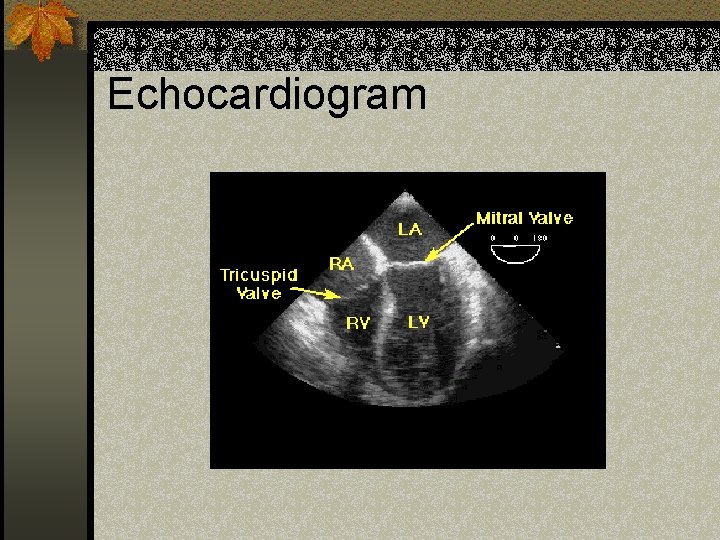
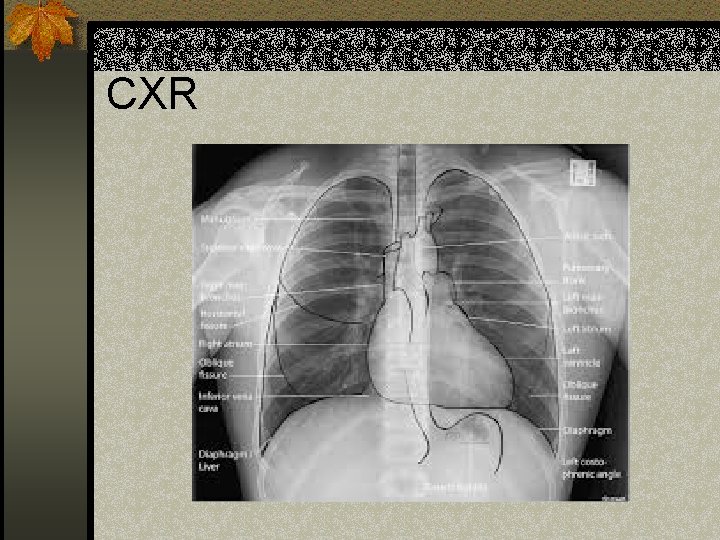
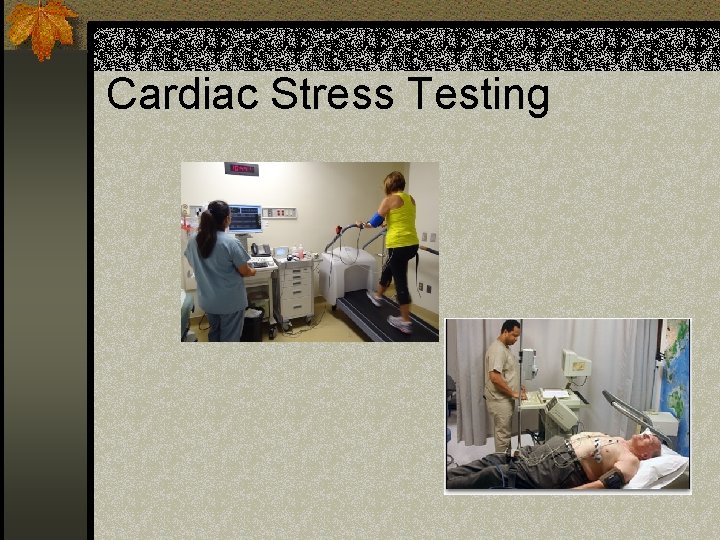
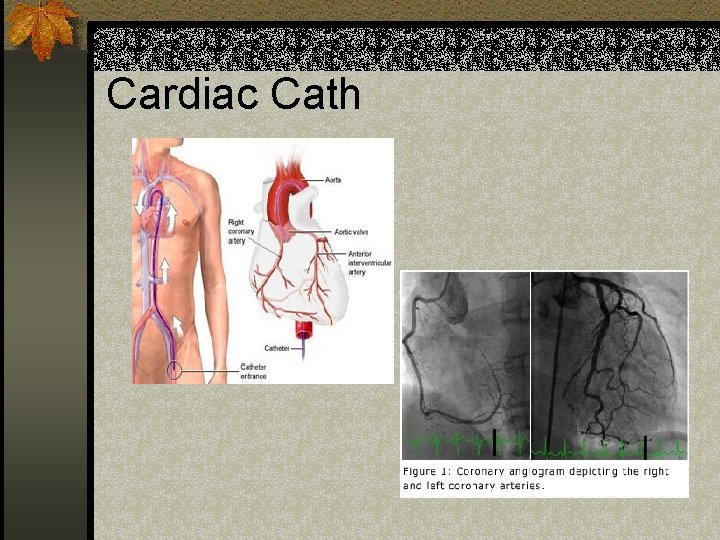
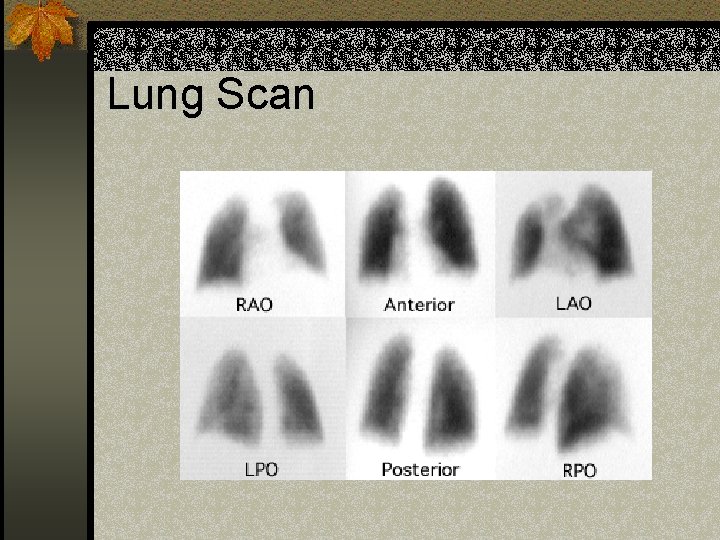
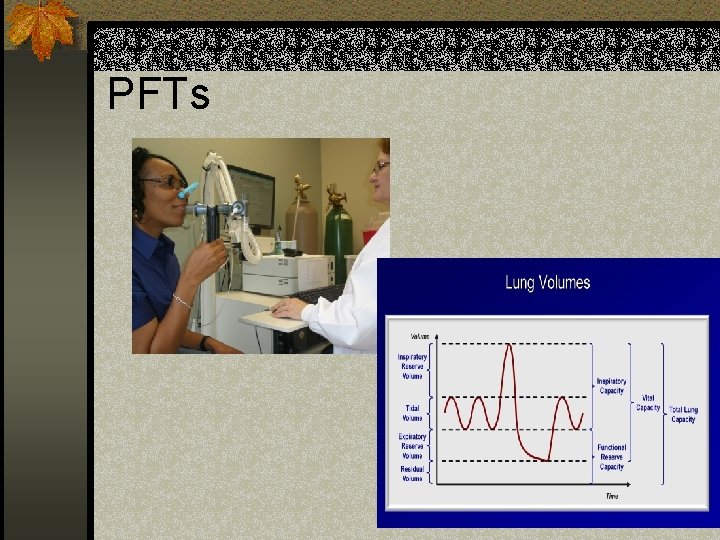
Diagnostics (cont’d) n Electrocardiogram (ECG) n Echocardiogram (ultrasound) n CXR n Cardiac stress testing n Heart catheterization n Lung scan n Pulmonary function tests (PFTs) n TB skin test
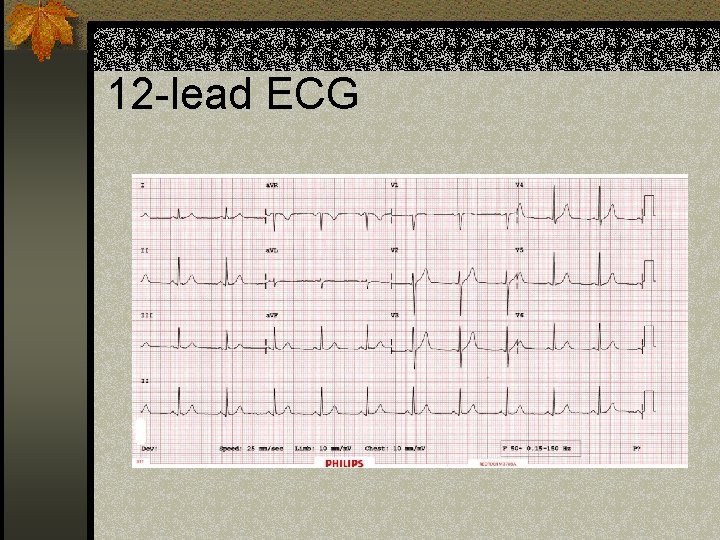
12 -lead ECG
Echocardiogram
CXR
Cardiac Stress Testing
Cardiac Cath
Lung Scan
PFTs
Positive TB Skin Test