
Assessment of market impact and market creation potential
- Slides: 32
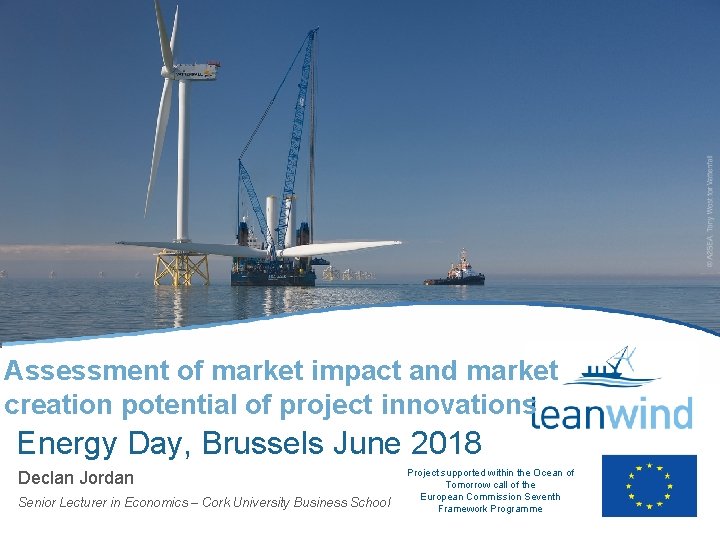
Assessment of market impact and market creation potential of project innovations Energy Day, Brussels June 2018 Declan Jordan Senior Lecturer in Economics – Cork University Business School Project supported within the Ocean of Tomorrow call of the European Commission Seventh Framework Programme
Presentation outline • Objectives • Market Analysis • Attribute Matching Approach • Survey Findings • Conclusions
Objective of the Research • This work forms part of the LEANWIND project. • The aim of the LEANWIND project is to provide costreductions by applying lean principles to the offshore wind lifecycle and supply chain. • Critical to this aim is the design and development of several innovations within the scope of the project. • These innovations must be taken up and exploited by industry participants to achieve widespread cost improvements in the sector. This means the innovations must add value and address critical needs of potential purchasers and/or users.
Objectives of the Research • The task assesses the market potential of LEANWIND innovations in offshore wind-farm foundation types, installation vessels, and Operations & Maintenance (O&M) vessels. • The study assesses the extent to which these innovations meet the requirements of stakeholders in the industry and, using attribute matching, assesses the extent to which innovations add value in the most critical aspects of the use or buy decision. • This is achieved using a survey of industry stakeholders.
Market Analysis • A market analysis was undertaken as part of the study. • It finds there a number of conditions that will impact the growth of the industry. • External factors, such as competition with other markets for resources or with incentives for development cannot be controlled directly by developers • Technological innovation is likely to be significant in reducing the Levelised Cost of Energy (LCo. E). • Technological innovations expected to become more mainstream in the industry in the near future include: larger capacity turbines, floating foundations, and improved installation and monitoring technologies.
Market Analysis • In addition, originally ownership of offshore wind farms was almost exclusively by large utility companies. • Although they still own the majority share in projects, the mix of investors is changing due to the increase of joint-venture projects, where investors include financial lenders (e. g. Green Investment Bank), institutional lenders (e. g. Pension Danmark), smaller power producers, or Engineering, Procurement, Construction and Installation (EPCI) contractors (e. g. the turbine manufacturers). • Market trends also suggest there may be more vertical integration along the supply chain, that is offshore wind developers are bringing operations such as maintenance inhouse.
Attribute Matching Approach • The study assesses the extent to which the technological innovations developed in the LEANWIND project match the self-reported important criteria of potential users. • The report generated by the study presents detailed technical specifications of the LEANWIND innovations and the gaps in the industry which they are intended to fill - though this is not elaborated here. • To explore the extent to which the innovations add value to potential users/purchasers, and therefore the likelihood that the innovations will be taken up by the market, an original survery is administered to industry participants that are potential users and/or purchasers of the innovations for wind-farm developments.
LEANWIND Innovations • The LEANWIND partners designed several innovations to achieve the objectives of the project. • An important aspect of the project is the diffusion of these innovations across the industry. • The innovations will be successful to the extent that they are adopted by industry participants. Their adoption depends on the degree to which the innovations add value to off-shore wind farm projects. • This value may take the form of lower costs, improved efficiency, greater reliability, or other key attributes for wind farm development, all of which are ultimately aimed at reducing LCo. E.
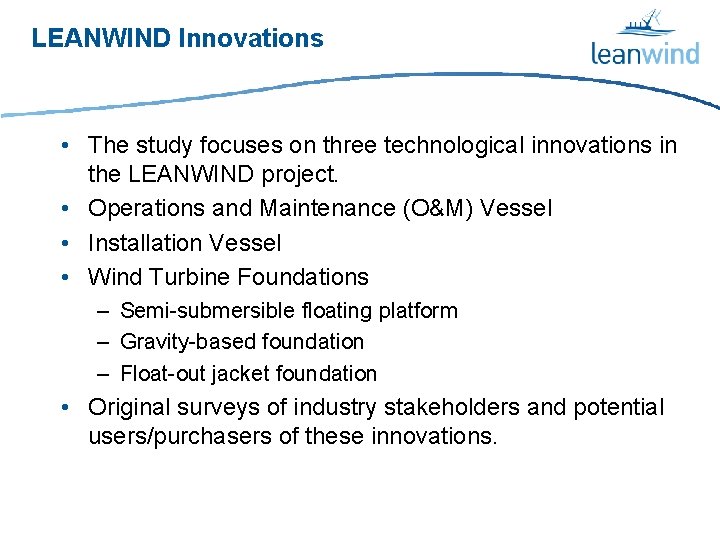
LEANWIND Innovations • The study focuses on three technological innovations in the LEANWIND project. • Operations and Maintenance (O&M) Vessel • Installation Vessel • Wind Turbine Foundations – Semi-submersible floating platform – Gravity-based foundation – Float-out jacket foundation • Original surveys of industry stakeholders and potential users/purchasers of these innovations.
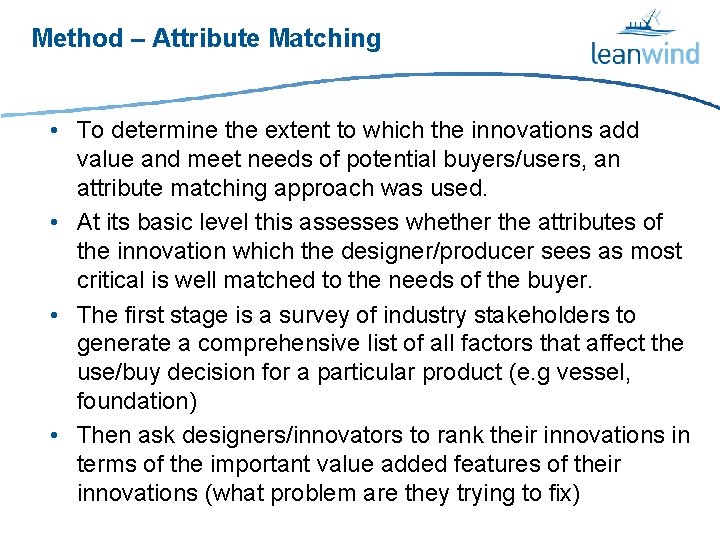
Method – Attribute Matching • To determine the extent to which the innovations add value and meet needs of potential buyers/users, an attribute matching approach was used. • At its basic level this assesses whether the attributes of the innovation which the designer/producer sees as most critical is well matched to the needs of the buyer. • The first stage is a survey of industry stakeholders to generate a comprehensive list of all factors that affect the use/buy decision for a particular product (e. g vessel, foundation) • Then ask designers/innovators to rank their innovations in terms of the important value added features of their innovations (what problem are they trying to fix)
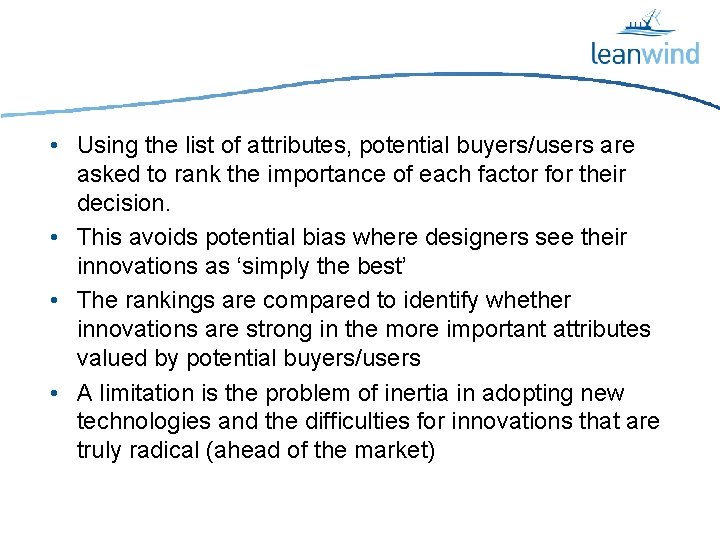
• Using the list of attributes, potential buyers/users are asked to rank the importance of each factor for their decision. • This avoids potential bias where designers see their innovations as ‘simply the best’ • The rankings are compared to identify whether innovations are strong in the more important attributes valued by potential buyers/users • A limitation is the problem of inertia in adopting new technologies and the difficulties for innovations that are truly radical (ahead of the market)
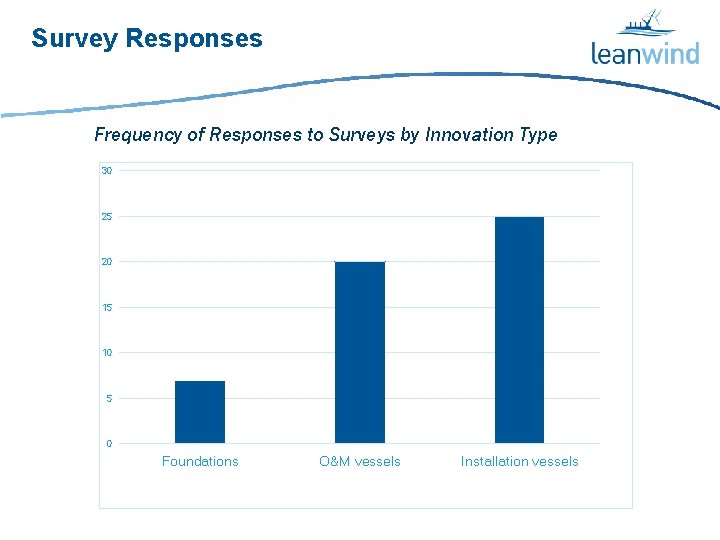
Survey Responses Frequency of Responses to Surveys by Innovation Type 30 25 20 15 10 5 0 Foundations O&M vessels Installation vessels
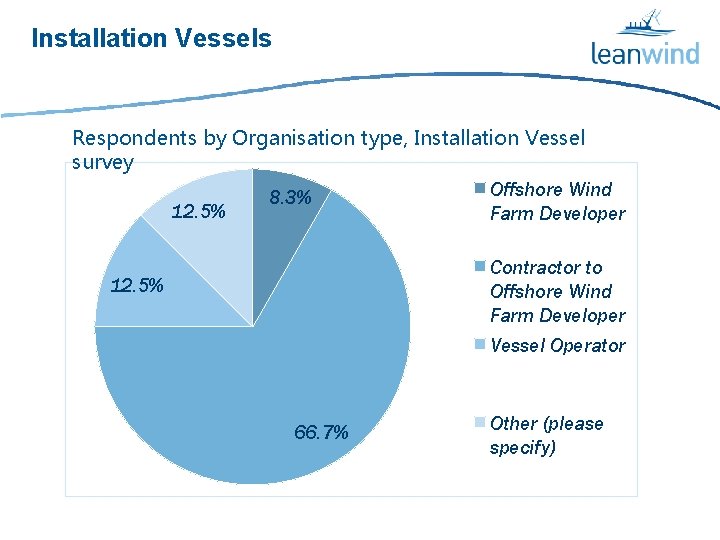
Installation Vessels Respondents by Organisation type, Installation Vessel survey Offshore Wind 8. 3% 12. 5% Farm Developer Contractor to Offshore Wind Farm Developer 12. 5% Vessel Operator 66. 7% Other (please specify)
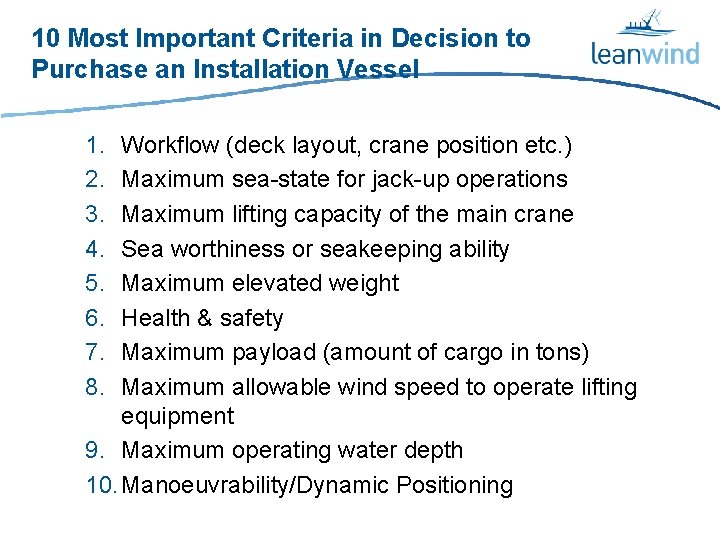
10 Most Important Criteria in Decision to Purchase an Installation Vessel 1. 2. 3. 4. 5. 6. 7. 8. Workflow (deck layout, crane position etc. ) Maximum sea-state for jack-up operations Maximum lifting capacity of the main crane Sea worthiness or seakeeping ability Maximum elevated weight Health & safety Maximum payload (amount of cargo in tons) Maximum allowable wind speed to operate lifting equipment 9. Maximum operating water depth 10. Manoeuvrability/Dynamic Positioning
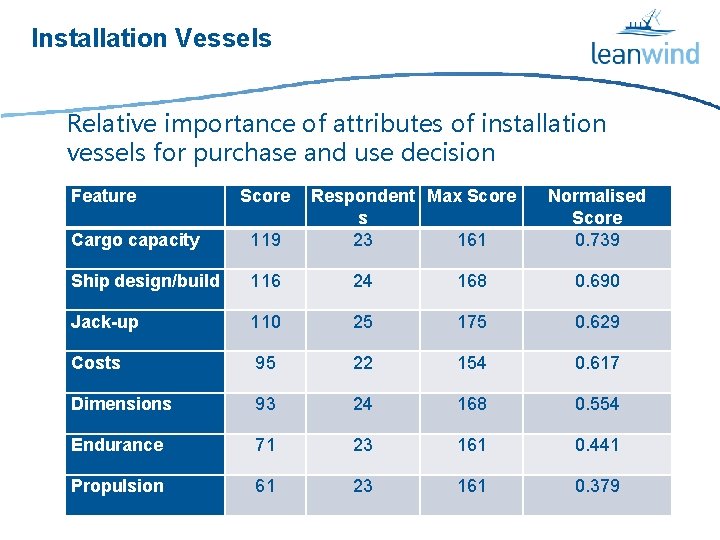
Installation Vessels Relative importance of attributes of installation vessels for purchase and use decision Feature Score Respondent Max Score s 23 161 Normalised Score 0. 739 Cargo capacity 119 Ship design/build 116 24 168 0. 690 Jack-up 110 25 175 0. 629 Costs 95 22 154 0. 617 Dimensions 93 24 168 0. 554 Endurance 71 23 161 0. 441 Propulsion 61 23 161 0. 379
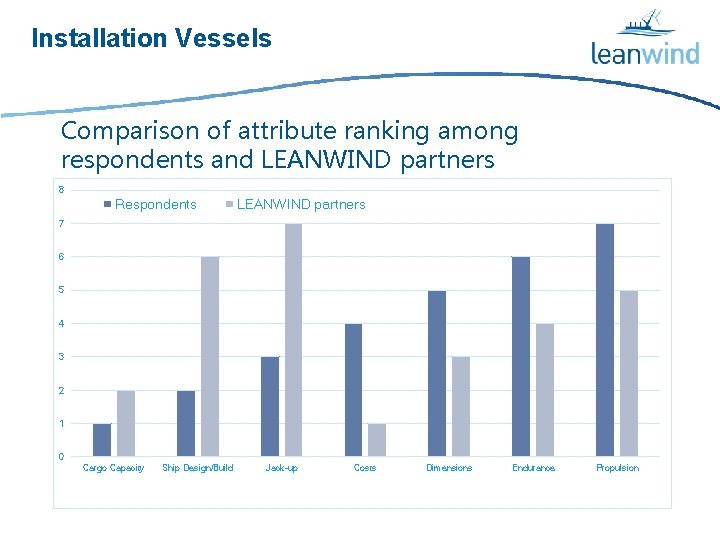
Installation Vessels Comparison of attribute ranking among respondents and LEANWIND partners 8 Respondents LEANWIND partners 7 6 5 4 3 2 1 0 Cargo Capacity Ship Design/Build Jack-up Costs Dimensions Endurance Propulsion
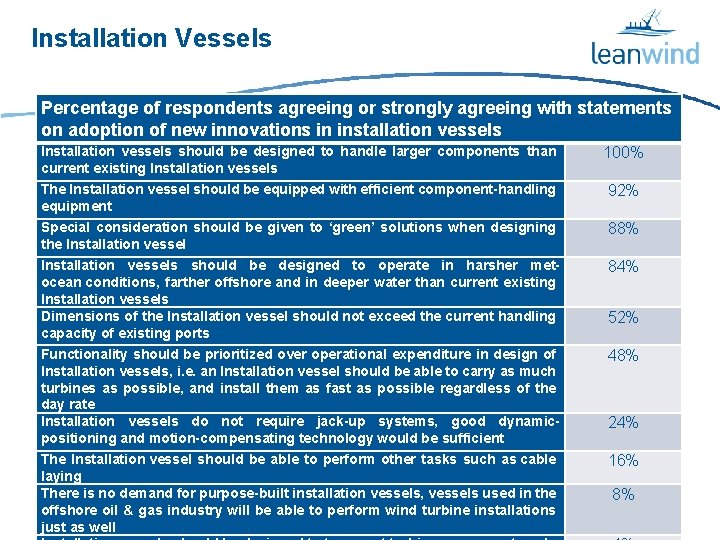
Installation Vessels Percentage of respondents agreeing or strongly agreeing with statements on adoption of new innovations in installation vessels Installation vessels should be designed to handle larger components than current existing Installation vessels 100% The Installation vessel should be equipped with efficient component-handling equipment 92% Special consideration should be given to ‘green’ solutions when designing the Installation vessel 88% Installation vessels should be designed to operate in harsher metocean conditions, farther offshore and in deeper water than current existing Installation vessels Dimensions of the Installation vessel should not exceed the current handling capacity of existing ports 84% Functionality should be prioritized over operational expenditure in design of Installation vessels, i. e. an Installation vessel should be able to carry as much turbines as possible, and install them as fast as possible regardless of the day rate Installation vessels do not require jack-up systems, good dynamicpositioning and motion-compensating technology would be sufficient 48% The Installation vessel should be able to perform other tasks such as cable laying There is no demand for purpose-built installation vessels, vessels used in the offshore oil & gas industry will be able to perform wind turbine installations just as well 16% 52% 24% 8%
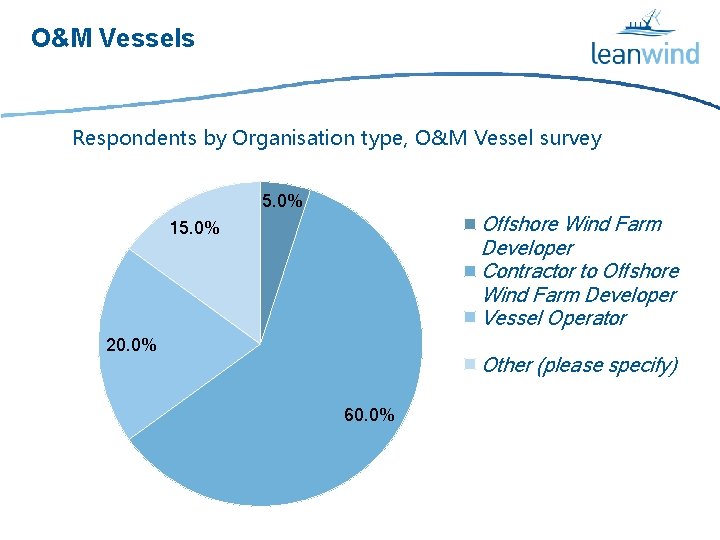
O&M Vessels Respondents by Organisation type, O&M Vessel survey 5. 0% Offshore Wind Farm Developer Contractor to Offshore Wind Farm Developer Vessel Operator 15. 0% 20. 0% Other (please specify) 60. 0%
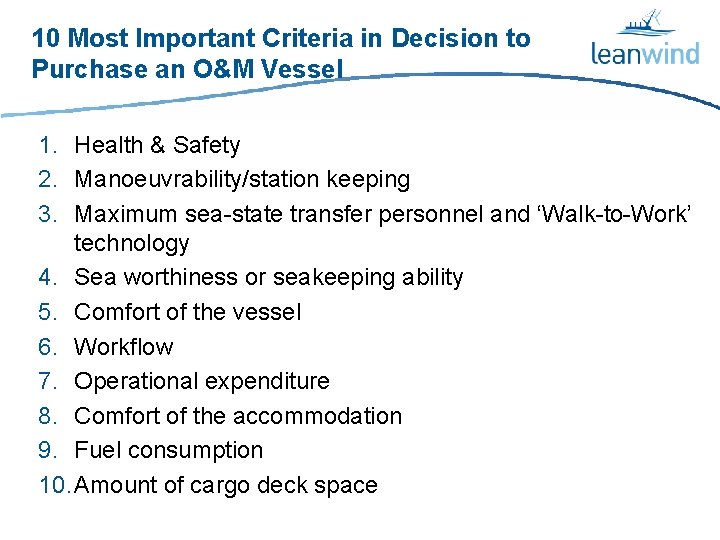
10 Most Important Criteria in Decision to Purchase an O&M Vessel 1. Health & Safety 2. Manoeuvrability/station keeping 3. Maximum sea-state transfer personnel and ‘Walk-to-Work’ technology 4. Sea worthiness or seakeeping ability 5. Comfort of the vessel 6. Workflow 7. Operational expenditure 8. Comfort of the accommodation 9. Fuel consumption 10. Amount of cargo deck space
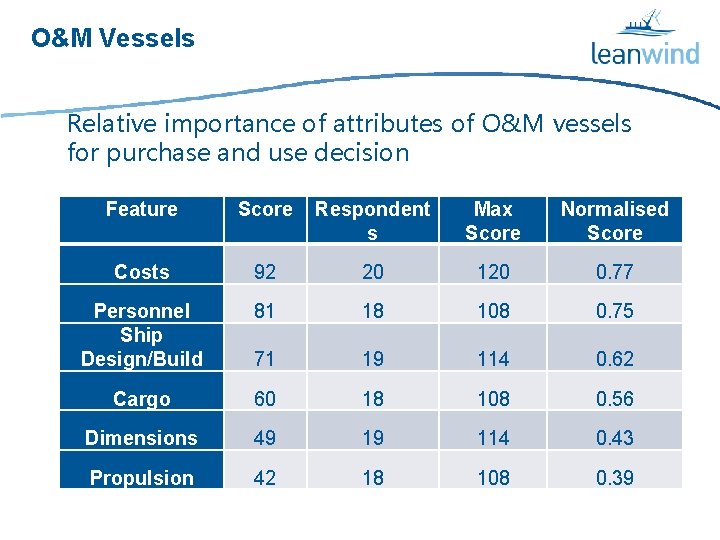
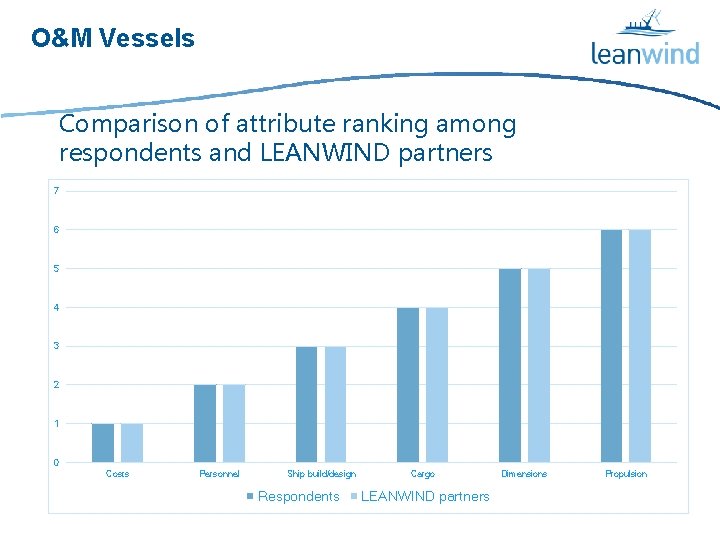
O&M Vessels Relative importance of attributes of O&M vessels for purchase and use decision Feature Score Respondent s Max Score Normalised Score Costs 92 20 120 0. 77 Personnel Ship Design/Build 81 18 108 0. 75 71 19 114 0. 62 Cargo 60 18 108 0. 56 Dimensions 49 19 114 0. 43 Propulsion 42 18 108 0. 39
O&M Vessels Comparison of attribute ranking among respondents and LEANWIND partners 7 6 5 4 3 2 1 0 Costs Personnel Ship build/design Respondents Cargo LEANWIND partners Dimensions Propulsion
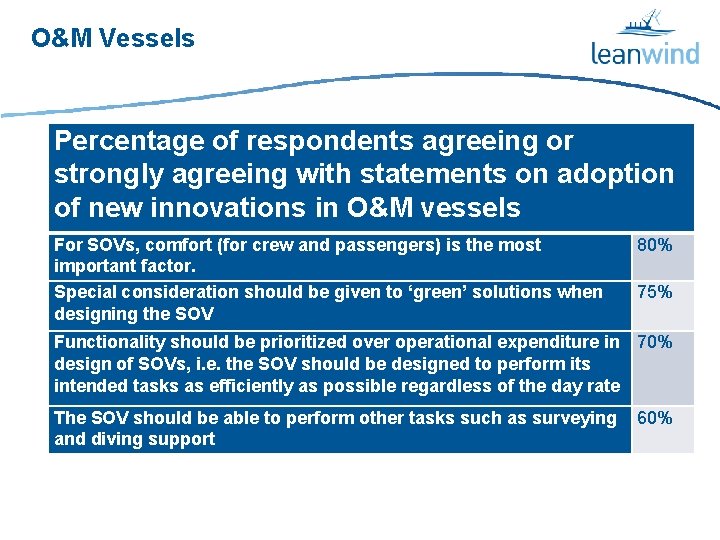
O&M Vessels Percentage of respondents agreeing or strongly agreeing with statements on adoption of new innovations in O&M vessels For SOVs, comfort (for crew and passengers) is the most important factor. Special consideration should be given to ‘green’ solutions when designing the SOV 80% 75% Functionality should be prioritized over operational expenditure in 70% design of SOVs, i. e. the SOV should be designed to perform its intended tasks as efficiently as possible regardless of the day rate The SOV should be able to perform other tasks such as surveying 60% and diving support
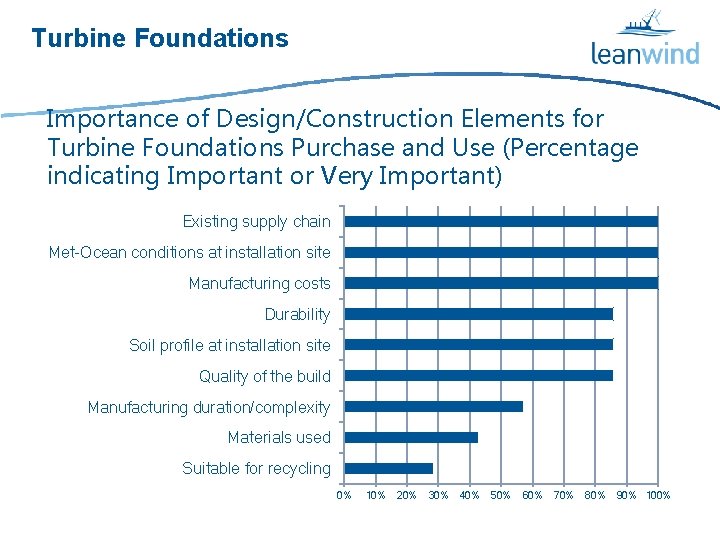
Turbine Foundations Importance of Design/Construction Elements for Turbine Foundations Purchase and Use (Percentage indicating Important or Very Important) Existing supply chain Met-Ocean conditions at installation site Manufacturing costs Durability Soil profile at installation site Quality of the build Manufacturing duration/complexity Materials used Suitable for recycling 0% 10% 20% 30% 40% 50% 60% 70% 80% 90% 100%
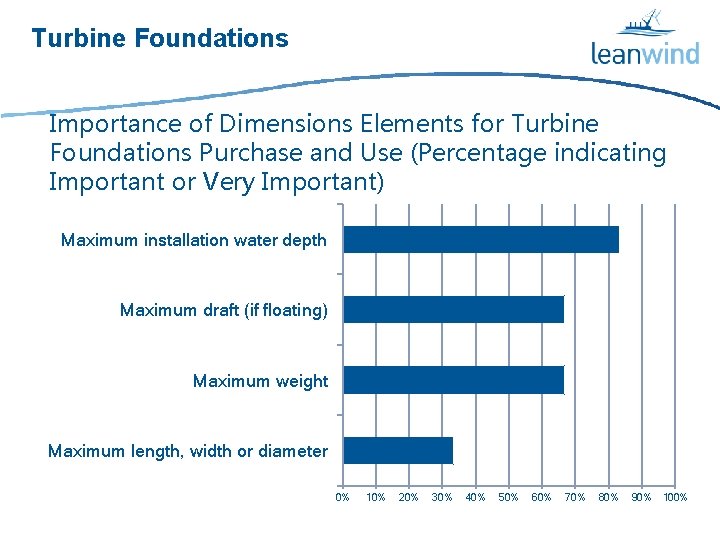
Turbine Foundations Importance of Dimensions Elements for Turbine Foundations Purchase and Use (Percentage indicating Important or Very Important) Maximum installation water depth Maximum draft (if floating) Maximum weight Maximum length, width or diameter 0% 10% 20% 30% 40% 50% 60% 70% 80% 90% 100%
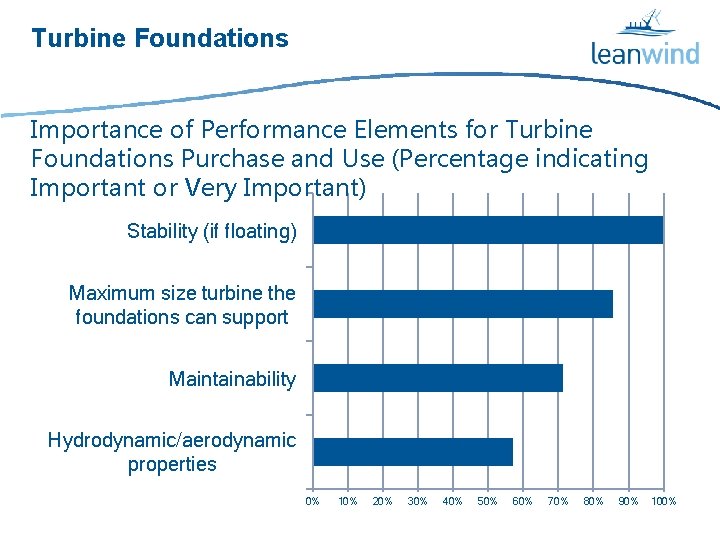
Turbine Foundations Importance of Performance Elements for Turbine Foundations Purchase and Use (Percentage indicating Important or Very Important) Stability (if floating) Maximum size turbine the foundations can support Maintainability Hydrodynamic/aerodynamic properties 0% 10% 20% 30% 40% 50% 60% 70% 80% 90% 100%
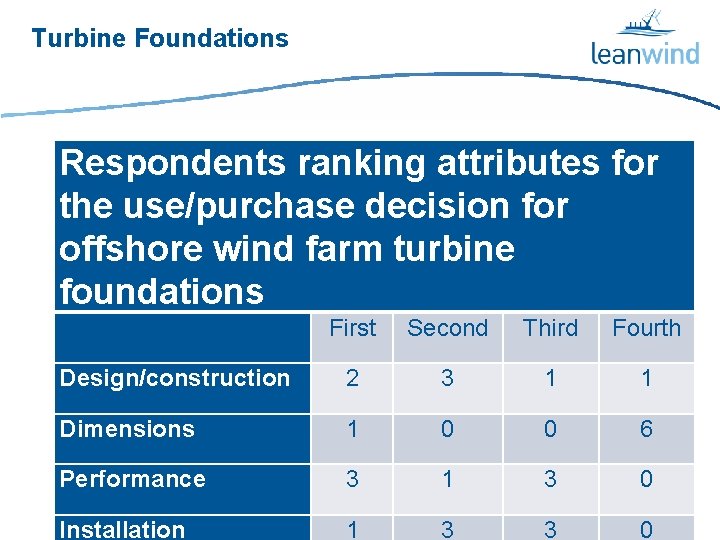
Turbine Foundations Respondents ranking attributes for the use/purchase decision for offshore wind farm turbine foundations First Second Third Fourth Design/construction 2 3 1 1 Dimensions 1 0 0 6 Performance 3 1 3 0 Installation 1 3 3 0
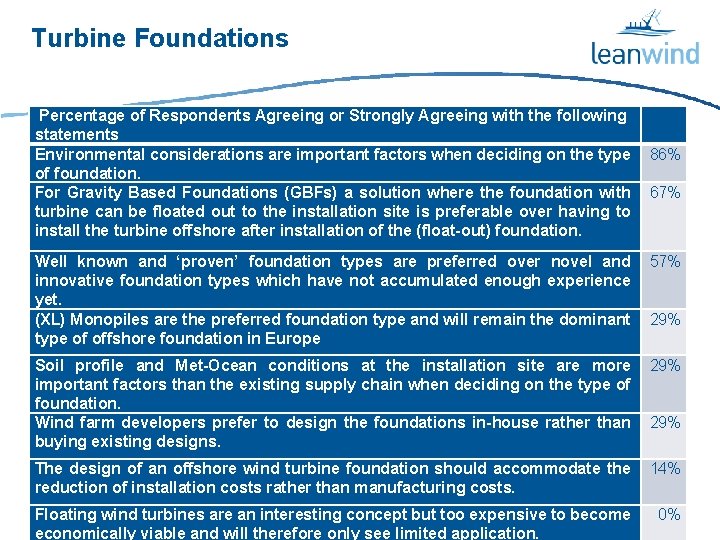
Turbine Foundations Percentage of Respondents Agreeing or Strongly Agreeing with the following statements Environmental considerations are important factors when deciding on the type 86% of foundation. For Gravity Based Foundations (GBFs) a solution where the foundation with 67% turbine can be floated out to the installation site is preferable over having to install the turbine offshore after installation of the (float-out) foundation. Well known and ‘proven’ foundation types are preferred over novel and 57% innovative foundation types which have not accumulated enough experience yet. (XL) Monopiles are the preferred foundation type and will remain the dominant 29% type of offshore foundation in Europe Soil profile and Met-Ocean conditions at the installation site are more 29% important factors than the existing supply chain when deciding on the type of foundation. Wind farm developers prefer to design the foundations in-house rather than 29% buying existing designs. The design of an offshore wind turbine foundation should accommodate the 14% reduction of installation costs rather than manufacturing costs. Floating wind turbines are an interesting concept but too expensive to become economically viable and will therefore only see limited application. 0%
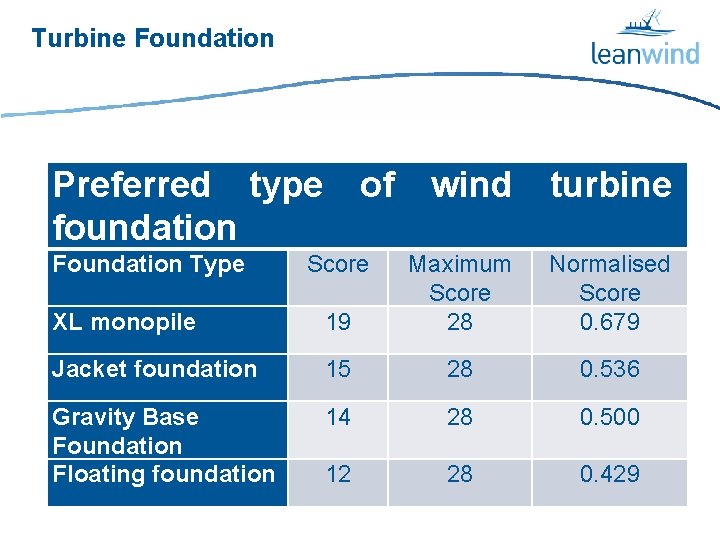
Turbine Foundation Preferred type of wind turbine foundation Foundation Type Score Maximum Normalised Score 28 0. 679 XL monopile 19 Jacket foundation 15 28 0. 536 Gravity Base Foundation Floating foundation 14 28 0. 500 12 28 0. 429
Conclusion • The results of the surveys generally confirmed the demand for larger installation vessels which are able to handle larger components than current vessels available in the market, and substructures which are able to support larger wind turbines and in deeper water than is currently feasible. • ‘Green’ designs and environmentally friendly solutions are considered important for the vessels, but to a lesser extent for the foundations. • Health & Safety and Workflow are considered important factors for both types of vessel. Comfort for crew and passengers is considered the most important factor for O&M vessels but less so for installation vessels. • Operational expenditure is considered a very important factor for the O&M vessel but less so for the installation vessel. However, respondents indicated that functionality should be prioritised over reducing OPEX for both vessels.
• Vessel operators prefer installation vessels suitable for transportation and installation of both foundations and turbines rather than installation vessels dedicated to turbines only. • The use of feeder barges/vessels for foundations and/or turbines is unpopular among vessel operators. • Reducing the manufacturing costs of foundations is considered more important than reducing installation costs. • Respondents indicate a willingness to use novel foundation types for the installation of offshore wind turbines, however, when given the choice the monopile is still the most popular foundation.
Conclusions • Respondents believe there is a high degree of potential for floating offshore wind energy generation. • The attribute matching revealed a high degree of correlation between designers’ and respondents’ priorities for O&M vessels and low correlation for installation vessels. • This would suggest the LEANWIND O&M vessel will have high potential, whereas further consultation between designers and industry is required for the design of the LEANWIND installation vessel.
Thank you for your attention! Contact: d. jordan@ucc. ie @decjordan