
Assessment of Learning and Assessment for Learning Aim
![Formative assessment [Black and Harrison 08: 20 -14: 30]](https://slidetodoc.com/presentation_image_h2/b3ca42919d16d75e18d3561754308d98/image-9.jpg "Formative assessment [Black and Harrison 08: 20 -14: 30]")
![Summary of Principles of Af. L [Black and Harrison 00: 00 -06: 32]](https://slidetodoc.com/presentation_image_h2/b3ca42919d16d75e18d3561754308d98/image-21.jpg "Summary of Principles of Af. L [Black and Harrison 00: 00 -06: 32]")
- Slides: 22
Assessment of Learning and Assessment for Learning
Aim To understand the distinctions between the different purposes and characteristics of Ao. L and Af. L and hence their use, and some of the consequences, with particular emphasis on Af. L.
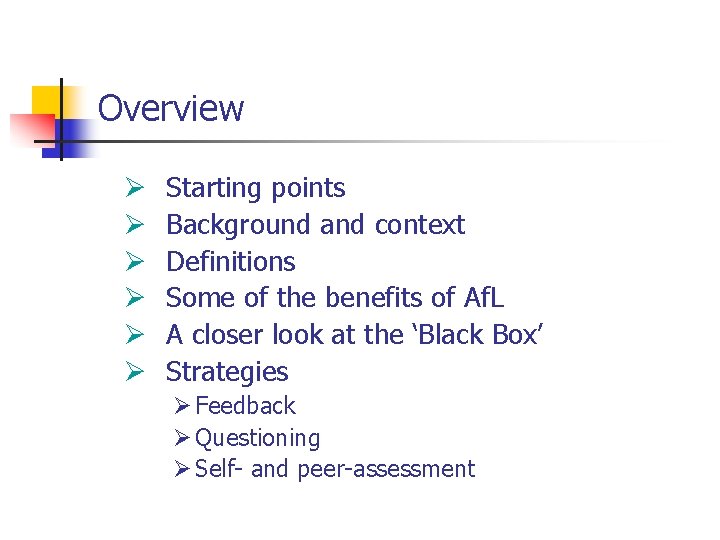
Overview Ø Ø Ø Starting points Background and context Definitions Some of the benefits of Af. L A closer look at the ‘Black Box’ Strategies Ø Feedback Ø Questioning Ø Self- and peer-assessment
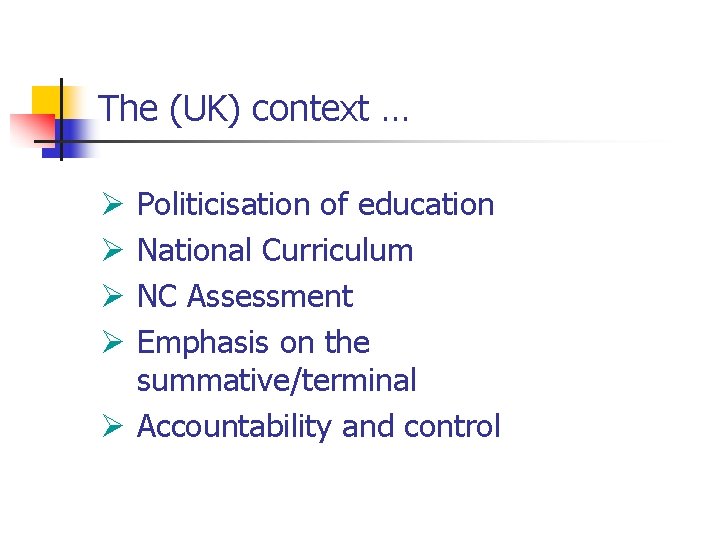
The (UK) context … Politicisation of education National Curriculum NC Assessment Emphasis on the summative/terminal Ø Accountability and control Ø Ø
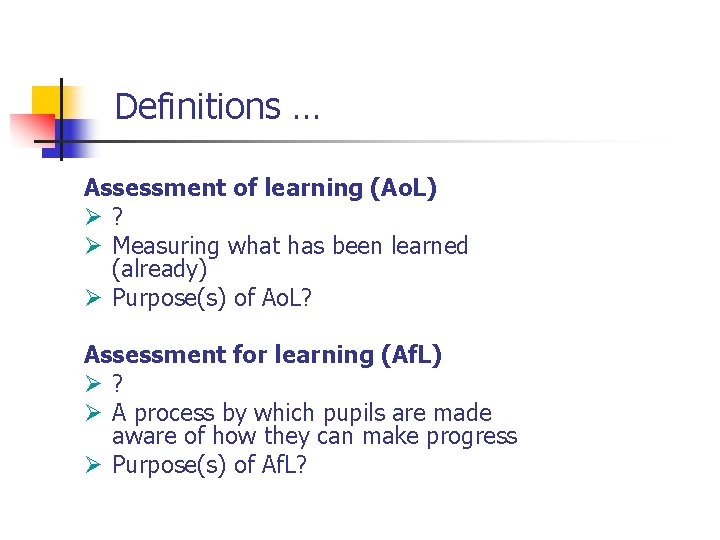
Definitions … Assessment of learning (Ao. L) Ø? Ø Measuring what has been learned (already) Ø Purpose(s) of Ao. L? Assessment for learning (Af. L) Ø? Ø A process by which pupils are made aware of how they can make progress Ø Purpose(s) of Af. L?
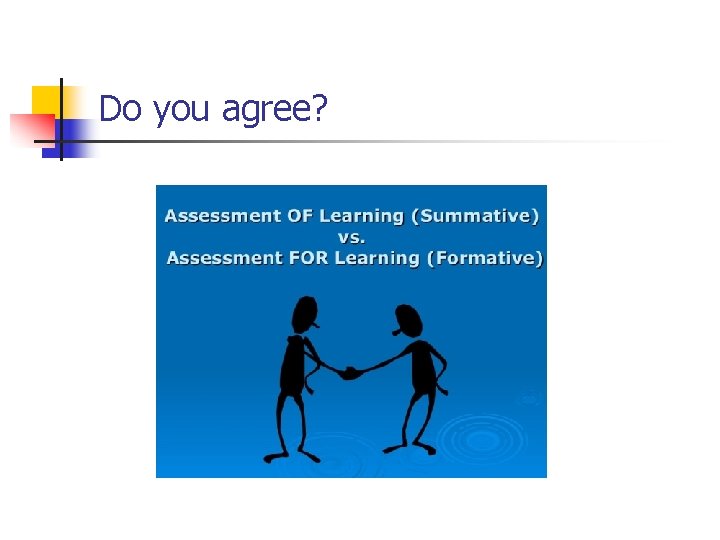
Do you agree?
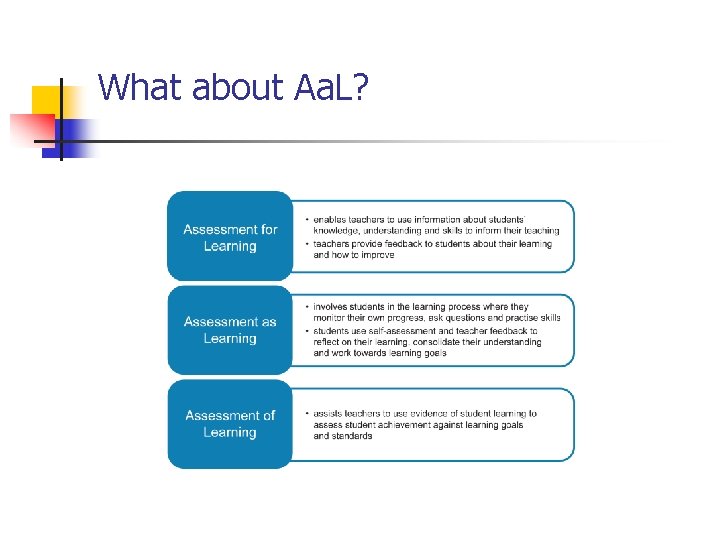
What about Aa. L?
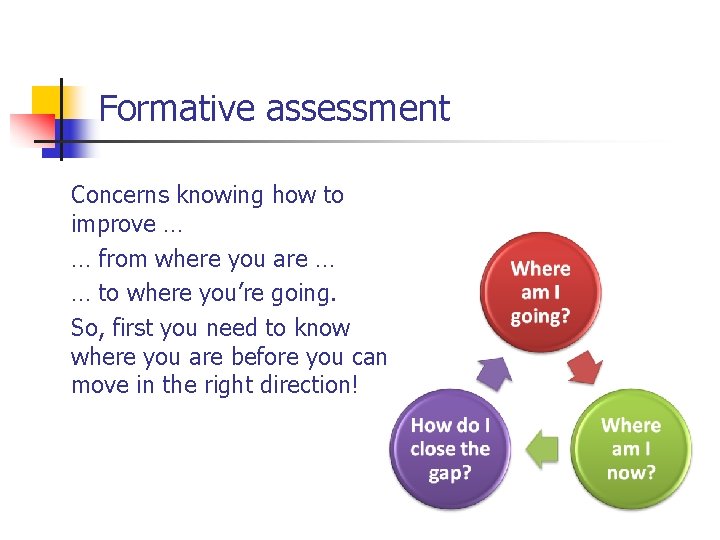
Formative assessment Concerns knowing how to improve … … from where you are … … to where you’re going. So, first you need to know where you are before you can move in the right direction!
Formative assessment [Black and Harrison 08: 20 -14: 30]
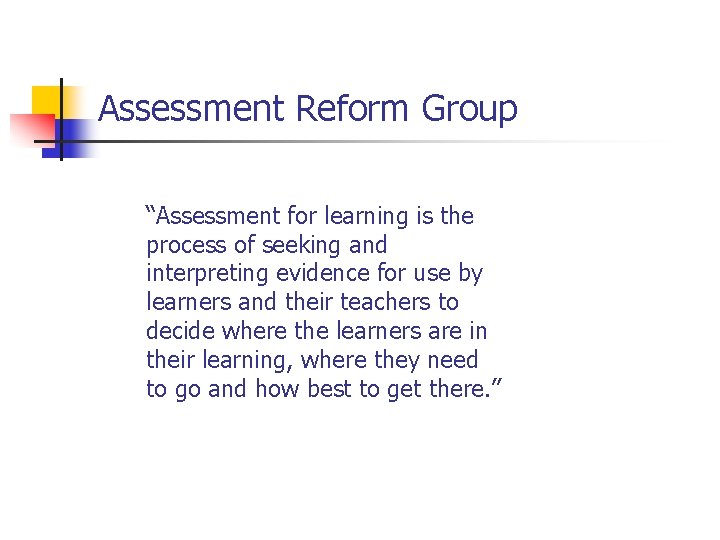
Assessment Reform Group “Assessment for learning is the process of seeking and interpreting evidence for use by learners and their teachers to decide where the learners are in their learning, where they need to go and how best to get there. ”
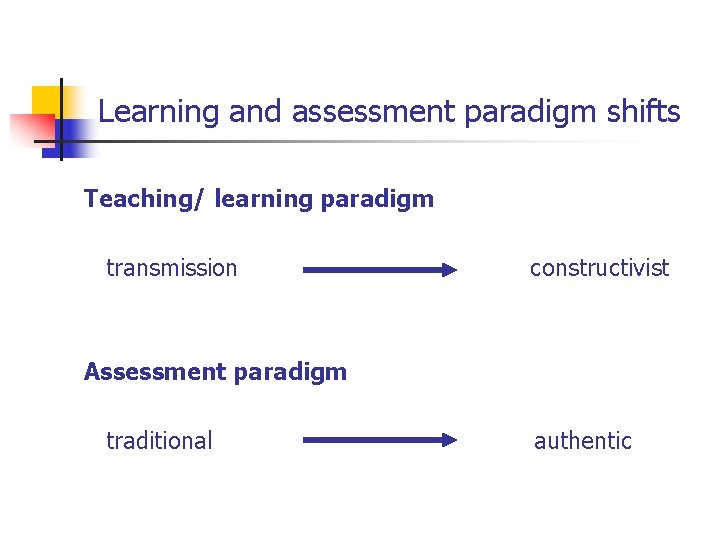
Learning and assessment paradigm shifts Teaching/ learning paradigm transmission constructivist Assessment paradigm traditional authentic
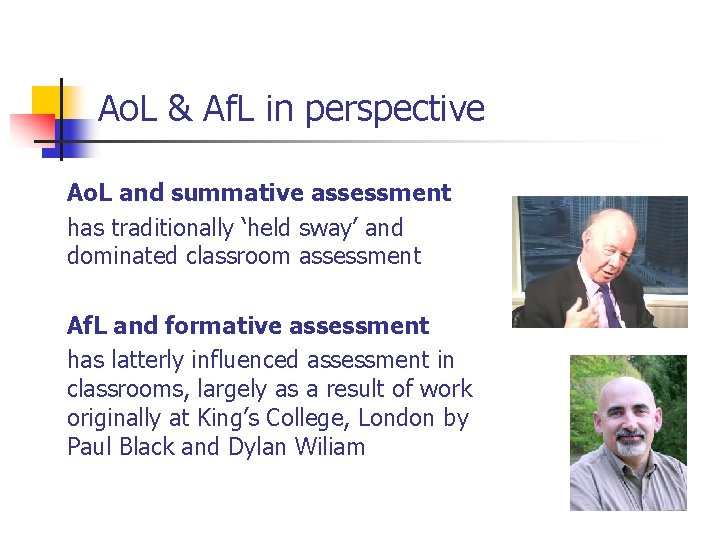
Ao. L & Af. L in perspective Ao. L and summative assessment has traditionally ‘held sway’ and dominated classroom assessment Af. L and formative assessment has latterly influenced assessment in classrooms, largely as a result of work originally at King’s College, London by Paul Black and Dylan Wiliam
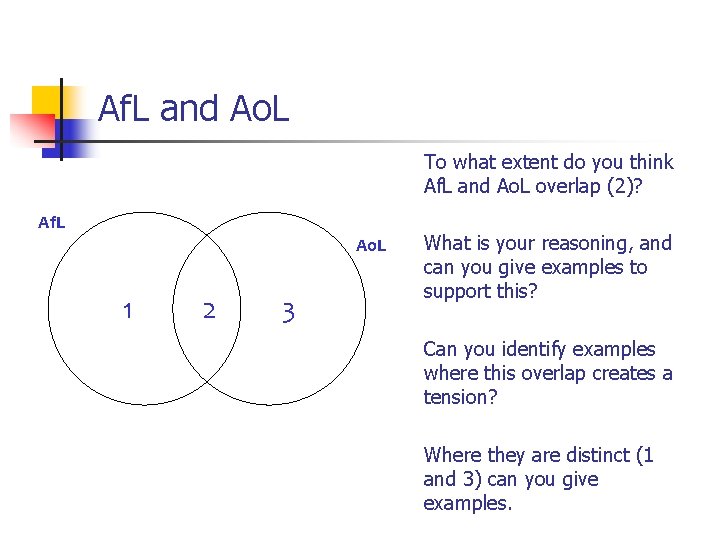
Af. L and Ao. L To what extent do you think Af. L and Ao. L overlap (2)? Af. L Ao. L 1 2 3 What is your reasoning, and can you give examples to support this? Can you identify examples where this overlap creates a tension? Where they are distinct (1 and 3) can you give examples.
‘Inside the Black Box’ 1. What was the aim of this publication? Why was it written? 2. To what extent do you agree with the principles outlined? Does it match your experience? 3. What one thing would you take from it? 4. Are there any outstanding issues in your view?
Pre-Black Box: shortcomings in formative assessment practice Ø tests that encourage rote learning Ø no sharing of assessment practices Ø no critical review of practices Ø marks and grading over-emphasised Ø giving advice and learning under-emphasised Ø inter-pupil comparison; competitive emphasis Ø feedback for social and managerial purposes Ø record-keeping for its own sake
IBB: the key questions 1. Is there evidence that improving formative assessment raises standards? 2. Is there evidence that there is room for improvement? 3. Is there evidence about how to improve formative assessment?
IBB: main findings Ø Improving the practice of formative assessment can produce substantial learning gains* Ø The gains are often greatest for lower achievers * It has been suggested that this could shift UK to the top of international comparisons
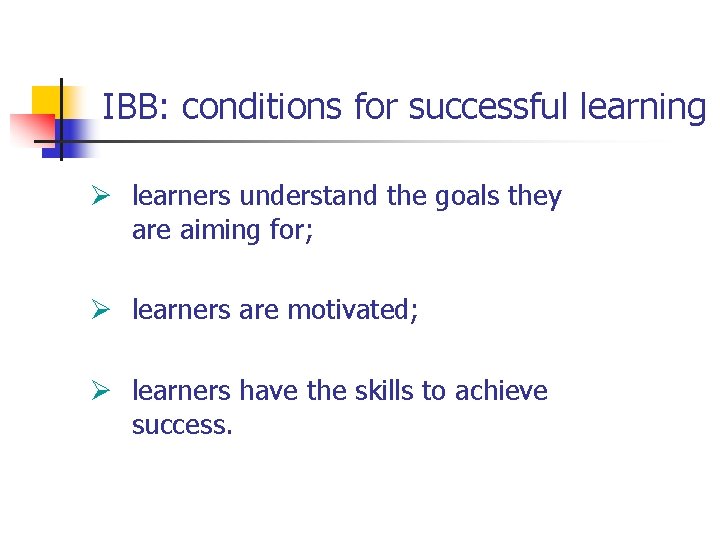
IBB: conditions for successful learning Ø learners understand the goals they are aiming for; Ø learners are motivated; Ø learners have the skills to achieve success.
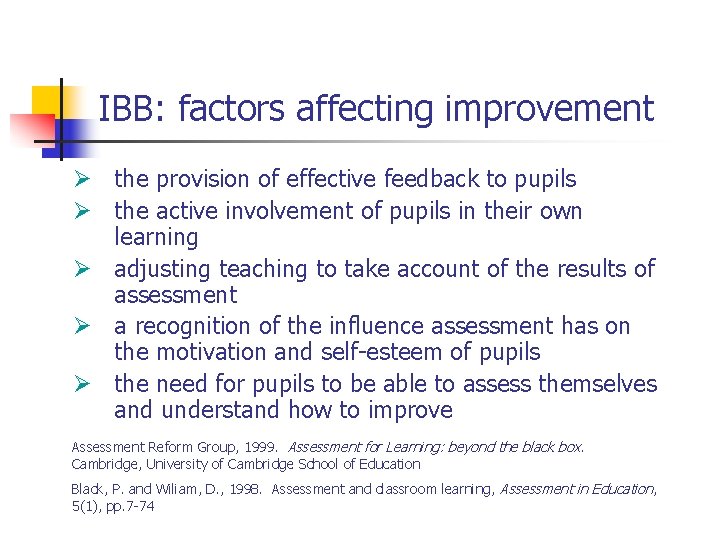
IBB: factors affecting improvement Ø the provision of effective feedback to pupils Ø the active involvement of pupils in their own learning Ø adjusting teaching to take account of the results of assessment Ø a recognition of the influence assessment has on the motivation and self-esteem of pupils Ø the need for pupils to be able to assess themselves and understand how to improve Assessment Reform Group, 1999. Assessment for Learning: beyond the black box. Cambridge, University of Cambridge School of Education Black, P. and Wiliam, D. , 1998. Assessment and classroom learning, Assessment in Education, 5(1), pp. 7 -74
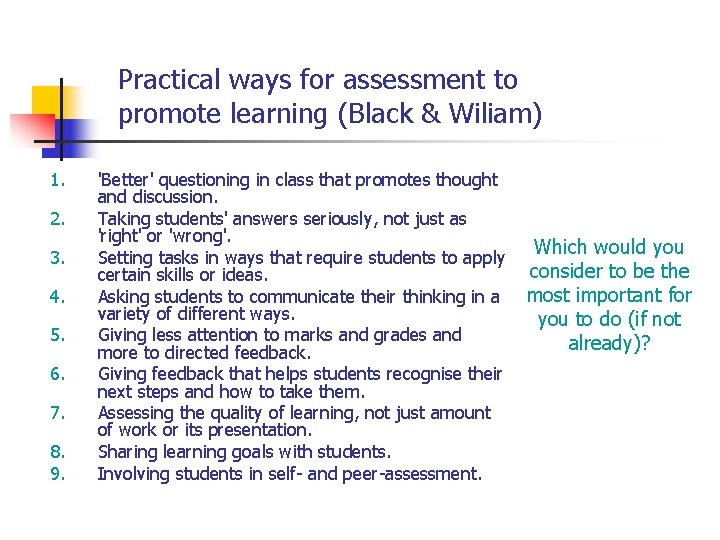
Practical ways for assessment to promote learning (Black & Wiliam) 1. 2. 3. 4. 5. 6. 7. 8. 9. 'Better' questioning in class that promotes thought and discussion. Taking students' answers seriously, not just as 'right' or 'wrong'. Setting tasks in ways that require students to apply certain skills or ideas. Asking students to communicate their thinking in a variety of different ways. Giving less attention to marks and grades and more to directed feedback. Giving feedback that helps students recognise their next steps and how to take them. Assessing the quality of learning, not just amount of work or its presentation. Sharing learning goals with students. Involving students in self- and peer-assessment. Which would you consider to be the most important for you to do (if not already)?
Summary of Principles of Af. L [Black and Harrison 00: 00 -06: 32]