
Assessment in the foundation subjects Bethan Lucas Assistant
Assessment in the foundation subjects Bethan Lucas - Assistant Head at Surrey Hills All Saints Primary School bethanlucas@surreyhills. surrey. sch. uk
OFSTED: The education inspection framework Quality of Education: Implementation: Teachers and leaders use assessment well, for example to help learners embed and use knowledge fluently or to check understanding and inform teaching. Leaders understand the limitations of assessment and do not use it in a way that creates unnecessary burdens for staff or learners Leadership and Management (includes middle leadership/subject leadership): Leaders focus on improving staff’s subject, pedagogical and pedagogical content knowledge to enhance the teaching of the curriculum and the appropriate use of assessment. The practice and subject knowledge of staff are built up and improve over time Leaders aim to ensure that all learners complete their programmes of study. What does this mean for us as foundation subject leaders? Why do we need to assess foundation subjects?
Why do we need to assess the foundation subjects? To ensure progression and application of skills and knowledge. To ensure full coverage of the programme of study is being taught. To ensure pupil’s are retaining and embedding the skills and knowledge taught. Reduce cumulative disfluency. To plan effectively for pupil’s next steps, ensuring challenge. To ensure pupils achievement in foundation subjects is in line with the core subjects. To monitor the attainment and progress of vulnerable groups. To ensure all groups of pupils are able to access the skills and knowledge being taught. To raise questions that enable development of the subject.
What sources of evidence can we use to assess the learning in the foundation subjects? Written evidence in books Scrap books Photos and annotations Observation notes Pupil conferencing Classroom displays (scrap book) Anything else?
Assessment in the Foundation Subjects at Surrey Hills All Saints Developed a consistent approach for assessment judgements, regardless of how evidence is collected. Twice yearly (Dec and Jun), teachers use evidence from each subject to give a judgement for each pupil against the National Curriculum programme of study. Chris Quigley: Beginning, Advancing, Deepening within milestones 1, 2 and 3. For example: A Year 5 or 6 child in a foundation subject could be given one of the following judgements: M 3: B 1 M 3: B 2 M 3: A 1 M 3: A 2 M 3: D 1 M 3: D 2 Staff meeting time is given for this so that teachers can discuss and moderate in their phases. The data is entered into Pupil Asset.
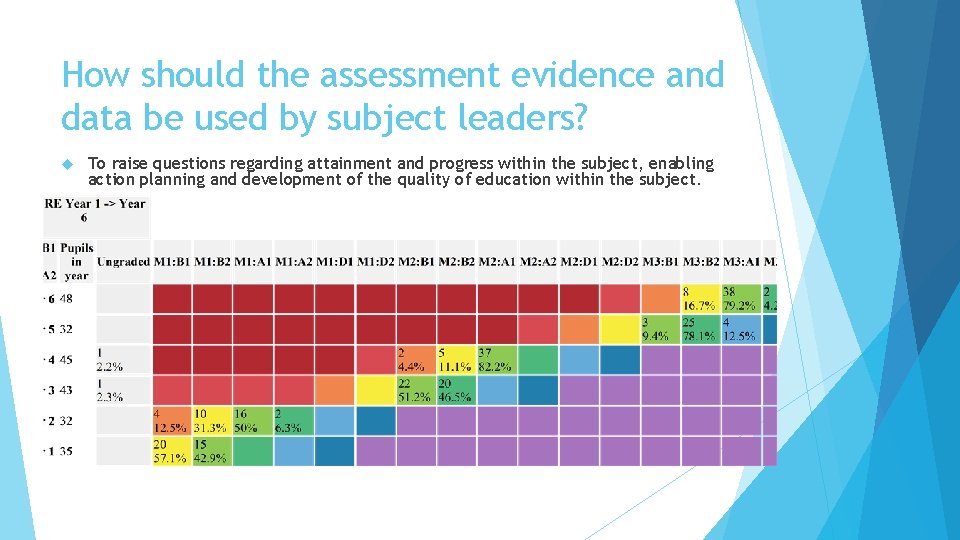
How should the assessment evidence and data be used by subject leaders? To raise questions regarding attainment and progress within the subject, enabling action planning and development of the quality of education within the subject.
If you were a DT subject leader, what questions would this data raise?
Evidencing impact of your subject leadership: It is important that you are able to explain how pupils in your school are attaining and progressing in skills and knowledge within your subject. Data or assessment evidence should be analysed for a purpose. Be clear of this purpose. Use the data to celebrate success and raise questions which need to be investigated. Use the data to support your action planning and the monitoring of your subject. Keep a record of your subject leadership actions and the IMPACT this had on the quality of education within your subject.
- Slides: 8