
Assessment for operability of CHD with PAH R

Assessment for operability of CHD with PAH R. Tandon
CONGENITAL HEART DISEASE o 8 to 10 / 1000 live births o Uncorrected – 30 % PAH o PPH of new born o Idiop. Ped. PAH

L > R Shunt with PAH o o Acyanotic CHD - AVSD - - PDA VSD AP Window ASD Cyanotic CHD with ↑ Qp (Transposition physiology)
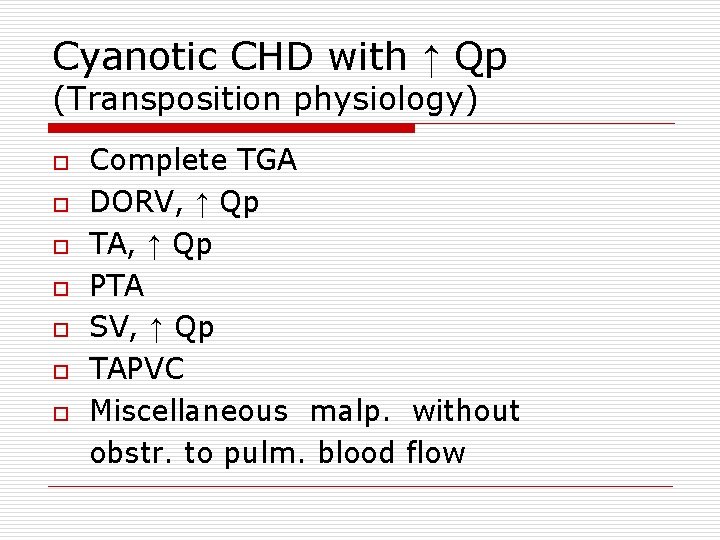
Cyanotic CHD with ↑ Qp (Transposition physiology) o o o o Complete TGA DORV, ↑ Qp TA, ↑ Qp PTA SV, ↑ Qp TAPVC Miscellaneous malp. without obstr. to pulm. blood flow

Congenital Heart Disease Pulm. Circ: PAH § § § CHD -↑ QP, ↑ Pr, ↑ O 2 sat, ? ? Hypoperf, 2° to under development Blood Viscosity Thrombo–embolic obstr. Aorto–pulm. Collat.
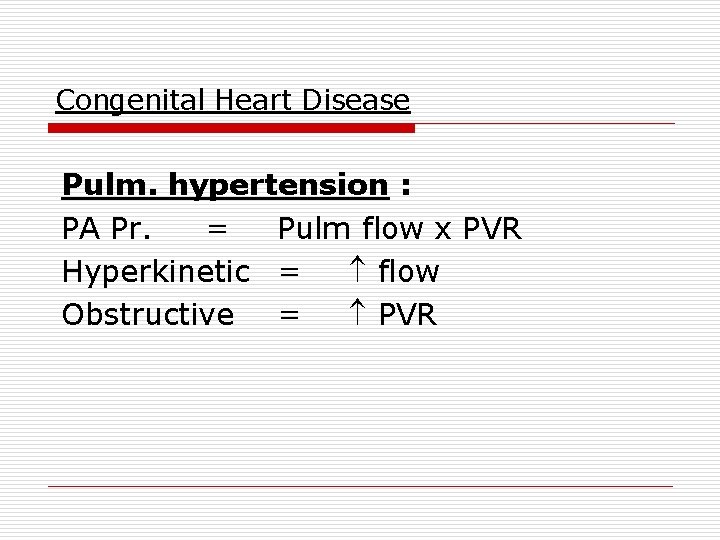
Congenital Heart Disease Pulm. hypertension : PA Pr. = Pulm flow x PVR Hyperkinetic = flow Obstructive = PVR
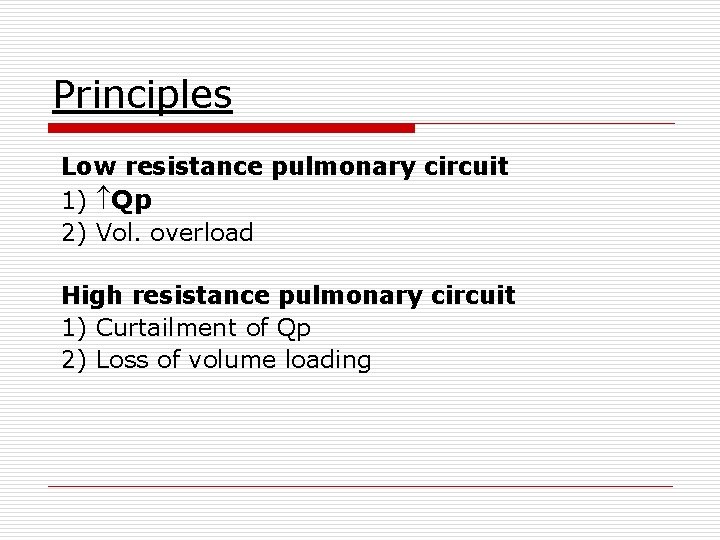
Principles Low resistance pulmonary circuit 1) Qp 2) Vol. overload High resistance pulmonary circuit 1) Curtailment of Qp 2) Loss of volume loading
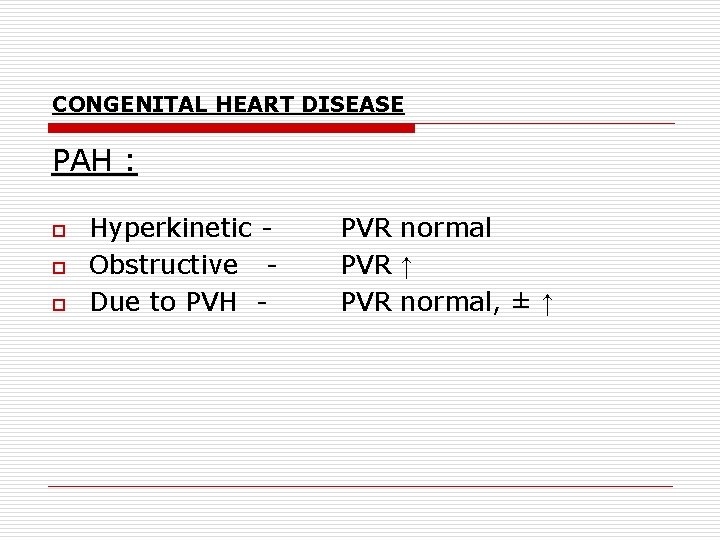
CONGENITAL HEART DISEASE PAH : o o o Hyperkinetic Obstructive Due to PVH - PVR normal PVR ↑ PVR normal, ± ↑
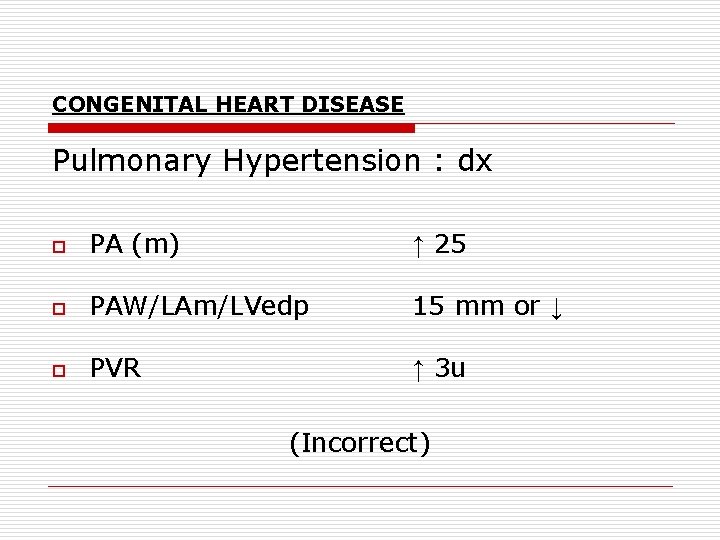
CONGENITAL HEART DISEASE Pulmonary Hypertension : dx o PA (m) ↑ 25 o PAW/LAm/LVedp 15 mm or ↓ o PVR ↑ 3 u (Incorrect)
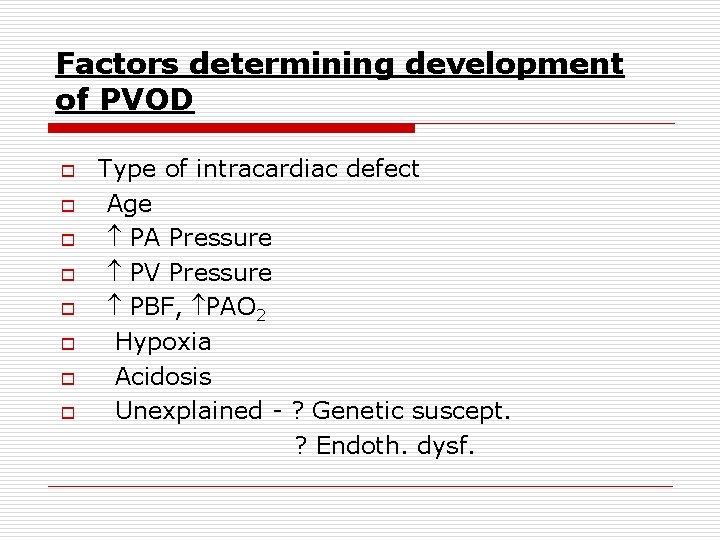
Factors determining development of PVOD o o o o Type of intracardiac defect Age PA Pressure PV Pressure PBF, PAO 2 Hypoxia Acidosis Unexplained - ? Genetic suscept. ? Endoth. dysf.
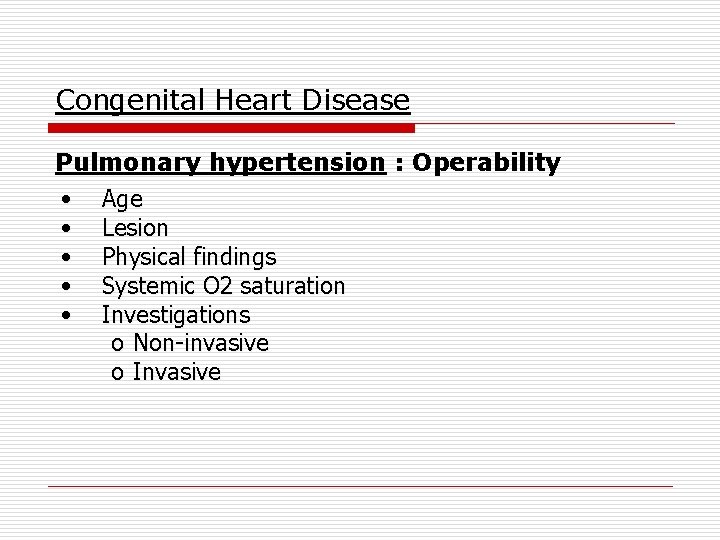
Congenital Heart Disease Pulmonary hypertension : Operability • • • Age Lesion Physical findings Systemic O 2 saturation Investigations o Non-invasive o Invasive
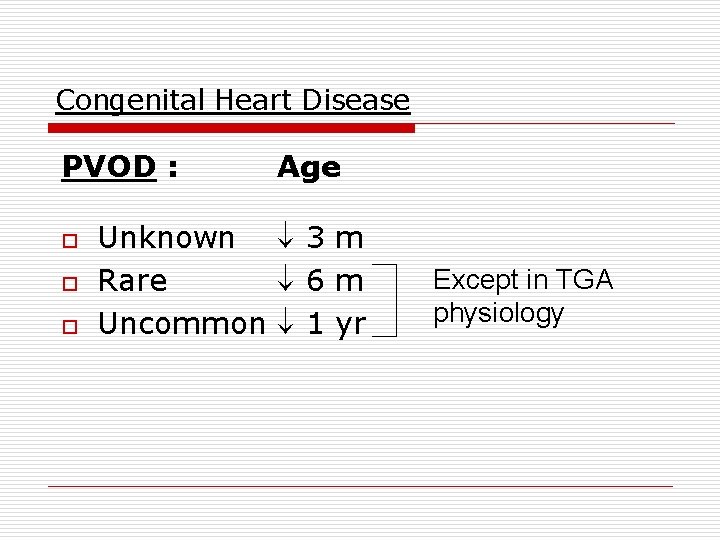
Congenital Heart Disease PVOD : o o o Age Unknown 3 m Rare 6 m Uncommon 1 yr Except in TGA physiology
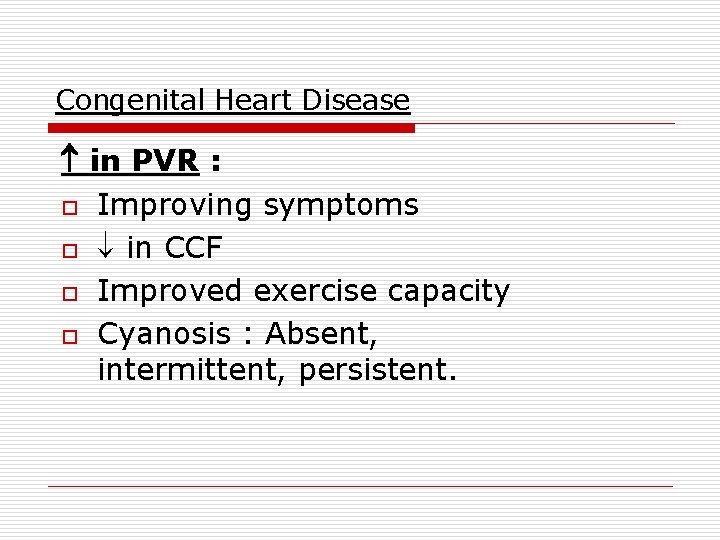
Congenital Heart Disease in PVR : o Improving symptoms o in CCF o Improved exercise capacity o Cyanosis : Absent, intermittent, persistent.
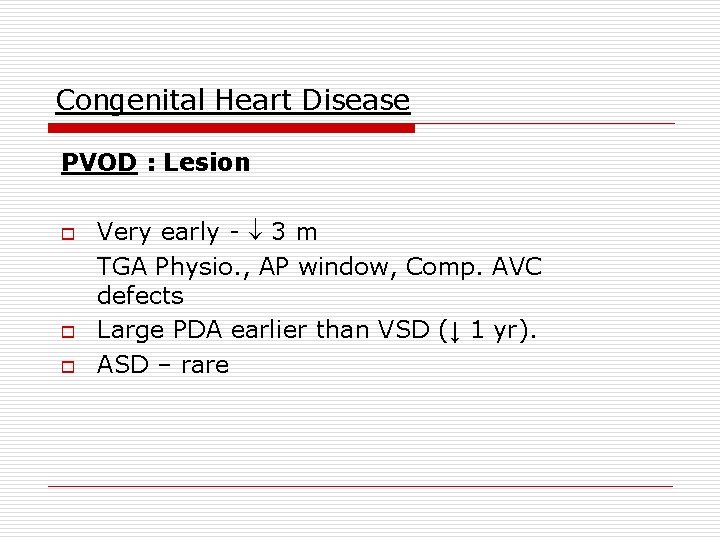
Congenital Heart Disease PVOD : Lesion o o o Very early - 3 m TGA Physio. , AP window, Comp. AVC defects Large PDA earlier than VSD (↓ 1 yr). ASD – rare
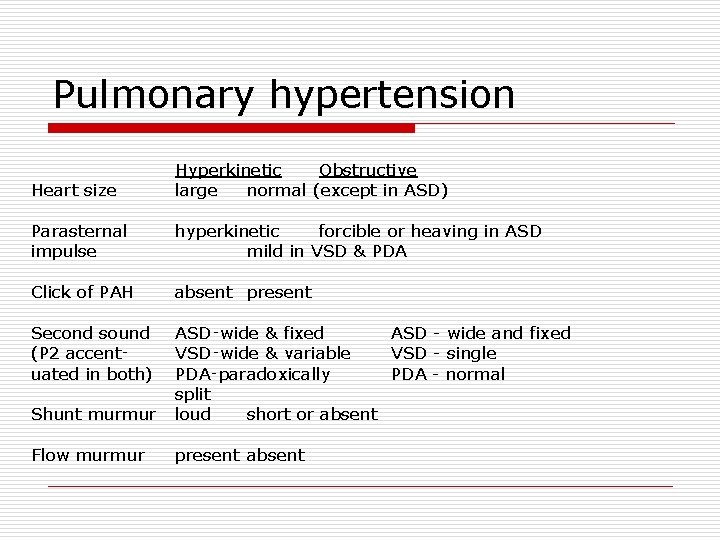
Pulmonary hypertension Heart size Hyperkinetic Obstructive large normal (except in ASD) Parasternal impulse hyperkinetic forcible or heaving in ASD mild in VSD & PDA Click of PAH absent present Second sound (P 2 accent‑ uated in both) Shunt murmur ASD‑wide & fixed ASD - wide and fixed VSD‑wide & variable VSD - single PDA‑paradoxically PDA - normal split loud short or absent Flow murmur present absent
Congenital Heart Disease PVOD : Syst. O 2 saturation o L R shunt - 93% - PVR 95%, PVR not excluded o TGA physiol. - 85% high flow and low PVR
Congenital Heart Disease PVOD o ECG o X-ray : Increasing RVH - Not helpful : * Heart size * Pulm. Vasculature Characteristics changes appear too late.
Congenital Heart Disease Pulm. hypertension : Echo assessment : PA syst. pr Good PA diast. pr Reasonable PA mean pr Poor For assessment of PVR – cath is gold standard and essential.
Congenital Heart Disease Invasive evaluation § Hemodynamic study. § Pulmonary wedge angiography. § Biopsy – Pulmonary histology. § Pulmonary vascular compliance. (MRI & intravascular ultrasound)

CONGENITAL HEART DISEASE PAH Cath study: o o o Pressures – RA, RV, PAW, LA/LVED, SA Saturations – SVc, RA, RV, PA, SA VO 2, CI, SVR, PVR HR p. O 2, p. H Effect of intervention.

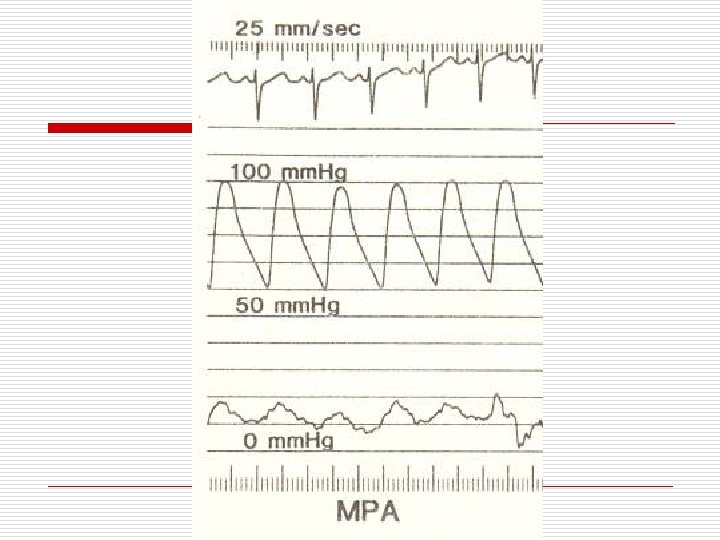
Cardiac Catheterisation o o o Measurement of PAP Measurement of PVR Vascular Reactivity PVR = PAm - LAm Qp If PVR & PAH - p. O 2 and p. H essential.
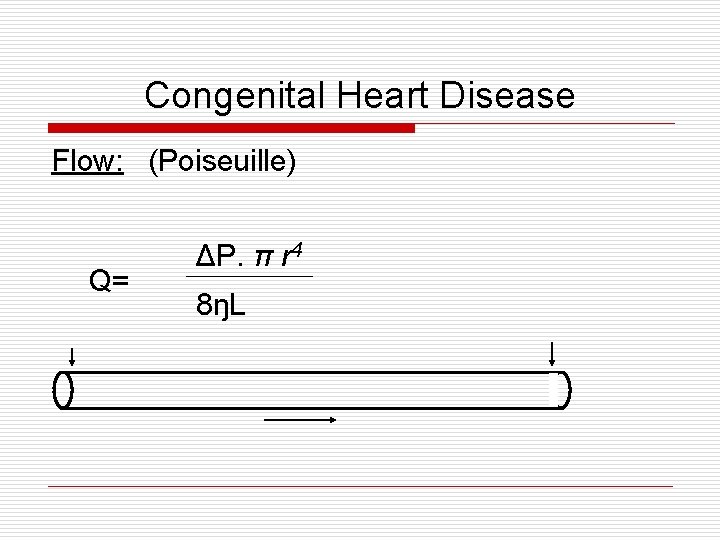
Congenital Heart Disease Flow: (Poiseuille) Q= ΔP. π r 4 8ŋL
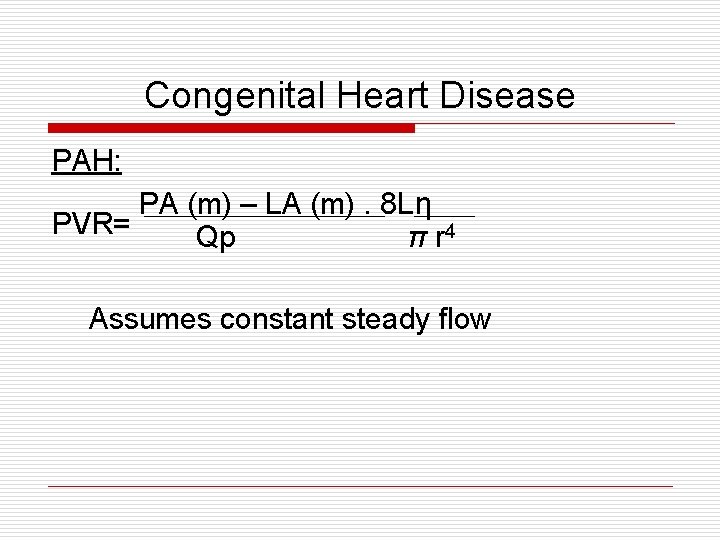
Congenital Heart Disease PAH: PA (m) – LA (m). 8 Lη PVR= Qp π r 4 Assumes constant steady flow
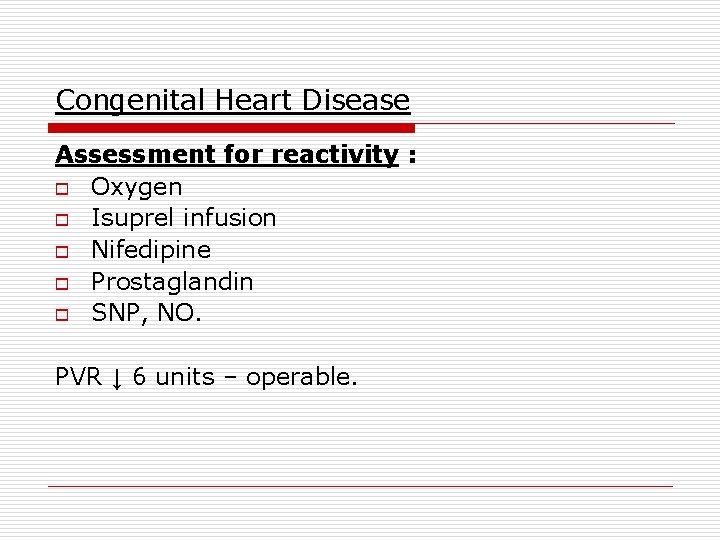
Congenital Heart Disease Assessment for reactivity : o Oxygen o Isuprel infusion o Nifedipine o Prostaglandin o SNP, NO. PVR ↓ 6 units – operable.
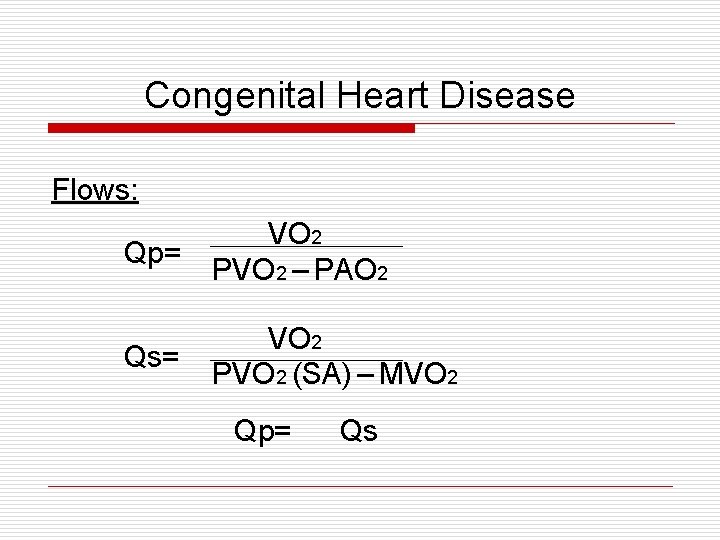
Congenital Heart Disease Flows: Qp= VO 2 PVO 2 – PAO 2 Qs= VO 2 PVO 2 (SA) – MVO 2 Qp= Qs
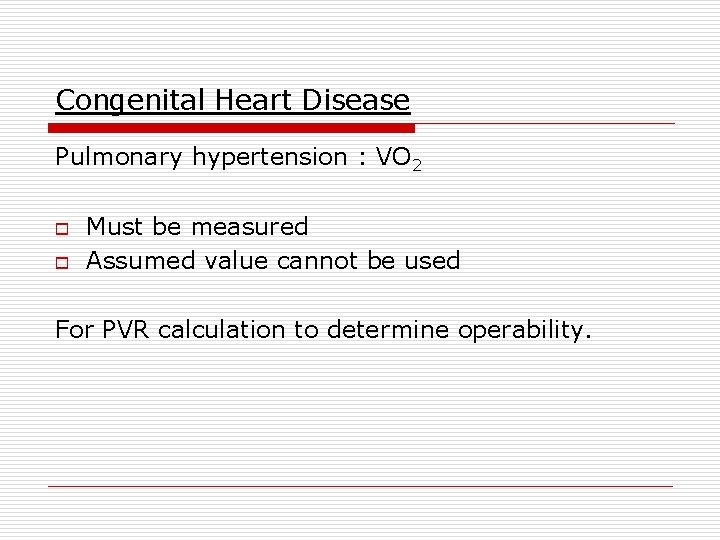
Congenital Heart Disease Pulmonary hypertension : VO 2 o o Must be measured Assumed value cannot be used For PVR calculation to determine operability.
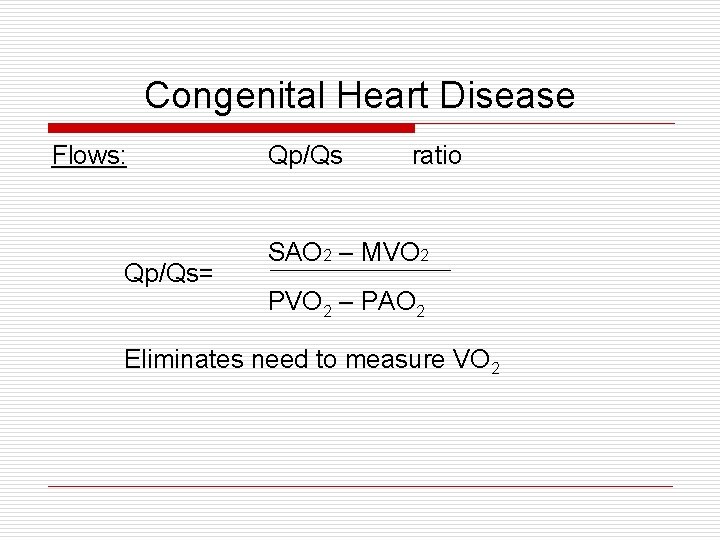
Congenital Heart Disease Flows: Qp/Qs= Qp/Qs ratio SAO 2 – MVO 2 PVO 2 – PAO 2 Eliminates need to measure VO 2
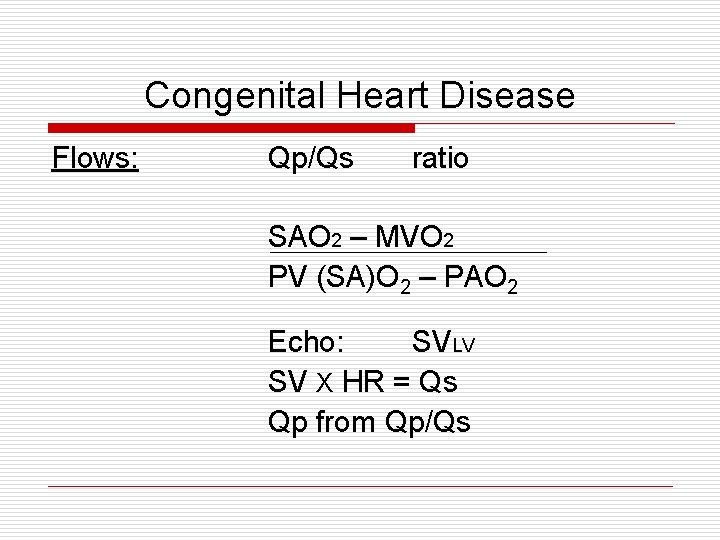
Congenital Heart Disease Flows: Qp/Qs ratio SAO 2 – MVO 2 PV (SA)O 2 – PAO 2 Echo: SVLV SV X HR = Qs Qp from Qp/Qs
CONGENITAL HEART DISEASE PAH – PVR o o Fixed : PVOD Variable: Vasoconstr - 20% pts.

Congenital Heart Disease PAH: § Operable – PVR ↓ 6 u § Inoperable – PVR ↑ 8 u Grey zone 7 u ± 1. Rest or ac. testing.
CONGENITAL HEART DISEASE PAH Vasodilat testing : Identifies - Prognosis Responders (utility of CCB)
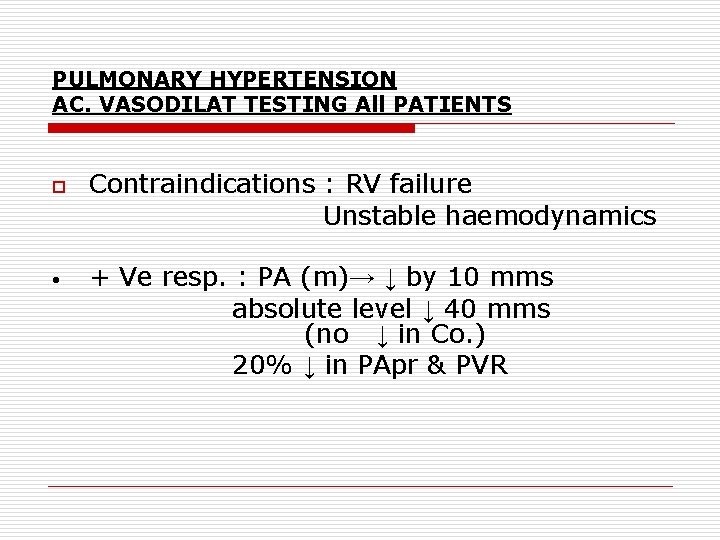
PULMONARY HYPERTENSION AC. VASODILAT TESTING All PATIENTS o • Contraindications : RV failure Unstable haemodynamics + Ve resp. : PA (m)→ ↓ by 10 mms absolute level ↓ 40 mms (no ↓ in Co. ) 20% ↓ in PApr & PVR
Congenital Heart Disease Pulm. hypertension : Reversibility o Qp on the basis of assumed VO 2 - not reliable o o 100% : O 2–VO 2 not known, hence all calculation will be incorrect. Dissolved O 2 - (modifies calculations)

Congenital Heart Disease PVOD : O 2 study o PA saturation increases abnormally giving increased calculated QP and low PVR. o Fall in PA pressure more reliable. Fall in PA diast. pr may result in lower mean pressure.
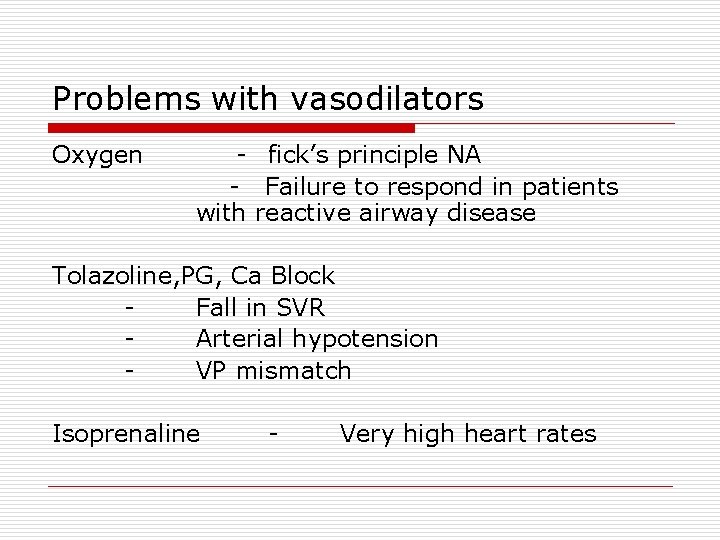
Problems with vasodilators Oxygen - fick’s principle NA - Failure to respond in patients with reactive airway disease Tolazoline, PG, Ca Block Fall in SVR Arterial hypotension VP mismatch Isoprenaline - Very high heart rates
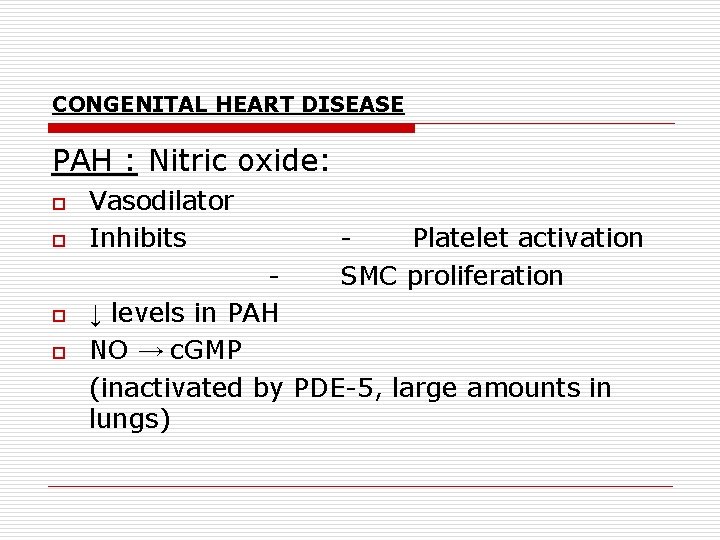
CONGENITAL HEART DISEASE PAH : Nitric oxide: o o Vasodilator Inhibits Platelet activation SMC proliferation ↓ levels in PAH NO → c. GMP (inactivated by PDE-5, large amounts in lungs)
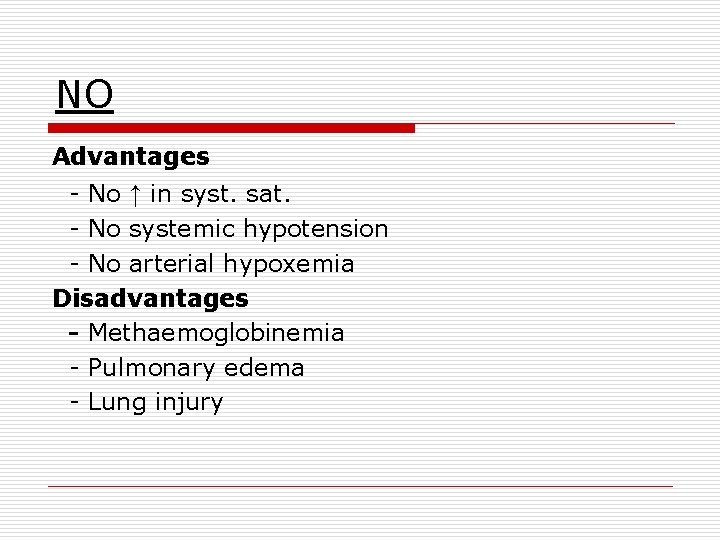
NO Advantages - No ↑ in syst. sat. - No systemic hypotension - No arterial hypoxemia Disadvantages - Methaemoglobinemia - Pulmonary edema - Lung injury
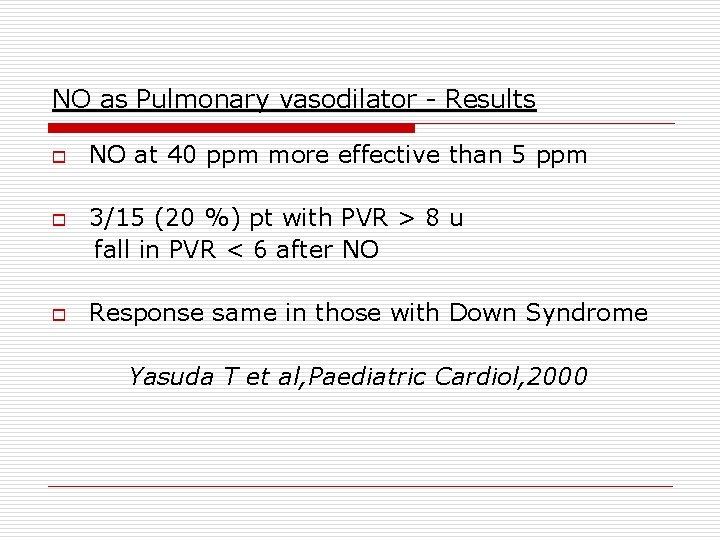
NO as Pulmonary vasodilator - Results o o o NO at 40 ppm more effective than 5 ppm 3/15 (20 %) pt with PVR > 8 u fall in PVR < 6 after NO Response same in those with Down Syndrome Yasuda T et al, Paediatric Cardiol, 2000
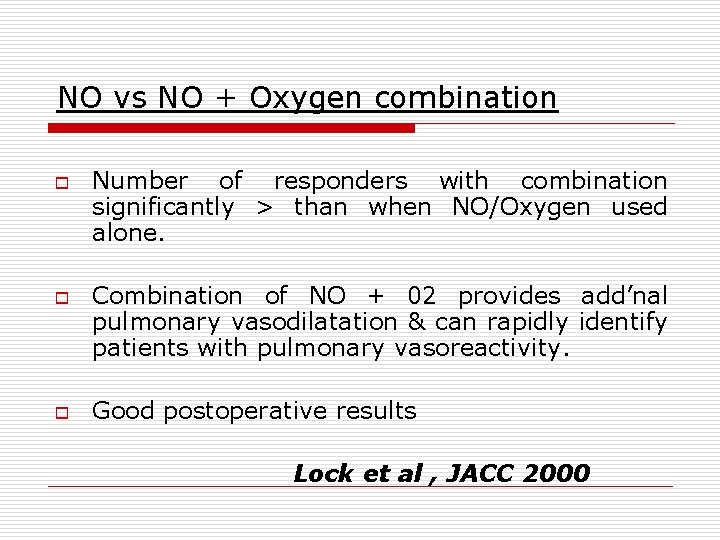
NO vs NO + Oxygen combination o o o Number of responders with combination significantly > than when NO/Oxygen used alone. Combination of NO + 02 provides add’nal pulmonary vasodilatation & can rapidly identify patients with pulmonary vasoreactivity. Good postoperative results Lock et al , JACC 2000
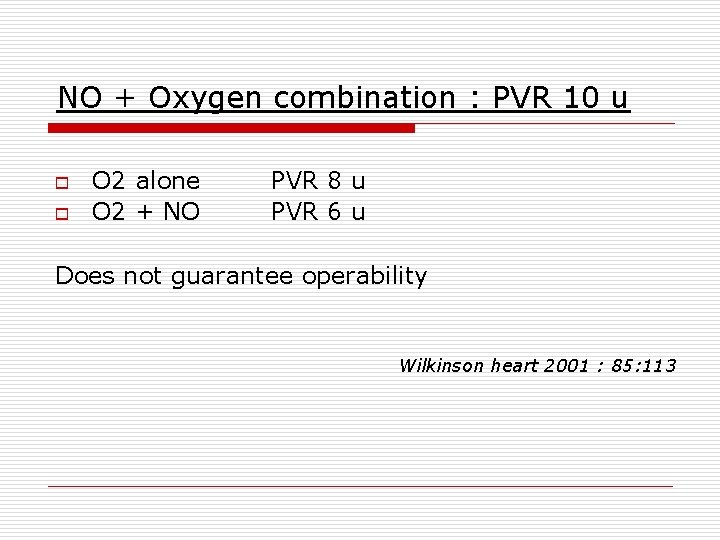
NO + Oxygen combination : PVR 10 u o o O 2 alone O 2 + NO PVR 8 u PVR 6 u Does not guarantee operability Wilkinson heart 2001 : 85: 113
Lung biopsy o o Open lung specimen is taken General anaesthesia Biopsy those with borderline haemodynamics (Heath. Edwards classification)
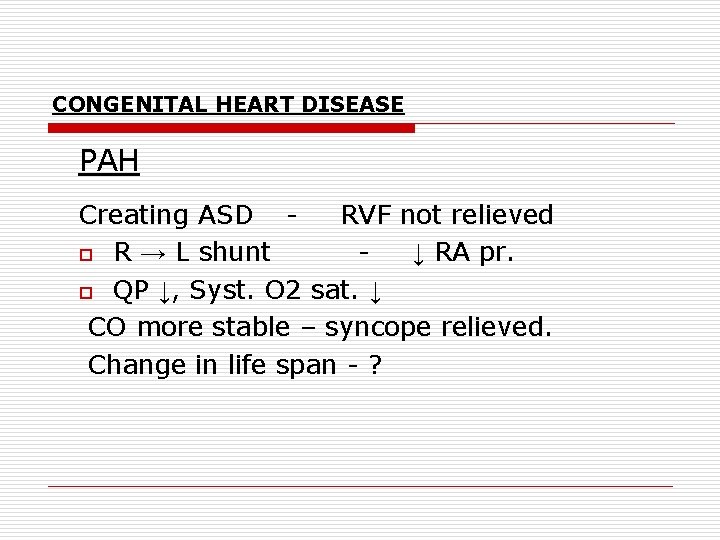
CONGENITAL HEART DISEASE PAH Creating ASD RVF not relieved o R → L shunt ↓ RA pr. o QP ↓, Syst. O 2 sat. ↓ CO more stable – syncope relieved. Change in life span - ?
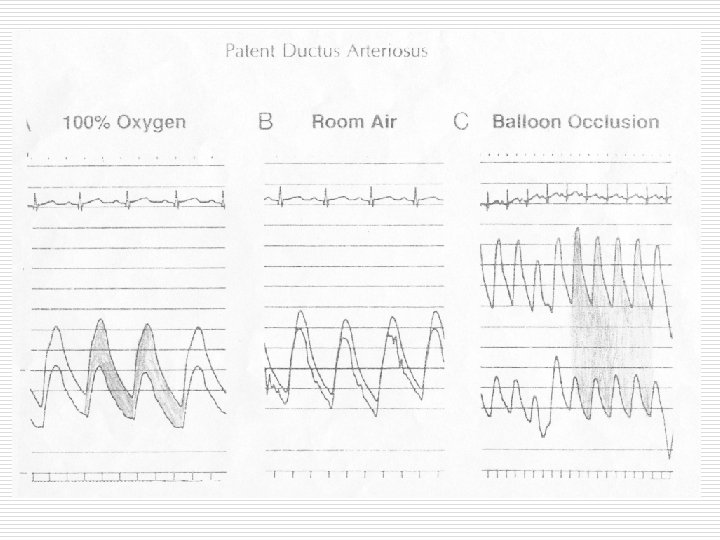
Congenital Heart Disease PVOD : Defect occlusion PDA & some VSDs Significant fall in PA pressure is helpful in decision making.
CONGENITAL HEART DISEASE PAH Treatment o o Prostanoids - Epoprostenol E. R. A. Bosentan PDE-5 -I Sildenafil CCB Diltiazem, Amlodip. IV PO PO PO
CONGENITAL HEART DISEASE PAH: Breathe – 5 : ASD & VSD Bosentan Vs Placebo – 54 pts. , class III, 16 weeks o o o Syst. O 2 Sat. maintained. PVR, PAm ↓ Ex. Cap. ↑, funct. class ↑ Time to deterioration ↓ Placebo – PVR worsened (? )
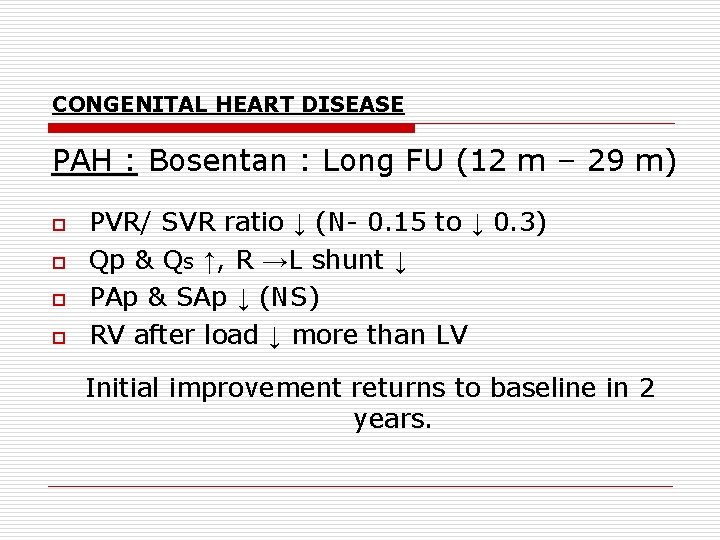
CONGENITAL HEART DISEASE PAH : Bosentan : Long FU (12 m – 29 m) o o PVR/ SVR ratio ↓ (N- 0. 15 to ↓ 0. 3) Qp & Qs ↑, R →L shunt ↓ PAp & SAp ↓ (NS) RV after load ↓ more than LV Initial improvement returns to baseline in 2 years.
CONGENITAL HEART DISEASE PAH : Bosentan o o Hepatotoxicity Potentially teratogenic Testicular atrophy & infertility Hormonal birth control - ↓ effectiveness.
CONGENITAL HEART DISEASE PAH : Sildenafil o o PAp (m) ↓ 3 -5 mms Ex. capacity ↑ Side effects – minor Functional class ↑
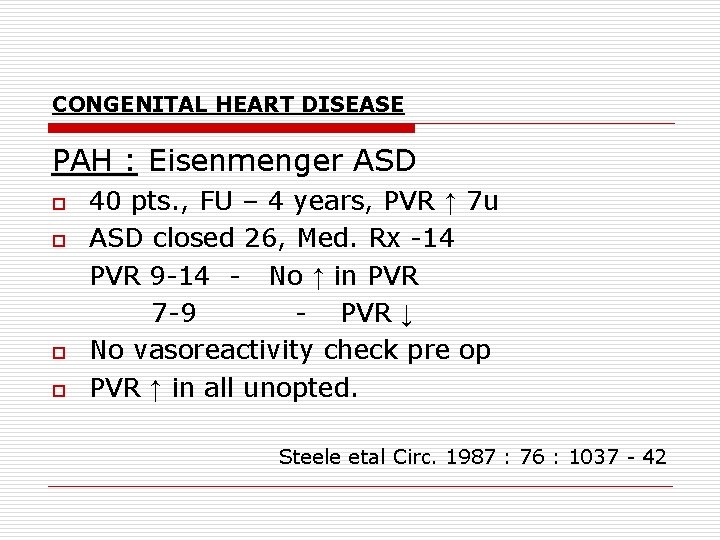
CONGENITAL HEART DISEASE PAH : Eisenmenger ASD o o 40 pts. , FU – 4 years, PVR ↑ 7 u ASD closed 26, Med. Rx -14 PVR 9 -14 - No ↑ in PVR 7 -9 - PVR ↓ No vasoreactivity check pre op PVR ↑ in all unopted. Steele etal Circ. 1987 : 76 : 1037 - 42
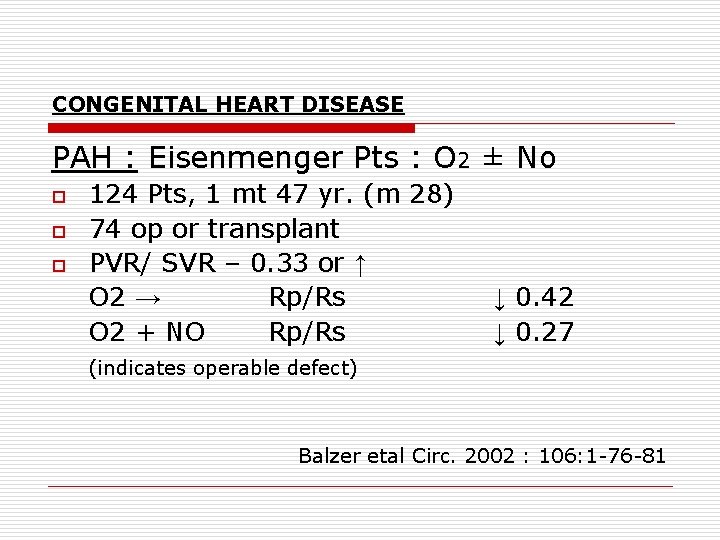
CONGENITAL HEART DISEASE PAH : Eisenmenger Pts : O 2 ± No o 124 Pts, 1 mt 47 yr. (m 28) 74 op or transplant PVR/ SVR – 0. 33 or ↑ O 2 → Rp/Rs O 2 + NO Rp/Rs ↓ 0. 42 ↓ 0. 27 (indicates operable defect) Balzer etal Circ. 2002 : 106: 1 -76 -81
Operability & Reversibility o o o Not Synonymous Patients with severe intimal proliferation may not show decrease in PAP post-op PAH can progress after repair
Congenital Heart Disease PVR : mistakes in assessment o Presence of A. V. valve regurg. o Obligatory shunts o Pulm. infection, acidosis, anemia, polycythemia, hypoxia
SUMMARY o o o Knowledge of determinants of progression of PVOD is poor Remember confounding factors affecting PVR in assessing L→R shunts. Clinical auscultation- fading art.
SUMMARY o Age of patient probably THE most important determinant * Pre tricuspid shunt except TAPVC- Longer waiting period * Post tricuspid shunt without cyanosis 6 months to 1 year * Post tricuspid shunt with cyanosis before 3 months
Message Timely surgical intervention is THE KEY for good immediate & long term results.




- Slides: 61