
Assessment FOR Learning Larisa Timofeeva Ph D Ass

- Slides: 18
Assessment FOR Learning Larisa Timofeeva Ph. D, Ass. Prof. , Hydrological Faculty Russian State Hydrometeorological University, Saint Petersburg CALMet XI, Seoul 7 -11 September, 2015
Assessment A way of measuring what individuals have learnt as a result of a learning activity – for example, by testing a learner’s knowledge, skill or behaviour – or of determining current knowledge or competency. The assessment should be based upon the objectives of the learning situation or job requirements. Guidelines for Trainers in Meteorological, Hydrological and Climate Services, Glossary (WMO, 2013)
Students can survive (with difficulty) poor teaching, but they can't escape the effects of poor assessment. Boud, 1995
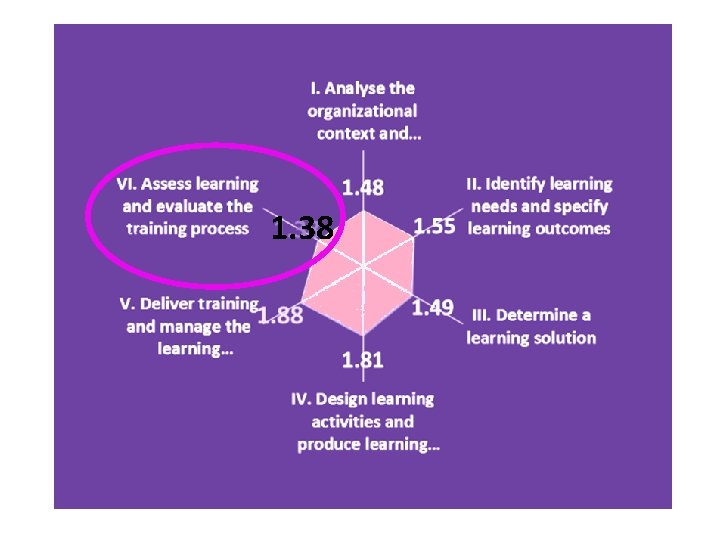
1. 38
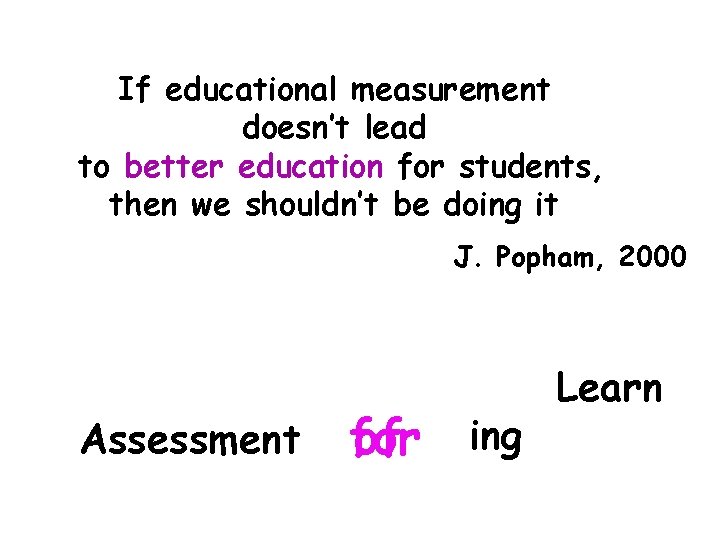
If educational measurement doesn’t lead to better education for students, then we shouldn’t be doing it J. Popham, 2000 Assessment for of ing Learn
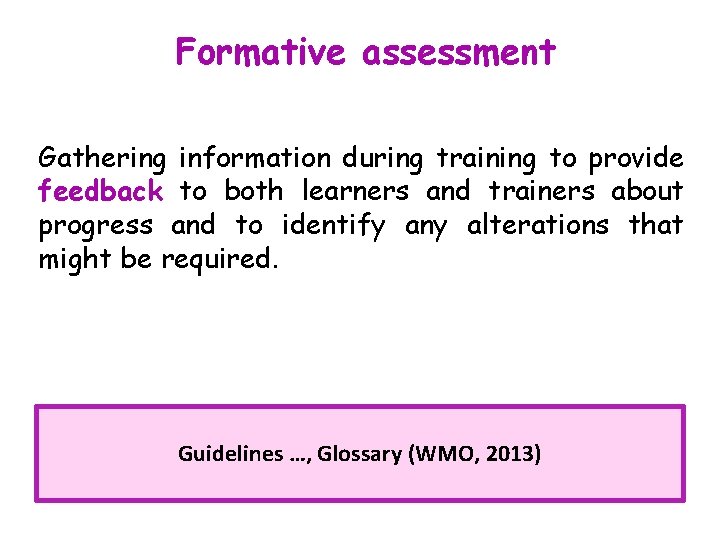
Formativе assessment Gathering information during training to provide feedback to both learners and trainers about progress and to identify any alterations that might be required. Guidelines …, Glossary (WMO, 2013)
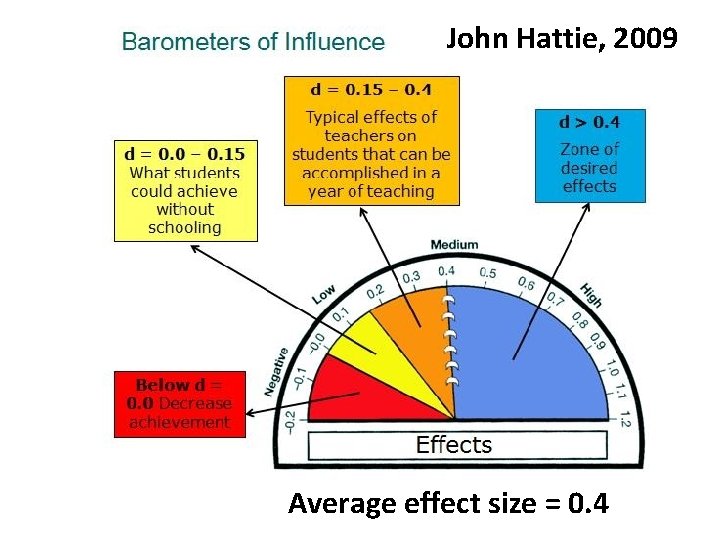
John Hattie, 2009 Average effect size = 0. 4
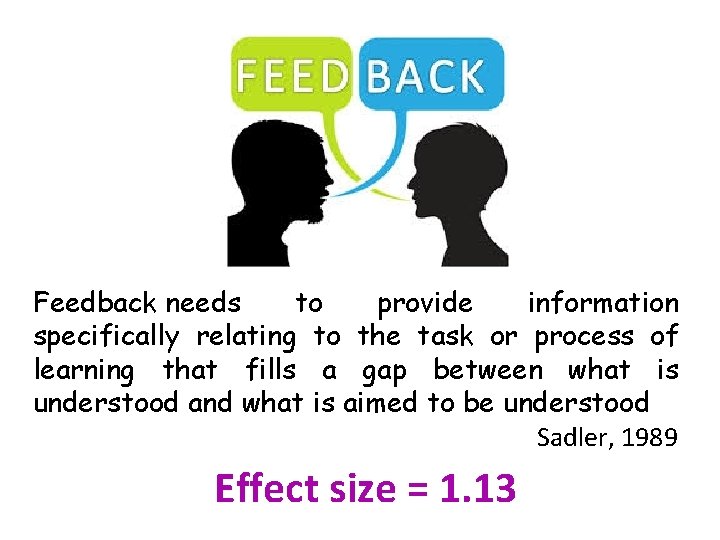
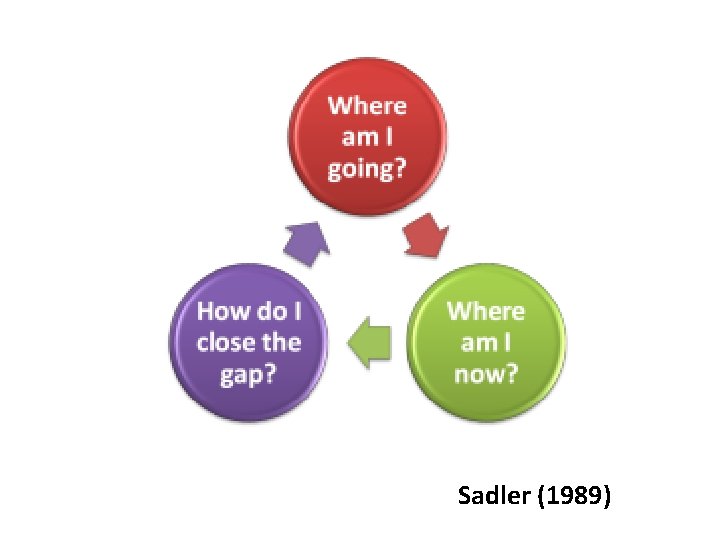
Feedback needs to provide information specifically relating to the task or process of learning that fills a gap between what is understood and what is aimed to be understood Sadler, 1989 Effect size = 1. 13
Sadler (1989)
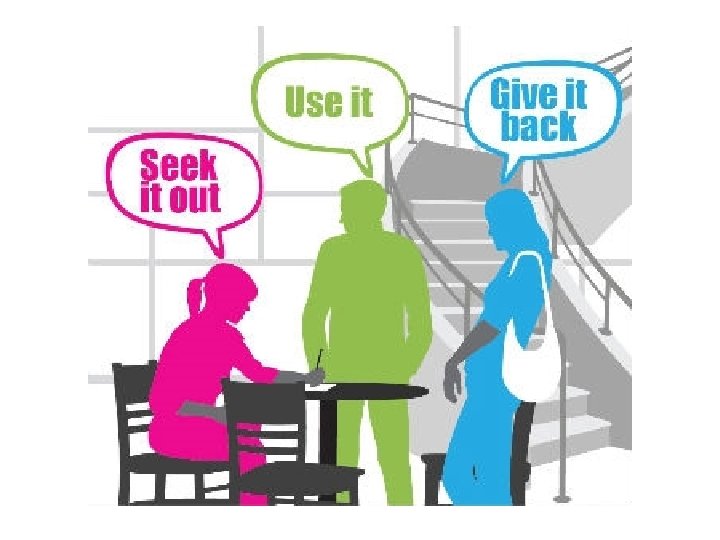
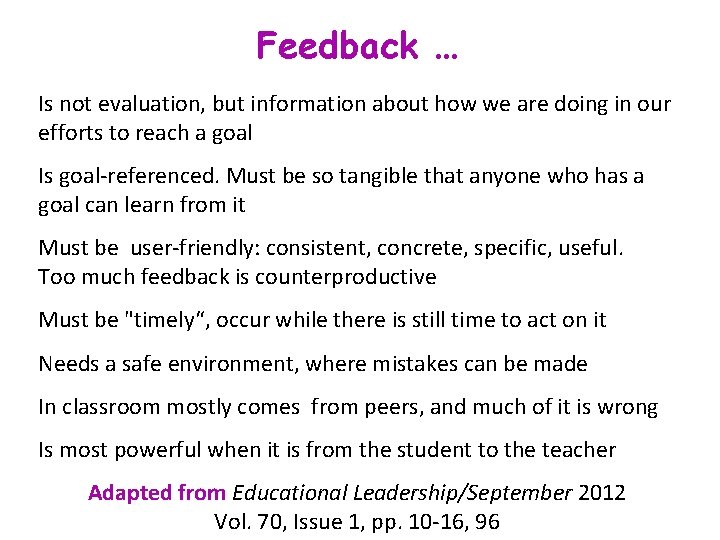
Feedback … Is not evaluation, but information about how we are doing in our efforts to reach a goal Is goal-referenced. Must be so tangible that anyone who has a goal can learn from it Must be user-friendly: consistent, concrete, specific, useful. Too much feedback is counterproductive Must be "timely“, occur while there is still time to act on it Needs a safe environment, where mistakes can be made In classroom mostly comes from peers, and much of it is wrong Is most powerful when it is from the student to the teacher Adapted from Educational Leadership/September 2012 Vol. 70, Issue 1, pp. 10 -16, 96
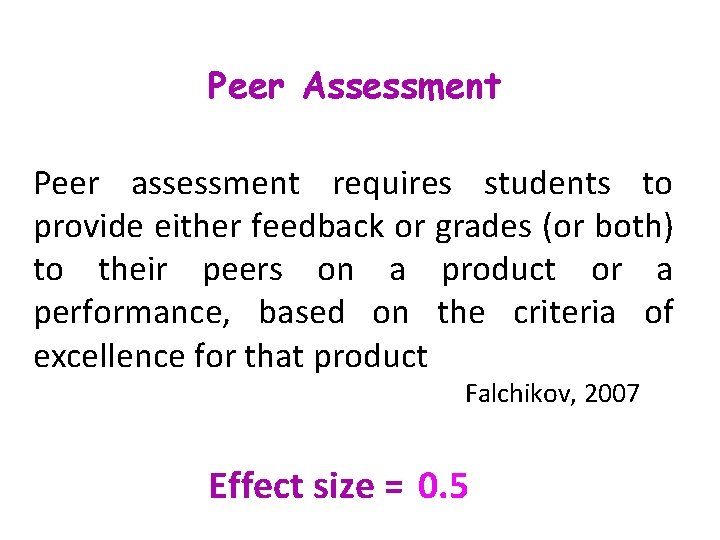
Peer Assessment Peer assessment requires students to provide either feedback or grades (or both) to their peers on a product or a performance, based on the criteria of excellence for that product Falchikov, 2007 Effect size = 0. 5
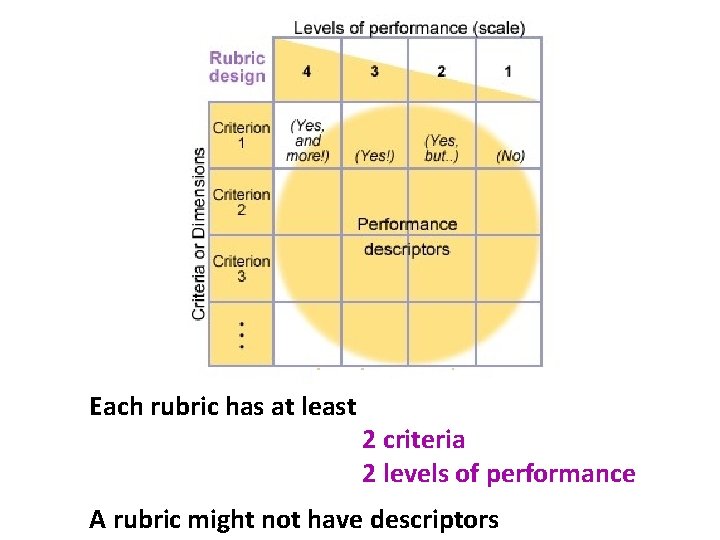
Each rubric has at least 2 criteria 2 levels of performance A rubric might not have descriptors
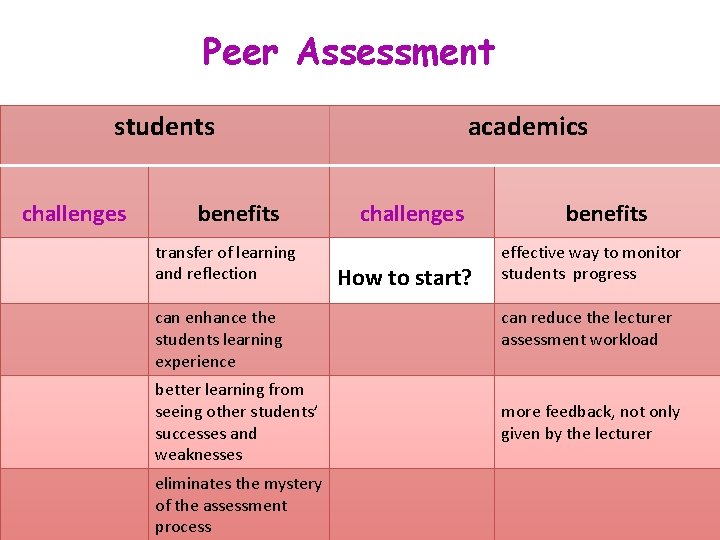
Peer Assessment students challenges benefits transfer of learning and reflection can enhance the students learning experience better learning from seeing other students’ successes and weaknesses eliminates the mystery of the assessment process academics challenges How to start? benefits effective way to monitor students progress can reduce the lecturer assessment workload more feedback, not only given by the lecturer
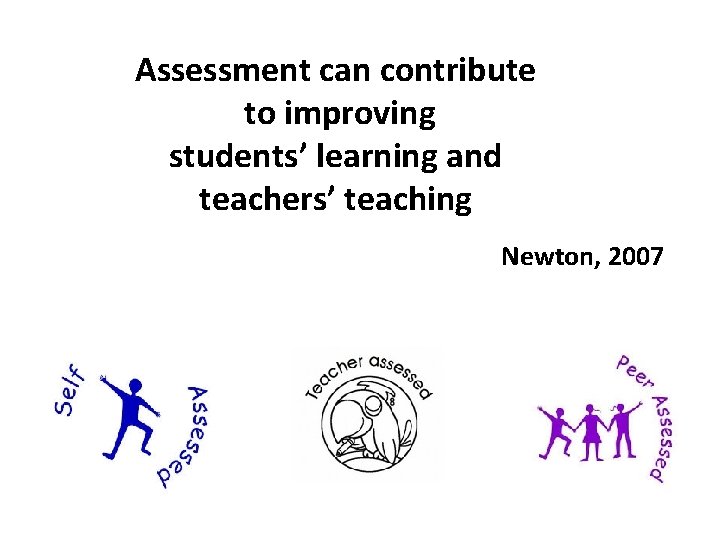
Assessment can contribute to improving students’ learning and teachers’ teaching Newton, 2007
Resources Australian Institute for Teaching and School Leadership www. aitsl. edu. au www. coursera. org Judy Halbert and Linda Kaser Co-directors, Centre for Innovative Educational Leadership Vancouver Island University, British Columbia, Canada Assoc. Prof. Gavin T L Brown The University of Auckland, New Zealand
Thank you! Welcome to Saint Petersburg