
Assessment Feedback Michael Tidd michaelt 1979 www primarycurriculum
Assessment & Feedback Michael Tidd @michaelt 1979 www. primarycurriculum. me. uk michaelt 1979. wordpress. com
“Assessment for learning” • Purposes of Assessment • EEF Toolkit advice on feedback • Learning from mistakes (mine!) • Hidden feedback • An alternative policy
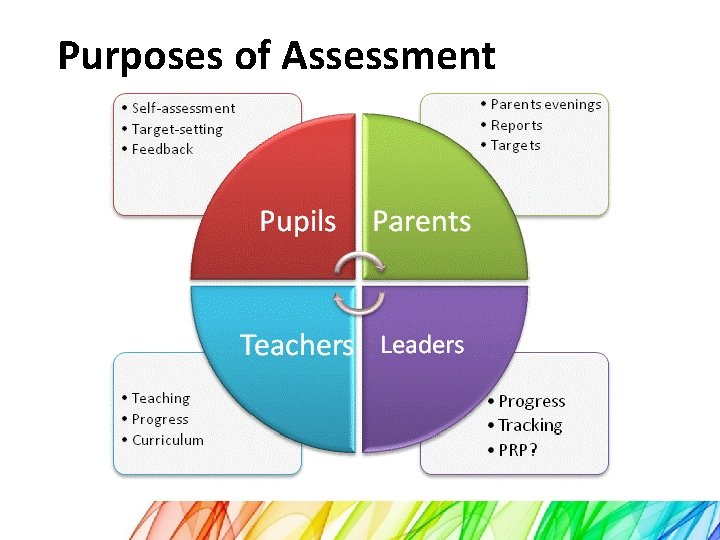
Purposes of Assessment
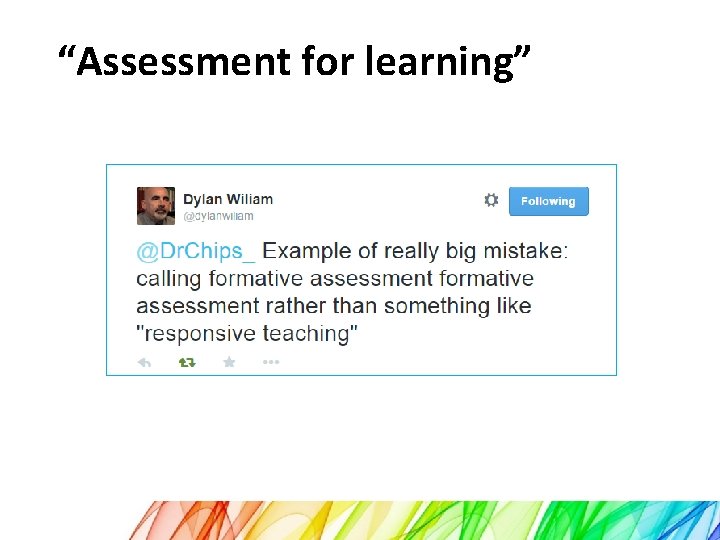
“Assessment for learning”
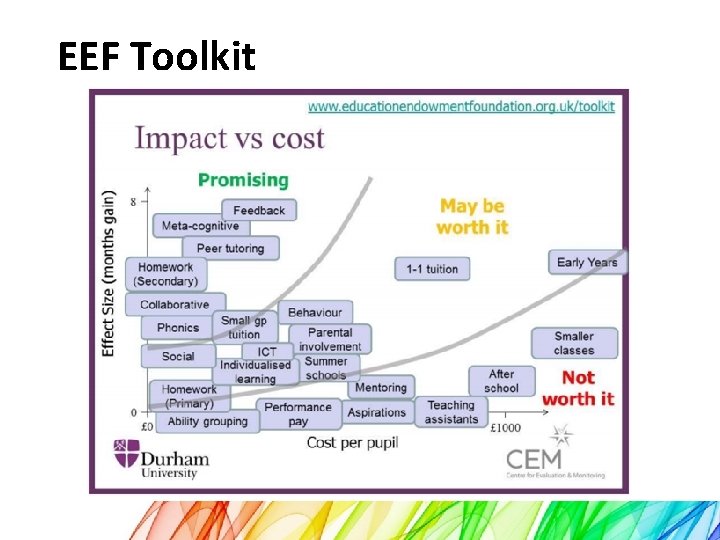
EEF Toolkit
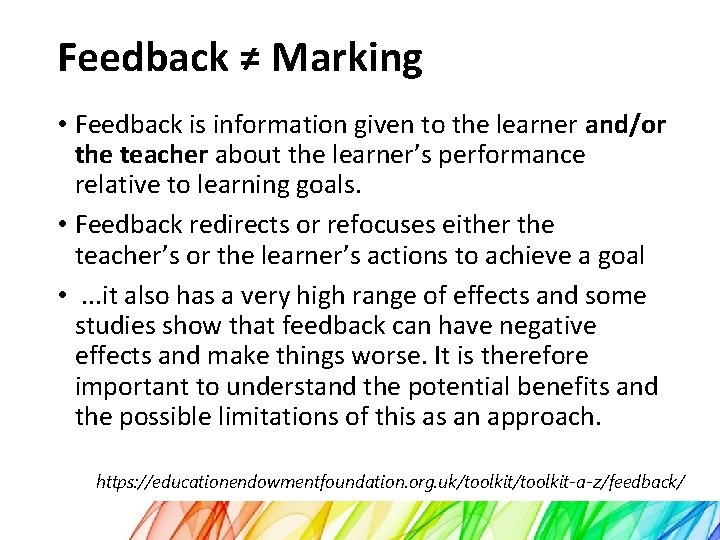
Feedback ≠ Marking • Feedback is information given to the learner and/or the teacher about the learner’s performance relative to learning goals. • Feedback redirects or refocuses either the teacher’s or the learner’s actions to achieve a goal • . . . it also has a very high range of effects and some studies show that feedback can have negative effects and make things worse. It is therefore important to understand the potential benefits and the possible limitations of this as an approach. https: //educationendowmentfoundation. org. uk/toolkit-a-z/feedback/
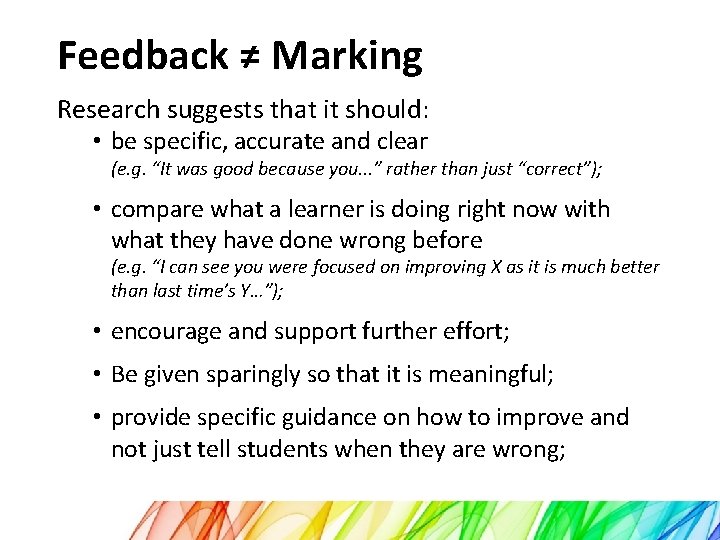
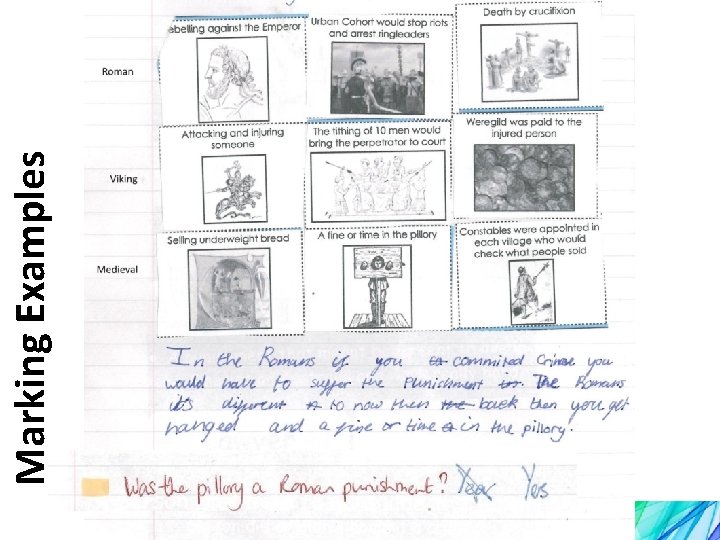
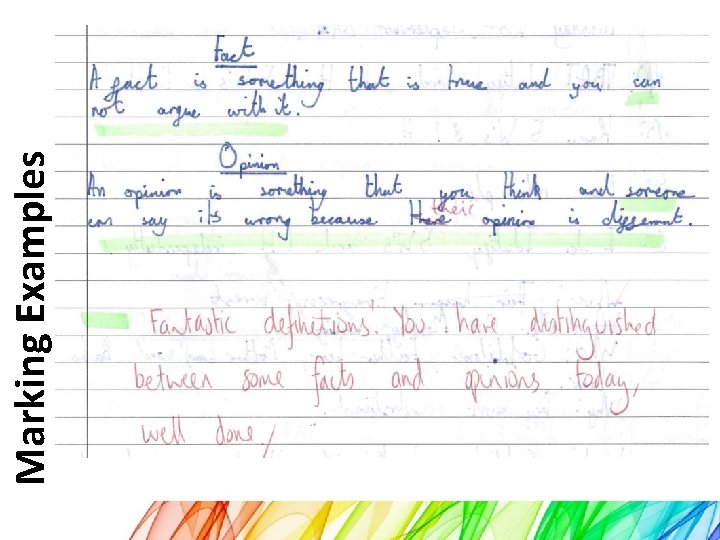
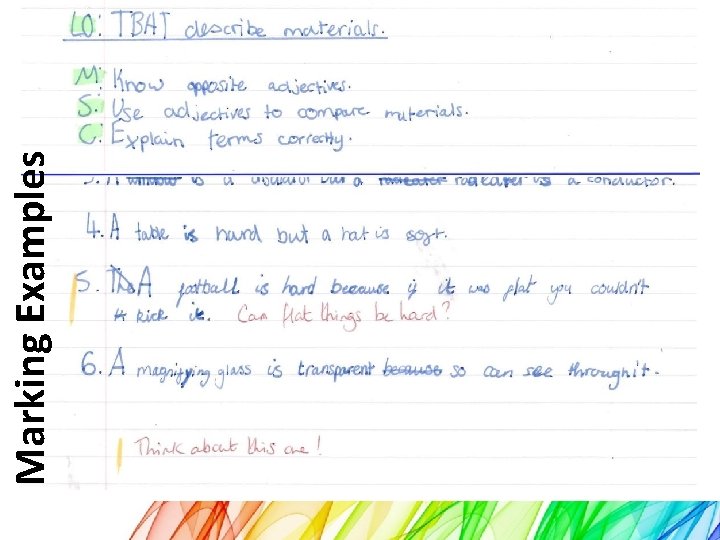
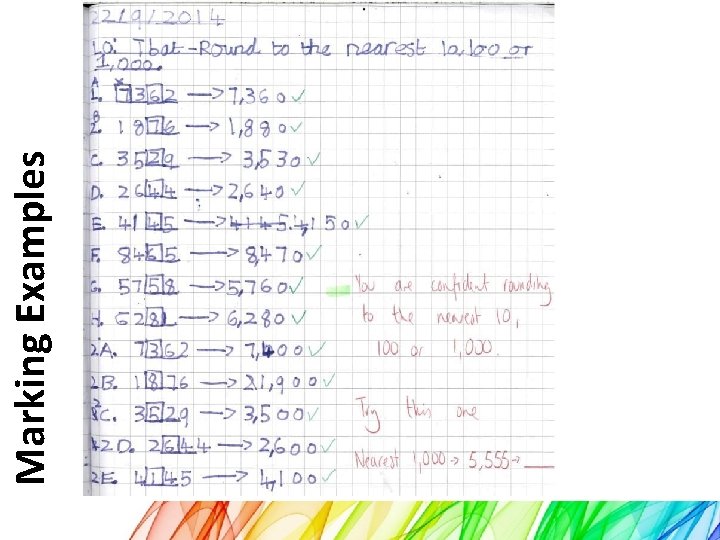
Feedback ≠ Marking Research suggests that it should: • be specific, accurate and clear (e. g. “It was good because you. . . ” rather than just “correct”); • compare what a learner is doing right now with what they have done wrong before (e. g. “I can see you were focused on improving X as it is much better than last time’s Y…”); • encourage and support further effort; • Be given sparingly so that it is meaningful; • provide specific guidance on how to improve and not just tell students when they are wrong;
Marking Examples
Marking Examples
Marking Examples
Marking Examples

Marking Examples

Marking Examples
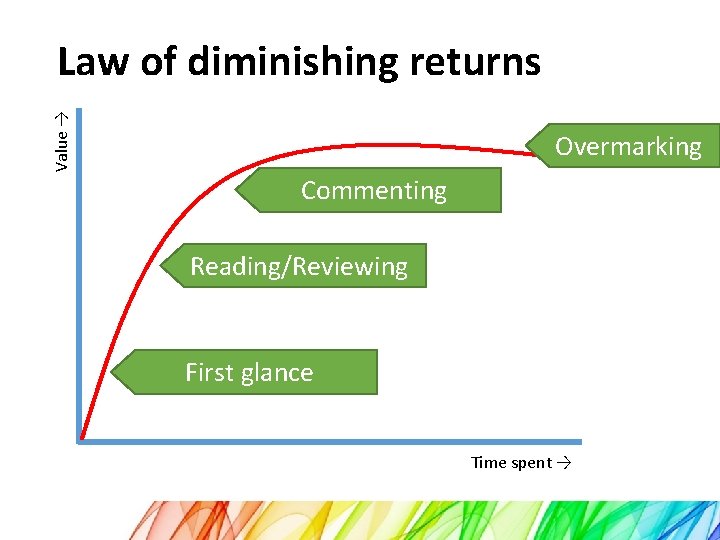
Value → Law of diminishing returns Overmarking Commenting Reading/Reviewing First glance Time spent →
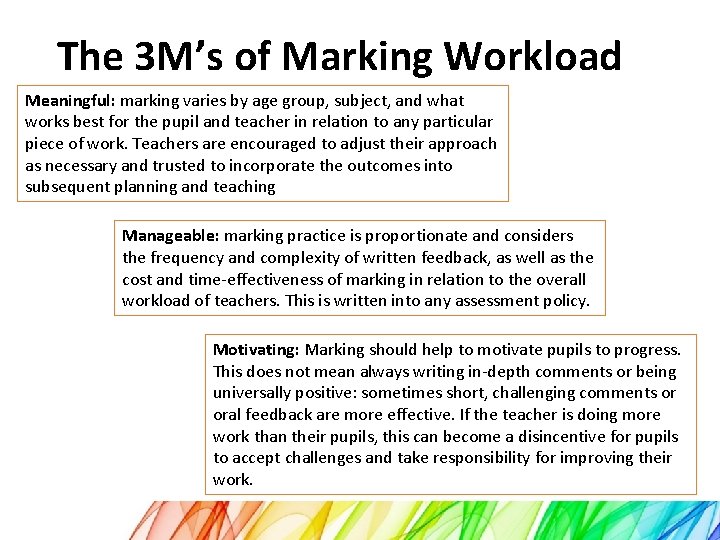
The 3 M’s of Marking Workload Meaningful: marking varies by age group, subject, and what works best for the pupil and teacher in relation to any particular piece of work. Teachers are encouraged to adjust their approach as necessary and trusted to incorporate the outcomes into subsequent planning and teaching Manageable: marking practice is proportionate and considers the frequency and complexity of written feedback, as well as the cost and time-effectiveness of marking in relation to the overall workload of teachers. This is written into any assessment policy. Motivating: Marking should help to motivate pupils to progress. This does not mean always writing in-depth comments or being universally positive: sometimes short, challenging comments or oral feedback are more effective. If the teacher is doing more work than their pupils, this can become a disincentive for pupils to accept challenges and take responsibility for improving their work.
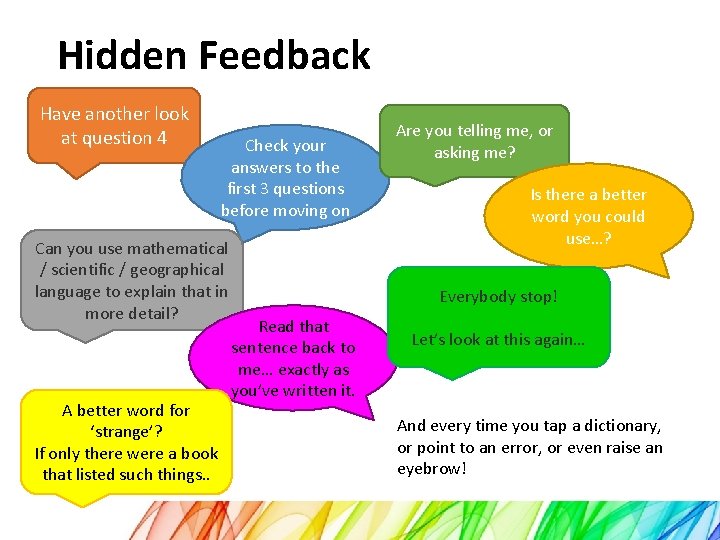
Hidden Feedback Have another look at question 4 Check your answers to the first 3 questions before moving on Can you use mathematical / scientific / geographical language to explain that in more detail? A better word for ‘strange’? If only there were a book that listed such things. . Are you telling me, or asking me? Is there a better word you could use…? Everybody stop! Read that sentence back to me… exactly as you’ve written it. Let’s look at this again… And every time you tap a dictionary, or point to an error, or even raise an eyebrow!
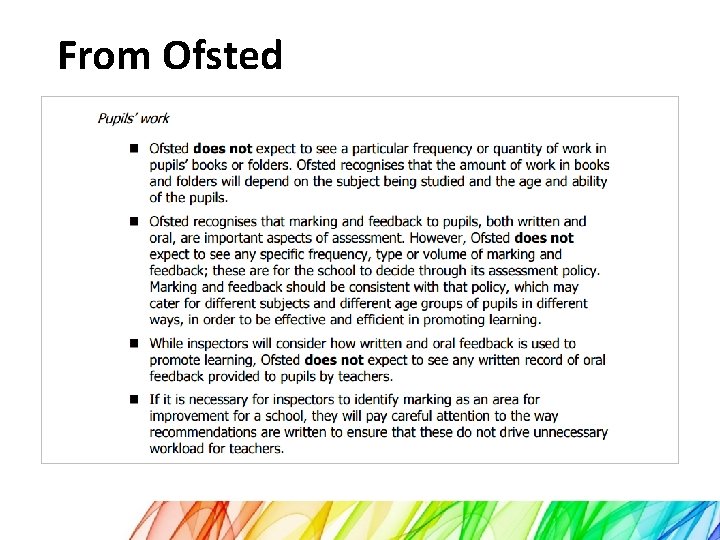
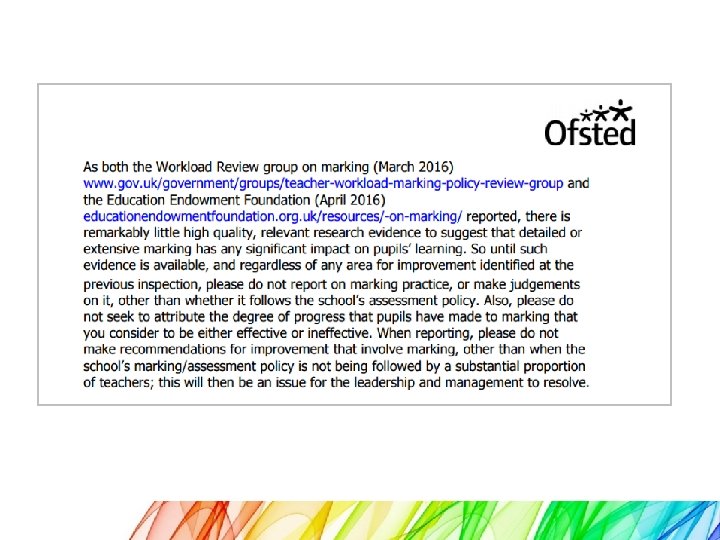
From Ofsted
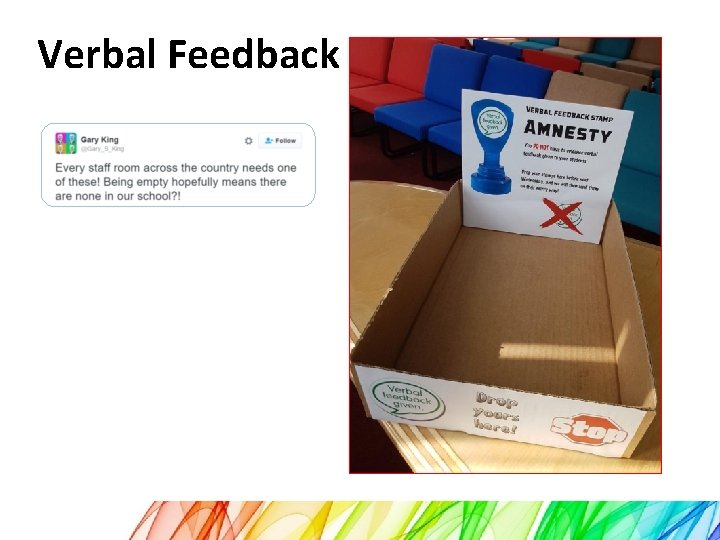
Verbal Feedback
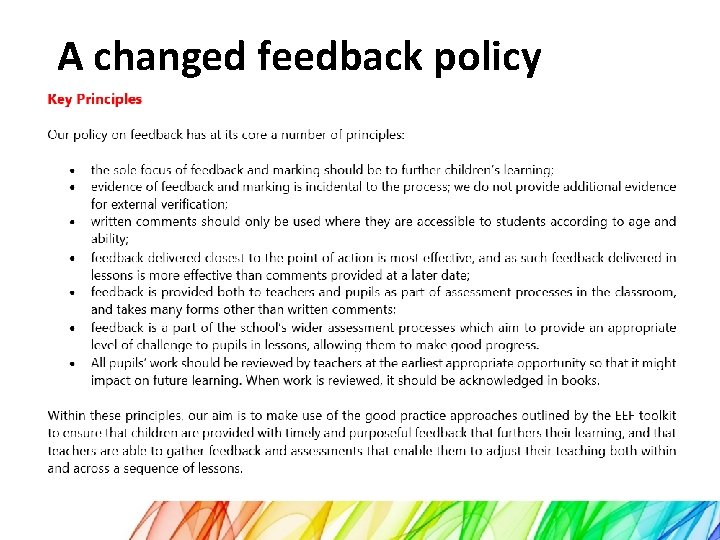
A changed feedback policy
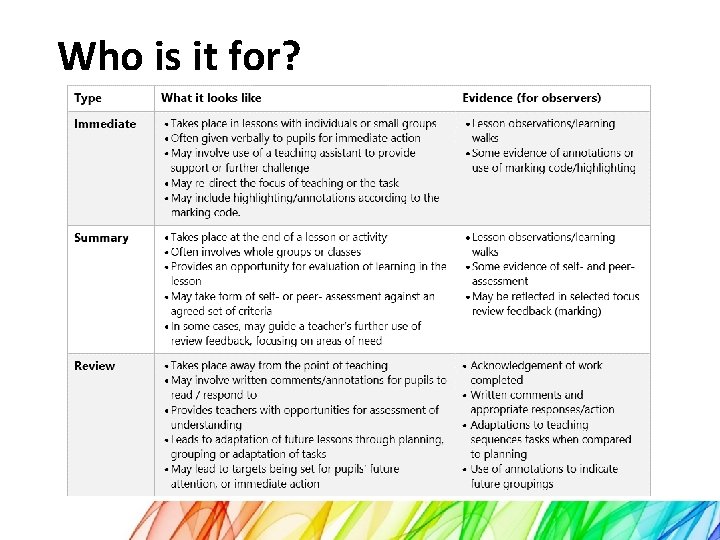
Who is it for?
What has it meant for me? • Marking completed sooner • Increased awareness of assessment in lessons • More time for quick interventions • A lighter school bag • Some grateful colleagues! • Some monitoring to be done – to lower workload
What does it mean for you? • Who is marking for? • If you’re honest, what is the impact? • What are the signs you look for in a book scrutiny? • Where else does feedback happen? • How are you keeping the evidence trail? • Does your policy match your practice?

Michael Tidd @michaelt 1979
- Slides: 25